Malaysia property might not be as hot as previous years, but the interest is still there. With the recent hike in interest rates and more hikes expected later this year, the instalment for properties will go up.
This then begs the question as to whether Malaysia property is still a good investment?
House prices in Malaysia went up by almost 100% from 2010 to 2022 with the average price went up from RM220,154 to RM433,430.
But there has been a steady decline in recent years caused by the pandemic where demand went down and supply going up. The concept of supply and demand has influenced Malaysia property price to a certain extent.
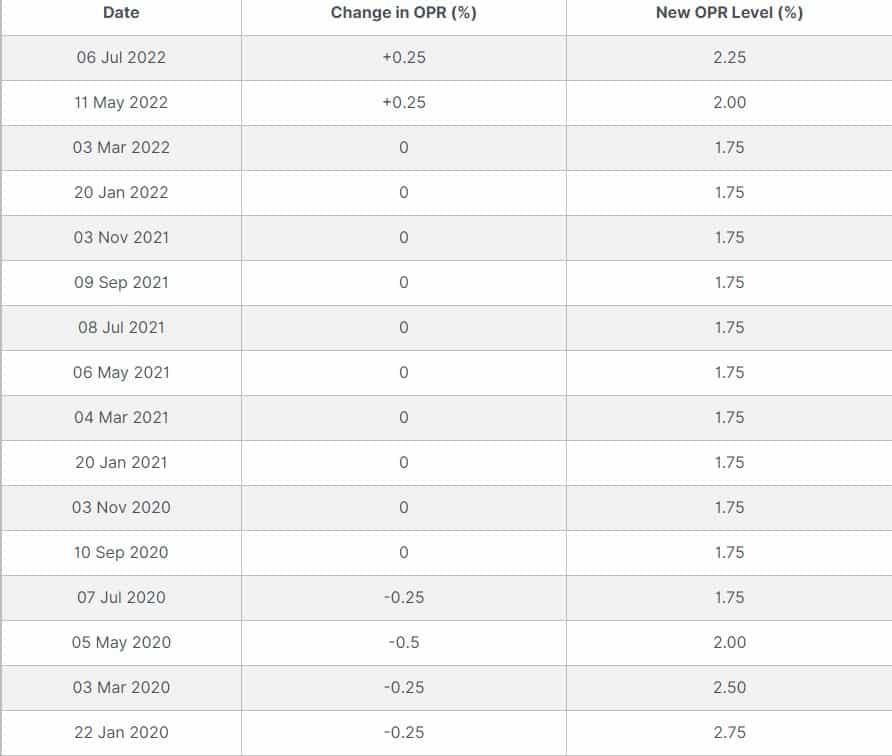
Malaysia have been enjoying a very low interest rate since the pandemic begin. But with the recent OPR hike by Bank Negara Malaysia, this would have caused interest rate to rise, and subsequently the monthly instalment for houses to increase as well.
Analysts are predicting a few more rounds of OPR increase to curb the rising inflation by end of this year, which could cause house purchases to cool off.
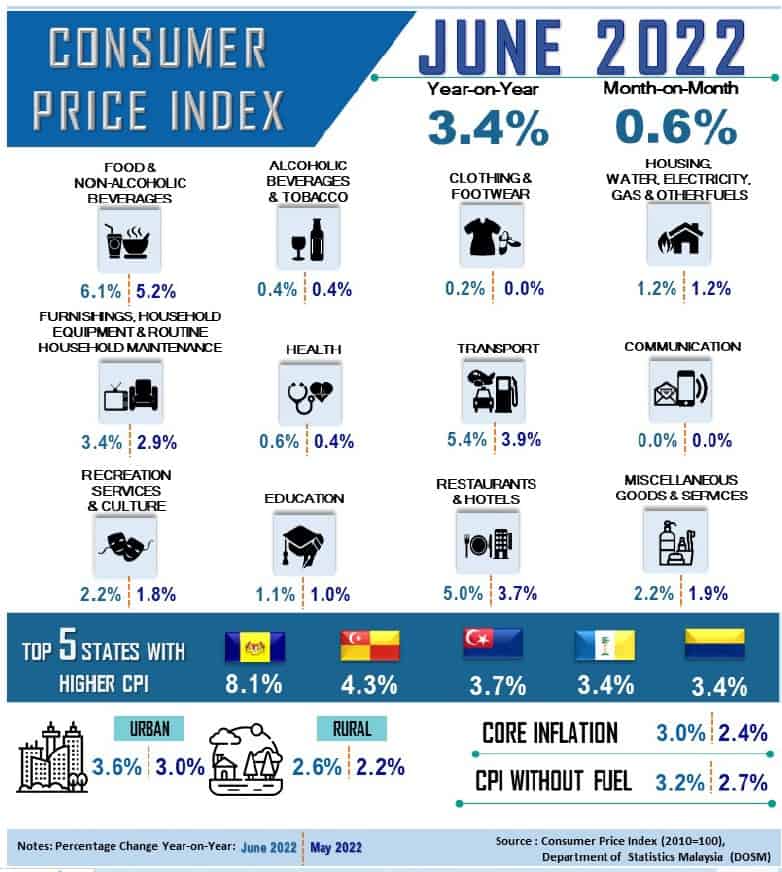
Malaysia’s inflation increased 3.4%to 127.4 in June 2022 as against 123.2 in the same month of the preceding year. The Food index increased 6.1% and remained as the main contributor to the rise in the inflation during the month of June 2022.
When faced with high inflation, there will be lesser disposable income as everyone will be tightening their budget. Only those who have made the necessary preparation and is prioritizing in buying a house over other needs, will buy it.
The others will then have to rent, so more renters are expected to be on the market.
Ultimately only you can answer whether Malaysia property is worth investing in. Do you have the holding power? Are you able to find below market value and irresistible deals from the property market?
As the saying goes, it is about ‘buying low and selling high’. Do your homework and remember the mantra, ‘location, location, location’.
The issue of retirement is haunting everyone, especially now with the rise of inflation and interest rates. It is happening not only in Malaysia, but the rest of the world. This makes retirement planning harder and it makes us wonder, what does it take to retire comfortably?
According to Husaini Hussin, chief executive officer of Private Pension Administrator Malaysia (PPA), the reason why most Malaysians are not able to save is because they are poor with financial planning.
“We don’t normally live within our means and do not have a plan for the long term, such as building up our retirement funds,” said Husaini.
To overcome this, we must set aside one third of our monthly salary to have two thirds of our last drawn salary as income replacement in order to have adequate funds upon retirement. This fund will then need to last us throughout our golden years. With Malaysians living on average up to 77 years of age, it is definitely a challenge to have sufficient funds to retire comfortably. Therefore, it is always good to start planning for retirement as soon as possible.
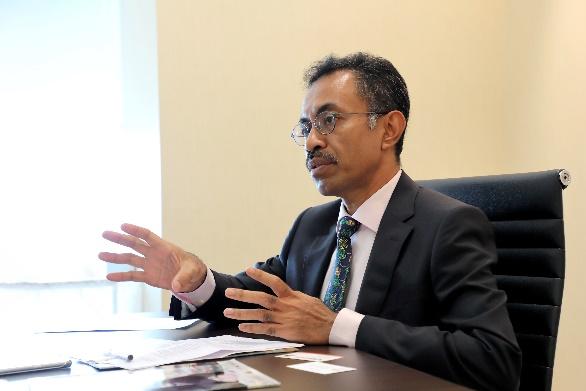
Husaini Hussin
For those who contributed to the Employee Provident Funds (EPF), at least there is something for your retirement. But according to statistics, 6.1 million EPF members have less than RM10,000 in their savings. This amount is not enough to sustain even for a year.
Husaini suggested that all of us start saving for our retirement as early as possible.
“Start with a small amount, then gradually increase the saving once our salary increases. By building a regular saving habit and with the help of compounding growth, it helps to build up our retirement funds,” Husaini remarked.
What About Those with No EPF?
The younger generation these days prefer to have freedom and flexibility, which has given rise to a new generation of freelancers, small-time business owners or e-hailing drivers, with all of them not contributing to EPF, hence there is no retirement fund for them.
So how can they start planning for their retirement?
“It has to start with the right awareness, that they need to begin planning for their retirement as soon as possible,” mentioned Husaini.
It is important to start a saving habit and set aside some money each month and make contributions to a bona-fide scheme such as PRS which is a voluntary long-term saving and investment scheme to help people save for their retirement.
On the issue of scams, Husaini mentions that this is due to greed, negligence, carelessness and naivety. Even though there are a lot of legitimate investments out there, people still fall for scammers, which is now to the tune of billions of Ringgits. Based on Bank Negara Malaysia’s Financial Capability and Inclusion Demand Side Survey 2018 (FCI Survey 2018), most Malaysians are lacking in financial literacy with one out of three Malaysians rate themselves to be low in financial knowledge.
We can avoid scams by educating ourselves and getting credible information by visiting the official websites, such as the Securities Commission Malaysia (SC), Federation of Investment Managers Malaysia (FIMM), Financial Planning Association Malaysia (FPAM) and the likes, before making any investment. Also, we can seek investment advice from a licensed financial planner instead of online gurus with no evidence of qualification.
Malaysians from all walks of life are invited to visit PRS LIVE website, which is a one-stop learning centre on retirement and PRS. There are insights, articles, news and videos available for visitors to read and have a better understanding on retirement planning.
“At PPA, we advocate Private Retirement Schemes (PRS). It was launched by the government in 2012 as a voluntary long-term saving and investment scheme to help Malaysians save more for their retirement. With the regulatory framework developed by the SC, PRS forms the third pillar of Malaysia’s multi pillar pension framework,” added Husaini.
How Do We Cope with the Rising Inflation and Interest Rates?
We can do this by reassessing our spending habits and to clearly define our “needs” and “wants”. If inflation is making it difficult to stay within budget, take a moment to reassess your cash flow.
With the rise in interest rates, this will cause our spending to reduce and hopefully it can help us to save. But there is so much that we can do to reduce our expenditure, perhaps it is time that we earn additional income by getting a second job.
Other than saving regularly towards our retirement funds, we should also set aside some sum towards an emergency fund. We can then dip into when we need access to cash during a crunch period. Studies have shown that people having access to an emergency fund would not touch their retirement savings.
In order to achieve a happy retirement, we need to have the mindset of ‘saving before spending’. Allocate a certain amount of savings before deducting your expenses for the month.
“This ensures we will always set aside a sum for our retirement savings, rather than to wait until the end of the month to see if we have anything left to save after all expenses,” Husaini mentioned.
Because chances are, we might not have anything left to save if we did not allocate ahead. Another consideration is to save now and indulge later.
Start saving for the life you want with as low as RM100 to enrol in PRS via PPA’s PRS Online service today and stand to enjoy more PRS treats during the #ISaveinPRS Treats Contest period until 20 December 2022. For more information, visit https://www.ppa.my/isaveinprstreatscontest/
Property investment is a lucrative business even when market sentiments are not exactly encouraging. Many investors will tell you that they still make money and this is the best time to find the ‘hidden gems’ of properties, especially those below market price by understanding the market trend.
For those with a deep pocket, investing in property might be easy for them initially, but the challenge later on will be on how efficient they can strike a balance between monitoring their investment profitability at the same time invest in more properties.
Here are some rules that have helped property investors achieve their property investment objectives and may help you in your property investing journey as well.
Rule of 72
Dubbed as the eighth wonders of the world by renowned math genius Albert Einstein, who formulated the famous formula E=MC2, the rule of 72 is really worth understanding, especially in doing property investment as real estate is a business where you practically “double-up” your money invested.
The rule of 72 indicates how fast the money you invested can grow by 100%. It shows you the number of years to double up the original money invested into your property. For instance, if you have invested RM50,000 into a property promising an 8% return annually, you would double-up the money in just 9 years.
Say you get lucky and purchase a similar property at RM50,000 but with a 15% return annually, you would have doubled-up the money invested in less than 5 years.
The rule of 72 works because of inflation. Can you still remember how much a pack of nasi lemak costs 20 years ago and compare it to now? Moreover, your home mortgage should decrease over time, but at the same time, your rent increases.
Take the same example and you will know the amount of money according to your age. For instance, if you invested in a property with RM50,000 with an 8% return at age 31, the value will increase to RM800,000 by the time you reach 67 years old.
The rule of 72 essentially summarises one of the most powerful forces in the history of human’s economy – the power of compound interest.
If you know how to apply the rule of 72 in your property investment journey based on the annual rate of return, you can then plan your retirement almost more accurately; therefore the notion that people can retire before the retirement age of 60 by investing in the right property is one that is practical and possible to achieve.
Rule of 78
Did you know that making payments before they are due does not necessarily reduce the total interest owed to the lender? This is a misconception that sometimes makes investors confused.
The Rule of 78 is also known as the sum of digit. This rule will guide you to understand how the annual interest is calculated, as well as help in differentiating how much of your monthly instalment is actually going into paying the capital and interest respectively.
This rule is applicable based on an assumption that investors are looking to take a fixed interest rate with a fixed period loan.
Apply this rule when it comes to investing in property. Take the balance of your mortgage loan and multiply the balance of your annual interest rate. Then divide by 365. From the total amount multiply number of days per month. Quite a tricky calculation this is!
These days, a number of mortgage consultants are offering services where they can help you save on interest by splitting your repayments and paying them at different times.
Rule of 1%
This is the fastest method an experienced property investor will use before deciding to invest in a property.
Basically the rule of 1% states that any property you invest should be able to be rented out at 1% of the purchase price of the property.
So for a RM600,000 home, the rental at 1% will be RM6,000. Some investors will increase this percentage from 1% to 1.5% and even 2% for greater cash flow.
The rule actually helps investors do a quick estimation if the monthly rent recovered will be sufficient enough to cover or exceed the monthly mortgage payment.
Let’s say you put 20% down payment for a property worth RM600,000, you would have a mortgage of RM480,000; so according to the rule, the monthly rental cannot be less than 4,800.
Rule of 50%
Besides the rule of 1%, investors will also consider the rule of 50%. This rule basically states that 50% of your rental income will be used or allocated for the expenses incurred on your property.
For instance, let’s assume you have a property renting at RM1200. Thus, you should plan to pay RM600 (0.5 x RM1,200 =RM600) on your expenses not including the mortgage. Essentially, this indicates that you have RM600 left to pay mortgage before getting the profit.
The Cap Rate
Capitalisation rate or Cap Rate is a good method to calculate the rate of return if you buy or invest in a property because it measures the property’s value relative to your cash flow.
This is done by having the total amount of net income divided by the cost of the property or asset.
For instance, let’s say you buy a home at RM300,000 and your expenses such as property taxes, repairs, maintenance and insurance averages out to RM500 per month. If your rental is fetching you RM1,500 per month, then your net operating income is RM1,000 per month or RM12,000 per year.
So using the formula provided, you will get a return of 4%. But is 4% a good rate of return? It depends on many other factors such as location, security, opportunities for growth and so on.
There are many more rules that experienced investors will use other than those stated above. Share your thoughts and feedbacks by sending me an email at aicheng@skbrothers.com
On the topic of retirement planning, there are a lot of things that comes into mind. Savings, investment and retirement funds are just some of the issues that we need to face. How much do we need to save every month? Where to invest? Is RM1 million enough to retire?
Smart Investor spoke to Ismitz Matthew De Alwis, executive director & chief executive officer, Kenanga Investors Berhad to get more insights on this issue.
Ismitz Matthew De Alwis
Smart Investor: It is reported that 75% of Malaysians don’t even have savings of RM1,000. Why do you think most of us are not able to save?
Ismitz Matthew De Alwis: With rising inflation and poor personal financial habits, most Malaysians would not be able to survive for more than three months if they were to unexpectedly lose their main source of income. Although the Employees Provident Fund (EPF) and Private Retirement Schemes (PRS) withdrawal policies were relaxed to assist those significantly impacted by recent events, this has led to many depleting their retirement savings faster than planned.
I believe that it all eventually boils down to their personal finance fundamentals. Many forget that the process of building up sufficient retirement funds is not brief, but a lifelong journey.
Everyone seems to be talking about that magic RM1 million. It is achievable and will it be enough to retire comfortably?
Everyone begins their journey from a different starting line and the decisions we make along the way will affect our destination in the end. RM1 million may seem a big amount for some, but a drop in the pool for others.
Investors should focus on saving for a sufficient amount that is achievable and enough to retire (according to their desired lifestyle) without worry. The major factor is to plan early for their retirement.
6.1 million EPF members have less than RM10,000 in their savings, it doesn’t look too good. What can these people do to ensure they can retire well and not continue working until old age?
Make it a habit to review and evaluate your financial portfolio periodically and make the necessary changes when needed. This can reduce the chances of panicking and making rash decisions when difficult situations present themselves. I tend to link retirement planning towards building a well-rounded ship.
By actively evaluating their portfolios, they can ensure that their ship is well-fuelled and constructed with high-quality materials, to protect their growing cargo from rough waters and strong winds.
The younger generation these days seems to like working as a freelancer, running their own small business or becoming an e-hailing driver but with no EPF, how can they start planning for their retirement?
Proper research and planning are required before diving into any form of investment as there exists many products and options which all serve the same purpose: providing additional income. They can then set aside this additional income and park it under voluntary long-term saving schemes.
For example, here in Kenanga Investors, we offer OnePRS by Kenanga as a voluntary retirement scheme to assist investors to supplement their current savings for their golden years. With an increasing life expectancy and the rising costs of living, many are finding that their retirement funds are not enough to solve any potential financial difficulties during their retirement.
What are some of the investment vehicles that you would suggest for retirement planning?
There are usually two main factors when it comes to discussing preference, an investor’s investment horizon and risk tolerance. When planning for retirement, investors can opt for short, mid or long-term investment periods, while their risk tolerance depends on the person itself. Investors who are willing to take on higher amounts of risk to achieve higher returns or growth are categorised as growth or aggressive investors.
Moderate risk investors are those that are in-between and are willing to take some percentage of losses to achieve a steady growth rate. Also, low-risk or conservative investors are those that do not participate in high-risk investments, they often seek a steady stream of income with very low risk.
There is no one-size-fits-all option for retirement planning, as there exists a wide variety of investment products in the market that cater to various risk tolerance and investment goals. Some examples of these are unit trusts, real estate, bonds, deposits, stock trading, and exchange-traded funds. In short, be sure to first determine your risk tolerance and retirement goal before committing to any investment vehicles.
There will be an increase of senior citizens in Malaysia as the life expectancy of Malaysians increases. Undoubtedly, decreasing fertility rates and increasing life expectancy is fast forwarding Malaysia to the status of an ageing society.
Based on the Department of Statistics Malaysia, the total population of the country was recorded at 32.4 million in 2020, with a total 2.2 million of the population or 7.4% aged 65 years old and above. The World Bank defines a country as ‘ageing’ when the percentage of people aged 65+ is above 7%, thus, categorising Malaysia as one of the ‘ageing’ nations.
The 2020 report by the World Bank, titled: A Silver Lining: Productive and Inclusive Aging for Malaysia, estimated that Malaysia will be an ‘aged’ nation by 2044 and ‘super-aged’ nation by 2056 with at least 14% and 20% of the population aged 65 and above respectively.
Whether it is for ourselves or for our parents, are we prepared for aged care?
Dr Carol Yip
Responding to Smart Investor, Aged Care Group Sdn Bhd (ACG) chief executive officer, Dr Carol Yip says that many are still struggling and worry if there will be enough money to retire, especially when medical costs continue to rise.
“Have you ever spoken to your parents or your family members about this? Most of us have not talked about or planned on retirement with our parents or families,” Dr Carol points out.
She notes that it will be difficult when adults in their 40s and 50s need to take care of their aged parents’ medical and living expenses, in addition to what they may have to spend on their own medical and living expenses. The situation may worsen with sibling rivalry and unwillingness to share the financial burden of caring for aged parents.
Increasing Needs for Aged Care Service
Group chief executive officer of Seterra Group of Companies, Rashidi Yahaya said that more and more people are now looking for aged care for their parents. Seterra is a Syariah-compliant aged care company located in Bukit Damansara, with the goal to revolutionise the standard of Islamic aged care in Malaysia by setting a new world class standards in aged healthcare facilities.
“Inevitably parents will grow old. When they are no longer mobile or become bedridden, their children will find themselves inadequately ready to provide the necessary care,” he informs.
He explains that there is also a shift in the thinking of the elder community today. They do not want to burden their children when they grow old, and can accept living out their older age in a place that can fulfill both their medical/physical and spiritual needs.
Society at large has moved away from traditional family values where the elderly are mostly at home under the care of their family members, shares Angela Francis, a project coordinator for Ipoh-based Ozanam Retirement Village (ORV).
“Hence, it is becoming more necessary for people nowadays to start planning on how to secure and support themselves in their twilight years,” she says.
ORV provides an essential community living environment for seniors. It is an initiative by The National Society of St Vincent De Paul (SSVP) and the Titular Roman Catholic Bishop of Penang where Angela is the vice president of SSVP.
There are some critical perspectives regarding retirement living and aged care. In the old days, the responsibility to care for the parents lies on the children. Even today, some are still stuck with this perspective.
“You are not neglecting your duty as a son or daughter by sending your mother or father to a home as these homes could perhaps take even better care of them for you,” Rashidi explains. “We still have a duty to provide emotional, physical and spiritual support to the best of our ability.”
“For Muslims especially, there are special considerations and concerns. These concerns need to be balanced with providing the best aged care for our parents according to our means and the seeking of Husnul Khotimah, of finding peace and contentment in their final years,” he points out.
Are There Enough?
As Malaysia moves closer towards becoming a ‘super-aged’ country in less than 35 years, are there enough aged care facilities that can cope with the demands?
“Elderly people have multi-types of illness and will need a qualified multi-disciplinary team of trained staff.”
“We don’t have enough purpose-built licensed aged care facilities with professional managers and trained staff to provide quality care according to the define-specific old age illness like dementia, Parkinson’s disease, stroke, kidney failure, cancer, heart problems and frailty – just to name the common problems,” says Dr Carol.
Rashidi agrees with Dr Carol that the facilities for aged care needs are not enough, noting that the aged care sector is very under-served, especially for Muslims. That is why Seterra is pioneering a structured approach to retirement and elderly care for Muslims.
Rashidi Yahaya
“We sincerely hope there will be more Muslim players in the industry. New standards of caregiving and infrastructure, nutritious halal food and food for the spirit are needed to ensure a dignified ageing experience, and adequate medical care are just some of the factors that needs to be put in place,” he says.
In Malaysia, developers are already noticing the potential of this market segment and have invested in building retirement villages to cater to the anticipated growing market. In the last ten years, residential property developers have begun developing aged people-friendly residences. However, this is still not enough.
Current townships have more residential apartments, commercial buildings and shopping malls as compared to aged care related facilities which is not the main attraction for buyers. But the awareness is increasing. Will an aged care friendly ecosystem in the residential building be a game-changer?
“There’s no statistic to back the claim that it will be a game-changer. But I’ve worked with developers to build aged care facilities in their township development. It’s satisfying to see that most residents can easily get the help they need anytime as the aged care operates 24/7 in such development,” Dr Carol informs.
According to her, in Singapore, every township development or common area is required to have childcare and senior citizen centers among other community facilities. It is for the convenience of those who are staying in that particular housing area.
She strongly recommends that the elderly live their old age in a neighbourhood familiar to them. Even better if it is within the same neighbourhood that is within a 5 to 10 km radius, and there is a licensed aged care facility for them.
“We need to start engaging the stakeholders that are building smart cities for sustainable living. It would be to encourage them to include aged care support infrastructure, facilities and support services.
“The government has access to all the data and surveys from MyCensus; as well as health and medical conditions of Malaysians via public hospitals and clinics from the Ministry of Health. They should be able to predict the ageing needs based on that data. That’s where all the data comes in for a better projection, planning and execution,” she notes.
Lack of professional caregivers, affordable care, elderly-friendly accommodation and other related problems would require urgent attention before the silver tsunami overwhelms the country.
Is Aged Care Exclusive?
Who has access to aged care? Is aged care only exclusive to those in the wealth hierarchy (aka the one who can afford it)? Dr Carol insists that aged care should be inclusive to help those, and all in need.
“We have low-cost airlines, low-cost hotels, so the same should go for aged care. We need low-cost aged care facilities with proper care for the elderly. There is a need for more affordable aged care that people in need can access,” Dr Carol explains.
Aged care should be inclusive but are they affordable especially to those in B40 or M40?
“Today, I don’t think that the B40 segment can afford aged care, while the M40 can only afford to provide aged care amongst the family if the family comes together to take care of each other and their aged parents,” Dr Carol shares.
According to her, it has to be a shared effort and shared financial responsibility depending on how each adult child plans their retirement. If the M40 does not have family, they will need help from the community such as friends and neighbours.
She emphasises on the government’s role in providing support and incentives to make aged care affordable by categorising the population data by area or township, enforcing and implementing a continuum of care services that are easily accessible.
Non-Governmental Organisations (NGOs) have been playing an active role in many segments, especially in helping those in need.
Angela Francis
“As part of an NGO that serves the weakest and marginalised within society, we regularly encounter many of the elderlies who are abandoned and left to fend for themselves,” Angela says.
She adds that the growing need to provide care, better living standards and security to this vulnerable group in society has inspired and driven them towards the development and management of ORV.
“We want an eco-friendly environment. Hence ORV is being built in Taiping, Perak – a land surrounded by lush green foliage to harness the tranquility and peacefulness from nature,” she says.
“We would also want to ensure that we are giving the opportunity to the right target group, namely the elderly, to reside in the retirement village,” Angela explains adding that the majority of those using their services are in their 60s and 70s.
Islamic Aged Care
Aged care is needed across the board. It should be inclusive without any label, be it from a religious point of view or race.
“Out of the 1,400 aged care homes in Malaysia, none are registered as an ‘Islamic Aged Care’ home,” Rashidi informs.
On the hesitance of aged care in Malaysia especially for the Muslim community, Rashidi comments: “If one cannot take care of one’s parents because they are bedridden or seriously ill, it is the children’s responsibility to seek solutions to care for them. Letting others take care of their parents does not mean they are neglecting their duty. They are still providing for them to the best of their ability.”
The Muslim mindset about aged care or retirement homes needs to change. They must see that it is a natural progression of their own life and of their parents to undergo a new phase – to seek spiritual fulfillment, to handle all worldly issues and to have a dignified and peaceful ending with the best of care.
With the world evolving, aged care is not as typical as we think. The way we view things needs to change and come from different perspectives.
Placing your parents in an aged care facility does not mean you are abandoning your elderly parents. However, it must be followed by strict compliance as enshrined in the Quran and the Hadiths. “You still owe a very heavy duty to them and keeping your parents happy and fulfilled is still your responsibility which you cannot abdicate to a Rumah Orang Tua,” he emphasises.
Never Too Late to Start
Have we planned on how to survive our golden years? If you are to retire, how much money do you need? Would it be sufficient to cover for the rainy days?
RM2,500 per month looks to be sufficient for retirement. But depending on one’s lifestyle during retirement, it may not be enough. “With rising inflation, this amount will not be sufficient,” says Angela.
Sadly, according to the Employees Provident Funds (EPF), around 6.1 million contributors aged below 55 or 50% of total contributors only have RM10,000 or less, which means this group of contributors may only have RM42 per month to live for another 20 years after retirement.
“It is estimated that 39.2% of our population have ZERO savings for aged care (World Bank calculations based on the Department of Statistics Malaysia, EPF and KWAP). In addition to that, almost 50% of the ageing population in Malaysia falls into the B40 category. At Seterra, it is our objective to cater to all walks of society regardless of their faith, beliefs and ethnicity,” Rashidi informs.
According to a survey on ageing conducted by Ipsos in 2018: when asked what’s the worst thing about growing old is, globally 30% of those polled responded that they personally worry about not having enough money to live on in their later years,
So, how can we prepare for our ageing needs? It is never too late to start planning for your retirement. The rising cost of living, medical expenses and inflation should be factored into our retirement planning.
“Age is just a number. Choosing to work part-time during retirement can maintain a good mental health and earn an income,” says Dr Carol.
She also suggests the need to increase the retirement age to 65 and beyond, so that people can continue working for as long as they can. “It’s not that bad. It helps you to be physically, mentally and socially active.”
As for the younger generation, here’s a piece of advice from Dr Carol.
“Save more money than what is required by EPF. This is because when you retire, you may need your savings to help your aged parents, especially when your parents’ retirement income is insufficient to take care of their health and medical care. Get ready before the storm,” she advises.
When it comes to retirement planning, investment is one of the tools that can help us to achieve our goals. The famous quote by Benjamin Franklin rings true;
If you fail to plan, you are planning to fail!
Recently Smart Investor spoke to Isnaliyah Sarwadi, director, business development of PMB Analytics Sdn Bhd (PMBA) which is a subsidiary of Pelaburan Mara Berhad, to get her views on the topic at hand.
According to her, there are many investment vehicles to support our retirement planning, but the two vehicles that she believes could warrant the achievement of the goal are through unit trust and property investment.
Unit Trust and Property
Unit trust investment is one of the most common investment vehicles in Malaysia. It is easily accessible by everyone and it also has a very low entry barrier. You can start investing in unit trust from as low as RM100, which makes it affordable for everyone. It can also be used as a tool to invest regularly each month.
One must emphasize asset allocation and diversification strategies to benefit the most from unit trust investment. With just a small amount of money, you can already be exposed to global markets such as the United States, ASEAN, China and the rest of the world. Just ensure that it matches your investment objectives, investment horizon and risk tolerance level.
Secondly, there is property investment. With the right selection of property especially the right location, it can save you time and money to access to your work place. On top of that, price of a good property will always grow over a long period of time. When it appreciates in value, instead of selling it to buy bigger property (an upgrade of lifestyle), one may lower or maintain the lifestyle by buying two properties to accommodate two purposes (accommodation and investment).
Hopefully, when you combine these two investment vehicles, you will enjoy strong financial standing when you retire. These investments can also be liquidated and used for other purposes such as for your children’s education or to start off a new business.
Another tip by her is the new age comes with the latest technology. You must equip yourself with new skills as well. If you start saving early, over time, you will have money to start great things in life as the savings will enable you to start small businesses (become an entrepreneur). Immediately, the money will provide you with working capital or a deposit to buy machinery or vehicles for transportation to start the business. In addition, it will provide you money for upskilling since you will need to attend courses of your preference, for example, culinary, bakery, saloon, sewing, massage technique, writing technique, etc.
Why Aren’t We Able to Retire Well?
The reason that some of us are not able to retire well is caused by the low awareness of personal financial planning. We tend to spend more than what we earn, which then causes us to borrow in order to carry on with our lives.
The credit card debt trap which can be a very vicious cycle. Once you are trapped as you are only able to pay the minimum amount each month, it will be very difficult to get out of it. It can snowball to a huge amount over a period of time.
It all boils down into a mismatch of lifestyle against income. Ever heard of the quote, “We buy things we don’t need with money we don’t have to impress people we don’t like.”
We also tend to fall prey to “ponzi” schemes and scammers out there. We are easily blinded by the promise of getting rich instantly and receiving extraordinary monthly returns.
Tackling the Rising Inflation and Interest Rates
Finally, we have to deal with the issue of rising inflation and interest rates. Here are some tips that Isnaliyah is kind enough to share with us. To help us weather the storm, we should do the following:
Prudent management of cash flows and personal budgeting requires you to choose wisely between needs and wants
Structure your retirement portfolio well. The investment horizon is for the long term and should the market tumble, don’t panic and don’t abruptly restructure your existing portfolio.
Invest in upskilling so that you can look for additional income streams if the need arises.
Retirement planning is something that we should not take for granted. As the years pass so quickly, especially these days, we will be staring at the day we retire very soon.
If we do not take action, we may have to work until our golden age. So do not delay; start to plan for your retirement now.
From advertisement run by insurance company, investment company to banks, and even the likes of private pension and pension fund, the idea of retirement planning is central on the need to plan early so that we can have adequate savings that sustain our golden years.
That being said, most (if not all) messages revolving around the concept of retirement is more often than not about “whether you prepared enough money for your retirement”.
Imagine people who have been working diligently and save very hard to prepare for this eventual phase of life called retirement for the past three decades. When they finally retire from their full-time work, does this now mean they will have a very good retirement?
I believe that a good retirement is determined not by what product we use to prepare for it, but how we invest our retirement money. In fact, there are three non-financial sides that we should not ignore.
Time
“What we do with this luxury of time is equally important (if not more important) than whether we have prepared enough money for our old age.”
One of the biggest differences between before and after retirement is not just about our main income will come to a stop, but rather, we will now have all the time available to ourselves.
So, what we do with this luxury of time is equally important (if not more important) than whether we have prepared enough money for our old age.
There is a saying that sound like this, “Growing old with lots of money is no longer the goal. Dying rich cannot compete with living rich, and making a living does not measure up to making a life.”
This implies that while we may be rich financially, if we are not rich in life, then those money may not carry any significant meaning beyond fulfilling our basic need.
There are 24 hours a day and this means we will have 168 hours every week now. Before we stop working completely, assuming we spend eight hours a day for our work, and we work 22 days a month, we will now have an additional 160 hours available to us!
So, how are you planning to use this new found 160 hours of your life? Having an idea for this is crucial because how we use our time will determine how our money will be used.
Of course, we will have some ideas about what we want to do when we no longer have to wake up to clock in for work. Maybe we can go shopping, hi-tea with friends, travel and do some of our hobbies. This is such a good thing and it will surely be liberating for us to indulge in these activities. However, do we see ourselves constantly doing this to fill up the 160 additional hours for years or decades? Could we come to a point that these activities that look attractive to us now may then become boring in future (after enough repetition)?
Meaning
“When we do not find life interesting, we may start to lose a sense of what is worth living for.”
Another key factor for people not retiring well is boredom. When we do not find life interesting, we may start to lose a sense of what is worth living for. It may also lead to us seeking new excitement with the retirement funds we have and in certain extreme situations, the person may even squander away their retirement savings.
On the other hand, people who have retired well and happy in their golden years usually have a few things in common. One such trait is living their life with a purpose. This can include volunteering at certain organisations with a cause they believe in. It may also be work that allows them to use their talents or experience to help the younger generations, such as a mentoring program.
Money is not the main motivator for getting involved in such projects or activities, but rather living a life that is ‘rich’ in meaning and purpose. If we look around, there are many people that can already afford to retire, but yet they are still actively pursuing a certain cause.
Speaking with them to understand their mentality may also help in seeing a different perspective.
Health
“No matter how wealthy or how financially prepared we are, without good health, anything else hardly matters.”
Think about your retirement as having three phases. In early retirement, you hopefully have the time, resources, and fitness to lead an active life. In the middle of retirement, your level of activity will probably start to slow down. And in the third phase, most retirees begin to settle into their homes and prioritise their wellbeing.
It is in the third phase that health care costs can increase dramatically depending on your needs and your personal support network. This is also potentially one blind spot that most people have not come to realise.
Some retirees who anticipate assisted living or in-home nursing purchase medical insurance with very high coverage. But these products only can do so much, i.e. it only pays for our hospitalisation bills and some post-hospitalisation. Other things that require money but not a hospital stay are not covered (yet). Hence, there is still a need to plan for additional funds that cater to these situations and having a back-up fund that we can dip into is crucial.
A more sensible way is to plan and accumulate our retirement savings, while also planning how to keep ourselves healthy and fit so that we enter our retirement with reasonable health.
Sadly, too many seniors put off making these difficult decisions until they are dealing with a major health or financial crisis. Planning ahead puts folks in a much better position to choose how and where they are cared for on their own terms.
No matter how wealthy or how financially prepared we are, without good health, anything else hardly matters.
Retirement Planning Is Never Just About Numbers
Back to those advertisement messages we are bombarded daily, those are messages about how financial products can help us prepare for retirement. But it is not preparing for a full retirement as money is just part of the picture.
In order to plan holistically for a retirement that really has meaning, you will have to engage in deeper conversation that helps you in understanding yourself better, discovering your personal values, identifying how you envision your retirement life to be, and how are you going to fill up your 168 hours a week, before looking at the numbers.
Real retirement planning should be a process that integrate numbers, and your life. Because eventually, it is the person (you) that gives meaning to the number, not the other way around.
About the Author
Kevin is a NextGen Money Mentor and founder of NextGen Independent Advisors. He works with people to transform their relationship with money and be brave in their pursuit to live a meaningful life with their money. He is a CFP professional, a certified member of Financial Planning Association Malaysia (FPAM). Kevin can be contacted at www.kevinneoh.my.
Property investment can be classified as a high risk investment category. High risk, high return. Indeed, that statement is true but do not forget the other side of it which the possibility of higher losses also increases.
Knowledge and strategy are matter the most in investment. It is applicable to all types of investment including property. They are important so that investor can manage their investment properly; control their losses.
It’s not whether you’re right or wrong but how much money you make when you’re right and how much you lose when you’re wrong.
George Soros
Property Investment
Property investment involved a huge amount of capital as compared to the others. Remember, it is not easy to liquidate your property especially when you are in the lost.
It involved quite a long process before the deal is done. You will need an agent to market your property, then will have to wait for a buyer. Then, if your property is leasehold, you will have to wait for consent from the land office. Normally it will take 3-6 months for a deal to be completed after you have a buyer.
Anyway, that is not our discussion in this article. There are whole lot of things can be done to get the best property investment as your investment portfolio.
How can investors make money via property investment?
Capital Gain of a Property
Capital gain also known as capital appreciation can be defined as the increase of the property value from time to time. It can be measured by the difference from original value with current market value.
You can easily calculate it using this simple calculation,
Capital gain = ((Current market value – Original value) / Original value) x 100
For example, you bought an investment property in Setia Alam for RM600,000 in July 2015. As of July 2022, the current market value is RM800,000.
Your property value has increased as much as RM200,000 in just 7 years. The capital gain from formula given is 33% over the 7 years of ownership. Easily calculated, your property value increased around 4% to 5% a year.
Your property value appreciation can not be reflected literally by 4% to 5% per year as the appreciation value is pretty volatile over the years. It could have appreciated by 15% in the first year and stagnated until the fifth year and appreciated again.
So, what can be considered as good capital gain for our investment?
Average capital gain of residential properties in Malaysia reached 13.9% in 2012 when the economy was great according to National Property Information Center (NAPIC).
Capital gain of 5% to 7% can be considered ideal during typical market situations. It is good to remember that mostly, the capital gain is impacted by the economy.
After all, the capital gain can be seen as decent when it is above the inflation rate. Most investors who aim for capital gain will flip or sell their property unit after they reach their goals at certain times.
Property Rental Yield
Rental yield can be described as the amount of rental income for a property as compared to the total investment value. This can help property investor to evaluate potential income of the said property.
Rental Yield = ((total rental income – total maintenance cost)/(property purchase price))x 100
For example, you purchased a property at RM600,000 while the maintenance cost per year amounting RM5,000 and the rental income per month is RM3,000.
Then, your rental yield is around 5.2%. What does it mean?
Rental yield also impacted from the economy. When the demand for rental market is good, the rental yield would likely be good too.
During the pandemic outbreak, many people lost their job. The demand for the properties especially surrounding business area depleted.
Normally, the average rental yield for residential properties is about 3.7%. A good rental rate should be at least 7%. As an investor, there are things that need to consider; property furnishing, property repairs, maintenance fees and any other cost involved.
You have to consider taxes that actually may reduce your rental income.
Location and type of the property play big role in determining the rental yields. For instance, a high rise property with limited units that located near to the access of public transport and offices are usually get a higher rental yields.
This rental yield strategy is suitable for those who have a property in a high demand rental area where you can rent it out easily with higher price.
When it comes to success in personal finance, investors oftentimes relate their personal wealth to a measuring performance index. We are immersed in our busy schedules primarily to create more wealth.
It is fair to say that when it comes to wealth creation, everyone will be interested, but not everyone will know how to achieve it. Some may end up getting a less desirable outcome from their wealth creation attempt.
Creating More for the Future
Generally speaking, the goal in mind in wealth creation is so that our future wealth will be more than the wealth we presently have.
If you are not careful, however, you can get wealth reduction as an entirely opposite outcome instead. This will be unfortunate as we will not be able to turn back time, which eventually means we will have to either delay our plan, or make drastic adjustments to the new reality of the future.
Invest to Create Wealth
A simple way to wealth creation is to increase income while keeping expenses at status quo, or spend less while income remains status quo, or we achieve additional wealth via investing.
However, chasing more income requires trade-offs like having less time for other aspects of life such as family time, hobby or leisure. Likewise, to spend lesser also requires compromise in not living the most desired lifestyle or you may have to forgo changing to the next new smartphone, or fashion trend. Investing our hard-earned money also has a trade-off. It needs the investor to take a risk and accept that “cash is king” is not always right.
Throughout my experience and the many cases I have seen, it is common to observe that people have their primary focus on growing their wealth so much that they at times overlook some factors. Avoiding wealth reduction or reducing the extent of wealth reduction is perceived to be one step closer to greater future wealth.
In sport, sometimes people say that the best defence is the best offence, because you are more likely to be in a position of not being defeated. Thus, we should try to train ourselves to consciously pay attention to minimising the leakages or waste in our financial system while we attempt to invest to grow our wealth. At least when we do this simultaneously, we will have more than “one engine” running our wealth creation process.
In the worst case scenario, investment outcome may be capital loss and wealth reduction due to certain vagaries such as paying medical bills from our own hard-earned savings, penalty on income tax bills, or under-estimating inflation, overlooking on currency hedging, children’s education expenses, and so on.
Wider View of Personal Finance
As a financial planner who believes in comprehensive financial planning, I would suggest that a person look at personal finance from a comprehensive angle that includes:
Cashflow and debt management
Retirement planning
Education fund planning
Asset protection planning
Tax planning
Estate planning
Insurance planning
Investment planning
It is not difficult to hear real life stories where a person has set forth to invest their money hoping to see a positive return on investment (ROI) in a few years’ time, only to find that their capital was lost. In fact, it could be that only a handful of investors are well aware of what they are investing in. Many of us may not know that we are paying excessive fees for the investment, or some may not even know that such fees exist. Ultimately, fees are always a factor that will eat into our return.
Risky Ventures
I have also seen investors who disregard the need to have health insurance, but they are very focused in making risky investment such as penny stocks, or leveraged investing. Wealth creation strategy like this generally assumes that life will move in a straight line and the anticipated investment return will be positive and without much volatility that may hurt their standing.
But in real life, anything could happen, and we may have sudden need of cash and fund, if we are not careful and do not have a decent financial foundation, we may then be forced to put our hand into our investment and make unplanned withdrawal, if at the point of withdrawal, the investment is making a loss, we will then be realising those losses. This is a sure way to lose your money, and if you are sane you will not be interested to do this.
Apparently, “cash is not king” but cashflow is king. Therefore, when we set out to take adventurous ventures with our money, or to create a new business start-up, it is best we ensure that our cashflow position is within our control and is stable, and that we have a safety net to cushion us should there be an unexpected fall. This is what people usually call an emergency fund or buffer.
When our cashflow situation is healthy and we also prepare a safety net to weather challenges and unexpected events, then our wealth creation process will become less risky. An entrepreneur personal financial management will very likely impact the financial success of their business, and vice versa. So, it is also important for business owners to separate their personal financial affairs from their businesses. As we embark on the journey of wealth creation, perhaps it is in our best interest to recognize that there are things that are well within our control to reduce or increase wealth creation process will become less risky.
An entrepreneur personal financial management will very likely impact the financial success of their business, and vice versa. So, it is also important for business owners to separate their personal financial affairs from their businesses. As we embark on the journey of wealth creation, perhaps it is in our best interest to recognise that there are things that are well within our control to reduce or increase wealth.
About the author
Kevin Neoh is a NextGen Money Coach who works with people to help them transform their relationship with money to improve their lives with the money they have. Kevin can be contacted at kevin@nextgenadvisors.my and www.kevinneoh.my.
Retirement, is defined as the ending of working phase in life, which is anticipated to be one that is dominated by leisure that is paid for by savings and benefits accumulated during the employment phase. This is how most investment companies sell retirement plans ideas anyway.
There seems to be a great divide of lifestyle – before and after retirement period. But most people who have experienced the shift would tell you otherwise, especially as we journey into the future with increased longevity, greater responsibilities, eroding filial piety, shifting attitudes and different economic landscape.
The idea of retirement would be rather different, say by 2050. I would think that in the future, the younger cohorts may not know the word retirement, either due to circumstances or by choice.
Stop Working? No Way!
“Oh I don’t plan to retire. I’ll work till I die. It’s more fulfilling.”
This is a phrase we hear increasingly often nowadays. Unfortunately, this may soon be a reality for many of us, as the sociographic landscape is bound to evolve in years to come.
The societal acceptance of single living or family without kids has dropped birth rates historically low, causing our projected population to be made out of a growing number of the elderly.
This would undoubtedly affect our dependency on the older generation to contribute to the workforce. Coupled with the increase in retirement age following the increase in life expectancy in the next 30 years, we would have no choice but to let the elderly continue working for the betterment of our economy.
Work? Leisure? Why Not Both?
Friedmann and Havighurst who first defined the concept of retirement which we think of today, in a 1954 research found that people at that time viewed retirement as a time that they could truly engage in leisure activities and that their working age was the period of time to save towards this end.
However, fast forward to today and towards the future, when general standard of living increase and leisure becomes more accessible and affordable, not to mention more varied, we tend to enjoy both work and leisure at the same time.
This makes the concept of retirement seems less convincing and attractive. In the past, people did not see work and the workplace as central to their life interests.
Today, as the pace of economic growth quickens, we look at our career as being central to our lives, and as work and leisure become inextricably interwoven, Friedmann and Havighurst’s idea of retirement as a discrete phase of life dedicated to leisure becomes less relevant.
Blessed With Longevity
With progress in medical treatments and the rise of health-conscious lifestyle through better awareness, an extended life expectancy can be expected.
There is a high probability that life expectancy will continue to increase in industrialised countries in the Americas, Australia and the Asia- Pacific. Already, the average life expectancy will increase in many countries by 2030 – with South Korea expected to exceed 90 years of age. (Source: A 2017 analysis by Imperial College London and the World Health Organisation)
As life expectancy increases, people are also living healthier lives both physically and mentally, and being “too old” to work may seem to come much later in life than anticipated.
Some would argue that the elderly would become irrelevant due to technological knowledge demands. We might be able to say this about the elderly of yesteryear, but it certainly would be different for current generations which grew up with technology and the Internet of Things, and whose lives are being intertwined with technology whether they like it or not.
Shifting Attitudes – Do You Even Want To Retire?
As jobs turn into careers and knowledge or experience is prized over physical labour, we value our contributions to the society.
With mundane jobs and repetitive tasks are replaced by technology and artificial intelligence, our society in the future would be left with nothing but intellectual jobs.
Having to stop working all of a sudden would certainly leave a gap in a person’s purpose in life, especially when filial piety is on a downtrend as well.
As we crystal-ball into the future, the very idea of retirement may seem invalid as people would continue working until they are mentally incapable. Indeed, the very idea that a person stops working and becomes irrelevant to society does not sound like a very appealing thing to do.
Do You Still Need Financial Planning?
With all that said, having a financial plan will allow you to successfully not retire. Financial planning is far more expansive than just “save for retirement.” There’s a lot of life to live between now and when or if you decide to stop working.
There are plenty of other short-term goals and milestones in your life that you likely want to hit – starting a new venture, growing your family or buying a new home and traveling around the world. And financial planning provides a system and a process to make some of these goals possible.
About the Author
Alvin Kwan, CFP CERT TM is the executive director and head of financial planning at Redvest Wealth & Asset Management. He has over 12 years industrial experience in the financial industry, specifically in wealth advisory, private banking and stock broking. He was also a lecturer in areas of investment management, derivatives, and financial markets.
We at Smart Investor and Redvest is committed to help you better manage your financials. Get a free consultation from an expert by filling in your details here: https://www.smartinvestor.com.my/SIxRedvest




























 Kevin Neoh is a NextGen Money Coach who works with people to help them transform their relationship with money to improve their lives with the money they have. Kevin can be contacted at