Category: Investments

  • Digital Art (NFT), Is It A Prudent Investment Or A Bubble Waiting To Burst?

    Digital Art (NFT), Is It A Prudent Investment Or A Bubble Waiting To Burst?

    If you have paid any attention to investing news over the past year, you would almost certainly have come across the term NFT (non-fungible token). Often linked to digital art, it is responsible for some of last year’s biggest investment headlines, with jaw-dropping amounts being spent on them.

    But what exactly is an NFT?

    In A Nutshell

    As the phrase “non-fungible” suggests, it is a one-of-a-kind, irreplaceable token that acknowledges a person’s ownership over a digital asset. Think of it as a digital certificate that recognises ownership, similar to a certificate of authenticity for valuable artwork or timepieces. Although NFTs are commonly linked to art, it can be used to prove ownership of any digital assets such as memes, songs or even tweets!

    The assets being sold can be freely viewed, or even saved to their own devices, by anyone, which is often what detractors point at when denouncing NFTs. However, just like how there are knockoff versions of famous art pieces, there is only ever one original, which is where it gets its perceived value.

    Like cryptocurrencies, owners of assets are documented on a publicly shared ledger, also known as the blockchain, that cannot be tampered with or altered by any single individual or party. Any changes to this ledger must be acknowledged and ratified by all members of the blockchain before being made permanent, making it close to impossible to tamper with.

    The most popular platform to buy or list NFTs is OpenSea but there is a raft of competing marketplaces that are all aiming to carve their own slice of a very lucrative pie. Local NFT marketplaces have also sprung up, with Pentas.io being the most prominent.

    Do They Have Any Use?

    Metaverse and Blockchain Technology Concepts. Person with an Experiences of Metaverse Virtual World via Smart Phone. Futuristic Tone. Conceptual Photo

    Although copies can be made of these digital artworks (memes, tweets, music etc.), the NFT is the sole acknowledgement of who is the “owner” of the piece. Art has long been used as a store of value, and this easily extends to digital art, with the value stored in the certificate of ownership.

    But whether this has any tangible value depends solely on the market. Many are of the belief that NFTs are in a bubble, including artists themselves.

    Digital artist Beeple, also known as Mike Winkelmann, holds the current record for the most expensive NFT, with his piece EVERYDAYS: THE FIRST 5000 DAYS, auctioned off by Christie’sforUS$69,346,250, but he thinks that NFTs are a bubble waiting to burst.

    Speaking to the New York Times Sway podcast last year, he said “This stuff will absolutely go to zero.”

    He believes the key aspect of NFTs is proving ownership which is why popular pieces trade for millions.

    “The more something is widely shared, the more popular it becomes, the more valuable it will become.”

    “When you go to The Louvre and take a picture of the Mona Lisa and share it on the internet no one is like ‘Wow, I just devalued the Mona Lisa.’”

    However, he does believe NFTs serve a purpose and that an eventual bubble burst will simply remove the deadweight, much like how the dotcom bubble did not cripple the internet’s functionality and its now ubiquitous influence on the world.

    Money-Spinning Endeavours

    Jack Dorsey, the former CEO of Twitter, sold his first ever tweet on the platform as an NFT for just over 1,630 ETH or US$2.9 million to Malaysian businessman Sina Estavi, the CEO of Bridge Oracle. Famous memes have also been put up for sale for life-changing amounts, with originators eager to strike while the iron is hot.

    The trend is already being jumped on by local artists as well. Graffiti artist Abdul Hafiz Abdul Rahman, better known as Katun, sold two NFT collections in August 2021, titled Apes Stand Strong, with a limit of 50 pieces (1 ETH each) and Mystical Fruits, an open edition that sold 776 pieces at 0.1 ETH each. This raised a total of 127.6 ETH (over RM1.6 million at the time, now worth over RM2.1 million at the time of writing).

    Another well-known local artist, Red Hong Yi, sold her Doge to the Moon NFT for 36.3 ETH (approx. RM325,000 at the time, now worth RM620,000 at the time of writing) in July 2021, while local rapper Namewee made 209 ETH (approx. RM3.5 million) from selling 100 NFTs of his song Go NFT in November.

    Many buyers of NFTs also immediately list it at a higher price in a bid to make a quick profit. Whether these prove to be prudent investments or not, it is clear that there is a demand for NFTs, either for speculative purposes or as stores of wealth.

    What is less certain though is whether NFTs are a bubble or if it will ever become a popular method of investment. Whatever happens, digital natives are making moves and it is up to the rest of the world to get up to speed or possibly be left behind.

    NFTs In Numbers To Date

    • Number of NFTs sold: 19,390,873
    • Total sales of NFTs: US$13.95 billion
    • Average value per sale: US$719.77
    • Primary sales: 11,244,153
    • Secondary sales: 8,146,720
    • Active market wallets: 1,510,331
    • Most popular project (volume): CryptoPunks – US$1.8 billion
    • Most expensive NFT sold (ETH): CryptoPunks (Ͼ #3100) – 4,200 ETH
    • Most expensive NFT sold (US$): EVERYDAYS: THE FIRST 5000 DAYSBeeple (aka Mike Winkelmann)US$69,346,250

    Statistics are accurate as of December 2021.

  • Property Investing In A Post-Pandemic World, 4 Things To Consider

    Property Investing In A Post-Pandemic World, 4 Things To Consider

    Planning to do some property investing after the pandemic? Here are some factors to help you find rewarding deals.

    Real estate investment is one of the most preferred forms of medium to long-term investment, especially for Asians. It increases in value and generates ongoing passive income over time.

    Despite the Covid-19 pandemic that took a toll on Malaysia’s property industry, experts say the property market will likely recover in 2022 with renewed consumer confidence and the expected recovery in Malaysia’s overall economy. They anticipate that property investing will get better in the first half of this year before it begins to pick up in the second half.

    “All signs are pointing towards 2022 being a recovery year for the property market in Malaysia. It is predicted to be stable in the first half with gradual improvement in the second half. While many are adopting a wait and see approach, landed properties in the Klang Valley are hitting new highs each month,” says Chan Ai Cheng, President of the Malaysian Institute of Estate Agents.

    4 Factors To Consider In Property Investing

    With the attractive low interest rates and property prices on an upward cycle, it seems like a good time to snap up some good properties. However, you do need to have a sound knowledge before venturing into the world of investment properties.

    According to Chan, some of the factors to consider when investing in a property in Malaysia include:

    1. Purpose Of Property Investing

    Are you looking to make money through rental income or property appreciation? What you plan to do with the property makes a difference in deciding the type of property you need to buy. It also helps you narrow down the available options to find one that is better suited for your needs.

    2. Location And Neighbourhood

    Location is one of the most crucial factors to consider when investing in property. Other factors include accessibility and connectivity, amenities, plans for future development, proximity to transportation network, and how safe is the location from natural calamities like floods or landslides.

    “For me, I look for properties within easy reach of areas I am familiar with. There may well be opportunities in other localities, but it is always best to invest in locations you know best. You would have better knowledge of the neighbourhood, past prices, and potential for the area compared with buying on one’s hunch,” she explains.

    3. Type Of Property

    The main three types of property investing include residential, commercial, and industrial.

    “In Malaysia, most investors buy residential properties with a minority investing into commercial and industrial properties,” Chan says.

    Popular residential property options include landed properties like terraced houses, semi-detached houses, or bungalows. For non-landed properties, they include highrise or strata residential properties such as condominiums, serviced residences, and apartments.

    Each property type has its own set of terms and guidelines or considerations; thus, you need to determine what you are looking for in advance.

    4. Budget

    Your choice of property to invest in should not only be a good investment, but it should also fit within your budget.

    When calculating your budget, remember to factor in all initial costs such as downpayment, legal fee, stamp duty, bank processing fee, valuation fee (for subsale), as well as renovation expenses to get the property ready for use.

    Besides the monthly loan instalment, you also need to budget for recurring payments that come with owning a property such as monthly maintenance charges, annual quit rent and assessment tax.

    While most people buy directly from the developer and the secondary market, Chan says that there are some investors who focus only on picking up investment properties via public auctions. So, how do you find a profitable investment property in Malaysia post-pandemic?

    “Data is key,” says Chan.

    “Do your research on the type of property and the location you have your eye on. Although most hold the view that investing in property should not be an emotional affair, it is quite hard to separate the two.”

    According to Chan, if prices of properties within the area you are targeting have had a downward adjustment in asking prices – then it might be worth your while to put in an offer.

    With the rising cost of building materials and disruptions in the supply chain, Chan indicates that this might lead to higher property prices. This is favourable to property owners as real estate has historically been viewed as a good hedge against inflation—when housing prices rise with inflation, owners will see appreciation.

    Besides being a hedge against inflation, if done right, property investing can get you a substantial return through passive income and equity gains.

    Do you know how much is your Home Loan eligibility? Not sure how much you can borrow from the bank? 

    Get your TechRevo credit report + Home Loan Eligibility which includes:
    • Credit history up to the past 12 months [CCRIS] 
    • Bankruptcy, Legal Suits, Legal action from banks, SAA, and Trade Bureau (Section E)  
    • Max home loan eligibility calculation up to 12 mortgage favorable banks in Malaysia 
    • CCRIS + Credit report + Calculator 

    It only takes 5 minutes. Click here now to get 50% off -> https://www.smartinvestor.com.my/techrevo


  • Malaysia: Investment For Expatriates In A Global Context

    Malaysia: Investment For Expatriates In A Global Context

    There are many factors that expatriates must take into account when considering what to invest in.

    Whether you are risk-loving, or not, Malaysia has a lot to offer expatriates for work, pleasure or retirement. How much time you choose to spend in Malaysia may depend on your work schedule, family commitments and the availability of legal status as a foreigner.

    All these things change and so does the risk of investing in Malaysia. When you are deciding whether or not to invest in Malaysia, as an expatriate or a local, one way to make better decisions is to look at the risk and return on investment opportunities in Malaysia in a global context.

    Malaysia Country Risk

    Country risk is the uncertainty associated with investing in a particular country and, more specifically, the degree to which that uncertainty could lead to losses for you as an investor. Uncertainty can come from many different factors ranging from political and economic, to health and technological influences.

    A rule-of-thumb to use when assessing country risk is a global, or Asian, country risk ranking. For Malaysia the recent country risk rankings are varied and comparable to their Asian neighbours. Risk rankings are based on a variety of political, sovereign debt, perception of ethics indices and a combination of business specific factors, but how useful are they to the individual investor?

    Once you have taken the decision to invest yourself, your time and your hardearned money into Malaysia as an expatriate, then you can run through the list of assets that you might like to invest in and do a global comparison for each one.

    Your Time In Malaysia

    Is time more precious than money? It may be, depending on whether you have a busy job or are retired. Deciding how much of your time each year to spend in Malaysia and how much to spend in the rest of the world is a good way to assess your investment risk in Malaysia as an expatriate.

    With high growth rates in Asian countries and, until recently, ease of travel across Southeast Asia, Malaysia is the perfect hub from which to do due diligence on other Asian investment opportunities.

    Your Investment Portfolio

    Most investors, expatriate and local, diversify their investments amongst different asset classes. Malaysia offers the same, or similar, assets as most developed countries, which now includes cryptocurrency exchanges, but does that mean that Malaysia should be a large proportion of your investment portfolio? The answer to this depends on your personal investment journey.

    Entry, and exit, from Malaysia may be more complicated than you may have anticipated as an expatriate. If you are a Malaysian and see your future lying overseas, in Australia, the UK or elsewhere, then Malaysia may be a smaller part of your global investment portfolio.

    Short-, medium-, or long-term stays in any country does not necessarily equate to how much of your investment portfolio should be held there, but it could be an important factor. Analysing typical economic variables over time can inform your investment decision.

    The RINGGIT

    The first thing most visitors to a country look at is the exchange rate risk. If it is favourable, you may be pleased but it is not likely to cause you to extend your time in a country. Holidays, travel, work or living in a foreign country are usually motivated by more than one factor.

    In the case of Malaysia, the valuation of the ringgit against other foreign currencies is attractive for a holiday but does it make it a good investment for the medium- or long-term? Probably not; the Malaysian Ringgit is relatively weak, compared to major global currencies, and also volatile.

    Buying on dips may be good for speculation but long-term accumulation of currency in Malaysia, like many other countries, faces the risk of tightened global exchange and transfer controls.

    Real Estate

    Buying real estate in Malaysia is relatively easier for locals than for expatriates. Limits on purchase price for real estate for foreigners vary from state to state, and legal status as well. Compounding these risks, oversupply of property in Kuala Lumpur is palpable, but there are some real gems to pick up in good locations at affordable prices if you take expert, local real estate advice.

    Real estate in Kuala Lumpur is no longer below global market prices but there are many, great out-of-town locations still available at a fraction of global prices.

    Tax Rates

    Personal income tax and corporate tax rates are still relatively low in Malaysia. As an expatriate you can benefit from tax rates that are comparable to other neighbouring Asian countries and still below average global tax rates. A non-resident tax rate of 30% applies across Malaysia and 15% in Iskandar, Malaysia.

    This compares favourably to many countries in Europe where marginal rates of tax can be 40% or higher. Any good investment advisor will tell you that there is no point in making 100% if you have to pay 40% of it in tax. It also leaves you more to invest from your Malaysian income.

    Interest Rates

    Bank fixed deposit interest rates in Malaysia are still competitive, at more than 2% per annum, whereas globally interest rates can be as low as 0.1%. If you have built up a significant amount of savings, holding them in a riskless bank account in Malaysia could be a good investment in these turbulent times.

    Then there are higher interest saving options such as the EPF for salaried expatriates where annual interest rates, although variable in recent years, was a relatively attractive 5.2% per annum in 2020, with easy access to withdraw funds.

    Future Investments

    Crypto exchanges are nascent worldwide and Malaysia also has four regulated digital asset exchanges, namely Luno, MX Global, SINEGY and Tokenize. There is currently no capital gains tax on cryptocurrency profits in Malaysia, making it an attractive location to buy, hold and sell Bitcoin, Ethereum and other cryptocurrencies compared to other countries.

    If you are smart (and lucky), you may be able to realise large, speculative profits when you buy and sell cryptocurrency assets in Malaysia then invest for the longer term.

    Exit Strategies

    Exit from Malaysia may prove more difficult than you may expect, so do your homework and be prepared to face changing rules and regulations just like most other countries. A smart expatriate should think twice before he, or she, or they, make a long-term investment decision in Malaysia.

    One key country risk assessment that should be done before making an investment decision in Malaysia is your ability to transfer currency for foreign payments, or other uses. Such a country risk assessment involves weighing and assessing a variety of factors and potential, unforeseen future changes. If you are planning to retire in Malaysia, and never leave, then the only real risk is your inheritance. Due to the Covid-19 pandemic, and other factors, even this long-term view may need to be reassessed.

    A key question locals may ask you as an expatriate in Malaysia is ‘What are you doing here?’ It’s a good question, so why not ask yourself, as an expatriate investor, ‘What am I doing investing here?’ A good way to answer this is to put your Malaysia investments in a global context, then take it from there.

    Article by: Dr. Jonathan Di Rollo (PhD Econ)

    First published : Smart Investor Issue 369

  • The Basics of Forex Trading

    The Basics of Forex Trading

    The foreign exchange market, also known as the forex market, refers to a set of markets that facilitate the exchange of international currencies. According to Britannica Encyclopedia’s overview, the forex market is one of the oldest, biggest, and most liquid markets in the world. Today, most markets operate as over-the-counter (OTC) dealer’s markets, where two participants exchange assets over telecommunications channels.

    There are many reasons one might want to swap one currency for another: tourists, for instance, may buy local currencies while travelling, while international businesses may purchase foreign currencies to pay offshore employees. However, in the world of trading, investors exchange currencies with the goal of making a profit.

    If you’re interested in learning more about the complex world of foreign exchange trading, here are a few basic facts.

    How do traders profit from forex?

    Exchange rates can rise or fall by the minute. Traders profit from such changes by buying currencies while they’re undervalued, then selling them when their prices rise against other currencies.

    To illustrate: let’s say a trader predicts that the Great British Pound would become stronger than the US Dollar. Let’s also say that £1 was worth US$1.55. The trader then buys £1,000 for US$1,550. Later, his prediction comes true, and the GBP grows, with £1 becoming worth US$1.75. This time, when he sells his £1,000, he gets US$1,750, thus turning a profit of US$200.

    What is leverage?

    Traders can also increase their profits by making use of widely available leverage trading options. According to The Balance, leverage allows traders to invest a small amount of capital to use borrowed funds in large trades. Though the trader will still have to return the borrowed capital after the trade has been executed, they will receive the majority of the trade’s profits.

    Let’s say that the trader from the previous example wants to stake 15,500 USD in a trade. However, he only has 1,500 USD. Through leverage trading, he can use his 1,500 USD to borrow 14,000 USD, allowing him to purchase 10,000 GBP at 15,500 USD. If the exchange rate again shifts from 1 GBP for 1.55 USD to 1 GBP for 1.75, the trader can sell his 10,000 GBP for 17,500 USD. Returning the 14,000 USD he borrowed leaves him with a profit of 2000 USD.

    Of course, it goes both ways. If the trader’s prediction were incorrect, using borrowed funds would also amplify his losses. Thus, when trading on leverage, it’s important to only stake money you can risk losing.

    Where can I trade forex?

    To get started, traders must first create a trading account at a brokerage. These days, most transactions occur on forex trading platforms online, through websites, software, and mobile apps. According to an overview of trading platforms by FXCM, some of today’s most popular trading platforms include MetaTrader4, Ninja Trader, and FXCM’s Trading Station. These platforms are widely used because they offer resources that can help traders make smarter decisions. For example, some notable tools these platforms provide include access to advanced analytics, charting tools, and risk management applications.

    A note for beginners

    As with any financial endeavour, it’s best to enter forex trading with a plan in mind. As mentioned in our previous article The Importance of Financial Planning, a lack of understanding of financial risks and returns will make you vulnerable to errors of judgment, which can lead to bad trading decisions. Consequently, it’s important to take time to study the markets thoroughly before starting your trading journey. If you want some hands-on experience without putting your capital at risk, you can practice trading using virtual money on one of the many demo accounts available.

    Thanks to resources like leverage and helpful tools on trading platforms, forex trading has become more accessible. Beginners who want to try their hand at foreign exchange trading should study the market, its movements, and different trading strategies in order to safely engage in trading.

    This article was contributed by Alex Palmer.

  • How to Choose the Right Investment Vehicle for Yourself?

    How to Choose the Right Investment Vehicle for Yourself?

    “Soo Yee, I saw someone on Instagram saying that stock investment is better than unit trust investment. What is your view?”

    This is one of the questions that I get from my client on investment.

    Everyday, we are bombarded by a myriad of information on social media. It’s especially important to process the information, rather than consuming it blindly. How can you take up a piece of investment advice from someone who does not understand your financial situation as a whole? Does the mentioned investment vehicle suit your investment plan?

    Is stock investment really better than unit trust investment? It depends. Stock investment might be good for that person, but it is not necessarily good for you.

    When it comes to investment vehicles that suit you, there are many factors to consider. Here are some of the questions to ask to find your preferred investment vehicle.

    1. Risk level of the investment

    • Is the investment low, moderate or high risk?
    • Does it match your risk appetite?

    2. Capital needed to start investing

    • Does the investment require low or high capital?

    3. Investment lock in period

    • Is there a lock in period for your investment?
    • Is the investment easy to sell?

    4. Guaranteed element of the investment & its income tax implication

    • Is there a minimum guaranteed return for this investment?
    • How does this investment affect your income tax?

    5. Other considerations on the investment

    • Do you enjoy handling property management?
    • Do you enjoy spending time doing stock research & analysis?
    • Are you skilled in stock picking or do you prefer getting professional fund managers to manage your investment?

    There’s a multitude of investments available, so here are five of the more common investment types for your reference:

    How to Choose the Right Investment Vehicle

    If you’re a business person (without EPF contributions) and concerned about payable tax, some of the investments that can be considered are EPF and SSPN. Both EPF and SSPN will help to reduce your payable tax.

    If you’re a person who doesn’t have time or enjoy doing stock research & analysis, perhaps you can look into unit trust investment that leverages on professional management to invest your hard earned money.

    In short, a suitable investment vehicle for you should be tailored to your financial situation as a whole. If you’re clueless about your investment planning, you may consider investing in a licensed financial planner. A licensed financial planner will be able to look at your whole financial landscape and advise on the right investment vehicles to help you to reach your financial goals.

    About the author

    Kuah Soo Yee is a Licensed Financial Planner (CFP) who is passionate about helping people make sound financial decisions and achieve their financial goals, and recently launched her own app. Her personalised strategies and advice have helped many to gain better clarity and take firm control of their financial future. She can be contacted at soo.yee@ipp.com.my

    Website
    LinkedIn
    Facebook
    Instagram

  • SC Launches Five Year Capital Market Masterplan to Support Malaysia’s Next Stage of Growth

    SC Launches Five Year Capital Market Masterplan to Support Malaysia’s Next Stage of Growth

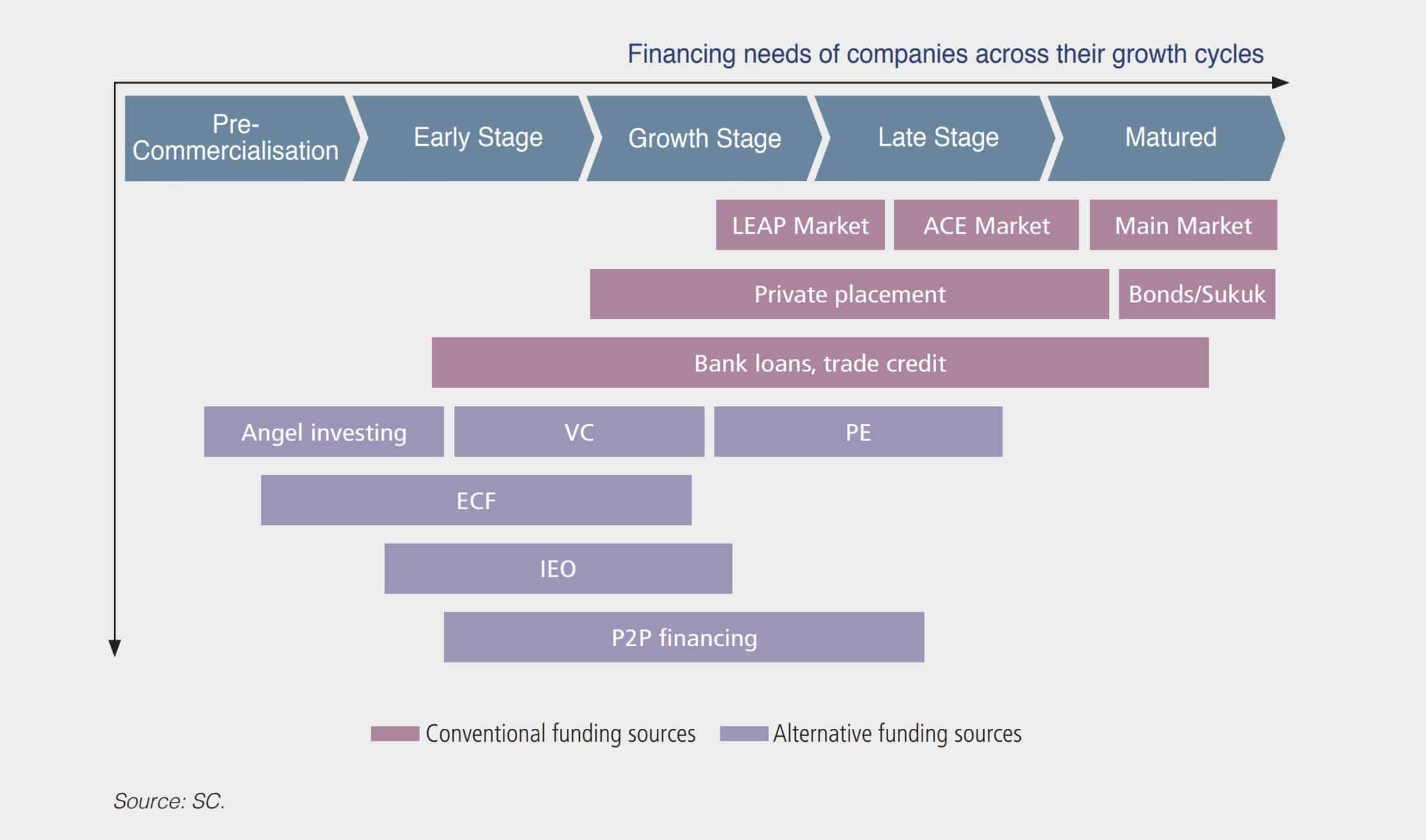
    Capital Market Masterplan (CMP3) strives to build a capital market that is relevant, efficient and diversified to enable the Malaysian economy to emerge fitter and stronger.

    The Securities Commission Malaysia (SC) launched the third Capital Market Masterplan (CMP3), which will serve as a strategic framework for the growth of Malaysia’s capital market over the next five years. It seeks to leverage on the strengths and potential of the Malaysian capital market to accelerate economic growth that is sustainable and inclusive.

    The CMP3 was unveiled at a virtual ceremony officiated by Finance Minister YB Senator Tengku Datuk Seri Utama Zafrul Tengku Abdul Aziz.

    Speaking at the launch, the Finance Minister said, “The CMP3 fits well into the nation’s aspirations as one of the key enablers that will pave the way for a wider population to participate in the nation’s growth by enabling more inclusive and accessible investment products and distribution channels. With the CMP3 as a strategic guide for our capital market over the next five years, I am confident that it will continue to play an important role in the Malaysian economy.”

    Datuk Syed Zaid Albar, Chairman of the SC said, “Malaysia is now at a critical juncture in our post-pandemic journey. It is imperative for the capital market to continue to support the economy as we transition into an inclusive and sustainable nation. The progress in the capital market cannot be measured solely by growth and size, as it also has to serve the underlying needs and aspirations of the country and its people.”

    The CMP3 takes into consideration global megatrends that will shape the recovery and growth of global and Malaysian economies as it steers the capital market towards three desired outcomes:

    i. Relevant to the development of the economy and its stakeholders;

    ii. Efficient in capital mobilisation and in achieving the desired regulatory outcomes; and

    iii. Diversified to create value for all participants.

    To achieve these desired outcomes, the CMP3 outlines six key development and regulatory thrusts that will collectively serve as pillars in developing strategic initiatives over the next five years.

    The first development thrust is facilitating fundraising for competitive businesses through a diverse market and intermediation ecosystem. The CMP3 also aims to empower all Malaysians to invest for their future and promote digital inclusion and protection for vulnerable investors. Furthermore, through the Sustainable and Responsible Investments (SRI) and Islamic Capital Market (ICM) pillars, the CMP3 aims to shape a stakeholder economy by mobilising more capital towards sustainable businesses.

    In tandem, the SC’s regulatory approach will also evolve in response to changing trends and market landscape. The CMP3 strives to embed greater shared accountability within the capital market, particularly corporate responsibility to stakeholders beyond short-term profitability. It also aims to achieve a more efficient regulatory outcome and greater efficiency in investor protection through swift, effective and targeted enforcement and supervision approaches. In addition, as the industry becomes more digital, the CMP3 envisions greater use of technology – both RegTech and SupTech – for greater efficiency and deeper insights.

    “It will be our collective responsibility to bring these strategic thrusts and desired outcomes to fruition, for us to achieve meaningful change. This is a shared journey for all of us to undertake. We will be stronger together,” concluded Datuk Syed Zaid.

    Over the last two decades, the Capital Market Masterplan 1 (2001 – 2010) and Capital Market Masterplan 2 (2011 – 2020) have successfully expanded the capital market while ensuring market stability and integrity. Malaysia now has a well-diversified capital market, with an equity market that has over 900 listed companies, a bond market that is the third largest in Asia, an Islamic capital market that is innovative and well-regarded globally, a derivatives market that leads in crude palm oil price discovery and a unit trust industry that is one of the largest in the region.

    In addition, governance strategies implemented during the previous masterplans have ensured robust regulatory oversight to enhance confidence in the integrity of Malaysia’s capital market. The Malaysian capital market regulatory framework is benchmarked and ranks highly internationally with regards to, amongst others, investor protection standards, corporate governance and enforcement capabilities.

    The CMP3 will build on this solid foundation to pave the way for the next stage of Malaysia’s market evolution and growth.

    To learn more about the CMP3, please visit https://www.sc.com.my/cmp3

  • AI : Automating Investing For A Better Future

    AI : Automating Investing For A Better Future

    Would you trust artificial intelligence to invest your hard-earned cash for you?

    Robo-advisors are fast gaining popularity in Malaysia, and while the concept of digital wealth management platforms have been around since 2008, it has taken much longer for such services to reach our shores.

    StashAway was the first robo-advisor to enter Malaysia in 2018, a year after it first launched in Singapore. Today, there are seven robo-advisors or digital investment managers (DIM) recognised by the Securities Commission Malaysia, suggesting that the industry is beginning to mature and grow exponentially. So what fuelled this sudden growth and how does it bode for the future of retail investors?

    A Time-Saving Option For Investors

    Contrary to a lot of investment products which tend to champion the rate of return, one of the main selling points of robo-advisors is the time that can be saved by using their services. The typical image of a full-time investor can often be one of multiple screens set up in a room, with hours spent analysing graphs and charts. In short, it is essentially a full-time job, especially for the most successful investors.

    “To build a case for investing, an individual would need time to learn the in’s and out’s of investing, which can be overwhelming for certain individuals,” says Wong Wai Ken, country manager, Malaysia of StashAway.

    “Robo-advisors offer individuals an alternative to this, as they are able to offer guidance to picking the right portfolio whilst charging much lower fees compared to traditional unit trusts. It is also a convenient manner to invest, as it gives investors a platform to get exposure to global markets.”

    With such convenience at investors’ fingertips, it appeals greatly to individuals that are keen to save time and have disposable income that they can invest, a notion that is backed by the demographics.

    “Our main demographic are white collar professionals in the financial services, tech, consulting, and oil and gas sectors,” shares Wong.

    “64% of our customers are the main financial decision-makers of their household, while 43% are male and 57% are female. The range of our demographic varies however, as StashAway is built for those focused on building long-term wealth.”

    And while a time-saving investment product may be thought of as appealing to the younger generation who are more tech savvy, it seems that seasoned working professionals are also coming round to the idea of alternative investments and are willing to explore. The time they save by leaving investing to algorithms can then be utilised elsewhere, be it into their careers, families or personal goals.

    Emotion-Free Investing

    One of the key tenets of robo-advisors is that it is not swayed by emotion, unlike humans who are often influenced by market movements in either direction. Regardless of market sentiment, the AI simple executes buy and sell orders as determined by its risk algorithms, which can provide peace of mind for more passive investors.

    [ You may read the full article HERE ]


  • How COVID-19 Affected Our Favoured Investment Themes

    How COVID-19 Affected Our Favoured Investment Themes

    Schroders identifies eight themes that could transform the world, but how are these being affected by the coronavirus?

    At the core of thematic investing at Schroders is the belief that the most powerful and persistent investment themes are those where human ingenuity ignites innovation to address imbalances in the world. These imbalances may be between populations and resources, or between supply and demand in individual industries.

    As we all know, necessity is the mother of invention. As coronavirus throws the whole world into turmoil, humanity’s ingenuity and powers of innovation are being mobilised to fight the disease, care for our populations and adapt our work and home lives to a new set of economic, political and social realities.

    Covid-19 is exacerbating existing tensions between populations and finite resources and dislocating supply and demand relationships in countless industries. Bearing this is mind, we examine the impact of this crisis on the eight investment themes that we think have the potential to transform the world we live in:

    1.HEALTHCARE INNOVATION

    “Crisis highlights importance of healthcare innovation”

    This pandemic underscores the critical societal importance of healthcare innovation as countries seek to prevent and cure disease while wrestling with ongoing demographic and budgetary challenges. Central to our investment thinking in this area is the belief that science and technology will be crucial as companies harness data, computing power and medical knowledge to meet these goals.

    We believe this will drive further breakthroughs in advanced therapies, medical technology, and healthcare services as well as in digital healthcare where technology in the form of ‘telehealth’ has shown its worth during this crisis as a means of making healthcare provision more responsive and efficient. As governments realise their vulnerability to pandemics, the drive to spend more on healthcare in the future can only intensify.

    2.SMART MANUFACTURING

    “Smart manufacturing essential as demand fluctuates”

    Amid the acute demand and supply shock experienced by the global economy, manufacturers are also having to innovate. We expect to see companies developing local supply lines alongside their existing global networks while investment in data analytics will be imperative as a means of understanding and managing volatile demand and disrupted procurement in the future.

    Investment will also take place in other smart manufacturing themes, including advanced manufacturing such as 3D printing, automation in the shape of robotics, sensors and controls, and advanced materials like lightweight composites as companies harness exciting innovations in hardware, software and materials to deliver greater agility.

    While manufacturers face undoubted short-term headwinds, the disruption caused by Covid-19 demonstrates the importance of manufacturing innovation to ensure responsiveness and productivity in both good times and bad

    3.CHANGING LIFESTYLE

    “E-commerce and well- being are growing lifestyle trends”

    […continue to read this full article HERE ]

  • Avoiding Investment SCAMS

    Avoiding Investment SCAMS

    What you should look out for and how to not fall for these malicious schemes.

    The economic impact brought on by Covid-19 has led many people into financial distress.

    Those looking for quick gains could easily fall into investment schemes that take advantage of their desperation and fears. Some of the victims might use all of their life savings or even obtain bank loans to participate in such schemes.

    For the perpetrators, their goal is simple: profit from the plight of their victims. While the stealing of private information and hard-earned savings are not new, such investment schemes are regularly updated and amended so as to portray a look and feel of legitimacy.

    People should educate themselves about the investments they are considering. Perhaps, start with being mindful about content and marketing scams. Here are some useful tips that help with identifying new scammer methods:

    TREND #1: MARKETING GURU SCAMS […]

    TREND #2: CRYPTOCURRENCY SCAMS […]

    TREND #3: VIRAL FAKE NEWS THAT CAN PHISH AND USE BEHAVIOURAL TRACKING […]

    [read the full article HERE ]


  • Best Reit In Malaysia. Which One Is Better? Is It Time To Invest Now?

    If you’ve done your research on how to invest in Malaysia, there’s a good chance that you’ve come across the usual investment products such as unit trusts, the stock market, investment properties and other well-championed financial tools.

    You may also have heard of the term REIT before, but it’s definitely not as popular as the other products. There’s a good chance you’ve had a relative or friend recommend hot stocks to you or recommend properties to invest in. But have you had the same people recommending Malaysian REITs to you? So what exactly does REIT stand for and what is this product that isn’t very well-known to the general public?

    What is a REIT?

    REIT stands for real estate investment trust and is a form of financial product that allows investors to get exposure to the real estate market. When it comes to investing in real estate, most people think of purchasing property to rent out to others, but real estate investment trusts offer many of the same benefits with less of the hassle.

    You simply purchase shares in the REIT and leave the headaches of rental negotiation and collection, tenant sourcing, and property maintenance to the professionals, while collecting dividends a few times a year!

    In fact, the average dividend distribution rate for some REITs even outpaces the rental yield of the average residential property, making it hard to argue against investing in REITs as opposed to purchasing your own property.

    kuala lumpur malaysia reits
    Fancy owning property in Kuala Lumpur without the hassle? REITs may be the answer.

    For some individuals, they may even prefer investing in REITs as there’s no need to monitor the stock exchange news, revenue growth of companies and other time-consuming research. At most, they’ll just have to read the quarterly or annual reports published by the REITs about the current performance and yields.

    There are currently 17 REITs listed on Bursa Malaysia for investors to buy shares in. REITs are considered a good investment for beginner investors as the initial entry price is low and dividends are consistently paid out at regular intervals. This also makes it a good defensive investment to hold in times of uncertainty.

    For example, let’s say a REIT is selling at a share price of RM0.53. This means you just need RM53 to start investing. However, a more expensive REIT may cost much more, with some even priced above RM6 per share. This means investors need at least RM600 to start investing in those premium REITs.

    So Which is the Best REIT in Malaysia?

    If we could tell you, we’d all be rich investors! There’s no hard and fast rule to determine which is the best REIT as it depends on what you’re looking for when investing, just like when doing research on the stock market. If you have a higher risk tolerance, you may want to focus on a REIT that is less diversified (eg. retail only) but if you prefer steady dividends, you may want to invest in a REIT spread across several industries.

    Here’s a quick and complete guide to the top 10 REITs in Malaysia to help you learn more about what’s available in the market:

    Top 10 Malaysia REITs

    1. KLCC REIT

    Unlike many other REITs, the KLCC REIT only has three properties in its portfolio but these are enough to make it the largest REIT in Malaysia based on market capitalisation. It includes the PETRONAS Twin Towers, Menara 3 PETRONAS and Menara ExxonMobil, all of which have a 100% office occupancy rate as of the end of 2020. The only exception is the retail section of Menara 3 PETRONAS, which has a still healthy occupancy rate of 93%.

    Another point to note is that it’s the most expensive REIT to own by far based on the prices on Bursa Malaysia. This can be attributed to its stable dividends and occupancy rates, making it an attractive option for investors on the lookout for REITs to invest in.

    2. IGB REIT     

    One of the most popular Malaysian REITs around, the IGB REIT is made up of only two shopping malls in its portfolio. However, these two malls are Mid Valley Megamall and The Gardens Mall in Kuala Lumpur, two of the most renowned shopping centres in Malaysia.

    According to its latest annual report, the occupancy rate of Mid Valley Megamall stands at 99% while The Gardens Mall is at 92%. To maintain such numbers throughout the Covid-19 pandemic is impressive, but it remains to be seen if it can maintain this with the numerous Movement Control Orders that have been implemented.

    3. Sunway REIT          

    Another of the highly popular Malaysian REITs, it comprises of properties under the Sunway Group in a variety of industries, including retail, hospitality, corporate offices and education. Its retail and office properties currently boast a healthy occupancy rate despite the pandemic, but unsurprisingly the hospitality properties are currently struggling with travel not allowed under the Movement Control Order.

    The diversity of the Sunway REIT could prove a crucial factor for potential investors, and could be a key mitigator against restrictions brought about by the pandemic. Whether reduced foot traffic will have a huge impact on the occupancy rates of its retail properties remain to be seen.

    4. Pavilion REIT          

    The Pavilion REIT may only have five properties in its portfolio, but they’re some of the most recognised landmarks in the Klang Valley, including Pavilion Mall, Pavilion Tower, Intermark Mall, Da Men Mall and Elite Pavilion Mall.

    With the properties covering the retail and corporate office sectors – two of Malaysia’s most dependable industries – it’s no surprise that its market capitalisation currently hovers over RM4 billion, demonstrating the trust that investors have in these evergreen industries. According to its latest annual report, the occupancy rate of most malls is above 80%, with only Da Men Mall lagging behind at 68.9%.

    5. Axis REIT    

    The Axis REIT is one of the largest in Malaysia based on market capitalisation, with the current figure standing at over RM2.8 billion! Its property portfolio current consists of buildings in various industries spread out across Peninsular Malaysia, including corporate offices, logistics warehousing, manufacturing, and retail.

    Thanks to its diversity, it’s well-placed to mitigate the effects of the Covid-19 pandemic, with its dividend distribution consistently above 5% in the years prior, only dropping to 4.31% in 2020. These encouraging numbers are a key reason why this is one of the most popular REITs in Malaysia.

    6. YTL Hospitality REIT

    As the name suggests, the YTL Hospitality REIT is in the hospitality industry with a slew of hotels and resorts across Malaysia in its portfolio. An interesting note for investors is that the YTL Hospitality REIT offers international exposure as it owns multiple properties in Niseko, Japan and three branches of the Marriott Hotel in Australia (Sydney, Brisbane, and Melbourne).

    It first acquired its Australian hospitality properties in 2012, while The Majestic Hotel Kuala Lumpur was taken over in 2017, making it the tenth property managed by the YTL Hospitality REIT in Malaysia. In 2018, it ventured to Japan with the acquisition of The Green Leaf Niseko Village. While the pandemic means that REITs focused on hospitality and tourism will take a hit in the short-term, it could potentially prove to be a shrewd investment in the long-term when borders are allowed to reopen and travellers can move around.

    7. Capitaland Malaysia Mall Trust REIT 

    One of the foremost Malaysian REITs, there are only five properties in the Capitaland Malaysia Mall Trust REIT, all of which are shopping malls. However, there are currently 1,146 leases within those five malls, meaning the properties have an occupancy rate of 85.1% at the time of writing.

    It also boasted healthy foot traffic of 32.4 million throughout 2020, making it a good option for those that are keen on healthy rental cash flow in their REIT portfolio. Whether it can maintain these numbers in the wake of the pandemic is another matter altogether. This could also bounce back in the long-term when lockdowns are eased and retail returns to normal, so investors with a higher risk appetite may consider purchasing shares while prices are lower.

    8. Sentral REIT

    The majority of SENTRAL REIT’s properties in its portfolio is in the corporate office sector, with the remainder in retail assets and car parks. In total, it manages over 2.1 million square feet of lettable areas across its properties, with an average occupancy rate of 93% as of December 2020.

    It remains to be seen if the Covid-19 pandemic and various MCOs imposed in Malaysia will affect its revenue in 2021, but its healthy office tenancy rate should help to maintain a sense of stability.

    9. Al-‘Aqar Healthcare REIT

    The Al-‘Aqar Healthcare REIT is mostly made up of properties in the healthcare sector, with a total of 20 hospitals and care centres spread across Peninsular Malaysia. However, it also diversifies into the education sector, with KPJ Healthcare University College, Nilai, and KPJ International College, Penang being the two higher education properties in its portfolio.

    Investors that want some exposure to foreign markets will be pleased to note that the Al-‘Aqar Healthcare REIT also manages a single retirement village property located in Australia. This offers investors potential foreign exposure, which could be key to mitigating risk.

    10. UOA REIT

    With the six properties in its portfolio all comprised of corporate offices, it’s clear which sector the UOA REIT focuses on. According to its latest publicly available annual report, the average occupancy rate is over 90% as of December 2019, and it is probably safe to assume that this number has dropped since the pandemic began.

    However, its Q1 2021 report highlights the acquisition of the UOA Corporate Tower as a reason for the increase in gross rental income, which could be attractive for potential investors once the pandemic is over.

    This article is provided for general information purposes only, and is not intended to be or constitutes financial advice from Smart Investor or our affiliates. We do not represent or claim that content in this article is accurate, complete or up to date. Data taken from bursamalaysia.com, klse.i3investor.com, and respective REIT companies.

    Last updated July 22, 2021.