An ‘easy investment’ can be a bit of a misnomer. It might be more accurate to regard them as ‘assessable points of entry’ into investing. What makes most of these investments ‘easy’ are largely their low-risk points.
But the first thing you should know as you start your investment journey, is that there is no such thing as low-risk with high-rewards. Neither does choosing to opt for something high-risk so that you can automatically reap high rewards. Whichever choice you make, any type of investment requires additional thought, research and (some) professional advice.
Essentially, an investment is the decision to park your money at a spot with the intention that placing it there will grow your money, preferably in value and quicker than inflation. In Malaysia, here are five options you can explore, especially if you are completely at the beginning of your investment journey.
1. Fixed Deposits
This is usually the first point of entry for most people as there is almost no risk and promises guaranteed returns; and also, no broker fees. A fixed deposit means parking your money in this account for a set amount of time, and upon maturity, you’ll receive returns calculated on the interest rates.
The tenure of a fixed deposit ranges from short-term (one month) to long-term (five months). Usually, the longer the term, the higher the interest rate. However, if you withdraw your deposit before the duration and maturity is up, it will result in less returns.
2. Unit Trusts
A unit trust is a portfolio of assets made up of different investments which include shares (ETFs, REITs, etc), bonds, gold and others. You, as an investor would then be buying a ‘unit’ of this portfolio. This would be a long-term investment and returns come in the form of dividends or any increase in the value of investments.
Unit trust investments usually earn and have higher returns than fixed deposits, but are also riskier. The point of entry for this investment is easy as it does not require a lot of capital and can be tailored to your risk appetite. The risk is dependent on the performance of the investments in the portfolio and the Net Asset Value (NAV) of the unit when you purchase it. Like most investments, other things to note is that this will incur transaction and management fees and sales charges.
3. Investment-Linked Insurance Plans
Insurance plans usually range from the coverage you are looking for. For those that are investment-linked, a portion of the premiums paid for your insurance plan is invested, while the remainder covers the usual insurance premium.
The pull for this investment is usually its flexibility, and its dual service as insurance. If you are paying for insurance, you might as well set aside an amount for investment. This, however, does not guarantee returns like the first two investment options, as it is still dependent on the fund’s performance in the market.
4. Robo-Advisor
If you do not know where to start when it comes to the stock market, and if you are overwhelmed by the myriad of investment vehicles there are out there, robo-advisors are now a popular mode of entry for investing. The appeal of a robo-advisor is that it utilises data and algorithms to automate your investments, to ensure returns. It also requires a low point of entry and can be tweaked to suit your risk profile.
They also do away with the traditional need to lock in funds for a set amount of time. Its user-friendliness is a positive for beginner investors, and would be a good place to learn how investing works and to understand your personal risk profile and appetite, before moving onto more hands-on and advanced investing.
5. Private Retirement Scheme (PRS)
Best known as a privatised alternative to the government-run EPF (Employee Pension Fund), PRS provides flexibility and also has a variety of retirement funds to invest in. Managed by asset management companies, PRS offers multiple schemes and you have the option to invest in more than one fund.
The different funds are available based on risk appetite, age eligibility and asset allocation breakdown of investment. Another plus point of investing in PRS is a tax relief of RM3,000. However, funds in PRS cannot be withdrawn at any time, much like EPF. It is your retirement fund, after all. But if you are going to invest in saving for your retirement, the best your money can do is make more money while you do too.
Most investors swear by the saying “Never put all your eggs in one basket”. They usually invest in various types of investment vehicles by putting more money into safer types of investments rather than the riskier ones. Previously, most Malaysians chose shares, unit trusts, real estates, fixed deposits and bonds as the main vehicle to grow their money.
Over the last few years, a range of new investment vehicles have emerged in Malaysia, namely, cryptocurrencies, peer-to-peer (P2P) financing, robo-advisors and equity crowdfunding.
As the saying goes, there are two things you cannot avoid in life – death and taxes. This article aims to explore the tax concerns when investing into certain types of investment vehicles in Malaysia, with a greater focus on these popular, emerging investment vehicles:
1. Shares
Over the shoulder view of and stock broker trading online while accepting orders by phone. Multiple computer screens ful of charts and data analyses in background.
When investing in shares or stocks, investors may focus on investing either for dividend yields or capital gains. Any capital gains on shares are not subject to tax under the Malaysian Income Tax Act, 1967 (ITA).
However, if the activity of trading in shares is frequent enough, the Malaysian Inland Revenue Board (IRB) may treat the gain as a revenue gain which will be taxable. Alternatively, dividends distributed by a company is taxed at the company’s level as a final tax. Hence, dividend yields are exempted from tax in the hands of the shareholders.
2. Unit Trusts
The return on investment for unit trust holders is usually in the form of income distribution or capital appreciation which is derived from the pool of assets supporting the unit trust fund. Generally, unit holders are subject to tax on their share of the total taxable income of the unit trust.
The distribution received by the unit holders are net of tax. In this regard, unit holders are advised to check their dividend statements to identify the Section 110 tax credit. Unit holders are entitled to utilise this tax credit to offset against any income tax payable by them. In the event the tax credit exceeds the tax liability of the unit holder, the excess will be refunded to the unit holders.
3. Equity Crowdfunding
Happy young Asia businessmen and businesswomen meeting brainstorming some new ideas about project to his partner working together planning success strategy enjoy teamwork in small modern home office.
Start-ups and small-to-medium enterprises often use equity crowdfunding to raise funds from the public. The term “angel investor” is usually related to equity crowdfunding. An angel investor is generally a high net-worth individual who invests in start-ups.
In Malaysia, angel investors are accorded tax incentives in terms of a tax exemption of up to RM500,000 per year in the second year of assessment following the year of assessment in which an investment is made. Prospective angel investors are required to apply to the Malaysian Business Angel Network (MBAN) to ensure that the eligibility criteria are met and to accredit them as angel investors (see Public Ruling 12/2020, IRB).
4. Cryptocurrencies
The IRB has mentioned that all cryptocurrency transactions will fall within the ambit of the ITA. The IRB referred to Section 3 of the ITA where any gains from trading in cryptocurrencies will be taxed if it is revenue in nature for the investor.
Therefore, gains made by occasional trading in cryptocurrencies should be viewed as capital gains and under the local tax law, capital gains are not taxed.
With that said, the Malaysian tax authorities have recently updated its Guideline on Taxation of Electronic Commerce Transactions in 2019 to include digital currency under its scope of charge. This now effectively allows the IRB to collect revenues generated by cryptocurrency trading.
With the absence of any provisions in the Malaysian tax law on taxing virtual assets, investors involved in digital currency activities are strongly advised to keep their transaction records and any relevant documents for seven years in case of a tax audit.
5. P2P Financing
Millennial Asia businessmen and businesswomen having conference video call meeting brainstorming ideas about new project colleagues working together planning strategy enjoy teamwork in modern office.
P2P financing is akin to traditional borrowing with the exception of a financial intermediary such as a bank or financial institution. Therefore, the subject of concern in P2P financing will be the interest earned. So will the interest income be subject to tax? Yes, the interest earned is taxable for both Malaysian resident and non-resident investors.
What is the tax treatment on your P2P interest earned? While Malaysian resident investors will need to declare the interest earned as interest in their annual income tax returns, the P2P financing operators will directly deduct 15% withholding tax at source for non-resident investors.
6. Robo-Advisors
Certain investors prefer to simply let a third party handle the investment aspect of their money. This is possible with the existence of robo-advisory platforms which use algorithms to allow an investor’s portfolio management to be automated.
Robo-advisor platforms typically invest in exchange traded funds (ETFs) which are a compilation of stocks, bonds and other investments. Furthermore, most robo-advisor platforms in Malaysia tend to focus on foreign ETFs.
Investors should be aware that the dividend yields from trading in foreign ETFs may be subject to withholding tax depending on the jurisdiction of the ETF. The distributions received from the foreign ETFs will be exempted from tax in Malaysia as it is considered a foreign source of income.
About the Author
Shanthini Parama Dorai is a Tax Senior Manager at Crowe Malaysia PLT. Crowe Malaysia PLT is a member firm of the Crowe Global network of independent accounting and advisory services firms. She can be contacted at shanthini.dorai@crowe.my.
In the past two years, we have seen the stellar ascent of environmental, social and governance (ESG) factors in the investment realm. Formerly a niche term popular amongst sophisticated and institutional investors, ESG investing has now found itself pushed into the mainstream and embedded firmly into public consciousness.
Global investors have become more aware about the broad sustainability challenges that we face in the world today as the pandemic exposes the wider rifts in society. However, a lack of standardisation coupled with overuse of the term has created a lot of confusion about what ESG actually entails.
Here is a closer look at ESG investing (sometimes interchangeably referred to as sustainable investing) and how investors can get started.
Definition of ESG
As alluded earlier, ESG are a set of non-financial factors that investors or fund managers use to assess the sustainability of a company through three distinct lenses namely environment, social and governance.
Environmental factors consider the company’s stewardship of natural resources including conservation of the environment as well as reducing its carbon footprint.
Social factors examines the company’s relationship and treatment of all its stakeholders including suppliers, customers, staff and the wider community it operates in.
Governance deals with the company’s set of policies and procedures related to its corporate governance to ensure clear lines of accountability between shareholder and management. These include safeguards to avoid conflict of interests such as the presence of independent boards as well an audit or remuneration committee.
By evaluating all three factors, investors can then screen out potential investments especially if they pose a material impact to the company’s operations and its financials.
Such information can be typically gleaned through the company’s annual report where enhanced disclosure guidelines require companies to provide information about its key sustainability indicators such as environmental and social footprint.
Steps to Building an ESG Portfolio
The first challenge for investors looking to dip their toes in the ESG arena is finding out where to begin. Given how large the investment universe has grown, it is important to take a methodical approach and establish several things first at the outset.
Step 1: Identify Investment Objective and Intent
The first question you need to ask is your investment intent and objective in wanting to incorporate an ESG strategy in your portfolio. There may be some introspection required to unpack your motivations to understand the specific causes or issues that you are prepared to invest/not invest in.
It is an important step because this would determine how deep you would go in this specific route:
Is this a strategy to add diversification and reduce asset correlation?
Are you looking to gain exposure to specific themes like green energy?
Are there certain causes that you deeply believe in and want to include in your portfolio through purpose-driven solutions?
Alternatively, do you want to embrace ESG wholeheartedly as an investment philosophy and want a pure ESG portfolio?
All investors have different goals and objectives which would in turn influence their degree of involvement in ESG.
On one end of the spectrum, investors may not be ESG-aware and does not consider ESG factors at all in their investment decisions. On the other end, investors are fully on-board with ESG and want it fully ingrained in their portfolio. More often than not, they are situated somewhere in between.
Wherever you find yourself, it is okay to pick a point to start and then move along the spectrum as and when you feel comfortable.
Step 2: Which Approach Suits You?
Hand of human holding green earth ESG icon for Environment Social and Governance, World sustainable environment concept.
Once you have uncovered your motivation to get started in ESG, it is now time to explore which approach suits you best.
Very broadly, ESG funds are grouped according to the following categories depending on the strategy it employs:
Negative screening is an exclusion strategy where companies with poor ESG scores are sieved through and ruled out from the portfolio’s investable universe. Common exclusions include those companies with a poor track record in environmental management or with a history of labour malpractices.
Values-based funds such as Shariah-compliant funds also employ a negative screen to filter out companies that to not adhere to the principles of the faith such as gambling or alcohol.
Positive screening seeks out companies with a strong ESG score to be included in the portfolio’s holdings. Companies are often benchmarked against their peers or the industry’s best practices in choosing the cream of the crop. Companies that are actively committed to improving their ESG scores may also be considered by the fund manager.
Thematic funds often use a positive screen to choose best-in-class companies involved in specific investment themes like decarbonisation or climate change.
However, both positive and negative screening are typically regarded as two sides of the same coin and are used concurrently by fund managers.
ESG integration is the inclusion of material ESG factors on top of traditional financial metrics in the investment decision making process. For example, a company’s emission data are evaluated alongside other financial measures to assess potential risks or opportunities. A more encompassing approach, ESG integration gathers data from multiple sources with an aim to deliver better risk-adjusted returns.
This approach is often used for funds which may not even have an explicit sustainability mandate or objective such as traditional equity or bond funds. This is because more investors realise that ESG integration offers enhanced risk management by identifying the mid-to-long term risks that could hurt the stock’s fundamentals. For instance, companies that have poor labour practices face increased risk of lawsuits, customer order cancellations as well as reputational damage.
Impact investing refers to funds or investment solutions designed to produce specific outcomes that are beneficial to society or the environment, alongside financial returns. It has a more explicit intent to generate social or environmental returns such as development of clean energy or microfinancing. Types of investments include green bonds or sustainability-linked bonds which are earmarked to finance specific projects or initiatives.
Depending on your investment objective, either one or a combination of the above approaches might suit your portfolio needs. There is no one-size-fits-all approach when it comes to ESG investing as the requirement of each portfolio hinges on very personal choices and values. It is all a matter of aligning the outcomes you want and your investment objectives.
Step 3: Make a Plan to Invest
Mutual fund investors can then integrate ESG into their portfolios either by:
introducing ESG specific themed funds; or
integrating ESG factors into their investment analysis for all funds.
With a growing array of ESG funds spanning different strategies and asset classes, there is plenty to choose from. Malaysian investors can find a list of sustainable and responsible Investment (SRI) funds on the Securities Commission Malaysia website.
Like picking any fund to invest, it is crucial that investors understand the fund’s objective and strategy by reading up its prospectus and product highlight sheet. Be on the lookout for greenwashing red flags in funds that make unwarranted or ambiguous claims.
Ensure that you actually understand what the fund aims to do and its strategy in achieving those outcomes. Is it to avoid certain industries or companies? Does it aim to make an impact in a sector?
Investors should also ensure the ESG characteristics of the holdings are also consistent with the fund’s claims. Traditional tools and resources in fund selection can help in ensuring that you’re picking the right fund for you by looking at its ESG rating and profile of its holdings.
Why ESG?
ESG, Environmental, Social and Governance printed in blue with two rubber stamps over white background. Corporate responsibility concept.
ESG or sustainable investing provides a platform for investors to demonstrate their personal values and play a role in financing assets that are contributing positively to environmental and social causes.
Besides that, ESG investing also offers several distinct advantages to investors in terms of enhanced risk management as well as a differentiated driver of returns. Companies with higher ESG scores could mean more ethical business practices that leads to improved stakeholder engagement as well as staying on the right side of governments/regulators.
In recent times, we have seen the share price of companies with poor ESG practices being punished as global fund managers shun these companies. Many see ESG investing as a structural trend that will persist as long as social and environmental imbalances exist and there is a desire to address these gaps.
Invest with Purpose
The myth that investors have to pick between investing according to their values and sacrificing performance is an old one. Studies have shown that over the long-term, ESG funds can lead to improved returns and lower volatility overall. So, investors don’t have to worry about making trade-offs.
With a variety of solutions available in the market, investors can invest with purpose to reap rewards that go beyond just financial returns.
About the Author
Lee Sheung Un is a Communications Officer at Affin Hwang Asset Management. A millennial, he is still finding that balance between wealth, freedom and purpose. Views expressed are his own.
The world is recovering from the pandemic and global economy is poised to be fueled by the normalisation of economic activity globally. Over here in Malaysia, we just opened up our international borders and is seen as a good sign for our economic growth.
As a smart investor, we need to be aware of the market trends that are happening all around us.
Let’s hear from Germaine Share who is the Director of Manager Research at Morningstar, on the 3 market trends that an investor should look out for in 2022.
1. ESG (Environmental, Social, and Governance)
Environmental, social, and governance (ESG) investment Organizational growth. Wooden cube with symbol of esg concept
We continued to see growing interests in sustainable investing as investors become increasingly aware of ESG issues, and some of them believe it would lead to better investment outcomes.
Global sustainable fund assets grew to US$2.74 trillion as of 2021-end, up 53% from a year ago, according to Morningstar’s quarterly sustainable fund flows report. There are now almost 6,000 sustainable funds globally. Inflows grew as well, driven by continued investor interest in environmental, social, and governance issues and by regulation.
In Malaysia, despite a small base, locally domiciled ESG funds expanded by 50% over 2021 to US$877.1 billion. There were record 13 sustainable fund launches in 2021, compared to just two launches a year earlier. We see the rising number of ESG fund launches not unique to Malaysia, but a global trend on the back of greater ESG awareness amongst investors with the importance of climate change agenda championed by various governments.
As sustainable investing becomes more mainstream, we see more regulators in Asia launching practical guidelines to help avoid greenwashing and importantly, to better inform investors when they consider investing in ESG funds.
2. Inflation
For many years, inflation has not been a major concern for investors given the low interest rates and decent market returns. This year, the risk is real. Inflation is at 30-year highs in the US. Higher inflation tends to lead to higher interest rates, which hurt corporate profits and cause losses for bond holders.
Equity investors’ total return can also be in jeopardy: their dividend payments are worth less, and their earnings can suffer from higher input costs, particularly if they are not in a position to pass along higher prices to their consumers. As earnings come under pressure, so can their ability to generate inflation-beating returns.
There are many assets suited for inflation protection, such as short-duration bonds or cash, high-yield bonds or inflation-protected bonds, or stocks that are either positively correlated to inflation, for example energy stocks, or high-quality names with high degrees of pricing power that can pass along rising input costs.
3. Yield
Coin on wooden table in front of green bokeh background. coins a concept of investment and saving moneys.
With negative yields on government bonds (after adjusting for inflation) across developed government-bond markets and corporate credit spreads at multi-year lows, the global fixed-income universe is looking at paltry returns.
In comparison, Asian and emerging market bonds continue to offer a reasonable yield for income-seeking investors who are comfortable with taking more risk.
About the author
Germaine Share is the Director of Manager Research at Morningstar
Congratulations to Kenanga Investors Berhad for winning the Best Malaysia Large-Cap Equity Fund. In a tough market last year, Kenanga manages to put in a stellar performance and outperform all others.
We spoke to Lee Sook Yee, Chief Investment Officer of Kenanga Investors Berhad to share more about their secret for success.
Key Factors Behind The Success Of This Fund?
We are honoured to have received this award from Morningstar. This award reflects our team’s dedication and perseverance to continuously go above and beyond for our clients.
As a bottom up stock picker, our investment is underpinned by comprehensive fundamental research combined with a relative value approach to create superior risk adjusted returns.
In formulating a company’s investment thesis, we usually run channel checks on the company’s competitive advantages and also attempt to model out the growth drivers. Some of the key areas we look at include management quality, sustainable business model, industry dynamics and balance sheet strength.
By consistently applying this strategy, our funds have achieved continuously outperforming returns throughout the last 3,5 and 10 years.
Strategies To Maximise The Chance Of Success For The Fund
Half recovering from the pandemic-stricken crisis, 2021 presented both challenges and opportunities. One of the biggest challenges was having to grapple with the lingering impact of the pandemic, as persistent waves of Covid resurgence triggered intermittent lockdowns and containment measures, which when happened pulled the markets down with them.
Although such corrections became less intense as vaccination gathered pace, new sources of fear took shape in the form of worries over rising inflationary pressure attributed to severe supply chain disruption, talent and component shortage, power rationing which impacted our investments in varying degree.
We navigated through these speed bumps by constantly reviewing our investment theses to make sure they stayed relevant, identified the “relative winners” from sectors which were deemed resilient, consistently-growing and reasonably priced. Tech sector was one key sector which ticked most boxes and contributed immensely to our outperformance last year.
Can We Expect New Investment Products By Kenanga Investors?
We look forward to expanding our Kenanga Sustainability Series, a suite of multi-asset class products rooted in sustainability considerations to advance long-term financial growth for investors and to generate social and financial value for surrounding communities, in 2022. We introduced the first fund under this series in 2021 which was the Kenanga Sustainability Series: Frontier Fund. It provides investors with a range of opportunities in boosting not only the future development curve through the reduction of carbon emissions, new medical discoveries that may propel patient empowerment, and greater societal benefits while driving sustainable returns.
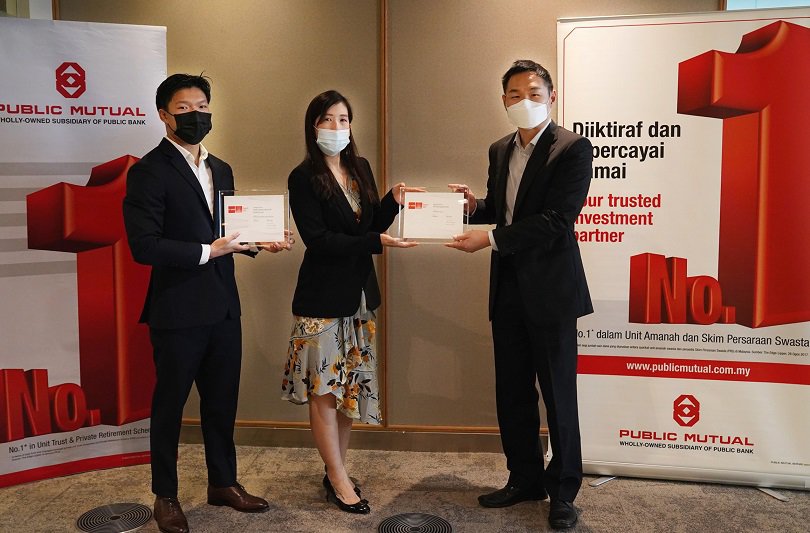
Congratulations to Public Mutual for another double win for the second successive year. It is no easy feat to achieve, considering the tough market in 2021.
On hand to share more insights on their success, we spoke to Chiang Kang Pey, Deputy Chief Executive Officer of Public Mutual.
Key Factors Behind These Two Wins?
Our key strategy behind both wins is our adherence to a fundamental investment approach of focusing on companies with sustained earnings, strong financial positions and proven track records. Despite the elevated levels of market volatility in 2021, the portfolios of our winning funds – PB Asia Equity Fund (PBAEF) and Public Islamic Alpha-40 Growth Fund (PIA40GF) – were rebalanced accordingly in line with the changing trends in the respective markets, sectors and industries that the funds were invested in.
Steps Taken For Best Chance Of Continued Growth?
In 2021, PBAEF, which focuses its investments in the Asian markets, locked in profits from selected growth stocks and positioned in semiconductor-related stocks within the Asian region which benefitted from the shortage of chips amid supply chain disruptions and China’s localisation trend. In addition, the fund’s performance was lifted by its holdings of North Asian technology and electric vehicle-related stocks which ride on the structural trends of digitalisation and the increased focus on cleaner energy solutions.
Meanwhile, PIA40GF, which focuses its investments in the domestic market, continued to capitalise on technology and basic materials stocks which stood to benefit from the long-term digitalisation trend as well as the strength in commodity prices. The fund also locked in gains from selected technology stocks at the end of 2021 amid concerns over the potential rise in global interest rates.
To ensure the long-term growth of our funds, we constantly assess and monitor the long-term prospects of our investee companies’ business models and strategies – including their pricing power, market dominance, growth potential as well as the competitive landscape. These strategies have proven to work well for the performance of our funds.
Strategies That Have Shifted In Line With Market Forces?
Despite the decline in the severity of symptoms for the newer Covid-19 Omicron variant, the evolving nature of this virus could mean that potentially new and unpredictable variants may emerge. Nevertheless, barring unforeseen circumstances, the global economy is anticipated to continue on its path towards recovery amid the easing of movement restrictions and the re-opening of international borders as governments increasingly transition towards policies to ‘live with Covid’.
Tightening monetary policies by global central banks, global supply chain disruptions as well as sanctions triggered by the current geopolitical conflict between Russia and Ukraine have also led to elevated levels of volatility in global financial markets this year.
That said, the domestic and Asian markets – which PIA40GF and PBAEF focus their investments on – are less exposed to the geopolitical risks in Europe. As such, both funds will continue to invest in selected recovery plays within the local and regional markets such as the financial, energy and commodities sectors, as well as selected consumer discretionary and leisure stocks.
The funds will also continue to position for the long-term growth potential of the technology sector which will benefit from the increasing adoption of digital products and services as well as the rise of automation, online shopping and hybrid/ remote working arrangements.
Upcoming Trends For Investors?
Global markets may continue to experience volatility and uncertainties in the short term amid the normalisation of monetary policies by major central banks in response to elevated inflation levels, as well as the current Russia-Ukraine conflict which has exacerbated global supply chain disruptions and inflationary pressures. Meanwhile, the performance of the China stock market will depend on whether the Chinese government will continue to implement policies on sectors such as technology and real estate which may impact their profitability or earnings visibility.
In addition to the recovery plays which will benefit from the re-opening of international borders and the lifting of social-distancing restrictions, investors are expected to focus on sectors that are more defensive such as utilities and consumer staples amidst the uncertainty surrounding the global economic outlook. Sectors that will benefit from the impact of high inflation such as the commodity, basic materials and energy sectors which have staged a strong performance compared to the broader markets thus far this year may also continue to outperform if inflationary pressures remain elevated.
Over the longer term, sectors that possess structural growth prospects such as those driven by the trends of digitalisation and the push towards greener energy solutions are also expected to do well. The rising adoption of cloud computing, artificial intelligence, cybersecurity, e-commerce, electric vehicles and lower-carbon solutions is expected to drive sustainable earnings growth for companies in these segments in the years ahead. The valuations of such growth-oriented stocks have also fallen on profit-taking activities amid higher bond yields; thus providing buying opportunities for investors who have a longer-term investment horizon.
Plans And Strategies For 2022?
We will remain committed to our fundamental-based approach and long-term investment strategies which have served us well in delivering consistent returns to our unitholders over the long term. Given the volatile markets amid uncertainties surrounding the Russia-Ukraine conflict and its impact on global growth and inflation, we have adopted a portfolio comprising growth and value stocks.
We will continue to monitor developments in the global markets so as to re-deploy our funds’ cash holdings when opportunities arise.
KUALA LUMPUR, 7 April 2022 — Morningstar Asia Limited, a subsidiary of Morningstar, Inc. (NASDAQ: MORN), a leading provider of independent investment research, has announced the winning funds for its 2022 Morningstar Fund Awards Malaysia.
The annual Morningstar Malaysia Fund Awards recognise retail funds that have added the most value for investors within the context of their relevant peer group in 2021 and over longer time periods. Morningstar selects the winners using a quantitative methodology, along with a qualitative overlay. Weightings to one-, three-, and five-year risk-adjusted performance are factored into the methodology.
Wing Chan, Morningstar’s Head of Manager Research, Europe and Asia Pacific, remarked: “Our 2022 winners have proven themselves to be excellent stewards of investors’ capital. They have demonstrated their abilities to navigate through market volatility and deliver excellent returns over the longer term. We applaud all winners for their outstanding achievements.”
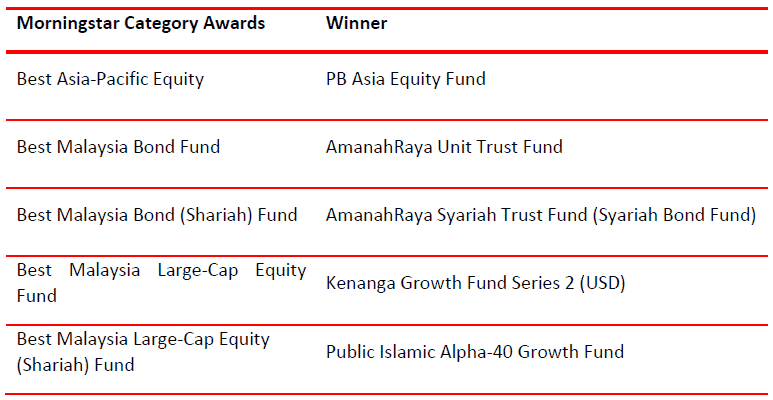
The 2022 Morningstar Awards winners in Malaysia are:
Methodology
The Morningstar fund category awards are based on Morningstar fund data as of 31 December 2021. The awards methodology emphasises the one-year period, but funds must also have delivered strong three- and five-year returns after adjusting for risk within the awards peer groups in order to obtain an award. In selecting winners, fund returns are adjusted for risk using the Morningstar Risk, a measure which imposes a higher penalty for downside variation in a fund’s return than it does for upside volatility. For the full methodology, please click here. The full methodology for the awards is available here.
Morningstar Asia Limited is a subsidiary of Morningstar, Inc., a leading provider of independent investment research in North America, Europe, Australia, and Asia. The Company offers an extensive line of products and services for individual investors, financial advisors, asset managers and owners, retirement plan providers and sponsors, and institutional investors in the debt and private capital markets. Morningstar provides data and research insights on a wide range of investment offerings, including managed investment products, publicly listed companies, private capital markets, debt securities, and real-time global market data. Morningstar also offers investment management services through its investment advisory subsidiaries, with approximately US$265 billion in assets under advisement and management as of Dec, 31. 2021. The Company has operations in 29 markets.
If you have paid any attention to investing news over the past year, you would almost certainly have come across the term NFT (non-fungible token). Often linked to digital art, it is responsible for some of last year’s biggest investment headlines, with jaw-dropping amounts being spent on them.
But what exactly is an NFT?
In A Nutshell
As the phrase “non-fungible” suggests, it is a one-of-a-kind, irreplaceable token that acknowledges a person’s ownership over a digital asset. Think of it as a digital certificate that recognises ownership, similar to a certificate of authenticity for valuable artwork or timepieces. Although NFTs are commonly linked to art, it can be used to prove ownership of any digital assets such as memes, songs or even tweets!
The assets being sold can be freely viewed, or even saved to their own devices, by anyone, which is often what detractors point at when denouncing NFTs. However, just like how there are knockoff versions of famous art pieces, there is only ever one original, which is where it gets its perceived value.
Like cryptocurrencies, owners of assets are documented on a publicly shared ledger, also known as the blockchain, that cannot be tampered with or altered by any single individual or party. Any changes to this ledger must be acknowledged and ratified by all members of the blockchain before being made permanent, making it close to impossible to tamper with.
The most popular platform to buy or list NFTs is OpenSea but there is a raft of competing marketplaces that are all aiming to carve their own slice of a very lucrative pie. Local NFT marketplaces have also sprung up, with Pentas.io being the most prominent.
Do They Have Any Use?
Metaverse and Blockchain Technology Concepts. Person with an Experiences of Metaverse Virtual World via Smart Phone. Futuristic Tone. Conceptual Photo
Although copies can be made of these digital artworks (memes, tweets, music etc.), the NFT is the sole acknowledgement of who is the “owner” of the piece. Art has long been used as a store of value, and this easily extends to digital art, with the value stored in the certificate of ownership.
But whether this has any tangible value depends solely on the market. Many are of the belief that NFTs are in a bubble, including artists themselves.
Digital artist Beeple, also known as Mike Winkelmann, holds the current record for the most expensive NFT, with his piece EVERYDAYS: THE FIRST 5000 DAYS, auctioned off by Christie’sforUS$69,346,250, but he thinks that NFTs are a bubble waiting to burst.
Speaking to the New York Times Sway podcast last year, he said “This stuff will absolutely go to zero.”
He believes the key aspect of NFTs is proving ownership which is why popular pieces trade for millions.
“The more something is widely shared, the more popular it becomes, the more valuable it will become.”
“When you go to The Louvre and take a picture of the Mona Lisa and share it on the internet no one is like ‘Wow, I just devalued the Mona Lisa.’”
However, he does believe NFTs serve a purpose and that an eventual bubble burst will simply remove the deadweight, much like how the dotcom bubble did not cripple the internet’s functionality and its now ubiquitous influence on the world.
Money-Spinning Endeavours
Jack Dorsey, the former CEO of Twitter, sold his first ever tweet on the platform as an NFT for just over 1,630 ETH or US$2.9 million to Malaysian businessman Sina Estavi, the CEO of Bridge Oracle. Famous memes have also been put up for sale for life-changing amounts, with originators eager to strike while the iron is hot.
The trend is already being jumped on by local artists as well. Graffiti artist Abdul Hafiz Abdul Rahman, better known as Katun, sold two NFT collections in August 2021, titled Apes Stand Strong, with a limit of 50 pieces (1 ETH each) and Mystical Fruits, an open edition that sold 776 pieces at 0.1 ETH each. This raised a total of 127.6 ETH (over RM1.6 million at the time, now worth over RM2.1 million at the time of writing).
Another well-known local artist, Red Hong Yi, sold her Doge to the Moon NFT for 36.3 ETH (approx. RM325,000 at the time, now worth RM620,000 at the time of writing) in July 2021, while local rapper Namewee made 209 ETH (approx. RM3.5 million) from selling 100 NFTs of his song Go NFT in November.
Many buyers of NFTs also immediately list it at a higher price in a bid to make a quick profit. Whether these prove to be prudent investments or not, it is clear that there is a demand for NFTs, either for speculative purposes or as stores of wealth.
What is less certain though is whether NFTs are a bubble or if it will ever become a popular method of investment. Whatever happens, digital natives are making moves and it is up to the rest of the world to get up to speed or possibly be left behind.
NFTs In Numbers To Date
Number of NFTs sold: 19,390,873
Total sales of NFTs: US$13.95 billion
Average value per sale: US$719.77
Primary sales: 11,244,153
Secondary sales: 8,146,720
Active market wallets: 1,510,331
Most popular project (volume):CryptoPunks – US$1.8 billion
Most expensive NFT sold (ETH): CryptoPunks (Ͼ #3100) – 4,200 ETH
Most expensive NFT sold (US$): EVERYDAYS: THE FIRST 5000 DAYS – Beeple (aka Mike Winkelmann) – US$69,346,250
Planning to do some property investing after the pandemic? Here are some factors to help you find rewarding deals.
Real estate investment is one of the most preferred forms of medium to long-term investment, especially for Asians. It increases in value and generates ongoing passive income over time.
Despite the Covid-19 pandemic that took a toll on Malaysia’s property industry, experts say the property market will likely recover in 2022 with renewed consumer confidence and the expected recovery in Malaysia’s overall economy. They anticipate that property investing will get better in the first half of this year before it begins to pick up in the second half.
“All signs are pointing towards 2022 being a recovery year for the property market in Malaysia. It is predicted to be stable in the first half with gradual improvement in the second half. While many are adopting a wait and see approach, landed properties in the Klang Valley are hitting new highs each month,” says Chan Ai Cheng, President of the Malaysian Institute of Estate Agents.
4 Factors To Consider In Property Investing
With the attractive low interest rates and property prices on an upward cycle, it seems like a good time to snap up some good properties. However, you do need to have a sound knowledge before venturing into the world of investment properties.
According to Chan, some of the factors to consider when investing in a property in Malaysia include:
1. Purpose Of Property Investing
Are you looking to make money through rental income or property appreciation? What you plan to do with the property makes a difference in deciding the type of property you need to buy. It also helps you narrow down the available options to find one that is better suited for your needs.
2. Location And Neighbourhood
Location is one of the most crucial factors to consider when investing in property. Other factors include accessibility and connectivity, amenities, plans for future development, proximity to transportation network, and how safe is the location from natural calamities like floods or landslides.
“For me, I look for properties within easy reach of areas I am familiar with. There may well be opportunities in other localities, but it is always best to invest in locations you know best. You would have better knowledge of the neighbourhood, past prices, and potential for the area compared with buying on one’s hunch,” she explains.
3. Type Of Property
The main three types of property investing include residential, commercial, and industrial.
“In Malaysia, most investors buy residential properties with a minority investing into commercial and industrial properties,” Chan says.
Popular residential property options include landed properties like terraced houses, semi-detached houses, or bungalows. For non-landed properties, they include highrise or strata residential properties such as condominiums, serviced residences, and apartments.
Each property type has its own set of terms and guidelines or considerations; thus, you need to determine what you are looking for in advance.
4. Budget
Your choice of property to invest in should not only be a good investment, but it should also fit within your budget.
When calculating your budget, remember to factor in all initial costs such as downpayment, legal fee, stamp duty, bank processing fee, valuation fee (for subsale), as well as renovation expenses to get the property ready for use.
Besides the monthly loan instalment, you also need to budget for recurring payments that come with owning a property such as monthly maintenance charges, annual quit rent and assessment tax.
While most people buy directly from the developer and the secondary market, Chan says that there are some investors who focus only on picking up investment properties via public auctions. So, how do you find a profitable investment property in Malaysia post-pandemic?
“Data is key,” says Chan.
“Do your research on the type of property and the location you have your eye on. Although most hold the view that investing in property should not be an emotional affair, it is quite hard to separate the two.”
According to Chan, if prices of properties within the area you are targeting have had a downward adjustment in asking prices – then it might be worth your while to put in an offer.
With the rising cost of building materials and disruptions in the supply chain, Chan indicates that this might lead to higher property prices. This is favourable to property owners as real estate has historically been viewed as a good hedge against inflation—when housing prices rise with inflation, owners will see appreciation.
Besides being a hedge against inflation, if done right, property investing can get you a substantial return through passive income and equity gains.
Do you know how much is your Home Loan eligibility? Not sure how much you can borrow from the bank?
Get your TechRevo credit report + Home Loan Eligibility which includes:
Credit history up to the past 12 months [CCRIS]
Bankruptcy, Legal Suits, Legal action from banks, SAA, and Trade Bureau (Section E)
Max home loan eligibility calculation up to 12 mortgage favorable banks in Malaysia
For Muslims, Islamic estate planning can be key for the smooth distribution of assets to heirs.
When a Muslim dies, the Islamic Law of Inheritance, namely Faraid, applies in respect of the distribution of the deceased’s estate. The main heirs entitled for his estate will be the father, mother, husband or wife, son and daughter. In other circumstances where there is no father or son, the siblings, paternal uncle or the child of paternal uncle, or Baitul Mal, will be entitled to the estate. The rights and portions of the heirs are protected and stated in al Quran, an Nisa’ verses 11 and 12. Those not under the above categories would not be entitled for the Faraid portion.
In term of legal ownership, the rights of Faraid heirs would not be automatically transferred. However, such rights and portions must be claimed and vested through the legal process, or the estate will remain frozen under the name of the deceased and would not be of any benefit to the heirs. For a person who dies without a wasiat, a representative of the deceased shall be appointed as an administrator of the estate with the agreement of all legal heirs. He shall apply for a court order, namely a letter of administration to empower him to administer the deceased’s assets and liabilities subsequently to distribute the assets to the rightful heirs after making payment of the liabilities.
Depending on the gross estate value, the letter of administration shall be applied at three agencies as follows:
i) Department of Director General Lands and Mines (JKPTG) if the value of the estate does not exceed RM2,000,000 consists of movable and immovable assets ii) Amanah Raya Berhad for the movable assets worth not exceeding RM600,000 iii) The Civil High Court for the estate value worth exceeding RM2,000,000
In addition, the representative shall apply for a Faraid certification at the Syariah Court to ascertain who are the legal heirs and their share over the deceased’s estate. But for applications made at JKPTG, the Faraid certificate is not required.
“It is advisable for a Muslim to have proper Islamic estate planning for the purpose of expediting the administration and liquidation of the estate.”
Islamic estate planning instruments In consideration of the above issues, it is advisable for a Muslim to have proper Islamic estate planning for the purpose of expediting the administration and liquidation of the estate, as well as planning for a fair and balance distribution based on the wishes and needs of the testator and his family. Wasiat and Hibah are the two main instruments to be considered when preparing the Islamic estate planning.
Wasiat Wasiat is an essential part of estate planning. Having a wasiat provides some advantages to the testator such as appointing an individual or a trust corporation as an executor to administer his assets and liabilities for distribution to his loved ones upon his demise. With the appointment of the executor, the tedious and lengthy process of getting an agreement from all legal heirs for the appointment of administrator can be avoided.
Appointing a trusted and competent executor is crucial so the testator can rest assured that the administration and liquidation of the estate will be conducted smoothly in the proper manner and the rights of the beneficiary(s) are preserved. Unlike an individual, a trust corporation such as as-Salihin Trustee Berhad is a perpetual, competent, professional and governed under the Companies Act 2016, Trust Companies Act 1949 and Trustee Act 1949.
In term of distribution, the testator is permitted to bequeath one third of his assets to his intended beneficiaries who are not his Faraid heirs. Therefore, wasiat is a good instrument for distributing assets to an adopted child, non-Muslim family member, orphanage, or charitable organisation.
In addition, one third also can be allocated for sadaqah and waqaf for the purpose of getting rewards from Allah and his blessing in hereafter. The remaining two-thirds of the estate is to be distributed among the Faraid heirs. Faraid merely indicates the fraction of the heirs’ entitlement over the deceased’s estate as whole. This could result in the fragmentation of a property; for instance, if the ownership of a house is to be shared among many heirs such as father, mother, wife, son and daughter. Therefore, in his Wasiat, the testator may ascertain the manner of distribution.
In other words, he may give specific assets to specific heirs within his Faraid entitlement or he will provide the executor with wide discretion to sell the asset without the necessity of obtaining consent from the beneficiaries. From the proceeds of sale, distribution of the estate can be divided without much delay. In brief, the executor may use his discretion and absolute power to execute the testator’s wishes provided that the wishes do not contravene Syariah law.
Hibah Hibah is a gift made by a donor to a beneficiary(s) during his lifetime and effective immediately upon the setting up of the hibah. The hibah asset is not considered part of the donor’s estate and is not subject to Faraid. Of equal importance, hibah is used for distributing the asset to intended beneficiaries and avoiding fragmentation of the property. It is the most suitable estate planning instrument for a couple without children or only a daughter, a reverted Muslim, or a couple with a minor or special child.
Business owners may consider hibah in a business succession plan to ensure the continuity of the business. Allowing the business to be run by all Faraid heirs and inexperienced heirs may lead to serious disruption or dispute within the management of the company. Thus, deciding on the right and capable candidate for taking over the business is a must as it can help to create a smooth transition and management of the company upon his demise.
In conclusion, by drawing up an Islamic estate plan during his lifetime, the testator may determine who will be given the mandate to administer his estate and the manner of distribution of his assets upon his demise for the benefit of his family’s well-being.
Article by : Amna Fazillah binti Ismail, Chief Business Officer of as-Salihin Trustee Berhad. as-Salihin Trustee Berhad offers full-fledged Islamic Estate Planning products and services such as Wasiat writing, declaration of Hibah, jointly acquired asset agreement, takaful trust and living trust.