As companies budgets and business plans for 2026, the latest global Risk in Focus 2026 Report by the Institute of Internal Auditors Inc. warns that boards must urgently strengthen governance to keep pace with fast-evolving risks.
The report has outlined changes in top risks over the years in many regions, showing how cybersecurity, business resilience, disruptive technologies such as AI, and geopolitical volatility are converging into complex increasingly interconnected, challenging and intensifying.
In the Risk in Focus 2026 Report’s regional deep-dives, Asia Pacific is highlighted as a fast-growing but risk-intensive region requiring urgent governance responses. Specially to Southeast Asia, the Report highlights that Cybersecurity (67%) tops the list as the number one threat, with AI, digital disruption, and data privacy expanding the attack surface. Business resilience (62%) comes second, reflecting the impact of tariff wars, supply chain shocks, and climate-related disruptions. The top two audit priorities for Southeast Asia (above 60%) mirror these threats.
For Southeast Asia, these trends not only heighten exposure but also present an opportunity: organisations that invest in the right resources, skills, and internal audit capabilities today will be better positioned to build resilience, sustain growth, and protect stakeholder trust in the years ahead.
However, while 52% of Southeast Asia survey respondents included digital disruption as a Top 5 risk – with AI reshaping competition and productivity, just 32% included it as a Top 5 audit priority. Many companies admit they lack the skills and frameworks to respond.
This year, the annual global report surveyed over 4,000 senior internal audit leaders worldwide, including 159 respondents from Southeast Asia who represent organisations with significant operations in the region. The 2026 edition introduces a forward-looking outlook — not just a snapshot of current risks but a projection of what boards cannot afford to ignore in the next three years. It also integrates AI, green finance, and geopolitical fragmentation as cross-cutting themes, which were less pronounced in earlier reports.
Malaysian Companies Under Pressure In 2026
Some of these risks are already manifesting and weighing on organisations in Malaysia. In 2024, police reports point to cybercrime losses exceeding RM1 billion, and yet, only 2% say they are prepared. That’s a governance gap with real financial consequences. Meanwhile ESG compliance pressures are also mounting with IFRS S1/S2 alignment this year and Scope 3 reporting by 2027.
Boards, therefore, cannot afford to deprioritise these threats, and gaps between identified risks and internal audit coverage, particularly in areas such as cybersecurity, digital disruption and human capital which must be addressed with the appropriate control measures.
In these, internal auditors can support leadership in anticipating risks, testing resilience and building confidence with stakeholders. What were once operational — have now become
business survival issues, and internal auditors are empowered to guide boards through this era of polycrises.
With organisations improving their resilience against “cascading failures”, The Institute of Internal Auditors Malaysia offers more than 90 training programs each year to elevate governance practices and foster a culture of transparency and accountability for businesses. IIAM recently launched the Statement of Risk Management and Internal Control (SORMIC) Guide 2025 with Bursa Malaysia which provides public-listed companies with a clear framework to strengthen disclosures, bolster investor confidence, and embed risk governance into their operations.
Demand for internal audit upskilling is also rising sharply: with growing enrolment in IIAM’s 80 programmes.” Continuous professional development and staying abreast of emerging trends are key to enabling internal auditors to excel in their roles. The Institute is central to equipping professionals with the knowledge, skills, and ethical standards necessary to comply with Global Internal Audit Standards effectively.
Zurich Malaysia has introduced Z-Driver EV Protect, a comprehensive insurance and takaful benefits designed exclusively for electric vehicle (EV) owners. This new offering enhances car insurance and takaful protection to cover EV batteries, home wall chargers, portable charging accessories, and more. With an affordable add-on premium/contribution of just RM120*, Z-Driver EV Protect delivers targeted coverage tailored to the unique needs of EV owners.
“EV owners face a unique set of risks that go beyond traditional motor insurance and takaful. Z-Driver EV Protect is designed to address these concerns, offering practical coverage that reflects how EVs are used today. It’s part of our commitment to making protection more relevant, accessible, and aligned with our customers’ evolving lifestyles,” said Foo Chuen Hou, Chief Distribution Officer, General Segment of Zurich Malaysia.
Key benefits* of Z-Driver EV Protect include:
• Home wall charger coverage up to RM15,000
• Personal liability while charging up to RM50,000
• Portable charging cable coverage up to RM2,000
• Compassionate allowance for incidents at public charging stations up to RM20,000
• Optional enhanced special perils protection, including battery damage due to water ingress from insured events
These benefits complement existing Z-Driver features, such as unlimited towing in the event of battery depletion, giving EV drivers greater confidence, peace of mind, and protection for every journey.
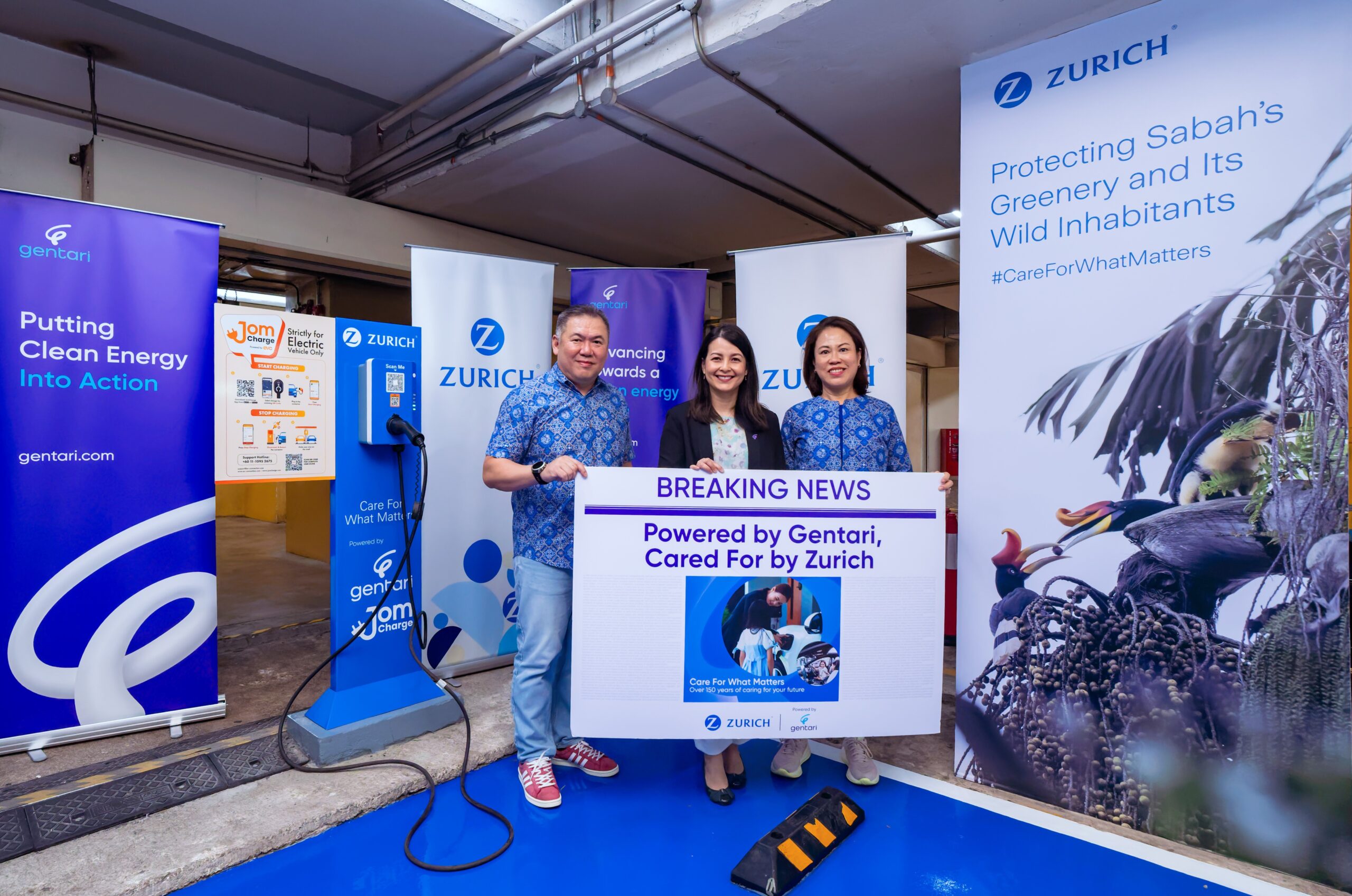
Furthering this commitment to sustainable mobility, Zurich Malaysia has collaborated with Gentari Green Mobility Sdn Bhd, a subsidiary of Gentari Sdn Bhd (Gentari), to support greater awareness and visibility of EV charging infrastructure nationwide. Through this collaboration, Zurich Malaysia has extended its brand presence to 13 EV charging stations at high-footfall destinations, including Suria KLCC, Kuala Lumpur Convention Centre, KLIA2 Gateway, The Gardens Mall, Paradigm Mall Johor Bahru, Gamuda Gardens, Putrajaya Sentral, and more.
“Reliable charging infrastructure plays a pivotal role in enabling more Malaysians to embrace electric mobility. Our collaboration with Gentari is not just about increasing the number of chargers, it’s about helping to build a more connected and confident EV ecosystem. Sustainability must be practical, customer-focused, and accessible,” said Teresa Wong, Chief Risk Officer – General Segment and Head of Sustainability Risk of Zurich Malaysia.
Aliah Nasreen Abdullah, Chief Customer Officer of Gentari Green Mobility, echoed this sentiment, saying, “Gentari is committed to creating a robust green mobility ecosystem in Malaysia, and our collaboration with Zurich Malaysia is another step in that direction. Together, we’re expanding the availability of EV chargers and enhancing the entire ownership experience, making it easier, safer, and more accessible for drivers to transition to clean mobility.”
The collaboration with Gentari, a leading clean energy solutions provider, supports Zurich Malaysia’s goal of building a more sustainable future by addressing one of the main barriers to EV adoption, convenient and reliable charging infrastructure.
Kenanga Futures Sdn Bhd (“Kenanga Futures”) has announced the launch of its latest nationwide campaign, “Futures Awaken”. Running until 30 November 2025, the campaign is dedicated to shaping a new generation of traders by enhancing their financial strategies and redefining Futures as a vital hedging and risk management tool amidst ongoing global economic uncertainties.
Futures Awaken highlights Malaysia’s growing prominence in the global derivatives space by showcasing the vibrant and dynamic product landscape of Bursa Malaysia Derivatives (BMD) as a gateway to new opportunities. Reflecting Kenanga Futures’ commitment to Building a Smart Derivatives Trading Community, the campaign offers a curated digital learning journey featuring interactive e-modules and seminars – all designed to foster financial literacy and empower Malaysia’s New-Gen, which makes up 25% of the population, to take charge of their financial future in the ever-evolving derivatives landscape.
“At Kenanga Futures, we are building tomorrow, today. By staying true to our values, we strive to inspire and empower the next generation of traders through innovation and enhanced education to thrive in this dynamic derivatives industry. The Futures Awaken campaign is a timely initiative that celebrates the spirit of Malaysia Day by equipping Malaysians with a strong foundation in futures trading and advancing them to the next level. As the Gen-Alpha of today embraces disruptive technology and adopts AI-machine learning in trading strategy, the derivatives landscape is being redefined – unlocking new opportunities in this new era of trading,” said Azila Abdul Aziz, Chief Executive Officer/ Executive Director & Head of Listed Derivatives of Kenanga Futures.
Throughout the campaign period, account opening fees are reduced to a nominal RM10, lowering the barrier of entry for newcomers to capitalise on the current market landscape. Additionally, new clients who successfully register and open a futures trading account with Kenanga Futures during the campaign period, and trade a minimum of 10 BMD contracts, will be eligible to receive a RM100 e-shopping voucher, while the top 20 traders must fulfil the minimum requirement of trading more than 500 BMD contracts during the campaign period in order to qualify for the RM300 e-shopping voucher.
Looking ahead, Kenanga Futures plans to expand the campaign with advanced learning modules, collaborative initiatives, and partnerships with industry experts – reinforcing its commitment to Building a Smart Derivatives Trading Community.
Airwallex, a leading global financial platform for modern businesses, has acquired OpenPay, a San Francisco-based billing platform that offers subscription management, payment orchestration, and revenue analytics. The acquisition will bring OpenPay’s billing and analytics capabilities into Airwallex’s global platform, strengthening Airwallex’s position against other players like Stripe Billing and Recurly, and empowering Airwallex customers to unlock and automate revenue growth.
“Most billing systems are locked in the past, they were never designed for a global, multi-currency world. That’s the gap we’re closing,” said Jack Zhang, Co-founder and CEO of Airwallex. “By bringing OpenPay’s subscription management, orchestration, and analytics capabilities into Airwallex, we’re creating the first truly global billing platform. The OpenPay team brings deep technical strength and a shared conviction in our vision, and we’re thrilled to have them on board as we help businesses scale seamlessly across borders.”
“We started OpenPay to solve the complexity of recurring revenue management. We envisioned a smarter, more intuitive platform that empowers subscription businesses to scale without barriers,” said Lance Co Ting Keh, CEO of OpenPay. “In Airwallex, we found a partner who shares our vision, our DNA and has the global reach to apply our work at scale. We are very proud of what we’ve built and excited for our next chapter as we partner with Airwallex to set a new standard, creating a paradigm shift in global payments.”
OpenPay has distinguished itself through its development of automated features like smart payment routing, AI-driven retention tools, real-time insights and subscription management for tiered, usage-based, and flat fee models. Demand for hybrid and usage-based billing – tied to actual product usage as opposed to static, seat-based pricing – is rising as AI companies and other consumption-led businesses monetize by tokens, calls, and computes. With OpenPay, Airwallex will offer built-in usage-based billing that works across borders and currencies.
With this acquisition, Airwallex isn’t just entering billing – it’s redefining it. By marrying global financial infrastructure with modern subscription management, Airwallex is creating the first truly global billing platform: one that lowers costs, increases revenue, and lets businesses scale subscriptions without borders.
Financial terms of the transaction are not disclosed.
The Big Tiny story started in 2016, during Adrian’s family trip along Australia’s iconic Great Ocean Road. As his family journeyed through the coastal vistas and rural retreats, an idea began to take shape: What if this sense of calmness could be made accessible to others, anywhere in the world through sustainable and mobile living?
Pioneering eco-friendly getaways: Dave Ng, Adrian Chia and Jeff Yeo.
Upon returning to Singapore, Adrian shared his idea with two long-time friends and soon-to-be co-founders at Big Tiny, Dave Ng and Jeff Yeo, both former Singapore Army and Navy scholars respectively. Together, they envisioned crafting tiny houses on wheels that would bring this same restorative clarity to others while simultaneously empowering communities.
A Product Designed for Shared Success
Comfortable and cosy – inside a quaint tiny house.
Big Tiny was officially launched in 2017. Its product derives from a simple concept which made perfect sense—travel and leave a positive impact on a place and its people.
The founders believe that the modern life-style, for all its conveniences, often distracts people from the basics—nature, simplicity and meaningful moments. With that, its brand mandate is centred around helping people to reconnect with themselves and nature.
The company and its products are defined by three robust core values:
Connection with Nature: Locations are carefully selected where guests can wake up to wide open skies, immerse themselves in pristine landscapes and experience the quiet beauty of the outdoors. Big Tiny’s low-impact builds are designed to preserve the integrity of these natural environments.
Simplicity with Purpose: Every Big Tiny stay is intentionally minimal yet complete, removing the noise of modern living while ensuring comfort and functionality. From the design of tiny houses to the curated experiences offered, Big Tiny champions the idea that less can be more—more meaningful, more sustainable and more fulfilling.
Sustainability through Experience: Rather than preaching eco-consciousness, tiny houses invite its guests to experience it through the stillness of a stay, the satisfaction of living with less and the joy of discovering the surroundings. These tiny houses are not just a place to sleep; they are vessels for a lifestyle shift—subtle, but lasting.
These values are woven into the very fabric of a Big Tiny experience, from the layout of a tiny house to the way it partners with landowners and communities. Ultimately, the brand doesn’t just offer accommodation—it’s a chance to pause, reflect and return to what’s essential.
As a proud pioneer in this niche eco-tourism space, Big Tiny designs, builds and manages eco-conscious tiny houses on underutilised lands—transforming idle plots into revenue-generating destinations. These tiny homes are then placed within its Tiny Away web platform (tinyaway.com) for bookings, alongside 11 other online travel sites.
But the company doesn’t do it alone, of course, as it involves strategic partners along the process. Its ecosystem brings together landowners, tiny house buyers and travellers on a single beneficial model for all parties.
“Basically, there are three external core parties involved in the equation with us being the linchpin that pulls together everyone. Let’s say you own a piece of land which you don’t have any plans for but is the perfect spot for our tiny houses. So, hosting a tiny house on your land naturally unlocks a revenue stream for you while guests can have access to a unique, nature-immersive stay. The landowners are not the only income earners; a tiny house buyer too can earn passive income through our tiny house sale and management programme,” explained Adrian.
As for Big Tiny, it holds critical roles for its end-to-end capability—from land activation to architectural design to operations—the company’s full-stack solution gives it greater control over quality, scalability and sustainability. Big Tiny’s position as a curator of experiences evokes emotional resonance for guests, backed by operational efficiency and proven returns. This is what truly sets Big Tiny’s unique selling proposition.
Apart from being positioned as an accommodation, tiny houses too can function as:
A comfortable home office, studio or workshops venue.
An outstanding pop-up cart or a Farmer’s Market Stall.
A guest house or even a holiday home—an affordable luxury indeed!
Tiny Houses Everywhere!
A tiny house perched on the pastures of Glenlyon, Australia.
Since its first in Australia, Big Tiny is gradually taking over the globe, despite its business being disrupted during the pandemic. Today, the brand operates in Australia, New Zealand, Japan, Malaysia, Taiwan, Singapore, China and Europe, building a thriving ecosystem and establishing itself as a key player in the alternative accommodation space. In many ways, Big Tiny has exceeded its initial expectations for brand traction, buyer interest and global reach.
Scattered across 19 countries, each market presents its own unique landscape and audience for the tiny home experience:
In Australia where its journey began, the concept of tiny house strongly resonates with both domestic and international travellers seeking authentic, nature-based getaways. The expansive rural terrain, paired with growing interest in sustainable travel, created a fertile ground for the brand to grow.
Big Tiny’s minimalist concept strikes a chord with New Zealand and Japan as it aligns with their respective cultural values—connection with nature through its refined, thoughtful designs.
A tiny house in Malaysia.
In Malaysia, the brand is seeing growing interest from both eco-conscious millennials and families looking for unique, short-haul experiences, especially as awareness of sustainability and experiential travel continues to rise. In December 2024, Big Tiny and IOI Properties Group Berhad embarked on a strategic collaboration with the placement of tiny homes at the Amigo Clubhouse @ 16 Sierra in Puchong. This partnership supports both entities’ environmental, social and governance (ESG) vision towards sustainable, eco-living, while offering guests immersive, nature-inspired experiences.
Singapore, despite being its headquarters and an urban market, has shown strong interest and demand for nearby, nature-based escapes—especially with Big Tiny’s expansion into Lazarus Island.
Europe’s entry has been more exploratory at this stage but promising, with pilot activations in scenic regions sparking conversation and demand for low-impact, mobile-friendly tourism infrastructure.
Additionally for this year, its footprint continues to expand with profound milestones achieved during the first half of 2025. Big Tiny has entered the China market beginning with Guangzhou, on top of enhancing its portfolio in Australia, raising its profile in Taiwan and Singapore’s Mandarin-speaking communities. Each presence and initiative are a bold move reaffirming the borderless resonance of sustainable, experiential-led travel.
Its official presence in China as one of Asia’s most dynamic tourism markets has generated strong traction through its tiny house owner-ship programme, and the brand is preparing for Shenzhen next.
Juggling Dream and Reality
Establishing Big Tiny came with its fair share of obstacles. While the concept made perfect sense, it was anyhow, one that was still nascent.
Adrian reveals its biggest road-block, “Convincing both ends of the spectrum—landowners and travellers—to embrace a new way of experiencing nature through compact homes on wheels against the backdrop of remote landscapes. As an unconventional and almost un-heard-of concept, it demanded persistence, thoughtful education and clear articulation of our vision to gain trust and build traction”.
It also stretched logistical capabilities as Big Tiny needed to source sustainable materials and design both on- and off-grid systems, all while ensuring regulatory compliance across different countries was met.
“With a problem-solving mindset, we undertook the strategy of engaging partnerships. Supported by the right parties, we were able to scale our vision—from securing scenic plots, refining operations, increasing footprints and delivering nature-based stays that integrate and balance eco-conscious values with comfort and accessibility,” said Adrian.
More importantly, Big Tiny resiliently kept to its belief that it wasn’t just building tiny houses, instead it is essentially reshaping human-nature interaction, one stay at a time. Naturally, this belief continues to drive the brand forward today.
The Next Big Tiny Stride
The future is promising, as the company believes that eco-conscious travel will shift from doing less harm to actively giving back.
“Our guests will continue seeking regenerative experiences that will positively impact local ecosystems and communities, and this movement is likely to grow amongst the travel community,” explained Adrian.
Big Tiny foresees travellers expecting:
Personalised Sustainability: Data driven choices (from energy use to local sourcing) tailored to each guest’s values.
Deep Cultural Immersion: Hands on conservation, farm-to-table dining and authentic storytelling with local partners.
Tech-enabled Transparency: Real-time carbon and water use tracking, renewable energy dashboards and blockchain-backed supply chains.
With its projection, Big Tiny is adopting a ‘living lab’ model to stay at the forefront of its game. This model is propelled by piloting various environmental technology solutions, circular material construction and AI-powered guest experience platforms.
Additionally, it continues to forge strategic alliances with conservation groups and smart-tech startups to co-create the next generation of tiny house modules that are not just low in impact but ultimately net positive.
At the end of the day, by continuously iterating on de-sign, embedding real-time sustainability and amplifying local community benefits, Big Tiny is positive that the brand will lead the transformation from eco-friendly stays to re-generative travel destinations.
For more information on Big Tiny, visit www.bigtiny.com.my.
This article is featured as the Cover Story for The SmartInvestor’s September/October 2025 issue.
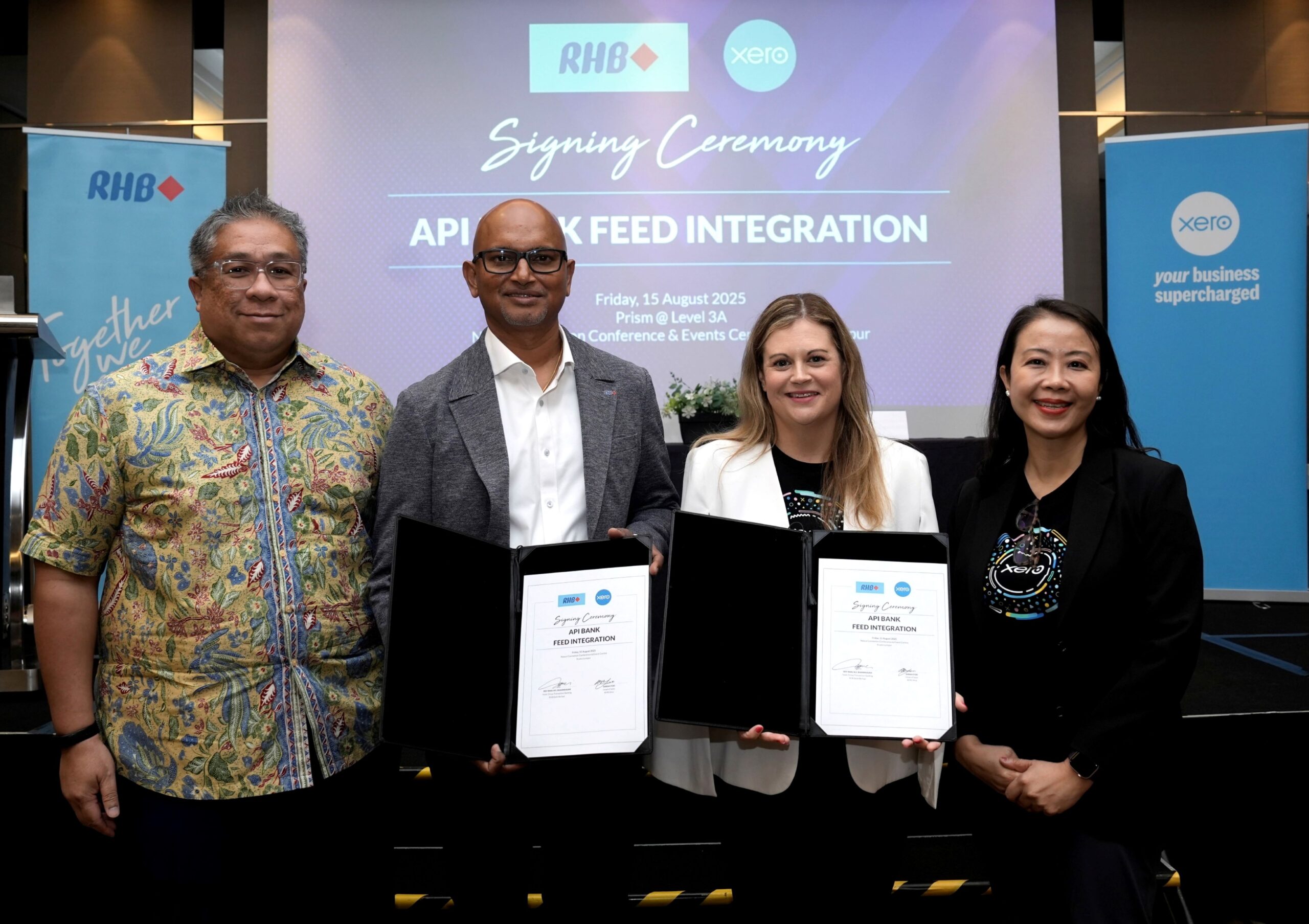
Global small business platform, Xero and RHB Banking Group (RHB) have partnered to provide Malaysia’s small and medium enterprises (SMEs) with seamless daily access to financial data through a fully digital API-enabled bank feed.
The integration enables SMEs to automatically and securely import data from their RHB bank accounts into Xero each day – thus reducing the need for manual uploads and data entry, lowering the risk of errors and saving valuable time reconciling transactions. With an accurate daily view of their cash flow within Xero, SME owners will gain deeper insight into their business performance, enabling them to make better-informed decisions that drive growth.
“We know running a business is challenging, and our goal is to make it simpler. By connecting RHB’s banking services directly with Xero’s platform, we’re eliminating time-consuming manual data entry and giving business owners a clear, real-time view of their finances. This is about more than efficiency — it’s about empowering SMEs with the confidence and insights to grow, create jobs, and strengthen Malaysia’s economy. Together, we’re helping drive the digitalisation of Malaysian SMEs and building an ecosystem where they can thrive,” said Koren Wines, Managing Director of Xero Asia.
“RHB is committed to supporting the growth of our SME customers through a connected ecosystem of simple, seamless banking experiences,” said Nurjesmi Mohd Nashir, Managing Director of Group Wholesale Banking, RHB Bank. “We aim to help our customers operate more efficiently with services and tools that streamline financial management. This new bank feed that integrates directly with Xero enhances visibility and control. This helps our customers to make informed decisions and empower them to grow their businesses with greater confidence over the long term.”
The Xero-RHB Bank feed is currently in beta testing and will be available to all Malaysian Xero users with an RHB bank account in August 2025. It will be offered at no additional cost, with a seamless and fully digital setup process.
Alliance Islamic Bank (AIS or The Bank) is expanding its Halal in One Programme’s market access proposition by leveraging leading social commerce platforms to help halal businesses and SMEs reach and engage more customers in the growing digital economy.
The Bank is collaborating with top social media platforms to connect with businesses that could benefit from Halal in One – particularly those in high demand segments such as beauty & personal care, food & beverages, and other halal-eligible products. By creating more visibility and sales opportunities online, this initiative reinforces the Bank’s commitment to driving inclusive growth and innovation within Malaysia’s halal ecosystem.
As part of its outreach, Alliance Islamic Bank is also participating in Megasales 2025, a major campaign by a leading social commerce platform. The Bank is using this platform to support businesses, in need of halal certification, market access, and funding, to help them scale and thrive in the competitive digital economy.
Launched in 2020, the Halal in One programme plays a vital role in supporting entrepreneurs and business owners entering the halal industry. It offers end-to-end solutions including seamless halal certification facilitation, funding through the unique Halal in One Financing Programme, and access to advisory services – empowering halal business to start, grow and thrive.
By integrating social media into its outreach, the Bank aims to open new pathways for businesses to boost brand visibility, tap into wider audiences, and strengthen their presence in the competitive e-commerce landscape. The approach combines powerful online engagement with AIS’s suite of halal business solutions, enabling clients to accelerate growth in the digital-first marketplace.
Rizal IL-Ehzan Fadil Azim, Chief Executive Officer of Alliance Islamic Bank, said, “With its millions of users and distinctive position, social media has become a powerful tool for businesses to promote and scale their products. For SMEs in the halal space, this is an opportunity to compete and scale faster. Through Halal in One, we are helping businesses seize these opportunities with the right tools, resources, and market access to succeed.”
As Malaysia’s consumer spending gears up for a strong 2025, driven by an average income growth of 3.3% year-on-year, household expenditures are set to rise sharply – from RM896.9 billion in 2024 to an anticipated RM943.7 billion this year.
But what’s truly reshaping the consumer spending landscape? A new wave of digitally savvy Malaysians is demanding smarter, more flexible payment solutions such as Easy Payment Plans (EPP) to help manage both planned and unplanned purchases.
Recognising this shift in consumer expectations, Malaysia’s leading payment gateway, Razorpay Curlec, has joined forces with the trusted leader in digital payments, VISA, in a strategic partnership to deliver credit card-based instalment plans through VISA Instalment Solutions (VIS).
This game-changing collaboration is designed to empower businesses nationwide, enabling them to offer customers easy and affordable ways to manage both planned expenditures and unexpected expenses.
With VIS now integrated into the Razorpay Curlec platform, businesses can provide their customers the freedom to spread the cost of big-ticket items over manageable monthly instalments, available on credit cards from major banks. This partnership not only meets the evolving needs of Malaysia’s consumers but also unlocks fresh growth opportunities for businesses in a fast-paced digital economy.
Kevin Lee, Country Head and Chief Executive Officer of Razorpay Curlec, said, “Today’s consumers do not just appreciate flexibility, they expect it, especially when it comes to making high-value purchases. To stay ahead, Malaysian businesses need solutions that deliver choice without compromising cash flow or customer experience.
Through our partnership with Visa, we are enabling thousands of Razorpay Curlec businesses to offer trusted, seamless instalment options, empowering them to elevate the checkout experience, deepen customer relationships, and unlock new avenues for growth and loyalty,” Lee concluded.
Previn Pillay, Country Manager of Visa Malaysia, said, “We’re thrilled to partner with Razorpay Curlec to enable Visa Instalment Solutions at checkout, empowering consumers with seamless and flexible ways to pay. Instalments are increasingly becoming a smart and manageable way to spend, whether on everyday essentials or larger purchases, because they provide both choice and peace of mind. By bringing VIS to Razorpay Curlec, we are supporting financial confidence and giving consumers greater control of their spending, underscoring our commitment to driving inclusive payments built around the needs of consumers.”
According to the 2024 Visa Consumer Payment Attitudes study, card payments are especially prevalent in more mature markets such as Singapore and Malaysia (91%), where card usage maintains a deeper foothold than other newer payment methods, despite the momentum for mobile wallets.
With EPP, businesses offer customers 0% interest and no management fees on purchases with flexible instalments for credit card users. Customers can access over thousands of participating retailers across categories like home & living, electronics, jewellery, and beauty services.
By combining world-class technology with deep local insight, Razorpay Curlec is redefining what it means to be a modern payment gateway in Malaysia. Trusted by businesses of all sizes, Razorpay Curlec remains committed to driving innovation, strengthening security, and delivering customer-first solutions to Malaysian businesses, powering growth in one of Southeast Asia’s most dynamic digital economies.
Malaysia’s digital economy continues to gain momentum, with an expanding community of over 1.8 million local sellers and 3.8 million affiliate creators leveraging TikTok Shop as the trusted full-funnel e-commerce ecosystem to create sustainable livelihoods.
With TikTok Shop recording more than 100 million daily product searches in Malaysia, it is uniquely positioned to accelerate the digital transformation of these homegrown entrepreneurs, as proven by its recent milestone of over 130% year-on-year sales uplift for Malaysian-made products under the #JomLokal initiative.
At the heart of this progress is TikTok Shop’s continuous efforts to build and maintain a safe e-commerce ecosystem that facilitates secure shopping experiences for a nationwide community, from discovery to purchase.
“Safety is the top priority for TikTok Shop. This commitment is underpinned by our continuous investment, robust end-to-end policies, and compliance with local laws,” said Nur Azre Abdul Aziz, Director of Strategic Partnerships, TikTok Shop Malaysia.
“As of December 2024, we have invested nearly USD1 billion globally in tools, technologies, and people to protect our community of shoppers, sellers, and affiliate creators from fraudulent, dangerous, illegal, and violative activities,” she emphasised.
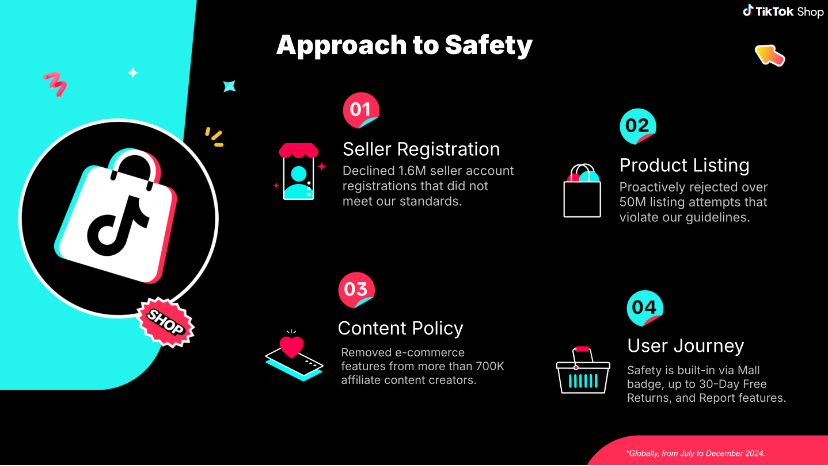
According to Azre, TikTok Shop adopts a four-pronged approach to safety, which includes Proactive Seller Screening, Proactive Product Listing Governance, Reactive Platform Policy Enforcement, and Safety by Design.
“We believe creating a trustworthy and secure environment for our community starts with prevention. To this end, TikTok Shop implements extensive proactive measures to screen sellers upon account registration and before products are listed,” she added.
Diving deeper, Azre mentioned that all businesses must submit official documentation when applying to register for a TikTok Shop Seller Account.
These applications are said to be scrutinised closely to comply with applicable local regulations and TikTok Shop’s extensive policies, including ensuring that the Identity Card (IC) or relevant business certificates submitted match the corresponding TikTok Shop account and bank account details.
Even the store names of all sellers must strictly adhere to a comprehensive set of guidelines to ensure accurate business representation, such as restrictions on terms like “Official”, “Flagship”, or “Authorised”.
“With these preventive processes, from July to December 2024, TikTok Shop has proactively declined 1.6 million seller account registrations globally that did not meet our rigorous standards,” said Azre.
Once successfully registered, new sellers are then placed on a temporary probation period, with limited daily orders and product listings, to help familiarise themselves with TikTok Shop’s policies and stabilise their operations.
These policies include TikTok Shop’s Product Listing Guidelines, which explicitly outline prohibited products, including counterfeits and knockoffs.
“From July to December 2024, TikTok Shop has proactively rejected over 50 million product listing attempts worldwide that violate our guidelines,” explained Azre.
Affiliate creators are similarly held to high standards under TikTok Shop’s Content Policy, which ensures responsible product promotions by prohibiting illegal activities, intellectual property (IP) rights infringement, misleading or false content, Artificial Intelligence Generated Content (AIGC), and more.
“However, there is no finish line when it comes to safety. Users are encouraged to directly report violative products, content, and sellers on TikTok Shop via the in-app reporting channel,” Azre reminded.
Strict enforcement actions are then taken against any sellers or creators who breached its policies, based on TikTok Shop’s Seller Performance Evaluation Policy and Creator Performance Evaluation Guidelines.
Azre highlighted that, worldwide between July 2024 and December 2024, TikTok Shop removed more than 90,000 listed products, disabled e-commerce features for more than 700,000 creators, and removed more than 450,000 sellers as a result of shop-level violations.
“In addition to our platform’s proactive and reactive governance, security is also embedded into users’ in-app shopping experience, through our Safety by Design approach,” she underscored.
All orders on TikTok Shop are protected by its robust Free Returns and Refunds Policy, which facilitates simplified and fair after-sales requests for customers.
“TikTok Shop will continue collaborating with our community, regulators, and industry stakeholders to share insights, refine best practices, and shape forward-looking policies that promote a safe and vibrant e-commerce ecosystem for all, such as through our #ShopSafe scam prevention initiative,” Azre concluded.
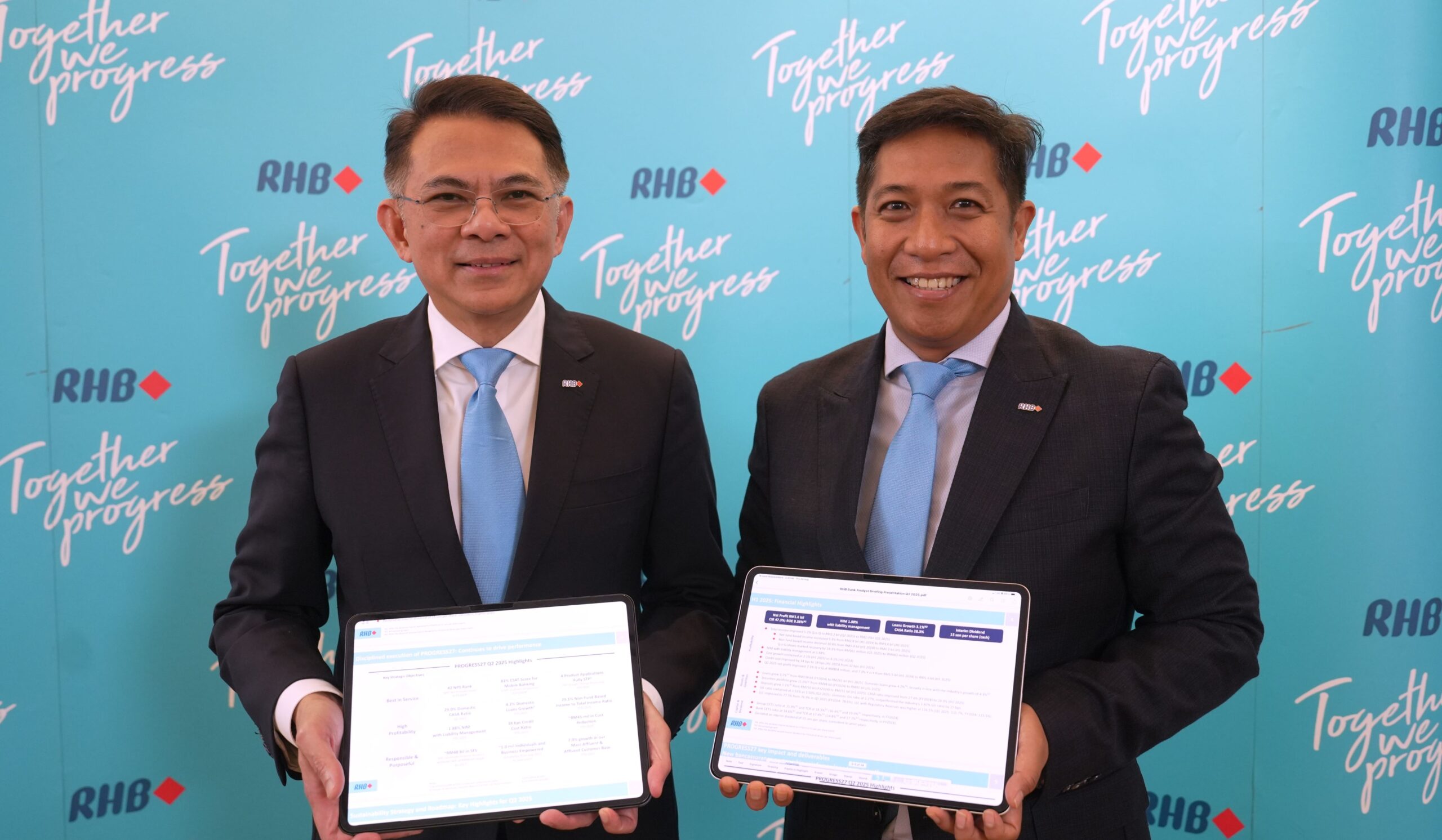
RHB Bank Berhad (RHB or the Group) registered a net profit of RM1.6 billion in the first half of its financial year ending 31 December 2025 (1H FY2025), a 7.0% Y-o-Y increase, primarily driven by higher net fund-based income, disciplined credit cost management and improved credit quality, reflecting the Group’s strong fundamentals and prudent risk discipline.
Total income expanded marginally at RM4.2 billion, mainly from higher net fund-based income but partially offset with contraction in non-fund based income. The Group maintained operational stability, supported by prudent cost management, continued strength in capital and liquidity positions. Cost growth was contained at 2.1% with CIR at 47.3%.
Dato’ Mohd Rashid Mohamad, Group Managing Director/Group Chief Executive Officer of RHB Banking Group said, “The first half of 2025 was marked by global uncertainties and industry headwinds. Despite this, RHB remained resilient in delivering performance with sustained growth, lower ECL, and disciplined cost management. Our domestic loan growth tracked well with the industry, supported by sound asset quality. These results underscore our strength and position us well to capture new growth avenues in the months ahead.”
“We remain focused on sharpening the execution of PROGRESS27, our three-year strategic roadmap. The recently concluded strategic bancassurance and bancatakaful partnerships reinforce our commitment to staying relevant to customers, diversifying income streams, and driving sustainable long-term growth. This is aligned to our strategic priorities, enabling us to deliver broader value for stakeholders, strengthen our non-interest income base, and unlock greater opportunities ahead,” added Dato’ Mohd Rashid.
Strong Capital and Liquidity Position
The Group’s total assets rose to RM354 billion, supported by healthy balance sheet growth and prudent capital management. Group shareholders’ equity stood at RM33 billion, with the Common Equity Tier-1 (CET-1) ratio of 15.9% and Total Capital Ratio (TCR) at 18.3%, reinforcing a strong capital position to support future growth ambitions while providing ample buffers against macroeconomic uncertainties. Whereas the Bank’s CET-1 and TCR stood at 14.6% and 17.4%, respectively. Loan loss coverage ratio including regulatory reserves, improved to 116.5%, reflecting sound provisioning practices.
Domestic loan growth of 4.2% (annualised) tracking well against the industry’s 4.3%, while the Group’s GIL ratio contained at 1.51%, and the domestic GIL ratio was below the industry average, demonstrating sound credit quality.
The Group has delivered RM48 billion in sustainable financial services, achieving more than half of its RM90 billion target for 2027. This underscores its commitment to sustainable financing and supporting the nation’s low-carbon transition agenda. Most recently, the Group partnered with Malaysia Rail Link Sdn Bhd (MRL) to activate the RHB-MRL 360⁰ ESG Finance Ecosystem, a first-of-its-kind sustainable financial value chain transition roadmap. Through this partnership, MRL has placed funds in RHB ESG Deposits to finance green and social projects, embedding sustainability into the core of banking while reinforcing the role of financial flows in driving climate resilience and inclusive economic growth.
Outlook: Building on Momentum
Looking ahead, Malaysia’s economy is projected to remain resilient, with strong domestic demand, growth in tourism activity, job creation, and sustained investment activity from both private and public sectors. The Government’s Ekonomi MADANI framework is key to guiding sustainable and inclusive growth, emphasising high value activities, fiscal consolidation, and social equity. Initiatives such as the Energy Transition Roadmap and the New Industrial Master Plan 2030, alongside the steady rollout of structural reforms, are expected to further stimulate investment and economic growth. In this environment, the operating landscape remains conducive for the Group to pursue its growth ambitions under PROGRESS27.