Category: lifestyle

  • FedEx empowers APAC businesses to navigate global trade shifts

    FedEx empowers APAC businesses to navigate global trade shifts

    Federal Express Corporation is helping businesses across Asia Pacific navigate an evolving trade landscape marked by tariff-induced uncertainties and heightened customs complexity. FedEx has been conducting webinars to help its customers stay agile in managing regulatory changes and responding to shifting trade environments. The response to its latest webinar series demonstrates the need for guidance within the business community. Over 6,500 participants registered from across the region.

    The company’s role as experienced trade facilitators gives it a front-row seat to gauge sentiment in the business community:

    • One third (29%) of respondents attending FedEx webinars are not planning on changing their supply chain strategy.
    • More than half (52%) are considering supply chain diversification over the next 12 months to better adapt to global trade uncertainty.
    • A fifth (19%) are actively pursuing such plans.
    • Businesses have identified ongoing tariff uncertainty (41%) and increasing costs (29%) as both the drivers’ and key barriers to supply chain diversification.

    These insights underscore the growing importance of leveraging best practices and the expertise of trade experts to tackle customs challenges and enhance supply chain resilience.

    “Resilience has become a strategic imperative in a trade environment of constant transformation through shifting regulations, changing trade flows, and digital disruption,” said Salil Chari, senior vice president of Marketing & Customer Experience for Asia Pacific at FedEx. “While many are adopting a ‘wait and see’ approach before making major strategic changes, the most future-ready businesses will be those that invest in flexibility, embrace innovation, and rely on trusted partners to stay ahead of change.”

    Best Practices for Seamless Customer Experience Supported by FedEx’s Comprehensive Suite of Services

    Amid ongoing regulatory uncertainty, businesses need to be better equipped to navigate increasing complexity. By leveraging the FedEx comprehensive suite of services, including digital trade tools and tailored solution guides, businesses can minimize delays, avoid unexpected costs and maintain operational efficiencies.

    1.Rely on Expert Guidance

    • Regularly check for expert guidance on tariffs, customs policies, and required documentation through reliable sources like the FedEx U.S. Tariff Hub.
    • Access FedEx Trade Solutions for personalised trade consulting, advisory solutions for immediate challenges, and managed solutions for ongoing compliance and regulatory needs

    2. Gather Essential Information for Seamless Clearance

    • Provide Clear and Accurate Product Descriptions: Include specific details such as material composition, intended use, quantity, and country of manufacture.
    • Use the Correct HS Codes: Ensure the appropriate Harmonized System (HS) codes are included in all shipping documents. Customers can leverage the enhanced HS code feature in FedEx Ship ManagerTM at fedex.com powered by the latest AI technology to improve compliance.
    • Include Manufacturer Identification Code (MID): For certain shipments, particularly textiles and apparel, provide the MID code on both the Air Waybill and commercial invoices to ensure smooth customs clearance.
    • Prepare for Formal Entry Requirements: Ensure the consignee’s Employer Identification Number (EIN) or Social Security Number (SSN) is included for formal entry shipments to avoid delays or returns.

    3. Leverage Tailored Digital Trade Tools

    • Utilise tools such as FedEx Global Trade Manager to estimate duties and taxes, identify applicable tariffs, and access essential trade resources.
    • Take advantage of Electronic Trade Documents to electronically submit data, enabling paperless processing and accelerated customs clearance with reduced delay risks.

    4. Select a Reliable Logistics Expert with a Robust Global Network

    • Customers can leverage the comprehensive FedEx portfolio of day-definite parcel and freight services that balance speed with competitive pricing to support their business growth. With its one-stop solution, designed to handle everything from single packages to large pallet or container shipments.
    • FedEx also continues to invest in infrastructure to support regional trade. In addition to its strong intra-Asia network, the recent launch of a direct Singapore-Anchorage flight improves transit times between Southeast Asia and the U.S., offering faster delivery options for businesses in the region. FedEx also launched a new flight connecting its Asia Pacific Hub in Guangzhou, China to Bangalore, India and onwards to Liege and Paris in Europe in November last year. The flight operates five times per week to enhance intra-Asia and Europe connectivity.

    As global trade dynamics shift, FedEx trade expertise, industry-leading customs clearance capabilities, and game-changing digital solutions, empower its customers to navigate customs complexities with confidence and seize new opportunities.

    To stay informed of the latest tariff policy changes and access FedEx’s latest solutions and support, businesses are encouraged to explore the FedEx U.S. Tariff Hub and contact their local FedEx representative for personalised support.
     

  • China Medical System successfully debuts on the Mainboard of the SGX-ST

    China Medical System successfully debuts on the Mainboard of the SGX-ST

    China Medical System Holdings Limited (CMS or the Group), a platform company linking pharmaceutical innovation and commercialisation, made its debut on the Mainboard of the Singapore Exchange Limited (SGX-ST) under the ticker symbol “8A8”. CGS International Securities Singapore Pte. Ltd. is the sole issue manager for this secondary listing.

    This marks CMS’s secondary listing in the capital markets, following its debut on the Stock Exchange of Hong Kong Limited (HKEX) in 2010. While no new shares were issued or placed, the move reflects CMS’s commitment to expand its footprint to the broader Asia-Pacific region by capitalising on its proven track record in the pharmaceutical industry of over 30 years in China.

    Having evolved from being China’s largest contract sales organisation (CSO) into an innovation-driven multinational pharmaceutical company, the Group is now operating an integrated product lifecycle management platform that covers target selection and confirmation, to preclinical research, clinical development, and commercialisation. Building on this foundation, CMS has developed strong capabilities in identifying, developing, and commercialising First-in-Class and Best-in-Class innovative products. As of 15 July 2025, the Group’s market capitalisation stood at HK$31.91 billion1.

    The listing comes at a time where CMS is transitioning toward an innovative product-driven business model to mitigate the impact of China’s volume-based procurement (VBP) policies to ensure sustainable growth. Since 2018, the Group has developed a robust pipeline of approximately 40 innovative products, five of which were already approved for marketing as of 2024. Notably, two other products have been submitted for marketing approval in China as well.

    CMS currently sells seven major exclusive or brand-name products in the market, which have shown a progressively upward trend in their revenue contribution over time. Together with five commercialised innovative drugs, these collectively contributed RMB 4.56 billion in revenue in FY2024, accounting for 52.8% of the Group’s total turnover. Given the gradually easing impact from China’s VBP policy and the Group’s optimised product portfolio focusing on exclusive and innovative drugs which are typically exempt from VBP, CMS is well-positioned to resume its top-line growth trajectory from FY2025.

    With a forward-looking mindset and acute market insight, the Group has implemented an industrial internationalisation strategy for its business expansion in Southeast Asia and the Middle East, which has already begun to deliver tangible outcomes. To date, the Group has established a full-scale pharmaceutical value chain based in Singapore, which covers R&D, production, and commercialisation. This not only enables the Group to bring high quality, regulatory-compliant, and affordable drugs to emerging markets with increasing pharmaceutical demand, but also serves as a bridge for introducing global innovative therapies into the broader Asia-Pacific region.

    Emerging markets such as Southeast Asia and the Middle East are becoming new growth opportunities for the global pharmaceutical industry.  The key drivers behind the rapid expansion of these markets include large population bases, the early onset of aging demographics, increased healthcare coverage, and a rising burden of chronic diseases that reshape the disease landscape. At the same time, the growing middle class and rising health awareness are also driving the increase in both purchasing power and accessibility of medicines.

    With regard to the regional market outlook and CMS’s overseas expansion, the Group added that Southeast Asia remains a largely untapped market in its view. The region comprises many small to mid-sized developing economies, each with distinct healthcare systems and regulatory requirements for drug launch. While complex, this landscape aligns well with CMS’s strengths and resources, particularly its proven track record in commercialising innovative therapies.

    Looking ahead, CMS remarked, “The successful listing of CMS on SGX marks a solid step forward in advancing our industrial internationalisation strategy, further enhancing our brand visibility and credibility in the broader Asia-Pacific region. Meanwhile, to meet the growing pharmaceutical demand, our CDMO facility is planning to expand its manufacturing capability to include nasal spray platform, cream and injectable lines beyond its current focus on oral solid dosage forms. Further expansion to double or triple the current capacity by the end of 2028 is also under evaluation. As such, we firmly believe that our notable progress in innovative drug development, steady growth in the speciality-focused business, and continued advancement in overseas expansion will collectively facilitate the Group’s return to a multi-year growth trajectory.”


  • SC unveils initiatives to drive adoption of Masaqid al-Shariah Guidance in ICM

    SC unveils initiatives to drive adoption of Masaqid al-Shariah Guidance in ICM

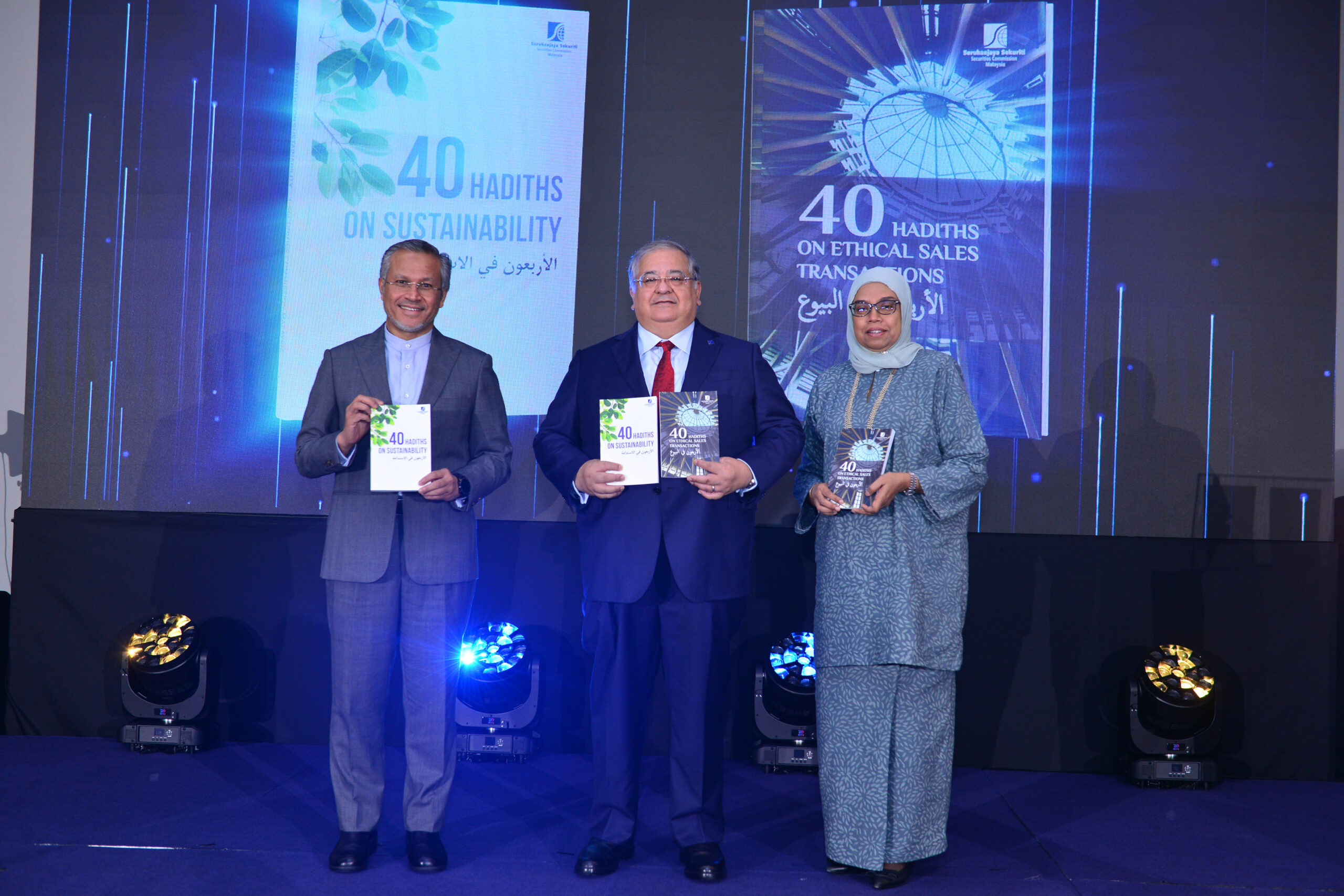
    The Securities Commission Malaysia (SC) today launched the 40 Hadiths book series on sustainability and ethical sales transactions to promote a deeper understanding of the Islamic perspective on sustainability and Islamic ethics in commercial transactions.

    The publications, launched during the 3rd SC Nadwah of Shariah Advisers in Islamic capital market (ICM) (SC Nadwah), aim to enhance industry awareness and practical implementation. They mark a significant milestone in raising industry awareness on embedding the principles of Maqasid al-Shariah Guidance (Guidance) in ICM, specifically in areas such as environmental stewardship, responsible business, and trade practices.

    The SC Chairman Dato’ Mohammad Faiz Azmi said internalising the Guidance encapsulated in these hadiths contributes to the development of a just, inclusive and sustainable economy.

    “More importantly, the SC is committed to making Maqasid al-Shariah a fundamental framework for business dealings in ICM,” he said. “The outcomes that we are witnessing today is one of the approaches towards ensuring Islamic financial products and services are designed and implemented in a way that promotes the welfare of society and the environment,’’ he added.

    The SC also announced the establishment of the Maqasid al-Shariah Task Force for ICM (MaTF), that will drive and streamline adoption of the Guidance across the Malaysian ICM. This includes identifying areas for strategic collaboration and innovation between regulatory bodies and industry players.

    Members of the task force include Bursa Malaysia Berhad, the Malaysian Association of Asset Managers (MAAM), the Federation of Investment Managers Malaysia (FIMM), Malaysian Investment Banking Association (MIBA), the Association of Islamic Banking and Financial Institutions Malaysia (AIBIM), the Islamic Banking and Finance Institute Malaysia (IBFIM), and the International Council of Islamic Finance Educators (ICIFE).

    Established in 2023, the SC Nadwah serves as a convening platform for intellectual discourse on applied Shariah knowledge sharing and charting the next wave of innovative Shariah solutions among Shariah advisers and market practitioners.

    This year’s SC Nadwah brought together over 200 stakeholders from the Shariah advisory ecosystem, including policy makers, government agencies, academia, Shariah advisers, State Islamic Religious Councils, State Mufti Departments and Islamic finance practitioners.

    Speakers were renowned industry leaders in the Islamic finance space. They include esteemed Shariah scholar Sheikh Dr. Nizam Yaquby and Chairman of SC’s Shariah Advisory Council Professor Dato’ Dr. Aznan Hasan. Sheikh Dr. Nizam Yaquby, who serves on more than 30 Shariah boards globally, including the Accounting and Auditing Organization for Islamic Financial Institutions (AAOIFI) and Islamic Development Bank (IDB), commended the SC’s efforts in organising the SC Nadwah.

    He said the SC should continue with this initiative, which he says is an invaluable platform for fostering strategic dialogue and knowledge-sharing in advancing Islamic finance and in facilitating the growth and readiness of the industry to navigate future challenges.

    The 40 Hadiths book series are now available for download at https://www.sc.com.my/resources/publications-and-research.

  • NCT collaborates with Intrinsic Venture to fuel start-ups

    NCT collaborates with Intrinsic Venture to fuel start-ups

    Intrinsic Venture Capital (Intrinsic Venture) and Malaysia’s Invest NCT Programme under NCT Group of Companies’ (NCT Group) partnership aims to  leverage on the Canadian venture capital firm’s RM615 million (CAD 200 million) fund to catalyse innovation, smart industry growth and global market integration from Malaysia.

    The initiative is slated to empower high-growth start-ups and advanced industries at the NCT Smart Industrial Park (NSIP), under the theme “New Money for New Industries.” The fund targets strategic sectors including semiconductors, medical technology, electronics, green technology and digital infrastructure, positioning NSIP as Southeast Asia’s leading hub for smart industrial transformation.

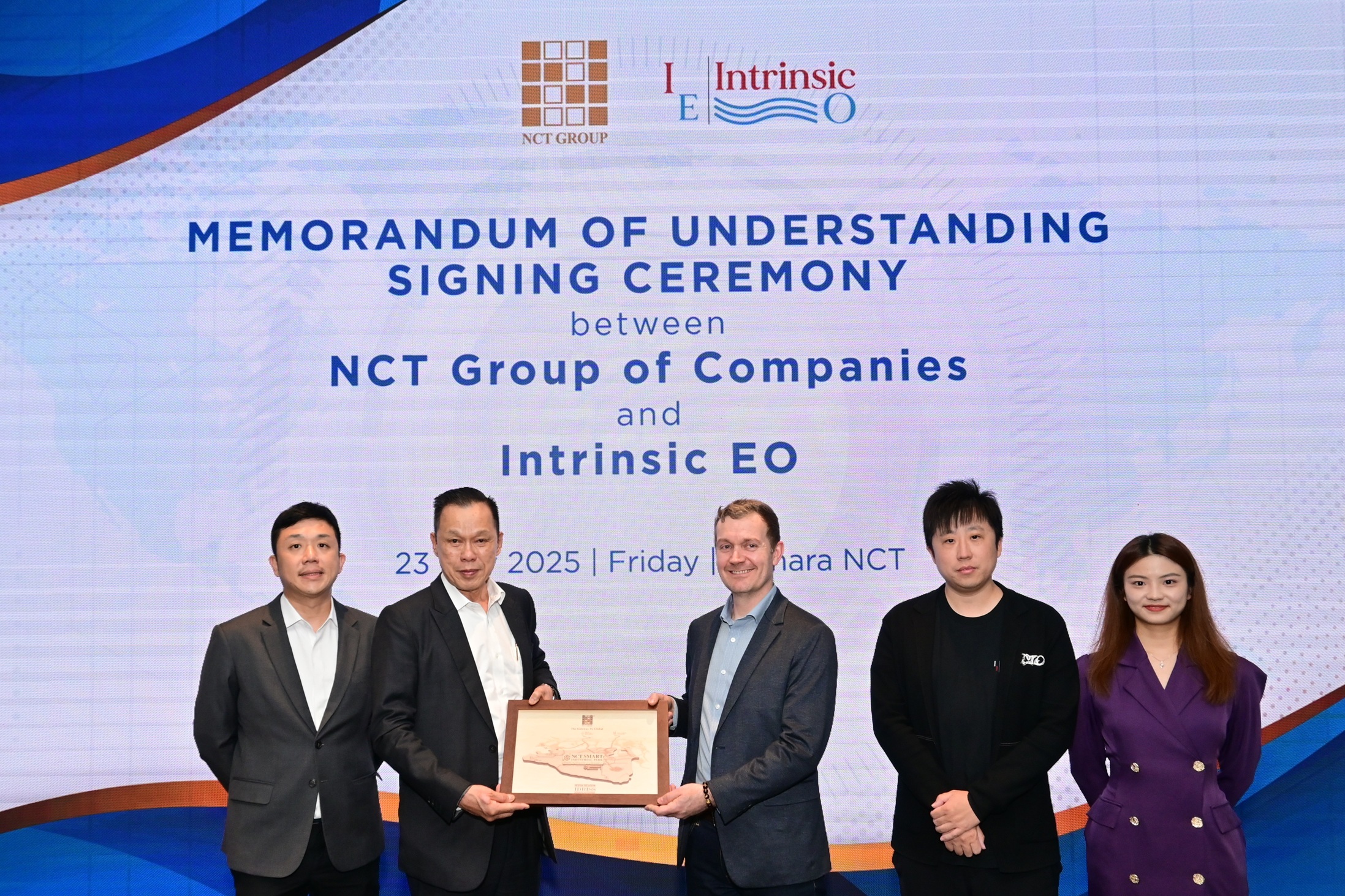
    The initiative is further reinforced through the signing of a Memorandum of Understanding (MoU) today between NCT Group and Intrinsic EO, a global cross-border financial consultancy. The MoU marks a pivotal step toward integrating global finance, digital infrastructure, and market entry strategies within NSIP supporting the development of a next-generation, digitally connected industrial ecosystem aligned with Malaysia’s National Industrial Master Plan 2030 (NIMP 2030) and Industry ESG 4.0 standards.

    Intrinsic EO, a pioneering consultancy specialising in cross-border investment and global growth enablement, brings deep international expertise to the collaboration. Backed by Canada’s Intrinsic Group, China’s EqualOcean, and Southeast Asian industry veterans, the firm offers integrated solutions in venture funding, digitalization, industrial transformation, and resource localization. It is also one of the first global firms to be awarded the prestigious KL20 Golden Pass, Malaysia’s flagship initiative to elevate Kuala Lumpur into one of the world’s top 20 start-up ecosystems by 2030.

    As a strategic facilitator, the Invest NCT Programme offers flexible industrial property models, including Built-to-Suit (BTS) and lease-to-buy schemes, supported by a capital consortium comprising venture capital (VC), private equity (PE), bank co-investments, and talent bank resources. It embodies a future-forward investment strategy that integrates “New Finance, New Money” principles to create a fully bankable industrialization model.

    “This strategic partnership with Intrinsic EO opens exciting possibilities for NSIP and Malaysia’s industrial landscape,” said Dato’ Sri Yap Ngan Choy, Founder and Group Managing Director of NCT Group. “By tapping into global expertise and digital capabilities, we are not only strengthening NSIP’s value proposition as an investment-attractive industrial hub, but also reinforcing our commitment to sustainable and innovation-led development.”

    Dr. Neil Foo, Chief Strategist of NCT Group, added “Invest NCT is proud to launch the Venture Capital (VC) Consortium in conjunction with the ASEAN Summit 2025 in Kuala Lumpur. Guided by the principle of ‘New Money, New Finance,’ this initiative represents a strategic shift toward innovative capital structures—integrating global venture funding, private equity, and co-investment models. Through this platform, the NCT Smart Industrial Park (NSIP) is not merely an industrial zone, but a scalable and bankable model for the future of industrial development across ASEAN and beyond.

    Mr. Andrew Sanden, Chairman of Intrinsic EO, commented: “This partnership allows us to bring our international experience in market expansion, cross-border investment, and digital transformation to a strategic location in Southeast Asia. Together with NCT Group, we aim to build a smart, connected industrial environment that supports companies entering and scaling within the region — while contributing to Malaysia’s role as a regional hub for innovation and sustainable industry.”

    Located in the heart of the Integrated Development Region in South Selangor (IDRISS), NSIP is Malaysia’s first Managed Industrial Park (MIP), setting a new benchmark for smart, bankable industrial development in ASEAN. With its focus on advanced technologies and sustainable practices, NSIP is emerging as a catalyst for next-generation industrial growth.

  • Myra unveils Alam Impian’s township with Malaysia’s first developer-backed renovation financing

    Myra unveils Alam Impian’s township with Malaysia’s first developer-backed renovation financing

    Myra, the residential brand under Oriental Interest Berhad (OIB), is making its most significant entry yet into Shah Alam with the unveiling of Myra Tenuman, a 70-acre township in Alam Impian with a projected gross development value (GDV) of RM1 billion. The development is set to raise the benchmark for community-centric urban living in one of the Klang Valley’s most rapidly maturing corridors.

    Designed as more than a residential project, Myra Tenuman is envisioned as a full-fledged township that integrates premium landed homes, upcoming serviced apartments, community-oriented commercial zones, and placemaking-driven public spaces.

    Anchored by a thoughtfully curated village hub, the masterplan will eventually connect green corridors, pocket parks, and public realms, creating a long-term address for multigenerational families and upwardly mobile professionals seeking both exclusivity and community.

    Speaking at the exclusive preview, Akil Hassan, Chief of People and Growth at Myra, said “Myra Tenuman marks a deliberate step forward in how we think about the liveability of place and permanence.

    The first landed offering within the township will be unveiled under the Halaman collection, comprising 54 semi-detached homes and 16 bungalows, with an estimated GDV of RM165.5 million. All units are freehold and come with individual titles, offering homeowners long-term ownership security and greater flexibility for future modifications or extensions.

    Conceived by Tangu Architecture, Halaman celebrates the idea of a “Green Village Compound”, fostering a sense of openness, connection, and harmony with nature. These homes draw inspiration from the traditional kampung spirit, reinterpreted through contemporary architecture and tropical design thinking.
    Bungalows in Halaman sit on expansive land parcels ranging from approximately 6,652 to 8,826 sq ft, with built-ups of up to 3,982 sq ft, and are priced from RM3 million. The semi-detached units will have lot sizes between 4,166 and 7,535 sq ft, with built-ups of up to 3,376 sq ft, and prices starting from RM2 million.
    Across both typologies, homes feature open-plan layouts, generous windows, and seamless transitions between indoor and outdoor spaces, blurring boundaries to enhance daily liveability. The architectural language promotes cultural sensitivity and environmental responsiveness, resulting in residences that are not only visually refined but also functional, adaptable and sustainably conceived.

    Myra Tenuman represents Myra’s final parcel in Alam Impian and is undertaken in collaboration with fellow landowners and partners Naza TTDI and Triterra, underscoring the area’s emerging profile as one of Shah Alam’s most valuable suburban corridors.

    To make homeownership more accessible and customisable, Myra has partnered with RHB Banking Group (RHB) to introduce a bundled Home & Renovation Loan/Financing package, marking RHB’s first collaboration of this kind with a property developer.

    This financing solution offers eligible homebuyers up to 120% financing of either the Sales and Purchase Agreement (SPA) price or open market value. Significantly, up to 30% of this amount can be specifically allocated for renovations, covering a wide range of enhancements including tiling, fittings, structural upgrades, and interior design.

    Jeffrey Ng Eow Oo, Managing Director, Group Community Banking, RHB Banking Group, said, “We recognise that today’s homebuyers aspire to create spaces that truly reflect their personal style and needs. This pioneering partnership with Myra allows us to empower them with a seamless and flexible financial pathway to achieve this vision, ultimately contributing to a more vibrant and personalised living environment for communities.”

    The renovation portion of the financing will be disbursed progressively over a 12-month period, commencing after the full disbursement of the home loan/financing. This offer is available to both new and existing RHB customers and also covers essential costs such as legal and valuation fees, as well as mortgage protection insurance or takaful, providing a comprehensive financial solution from the initial purchase through to moving in and personalising their new home.

    While Myra Tenuman buyers can only apply for the renovation loan upon completion, RHB’s financing initiative will also be extended to selected completed properties within Myra’s portfolio, including Myra Saujana Phase 4 in Sepang and Myra Gardens Phases 2 and 3 in Sungai Buloh.

  • Zurich launches travel takaful on ShopeePay

    Zurich launches travel takaful on ShopeePay

    ShopeePay announces its partnership with Zurich General Takaful to launch their first travel takaful plan, Zurich Travel Takaful.

    Meeting a growing demand for Shariah-compliant protections, Zurich Travel Takaful keeps users protected as they embark on their travels, starting from as low as RM3 per day for domestic travel and RM15.99 per day for international travel.

    Catering to short-term and frequent travellers, this is ShopeePay’s first travel protection plan to offer both single and annual trip travel protection plans, keeping users protected for travel all year round.

    Additional Benefits and Zurich Travel Assist

    The takaful offering provides coverage of up to RM300,000 in medical and personal accident benefits throughout user’s travel while providing additional protections and benefits including compensation for:
    ● Travel Cancellation
    ● Travel Delay
    ● Travel Curtailment
    ● Baggage Delay
    ● Double Indemnity
    ● Personal Effects and Travel Documents

    As part of Zurich’s Travel Takaful plan, users will also have access to Zurich’s 24-Hour Travel Assistance hotline to provide support throughout their travels.

    In celebration of the launch of Zurich Travel Takaful on ShopeePay, users can kick off their travel plans with a variety of complimentary discounts, including:
    ● 5% discount on Travel Takaful when travelling in groups of 2-5 pax
    ● 10% discount on Travel Takaful when travelling in groups of 6-10 pax
    ● 15% discount on upgrades to VIP Plans for both single trip and annual plans

    How to subscribe to Zurich Travel Takaful

    Available on the ShopeePay app and also the Shopee app, subscribing to your Zurich Travel Takaful plan can be completed in under just 3 minutes:

    Step 1: Access your ShopeePay App and click on the “Insurance” tab at the bottom left of your home page

    Step 2: Click on Travel and select your plan.

    Step 3: Confirm your details and proceed to check out.

    Breakdown your payments with SPayLater

    Subscribing for a big group, or planning to pace out your protection plan payments? Split your Takaful contributions with SPayLater, the Shariah-compliant credit solution that lets you pay next month, or in instalments ranging from three to 12 months.

    SPayLater is available for all Insurance and Takaful products provided on the ShopeePay and Shopee app.

  • Alibaba Cloud’s new whitepaper shows how AI can power sustainable business transformation

    Alibaba Cloud’s new whitepaper shows how AI can power sustainable business transformation

    A new whitepaper released by Alibaba Cloud, Driving Sustainability with AI: A Guide to Partnering with Technology Service Providers, offers a forward-looking blueprint for how organisations can harness digital infrastructure — particularly AI and cloud computing — to accelerate their sustainable journey.

    Based on insights from the Tech-Driven Sustainability Trends and Index 2024, which surveyed 1,300 business leaders across Asia, Europe, and the Middle East, the report combines industry data, actionable recommendations, and real-world case studies to explore how emerging technologies can close the gap between aspiration and execution.

    The State of Sustainability: Progress, Gaps and Opportunity

    The whitepaper highlights the growing urgency for businesses to act on sustainability, with 80% of surveyed organisations setting green targets. Yet only one-third of these have committed to science-based net-zero goals. Many companies still struggle to move from commitment to impact, citing gaps in technical understanding, measurement tools and concerns about the energy footprint of digital technologies.

    Despite these barriers, a strong majority — 76% — see AI and cloud computing as essential tools to achieve sustainability outcomes. At the same time, 82% say it is critical that these technologies themselves are developed sustainably.

    From Insight to Impact: Green AI in Action

    Alibaba Cloud is helping organisations bridge this gap through platforms like Energy Expert, which uses AI to measure emissions and energy consumption in real time. The platform has already served over 3,000 organisations globally.

    One standout case is its collaboration with Covestro, a polymer material company. Working together, the two helped Chinese beverage brand Nongfu Spring trace the full lifecycle emissions of its recycled water barrels — later repurposed into gel pens – offering supply chain transparency from production to reuse.

    The whitepaper also showcases Alibaba Cloud’s commitment to low-carbon AI innovation. Its open-source Qwen series models are designed for efficiency and accessibility. Japanese AI start-up Lightblue, for example, used Qwen to build a localized high-performance Japanese-language model with lower development costs and energy use.

    Five Strategies to Drive Recommendations for Sustainable Digital Transformation

    The whitepaper identifies five strategic actions that businesses can take to align digital transformation with sustainability outcomes. First, organizations are encouraged to link their adoption of AI and cloud technologies with specific sustainability KPIs—for example, using predictive tools to optimise operations or monitor emissions across supply chains. Second, companies should partner with transparent, green technology providers that publish energy usage and emissions data, operate on renewable energy, and invest in energy-efficient infrastructure. Third, the paper highlights the importance of embedding security into sustainability strategies, noting that cybersecurity concerns remain a key barrier to wider adoption of digital sustainability tools.

    Fourth, it recommends embracing open and trustworthy AI, such as open-source models that reduce costs, improve energy efficiency, and allow for localized applications. Finally, the paper calls for stronger public-private collaboration, with 82% of surveyed executives supporting more active government involvement to accelerate the adoption of sustainable technologies through policy, incentives, and education.

    A Roadmap for Business Leaders

    More than a guide, the whitepaper is a call to action. It emphasizes that sustainability is no longer a nice-to-have but rather a competitive differentiator and a catalyst for growth.

    For companies navigating climate and digital transformation simultaneously, the message is clear: success depends on choosing the right partners, tools, and strategies to deliver measurable progress. With the right foundation, AI and cloud can power a greener, smarter, and more resilient future.

  • AFFIN launches “AFFIN 50 Years, 50 Prizes” Golden Jubilee campaign

    AFFIN launches “AFFIN 50 Years, 50 Prizes” Golden Jubilee campaign

    AFFIN Group (“AFFIN” or “the Group”) celebrates its 50th anniversary with the launch of the “AFFIN 50 Years, 50 Prizes” Golden Jubilee Campaign, a year-long celebration rewarding customers with exclusive prizes, strengthening financial literacy and empowering Malaysians on their financial journey. Running from 1 March 2025 to 31 January 2026, this milestone campaign features 50 exclusive prizes, including a Grand Prize of RM1,000,000.

    The “AFFIN 50 Years, 50 Prizes” Golden Jubilee Campaign invites customers to participate by performing eligible transactions, such as maintaining a minimum Month-End Balance (MEB) of RM5,000 in their AFFIN Current or Savings accounts. With every eligible transaction, customers earn entries for a chance to win.

    Datuk Wan Razly Abdullah, President & Group Chief Executive Officer of AFFIN Group, said, “For 50 years, AFFIN has underscored its commitment to strengthening financial resilience, fostering economic growth, and delivering value to our customers wherever they are. The “AFFIN 50 Years, 50 Prizes” Golden Jubilee Campaign reflects our dedication to creating opportunities, driving progress, and empowering people with financial solutions that meet their evolving needs. As we look ahead, we remain focused on building a future-ready financial ecosystem that serves a wider community, aligned with the strategic pillars of our AFFIN Axelerate 2028 (AX28) Plan, which are Unrivalled Customer Service, Digital Leadership, and Responsible Banking With Impact.”

    Beyond this flagship campaign, AFFIN is introducing a suite of initiatives tailored to meet the diverse financial needs of its customers, including Jalan-Jalan Raya AFFIN with Naelofar, the Porsche Cashback Campaign, the 1-for-1 Business Class offer with AFFIN Credit Card, and many more to be launched throughout the year. These initiatives are spearheaded by AFFIN’s key business divisions such as Deposit Business, Cards, Personal Financing, Mortgage, Auto Finance, Corporate Banking, Enterprise Banking and Wealth Management, in collaboration with Affin Hwang Investment Bank Berhad.

    Learn more about how customers can benefit from the “AFFIN 50 Years, 50 Prizes” Golden Jubilee Campaign and start earning rewards today by visiting www.AffinAlways.com or following @Affinmy on social media.

  • Psychological traps in trading: Octa Broker’s perspective on avoiding costly mistakes

    Psychological traps in trading: Octa Broker’s perspective on avoiding costly mistakes

    Even the most seasoned Contract for Difference (CFD) traders can fall into psychological traps—from chasing the hype to holding poor trades out of stubborn hope. Emotional biases can cloud judgment and lead even experienced traders to costly blunders. However, psychological resilience reduces the risk of a loss. Octa Broker, as part of its commitment to traders’ education, explores how emotion-driven decisions can quietly sabotage performance and offers practical guidance for staying focused and disciplined.

    Psychological traps in CFD trading
    Psychological traps consist of cognitive bias and emotional responses that negatively affect trading decisions. Cognitive bias compels traders from their strategy, potentially undermining their results. Notably, such traps are not exclusive to novices. Experienced traders are not immune to them either, especially when the market is volatile.

    Emotions are powerful forces in trading. They can override rational analysis, prompting impulsive behaviour and unwise actions. Empirical findings in trading psychology indicate that investors frequently succumb to fear and greed, two emotions that can cloud their decision-making, potentially resulting in suboptimal profits or, more severely, significant losses.

    Understanding six common psychological traps in CFD trading

    1. Fear of missing out (FOMO) drives traders to enter positions based on the anxiety of missing potential profits, often influenced by market hype or social media trends. This behaviour can lead to buying at peak prices without proper analysis. FOMO-driven traders may trade excessively, believing that more trades will increase their chances of hitting a winning opportunity.
    2. Revenge trading. After incurring losses, some traders attempt to recover quickly by making impulsive trades without adequate analysis. This often exacerbates losses and deviates from disciplined trading plans.
    3. Overtrading. A situation when traders try to always be active in the market and take positions without clear signals or strategies. This impatience can result in increased transaction costs and exposure to unnecessary risks.
    4. Gambler’s fallacy involves believing that a series of losses or gains will be naturally followed by the opposite outcome. Driven by the anticipation of an imminent reversal, traders may prematurely try to ‘pick a top’ during a bullish trend or ‘find a bottom’ in a bearish trend, often without sufficient evidence.
    5. Hope vs. strategy means holding onto losing positions, believing that the market will turn in their favour, despite evidence to the contrary. This can lead to significant losses as traders ignore stop-loss rules and objective analysis.
    6. Herd mentality implies mimicking the crowd by following others’ trades without analysis. Herd behaviour may form bubbles or exacerbate market downturns, leading traders to buy or sell too early.

    Spotting the signs—when you’re not thinking straight
    Be mindful of the sudden impulses to deviate from your trading plan, especially after winning or losing a lot. A shifted risk tolerance, such as opening positions that are unusually large, can be a sign of emotional trading. Other behavioural red flags include:

    • ignoring predetermined stop-loss levels
    • doubling down on losing positions
    •  frequently changing strategies without thorough evaluation.

    Recognising these signs is the first step in regaining control and preventing emotion-driven decisions. Here are other tips to stay in control when trading:

    • Plan before trading. Develop a comprehensive trading plan that outlines entry and exit points, risk tolerance, position sizes, and adhere to it
    • Journal your trades to record your progress and monitor your emotional state. This helps identify patterns in behaviour and improve self-control.
    • Use stop-loss and take-profit orders to automate discipline, ensuring that decisions are executed as planned, even in volatile markets. Given the high-risk nature of CFDs, such controls are vital
    • Learn from mistakes. Regularly review your trading history to understand what worked and what didn’t. Reflecting on past errors fosters growth and helps in refining strategies
    • Step away when needed. Taking breaks from trading, especially after a series of losses or even wins, can provide perspective and prevent burnout. As Kar Yong Ang, a financial analyst at Octa Broker, advises: ‘Your worst trades often come when you feel most confident—or most afraid. Mastering trading psychology is what separates short-term reaction from long-term resilience.’

    While technical ability and market knowledge form the foundation of trading, psychological discipline determines long-term success. Even a valid strategy can be undermined by emotional biases. By recognising common psychological traps and implementing measures to negate them, traders can improve their decisions and perform more consistently. Constant self-monitoring, deliberate discipline, and emotional mastery are key factors in navigating the complex psychological landscape of trading.

    ___

    Disclaimer: This content is for general informational purposes only and does not constitute investment advice, a recommendation, or an offer to engage in any investment activity. It does not take into account your investment objectives, financial situation, or individual needs. Any action you take based on this content is at your sole discretion and risk. Octa and its affiliates accept no liability for any losses or consequences resulting from reliance on this material.
    Trading involves risks and may not be suitable for all investors. Use your expertise wisely and evaluate all associated risks before making an investment decision. Past performance is not a reliable indicator of future results.
    Availability of products and services may vary by jurisdiction. Please ensure compliance with your local laws before accessing them.

  • 21% and growing: women-Led SMEs drive Malaysia’s economy forward

    21% and growing: women-Led SMEs drive Malaysia’s economy forward

    Women-owned businesses (defined as 51% owned, managed, and controlled by one or more women) are on the rise. Micro and small women entrepreneurs (MSWEs) make up 21% of small and medium enterprises (SMEs) in Malaysia.

    This translates to approximately 241,767 women-led businesses (MSWEs) forming a vital part of the country’s economy, where SMEs account for 97.4% of all businesses.

    While this is encouraging, there is still a notable gender gap as Malaysia aims to achieve a 60% female Labour Force Participation Rate (LFPR) by 2033. The latest female LFPR rose slightly to 56.3%, while the male LFPR stood at 82.9%, highlighting a notable gender gap despite the upward trend in women’s participation.

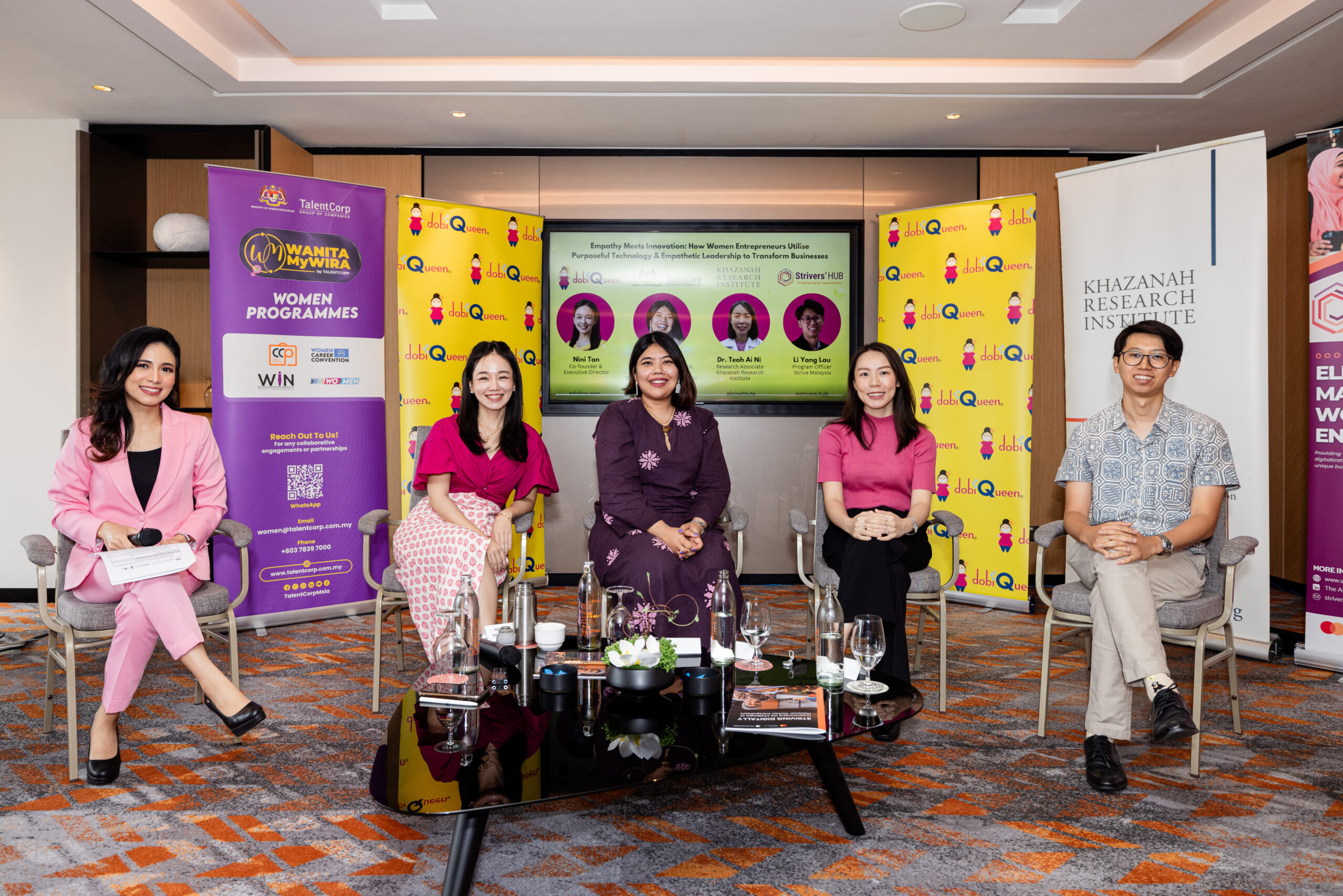
    In an effort to bridge the gender gap and uplift MSWEs in Malaysia, leading self-service laundrette dobiQueen has recently organised an engaging panel discussion entitled, “Empathy Meets Innovation: How Women Entrepreneurs Utilise Purposeful Technology & Empathetic Leadership to Transform Businesses” with experts from the public and private sector, including TalentCorp’s Wanita MyWira, Khazanah Research Institute (KRI) and Strive Malaysia.

    A study by Strive Malaysia has revealed that women entrepreneurs face three main challenges. Time poverty ranks tops with 97% citing juggling business, childcare, and household responsibilities as the biggest challenge. This is deeply rooted in gender norms, as women are often expected to be the primary caregivers in Malaysia’s social, cultural and religious contexts.

    While over 80% of MSWEs acknowledge the potential advantages of digital literacy, and are able to search for information online via Facebook, Instagram, and TikTok, many use it for personal rather than for business purposes. There is a disconnect between digital literacy and entrepreneurial pursuits.

    Lastly, only 50% of MSWEs expressed confidence in their financial knowledge and skill, limited to basic expenses of tracking income records, with many lacking understanding of broader financial concepts such as dynamic markets or funding applications. Of this, 78% expressed the need for more information from financial institutions in the areas of loan management, grants, and market information.

    “This insightful report has since guided the development of targeted interventions to address the unique needs of women-owned and women-led businesses.

    “We provide them with easy access to a free self-assessment tool, tailored skill-building training and microlearning resources, and mentorship opportunities, thus fostering a more enabling business ecosystem via Strivers’ Hub, a one-stop-shop digital platform designed to cater to the evolving needs of small businesses, particularly women entrepreneurs”, said Li Yang Lau, Program Officer at Strive Malaysia.

    Women entrepreneurs are on the rise, with women-led businesses such as dobiQueen combining purposeful technology merged with its understanding of Malaysian households facing time poverty as they juggle work, childcare and household responsibilities.

    Nini Tan, Co-founder and Executive Director of dobiQueen, shares, “As a small and medium-sized enterprise (SME), dobiQueen was founded 10 years ago with an empathetic mission to ease the burden of household chores.

    “Women spend close to 63.6% more time daily on unpaid work than men, with women continuing to perform an additional 3.6 to 4 hours on average for unpaid chores after office hours, leading to the “double burden” or “second shift”.”

    Both the private and public sectors have made many strides in uplifting women in society, with the Government allocating nearly RM470 million through the Budget 2025 to assist women-led entrepreneurs in Malaysia.

    Natasha Alias, Head of Wanita MyWira at TalentCorp, said, “In 2024, the Ministry of Human Resources, through TalentCorp, introduced Wanita MyWira to address workforce gaps by enabling more women to participate fully in Malaysia’s economy. As the agency driving national talent strategies, we are committed to supporting women’s career journeys – from re-entry to leadership, and strengthening their long-term contribution to the workforce.”

    “Wanita MyWira supports a broad spectrum of women – from students and returning professionals to entrepreneurs and industry leaders, through strategic advocacy, skills development, and employer engagement. The aim is to create real pathways into meaningful, sustainable employment.

    “In 2025, we’re scaling our impact with targeted efforts. These include promoting tax incentives under the Career Comeback Programme (CCP), embedding diversity, equity and inclusion (DEI) practices within universities, and working with industry to expand job opportunities for women.

    “With CCP tax exemptions and hiring incentives outlined in Budget 2024 and 2025, we’re driving outcomes that benefit both women and employers, and laying the groundwork for a more inclusive, resilient workforce.

    TalentCorp is also developing the Gender Action Lab Report, which explores forward-looking models for workplace gender equality. Aligned with the UN Women’s Empowerment Principles, this effort reinforces the agency’s commitment to building a more equitable and progressive labour market for Malaysia.

    Incorporating a broader view on women entrepreneurs in the marketplace, Dr Teoh Ai Ni, a Research Associate at Khazanah Research Institute (KRI), also shares about women-led participation as agri-food smallholders.

    “Based on KRI’s gender gap research conducted among 3,300 agri-food smallholders, agri-food production has similar economic importance for both men and women smallholders, but women are more likely to face challenges.

    “In the past, women’s roles in agri-food production tended to be invisible as they were often viewed as the ‘farmer’s wife,’ or the helping hand, rendering them as the ‘invisible farmers’.

    “Over time, with significant progress in gender equality and the Government’s efforts in empowering women, women’s contributions to agriculture are increasingly recognised, but their representation remains low.

    “This is partly due to the persistent gender-specific challenges women in agriculture face, such as gender stereotypes, the high burden of unpaid care and lower access to resources, that contribute to inequitable experiences.”

    With technological advancement and digital adoption, agriculture is no longer as labour-intensive as before. This offers more opportunities for women who are deterred by gender stereotypes or inequality in access to information and resources to participate and strive in agrifood production, similarly to men.

    However, more efforts are needed to close the gender inequality in resource access among women agrifood smallholders and address other challenges that generally limit women’s labour force participation, such as disproportionate care burden.

    As Malaysia accelerates toward its 2033 goal of a 60% female LFPR, the momentum driven by women-led SMEs, public-private partnerships, and inclusive policy frameworks is undeniable.

    Women are reshaping industries with empathy, innovation, and resilience. By addressing structural barriers and unlocking access to digital tools, financial literacy, and supportive ecosystems, Malaysia is not only empowering its women entrepreneurs but also charting a more inclusive, equitable, and prosperous economic future for all.