Over a long time of observing and interviewing many established developers, high-profile bankers, ultra-high net-worth investors, successful entrepreneurs and private equity firms, I would like to share with you a market proven real estate investment strategy that I call Property Investment Life Cycle or PILC.
With the skyrocketing house prices since 2010 in Malaysia, common investors have stampeded into property investment to ride the wave of fortune. Indeed, property investment is always one of the favorite options for high net-worth individuals to preserve their wealth and is arguably the safest asset class of all.
Delving into the fundamentals of property, I noticed that PILC is very similar to the human life cycle – people are born, grow up, age, and cease living. It makes no difference when it comes to property development and the property investment cycle. By adding value to a property according to different stages of its life cycle, investors can enjoy continuous profit regardless of the market condition.
Property Investment Life Cycle
The following are the six key stages in PILC and how you can reap significant return in these stages:
1. Land Acquisition
Buying land is usually significantly less costly while it is undeveloped compared to land that has usable construction structure. To put it clearly, the land is the raw material of any property development. Thus the saying – the best investment on earth is earth. Land is always a scarce resource as it is non-produce-able.
Hence, developers are constantly on the lookout to increase their land banks. Acquiring the right type of land such as agriculture, industrial, residential, commercial, and many more with the right size of density, plot ratio, type of usage and development, individual unit size will ultimately decide the potential value of the land.
Where property is “born” – this is the real crown jewel among the six stages as it contributes the biggest profit-making ratio within a short period in the PILC. Traditionally, developers acquire a parcel of land (or sometimes have a joint-venture with the land owner) and build multiple units on the same title.
Upon construction completion, the developers will market the end units to the public at a premium. Due to the high barrier of entry, huge capital and expertise involved, only large corporations and conglomerates are able to participate in this lucrative segment. However, by deploying the joint-development strategy a common investor can now invest together and earn like a developer as well.
3. Management
With an eye to enjoying constant property value appreciation, good property management always plays a pivotal role. Once a property is constructed, it needs both building management and tenants’ management to keep it in top-notch condition and attract quality tenants.
However, for some common investors, management is a nightmare in the journey of property investment while for an experienced investor, there are a lot of hidden gems in managing a property.
On the other hand, some special purpose property management strategies are able to reap high profit margin compared to the ordinary property investment. For example, Airbnb, co-working spaces, commercial car parks, student hostels, short stay accommodations are some proven strategies in property management.
4. Renovation
Renovation is like adding the soul into the body. It grants new functionality and enhances the appearance of a property. This strategy is one of the investors’ favourite as it can drive high profit within a short period of time.
In fact, there are many buildings in disrepair due to negligence of the owners. To shake the dust off the owner’s feet, they are willing to let go the property at a discounted price. By picking up these properties, you will attain profit by renovating the property and reselling it to the market at a better price.
5. Refurbishment
When an ageing property, especially heritage buildings in some countries, is occupied over some years, it may experience rundown, be severely damaged and may not be in liveable condition anymore. The deterioration of the abandoned building sometimes go beyond renovation works. This type of building requires a large fund for refurbishment.
Due to the reason that some property owners do not have the financial capacity to refurbish the building, these buildings can be purchased much lower than the market value. It can then be refurbished to a new design, providing new life to the historical building.
6. Redevelopment
When experiencing special events e.g. natural disasters such as an earthquake, volcanic eruption, fire, or change of market demand, the accelerated depreciation of the property value makes redevelopment a sensible decision.
Through redevelopment, existing buildings are fully or partially demolished and a new building is constructed. At this final stage of the PILC strategy, the said piece of land is given a new life to meet the local demand and thus boost the value of the property.
As mentioned in one of the famous quotes of The Art of War by Sun Tzu:
If you know your enemy and know yourself, you need not fear the result of a hundred battles. If you know yourself but not the enemy, for every victory gained you will also suffer a defeat. If you know neither the enemy nor yourself, you will succumb in every battle.
In short, if you plan to invest in any country, you need to understand its background including its economy, politics, risks and other important considerations that may ease your forthcoming investing journey.
What we invest in our time defines who we are.
About the Author
Max Shangkar is group CEO of Max Capital Management Holding Ltd and an expert in global project management consultancy. He is also the author of the best-selling book Investment Strategies for Global Real Estate.
He propounded the market-proven investment strategies of Property Investment Life Cycle and Business Investment Life Cycle that educated over 6,000 Global Investment Community members to invest in property projects and businesses in over 10 countries.
“17 years ago, I missed the opportunity to invest in Desa Park City. 5 years ago, I missed Sunway Velocity. I regret it. I don’t want to miss the boat this time”.
“Too many new projects available now and developer offers good incentives and rewards, I don’t know which to choose.”
“I heard many unpleasant experiences from friends and family, I worry the property I invested would be abandoned or the quality is bad when I gain vacant possession.”
These are typical comments you might hear when Malaysians share their perspective on property investing. Like other developing countries, economic growth and continuous urbanisation in major cities have made real estate investing one of the more attractive investment vehicles for Malaysians to grow their wealth.
There are loads of property investing books and “property gurus” on hand to offer pointers to those looking to embark on the property investment journey, imparting their strategies and experiences in this field. Some share their seemingly unbelievable profit-making experiences through property flipping (buy-to-sell) or property management (buy-to-rent).
The outbreak of Covid-19 in 2020 put a dampener on an already sluggish real estate market, resulting in property players having to transform their business model to weather the storm. Industry players responded with various digital innovations to allow most of the transaction process to be conducted without physical interaction.
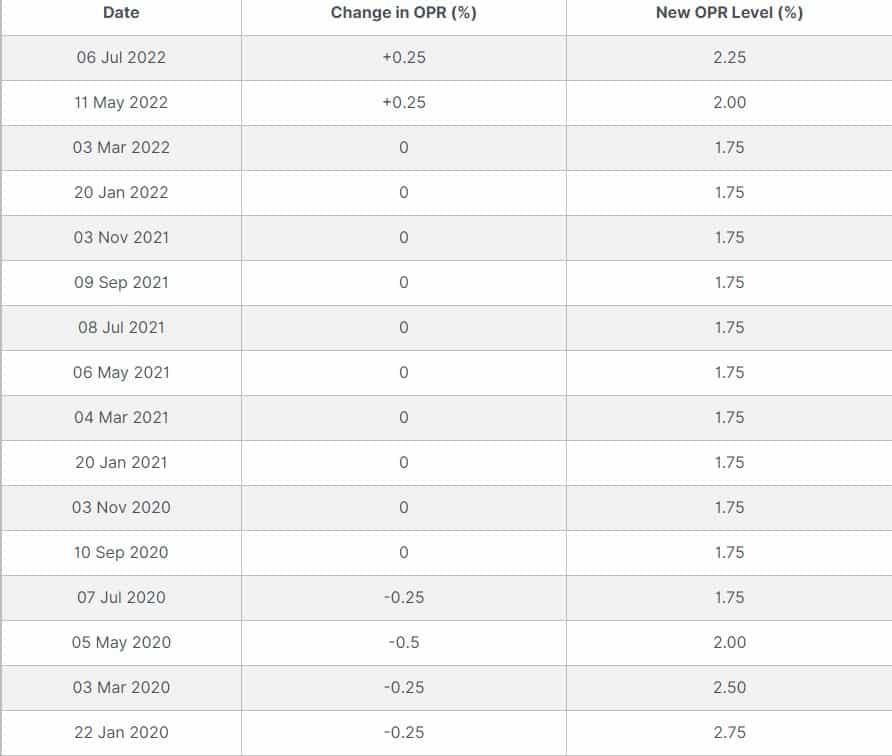
Supported by a low interest rate environment, these efforts seem to be paying off, as property demand at certain areas remained fairly stable despite the depressing health and economic backdrop.
Just like any other investment asset class, the real estate investment journey has its ups and downs. Some of us may make money from it, others should learn from the mistakes made so as not to repeat them to our own detriment.
An opportunity often arises from a threat, so it is important to be able to separate the wheat from the chaff. In order to have a higher probability of success, we will need to apply a structured approach to address these potential opportunities.
Plan-Check-Monitor
A structured opportunity management approach for investing involves a simple three-step process: Plan-Check-Monitor.
Plan refers to having a clear purpose and objective for the investment – do you know what you want to achieve and when you want to achieve that? The answer will determine your direction in investing and know what information is required to build a solid investment portfolio.
Check involves activities to survey and collect information about the respective investment to ensure it is compatible with your plan.
Monitor is about keeping track of any changes on investment and being sensitive to the important indicators that your investment returns can potentially sustain and improve, or otherwise. This also requires one to be nimble and responsive according to changing market conditions. Adopting the PCM approach will enable investors to differentiate whether it is a real opportunity, and to know how to ensure the compatibility of the opportunity to one’s current situation.
As property investing is possibly the single largest financial commitment in one’s lifetime, it can have a different impact on various aspects of our personal and family life. As such, merely asking what property to buy or where to buy is not enough.
So how we can apply the PCM model in a property purchase scenario?
You should start with questioning. What is your primary purpose for this property investment? What is your goal for this investment? The answer is crucial to determine the appropriate strategy to follow.
Say you are looking for an own stay property. You will need to identify a property that caters to your current and future family needs. Start by consolidating information about the targeted property (for example, understand the potential of the upcoming neighbourhood, the demographics, nearby amenities, etc.).
Then identify and assess the saleable area of the property, number of rooms, potential renovation costs due to expansion or layout restructuring and suitability for future expansion to determine its compatibility to your needs. For newlyweds, do not forget to consider the extra rooms for your future children.
If you are looking for investing or a rental property, you need a clear approach with cost-effective solutions and a well-planned property rental management strategy to optimise your rental yield. If you want to save the cost of engaging agents or a property management company, you need to determine if you have the capability to do it on your own.
Again, start with gathering information about the property types that are popular for rent, the targeted potential tenants, their preferred rental price range, etc. Then continue to identify and assess the property based on the needs of your targeted tenants.
In addition to this, you should continuously monitor the progress around the targeted property area. Are there any growth plans and projects to spur the development of that area, such as upcoming MRT lines, connection to highways and other developments that might affect your investment return direct and indirectly?
You should also be prepared for vacant tenancy periods without rental income as this will represent an opportunity cost to you. Hence, your sensitivity towards the growth around the property area will assist you to seize the opportunity in pricing the rental accordingly.
Potential capital appreciation and positive rental income is a property investor’s ultimate goal. Nevertheless, few can accurately predict their actual investment return as this will depend on the overall development and progress of property location – actual versus expected.
Given this uncertainty, it is important for you to have a practical plan to secure the rental yield and a well-planned exit strategy prior to investing in any property. As such, one can apply the PCM model prior to the investment instead of blindly following what is recommended by people around you.
Impact On Your Financial Health
Malaysia currency of Malaysian ringgit banknotes background. Paper money of one, five, ten, twenty, fifty and hundred ringgit notes. Financial concept.
The above examples should give you a fair idea on how you should approach a property purchase in the future. But is this sufficient for you to make the right property-related financial decisions? Will the purchase have a positive or negative impact on your overall financial well-being? To answer this, we will need to overlay the decision-making process with a holistic financial planning perspective.
Broadly speaking, holistic financial planning provides you a 360-degree view of your financial situation, taking your current and future financial expectations into consideration to empower you to make more informed investment decisions. A holistic financial planning empowers you to constantly be on guard against possible investment risks and potential financial costs as you expand your property portfolio holdings.
Working on strategic asset allocation helps you manage your investment risk while stabilising your overall investment returns. For example, strategic asset allocation will remind you to invest less than 40-50% of your funds in properties.
Understanding key financial ratios provide valuable information to help you monitor your debt ratio to avoid over-gearing and keep track of your emergency funds in the event of a scenario without rental income. Cash flow management will help you ensure that you have sufficient cash for down payment without using up your emergency funds, and give you clarity on how you can continue to save and invest for other goals once the property loan repayment starts.
In conclusion, there is no doubt that property investing has a big role to play in growing one’s net worth. However, there are pitfalls in investing in this asset class so the practice of opportunity management approach utilising the PCM model, coupled with holistic financial planning, will help to minimise.
About the Author
Jess Hon is a Licensed Financial Planner with Finwealth Management Sdn Bhd and would like to assist millennials to take control of their own finances and achieve financial happiness. She can be contacted at jesshon@finwealth.com.my
We at Smart Investor and Finwealth is committed to help you better manage your financials. Get a free consultation from an expert by filling in your details here: https://www.smartinvestor.com.my/SIxFinwealth
Do you know how much is your Home Loan eligibility? Not sure how much you can borrow from the bank?
Get your TechRevo credit report + Home Loan Eligibility which includes:
Credit history up to the past 12 months [CCRIS]
Bankruptcy, Legal Suits, Legal action from banks, SAA, and Trade Bureau (Section E)
Max home loan eligibility calculation up to 12 mortgage favorable banks in Malaysia
Planning to do some property investing after the pandemic? Here are some factors to help you find rewarding deals.
Real estate investment is one of the most preferred forms of medium to long-term investment, especially for Asians. It increases in value and generates ongoing passive income over time.
Despite the Covid-19 pandemic that took a toll on Malaysia’s property industry, experts say the property market will likely recover in 2022 with renewed consumer confidence and the expected recovery in Malaysia’s overall economy. They anticipate that property investing will get better in the first half of this year before it begins to pick up in the second half.
“All signs are pointing towards 2022 being a recovery year for the property market in Malaysia. It is predicted to be stable in the first half with gradual improvement in the second half. While many are adopting a wait and see approach, landed properties in the Klang Valley are hitting new highs each month,” says Chan Ai Cheng, President of the Malaysian Institute of Estate Agents.
4 Factors To Consider In Property Investing
With the attractive low interest rates and property prices on an upward cycle, it seems like a good time to snap up some good properties. However, you do need to have a sound knowledge before venturing into the world of investment properties.
According to Chan, some of the factors to consider when investing in a property in Malaysia include:
1. Purpose Of Property Investing
Are you looking to make money through rental income or property appreciation? What you plan to do with the property makes a difference in deciding the type of property you need to buy. It also helps you narrow down the available options to find one that is better suited for your needs.
2. Location And Neighbourhood
Location is one of the most crucial factors to consider when investing in property. Other factors include accessibility and connectivity, amenities, plans for future development, proximity to transportation network, and how safe is the location from natural calamities like floods or landslides.
“For me, I look for properties within easy reach of areas I am familiar with. There may well be opportunities in other localities, but it is always best to invest in locations you know best. You would have better knowledge of the neighbourhood, past prices, and potential for the area compared with buying on one’s hunch,” she explains.
3. Type Of Property
The main three types of property investing include residential, commercial, and industrial.
“In Malaysia, most investors buy residential properties with a minority investing into commercial and industrial properties,” Chan says.
Popular residential property options include landed properties like terraced houses, semi-detached houses, or bungalows. For non-landed properties, they include highrise or strata residential properties such as condominiums, serviced residences, and apartments.
Each property type has its own set of terms and guidelines or considerations; thus, you need to determine what you are looking for in advance.
4. Budget
Your choice of property to invest in should not only be a good investment, but it should also fit within your budget.
When calculating your budget, remember to factor in all initial costs such as downpayment, legal fee, stamp duty, bank processing fee, valuation fee (for subsale), as well as renovation expenses to get the property ready for use.
Besides the monthly loan instalment, you also need to budget for recurring payments that come with owning a property such as monthly maintenance charges, annual quit rent and assessment tax.
While most people buy directly from the developer and the secondary market, Chan says that there are some investors who focus only on picking up investment properties via public auctions. So, how do you find a profitable investment property in Malaysia post-pandemic?
“Data is key,” says Chan.
“Do your research on the type of property and the location you have your eye on. Although most hold the view that investing in property should not be an emotional affair, it is quite hard to separate the two.”
According to Chan, if prices of properties within the area you are targeting have had a downward adjustment in asking prices – then it might be worth your while to put in an offer.
With the rising cost of building materials and disruptions in the supply chain, Chan indicates that this might lead to higher property prices. This is favourable to property owners as real estate has historically been viewed as a good hedge against inflation—when housing prices rise with inflation, owners will see appreciation.
Besides being a hedge against inflation, if done right, property investing can get you a substantial return through passive income and equity gains.
Do you know how much is your Home Loan eligibility? Not sure how much you can borrow from the bank?
Get your TechRevo credit report + Home Loan Eligibility which includes:
Credit history up to the past 12 months [CCRIS]
Bankruptcy, Legal Suits, Legal action from banks, SAA, and Trade Bureau (Section E)
Max home loan eligibility calculation up to 12 mortgage favorable banks in Malaysia
Very recently, I’ve been shopping around for property for my own stay. This reminds me of the time I looked for my first property investment over five years ago. I’m still holding on to that property at a loss – both in cash flow and unrealised capital losses.
As a friend once said, things that happen to us could either be a blessing or a lesson.
This loss-making investment has given me three very important lessons that I hold close to my heart when it comes to property purchases.
1. Avoid new developments
As a professional real estate lawyer friend once told me, “Buy certainty when you are looking at investment property”.
The allure of a new development is apparent – minimal to no upfront costs (i.e. affordable), a lot of incentives, looks new and nice, etc.
However, every new development that we buy into is a bet. A bet that the developer will not fail, a bet that the future market is bright so that the value goes up, a bet that it has a market for good rentals.
When I bought mine, it was going to take three years to finish building. It was a mixed development that was supposed to come with a mall right in the middle (the second mall in that area). But, it didn’t happen.
The (prominent) developer decided to take out the mall from the development, SECRETLY! I only found out about it after it was completed in three years.
The mall just disappeared from the plan altogether as if it never existed.
Furthermore, more high-density properties started to pop up around that development. Causing supply to skyrocket around that place. Naturally, the value of my property dropped significantly.
As a result, I’ll be avoiding all new developments, even for my own stay. Nothing’s stopping them from delivering the property to you hastily or taking forever to fix the defects in the property.
Or building up the commercial space, which they promise will be vibrant, but end up becoming a dead place with only a few tenants.
Rather than buying something so uncertain, it would be better to buy into an existing property, where I can clearly evaluate how good or bad the place actually is.
2. It’s all about the maths
From the get-go, it’s all about the calculations when it comes to property investment. I got suckered in by the sales pitch for my first property and being a newbie then I didn’t do my own calculations.
The obvious part is that the rental income has to be higher than the mortgage payments and management fees.
The not-so-obvious part is the indirect costs – agent fees, maintenance fees, assessment tax, income tax, etc. These will eat into the income and hence reduce the net income that we would get.
Which means, we’d require a bigger margin in order to cover all these costs so that it’s profitable in the end.
For example:
– Mortgage + management fees = RM1,500 – Rental Income = RM1,700 – Indirect costs = RM140 (RM1,700 / 12 being the agent’s first month fee) + RM200 (miscellaneous fees) – Loss = RM140 per month (= RM1,700 – RM1,500 – RM140 – RM200)
Don’t hope for capital gains because it’s uncertain. Ask anyone who bought a new property five years ago at the peak of property prices. Most, if not all, are suffering from capital losses now.
Get the profit maths right before any investment. If it’s cash flow negative, forget it. It’ll be a pain somewhere down the road.
The saying of, “at least partially it’s being paid by someone” or “It’s breaking even!” is nonsense at best. Nobody enters an investment to break even!
3. Property investment is semi-passive
When we talk about property investment income, mostly we talk about renting out to tenants to collect rental income. The passive income part is when tenants pay rentals on time throughout the tenancy.
That’s about it.
There is a whole other side of property investment, which demands active participation. Some examples:
– Getting a tenant in involves liaising with the property agents on and off (every month it’s not tenanted is a loss to the P&L) – In between tenancy, there is a period where the property needs to be “cleaned up” and ready for the next tenant. The degree of work (and costs) required depends on how well the previous tenant took care of the place – Tenants with issues can create headaches during their tenancy. This could be delayed payments, pests, broken things, etc. We won’t know any of these for sure until the start of the tenancy
Some investors, especially those with a big portfolio of properties tend to engage property managers to manage the portfolio to get the headache off their minds.
This will bring down the returns but at least it’s converted into a mostly passive income portfolio. However, for most of us, this can take up significant brain juice, time, and effort to handle.
However, it’s all good as long as the profits from the investment better justify the effort required. Refer to lesson no. 2.
Closing thoughts
My first property was a headache. Students are potentially one of the worst tenants ever, in my experience.
In contrast to my trading and other investments, I’d rather put in more of my efforts there. The rewards in property can be huge, no doubt, but it isn’t one that I prefer.
It might be obvious for many but hope this reaches those of you who are looking into your first property for investment. It may help you in your journey!
About the Author
This article was originally published at betweenthemoney.com, a personal finance website by Jason Loh that focuses on money matters and investment topics for Malaysians
This article is written to share some steps for you to consider when evaluating properties as an investment vehicle in Malaysia.
Think of it as a methodology for you to apply during your first round of scouting properties before going into more detailed research.
This selection process can be applied to property investment opportunities in both the primary market (properties under construction) and the secondary market, including auction properties.
The goal is to identify a suitable area and then select property that will represent a logical, financially-suited and tax-effective investment vehicle.
1. Look for established and planned infrastructure
One of the specific elements that influences demand within an area is the degree to which established and planned infrastructure is readily accessible to tenants.
Thus, it’s crucial that the existing and planned infrastructure surrounding property is critically identified and assessed.
Ask yourself why property in areas like Taman Tun Dr Ismail (TTDI), Mont Kiara, Bangsar and Desa Park City are very sought after?
One factor is that these neighbourhoods are matured, secure and self-sufficient townships that offer many modern conveniences — from good schools, access to banks, retail and F&B outlets, and many popular public parks.
Using TTDI as an example, it’s close to popular commercial developments such as 1Utama Shopping Centre, the Bandar Utama City Centre, and the Curve, as well as a number of multinational companies that base their offices nearby like Tesco and IKEA in Bandar Utama.
It also has a green lung of Lembah Kiara as a public park.
Infrastructure can be divided into two broad categories:
i) Accessibility – Local transportation links like access to local bus routes, MRT/LRT feeder buses, train stations, access to highways and also major arterial roads
ii) Local amenities – schools (including international/private schools), shopping centres, parks, hospitals, recreational areas, jogging/cycling paths, public parks etc
An attractive area for property investment is an area with amenities and rich infrastructure, of which there are several in Malaysia.
Alternatively, you could also look at areas that have some upcoming planned infrastructures like new highways (DASH, SUKE), highway access (MEX extension or interchange add ons), new MRT lines, LRT lines, and convenient access to commercial areas with eateries, banks and offices.
Other key indicators include sustainable malls (not just any mall, but those with established management with experience running malls that are well occupied/tenanted and well patronised), government or private/international schools, universities, public transportation, green lungs like parks and recreational areas, and working populations with a heavy focus on professionals in the middle to high-income group.
However, the time it would take for these infrastructures to be resident-accessible is a factor that shouldn’t be ignored.
Remember that you have to take into account the duration for your own target property to be built as well as the maturity of new infrastructures (highway, MRT, LRT, new central business district, malls etc) to be ready.
The faster one expects infrastructure to materialise, the quicker and better the chance of a property investment yielding capital appreciation while simultaneously lowering the risk of the infrastructure project being postponed or worse still, called off entirely.
Many will testify that this is not an uncommon occurrence in Malaysia!
2. Observe the residential vacancy rate and supply of similar properties
The same fundamental economic forces that affect the share market or even the price of coffee in your neighbourhood cafe are the exact same forces that affect the price and rental of the property market: supply and demand.
Naturally, an area with high demand but limited supply will inevitably experience above-average capital growth. An area that is “oversupplied” in contrast to demand will result in lower average capital growth.
A property investor in an oversupplied market may be forced to:
i) experience an extended vacancy period;
ii) be forced to revise the rental rate downwards to attract a potential tenant in a competitive market environment; or
iii) incur a greater than anticipated cash outflow/expense as a result of lower rental yield and/or extended vacancy rate
An area with strong property demand is also more likely to attract tenants and own-stay occupiers to the same area.
One perspective to consider is to think about an area with a lot of units, it’ll be sensible to analyse and identify the vacancy rates in the development and also the surrounding area of the neighbourhood.
If the vacancy rate is high (for example, over 10%), be wary about the competition you may have, not just within the development you have invested in but also neighbouring developments.
In the instance of high vacancy, it is a tenant’s market to pick and choose.
In a competitive tenant-oriented market, you will need to consider ways to manage the vacancy or to attract tenants to pick your unit over others.
Before buying any property for investment, plan ahead for sufficient reserves to act as a buffer to sustain a higher vacancy period and/or putting in more capital to furnish the place or make your unit stand out among the competition.
3. Focus on mass market property and homes with a unique selling proposition
For property investment, consider buying mass-market product homes in the target area, but ensure that your entry price isn’t above similar transacted prices.
In the worst case scenario, purchasing a poorly selected property that has little valuation upside below the average transacted cost of similar properties in the area, at the very least, an investor would not be the first to lose money.
You should also look at the median property price of any one area.
You’ll often hear the saying “location location location”, however, the relevance to that mantra is not quite the same in this day and age.
More importantly, consider whether the price you are paying is around the average of the property market, whether or not the average Malaysian can afford to buy/or rent in the area that you’re targeting.
A typical rule of thumb we recommend is that a property investor invests at a price point within a 15% range of the median property for that particular area or development.
Our observation is that by limiting one’s scope to properties within this 15% price range, an investor is able to obtain an “above average” property that is more likely to represent good value for a future purchaser and prospective tenants.
To put it simply, a property within this price range maximizes represents a home the majority in that area is likely to afford to either rent or buy.
4. Be open to multiple rental strategies
Have an open mind and consider having multiple rental strategies for your property investment to target different rental prospect segments such as students, middle to high income locals, or expats so that you don’t just depend solely on one type of tenant.
For example, a “mass market property” in Bangsar, Mont Kiara, or TTDI isn’t within the same price bracket of a “mass market property” in Puchong, Selayang, Rawang or Sungai Buloh. This also applies to other hot areas within Malaysia.
A mass market development refers to properties that are priced and rented at affordable levels to the locals in that area. There are two parts to this equation:
Firstly, you must find out what the prices are for the various types of properties within an area. For example, segments condominiums landed bungalows and terrace houses to use as examples.
The second component is to roughly estimate who the locals in the area are and how much they’re likely to earn.
Typically, as a rule of thumb, a tenant or own stay would spend a maximum of one-third of their disposable income for housing expenses each month.
So if the usual rental price of a property is RM2,000 per month, the disposable income for that household should be around RM6,000 to RM8,000.
Do plan out multiple rental strategies like having a master tenant, rental on a per room basis, or even platforms like Airbnb, so that if one doesn’t work, you can try another approach.
If you buy a property relying on one stream of marketing, eg. only Airbnb, you run the risk of property management deciding to ban it.
And if your Airbnb unit isn’t profitable or requires too much time to manage or a black swan event like the Covid-19 pandemic leading to a lack of travellers, you’ll struggle with tenancy options.
5. Pay attention to the cash flow rule
Ideally, you’ll want a property investment where the minimum expected rent can cover 80% of your monthly mortgage instalment so that it wouldn’t deplete your cash flow to the point where you need to sacrifice your vacations, luxuries, cars and other basic necessities.
This also implies that with better cash flow, you could be eligible to obtain more loans in the future and therefore can invest in more properties or other assets of your choice.
Let’s use a subsale property that costs RM560,000 as a case study.
Purchase Price = RM 560,000
Loan Amount = RM 504,000
35 years tenure, 4.6% rate, Installment = RM2,416
Assumptions:
There are no new major catalysts (e.g. transport infrastructure, central business district) that affect rental appreciation)
There are similar developments that we can take as a comparison. Rental benchmarks are taken based on the transacted rental of units with a similar layout that’s less than 10 years old
Case A: If your rental = RM1,900
Rental-Installment Ratio = Rental / Installment = 1900 / 2416 = 78.6% → not qualify
We can say that Case A is not good enough to be considered because the Rental Installment Ratio is below 80%.
Does this mean we disqualify Case A straight away? It depends.
We did the comparison based on assumptions that the area does not have any other major infrastructure to induce a more significant increase in the rental. Secondly, there are similar units in the area that aren’t much older than the subject.
Let’s look at another point of view, in which the scenario is that there are major infrastructure developments and amenities where the rental could possibly increase to RM2,000 for example:
Rental installment ratio = 2,000/ 2,416 = 82.7%
Therefore the property now should be taken into serious consideration.
OR
If there is no newer supply of similar units. Most existing developments are already more than 10 years old, and the rental benchmark against these developments aren’t apple-to-apple comparisons, and rent of RM1,900 would be an underestimation of rent potential.
New development with a modern facade and newer facilities has strong property investment potential and is in a strong position to command a higher rent.
Prospective tenants would likely be willing to pay a 10-20% premium to live in a more posh and modern residence, especially if they are expats in Malaysia.
These are just two examples of how one development becomes a “good” or “bad” development based on different factors.
6. Prioritise and achieve balance of rental yield and capital growth
Capital growth isn’t the only factor that makes property investment exciting; it’s also the fact that regular and constant income can be derived from real estate that makes it a sound investment choice for many investors.
Rental income is also a source of cash flow that can be used to pay down debt on the property. Rental yield, therefore, is simply the annualised rental income expressed as a percentage of the value of the property.
For example:
Property value = RM400,000
Monthly rental = RM2,000
The annualised rental income = RM2,000 x 12 = RM24,000
Rental yield calculated as a percentage = 24,000 / 400,000 = 6%
This is not only an important percentage as it helps to determine the return on investment so that the cash flow requirement of servicing and maintaining the property can be calculated, it also provides important information about the rate of capital growth.
A natural response would be to obtain as high a rental yield as possible. However, this may not always be the best route for the investor.
More often than not, an area experiencing high rental yield is more likely to have a lower capital growth, and vice versa.
Usually, when rental returns are high, investors are willing to accept a less than average capital growth rate. When rental yields are lower, investors must be compensated by achieving a higher than average capital growth rate.
Most people will strive to achieve a balance between making a bit more money now (higher rental yield, cash flow and lower capital growth rate) or more money later (lower rental yield, higher capital growth rate).
7. Calculate potential cash on cash return(COCR)
COCR can be used as a metric to quickly evaluate if you should pump in more capital for the investment property.
However, we urge caution when looking solely at this number as this figure may not necessarily be the most useful and accurate way to evaluate the rate of return beyond one year.
Cash on Cash Return = Income / Capital Outlay
Income = Rental income – (installments + maintenance + sinking + quit rent + fire insurance)
To compare buying an undercon and subsale at nett price of RM550,000
a) Buying an undercon
Price: RM611,000
Loan amount : RM550,000
Monthly installment = RM2,637
Progressive interest costs: RM20,000
Downpayment: ZERO
Legal fee, stamp duty = Waived
Renovation = RM25,000
Capital outlay : RM 1,000 + RM 25,000 = RM 26,000
Assuming a first year rental of RM1,900 per month:
Income = (1,900×12) – (2,637+300) x 12 – 1,000 (assessment) = – RM13,444. In the first year, cash flow is negative for over RM13,000 and I spent RM26,000 to acquire the property
A quick calculation of COCR = -13,444 / 26,000 = -51.6%. This shows a negative COCR.
Consider the next investment option:
b) Buying a subsale
Price: RM550,000
Loan amount: RM495,000
Monthly installment = RM2,373
Progressive interest costs: ZERO
Downpayment: RM55,000
Legal fee, stamp duty, valuation = RM22,500
Remodeling / Refurbishments = RM30,000
Capital outlay: RM55,000 + RM22,500 + RM30,000 = RM107,500
Assuming a first year rental of RM2,200
Income = (2,200×12) – (2,373+300) x 12 – 1000 (assessment) = – RM6,676
In the first year, cash flow is at negative RM6,000 but I spent over RM100,000 to acquire the property
A quick calculation of COCR = -6,676 / 107,500 = -6.21%. This shows a negative COCR.
As COCR is only good in the short term, you need a better way to analyse your target property otherwise this number, which happens to be negative, will not tell you much. What can be deduced from this figure? Does a negative COCR tell you that you’re going to lose money?
Both options have negative COCR, but scenario (b) is less negative.
Scenario (a) capital outlay is RM26,000 with COCR -51.6% while scenario (b) capital outlay RM107,500, COCR -6.21%. How can you tell which one gives a better return? Can there be another way to evaluate these two options?
8. Meaningfully analyse your potential return on investment via internal rate of return (IRR)
As investors, it’s important to know the returns you make on your investment because you want to be able to know which are winning plays or losing plays.
For financial instruments like shares, bonds or unit trusts, keeping tabs on how well these investments are doing is quite easy because these investments have to produce some sort of “report card” each year; some may even produce it monthly.
If you don’t know how to check on the status of these investments, it’s probably best you engage a financial advisor to help you out.
However, it’s not that simple for property investments.
Using the internal rate of return (IRR) takes into consideration the cash outflows (your cost) of owning the property over any given investment horizon.
Cash on cash return (COCR) doesn’t give you an accurate picture of how good or bad your investments are, as you wouldn’t be able to make comparisons using COCR with the returns you get from other investments like entering into a business venture, Amanah Saham Bumiputera (ASB) funds, unit trusts, shares, or any other options available to you.
COCR = Annual cash flow / Total investment
Annual cash flow = all income – all expenses. It captures the snapshot year by year. If the COCR is positive, this suggests you’re getting some returns from the money put into this investment.
But what if the COCR is a negative number?
How would you benchmark against other asset classes? Property investment is a long term investment vehicle. Taking a snapshot return of any one particular year does not convey the full picture about whether you stand to make good or bad returns or lose money.
Rental yield = Annual rental / purchase price
This metric gives a quick indicator as to how the property is performing but it does not tell you anything about the expenses incurred to get the property rented out at a certain rental rate.
For example, let’s say owner A has two properties worth RM560,000 each of the same layout and size in the same development.
For one unit, the owner spends RM40,000 and he gets a rental of RM2,800 and for the other, he spends RM25,000 to get a rental of RM2,500.
Rental yield for unit #1 = 2800 x 12 / 560k = 6%
Rental yield for unit #2 = 2500 x 12 / 560k = 5.36%
The rental yield for unit #1 is 6% while unit #2 is 5.36%, but can we conclude that unit #1 is better than unit #2? It isn’t very accurate to make such an assumption just by looking at this equation.
If we restrict ourselves by analysing based just on rental yield, we will ignore the other extra cost of RM15,000 that it takes to be able to charge a RM300 premium on the rental yield of unit #1 compared to unit #2.
One way to address this cash flow is to use the internal rate of return as mentioned earlier. This is the third complimentary benchmarking tool to look at to help you make more informed decisions when evaluating a property, and is also useful for considering other asset investment classes.
IRR is simply the internal rate of return of the investment in which the net present value of all cash flow equals to zero.
When investing in property, it’s important for you to have a plan.
A plan is not the same as being told “let someone else pay your loan”; or “this property is yielding 20%” when you don’t know what those two sentences mean! Like all investments, there is a tried and tested method called IRR or internal rate of return.
One of the worst methods of getting information to validate an investment is through forums or a non-expert.
While we recognise the advantage of getting tips or rumours if you’re going to be spending a lot of money on your investment, why take the risk at all?
To evaluate transacted data, begin by benchmarking the selling price of the target property against the transacted price of similar products in the area for the last 12 to 24 months.
Building a portfolio is just like building up a football team – your team will require good cash flow properties (defensive) and good capital gains (offensive).
You can maintain your portfolio through defensive plays alone, but this strategy wouldn’t give you much cash to grow your portfolio.
The ability to consistently buy successful undercon properties involve many uncertainties that include the workmanship, delays or abandonment of the project, cancellation of nearby infrastructure and so on.
On the other hand, one can get more reliable data about transacted price and rental from subsales properties.
You can also visit the development and check out crucial factors like the profile of the residents and the upkeep of the development to entirely avoid the risk of construction delays or abandonment.
Cash from capital gain plays can be used for several purposes: loan reduction for defensive play properties, portfolio expansion, or used as self-rewards such as travelling, a dream car, or starting up a business.
Others may also use capital gains to fund children’s education or to keep for health emergencies.
You should also consider the time and effort of managing four units of low cost flats vs managing two residential properties for middle-upper income groups.
A low-cost only portfolio strategy does have its drawbacks.
Firstly, it’s more likely that you’ll encounter more issues managing lower income bracket tenants like late payments or even defaults.
Secondly, management spends on amenities improvements is limited. Most of these developments are run down and will not look appealing to future buyers or renters.
On the other hand, low-cost apartments provide better rental yields with limited capital appreciation.
Some people believe that buying landed properties gives better capital gain, sacrificing cash flow. Investing in too many landed developments will significantly affect short term cash flows compared to highrises.
In addition, to aim for better capital gains, people believe in investing in new areas or untested products (small units, new/low occupancy offices towers, landed play, negative cash flow) to hopefully enter at a lower price and exit the market after the boom, (for example, Setia Alam).
New areas and new mega developments involve huge resources and take time to build and there are a lot of dependencies and uncertainties involved.
Developers usually take a minimum of 10 years to build a self-sustaining township. Holding power and cash reserves are the most important considerations in deploying this strategy.
Your ability to maximise your property value depends on your holding power, your own patience, and cash reserves.
There are people who prefer the hybrid investment model (capital gain + cash flow), who would choose investments in high rises below market value while still offering decent cash flow.
And then there are others who use properties as a vehicle for wealth preservation or to provide a steady stream of income and tend to prioritise strong cash flow properties.
It all depends on your own resources in deploying proper investment planning, risk appetite, holding power, cashflow priorities and many factors.
The winning formula is about creating a balanced mix that suits your game plan to meet your financial goals. There are no free lunches out there so keep learning, and apply the knowledge learnt.
The more enlightened you get, you’ll make better, rational choices when building your nest egg for the future. All the best in your investment journey!
About the authors
Rozanna Rashid is a Licensed Financial Planner (CFP, IFP) and has an MSc in Real Estate Economics & Finance from the London School of Economics & Political Science. She can be contacted at rozanna@alpine-advisory.com
William Wong is an avid property investor and has an MBA (Finance) from Universiti Putra Malaysia. He is also the co-founder of Property Buddy PLT, a company that helps property investors strategise to achieve optimised rental returns via refurbishment for their investment properties
Let’s use the following example of a 1,500 sq ft fully furnished, two-bedroom, three-bathroom apartment in Mont Kiara valued at RM1 million, with rental at RM4,000 per month and a RM500 monthly management fee. We also assume that for 5 years, the property is perpetually rented. The rental yield is [(4000-500) x 12]/1,000,000 or 4.2%.
While this is simple enough math, it doesn’t take into account appreciating (or depreciating!) property. Nor does it take into account the upfront costs you probably paid to renovate the home for it to be competitively rented out. And what about those annual taxes? Or that one-month agent fee you paid?
Going over the variables for this exercise, we get:
(A) Initial outlay – including legal fees, down payment and booking fees = -RM150,000
(B) Monthly loan payments = -RM3,800
(C) Upfront renovation works = -RM50,000
(D) Monthly management fee = -RM500
(E) Monthly rental income = RM4000
(F) Taxes and property insurance = -RM1000
(G) Hypothetical net selling price of the property in year 5, minus RPGT and marketing/selling costs (eg. agency and lawyer fees) = RM1,100,000
(H) Hypothetical remainder of loan outstanding on the property in year 5 = RM790,000
Step 1: Calculate net inflow or outflow for each year
Let’s put the values below in Column B, next to the corresponding years in Column A.
Year 1 = A + (B x 12) + C + (D x 12) + (E x 11) + F (don’t forget the one month agency fee!)
Year 2 = (B x 12) + (D x 12) + (E x 12) + F
Year 3 = (B x 12) + (D x 12) + (E x 12) + F
Year 4 = (B x 12) + (D x 12) + (E x 12) + F
Year 5 = (B x 12) + (D x 12) + (E x 12) + F + G – H
Step 2: Input the formula for IRR in Excel
In cell B6, input =IRR(B1:B5) to select the values of the cash movements in Step 1 above.
This should result in an IRR of 9.08%.
Summary
In short, the internal rate of return is an annualised investment return which is directly comparable to other asset class returns. For example, if a share at the end of one year gives you 14%, inclusive of capital gains of the stock as well as dividends, then this number becomes immediately comparable to the IRR of the property.
The trick here is to be realistic and be honest with yourself. After all, there’s no point cheating in comforting yourself that these property investments are “paying for themselves”. Using ratios and numbers such as IRR enables astute property investors to make logical decisions on what represents a good or not-so-good investment decision.
Rozanna Rashid is a Licensed Financial Planner (CFP, IFP) and holds an MSc in Real Estate Economics & Finance from the London School of Economics & Political Science. Her background is in corporate banking and Islamic finance and she can be contacted at rozanna@alpine-advisory.com.
Most millennials are taught from a young age that owning a property, especially their own home, should be one of their life goals.
This leads to them saving up diligently from the day they enter the workforce with the dream of owning a property someday, either for their own stay or investment purposes.
However, you should remember that getting the keys to your own property is not an endgame.
Having signed the mortgage loan agreement, most will assume the best and expect to live until the loan is fully paid off.
But in the unfortunate event that you are no longer around to pay off the loan, it is important to ensure that you leave behind an “ASSET” and not a “DEBT” for your loved ones. On top of that, you have to distinguish what is the difference between MRTA vs MLTA.
Why Should I Have Mortgage Insurance?
These days, most mortgage tenures range from 30 to 35 years.
This is a very long time and should unforeseen circumstances like pre-mature death, disability or serious illnesses occur, your joint-borrower or next of kin (spouse, parents, children etc.) will need to continue servicing this debt until it is fully repaid. In other words, your debt has become their liability.
Therefore, it’s important to have mortgage insurance to protect against these risks even if the property is meant for investment purposes.
Some may argue that if the property is bought as an investment, it’s not necessary to have mortgage insurance as the property can be sold should the unforeseen happen. However, you must remember that the property market is cyclical in nature.
What if tragedy strikes during a crisis or market downturn? Your next of kin may need to sell the property at distressed prices and suffer financial losses from the sale just to pay off your outstanding loan.
So in order to safeguard against these risks, it is very important to have mortgage insurance and also a will to smoothen the process for distribution of your estate.
The two most common mortgage insurances are MLTA (Mortgage Level Term Assurance) and MRTA (Mortgage Reducing Term Assurance).
The Difference between MLTA and MRTA
Generally, an MLTA offers not only protection for the amount of outstanding loan, but also functions as savings since the amount insured will be consistent throughout the duration of the loan.
If nothing happens at the end of the loan tenure, you will receive back the total premium that was paid over the years. On the other hand, an MRTA covers the money owed to the bank from the loan.
The coverage decreases over time and if nothing happens at the end of the loan tenure, you won’t get any money back.
As for the protection coverage, both MLTA and MRTA offer basic life coverage (Death or Total Permanent Disability) with the option to include critical illness coverage depending on your needs.
For MLTA, you can appoint anyone as your beneficiary whereas for MRTA, the sole beneficiary is the bank.
In addition, MLTA is also transferable which means you can sell off a property and replace it with another property under the same MLTA.
Even if you refinance your loan, you do not need to replace it with a new MLTA. For MRTA, it is non-transferable as it is tied to your loan with the bank.
In terms of cost, an MRTA is more affordable. The premium for MRTA is paid as a lump sum and can usually be bundled into the mortgage loan.
As for MLTA, you can choose to pay your premiums on a monthly, quarterly, semi-annual, or annual basis.
So What Should I Do?
In most cases, the banks will typically offer you mortgage insurance (MRTA) together with the loan.
However, it is not compulsory for you to take up this mortgage insurance from the bank so don’t feel pressured into getting it.
Instead, seek consultation with your financial planner to discuss which option is best suited for you.
About the author
Billy Teoh (RFP) is a licenced financial planner, and can be contacted at billy.teoh@ipp.com.my.
iProperty.com.my has revealed the 10 most searched areas by Malaysian homebuyers in the year 2020.
The list looks at data for the highest number of searches among homebuyers who visited the property site from January to December 2020. The search data is captured by iProperty.com.my, with the properties being ranked in ascending order and the popularity being displayed in terms of percentages (%).
#10: Kota Damansara
Percentage of views: 6.79%
The improved amenities and infrastructure coupled with improved connectivity make this township in Petaling Jaya a widely searched area for homebuyers to live in. Additionally, the MRT Kota Damansara makes travelling to other parts of Klang Valley much easier.
Kota Damansara offers properties from all ends of the price spectrum. The median price for a condominium is RM600,000 whereas the median rental price for a fully furnished 3-bedroom 1,237 sq. ft. condominium unit is RM2,300. This area is accessible via LDP and NKVE and is only a short drive away from Bandar Utama, Mutiara Damansara and Damansara Perdana, among others.
#9: Rawang
Percentage of views: 6.93%
Rawang has undergone nearly 200 years of change since the British Malaya era. Today, Rawang is flourishing and has never looked more promising. It has progressively developed by transforming an ordinary old town into an urbanised township. The fast-growing property development and demand has opened the residential property market in Rawang. Landed houses are in an affordable range compared to other parts of Klang Valley. According to Brickz, the median price for a terrace house in Rawang is RM289,000.
This had led to buyers becoming less hesitant to the idea of moving to Rawang. It also has the potential to attract local and foreign families who wish to own a landed property in Rawang as there are options for vernacular, national, and international schools. The nearly 60-metres-tall Rawang–Serendah bypass eases the journey to Serendah, Selayang, and KL city centre. It cuts the journey down from two hours to just 30 minutes during peak hours.
#8: Tropicana
Percentage of views: 7.57%
Tropicana Golf & Country Resort is an exclusive and all-inclusive gated community. This 625-acre upscale township is located in the prime suburb of Petaling Jaya and is home to residents who enjoy the convenience and comfort of resort facilities right on their doorstep. This township offers a mixture of link, semiD, and bungalow houses overlooking the charming landscape and surrounded by lush greeneries. The median price for a bungalow at Tropicana Golf & Country Resort is RM2.3 mil.
#7: Ipoh
Percentage of views: 7.71%
Ipoh is the capital city of Perak and it is one of Malaysia’s biggest attractions. This former mining town is located about 200 km from Kuala Lumpur (KL) and 150 km from Butterworth (mainland Penang). It charms its visitors with attractions like Concubine Lane and Birch Clock Tower, and it is also the gateway to Cameron Highlands.
Based on listings on iProperty.com.my, terrace houses in Ipoh are ranging from three to five bedrooms with built-up sizes within 1,200 sq ft to 4,550 sq ft. The median price for a terrace house in Ipoh is RM220,000. Ipoh is also number one for the top five areas in Malaysia for properties below RM500,000.
#6: Ampang
Percentage of views: 8.22%
Ampang has been long known for its exorbitant real-estate prices and wealthy residents. Besides Mont Kiara, Ampang is also favoured by expatriate communities due to its amenities like international schools, private healthcare facilities, and entertainment.
Ampang is also home to a large Korean community in the Klang Valley. This area is ideally located close to the KL Golden Triangle and major roads and highways such as Jalan Tun Razak, Jalan Ampang, AKLEH and MRR2 are moments away. This affluent township is also listed as the top 10 most searched areas to rent in Malaysia in 2020. The median price for a condominium in Ampang is RM1.15 mil.
#5: Damansara Heights
Percentage of views: 9.67%
The enclave neighbourhood of Damansara Heights or Bukit Damansara is dubbed the Beverly Hills of Malaysia as it is sprawling with bungalows, villas, and other luxury residences. Its immediate affluent neighbours are Bukit Kiara, Sri Hartamas, and Bukit Tunku. The median price for a bungalow in Damansara Heights is RM3.5 mil.
Other than upper-class Malaysians, expatriates are flocking to this area for its trendy nightlife and entertainment, as well as a selection of bars and restaurants. It is also surrounded by a network of highways and main roads such as Jalan Tuanku Abdul Halim, Jalan Damansara, and Kerinchi and Damansara Link. Access to Sultan Abdul Halim Highway is also seamless due to its proximity.
#4: Cheras
Percentage of views: 10.6%
Cheras has remained in the top five for the most searched areas among Malaysian homebuyers. Even though it went down one spot to the number four position in 2020, Cheras is still popular among homebuyers and potential buyers. Cheras isn’t only one of the townships with the easiest access to the main rail lines, it is also one of the most searched areas to rent in Malaysia in 2020.
The readily available public transportation services and amenities, as well as a range of houses and price spectrum, make it favourable among house hunters and investors. The median price for a condominium in Cheras (KL) is RM350,000.
#3: Shah Alam
Percentage of views: 10.66%
This Selangor state capital is Malaysia’s first planned city and known for its family-friendly attractions like i-City. The LRT Bandar Utama-Klang Line or LRT 3 connecting Bandar Utama to Johan Setia in Klang will not only alleviate travelling time to other parts of Klang Valley but will also boost the capital growth of properties in Shah Alam especially those projects nearby the train stations.
The new LRT line will be extending the connectivity of two million people in the Western Corridor to other parts of the Greater Klang Valley. There are at least 4 properties in Shah Alam near LRT 3. The median price for a condominium in Shah Alam is RM390,000.
According to the H1 2020 Portal Demand Analytics by iProperty.com.my, Shah Alam recorded a positive YoY residential property demand, standing at +7.63%. With countless public parks, shopping malls, attractions, and things to do in Shah Alam, it is the natural choice for homebuyers.
#2: Petaling Jaya
Percentage of views: 15.6%
Petaling Jaya, popularly known as PJ has levelled up from the sixth spot last year to the 2nd in 2020. It’s also one of the most search areas among renters in 2020. The reason PJ makes it into the list year after year is because of its proximity to KL and the endless amenities readily available in the area. As far as shopping is concerned, there are a few shopping malls within its vicinity. Besides the ever-popular 1 Utama, there are smaller neighbourhood malls such as Paradigm Mall, Atria Shopping Gallery, and Starling Mall in Damansara Uptown.
The LRT 3 will further alleviate the public transportation service in PJ as it allows seamless commuting to Bandar Utama, Shah Alam, and Klang. There will be five LRT 3 stations within the PJ area.
#1: Johor Bahru
Percentage of views: 16.24%
Johor Bahru tops the chart for the most searched areas among Malaysian homebuyers in 2020. Johor is an attractive residential option for many foreigners who work in Singapore. Nevertheless, the closing of the Johor-Singapore border due to COVID-19 have dampened their purchasing sentiment.
According to the H1 2020 Portal Demand Analytics by iProperty.com.my, the terrace house category is the only one that remained steady in terms of median prices. For H1 2020, the terrace house segment recorded YoY capital gains of +4.97% and the median price was RM360,000.
The changing property market conditions today is inevitable due to COVID-19. We are seeing digital and data driving the way consumers seek properties. The recent effects of COVID-19 is showing further shifts in the way property agents and property buyers, sellers and investors, interact on their property journey.
iProperty.com.my is investing into the Malaysia property market with the launch of a brand new proptech tool, and special support & packages designed specifically for property agents for today’s market. This is with the objectives to forge stronger partnerships with property agents, help them recharge their businesses and the property market, and to come out of COVID-19, stronger.
The Proptech Tool Fueled by Property Data Insights
Property is one of the biggest financial transactions a consumer will make in their lifetime and today’s market condition sees property seekers demand more information and insights from property agents. It is key for a property agent to gain consumer confidence for a transaction to happen, and that is more so now than ever. Property seekers are also moving online for their property search and research, and COVID-19 have accelerated this.
iProperty PRO is designed to equip property agents in the market with the right tools and property data insights to help them recharge and grow connections with the millions of property seekers in Malaysia whether it is buying, selling, renting or investing. We want to continue partnering with property agents to provide them with the right tools, support and packages to stand out and win.
iProperty PRO allows property agents to be flexible and adapt to the changing environment. It is also a mobile-first, fast and simple-to-use tool that allows property agents to connect with the largest pool of property seekers in Malaysia anytime, anywhere. Property seekers can also benefit greatly by getting trusted and professional advice, and the latest data from their property agent before they make that important decision to buy, sell, rent or invest.
#iPropertyCares: For Businesses Impacted by COVID-19
The thousands of property agents in Malaysia are burdened by the aftereffects of COVID-19. It is our mission to help property agents get through this with not just the right tools but also with our support, and as the market recovers, Malaysia will have talented property agents to help grow the property industry further. #iPropertyCares support was introduced when the MCO was first announced in March 2020 with a second instalment when the MCO was extended.
With this third installment, iProperty.com.my is making investments to help property agents recharge their businesses across the coming months:
iProperty PRO – A brand new proptech tool driven by property data insights and designed mobile-first to allow property agents to connect with the largest pool of property seekers in Malaysia, anytime and anywhere. The flexible packages contain enhanced value to help property agents stand out and win at a time when they need it most.
25% discount on iProperty PRO subscriptions – New and renewing accounts will get 25% discount on new iProperty PRO subscriptions when signed up during May and June 2020. Applicable for selected packages only.
90 days payment holiday for iProperty PRO subscriptions – Property agents do not need to make payment until the 90th day, helping with their cash flow during these challenging times. It is available for new or renewals onto the new iProperty PRO subscription. The 90 days payment holiday is applicable for Visa and Mastercard debit card or credit card payments only.
30 days complimentary account subscription extension – All property agents with an active account subscription as of 6 May 2020 will receive an additional one-time only complimentary extension for 30 days, to their account.
Up to 50% discount on property listings upgrades – All property agents with an active account subscription as of 6 May 2020 can enjoy up to 50% discount on Featured and Premium 28-day property listing upgrades, during May and June 2020.
Property agents can contact their Account Manager for full details.
iProperty.com.my’s aim is to ensure all property agent clients in Malaysia are aware of our support to them.
“The #iPropertyCares third support package is designed to allow property agents to RECHARGE. We want to support the livelihood and careers of thousands of independent property agents in Malaysia who are impacted by COVID-19 to return stronger than before over the coming months. We are making an investment in the market to enable this to happen,” said Sean Liew, General Manager for Agent and Developer Sales, iProperty.com Malaysia Sdn Bhd.
“Our investment into new proptech tools and data together with the support and packages offered during COVID-19 demonstrates our commitment to the Malaysia property market. We hope this partnership with our property agent clients will leave a positive impact to the Malaysia property market and broader economy,” said Liew.
Premendran Pathmanathan, General Manager for Customer Data Solutions & Quality, REA Group Asia also said: “The property market is going through a lot of changes especially with the current COVID-19. We can expect the property market to continue to evolve as it makes adjustment to adapt.
“With iProperty PRO proptech tool being launched, we want to ensure that property agents can get the latest cutting-edge property data and trends. iProperty PRO is embedded with the latest property market information and data insights that will help property agents navigate through any market changes.
“It is a tool that is truly mobile and comes with packages that are value added to help customers stand out. Combined, we believe it will help property agents to recharge their business during COVID-19.”
Added Prem, “With access to the largest pool of property seekers in Malaysia (iProperty.com.my) and latest innovation in design, data and technology, iProperty PRO is the perfect proptech tool and place for property agent clients to connect with the Malaysia property market.”
As the nation endures its third week under the extended Movement Control Order (MCO), Malaysians from every walk of life face increasing uncertainty in the face of unprecedented sociopolitical and economic change.
However, PropertyGuru Malaysia, in line with its commitment to being the nation’s property advisor, anticipates corresponding effects on home seeker sentiment to be short-lived,with prospects for recovery in the near term.
Bread-and-butter Issues Take Centre Stage
“Income and employment have been adversely affected by the closure of non-essential businesses during the MCO, and many Malaysians are prioritising bread-and-butter issues,” says Sheldon Fernandez, Country Manager, PropertyGuru Malaysia.
Sheldon Fernandez
“This dampened sentiment is likely to persist through to H2 2020, though measures such as the government’s Economic Stimulus Package (ESP) announcements and Bank Negara Malaysia’s (BNM’S) six-month moratorium on financing payments are laying the foundation for the market to bounce back.”
Sentiment among home seekers was already in decline at the start of the year, with the PropertyGuru Malaysia Consumer Sentiment Study H1 2020 reporting a drop in the Property Sentiment Index to 42 points, down from 44 points in the corresponding period last year.
This will likely see a fall in home loan applications, despite catalysts such as BNM’s recent revision of its Overnight Policy Rate (OPR) to 2.50%. Other markets experiencing Covid-19 outbreaks have seen mortgage applications drop by as much as 30%.
Beyond these short-term impacts, research by property data analytics and solutions provider MyProperty Data Sdn Bhd underscores the property market’s resilience in the face of prior economic downturns and viral outbreaks, notably the severe acute respiratory syndrome (SARS) epidemic of 2002.
The Resilience of Property
While recent events have brought industries such as tourism and hospitality to a standstill, property transaction volumes and values have remained strong throughout periods of uncertainty (see Chart A).
Chart A: Property Transaction Volume vs Value Growth (Source: MyProperty Data, NAPIC data)
“The 1998 recession, in conjunction with the outbreak of the Nipah virus, saw volumes and values declining by 32.3% and 47.6% respectively, the largest downturn in recent decades,” says Fernandez.
“However, the industry still moved forward, with 186,000 transactions worth RM27.9 bil. In addition, house prices as a whole have only continued to grow over the past few decades, highlighting the merits of property as an asset class.”
According to the National Property Information Centre (NAPIC), the national house price index has not exhibited an overall decline since 1999, though its growth moderated to a low of 1.1% in 2001.
In terms of property types, high rises exhibited the most volatility in prices from 1999-2009, from a high of 15.1% growth in 2003 to a low of –5.9% the previous year (see Chart B).
Chart B: Malaysian House Price Index Growth (2000-2009) (Source: PropertyGuru Analytics, NAPIC data)
From 2009 to 2018, this volatility spread to other property classes such as detached and semi-detached homes. Since 1999, terrace homes have shown the most stability and consistent price growth among property types, with prices in the segment growing by 6.5% in 2018 (see Chart C).
Chart C: Malaysian House Price Index Growth (2010-2018) (Source: PropertyGuru Analytics, NAPIC data)
As such, terrace homes will likely be a key focus for property seekers moving forward. This is supported by the PropertyGuru Malaysia Consumer Sentiment Study H1 2020 report, which found that terrace homes are the residence of choice (39%) among Malaysians.
Locational Variations in Demand
The aforementioned price trends were seen in the market as a whole, with variations in demand by area. For instance, MyProperty Data research shows that terrace homes emerged as the clear favourite in Greater Klang Valley from 1999 to 2004, in terms of transaction volumes.
However, Kuala Lumpur saw high demand in luxury condominiums and service apartments throughout these crisis years. High-rise properties were also popular in Penang, particularly lower-end apartments and flats.
“For Selangor, it was the city fringe, with terrace houses in Subang Jaya, USJ and Putra Heights as the hottest market. Median prices went from about RM220,000 in 1999 to up to RM400,000 by 2004. Around which time, demand similarly progressed to Setia Alam, Klang and other outlying areas towards 2012,” says Joe Hock Thor, CEO, MyProperty Data.
Joe Hock Thor
“Developers such as Sime Darby, SP Setia, Gamuda Land and IOI caught the wave perfectly, building larger homes within master planned townships at prices found closer to the city. High-rise popularity in Kuala Lumpur over this period picked up post-2003; this may have been due to cashed-up investors taking the opportunity to pick up glossy headline properties at discount prices.”
This resulted in substantial price appreciation, with median high-rise prices rising from RM350,000 in 4Q 2003 to RM765,000 in 4Q 2009.
Inflection Point and Recovery
Whether in terms of price, transaction volume or value, the property market has repeatedly showcased a tendency to bounce back immediately following a downturn.
This is seen in surging transaction volumes and values in the years following 1998 (the Asian financial crisis and Nipah virus outbreak), 2002 (the SARS outbreak) and 2008 (the global financial crisis and H1N1 outbreak).
Similar recoveries are seen in national house price growth in the years following 2001, 2006 and 2009. “Price growth, as well as transaction volumes and values, have slowed down in recent years, with measures in place to address the residential overhang. This may cushion potential impacts on the market as it rolls with the blow,” says Fernandez.
“Moving forward, investors tend to restructure their portfolios in uncertain times to manage risk, with property as a potentially lucrative venture. This, along with natural corrective forces as the market regains equilibrium, may account for the sharp recoveries seen in domestic property following crisis years.”
These patterns are set to repeat themselves following the MCO and Covid-19 outbreak, with various initiatives contributing towards significant domestic liquidity moving forward.
These include BNM’s reduction of the Statutory Reserve Requirement Ratio to 3.00%, moratorium on financing payments, OPR revision as well as revised voluntary EPF contribution guidelines in the government’s earlier ESP announcement.
“For those struggling to make ends meet, these measures help address costs of living while presenting an opportunity to rebuild savings. For those with leverage, it may be a good time to invest,” says Fernandez.
“There have already been calls from some quarters for revised loan-to-value ratio caps for third home purchases. This would accommodate demand from property seekers with leverage, driven by developer initiatives to add value for purchasers amid the changing property landscape.”
GuruCares Reaches Out to Property Agents
The Covid-19 outbreak and MCO have highlighted existing structural weaknesses in domestic businesses when it comes to technology-driven remote operations. However, while property players are tapping further into online platforms to drive sales, the underlying business model is likely to remain.
“Developers have already invested in virtual show units and the online paradigm, and these can be useful for informational purposes. Due to the large emotional and financial investment required for property purchases, though, there will always be a need for the human touch, as well as physical showrooms and site visits,” says Fernandez.
However, PropertyGuru acknowledges the potential impact of the MCO and other recent events on industry stakeholders, particularly property agents, who are often overlooked amid the larger national housing agenda.
In its role as Asia’s largest property technology company, PropertyGuru has announced the launch of a (), aimed at easing the burden on agent partners. These include:
100 free advertising credits, valid for a 12-month period to support listing activities
Complimentary account upgrades for renewing agents
40% price reductions for any agent package, for first-time applicants, and
Four months’ unlimited access to Property Transaction Reports.