Environmental, social, and governance (ESG) issues are becoming more mainstream, and they now directly impact our daily lives. Whether we realise it or not, we now live in a fast-paced world, and technology is evolving faster than ever.
With that in mind, Smart Investor speaks with Rami Hajjar, Chief Executive Officer of Signify Southeast Asia, to understand the ESG agenda. Signify is the world leader in lighting for professionals and consumers, as well as lighting for the Internet of Things. Their energy-efficient lighting products, systems, and services give their customers a better quality of light and make people’s lives safer and more comfortable, businesses more productive, and cities easier to live in.
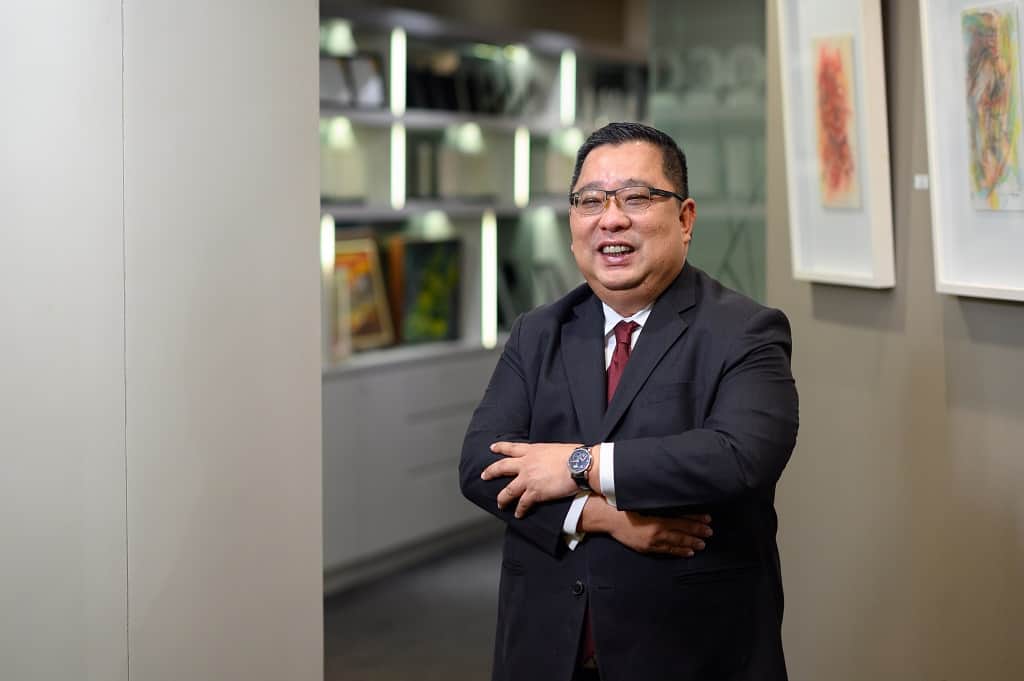
Rami Hajjar, Chief Executive Officer, Signify Southeast Asia
Smart Investor: What does ESG mean to you? Why is it essential to your business, and how does the ESG agenda impact your industry?
Rami Hajjar: ESG is about carrying out business in a way that is respectful to people and the planet and about generating profits ethically. This is important to ensure that businesses can carry out their operations sustainably. The ESG agenda is important for putting it into business because it gives us a way to hold ourselves accountable for managing our company’s impact, especially our carbon footprint.
Regarding the lighting industry, it is safe to say that the E [environmental] plays a crucial role. It covers the organisation’s energy usage, pollution, waste, and conservation efforts. The key ESG strategy is an environmentally friendly and cost-efficient LED lighting retrofit. LED products are recyclable, unlike most other types of lighting. Businesses also see a reduction in lighting maintenance costs and energy usage.
With the current energy crisis caused by various economic factors, including the rapid post-pandemic economic rebound that outpaced the energy supply, LED lighting solutions allow consumers to be more energy efficient and save cost due to their long-lasting durability at the same time, contributing to a greener planet.
SI: How successful is the ESG agenda deployment in your organisation, and what challenges are you facing?
RH: At Signify, I am proud to say that since September 2020, we have been 100% carbon neutral in our operations and use 100% renewable electricity. In the same year, Signify reached our commitment to send zero manufacturing waste to landfills for our manufacturing sites and recycle up to 91% of our manufacturing waste.
On September 8, 2020, Signify also launched Brighter Lives, Better World 2025, a new five-year plan that enables us to double our positive impact to brighten lives for a better world. With our new programme, we’ve set more challenging goals and promised to make our entire value chain more environmentally friendly.
For instance, we are going beyond carbon neutrality. We aim to double the pace of the Paris Agreement’s 1.5°C scenario to reduce greenhouse gas (GHG) emissions over our entire value chain by the end of 2025. We will do so by increasing our portfolio’s energy efficiency, reducing our customers’ emissions, and driving carbon reduction at our suppliers.
SI: How has the ESG agenda changed the lighting landscape?
RH: Over the past 125 years, Signify has pioneered many key breakthroughs in sustainable lighting, being a driving force behind several leading technological innovations, including LED. Approximately 13% of the world’s electricity is used for lighting.
Through digital LED technology, Signify offers up to 80% more energy-efficient light. With it, electricity usage for lighting will decline to 8% by 2030. Through our leading position in the lighting industry, we believe we have an essential role to play towards a low-carbon economy as the world transitions from conventional to LED lighting technology.
RH: At Signify, we pride ourselves on taking the lead in ESG efforts. We believe in sustainability at Signify and want to build a better world. Our organisation did not wait for the ESG landscape to impact us; we took the lead through our technology and innovations.
We also have policies and due diligence processes in place and have been recognised as leaders in DJSI, Sustainalytics, and EcoVadis. This allowed us to transform the industry for a better world and brighter lives.
RH: Climate change is the most important topic that has been gaining traction in the past ten years. It is evident from the World Economic Forum’s Global Risk Report that worsening climate change impacts and extreme weather conditions dictate global risk factors. Besides, social factors such as the livelihood crises of the B40 group have also gained a strong pull for ESG in Malaysia.
In 2023, we can expect other areas of the environmental pillar to grow, such as the carbon market, carbon tax, and carbon offsetting, which involves carbon capture, storage, and sequestration activities.
All said and done, we must accept that the ESG agenda will impact our daily lives. At home, at work, at school, wherever we are and whatever we will do. Let’s pray that humankind will unite for our planet’s and future generations’ greater good.
With the world continuing to emerge from Covid-19 lockdowns, cracks in economies, societies, and environmental ambitions are becoming clearer. Looking ahead to the sustainability outlook for 2023 and beyond, the debt legacy from that crisis limits governments’ capacity to continue supporting societies through difficult times.
We’re likely to see more interventions, and businesses will be expected to play a greater role in tackling critical issues, from climate challenges and biodiversity threats to the cost-of-living crises. In short, the future looks like it will play out very differently from the past.
In that context, a fund manager’s active management and ability to adapt investment strategies to the challenges and opportunities ahead will be more important to investment performance than ever.
Sustainability Outlook For 2023: Five Trends To Watch
1. Climate Change And Political Will
First, climate change is an inevitable question. All investors are exposed to the impact, not just of global warming and environmental damage, but of political and economic action to tackle their causes. Investors must make sure any exposures to these risks are contemplated and managed alongside opportunities in solutions to the climate challenge.
At Schroders, we committed to transitioning toward net zero over the coming decades, including setting a Science-Based Target, validated by the Science-Based Targets initiative earlier in 2022. But setting a target is the easy part. How we, and other businesses, decarbonise is critically important to the value we will create for our clients. Our Climate Transition Action Plan outlines our roadmap.
Political momentum slowed in 2022, but importantly the private sector continues to push ahead, helping close some of the gap between the ambitions global leaders have laid out and corporate readiness for transition. In November, the COP27 climate summit in Egypt did little to cement global commitments to action.
That said, agreement on a “loss and damage” fund to help developing nations should ease one key challenge to delivering the changes needed to reach the goals laid out in Paris in 2015. Attention will turn to COP28 in the UAE later in 2023.
Our focus has been on using our voice and influence to engage the most exposed companies and pushing them to lay out transition plans. In the year ahead, we will be intensifying those efforts.
2. Natural Capital
In that context, the role of natural capital and wider biodiversity threats are central. Climate threats are symptomatic of the structural and growing tensions between escalating demand from a larger, wealthier and hungrier global population and the world’s finite resources to support that population.
Today we use resources equivalent to those provided by 1.7 Earths every year, pushing us further into natural capital deficit and intensifying the threats degrading global ecosystems create. By some estimates, roughly $10 trillion of natural capital value is lost every year, underlining the hidden liabilities building in the global economy.
The reality is stark: nature risk is fast becoming an integral factor to investment risk and returns. That’s why we released our first company-wide Plan for Nature in late 2022, drawing together our action to date and setting a future direction for the action we are taking to tackle the causes and implications of nature loss.
3. Cost Of Living And Other Social Stresses
At a human level, a cost-of-living crisis has taken a grip in many countries, and while the most acute pressures may abate in 2023, poverty is a threat we will be monitoring. Few governments have the fiscal capacity to absorb shortfalls in household budgets, and social stresses could intensify.
Companies are coming under pressure to protect vulnerable workers – whether through wage increases and benefits for their employees or their responsibility to workers in supply chains.
We could see greater pressure on the political systems. This could undermine investors’ faith that political leadership will clearly define priorities, pushing responsibility back to companies and investors like ourselves. While climate change and nature have dominated headlines, particularly in the run-up to COP27 and COP15, we expect a bigger focus on social issues, including human capital management, human rights and diversity and inclusion in the new year. These are core themes for active ownership for us at Schroders.
4. Active Ownership And Impact
As the forces shaping value in financial markets multiply, stock-picking will be only a partial solution. Our ability to engage with the companies and assets in which we have invested will be a critical lever and a necessary one to create value for our clients.
Few companies are prepared for the world we are heading toward, and encouraging or pushing them to adapt will be important to protect their value. We published our Engagement Blueprint early in 2022, laying out our expectations of the companies we invest in and plan to build on that foundation in the future.
As our focus on impact investing continues to grow, active ownership will also be an important component of those strategies. Our survey of more than 700 institutional investors in 2022 found that around half (48%) are focusing on the impact of their investments, up from about a third (34%) in 2020. We expect that trend to continue.
5. Regulation
These trends are playing out against a backdrop of an industry under more intense scrutiny and scepticism than ever. Regulation is spreading from the EU to other parts of the world, and demands for transparency and clarity in product promises are rightly likely to increase.
Greenwashing headlines have underlined the importance of transparency; the antidote is honesty, transparency and consistency. For example, ahead of COP15, we’ve signed Business for Nature’s Make it Mandatory campaign, calling on mandatory disclosure for all large businesses and financial institutions of nature-related impacts and dependencies from 2030.
We are determined to help our clients navigate our investment products and understand what they can expect from different strategies.
Conclusion
For those of us focused on sustainability in the investment industry, the last few years have felt incredibly busy. Keeping up with the scale and pace of regulatory change has been challenging enough. Developing the analysis and the models and adapting our engagement with portfolio companies to reflect our deepening understanding of the implications of structural social and environmental trends in the expanding volume of ESG data all add to those demands.
None of this will change in 2023, and there you go with the sustainability outlook for 2023.
Andy Howard is the global head of Sustainable Investment at Schroders.
“I feel joy in successfully building up a business in a very competitive market space, where we’ve seen players come and go,” said Dato’ Teng Chee Wai in a resplendent maroon tie.
For over 20 years, Dato’ Teng has headed Affin Hwang Asset Management as the Managing Director where he steered the company through different economic and market cycles. Under his leadership, the company has since grown leaps and bounds becoming the fastest growing asset manager in Malaysia.
But Dato’ Teng says the company’s journey is far from over as it positions itself for its next growth phase through a new brand identity – AHAM Asset Management (AHAM Capital). Smart Investor sat down with Dato’ Teng to find out more about the company’s new journey including future growth plans as well as life lessons on leadership and wealth.
A New Chapter
With the completion of the company’s acquisition by CVC Capital Partners (CVC) on the 29 July 2022, the company sought to rebrand itself to augment its brand positioning as a trusted wealth partner as well as carve its own distinct identity as an independently managed asset and wealth management firm.
The rebrand included a name change and a new corporate logo that is reflective of the company’s new growth ambitions, while also affirming its commitment to clients in building trust.
“Our new brand identity AHAM Capital marks the start of a new and exciting journey for us and our clients. As a name that is already widely used and familiar amongst clients and business partners, the simplified brand name builds upon the positive brand equity of the company’s asset management capabilities as well as its people that has distinguished it over the years,” Dato’ Teng said.
In January 2001, Affin Hwang Asset Management Berhad started operations with just RM20 million in clients’ assets. Today, its total assets under administration (AUA) have grown to over RM75 billion as at 31 October 2022 – a true feat unto itself.
According to Dato’ Teng, this would not have been achievable without three important stakeholders who have been instrumental to the success of the company: its clients, employees and shareholders. With the trust of its clients, AHAM Capital has grown exponentially by nurturing and deepening relationships with its clients especially handholding them through volatile market cycles.
“One thing that always sets us apart is how we are also invested alongside our clients. The total staff investments into AHAM Capital’s own funds surpassed RM150 million this year demonstrating our own belief and confidence in our solutions,” remarked Dato’ Teng.
As for the employees who keep things running at AHAM Capital, they are the backbone of the company and integral contributors to the business. This is important as good talent is hard to come by and retain according to him.
Finally, it is also important to have shareholders that understand the business and are very supportive. Dato’ Teng and his team have been able to run the business in an independent manner and manage to keep the company’s culture intact.
Realising Synergies
With CVC Capital Partners (CVC) coming onboard, AHAM Capital is looking to take their business to greater heights by embarking on three strategic growth pillars: wealth management, innovation and regionalisation. Collectively these three strategic thrusts would help transform AHAM Capital into becoming a leading independent wealth and asset management company in Southeast Asia.
This begins with looking to investing in greater human capital and distribution networks to offer more investment solutions to the public.
“CVC Capital Partners brings a breadth of synergy that AHAM Capital can tap upon. These include CVC’s wide connections in the marketplace that can help produce a ‘network effect’ to grow our business particularly in terms of alternatives and private market offerings. On top of that, CVC Capital Partners brings with them the discipline and expertise which allows for information sharing for us to learn from them directly.”
“Learning from their financial metrics as well as how they manage a lot of their portfolio companies will enable us to understand how to manage the business and risks involved as we go to regional markets,” said Dato’ Teng.
Levelling Up With Innovation
Innovation and entrepreneurship are also very much key ingredients in the success of AHAM Capital and embedded in its corporate DNA. The company’s innovation journey started back in 2018 with the set-up of the Innovation Lab Department.
“Whether it is for transactions, internal processes, making things more efficient, or offering solutions via different platforms and wallets – digitalisation is the way forward.”
“Though it may be expensive, the pandemic really showed us that digitalisation was the right move to make,” explained Dato’ Teng.
AHAM Capital also recently made waves in the digital space through its partnership with Versa to launch a digital cash management solution.
“Our partnership with Versa which simplifies access to money market funds (MMFs) has been a stepping stone in our innovation journey. By doing away with the cumbersome registration and lock-in period that comes with fixed deposits (FDs), our collaboration with Versa has allowed more Malaysians to start saving from as low as RM1 in a MMF which is traditionally only used by corporates and high-net worth individuals.”
“We are also looking at other alternative investments like cryptocurrency. The younger generation has experience in it and believes in its potential. Although I have yet to start investing in Bitcoin personally, we need to find solutions to address this growing demand to appeal to a new generation of investors,” claimed Dato’ Teng.
Anything to do with ESG (environmental, social and governance) has become a trending hot topic these days, and its adoption rate is faster than ever. With more than nine out of ten publicly-listed companies adopting ESG as part of their goals and business plans, its popularity is more than just a buzzword in the industry. Some of the ESG benefits are higher returns on investment, better financial performance, and reduced business risks.
Smart Investor spoke to Datuk Wira Ismitz Matthew De Alwis, executive director & Chief Executive Officer at Kenanga Investors Berhad; Dr Sumitra Nair, head & senior vice president of Strategy & Policy at Malaysia Digital Economy Corporation (MDEC), and Azzahraa Annuar, director of Governance, Risk & Compliance at edotco Group to get a deeper understanding about ESG and ESG benefits.
This includes exploring the impact of an ESG focus to their business and industry, what makes for a successful ESG deployment, the challenges they have faced, and the trends to look out for. While we all know what ESG stands for, what it means, and what are the ESG benefits could be entirely different for each industry.
We got the ball rolling by asking, “Why is it important to your business, and how does ESG impact your industry?”
Datuk Wira Ismitz Matthew De Alwis, executive director & Chief Executive Officer at Kenanga Investors Berhad
To which Datuk Wira Ismitz Matthew De Alwis answered “The impact of ESG on the financial markets has been significant. Investors and businesses alike are beginning to acknowledge that an ESG-driven perspective promises stronger and more resilient economies and businesses. As a result, this awareness has changed the way individuals and institutions invest. For example, many are now focusing on mitigating their portfolio exposures to carbon risk.”
“As a partner to the sustainability agenda, we are dedicated to the goal of developing Malaysia’s impact investing landscape. Currently, we believe that the local environment faces issues in capacity building to address sustainability issues such as lack of competencies, skills, and technical awareness on ways to adopt a sustainability-driven top-down model at each level of the organisation. Recognising this, Kenanga Investors, as an established financial institution, must actively seek out and collaborate with regulators and other corporate entities finding its footing within the local green economy,” De Alwis added.
To ensure sustainable performance for Kenanga Investors’ stakeholders, they are confident that the integration of carbon exposures, ESG ratings, financial quality metrics and active engagements, amongst other factors, in a diversified and risk-controlled portfolio has historically resulted in better risk-adjusted returns for investors than just plainly investing in a broad market index.
Dr Sumitra Nair, head & senior vice president of Strategy & Policy at Malaysia Digital Economy Corporation (MDEC)
Adding to that, Dr Sumitra Nair is of the opinion that “ESG is about carrying out business in a way that is respectful to people and the planet, and about generating profits ethically. This is important to ensure that businesses can carry out their operations in a sustainable manner. For example, operations of a business could be impacted by climate-related risks, or governance related risks, hence impacting business continuity.”
A sustainable business model also improves productivity by uplifting employee motivation and loyalty, and boosting talent attraction and retention. There is also increasingly strong evidence of a connection between good corporate practices and financial performance – an ethics premium.
According to Ethisphere’s Ethics Index, the world’s most ethical companies outperform a comparable index of companies by 24.6% from January 2017 to January 2022.
The Global e-Sustainability Initiative (GeSI)’s ‘Digital with a Purpose: Delivering a SMARTer 2030’ report estimates that digital tech can directly influence 103 out of 169 UN Sustainable Development Goals (UN SDG) targets. The same report has identified key technologies that have the highest potential influence on the world, and more specifically on the UN SDGs.
These include high speed internet, cloud computing, internet-of-things, machine learning, AI, digital reality and blockchain. Such technologies can help to reduce environmental impacts, as well as narrow socio-economic disparities, which strengthen transparency and governance.
For example, from an environmental perspective, the effective use of digital technologies is projected to reduce global Green House Gas emissions by 15% by 2030, which translates to one third of the global 50% target reduction. This is mainly using digital tech solutions in the energy, manufacturing, agriculture and land use, buildings, services, transportation, and traffic management.
“Therefore, the digital tech ecosystem plays a very significant role in the agenda of ESG in Malaysia. It is also very much aligned to the recently launched national strategic initiative, Malaysia Digital (MD), which seeks to increase the overall ecosystem value sustainably,” shared Dr Sumitra Nair.
Azzahraa Annuar, director of Governance, Risk & Compliance at edotco Group
Meanwhile Azzahraa Annuar has said: “It is not about what ESG means to me, but it is about what ESG means to us. At edotco, ESG is central to how we do our business from planning to execution. To be a sustainable business, we believe that a strong governance is key to ensure our business is run in the most equitable manner.”
To edotco, their belief is that internet connectivity should be viewed as part of a human right in today’s world. As such, they are passionate when it comes to taking care of the communities around their towers and even more passionate when it comes to their greatest asset, that is their people.
They will continue to invest in innovation as innovation is the key to net zero emissions. Each component of ESG with the E, the S and the G are equally important and must be addressed together as one, and not separately.
What Are The Key Factors For Successful ESG Deployment?
It’s all fine and well to talk about ESG benefits, hopes and dreams and plans, but how do we ensure a successful implementation of these policies and intentions?
De Alwis shared: “We believe that there are a few critical factors required for a successful ESG implementation. To begin, a supportive and knowledgeable board is critical in steering the company’s ESG agenda as well as building the appropriate corporate culture, which leads to effective ESG implementation. Furthermore, the ESG goals must not only be specified, but also time-bound and practical during the implementation process. Policies, plans, and oversight mechanisms must address these issues both qualitatively and quantitatively.”
Kenanga Investors believe that the continuous delivery of consistent top performance stems from the premise of an effective stewardship and active ownership approach throughout the investment value chain. In search of long-term value accretive investments, they aim to influence investee companies as shareholders through the promotion of responsible and sustainable practices.
Nair has four key factors for successful deployment of ESG in Malaysia:
1. Leadership commitment is key
ESG must be driven from the top, ideally from the Board, top management and across the organisation.
2. ESG culture and mindset
ESG should be seen as a way of doing business, rather than a separate function or set of responsibilities.
3. Taking a longer-term perspective of business performance
The over-emphasis on short-term gains may impact a company’s ability to manage its ESG risks which may manifest in the longer term. For example, the focus on cutting costs in the short-term may result in non-eco-friendly or non-ethical purchasing decisions.
4. Measuring and managing ESG impact
As the saying goes, “what gets measured, gets done”. Similarly, defining and tracking ESG performance metrics is key to managing ESG impacts.
For Annuar, it is all about the culture. “At edotco, we believe in the mind, the heart, and the hands. This means, we inculcate the culture of a sustainable world for the future, for the next generation in the minds of our people. We hire passionate individuals who fit within edotco’s culture and core values to ensure our people have the heart of edotco. And finally, when we build our towers, our products, we continue to innovate for best possible output.”
These intentions are not without its challenges. According to De Alwis, the lack of knowledge and comprehension of ESG among our retail investors in Malaysia was one of the hurdles that they faced in implementing their ESG objectives and ESG benefits. Businesses also lacked transparency and reliability when it came to ESG data and disclosure.
Furthermore, when it comes to ESG practises, there is a lack of consistent standards, measurements, and focus as some may focus on climate change, whilst others may focus and emphasise on human rights issues.
With MDEC’s ESG focus this year starting with a highlight on climate change (which has been globally acknowledged as one of the most critical issues of our time), MDEC has also recently launched the Malaysia Digital Climate Action Pledge (MDCAP), which aims to galvanise digital tech companies to commit to specific actions addressing climate change, and to support the decarbonisation of SMEs.
“At the same time, MDEC with our partners such as the UN Global Compact Malaysia and Brunei (UNGCMYB) will provide guidance and know-how to the digital economy ecosystem via a Digital Economy Climate Playbook, and training programmes,” shared Nair.
These initial efforts are tailored to address some of the key success factors MDEC has identified in their journey to encourage digital companies in Malaysia to adopt ESG practices and reap the ESG benefits.
These include:
1. Raising the level of awareness and understanding about ESG amongst digital businesses;
2. Access to resources to address ESG risks and compliance – for example funding, talent, etc;
3. Encouraging digital tech companies to create shared value through opportunities arising from ESG trends – for example, via digital innovations/solutions that help governments, businesses, or society to achieve ESG-related targets and the many ESG benefits.
For edotco, Annuar discloses their two key challenges: “Firstly, macroeconomic challenges mean cost pressure continues to be central. We need to ensure we deliver a strong return for our shareholders amidst such a challenging environment. Our supply chain is struggling, the communities around our towers are struggling. This impacts our operations tremendously. Nevertheless, our engineers continue to innovate, and we manage to come up with LCS i.e., a low-cost structure in a country like Bangladesh.”
“Secondly, whilst we are certain with our Scope 1 and Scope 2, we are still struggling with Scope 3. This will be an area of focus for edotco in 2023 to ensure our carbon emission calculations are based on international standards and continue to be validated independently. We will also be reviewing our supply chain as part of this initiative,” she added.
We have to look forward. So, saving the best for last, we ask our experts: “What are the key trends you see gaining traction for ESG? What are the areas of growth amongst the pillars to look at in 2023?”
De Alwis responded with, “During the COVID-19 pandemic, there was a significant increase in ESG awareness. During this period, many firms suffered financially, whilst others with ESG policies were more protected from the pandemic’s consequences and were able to outperform their peers and competitors.”
As ESG awareness continues to grow, trends within the ESG economy increases in tandem as well, most notably is impact investing. Finally, we will be able to reap the ESG benefits.
ESG Benefits
“This was apparent in the deployment of financial firepower to investments and causes that could provide quantifiable ESG benefits, allowing investors to see and measure the beneficial effects of their investment,” he added.
There is currently a significant trend in assuring the interconnectedness of human and developmental needs. Assuring that these needs are fulfilled in a way that ESG benefits society while being environmentally and ecologically sustainable is a delicate balance. The blue economy and nature-based infrastructure are two examples of this.
For Dr. Nair, climate change is an immensely important topic – one that has been gaining traction for the past ten years.
“It is evident from the World Economic Forum’s Global Risk Report that climate action failure and extreme weather conditions dictate global risk factors,” she said.
MDEC took a proactive approach to launch the MDCAP initiative to advocate climate action amongst the digital economy ecosystems. Besides, social factors such as forced labour and the livelihood crises of the B40 group have also gained a strong pull for ESG in Malaysia.
In 2023, we can expect other areas of the environmental pillar to grow, such as the carbon market, carbon tax and carbon offsetting, which involves carbon capture, storage, and sequestration activities. Regarding the social pillar, the topic of diversity and inclusion in the workplace is growing in prominence, be it gender, age, ethnicity, or other forms of diversity.
Finally, Annuar points out that ESG is not a one size fits all around the globe. It varies for different economies and markets.
“It depends on which side of the world you are in. In developed markets, the focus is more on the governance aspect. In developing markets, the focus is more on the environmental aspects, while in the underdeveloped markets, the focus is more on the social aspects.”
For edotco, they have done independent reviews to see what are the areas that they need to focus on including materiality assessment. They will continue to focus on strengthening every pillar because they believe that all three are equally important.
I approached one of my couple clients, Chris (the husband & not his real name) and I told them that I was helping my other clients plan financially, I ask them whether they would like me to help them. Here is how the conversation about saving on housing loan interest went.
“Would you like to buy an AUDI TT for free after you settle your housing loan?”
They were very curious and our conversation went on like this. (This is an article I wrote in 2015 and is re-posted & re-edited.)
How to buy an AUDI TT for free after you settle your housing loan?
Chris: “Are you trying to sell me insurance or unit trust?”
Me: “Neither”
Chris: “I’m itching to buy an Audi TT & I’m not sure if this is a good time”
Me: “I could help you buy your AUDI TT for free after I help you settled your housing loan”
How To Save 50% Of Your Housing Loan Interest In Half The Time
This was their situation:
Property purchase price RM2.5 Million (semi-D in Petaling Jaya area)
Loan Interest Rate was 4.4%
Loan Tenure (no of years to repay back the loan) was 35 years (420 months)
Loan Installment is RM10,471/month
Total Interest Paid for the whole duration was RM2,147,808
After implementing my advice:
Total Interest Paid is RM 1,068,815, which is a 50% reduction in interest paid.
They finish paying off their loan in 19 years and 2 months (230 months), which is 45% earlier (15 years and 10 months OR 190 months).
He could buy 3 new AUDI TT worth RM285,000 with the interest savings. (Of course, AUDI TT’s price would have gone up, but still, if he did not apply this strategy, imagine the 3 AUDI TTs the bank managers would have driven off with)
Can you guess what did I suggest to him to do?
Save an additional instalment of RM4,000/month into his housing loan
Ensure their Debt Payment Ratio is still on a Healthy Level (<35%)
Ensure their Total Saving Ratio is Healthy (>33%) & their net worth is still growing
This was what I suggested to him
Because they are ‘SAVERS’ (people who like to save money in their bank account), they could channel some of their monthly savings into paying off their housing loans.
But one has to take note to maintain a balanced lifestyle of not over-saving as you do not want to lose out on any investment opportunity. Here, it shows how big of a difference it makes over time.
1. Save an extra of RM4,000/month on their housing loan, making the instalment RM14,471/month. Here you can deposit the extra RM4,000 into a Current Account facility provided by most Malaysian banks by now, which can be used to withdraw later (in the event of emergency)
2. Currently their Debt Payment Ratio is only 27% & they can commit up to 35%. Debt Payment Ratio measures how much income is used to pay ALL Loans (housing loan + car loan + personal loan & etc) divided by your NET INCOME (Your Gross Salary net off EPF, Socso, EIS & PCB). Since they don’t have any car loan, personal loan or any other loan, then all their funds can be channeled to the housing loan.
3. By doing (1), they are able to save almost RM 56,551/year in housing loan interest (Total savings on housing loan interest = RM1,078,993)
4. The amazing thing of ‘Saving’ the extra RM 4,000/month actually improves their networth. You don’t actually ‘spend’ it, here is how it works
(Net worth is assumed that Current Market Value of the property grow at 4% per annum)
5. Interestingly, RM 3,731.25 of your RM 4,000 goes directly to pay off your principal. So it seems like you were force saving in your bank account, is just a different account call loan account
Save on housing loan interest, he calls off his purchase and postpones his booking
After I have shown them the above, he called off his purchase of his Audi TT & redirect his savings to clear off his housing loan interest. Postponing his purchase after he settled off his housing loan first, he is convinced the savings from the housing loan interest will be able to buy him a free Audi TT.
*Do take note that you should only do this for a property that you live in. For property investment, you may not want to use this strategy. Talk to your financial planner or a professional first before taking action.
*DISCLAIMER – All strategies listed here are not a recommendation nor advise. The article is written purely for the purpose of education and journaling only. The content of this article is an expression of my opinion and should not be taken as professional advise. If you are seeking professional advise, please consult me personally . You should do your own research and/or seek expert’s advice when overcoming your debt circumstances.
Ka Hoe is a Licensed Financial Planner having a “Financial Adviser Representative” (FAR) with Bank Negara and “Capital Market Service Representative License (CMSRL) – Financial Planner” with Securities Commission. He is also the Founder of J Advisory, a Personal Finance Academy that helps struggling Malaysians elevate their financial well-being with proven tools, systems and strategies. For more real-world case studies, you can reach me at my blog – https://jadvisory.asia/
The pandemic has brought about a wind of change in the way we live our lives, with online activity becoming more common. We do more online shopping, we order more food online and have it delivered to our doorstep, businesses have to embrace online meetings, and schools and learning institutions have their teachings and learnings online as well. We are also seeing the rise of digital banks and Islamic finance in Malaysia.
There’s also a surge of demand for online banking but not everything can be done online. Online banking primarily focuses on essential transactions such as money transfers, bill payments and basic online account management. For other transactions, we still need to perform it physically at the bank’s branch.
This is where digital banking will revolutionise Malaysia’s banking industry. A full-fledged digital bank is a financial institution that offers financial services solely through a digital platform. Almost all banking activities that were previously only available at bank branches can now be performed online with digital banks.
Smart Investor spoke with Othman Abdullah, Chief Executive Officer of Islamic Banking at Silverlake Group, a global financial technology and digital economy solutions provider to find out more about digital banks. Silverlake is one of the pioneers of Islamic finance IT solution providers, and is also the most prominent in the region. Being a Malaysian company, Silverlake Axis is proud to be the enabler for 70-80% of daily Islamic financial transactions in Malaysia. All full-fledge Islamic banks and the majority of Islamic entities of banking groups in Malaysia run Silverlake’s core banking solutions in their core businesses.
For those sceptical of Malaysia’s readiness for digital banks, Othman replies, “Ready or not, it is something that our country has to do as there are real demands for digital banks.”
Quite a number of other countries are already far ahead. It is encouraging to see our central bank, Bank Negara Malaysia (BNM), implementing various efforts and initiatives to drive the growth of digital banking. This includes the issuance of a licensing framework for digital banks, which was announced on the 31st December 2020. As of April this year, BNM has issued five digital bank licenses to ensure that the digital banks and Islamic finance in Malaysia has a bright future.
The main advantage of digital banking for customers is convenience, where banking can be done anywhere, anytime. Through technology, service deliveries and business operations have become more efficient for financial institutions. Digital banking also addresses a key agenda as outlined by BNM, which is to cultivate financial inclusion to reach the underserved or unserved communities.
“As a financial technologist, I tend to see digital banks as mainly advantageous. The only disadvantage I see in digital banking services is that users are vulnerable to cybersecurity risks such as loss of credentials to hackers that result in financial loss. Digital banks will have to strengthen their cybersecurity defences, while consumers need to be vigilant of cybersecurity threats,” mentions Othman.
The global Islamic banking and finance market is valued at over US$2.5 trillion. According to S&P Global Ratings Islamic Finance Outlook 2022 Edition, it is estimated that the global Islamic finance industry would expand by 10-12% in 2021-2022. In view of the expansion of Islamic banking assets in some Gulf Cooperation Council (GCC) countries, Malaysia and Turkey as well as sukuk issuances exceeding maturities, S&P Global Ratings opines that higher digitalisation and fintech collaboration could help strengthen the industry’s resilience in more volatile environments and open new avenues for growth.
Digital transformations of financial institutions greatly accelerated by the Covid-19 pandemic, has created huge demands for digital Islamic finance solutions. According to a report, the Islamic fintech market within the Organisation of Islamic Corporation (OIC) countries alone is projected to grow at 21% CAGR to US$128 billion by 2025.
“We are also seeing digital banking initiatives launched by conventional Islamic banks such as Bank Islam with its Be U app, and Al-Rajhi Malaysia also shared some of their digital banking initiatives,” quips Othman.
The Future Of Digital Banks And Islamic Finance In Malaysia
The future of digital banks and Islamic finance in Malaysia looks very bright for Islamic finance. In addition to Muslim countries intensifying their efforts to further grow their Islamic finance market, non-Muslim countries have also been expanding their interests in developing the Islamic finance market in their jurisdictions. Indonesia has a national agenda to support a Shariah-compliant economy, coordinated by the efforts of their Islamic fintech association to develop the ecosystem.
The Malaysian government through its Shared Prosperity Vision 2030 (SPV2030) has identified Islamic finance and the digital economy as one of their Key Economic Growth Activities (KEGA). Digital banks and Islamic finance in Malaysia has a bright future indeed.
About the Author
Othman Abdullah is the Chief Executive Officer, Islamic Banking at Silverlake Group, a global financial technology and digital economy solutions provider. Othman is also a consultant for Silverlake Integrated Banking Solution and Silverlake Straight Through Banking Platform. Qualified in both IT and Islamic finance and equipped with more than two decades of hands-on experiences servicing financial services industry, Othman has positioned himself as a financial technology thought leader in the space of Islamic financial services.
Everyone wants to make a quick buck here and there, but property investment is a long-term game. Let’s hear a real-life case study on how you can make money in property.
In the early 1990s, a client bought a condominium unit that is 1,396 square feet, comprising three bedrooms and two bathrooms at Taman Tun Dr Ismail. The price after the Bumiputera discount was RM190,000. The condominium was completed in 1993.
The condominium’s latest transacted price last year was averaging RM600 to RM620 per square feet. Taking the conservative average of RM600 per square feet, it is valued around RM837,000 today.
Resident real estate negotiators advise that owners are not going to sell anything lower than RM860,000 now. It is a wait and see strategy adopted by owners with no urgency to sell, anticipating higher values post pandemic.
A simple arithmetic of the numbers brings the capital appreciation to 341%, bringing the Compounded Annual Growth Rate (CAGR) to arrive at about 5.1%
Does this sound impressive? Is is that easy to make money in property?
Maybe, and if you are using the property for own stay, you will be experiencing comfortable paper gains. However, if this property has been acquired for investment purposes, you will need to take into account these factors to calculate your return on investment:
Vacancy costs
Agency costs
Legal fees (for exiting or selling off the property)
Repair & modernisation costs (it is 30 years old!)
Building maintenance service fees
Mortgage borrowing costs
Yearly assessment & council taxes
Tax (on rental income & exit cost for future capital gains)
Due to limited data on the actual Internal Rate of Return (IRR) of this property, I do not have the rental income data as this property was bought over by my cousin for his own stay a few years after this condo was completed.
But let’s give some hypotheticals:
– Rental income during the 1990’s was RM650 and it increased by 10% each year (working out to RM2,400 today, which is conservative for a fully-furnished unit today transacting at an average of about RM2,700 to RM2,900).
– Annual council and assessment taxes at RM300, service charges at RM300 per month and assuming full tenancy. (This is considered on the upside already.)
– 90% margin on mortgage financing, a 4% interest rate, real property gains tax at 5%, agency selling fees at 3%, selling at RM600 per square feet (RM837,000) at the 30th year.
– Assume a one-off major modernisation cost for kitchen and bathrooms amounting to RM100,000.
7.16% Return Good Enough?
With that the computed annualised IRR is 7.16%. This is comparable to returns of a moderate aggressive asset portfolio.
Is this a good way to make money in property? A standard economist answer would be, it depends…
If you are the original owner, you will likely be enjoying a nice cash flow monthly as a landlord or liquidating with a net gain of capital (after deducting taxes), that could be partially funding retirement. Then you can say that by buying and holding, it is a sure way to make money in property.
But do bear in mind, it took thirty years for real estate values to reach to these levels, so it is not quite straight forward to make money in property. Having said that, it is also worth highlighting that cash flows enjoyed monthly is subjected to LHDN taxation.
According to Section 4d of the Income Tax Act 1967 LHDN, “the letting of real property is treated as a non-business source and income received from it is charged to tax under paragraph 4(d) of the Income tax act 1967 if a person lets out the real property without providing maintenance services or support services (such as cleaning services and repairs) comprehensively and actively”.
In layman terms, this means that you are letting out the residential property and deriving passive income from it. If you own one or multiple properties (bought or inherited) that is not used for business purposes, you are required to pay income tax.
Net rental income is subjected to a progressive income tax rate from 0-30%. These are tax deductible items permitted by LHDN that can be used to derive net rental income for an investment property on residential properties:
Assessment and quit rent is the annual assessment paid to the local authority and quit rent to be paid to the land office.
Interest portion on the mortgage to finance the purchase of real property which is rented out. (Do note that it is only the interest portion of the mortgage that is deductible and not the total monthly mortgage amount).
Fire insurance premium paid in relation to the insurance policy taken on the real property which is rented out.
Expenses on rent collection such as rent collection fees and legal expenses incurred to enforce rent collection.
Expenses on rent renewals to renew tenancy or change tenant.
Expenses on ordinary repair to maintain the property in its existing state.
Other things to consider whilst keeping real estate as an investment in your overall portfolio are:
Do you have the holding power?
Is there a maximum ceiling price to this condo?
Can you stomach vacancies or deal with (troublesome) tenants?
Do you have the willpower to deal with perpetual repairs, refurbishments and maintenance related to the upkeep of the property?
To some, these are hidden costs that can’t be quantified and are not worth the time and the headache. They would rather put their capital elsewhere in an asset like a mutual fund that takes minimal effort and see it grow annually at the rate 6-7%.
The question also would be, can we expect these kind of returns for newer residential projects 20 to 30 years down the road? Is it still going to be easy to make money in property?
Now I wish I had a magical crystal ball to look in the future, so I can make money in property.
Rozanna Rashid is a Director at Alpine Advisory, a financial planning firm. A former corporate banking relationship manager, Rozanna is currently a Licensed Financial Planner (CFP, IFP). She holds an MSc in Real Estate, Economics & Finance from the London School of Economics & Political Science. She can be contacted at rozanna@alpine-advisory.com
In September 2022, the National Property Information Centre (NAPIC) revealed that the Malaysian House Price Index (MHPI)* increased marginally by 0.5% on a year-on-year (y-o-y) basis in Q2 2022. This announcement is not surprising given the ongoing economic challenges such as high inflation, rising interest rates and political uncertainty. Nevertheless, the prices of select high-rise properties in prime locations in Malaysia with upscale features have continued to appreciate.
Therefore, as part of its efforts to provide potential investment opportunities, iProperty.com.my has identified the top high-rise residential properties in Kuala Lumpur, Selangor, and Penang with the highest H1 2022 capital gains.
Sheldon Fernandez, Country Manager, PropertyGuru Malaysia (PropertyGuru.com.my and iProperty.com.my), said, ” According to NAPIC, high-end residential property transactions in the RM500,000 to RM1 million and the RM1 million and above price category had a substantial 36.3% growth in H1 2022. Interestingly, most of the high-rise properties on our list fall within these price categories, which shows that properties with the right variable are untouched by the post-pandemic effects. The majority of the properties focus on luxurious living with excellent architectural design, lush landscaping, and strategic location near green spaces. Together with winning factors such as good connectivity and proximity to reputable hospitals and education institutions, these high-rise properties are ideal for long-term investments.”
Below is a rundown of the top high-rise residential properties in Kuala Lumpur, Selangor, and Penang with good capital gains in H1 2022:
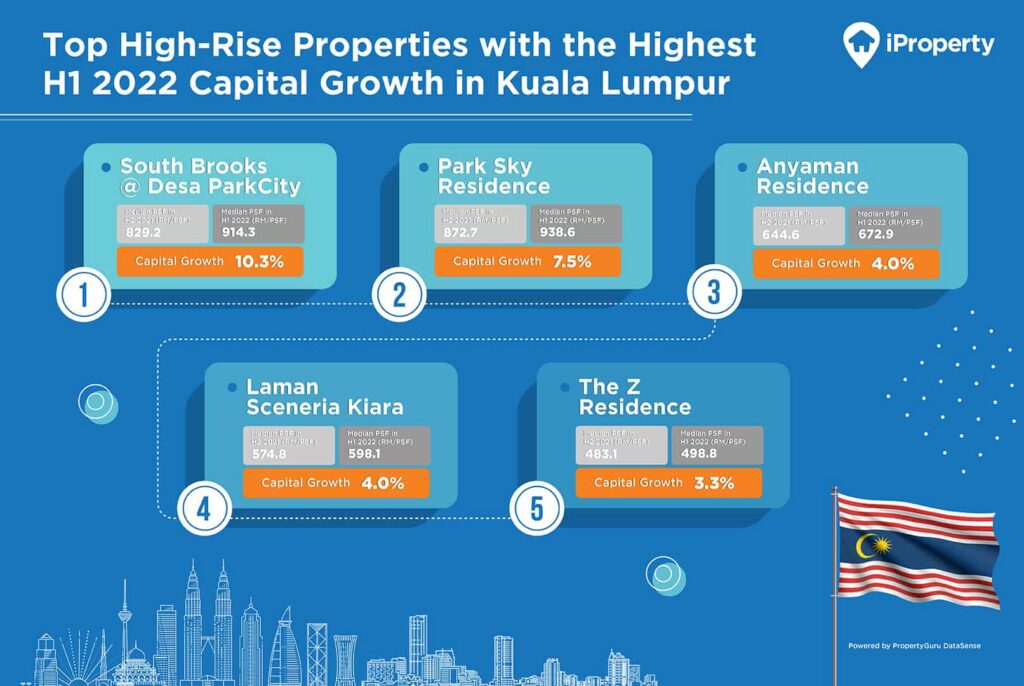
Top High-Rise Properties with the Highest H1 2022 Capital Growth in Kuala Lumpur
In Kuala Lumpur, South Brooks in Desa ParkCity tops the list with the highest capital growth at 10.3%. In addition to providing club-level gymnasium facilities, the condominium boasts a landscape with tropical pocket gardens. As South Brooks is within the affluent Desa ParkCity enclave, it has the advantage of being connected by various highways. A renowned international school and private hospital are also a short distance away from South Brooks.
Select high-rise properties in Bukit Jalil also emerged as winners, registering between 3.3% (The Z Residence) and 7.5% (Park Sky Residence) in capital growth. The price growth is spurred by each property’s emphasis on green living and proximity to Bukit Jalil Recreational Park. Meanwhile, Anyaman Residence in Sungai Besi and Laman Sceneria Kiara in Segambut achieved capital growth of 4.0%. Both housing developments provide luxurious living spaces and calm surroundings for residents.
Top High-Rise Properties with the Highest H1 2022 Capital Growth in Selangor
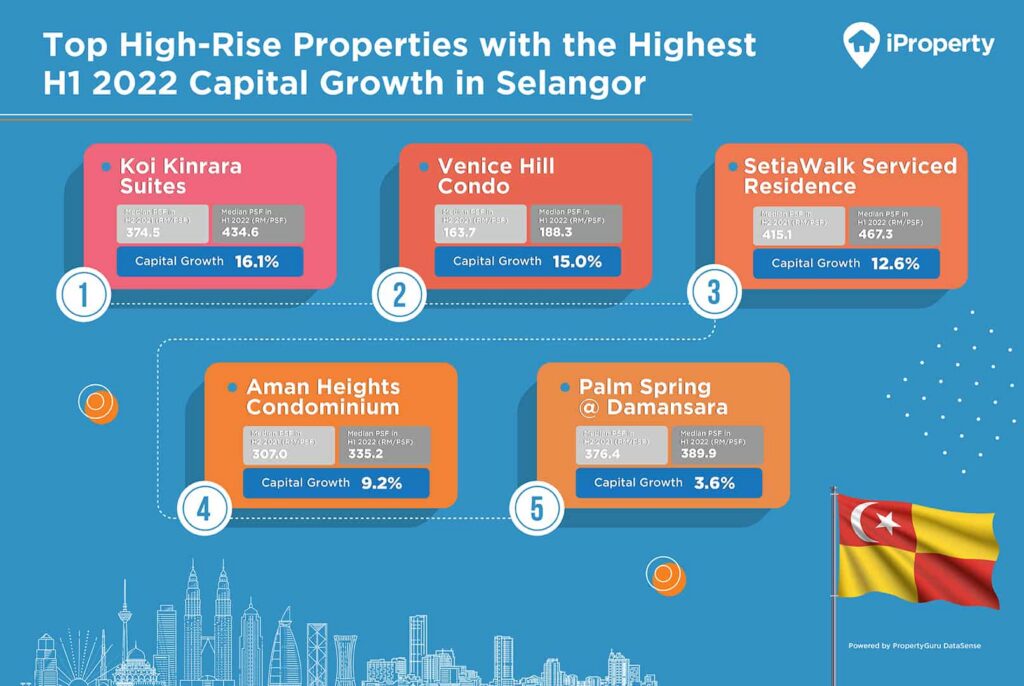
Two hillside properties, Koi Kinrara Suites in Puchong (16.1%) and Venice Hill Condominium in Cheras (15.0%), gained the highest capital growth in Selangor. These high-rise developments appeal to urbanites who prefer green living environments and modern condominium amenities. Regarding accessibility, Koi Kinrara Suites is well connected to major highways and is located nearby reputable tertiary educational institutes. Meanwhile, Venice Hill Condominium which is located on a hill, enjoys huge demand from expatriates for its scenic view of Kuala Lumpur City Center.
Setiawalk Residence is another property in Puchong with a double-digit capital growth figure of 12.6%. The service residence is popular among small families and young professionals as it is in a mixed development consisting of retail lots, offices, restaurants, and entertainment outlets. Apart from offering facilities along green landscapes, the property is strategically situated in the heart of Puchong. In Seri Kembangan, Aman Heights Condominium reaped a capital growth of 9.2% due to its peaceful surroundings, verdancy and tropical resort architecture. The condominium has attracted residents who prefer to live in a less hectic suburban area without sacrificing connectivity and access to commercial sites, educational institutions and medical centres.
Top High-Rise Properties with the Highest H1 2022 Capital Growth in Penang
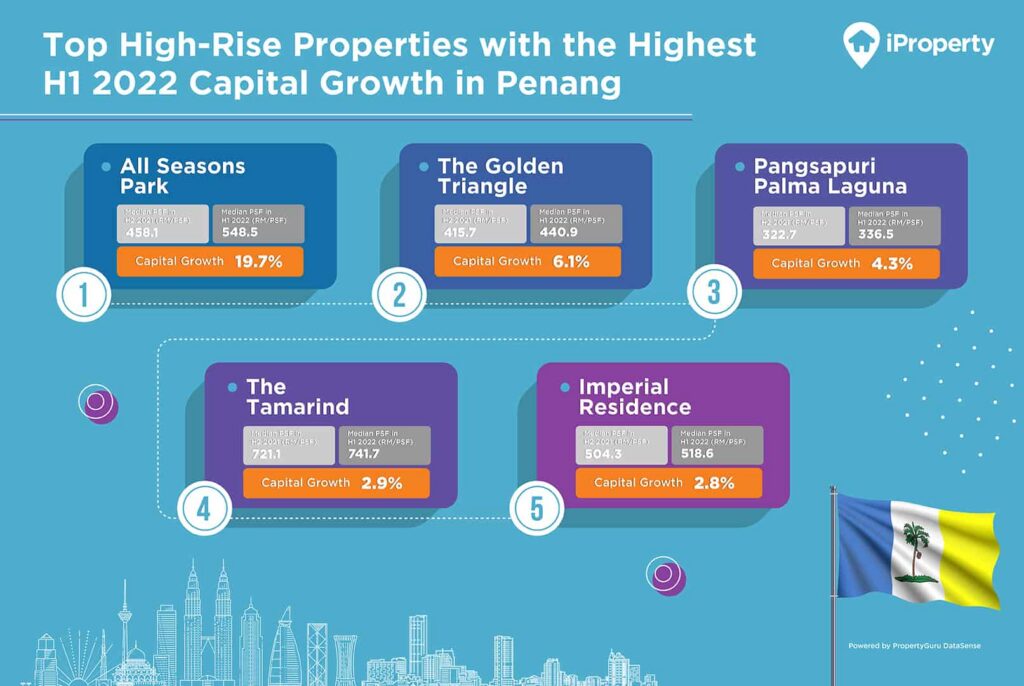
All Seasons Park in Ayer Itam achieved the highest growth with 19.7% because of its clubhouse facilities and an exclusive park with different landscaping themes, water features and hues of greens in keeping with the four seasons theme. Situated along Lebuhraya Thean Teik, residents can easily travel to other parts of the city. Another development, Golden Triangle, gained 6.1% in capital growth and is located in the middle of three prime locations — Relau, Sungai Ara and Bayan Lepas. A highlight of this condominium is that residents can enjoy the view of 1.9 acres of green open space. The development is also accessible via the Tun Dr Lim Chong Eu Expressway and is close to the Penang Bridge and Penang Bayan Lepas International Airport.
Other projects on the island round up the list — The Tamarind in Tanjung Tokong (2.9%) and Imperial Residence in Sungai Ara (2.8%). The resort-like design of The Tamarind is ideal for young professionals and families looking to live a seaside lifestyle while being close to The Gurney Drive area. Meanwhile, the main attraction of the Imperial Residence is its spacious layouts, inspired by bungalow and semi-detached homes. Similar to the Golden Triangle, it is near the airport and the Penang Bridge.
* * *
Footnotes
*The Malaysian House Price Index (MHPI) measures the price changes of residential housing in Malaysia as a percentage change from a specific start date
Capital growth is calculated as = Median PSF in H1 2022 – Median PSF in H2 2021 / Median PSF in H2 2021. Median Per Square Foot (PSF) is used to calculate capital growth due to various built-up sizes being transacted.
Only properties that have more than 5 transactions in H2 2021 and H1 2022 were selected to negate the effect of any spikes.
The data system from JPPH officially records a property transaction in Malaysia once the stamp duty for the Sales and Purchase Agreement is paid. Analytics is based on the data available at the date of publication and may be subject to revision as and when more data becomes available.
The opinions stated in the press release are not in any form an endorsement or recommendation by iProperty.com.my. Individuals are encouraged to perform their due diligence and seek independent advice prior to making any investment.
About iProperty.com.my iProperty.com.my is the market-leading property marketplace in Malaysia and offering a complete property picture for seekers in their property buying, renting, selling or investing journey. The company offers a search experience in both English and Bahasa Malaysia and provides in-depth consumer solutions such as Transaction Section – which offers the latest and most accurate sub-sale transaction data and LoanCare – a home loan eligibility indicator. The company has also been committed to developing innovative Proptech tools and data-driven insights such as iProperty PRO, Customer Hub and Marketing Services to support our partners, property developers and agents, in growing their business. The company is part of PropertyGuru Group (NYSE: PGRU), Southeast Asia’s leading property technology company.
Credited with revolutionising the American transportation industry in the 20th century, Henry Ford once remarked that: “A business must be run at a profit, else it will die. But when anyone attempts to run a business solely for profit and thinks not at all about a service to the community, then also the business must die, for it no longer has a reason for existence”.
Nearly a hundred years since, these words of wisdom remain true. Perhaps, even more so now than ever, with Islamic sustainability taking center stage. Indeed, we have witnessed time and again, episodes of excessiveness, and the sole and unchecked pursuit of profits that have led to global financial crises.
ESG is a spirit beyond profit, and is therefore a fitting reminder of the role of ESG in helping build a more resilient and sustainable future.
Islamic Principles And The UN SDGs
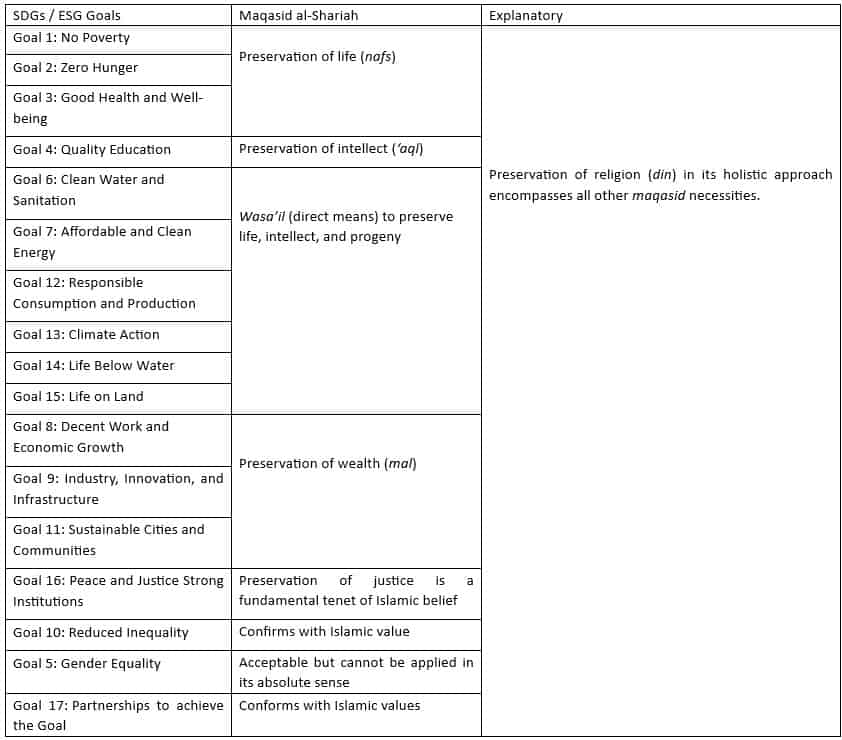
The Islamic transaction (muamalat) principle aspires to build a shared sustainable future for employees, consumers, shareholders, and the community, in accordance with the requirements of Shariah, observing the guidance from the United Nations Agenda 2030 for Sustainable Development. The Sustainable Development Goals (SDGs) aim to bring the world’s countries together in order to eradicate all forms of poverty, reduce inequalities, promote human rights, combat climate change and promote good governance within organisations.
Overall, the correlation of the 17 SDGs and maqasid-al-Shariah (objectives of Shariah) aim to push the globe towards a more sustainable and resilient path, as well as building a better community and for society’s economic, social, and environmental consequences.
Maqasid-Al-Shariah
The call for maqasid-al-Shariah not only complies with Shariah requirements but also achieves the intended outcomes of Shariah. These focuses on the enhancement of well-being of people through the preservation of wealth (mal), faith (din), lives (nafs), lineage (nasl) and intellect (‘aql).
The word ‘maqasid’ means objectives, aspirations or aims, while Shariah is ‘the Divine law as revealed unto the Prophet Muhammad (Peace be upon him)’. Therefore, the term ‘maqasid-al-Shariah’ means the objectives and goals underlying the Law of Islam.
Islamic finance is developed to emphasise the attainment of positive value creation and prevention of negative impact. In a broader sense, maqasid-al-Shariah covers the accomplishment of well-being and the avoidance of harm: “Do good, do no evil – Amal Ma’ruf Nahi Munkar.”
An Islamic sustainability economic definition is that the current economic needs must be within the scope of not causing harm to future generations. In Islam, the rights of a person and the organisation are clearly defined by religion.
It is further strengthened by the application of the code of ethics in business dealing based on Islamic values. For that, ethical investments and social responsibilities of individuals also apply to business, which is the catalyst in promoting economic sustainability.
Islam does not prevent any form of trade and business, as the religion recognises that work and business are part of the worship of God. An individual or a company is entitled to a return from capital commitments and efforts in the context of an economic venture. The only concern is the context of the application of ESG elements to the profit-making process, as long as it is subject to the scope of ESG compliance.
In a business context, any business that claims to comply with the Shariah jurisdiction must be clear about their role in society in providing goods and services that serve public interest in addition to profit. The permissible range of choices of Islamic investment is wide, as long as it involves investment in companies and businesses that undertake the deployment of funding on Shariah-compliant businesses and operations.
“Developing a comprehensive and robust ESG response is becoming increasingly crucial to enhance business resilience and viewed as an important catalyst for long-term value creation,” said Tan Sri Abdul Wahid Omar, Chairman of Bursa Malaysia.
Businesses that aim to be relevant in the long-run sees the investment of adhering with ESG requirements paying off, regardless of conglomerate corporations or SMEs. Conglomerates will benefit from positive reputation building and branding apart from complying with regulatory requirements, while SMEs will be benefiting through access to better financing capacity from financial institutions who adopt ESG through respective Value-Based Intermediation (VBI) initiatives. Non-monetary aspects include wider market access to business opportunities.
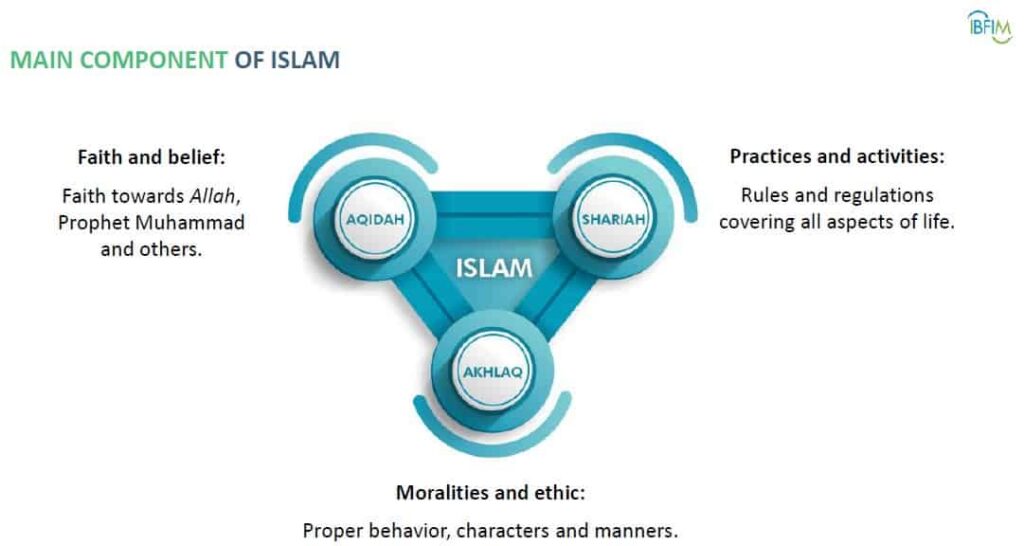
Main component of Islam
Source: Certified Professional Shariah Auditor (CPSA) reference book
Islamic Sustainability: The Way Forward
ESG and Islamic sustainability is going to be a megatrend and the E(nvironmental), S(ocial), and G(overnance) concepts are key market and business drivers today and in the future. The holistic adoption of Islamic principles in Shariah-compliant businesses is in line with the spirit of ESG without affecting the whole business practice.
Fulfilling the ESG agenda will ensure the prosperity of businesses by focusing on profit, people and the planet; while ESG criteria will be used to guide businesses based on corporate policies and to encourage businesses to act responsibly within the ESG framework. Businesses have no other choice but to gear up their readiness to embrace the ESG agenda within their respective organisations.
With Islamic principles induced, it will smoothen the whole agenda of Islamic sustainability.
About the Author
Haji Mohamad Faisal is a Managing Partner of Faisal Malik & Co (CA), a member of Islamic Finance Committee (IFC) of Malaysian Institute of Accountants (MIA), a Director of Islamic Shariah Audit Malaysia (ISAM). He is also a Certified Professional Syariah Audit Malaysia (CPSA). He can be contacted at admin@faisalmalikco.com.
If you have some extra cash lying around, we tend to use it to pay off house loan early so that we won’t be bogged down with loans well into our retirement. This is because housing loan can now go until 40 years or until we are aged 70.
Isn’t it a good thing then to settle our debts earlier?
Well I’m sure you have heard of the term, bad debt and good debt. Bad debt refers to debt that has a high interest rate, such as credit card and personal loan. It can reach double figures, with credit card interest in the range of 15% to 18% per annum, while personal loan is around the 10% range.
The interest rates are kind of fixed, so if you have extra cash – it is better to clear off your credit card and personal loan. Unless you can find an investment that can give a return which is higher than 18%. And consistently giving out that kind of high returns.
Whereas a good debt is having an interest rate that is low, but appreciates in value. Just like a house is. The current interest rate for loans in Malaysia is 4% to 6%, but your house value could go up by 10%.
If you have bought a house in the 1990’s or 2000’s, the house price have increased several times over.
So here’s a few reasons why you shouldn’t pay off house loan early.
1. Low Interest Rates
Yes, the primary reason is that the interest rate for housing loan is one of the lowest, if not the lowest. Compare that with the double digits that a credit card or personal loan, and you know that you are using loans for a good thing.
You should just enjoy the facility that the banks have given you, and take full advantage of it.
2. Invest For Higher Returns
Let’s say you have extra cash around RM100,000 and are considering to dump it all in your housing loan. But there’s a potential to make 8% return on the investment, which gives you an extra RM8,000.
In this case, you should go for that investment instead and let it compound annually. Using Rule of 72, the RM100,000 would have doubled to RM200,000 after nine years, provided that the 8% return is consistent throughout the years.
You shouldn’t pay off house loan early, if you can find a good investment.
3. Higher Return On Equity
For example, a property worth RM1 million which gets a rental income of RM50,000 a year, is fetching a 5% yield. If you buy the property without a loan, your return rate is 5%. When you get 90% financing from banks, your equity is RM100,000. So your return on equity is 50% (RM50,000/RM100,000).
If your rental yield of 5% plus all future capital appreciation is higher than the mortgage interest, the leverage effect allows you to get a higher return.
As you slowly pay down your outstanding principal, you build up the equity of the property. With a higher stake, your return rate comes down. That’s the reason that the more you pay down your mortgage, the return comes down too due to lower leverage.
4. Extra Payment Not Liquid
The equity value or extra funds that you put in your property is not liquid. You can’t take it out straight away, like you normally would when putting in your savings account. You might need to wait few days or weeks to cash out.
Another way to unlock your property is by refinancing. But this would involve a new loan agreement, legal fees, admin fees etc. And by the time you get the money, it will be a few months later.
That’s why you shouldn’t pay off house loan early, since you can’t take it out easily.
5. Tax Benefit
When you have rental income on a property that still has a loan, you can write off the mortgage interest when filing taxes. So the more you pay off the principal, the less interest you can deduct. Therefore, you might end up with more tax liability.
That’s Why You Should Not Pay Off House Loan Early
Now you understand why you should not pay off house loan early?