Category: Property

  • Official Launch Of KL Wellness City

    Official Launch Of KL Wellness City

    KL Wellness City (KLWC), the first purpose-built township project in Southeast Asia to cultivate a lifestyle fully integrated with healthcare and wellness, marked its official launch today at the KL Wellness City Gallery in Bukit Jalil. The ceremony welcomed the Minister of Health, YB Dr Zaliha Mustafa as its Guest of Honour to officiate the momentous occasion.

    With a gross development value (GDV) of RM11 billion and spanning over 26.49 acres, the development is a world-class medical and wellness living at its core. The project features a well-rounded ecosystem primed for wellbeing and health – The Nobel Healthcare Park, the KL International Hospital (KLIH), innovation laboratories, clinical R&D facilities, healthcare company office towers, a retirement resort, a Healthcare Hub, wellness-centric serviced apartments, a fitness-based Central Park, and more.

    For the past few years, during the pandemic, Malaysia has been fighting hurdles in keeping up infrastructure development with patient load, retaining our medical talents, maintaining continuance of care in preparation for an ageing nation and a continuous war against Non-Communicable Diseases (NCD).

    Positioning Malaysia As A Hub For Medical Tourism

    From Left: Pn Norhaslina Othman, Malaysia Healthcare Travel Council Vice President (Facilitation), Dato’ Sri Vincent Tiew, Executive Director (Branding, Sales, And Marketing), YB Dr. Zaliha Mustafa, Minister of Health, Dato’ Dr. Colin Lee, KL Wellness City Managing Director, Wan Zamri Wan Hassan, Director (Project Development), Ms. Lim Bee Vian, Malaysian Investment Development Authority (MIDA), Deputy Chief Executive Officer, Datuk Seri Garry Chua, Non-Executive Director (Retail, Consumerism & Construction)

    “In full support of Malaysia’s national plan to be recognised as one of the best places for medical tourism, KL Wellness City is designed to provide and prioritise health and wellbeing as the heart of its development, through its vision of a 360-degree wellness hub centred around its township which encompasses all aspects of medical care, health, wellness, fitness, and business, complete with residential, retail, and commercial offerings,” said KL Wellness City Managing Director, Dato’ Dr Colin Lee.

    In line with the national vision of solidifying Malaysia’s position and track record as the top destination for medical tourism in mind, KL Wellness City will serve as the ultimate one-stop oasis for the body and mind for both domestic and international travellers.

    Preparing For An Ageing Nation

    YB Dr. Zaliha Mustafa, Minister of Health, adds her signature to the plaque following the successful official launch ceremony of KL Wellness City

    Other than being a cornerstone for healthcare travel, according to Dato’ Dr Colin, the KLWC project is also an initiative that is built with an ageing nation in mind. Malaysia, having attained its status as an ageing nation, has an ageing population growing at a faster-than-expected rate where more than 15% of its
    population will be above the age of 65 by 2050.

    In response to this shift in population demographics, Malaysia is currently in pursuit of WHO’s Universal Health Coverage and Sustainable Development Goals, that is to provide equitable healthcare and wellness for all. “The KL Wellness City master plan incorporates thousands of facilities and residences. This township is a significant step towards embracing an ageing nation, with facilities for comprehensive healthcare dedicated to wellbeing through elderly care, retirement resorts, as well as independent and assisted living.” Dato’ Dr Lee added.

    Retaining And Cultivating Local Medical Talents

    Dato’ Dr. Colin Lee, Managing Director of KL Wellness City, expresses gratitude by presenting a token of appreciation to YB Dr. Zaliha Mustafa, Minister of Health

    The flagship KL International Hospital (KLIH), approved as a tertiary hospital with 624 beds and scalable to 1,000-bed capacity, will be on the same ranks as renowned institutions like Thailand’s Bumrungrad International Hospital, as well as Mount Elizabeth Novena, Singapore.

    Some of the of medical equipment and facilities to be equipped in the KL International Hospital will be amongst the first in the Southeast Asia region, offering a fully comprehensive and integrated ecosystem of healthcare services including wellness and fitness facilities across diverse areas, including cardiology, spine health, neuro health, sports medicine, cosmetic surgery, and fertility, with R&D laboratories and facilities for clinical studies.

    With the support of the Malaysian Investment Development Authority (MIDA) towards the KLIH, the new private hospital will be built within the mixed development of KL Wellness City in Kuala Lumpur with proposed investment of RM860 million. The project, set to be in operation in the first half of 2026, will create over 3,000 job opportunities for medical professionals, including medical specialists, doctors, nurses, pharmacists, technicians, and others.

    “The commitment of KLWC to raising the bar for healthy living and wellbeing resonates with the Ministry of Health’s whole-of-system approach. It aligns perfectly with our national vision and the direction set forth in the 12th Malaysia Plan.

    Undoubtedly, I have faith that KLIH will attract multidisciplinary leading specialists to practice in a single hospital location, shortening turnaround time for both local and foreign patients, optimising patient care and experience.

    We foresee KLIH filling in that gap for Malaysians, and we stand in support of KLWC resonating with their purpose. The Ministry applauds the efforts of the tertiary hospital to maintain our leading position in this region and globally. We will continue to endorse KL International Hospital’s commitment,” said YB Dr Zaliha Mustafa, Minister of Health Malaysia.

    Dato’ Dr Colin also expressed his gratitude for the support of the Malaysian Government for the groundbreaking project. “We are honoured by the presence of the esteemed Minister of Health, YB Dr Zaliha Mustafa, which further exemplifies our shared commitment to make Malaysia stand among the best in the SEA region.”

    VIPs pose for the photo album to commemorate the successful official launch ceremony of KL Wellness City

    About KL Wellness City

    KL Wellness City Sdn Bhd is the master township developer. At the forefront of wellness and healthcare, KL Wellness City is the first in Southeast Asia to cultivate a lifestyle fully integrated with healthcare. Pioneering a comprehensive ecosystem embodying healthcare and wellness living, KL Wellness City’s concept is uniquely modelled by its declaration to redefining, strengthening, and broadening our experience of health and quality of life. Sharing in this vision of building a 360-degree wellness hub, the KL Wellness City community boasts The International Tertiary Hospital, Medical Suites, innovation laboratories, clinical R&D facilities, healthcare company office towers, a retirement resort, a Healthcare Hub, wellness-centric serviced apartments, a fitness-based Central Park, and more.

    Serving as a healthcare nexus, these pivotal elements collectively render KL Wellness City the ultimate one-stop oasis for the body and the mind. Each component of this township is carefully conceptualised to excel both independently and collectively as a part of the community’s integrated ecosystem encompassing medical care, healthcare, wellness and fitness.

    For more information, kindly visit: http://klwellnesscity.com/

  • Pavilion REIT Concludes Acquisition Of Pavilion Bukit Jalil, Reinforcing Retail Portfolio

    Pavilion REIT Concludes Acquisition Of Pavilion Bukit Jalil, Reinforcing Retail Portfolio

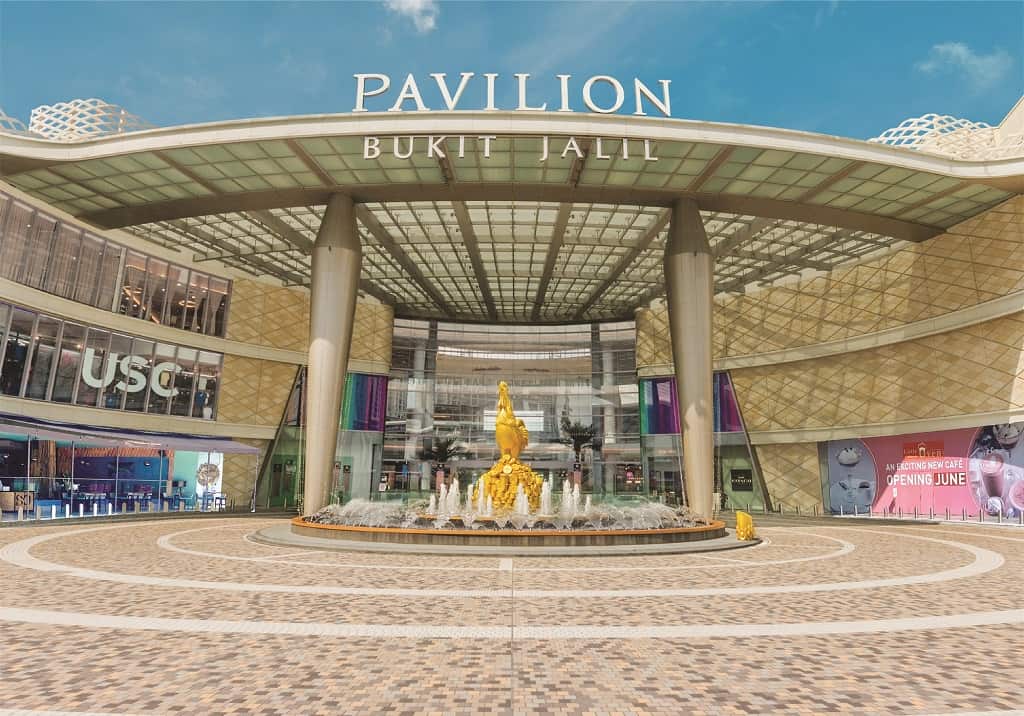
    Pavilion Real Estate Investment Trust (“Pavilion REIT”) has announced the successful conclusion of the acquisition of Pavilion Bukit Jalil, strengthening its position in the retail sector and marking an important milestone in its portfolio expansion and income diversification strategy.

    Following the fulfilment of all conditions precedent as set out in the earlier Sale and Purchase Agreement (SPA) and an oversubscription of its first private placement, Pavilion REIT now owns Pavilion Bukit Jalil, inheriting its balance sheet and revenues.

    Dato’ Philip Ho, CEO Pavilion REIT Management Sdn Bhd

    “The successful acquisition of Pavilion Bukit Jalil signals a strategic expansion in Pavilion REIT’s portfolio, bringing total asset under management to RM8.3 billion and the start of another new chapter for Pavilion REIT,” stated Dato’ Philip Ho, the Chief Executive Officer of Pavilion REIT Management Sdn Bhd.

    Dato’ Philip added that Pavilion Bukit Jalil’s robust tenant strategy, combined with its role as the host of numerous local and international events, has successfully driven the mall’s occupancy rate to over 82% in a relatively short span, and that this positive momentum is expected to continue.

    The mall’s diverse tenant mix has recently secured new brands particularly in the F&B space including BONCAFE @ HOME, Mixbowlicious, Noodleface Express, MOVON, CrunchCraze, 117 Coffee Bar by Psycoth, Superhero, and Xi Yu (喜鱼). Further adding to the unique experience, the mall also will welcome new concept outlets such as Iron House Cafe (铁皮屋) and JP & Co.

    Dato’ Philip Ho highlighted that Pavilion Bukit Jalil’s energetic atmosphere, catering to diverse interests, is poised to solidify Pavilion Bukit Jalil’s positioning as a premier retail destination. By incorporating novel retail brands and concept stores, while hosting renowned exhibitions and events, the mall’s strategic vision supports a wider visitor and shopper base, making it an increasingly attractive proposition.

    L’Occitane Hotel pop up

    Pavilion Bukit Jalil has established itself as a preferred event destination, hosting various international and local pop-up exhibitions. The mall is currently hosting the world’s first L’Occitane Hotel pop up and ‘The World of Tim Burton Pop-Up Museum’, the first in South East Asia. Recently concluded events include the internationally acclaimed Van Gogh immersive experience and Demon Slayer: Kimetsu no Yaiba Total Concentration exhibition from Japan.

    Pavilion Bukit Jalil will also soon play host to the Japan Expo Malaysia 2023, the biggest all-Japan event from August 18 to 20. The event is expected to draw enthusiasts for all things Japanese and will incorporate a number of zones including music, food, travel, arts, education, health and wellness, anime and cosplayers.

    About Pavilion REIT

    Listed on 7 December 2011, with the largest exposure to the retail sector by any listed Malaysian REIT, Pavilion REIT owns a RM6.0 billion portfolio based on appraised value, to which its most prominent asset is the Pavilion Kuala Lumpur Mall that is located in Bukit Bintang, Kuala Lumpur, Malaysia.  Pavilion REIT is established with the principal investment policy of investing, directly and indirectly, in a diversified portfolio of income producing real estate used solely or predominantly for retail purposes (including mixed – use developments with a retail component) in Malaysia and other countries within the Asia-Pacific region. For more details, please visit www.pavilion-reit.com

    About Pavilion REIT Management Sdn Bhd

    Pavilion REIT Management Sdn Bhd is the manager of Pavilion REIT. Incorporated in Malaysia on 7 April 2011 with an issued and paid-up capital of RM5 million, it is 51% owned by Urusharta Cemerlang Development Sdn Bhd and 49% owned by Urusharta Cemerlang Project Corporation Sdn Bhd. The principal activity of the Manager is to manage and administer Pavilion REIT.

  • PropertyGuru: Malaysian Residential Property Market Continues To Face Challenges As Supply And Demand Declines

    PropertyGuru: Malaysian Residential Property Market Continues To Face Challenges As Supply And Demand Declines

    PropertyGuru Malaysia released its PropertyGuru Malaysia Property Market Report (MPMR) Q2 2023, which revealed that property demand and supply eased at the beginning of the year with an overcast economic outlook.

    Based on the insights from DataSense, PropertyGuru’s market data and analytics platform, the report captured downward trends in the Sale Demand Index, with property enquiries decreasing by 5.6% QoQ. While inflation is projected to moderate in the coming months, global economic uncertainties have affected the appetite of Malaysian buyers for big-ticket purchases. Similarly, the Sale Supply Index saw a slight decrease of 0.6% as property owners continued the wait-and-see approach towards their investments.

    Sheldon Fernandez, Country Manager, Malaysia (PropertyGuru.com.my and iProperty.com.my), shared, “With Bank Negara Malaysia’s decision to raise the Overnight Policy Rate by 25 basis points to 3%, it will be difficult to see an uptick in property demand. Potential homebuyers are likely to delay their purchasing plans because of the higher borrowing costs and rising cost of living. Currently, it is still too early to gauge how much impact this will have on the market.”

    Sheldon Fernandez, Country Manager, Malaysia (PropertyGuru.com.my and iProperty.com.my)

    Asking Price Continues to Rise

    The MPMR Q2 2023’s Sale Price Index tracked the asking prices of properties listed on propertyguru.com.my, which increased by 1.6% QoQ in Q1 2023. Sellers are likely not keen to lower prices against the backdrop of an uncertain economic climate. The global increase in construction costs paired with recent labour shortages have also pressured developers to hike their prices to cover the increased costs.

    While Malaysia is projected to see a moderately lower economic growth this year, we may see a more attractive property market as economic activities accelerate towards the second half of the year. Following the boost in investments from companies like Tesla and AWS, as well as China’s RM 170 Billion Investment Commitment, this is likely to spur job creation and push infrastructure development in Malaysia in the near future.

    However, buyers are also aware of the external pressures caused by global inflation and remain cautious with their purchasing decisions, especially with the current higher borrowing costs. If property prices continue to peak with demand lagging, a global recession or economic shock could lead to a price correction. If it happens, property prices adjust accordingly to reflect the slower demand.

    Trends in the Rental Market

    From the report, the indexes in the rental market mirrored the trends in the property sale market, tracking a decrease in the Rental Demand Index by 6.3%. This is likely due to the substantial increase in rental prices, with the Rental Price Index rising by 4.7% QoQ. The rise in rental prices did not go unnoticed, and the Selangor state government has announced plans to look into the feasibility of expanding its Smart Rental Scheme to low-cost housing.

    “The decrease in rental demand, as highlighted in our report, could reflect that Malaysians are becoming even more cautious, perhaps opting to stay with family members and commute to the city to work instead of renting their own place. Again, the wait-and-see approach continues but it may be further exacerbated by the uncertainties ahead,” states Sheldon.

    As rental prices continue to rise, we are seeing increased pressure on the demand for affordable housing near job centres. More individuals are migrating towards these urban areas for convenience, but the rising prices may force them to forgo ideal living conditions. This presents a unique opportunity for developers and landlords to consider repurposing their unsold properties into co-living spaces, which offers more affordable living space by sharing costs and common areas with other residents without completely forgoing privacy.

    “We are seeing cumulative issues of housing affordability, higher cost of investment, mismatch of demand and supply, and “sick” housing projects. These issues have been persistent in the local market, and unfortunately remain unsolved today. While we do see the government taking the first steps to address these issues, developers must also play their part in assessing what homebuyers need – because that’s changed overtime”, he adds.

    Johor in the spotlight

    To kick-start 2023, Johor takes the crown for the most-viewed residential properties in Q1 2023. The state boasts the top four most viewed condominium projects in Malaysia and had four other projects front-running in the landed properties category, with Leisure Farm maintaining its top position as the most viewed residential landed project. In the rental market, R&F Princess Cove became a popular project for those looking to rent, given its strategic location near the Johor Causeway.

    Johor’s development surge is anticipated to persist, fueled by last year’s RM51.1 billion investment in data centres. As a burgeoning digital hub, Johor is attracting attention to its real estate market. The prospect of new job opportunities may entice more Malaysians to relocate to the peninsula’s southern region.

    “Overall in Malaysia, the rising prices driven by global uncertainties will continue to contribute to the current housing affordability issue. As property ownership costs are expected to increase with the OPR hikes, we foresee property buyers and sellers alike will continue to navigate a challenging and unpredictable property market. However,      we are cautiously optimistic that the economy will show improvement in the second half of 2023, and we will continue to look out for more positive signs of growth in the residential property market,” he concluded.

    About PropertyGuru Malaysia

    PropertyGuru.com.my is Malaysia’s leading property marketplace and has been guiding Malaysians in navigating their home-ownership journey since 2011. The company provides easy-to-use, property market data and actionable insights such as Property Guides, Property Market Reports and Home Loan Calculator, which enable property seekers to make confident property decisions wherever they are in their property journey. PropertyGuru Malaysia offers end-to-end solutions for Malaysian property agents (AgentNet) and developers to help achieve their business goals. These include, a high-quality developer sales enablement platform, FastKey; and a host of other property offerings including Awards, events and publications across Asia. The company is part of PropertyGuru Group (NYSE: PGRU), Southeast Asia’s leading property technology company.  

  • MRTT VS MRTA, What’s The Difference?

    MRTT VS MRTA, What’s The Difference?

    A mortgage is one of a person’s largest debts or loans. Therefore, it is unsurprising that several types of takaful can help settle the loan if something undesirable happens to the borrower.

    For example, the borrower’s death or permanent disability prevents them from working or generating further income to settle the remaining loan balance. Thus, takaful or insurance is the best protection for protecting you and your loved ones. How can it protect you and your loved ones?

    Before we start comparing MRTT vs MRTA, you should know that there are 4 types of protection for your mortgage:

    a. MRTT: Mortgage Reducing Term Takaful

    b. MRTA: Mortgage Reducing Term Assurance

    c. MLTT: Mortgage Level Term Takaful Assurance

    d. MLTA: Mortgage Level Term

    In this article, we will explore more on MRTT vs MRTA. To simplify understanding, MRTT and MRTA are a package that seems the same. The only difference is that MRTA is a form of conventional insurance while MRTT is takaful or Islamic.

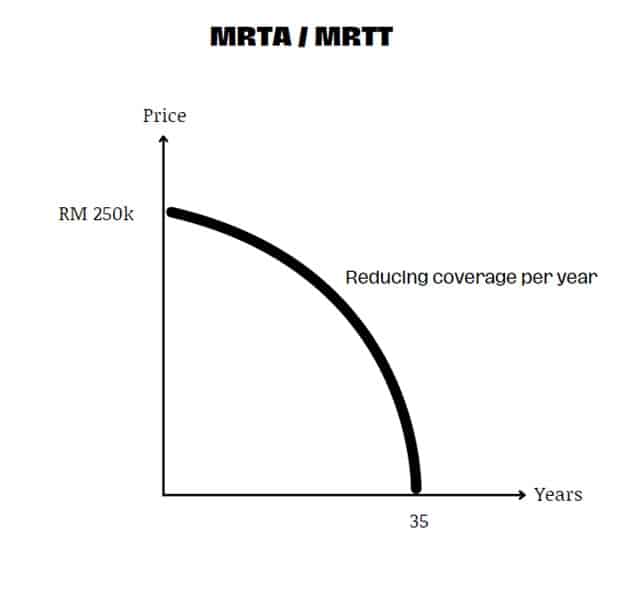
    The key phrase for MRTT and MRTA is R – Reducing. If your housing loan amount decreases, the protection MRTT and MRTA provide will also decrease.

    Read: 7 Tips For First-Time Home Buyers

    MRTT VS MRTA

    MRTT VS MRTA: What Is MRTT?

    MRTT, or Mortgage Reducing Term Takaful, is insurance based on Islamic finance principles. MRTT is a takaful (Islamic insurance) product that provides coverage for mortgage payments in the event of death or TPD of the policyholder.

    This type of insurance operates on the principle of shared risk, where policyholders collectively pool their resources to protect one another. In the event of a claim, the takaful fund covers the mortgage payments of the policyholder’s family.

    MRTT VS MRTA: What Is MRTA?

    Conversely, MRTA is a type of insurance that operates on the principle of individual risk. MRTA provides coverage for mortgage payments in the event of the death or TPD of the policyholder.

    Unlike MRTT, MRTA is not based on the principles of Islamic finance and operates as a traditional insurance product. In the event of a claim, the insurance company pays the mortgage payments to the policyholder’s family.

    Read: High-Rise Properties Near Lush Greenery Achieve High Capital Growth in H1 2022

    MRTT VS MRTA: The Differences

    Categories/Coverage TypeMRTTMRTA
    Pool of fundsOperates on shared risk principle, coverage from takaful fundOperates on the principle risk, coverage from the insurance company fund
    Cost of coverageCheapMore expensive
    Amount of coverageLowHigh

    One of the key differences between MRTT and MRTA is how they are structured. MRTT operates on the principles of shared risk, while MRTA operates on the principle of individual risk.

    This means that the cost of coverage is determined differently in each case. In MRTT, the cost of coverage is determined based on the collective pool of resources provided by policyholders.

    In MRTA, the cost of coverage is determined based on the individual risk of the policyholder.

    Another key difference between MRTT and MRTA is the way claims are handled. In MRTT, claims are handled by the takaful operator and are paid from the takaful fund. In MRTA, claims are handled by the insurance company and are paid from the insurance company’s funds.

    It all looks the same, but structurally, MRTT is shariah-compliant.

    Pros And Cons Of MRTT

    One of the main benefits of MRTT is that it operates on the principles of shared risk, which helps to reduce the cost of coverage. Because policyholders collectively pool their resources, the coverage cost is lower than MRTA.

    Additionally, MRTT is a takaful product, which means that it is based on the principles of Islamic finance and is therefore considered a more ethical and socially responsible option than MRTA.

    However, one of the potential drawbacks of MRTT is that it may not provide as much coverage as MRTA. MRTT operates on the principles of shared risk, which means that the cost of coverage is lower. However, this also means that the coverage is typically lower than MRTA.

    Pros And Cons of MRTA

    One of the main benefits of MRTA is that it provides more coverage than MRTT. Because MRTA operates on the principle of individual risk, the coverage provided is typically higher than MRTT. Additionally, MRTA is a traditional insurance product that provides higher financial protection than MRTT.

    However, one of the potential drawbacks of MRTA is that it is generally more expensive than MRTT. Because MRTA operates on the principle of individual risk, the cost of coverage is determined based on the individual risk of the policyholder, which can result in higher costs compared to MRTT.

    Additionally, MRTA is not based on the principles of Islamic finance and may not be considered a socially responsible option for some Muslim consumers.

    In conclusion, MRTT and MRTA are two popular insurance products in Malaysia that provide financial coverage for mortgage payments in the event of death or TPD of the policyholder.

    Both MRTT and MRTA have their pros and cons. Consumers must consider their needs and circumstances before choosing between these two options.

    Hope that you now have a better understanding of MRTT vs MRTA. You should also consider the level of coverage they require, the cost, and the level of financial protection they need before deciding.

    Read: How To Save 50% Of Your Housing Loan Interest In Half The Time, And Get Your Dream Car For Free

  • 7 Tips For First-Time Home Buyers

    7 Tips For First-Time Home Buyers

    Purchasing property in Malaysia can be complicated and perplexing, particularly for first-time buyers. Yet, if you are prepared and knowledgeable, you may go through the process easily and assuredly.

    Here are some tips for first-time home buyers in Malaysia.

    1. Property Ownership

    settle my loan early credit card loan house loan opportunity cost car loan

    One of the important tips for first-time home buyers is to know the many forms of property ownership. Malaysia has three: leasehold, freehold, and Bumiputera quota. Properties with a leasehold duration of up to 99 years are often less expensive than those with freeholds.

    Freehold homes cost more and have an unrestricted tenure. For ethnic Malays and other indigenous communities, quota-Bumiputera properties are set aside.

    Read: Housing Loan In Malaysia: What Is Debt Service Ratio (DSR) And How To Calculate DSR?

    2. Know Your Property Market

    Get knowledgeable about the property market. It is crucial to comprehend the market’s circumstances before making a purchase. Find out the costs of nearby properties similar to yours and the level of interest in those properties.

    To better grasp the market, you can also speak with property agents, registered real estate negotiators or property developers.

    Read: Property Investment: Make Money via Capital Gain & Rental Yield

    3. Loan Pre-Approval

    Next on tips for first-time home buyers is to obtain a loan pre-approval: If you intend to use a loan to pay for your property purchase (which most people are), it’s a good idea to get pre-approved a loan before beginning your search.

    This can help you decide how much you can pay on a property and provide you leverage when dealing with vendors.

    Read: 3 Important Steps For Your Mortgage Application

    4. Understand the Legal Process

    One should know and understand the legal process before buying a property. The legal procedure for purchasing property in Malaysia might be complicated, so it’s important to understand all the processes.

    This includes the ownership transfer, stamp duty and additional legal costs. Having a lawyer at your side will be very helpful throughout the procedure.

    Read: Investing In Property With A Holistic Perspective Using This 3-Step Process

    5. Property Inspection

    Number five on the tips for first-time home buyers, we need to inspect a property, particularly if it’s a sub-sale property. Make sure you conduct a property inspection before making an offer. It’s better to have a professional inspect the house before making an offer.

    This will ensure there aren’t any flaws or problems that aren’t obvious now but could later cause complications in terms of safety or money in your pocket!

    Read: 5 Reasons Why You Shouldn’t Pay Off House Loan Early

    6. Ready To Spend More Money!

    You should be ready! There are additional charges to consider in addition to the property’s purchase price, such as legal fees, stamp duty, and other ancillary costs. Make sure to budget for these fees in advance.

    If you are buying a sub-sale or auction property, be aware that repairing or renovating may take a lot of money.

    Read: How To Save 50% Of Your Housing Loan Interest In Half The Time, And Get Your Dream Car For Free

    7. Be Patient!

    One of the final tips for first-time home buyers is to be patient. Take your time, research, and consider all your possibilities before deciding.

    Remember! Property loan is one of the largest loans with the longest tenure one has in life!

    Buying property in Malaysia can be difficult and complex, but with a little information and planning, you can go through it confidently and smoothly.

    Understanding the various types of property ownership, being familiar with the real estate market, obtaining a loan pre-approval, being aware of the legal process, obtaining a property inspection, being ready for additional fees, and exercising patience are all key.

    Once you know these tips for first-time home buyers, you’ll have no trouble choosing your ideal property in Malaysia if you keep these suggestions in mind.

    Read: Is Malaysia Property Still Worth To Invest In?

  • How To Save 50% Of Your Housing Loan Interest In Half The Time, And Get Your Dream Car For Free

    How To Save 50% Of Your Housing Loan Interest In Half The Time, And Get Your Dream Car For Free

    I approached one of my couple clients, Chris (the husband & not his real name) and I told them that I was helping my other clients plan financially, I ask them whether they would like me to help them. Here is how the conversation about saving on housing loan interest went.

    “Would you like to buy an AUDI TT for free after you settle your housing loan?”

    They were very curious and our conversation went on like this. (This is an article I wrote in 2015 and is re-posted & re-edited.)

    How to buy an AUDI TT for free after you settle your housing loan?

    Chris: “Are you trying to sell me insurance or unit trust?”

    Me: “Neither”

    Chris: “I’m itching to buy an Audi TT & I’m not sure if this is a good time”

    Me: “I could help you buy your AUDI TT for free after I help you settled your housing loan”

    Chris: “How is it possible?”

    Me: “Let me show you”

    Chris: ‘Sure or not? I’m quite skeptical’

    Read: Save RM1 Million On Your Own Or Do It By Buying A Property?

    How To Save 50% Of Your Housing Loan Interest In Half The Time

    This was their situation:

    1. Property purchase price RM2.5 Million (semi-D in Petaling Jaya area)
    2. Loan Interest Rate was 4.4%
    3. Loan Tenure (no of years to repay back the loan) was 35 years (420 months)
    4. Loan Installment is RM10,471/month
    5. Total Interest Paid for the whole duration was RM2,147,808

    After implementing my advice:

    1. Total Interest Paid is RM 1,068,815, which is a 50% reduction in interest paid.
    2. They finish paying off their loan in 19 years and 2 months (230 months), which is 45% earlier (15 years and 10 months OR 190 months).
    3. He could buy 3 new AUDI TT worth RM285,000 with the interest savings. (Of course, AUDI TT’s price would have gone up, but still, if he did not apply this strategy, imagine the 3 AUDI TTs the bank managers would have driven off with)

    Can you guess what did I suggest to him to do?

    1. Save an additional instalment of RM4,000/month into his housing loan
    2. Ensure their Debt Payment Ratio is still on a Healthy Level (<35%)
    3. Ensure their Total Saving Ratio is Healthy (>33%) & their net worth is still growing

    This was what I suggested to him

    Because they are ‘SAVERS’ (people who like to save money in their bank account), they could channel some of their monthly savings into paying off their housing loans.

    But one has to take note to maintain a balanced lifestyle of not over-saving as you do not want to lose out on any investment opportunity.  Here, it shows how big of a difference it makes over time.

    1. Save an extra of RM4,000/month on their housing loan, making the instalment RM14,471/month. Here you can deposit the extra RM4,000 into a Current Account facility provided by most Malaysian banks by now, which can be used to withdraw later (in the event of emergency)

    2. Currently their Debt Payment Ratio is only 27% & they can commit up to 35%. Debt Payment Ratio measures how much income is used to pay ALL Loans (housing loan + car loan + personal loan & etc) divided by your NET INCOME (Your Gross Salary net off EPF, Socso, EIS & PCB). Since they don’t have any car loan, personal loan or any other loan, then all their funds can be channeled to the housing loan.

    3. By doing (1), they are able to save  almost RM 56,551/year in housing loan interest (Total savings on housing loan interest = RM1,078,993)

    4. The amazing thing of ‘Saving’ the extra RM 4,000/month actually improves their networth. You don’t actually ‘spend’ it, here is how it works

    (Net worth is assumed that Current Market Value of the property grow at 4% per annum)

    5. Interestingly, RM 3,731.25 of your RM 4,000 goes directly to pay off your principal. So it seems like you were force saving in your bank account, is just a different account call loan account

    Read: Double-Up Your Property Investment With These Rules!

    Save on housing loan interest, he calls off his purchase and postpones his booking

    After I have shown them the above, he called off his purchase of his Audi TT & redirect his savings to clear off his housing loan interest. Postponing his purchase after he settled off his housing loan first, he is convinced the savings from the housing loan interest will be able to buy him a free Audi TT.

    *Do take note that you should only do this for a property that you live in. For property investment, you may not want to use this strategy. Talk to your financial planner or a professional first before taking action.

    *DISCLAIMER – All strategies listed here are not a recommendation nor advise. The article is written purely for the purpose of education and journaling only. The content of this article is an expression of my opinion and should not be taken as professional advise. If you are seeking professional advise, please consult me personally . You should do your own research and/or seek expert’s advice when overcoming your debt circumstances.

    Read: 10 Ways to Spot Property Investment in Malaysia – A Property Investment Guide

    About the Author

    Ka Hoe is a Licensed Financial Planner having a “Financial Adviser Representative” (FAR) with Bank Negara and “Capital Market Service Representative License (CMSRL) – Financial Planner” with Securities Commission. He is also the Founder of J Advisory, a Personal Finance Academy that helps struggling Malaysians elevate their financial well-being with proven tools, systems and strategies. For more real-world case studies, you can reach me at my blog – https://jadvisory.asia/

  • Do You Have The Patience To Make Money In Property?

    Do You Have The Patience To Make Money In Property?

    Everyone wants to make a quick buck here and there, but property investment is a long-term game. Let’s hear a real-life case study on how you can make money in property.

    In the early 1990s, a client bought a condominium unit that is 1,396 square feet, comprising three bedrooms and two bathrooms at Taman Tun Dr Ismail. The price after the Bumiputera discount was RM190,000. The condominium was completed in 1993.

    The condominium’s latest transacted price last year was averaging RM600 to RM620 per square feet. Taking the conservative average of RM600 per square feet, it is valued around RM837,000 today.

    Resident real estate negotiators advise that owners are not going to sell anything lower than RM860,000 now. It is a wait and see strategy adopted by owners with no urgency to sell, anticipating higher values post pandemic.

    A simple arithmetic of the numbers brings the capital appreciation to 341%, bringing the Compounded Annual Growth Rate (CAGR) to arrive at about 5.1%

    Does this sound impressive? Is is that easy to make money in property?

    Read: Double-Up Your Property Investment With These Rules!

    Make Money In Property, But…

    Maybe, and if you are using the property for own stay, you will be experiencing comfortable paper gains. However, if this property has been acquired for investment purposes, you will need to take into account these factors to calculate your return on investment:

    • Vacancy costs
    • Agency costs
    • Legal fees (for exiting or selling off the property)
    • Repair & modernisation costs (it is 30 years old!)
    • Building maintenance service fees
    • Mortgage borrowing costs
    • Yearly assessment & council taxes
    • Tax (on rental income & exit cost for future capital gains)

    Due to limited data on the actual Internal Rate of Return (IRR) of this property, I do not have the rental income data as this property was bought over by my cousin for his own stay a few years after this condo was completed.

    But let’s give some hypotheticals:

    – Rental income during the 1990’s was RM650 and it increased by 10% each year (working out to RM2,400 today, which is conservative for a fully-furnished unit today transacting at an average of about RM2,700 to RM2,900).

    – Annual council and assessment taxes at RM300, service charges at RM300 per month and assuming full tenancy. (This is considered on the upside already.)

    – 90% margin on mortgage financing, a 4% interest rate, real property gains tax at 5%, agency selling fees at 3%, selling at RM600 per square feet
    (RM837,000) at the 30th year.

    – Assume a one-off major modernisation cost for kitchen and bathrooms amounting to RM100,000.

    7.16% Return Good Enough?

    With that the computed annualised IRR is 7.16%. This is comparable to returns of a moderate aggressive asset portfolio.

    Read: How to Calculate Internal Rate of Return – Property Investment

    Is this a good way to make money in property? A standard economist answer would be, it depends…

    If you are the original owner, you will likely be enjoying a nice cash flow monthly as a landlord or liquidating with a net gain of capital (after deducting taxes), that could be partially funding retirement. Then you can say that by buying and holding, it is a sure way to make money in property.

    But do bear in mind, it took thirty years for real estate values to reach to these levels, so it is not quite straight forward to make money in property. Having said that, it is also worth highlighting that cash flows enjoyed monthly is subjected to LHDN taxation.

    Read: 10 Ways to Spot Property Investment in Malaysia – A Property Investment Guide

    The Tax Man Is Here

    PERMAI Assistance Package 2021
    Image from boundless.com

    According to Section 4d of the Income Tax Act 1967 LHDN, “the letting of real property is treated as a non-business source and income received from it is charged to tax under paragraph 4(d) of the Income tax act 1967 if a person lets out the real property without providing maintenance services or support services (such as cleaning services and repairs) comprehensively and actively”.

    In layman terms, this means that you are letting out the residential property and deriving passive income from it. If you own one or multiple properties (bought or inherited) that is not used for business purposes, you are required to pay income tax.

    Net rental income is subjected to a progressive income tax rate from 0-30%. These are tax deductible items permitted by LHDN that can be used to derive net rental income for an investment property on residential properties:

    • Assessment and quit rent is the annual assessment paid to the local authority and quit rent to be paid to the land office.
    • Interest portion on the mortgage to finance the purchase of real property which is rented out. (Do note that it is only the interest portion of the mortgage that is deductible and not the total monthly mortgage amount).
    • Fire insurance premium paid in relation to the insurance policy taken on the real property which is rented out.
    • Expenses on rent collection such as rent collection fees and legal expenses incurred to enforce rent collection.
    • Expenses on rent renewals to renew tenancy or change tenant.
    • Expenses on ordinary repair to maintain the property in its existing state.

    Read: Property Investing In A Post-Pandemic World, 4 Things To Consider

    Other things to consider whilst keeping real estate as an investment in your overall portfolio are:

    • Do you have the holding power?
    • Is there a maximum ceiling price to this condo?
    • Can you stomach vacancies or deal with (troublesome) tenants?
    • Do you have the willpower to deal with perpetual repairs, refurbishments and maintenance related to the upkeep of the property?

    To some, these are hidden costs that can’t be quantified and are not worth the time and the headache. They would rather put their capital elsewhere in an asset like a mutual fund that takes minimal effort and see it grow annually at the rate 6-7%.

    The question also would be, can we expect these kind of returns for newer residential projects 20 to 30 years down the road? Is it still going to be easy to make money in property?

    Now I wish I had a magical crystal ball to look in the future, so I can make money in property.

    Read: Is Malaysia Property Still Worth To Invest In?

    About the Author

    Rozanna Rashid is a Director at Alpine Advisory, a financial planning firm. A former corporate banking relationship manager, Rozanna is currently a Licensed Financial Planner (CFP, IFP). She holds an MSc in Real Estate, Economics & Finance from the London School of Economics & Political Science. She can be contacted at rozanna@alpine-advisory.com

  • iProperty.com.my: High-Rise Properties Near Lush Greenery Achieve High Capital Growth in H1 2022

    iProperty.com.my: High-Rise Properties Near Lush Greenery Achieve High Capital Growth in H1 2022

    In September 2022, the National Property Information Centre (NAPIC) revealed that the Malaysian House Price Index (MHPI)* increased marginally by 0.5% on a year-on-year (y-o-y) basis in Q2 2022. This announcement is not surprising given the ongoing economic challenges such as high inflation, rising interest rates and political uncertainty. Nevertheless, the prices of select high-rise properties in prime locations in Malaysia with upscale features have continued to appreciate.

    Therefore, as part of its efforts to provide potential investment opportunities, iProperty.com.my has identified the top high-rise residential properties in Kuala Lumpur, Selangor, and Penang with the highest H1 2022 capital gains.

    Sheldon Fernandez, Country Manager, PropertyGuru Malaysia (PropertyGuru.com.my and iProperty.com.my), said, ” According to NAPIC, high-end residential property transactions in the RM500,000 to RM1 million and the RM1 million and above price category had a substantial 36.3% growth in H1 2022. Interestingly, most of the high-rise properties on our list fall within these price categories, which shows that properties with the right variable are untouched by the post-pandemic effects. The majority of the properties focus on luxurious living with excellent architectural design, lush landscaping, and strategic location near green spaces. Together with winning factors such as good connectivity and proximity to reputable hospitals and education institutions, these high-rise properties are ideal for long-term investments.”

    Below is a rundown of the top high-rise residential properties in Kuala Lumpur, Selangor, and Penang with good capital gains in H1 2022:

    Top High-Rise Properties with the Highest H1 2022 Capital Growth in Kuala Lumpur 

    In Kuala Lumpur, South Brooks in Desa ParkCity tops the list with the highest capital growth at 10.3%. In addition to providing club-level gymnasium facilities, the condominium boasts a landscape with tropical pocket gardens. As South Brooks is within the affluent Desa ParkCity enclave, it has the advantage of being connected by various highways. A renowned international school and private hospital are also a short distance away from South Brooks.

    Select high-rise properties in Bukit Jalil also emerged as winners, registering between 3.3% (The Z Residence) and 7.5% (Park Sky Residence) in capital growth. The price growth is spurred by each property’s emphasis on green living and proximity to Bukit Jalil Recreational Park. Meanwhile, Anyaman Residence in Sungai Besi and Laman Sceneria Kiara in Segambut achieved capital growth of 4.0%. Both housing developments provide luxurious living spaces and calm surroundings for residents. 

    Top High-Rise Properties with the Highest H1 2022 Capital Growth in Selangor 

    Two hillside properties, Koi Kinrara Suites in Puchong (16.1%) and Venice Hill Condominium in Cheras (15.0%), gained the highest capital growth in Selangor. These high-rise developments appeal to urbanites who prefer green living environments and modern condominium amenities. Regarding accessibility, Koi Kinrara Suites is well connected to major highways and is located nearby reputable tertiary educational institutes. Meanwhile, Venice Hill Condominium which is located on a hill, enjoys huge demand from expatriates for its scenic view of Kuala Lumpur City Center.

    Setiawalk Residence is another property in Puchong with a double-digit capital growth figure of 12.6%. The service residence is popular among small families and young professionals as it is in a mixed development consisting of retail lots, offices, restaurants, and entertainment outlets. Apart from offering facilities along green landscapes, the property is strategically situated in the heart of Puchong. In Seri Kembangan, Aman Heights Condominium reaped a capital growth of 9.2% due to its peaceful surroundings, verdancy and tropical resort architecture. The condominium has attracted residents who prefer to live in a less hectic suburban area without sacrificing connectivity and access to commercial sites, educational institutions and medical centres. 

    Top High-Rise Properties with the Highest H1 2022 Capital Growth in Penang 

    All Seasons Park in Ayer Itam achieved the highest growth with 19.7% because of its clubhouse facilities and an exclusive park with different landscaping themes, water features and hues of greens in keeping with the four seasons theme. Situated along Lebuhraya Thean Teik, residents can easily travel to other parts of the city. Another development, Golden Triangle, gained 6.1% in capital growth and is located in the middle of three prime locations — Relau, Sungai Ara and Bayan Lepas. A highlight of this condominium is that residents can enjoy the view of 1.9 acres of green open space. The development is also accessible via the Tun Dr Lim Chong Eu Expressway and is close to the Penang Bridge and Penang Bayan Lepas International Airport.   

    Other projects on the island round up the list — The Tamarind in Tanjung Tokong (2.9%) and Imperial Residence in Sungai Ara (2.8%). The resort-like design of The Tamarind is ideal for young professionals and families looking to live a seaside lifestyle while being close to The Gurney Drive area. Meanwhile, the main attraction of the Imperial Residence is its spacious layouts, inspired by bungalow and semi-detached homes. Similar to the Golden Triangle, it is near the airport and the Penang Bridge.

    * * *

    Footnotes

    *The Malaysian House Price Index (MHPI) measures the price changes of residential housing in Malaysia as a percentage change from a specific start date

    Capital growth is calculated as = Median PSF in H1 2022 – Median PSF in H2 2021 / Median PSF in H2 2021. Median Per Square Foot (PSF) is used to calculate capital growth due to various built-up sizes being transacted.

    Only properties that have more than 5 transactions in H2 2021 and H1 2022 were selected to negate the effect of any spikes.

    The data system from JPPH officially records a property transaction in Malaysia once the stamp duty for the Sales and Purchase Agreement is paid. Analytics is based on the data available at the date of publication and may be subject to revision as and when more data becomes available.

    The opinions stated in the press release are not in any form an endorsement or recommendation by iProperty.com.my. Individuals are encouraged to perform their due diligence and seek independent advice prior to making any investment.

    About iProperty.com.my  iProperty.com.my is the market-leading property marketplace in Malaysia and offering a complete property picture for seekers in their property buying, renting, selling or investing journey. The company offers a search experience in both English and Bahasa Malaysia and provides in-depth consumer solutions such as Transaction Section – which offers the latest and most accurate sub-sale transaction data and LoanCare – a home loan eligibility indicator. The company has also been committed to developing innovative Proptech tools and data-driven insights such as iProperty PRO, Customer Hub and Marketing Services to support our partners, property developers and agents, in growing their business.  The company is part of PropertyGuru Group (NYSE: PGRU), Southeast Asia’s leading property technology company. 

  • 5 Reasons Why You Shouldn’t Pay Off House Loan Early

    5 Reasons Why You Shouldn’t Pay Off House Loan Early

    If you have some extra cash lying around, we tend to use it to pay off house loan early so that we won’t be bogged down with loans well into our retirement. This is because housing loan can now go until 40 years or until we are aged 70.

    Isn’t it a good thing then to settle our debts earlier?

    Well I’m sure you have heard of the term, bad debt and good debt. Bad debt refers to debt that has a high interest rate, such as credit card and personal loan. It can reach double figures, with credit card interest in the range of 15% to 18% per annum, while personal loan is around the 10% range.

    The interest rates are kind of fixed, so if you have extra cash – it is better to clear off your credit card and personal loan. Unless you can find an investment that can give a return which is higher than 18%. And consistently giving out that kind of high returns.

    Whereas a good debt is having an interest rate that is low, but appreciates in value. Just like a house is. The current interest rate for loans in Malaysia is 4% to 6%, but your house value could go up by 10%.

    If you have bought a house in the 1990’s or 2000’s, the house price have increased several times over.

    So here’s a few reasons why you shouldn’t pay off house loan early.

    1. Low Interest Rates

    Yes, the primary reason is that the interest rate for housing loan is one of the lowest, if not the lowest. Compare that with the double digits that a credit card or personal loan, and you know that you are using loans for a good thing.

    You should just enjoy the facility that the banks have given you, and take full advantage of it.

    2. Invest For Higher Returns

    Let’s say you have extra cash around RM100,000 and are considering to dump it all in your housing loan. But there’s a potential to make 8% return on the investment, which gives you an extra RM8,000.

    In this case, you should go for that investment instead and let it compound annually. Using Rule of 72, the RM100,000 would have doubled to RM200,000 after nine years, provided that the 8% return is consistent throughout the years.

    You shouldn’t pay off house loan early, if you can find a good investment.

    3. Higher Return On Equity

    For example, a property worth RM1 million which gets a rental income of RM50,000 a year, is fetching a 5% yield. If you buy the property without a loan, your return rate is 5%. When you get 90% financing from banks, your equity is RM100,000. So your return on equity is 50% (RM50,000/RM100,000). 

    If your rental yield of 5% plus all future capital appreciation is higher than the mortgage interest, the leverage effect allows you to get a higher return.

    As you slowly pay down your outstanding principal, you build up the equity of the property. With a higher stake, your return rate comes down. That’s the reason that the more you pay down your mortgage, the return comes down too due to lower leverage.

    4. Extra Payment Not Liquid

    The equity value or extra funds that you put in your property is not liquid. You can’t take it out straight away, like you normally would when putting in your savings account. You might need to wait few days or weeks to cash out.

    Another way to unlock your property is by refinancing. But this would involve a new loan agreement, legal fees, admin fees etc. And by the time you get the money, it will be a few months later.

    That’s why you shouldn’t pay off house loan early, since you can’t take it out easily.

    5. Tax Benefit

    When you have rental income on a property that still has a loan, you can write off the mortgage interest when filing taxes. So the more you pay off the principal, the less interest you can deduct. Therefore, you might end up with more tax liability.

    That’s Why You Should Not Pay Off House Loan Early

    Now you understand why you should not pay off house loan early?

    Make sure you also read these:

  • Overcoming A RM1,700 Monthly Deficit To Buying Three Properties Worth RM1.1 Million

    Overcoming A RM1,700 Monthly Deficit To Buying Three Properties Worth RM1.1 Million

    A story of a typical Malaysian walking a path less travelled. Ian approach me to help resolve his debt problem.

    “Where do I go? Who can I turn to?”

    I met Ian (not his real name) when I went back to serve as a coach in one of the property investment courses I previously attended in 2013. He was introduced to me by a friend, who said that I needed to help him.

    During our first meeting at Old Town Coffee at Kuchai Lama over lunch, Ian shared with me that he was working as a Graphic Designer and has been working for more than 10 years but finds it very hard to have any savings. I see him as someone who has a dream, and ambition because he told me “People around me, my colleagues, friends and even relatives have already had their own families and even owned a few properties”.

    Yet he is still single and haven’t bought his first property nor started any investment.

    This was his situation:

    • Credit card debts, personal loans & Car Loan close to RM66,000
    • Negative cash flow of RM 1,767 (Outflow more than monthly salary)
    • Earns RM5000/month salary
    • His CCRIS has been badly affected, as he wasn’t prompt in paying his debts
    • Total commitments and loans of RM4,870/month (97% of his salary)

    To be honest, I thought he was in a worse-off situation. But after reviewing his situation, I share with him two strategies to resolve his situation. The first strategy is called Debt Consolidation Strategy, as he had multiple loans which needed to manage.

    The second strategy was to use the World’s Simplest Money Management System, which help him not to fall back into the same situation moving forward.

    Here is his situation before and after:

    Ian’s situation before applying the Debt Consolidation Strategy

    Ian’s situation after applying the Debt Consolidation Strategy

    ” If there’s the slightest chance for you to make a change in your life, don’t let go of it. Keep moving and going and you will find a way.”

    After applying the strategy, he managed to:

    • Reduce RM3,152/month after restructuring his debts from RM 4,870 to RM 1,718 per month
    • Ian could now save RM1,650/month as a result (Monthly salary having surplus)
    • Save on interest of 7-9% on average for his credit card debts & personal loans
    • Bought his first property for RM200K & subsequently another RM900K with his property investor team
    • Avoid being ‘EARMARKED’ by not going to AKPK else he wouldn’t be able to buy property. (I don’t have anything against AKPK, as they genuinely help people restructure their debts, but they need you to pay off your debts fully before taking on new debts)

    Ian Was A Mr Nice Guy To Others, But Is He Nice To Himself?

    So with these two financial strategies, Ian can free himself from his debt problem and pursue his dream of owning his own property. What I notice about Ian was, that he was an easy-going and easy to ‘trust people kind of guy’ which led him to this problematic situation.

    This same trait led him to trust his friend, his friend’s MLM products because he didn’t know how to say NO. And as a result, he doesn’t know how much he has spent over the years. After this experience, he is much more aware of his financial situation.

    How Do You Restructure Your Loans When Your CCRIS Is Not Great?

    “How do you qualify for more loans since Ian’s CCRIS is koyak?” If this is the same question you are wondering about, congratulations!

    It means two things. Firstly you are very aware of what you are reading and you probably have a high Financial IQ. Secondly, you could be in the same situation and you need help. Regardless, the solution to your problem is simple but not easy if you are not equipped with proper financial education.

    Learn how to overcome your debt situation by enrolling to Debt-Free Code here.

    *DISCLAIMER – All strategies listed here are not a recommendation or advice. The article is written purely for the purpose of education and journaling only. The content of this article is an expression of my opinion and should not be taken as professional advice. If you are seeking professional advice, please consult me personally. You should do your own research and/or seek expert advice when overcoming your debt circumstances.

    Source: J Advisory