Category: Start Here

  • Avoiding obvious mistakes: Octa broker breaks down security tools in trading

    Avoiding obvious mistakes: Octa broker breaks down security tools in trading

    There are multiple risk factors in trading, and navigating them requires patience and experience. To alleviate that pressure, modern trading platforms offer some highly practical tools that help to manage risks and avoid losses. Unfortunately, many traders are either unaware of these tools or have got used to trading without them. In this article, the experts at Octa, a globally regulated and trusted broker since 2011, break down some noteworthy features that seasoned traders use to mitigate the risks and improve their outcomes.

    Common challenges
    Trading can be a very intense experience. Each trade puts knowledge and skills to the test, creating a decisive stress factor. It’s like taking an exam with a limited time over and over, but the test questions and conditions are different each time.

    Octa leverages its extensive market experience to offer transparent trading conditions and fast, reliable withdrawals. The broker’s trustworthiness and transparency reduce the cognitive load involved in trading and allow traders to fully concentrate on their performance.

    The tools at hand
    Any trader strives to get additional income with each session, and the high significance of financial outcomes can get on their nerves. Luckily, modern trading platforms have a few simple yet efficient tools that help to automate the routine and improve outcomes.

    To simplify the trading process, Octa broker creates a reliable, secure trading environment and introduces accessible and efficient features to its platform. Below are some of the tools any trader should consider to achieve more consistent results.

    1. Stop loss and take profit
    Stop-loss and take-profit orders are by far the most popular and accessible risk management tools in trading. These tools automatically close a position once it hits a predefined mark, either cutting losses or locking in gains—just as their names suggest.

    Most trading tutorials emphasise the importance of regularly using these orders as part of the risk management routine. However, Octa broker’s survey showed that between 29% and 35% of traders apply risk management tools only when attempting a hazardous trade. In most cases, they trust their trading intuition to exit the trade on time. Unfortunately, this approach is risky and can cause significant losses. Remember, risk management tools are there to be used.

    2. Trailing stop and break even
    These tools allow traders to set up dynamic, market-sensitive exit points to secure the gains already made in a trade. While a standard stop-loss order is static and usually applied at the initial stage of a trade, trailing stop automatically adjusts the exit level as the market price moves in the trader’s favour, protecting profits while giving the trade room to run.

    Similarly, a break-even order moves the stop-loss level to the trade’s entry price (or slightly above or below to cover commissions or fees) once the price has moved a predetermined amount in the trader’s favour, thereby eliminating the risk of financial loss on that particular trade.

    These tools automatically close the position at a certain price level to protect profits, allowing traders to set up a dynamic, market-sensitive stop-loss order. While a standard stop-loss order is static, both trailing stop and break-even orders follow the price as long as it moves in favour of the open position.

    Octa broker highly recommends these intuitive and flexible tools available on the broker’s proprietary platform. They offer greater control over open positions, reduce stress, and enhance resilience in unpredictable market conditions.

    3. Notifications and calculators
    However basic, math in trading is always present as a hidden but instrumental mechanism, and a solid understanding of it remains crucial. Modern trading platforms offer dedicated features to automate calculations and reduce cognitive load.

    For example, position sizing algorithms and automated margin calculators help traders maintain the needed level of exposure. They take into account the user’s current equity amount and desired risk tolerance. An automated tool can calculate how many lots to trade within a specific currency pair so that no more than 1% of the account balance is at risk on any single trade. Maintaining this disciplined and detail-focused approach manually would be very cumbersome, but luckily, the appropriate tools can streamline the process.

    On the other hand, automated alert systems provide a psychological safety net for emotional traders who are prone to anxiety. These systems monitor charts around the clock and notify traders when specific setups or market conditions emerge. Instead of staring at screens for hours, traders who use such tools can focus on strategy refinement or other analyses, knowing they won’t miss critical entry or exit opportunities.

    Modern risk-management tools allow for easier and less nerve-wracking sessions while improving overall outcomes. Brokers that wield technology and offer their clients the most accessible, up-to-date solutions create a link of trust and understanding that helps both brokers and traders reach their respective goals. With this in mind, Octa broker recommends choosing a trusted and proven broker, rather than one that simply makes the most promises.

  • FedEx empowers APAC businesses to navigate global trade shifts

    FedEx empowers APAC businesses to navigate global trade shifts

    Federal Express Corporation is helping businesses across Asia Pacific navigate an evolving trade landscape marked by tariff-induced uncertainties and heightened customs complexity. FedEx has been conducting webinars to help its customers stay agile in managing regulatory changes and responding to shifting trade environments. The response to its latest webinar series demonstrates the need for guidance within the business community. Over 6,500 participants registered from across the region.

    The company’s role as experienced trade facilitators gives it a front-row seat to gauge sentiment in the business community:

    • One third (29%) of respondents attending FedEx webinars are not planning on changing their supply chain strategy.
    • More than half (52%) are considering supply chain diversification over the next 12 months to better adapt to global trade uncertainty.
    • A fifth (19%) are actively pursuing such plans.
    • Businesses have identified ongoing tariff uncertainty (41%) and increasing costs (29%) as both the drivers’ and key barriers to supply chain diversification.

    These insights underscore the growing importance of leveraging best practices and the expertise of trade experts to tackle customs challenges and enhance supply chain resilience.

    “Resilience has become a strategic imperative in a trade environment of constant transformation through shifting regulations, changing trade flows, and digital disruption,” said Salil Chari, senior vice president of Marketing & Customer Experience for Asia Pacific at FedEx. “While many are adopting a ‘wait and see’ approach before making major strategic changes, the most future-ready businesses will be those that invest in flexibility, embrace innovation, and rely on trusted partners to stay ahead of change.”

    Best Practices for Seamless Customer Experience Supported by FedEx’s Comprehensive Suite of Services

    Amid ongoing regulatory uncertainty, businesses need to be better equipped to navigate increasing complexity. By leveraging the FedEx comprehensive suite of services, including digital trade tools and tailored solution guides, businesses can minimize delays, avoid unexpected costs and maintain operational efficiencies.

    1.Rely on Expert Guidance

    • Regularly check for expert guidance on tariffs, customs policies, and required documentation through reliable sources like the FedEx U.S. Tariff Hub.
    • Access FedEx Trade Solutions for personalised trade consulting, advisory solutions for immediate challenges, and managed solutions for ongoing compliance and regulatory needs

    2. Gather Essential Information for Seamless Clearance

    • Provide Clear and Accurate Product Descriptions: Include specific details such as material composition, intended use, quantity, and country of manufacture.
    • Use the Correct HS Codes: Ensure the appropriate Harmonized System (HS) codes are included in all shipping documents. Customers can leverage the enhanced HS code feature in FedEx Ship ManagerTM at fedex.com powered by the latest AI technology to improve compliance.
    • Include Manufacturer Identification Code (MID): For certain shipments, particularly textiles and apparel, provide the MID code on both the Air Waybill and commercial invoices to ensure smooth customs clearance.
    • Prepare for Formal Entry Requirements: Ensure the consignee’s Employer Identification Number (EIN) or Social Security Number (SSN) is included for formal entry shipments to avoid delays or returns.

    3. Leverage Tailored Digital Trade Tools

    • Utilise tools such as FedEx Global Trade Manager to estimate duties and taxes, identify applicable tariffs, and access essential trade resources.
    • Take advantage of Electronic Trade Documents to electronically submit data, enabling paperless processing and accelerated customs clearance with reduced delay risks.

    4. Select a Reliable Logistics Expert with a Robust Global Network

    • Customers can leverage the comprehensive FedEx portfolio of day-definite parcel and freight services that balance speed with competitive pricing to support their business growth. With its one-stop solution, designed to handle everything from single packages to large pallet or container shipments.
    • FedEx also continues to invest in infrastructure to support regional trade. In addition to its strong intra-Asia network, the recent launch of a direct Singapore-Anchorage flight improves transit times between Southeast Asia and the U.S., offering faster delivery options for businesses in the region. FedEx also launched a new flight connecting its Asia Pacific Hub in Guangzhou, China to Bangalore, India and onwards to Liege and Paris in Europe in November last year. The flight operates five times per week to enhance intra-Asia and Europe connectivity.

    As global trade dynamics shift, FedEx trade expertise, industry-leading customs clearance capabilities, and game-changing digital solutions, empower its customers to navigate customs complexities with confidence and seize new opportunities.

    To stay informed of the latest tariff policy changes and access FedEx’s latest solutions and support, businesses are encouraged to explore the FedEx U.S. Tariff Hub and contact their local FedEx representative for personalised support.


  • Psychological traps in trading: Octa Broker’s perspective on avoiding costly mistakes

    Psychological traps in trading: Octa Broker’s perspective on avoiding costly mistakes

    Even the most seasoned Contract for Difference (CFD) traders can fall into psychological traps—from chasing the hype to holding poor trades out of stubborn hope. Emotional biases can cloud judgment and lead even experienced traders to costly blunders. However, psychological resilience reduces the risk of a loss. Octa Broker, as part of its commitment to traders’ education, explores how emotion-driven decisions can quietly sabotage performance and offers practical guidance for staying focused and disciplined.

    Psychological traps in CFD trading
    Psychological traps consist of cognitive bias and emotional responses that negatively affect trading decisions. Cognitive bias compels traders from their strategy, potentially undermining their results. Notably, such traps are not exclusive to novices. Experienced traders are not immune to them either, especially when the market is volatile.

    Emotions are powerful forces in trading. They can override rational analysis, prompting impulsive behaviour and unwise actions. Empirical findings in trading psychology indicate that investors frequently succumb to fear and greed, two emotions that can cloud their decision-making, potentially resulting in suboptimal profits or, more severely, significant losses.

    Understanding six common psychological traps in CFD trading

    1. Fear of missing out (FOMO) drives traders to enter positions based on the anxiety of missing potential profits, often influenced by market hype or social media trends. This behaviour can lead to buying at peak prices without proper analysis. FOMO-driven traders may trade excessively, believing that more trades will increase their chances of hitting a winning opportunity.
    2. Revenge trading. After incurring losses, some traders attempt to recover quickly by making impulsive trades without adequate analysis. This often exacerbates losses and deviates from disciplined trading plans.
    3. Overtrading. A situation when traders try to always be active in the market and take positions without clear signals or strategies. This impatience can result in increased transaction costs and exposure to unnecessary risks.
    4. Gambler’s fallacy involves believing that a series of losses or gains will be naturally followed by the opposite outcome. Driven by the anticipation of an imminent reversal, traders may prematurely try to ‘pick a top’ during a bullish trend or ‘find a bottom’ in a bearish trend, often without sufficient evidence.
    5. Hope vs. strategy means holding onto losing positions, believing that the market will turn in their favour, despite evidence to the contrary. This can lead to significant losses as traders ignore stop-loss rules and objective analysis.
    6. Herd mentality implies mimicking the crowd by following others’ trades without analysis. Herd behaviour may form bubbles or exacerbate market downturns, leading traders to buy or sell too early.

    Spotting the signs—when you’re not thinking straight
    Be mindful of the sudden impulses to deviate from your trading plan, especially after winning or losing a lot. A shifted risk tolerance, such as opening positions that are unusually large, can be a sign of emotional trading. Other behavioural red flags include:

    • ignoring predetermined stop-loss levels
    • doubling down on losing positions
    •  frequently changing strategies without thorough evaluation.

    Recognising these signs is the first step in regaining control and preventing emotion-driven decisions. Here are other tips to stay in control when trading:

    • Plan before trading. Develop a comprehensive trading plan that outlines entry and exit points, risk tolerance, position sizes, and adhere to it
    • Journal your trades to record your progress and monitor your emotional state. This helps identify patterns in behaviour and improve self-control.
    • Use stop-loss and take-profit orders to automate discipline, ensuring that decisions are executed as planned, even in volatile markets. Given the high-risk nature of CFDs, such controls are vital
    • Learn from mistakes. Regularly review your trading history to understand what worked and what didn’t. Reflecting on past errors fosters growth and helps in refining strategies
    • Step away when needed. Taking breaks from trading, especially after a series of losses or even wins, can provide perspective and prevent burnout. As Kar Yong Ang, a financial analyst at Octa Broker, advises: ‘Your worst trades often come when you feel most confident—or most afraid. Mastering trading psychology is what separates short-term reaction from long-term resilience.’

    While technical ability and market knowledge form the foundation of trading, psychological discipline determines long-term success. Even a valid strategy can be undermined by emotional biases. By recognising common psychological traps and implementing measures to negate them, traders can improve their decisions and perform more consistently. Constant self-monitoring, deliberate discipline, and emotional mastery are key factors in navigating the complex psychological landscape of trading.

    ___

    Disclaimer: This content is for general informational purposes only and does not constitute investment advice, a recommendation, or an offer to engage in any investment activity. It does not take into account your investment objectives, financial situation, or individual needs. Any action you take based on this content is at your sole discretion and risk. Octa and its affiliates accept no liability for any losses or consequences resulting from reliance on this material.
    Trading involves risks and may not be suitable for all investors. Use your expertise wisely and evaluate all associated risks before making an investment decision. Past performance is not a reliable indicator of future results.
    Availability of products and services may vary by jurisdiction. Please ensure compliance with your local laws before accessing them.

  • TikTok Shop and KPDN introduce #ShopSafe Tips

    TikTok Shop and KPDN introduce #ShopSafe Tips

    TikTok Shop has partnered with the Ministry of Domestic Trade and Cost of Living (KPDN) to spread awareness on #ShopSafe tips for online scam prevention. #ShopSafe is part of a wider online scam awareness initiative by TikTok Shop to empower Malaysians through education.

    YB Datuk Armizan bin Mohd Ali, Minister of KPDN, emphasised, “We are delighted to partner with TikTok Shop to educate Malaysians on best practices when shopping online and to empower them with the right knowledge and tools to #ShopSafe digitally. We have found that a large majority of reported e-commerce scams were conducted outside of legitimate online shopping platforms and apps, where bad actors redirect consumers off-platform to complete transactions, either through phone numbers, suspicious links, or direct debits. TikTok Shop’s dedication to championing the rights and safety of consumers is commendable, and we look forward to combating online scams together.”

    TikTok Shop Malaysia’s Director of Strategic Partnerships, Nur Azre Abdul Aziz, echoed the sentiment: “Safety is our top priority at TikTok Shop. We continuously invest in people and technologies for Malaysians to enjoy worry-free and secure online shopping experiences, such as through our robust 15-Day Free Return and Refund Policies. In the first half of 2024, we proactively rejected 20.4 million attempted product listings and two million seller account registrations globally that did not meet our standards. Combatting online scams is a collaborative effort and we are immensely thankful to KPDN for their support in educating Malaysians on our #ShopSafe tips. Together, we can keep our community informed and up to date on new scam trends, along with ways to safeguard each other against it.”

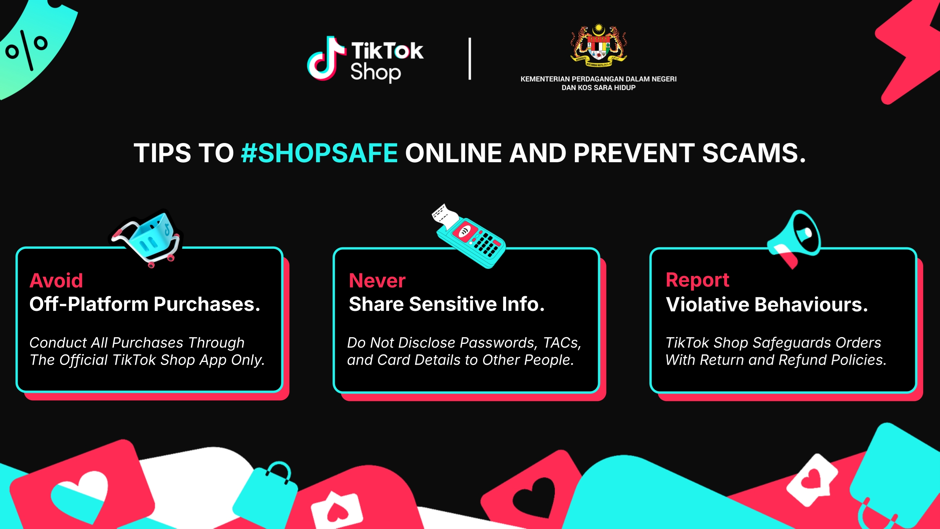
    The #ShopSafe tips introduced by TikTok Shop and KPDN include:

    1. Avoid Off-Platform Purchases.
    • TikTok Shop users should conduct all online purchases using only the official app to ensure their protection against scams. TikTok Shop strictly enforces its Product Listing Guidelines and Seller Registration Guidelines, which help to prevent violative products and sellers on the platform. Policies such as the Platform Abuse Policy, Anti-Counterfeit Policy, and TikTok Shop Mall’s 100% Authenticity Guarantee, actively detect and minimise any potential fraudulent activities and deceptive behaviours on the platform.
    • Users should ensure that all online transactions are conducted through TikTok Shop’s secure in-app payment gateways. All purchases can then be verified and tracked on the in-app order history, even when opting for Cash-On-Delivery (COD) transactions.
    • Users should not download TikTok’s apps via external links or APK files. Download TikTok’s apps (which are listed ‘by TikTok Pte. Ltd.’) via the official website (https://www.tiktok.com) and platforms, including the Google Play Store and Apple App Store. Be wary of suspicious links and misspelled websites.
    • By adhering to these #ShopSafe tips, users can avoid common scams, such as false advertising, phishing, COD scams, brushing scams, malware, and more

    2. Never Share Sensitive Personal Information With Other People.

    • Users can familiarize themselves with TikTok Shop’s Privacy Policy, which transparently outlines how TikTok Shop protects user data.
    • Users should be vigilant and avoid disclosing sensitive personal information to other people, especially potential scammers pretending to be TikTok Shop employees, authorities, or government officials. TikTok Shop will never ask for users’ sensitive personal information, such as passwords, TACs, and debit/credit card details through direct messaging, phone calls, or emails.
    • As an additional layer of protection, users should activate the 2-step verification feature on the TikTok app, which protects their accounts even when passwords are compromised.
    • With these helpful tips, Malaysians can prevent themselves from falling victim to Macau scams, phone scams, account takeovers, and more.

    3. Report Violative Behaviours In-App.

    • Users are encouraged to directly report violative products, content, and sellers on TikTok Shop via the in-app reporting channel, available on every product display page.
    • Users can also reach out to live agents in-app for enquiries about their TikTok Shop orders, via the Help Center page.
    • TikTok Shop is governed by robust 15-Day Free Return and Refund Policies, which facilitate simplified and fair after-sales requests for customers facing issues with their orders on the platform. TikTok Shop does not tolerate any fraudulent or unlawful activities on its platform.

    For more information on TikTok Shop Malaysia, please visit:

    @tiktokshop_my

  • Tune Protect and Ticket2U unveil ticket refund insurance

    Tune Protect Malaysia (Tune Protect), a leading digital insurer, has partnered with Ticket2U, Malaysia’s premier ticketing platform, to introduce Ticket Refund Insurance for events in Malaysia. The comprehensive plan covers tickets for a wide range of events, including conferences, marathons, runs, concerts, festivals, and sports tournaments, ensuring ticket holders receive a full refund if unforeseen circumstances prevent them from attending. This initiative reinforces Tune Protect’s commitment to delivering customer-centric solutions and enhancing the overall event experience.

    Covering a comprehensive range of unexpected situations, Ticket Refund Insurance protects attendees from disruptions such as medical emergencies, accidental death, home emergencies like fire or burglary, natural disasters, and sudden unemployment, ensuring that ticket buyers are not financially burdened. The coverage also extends to road accidents, vehicle breakdowns on the way to the event, as well as other unforeseen circumstances.

    “The launch of Ticket Refund Insurance is a game-changer for eventgoers, giving them the confidence to book tickets without the fear of the unexpected disrupting their plans. This innovative protection plan reinforces our commitment to making insurance simple, seamless and accessible to everyone. With event attendance on the rise, we are ensuring that customers can fully enjoy their favourite events stress-free, knowing they have a reliable safety net in place,” said Jubin Mehta, Chief Executive Officer, Tune Protect Malaysia.

    “At Ticket2U, we are focused on elevating the ticketing experience, and Ticket Refund Insurance marks a significant step towards setting a new industry standard. This protection gives ticket buyers greater assurance, knowing they are covered if the unexpected happens, while also reinforcing trust between event organisers and attendees. By reducing financial risk and making ticket purchases more secure, we are enhancing confidence in event attendance and supporting a more dynamic, worry-free event experience for all,” said YC Chia, Managing Director, Ticket2U Sdn Bhd

    For sports enthusiasts, Sports PA (Personal Accident Insurance) is available as an optional add-on, providing financial protection for accidental injuries sustained during sports-related events, ensuring peace of mind while staying active.

    Jubin added, “By embedding protection seamlessly into the event ticketing journey, Ticket2U and Tune Protect are setting a new industry standard for consumer protection against unexpected events while enhancing overall customer experience with greater confidence and ease.”

    Available to all Ticket2U customers purchasing event tickets, this insurance is available to a wide range of events, including concerts, sports matches, exhibitions and festivals at only 5% of the ticket price. Purchasing Ticket Refund Insurance is quick and effortless where eventgoers can:

    1. Select an event ticket on Ticket2U.
    2. Opt-in for ‘Ticket Refund Insurance’ at checkout.
    3. Complete the purchase, and coverage is automatically activated.

    The claims process is equally seamless:
    1. Submit a claim directly to Tune Protect with the required documentation.
    2. Claims are processed, and eligible refunds are issued promptly.

    For more information on Ticket Refund Insurance, visit www.ticket2u.com.my and click the “Read More” button on eligible event pages.

  • TikTok Shop collaborates with ASEAN Foundation and ASEAN-BAC to empower MSMEs

    TikTok Shop continues its commitment to empower Micro, Small and Medium Enterprises (MSMEs) through its latest collaboration with the ASEAN Foundation and the ASEAN Business Advisory Council (ASEAN-BAC) through the SOAR Together Program (Supporting Our Artisans and Retailers).

    The collaboration aims to leverage on relevant expertise to drive digital transformation and economic inclusion for MSMEs, providing tailored support and resources to help participating MSMEs rapidly advance their businesses and creative endeavors on TikTok Shop within their own markets as well as regionally, enabling growth and sustainable development.

    MSMEs play a crucial role in employment generation, income contribution, and local economic resilience. Across ASEAN, there are approximately 70 million MSMEs, accounting for between 97.2% and 99.9% of total establishments. Despite their significant presence, MSMEs often face challenges such as limited access to finance, inadequate business skills, and insufficient market linkages, which can hinder their growth and sustainability.

    TikTok Shop gives people a place to translate the excitement of discovering unique products and sellers into impactful transactions that spark joy for both buyers and sellers, all without leaving the app. The ASEAN SOAR Together programme is another major step in TikTok’s ongoing efforts to address the unique needs of small businesses and creators in Southeast Asia.

    The ASEAN SOAR Together programme is also aligned with the ASEAN Strategic Action Plan for SME Development 2016-2025 that aims to transform SMEs from domestic players into globally competitive and innovative enterprises by 2025, as well as the ASEAN Economic Community Blueprint 2025 that recognises Information and Communications Technology (ICT) as a key driver in ASEAN’s economic and social transformation.

    More details of the ASEAN SOAR Together programme can be found at this link: https://www.aseanfoundation.org/call_for_application_asean_soar_together

  • 4 biggest mistakes drivers make after an accident and how to avoid them

    4 biggest mistakes drivers make after an accident and how to avoid them

    Road accidents continue to be a major concern in Malaysia. Between January and October 2024 alone, Malaysia recorded over 530,000 road accidents, resulting in 5,364 fatalities. If this trend continues, the total number of accidents could surpass the 598,635 accidents reported in 2023.

    Given these alarming statistics, knowing what to do after an accident can make a significant difference. Being prepared helps prevent unnecessary stress, ensures a smoother claims process, and protects your rights.

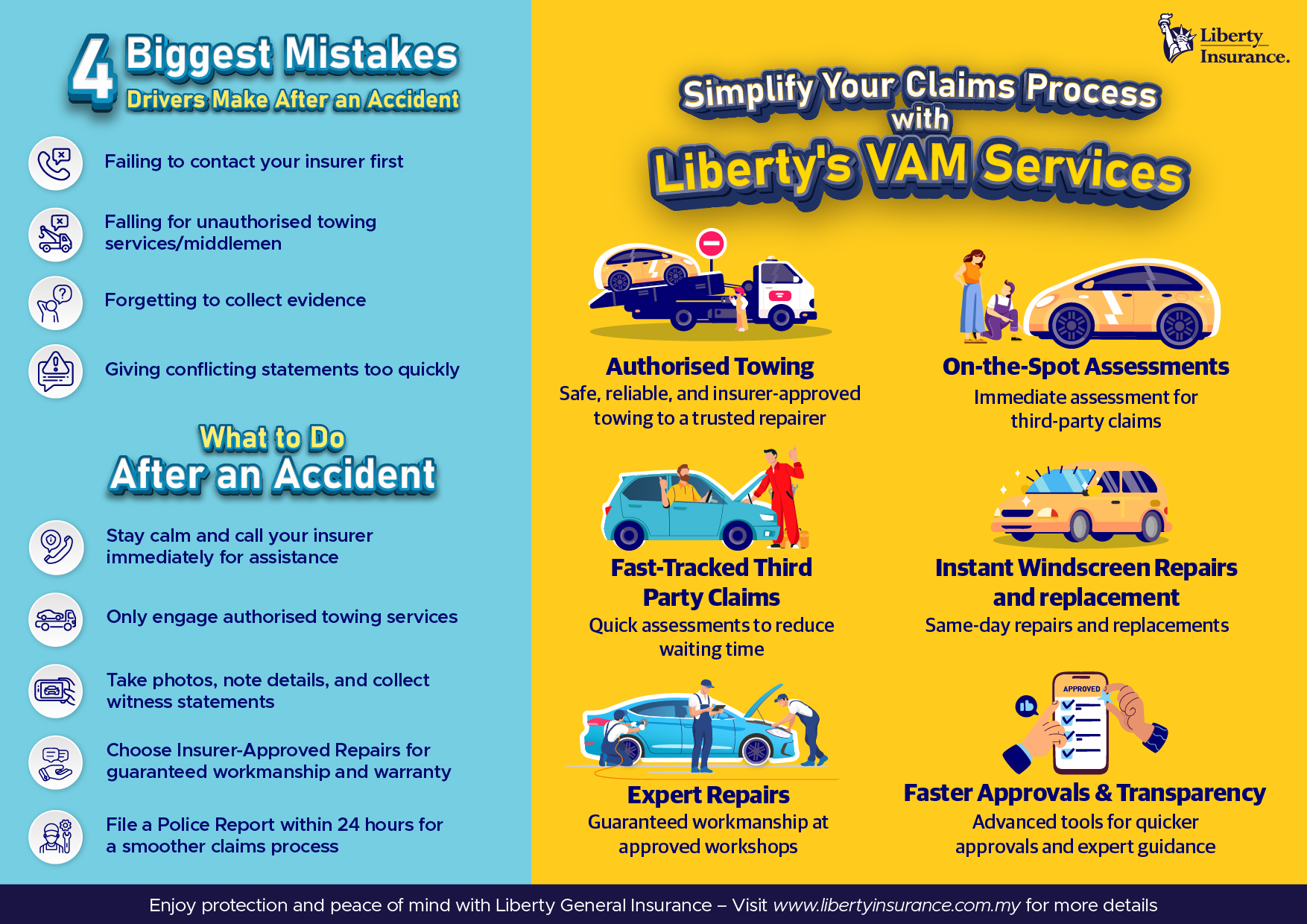
    On that note, Liberty General Insurance would like to share the four biggest mistakes drivers make after an accident.

    Mistake 1: Failing to Contact Their Insurer First
    Delayed notification makes it difficult to verify accident details and increases the risk of penalties for late reporting to authorities.

    Mistake 2: Engaging Accident Touts / Towing Syndicates / Unscrupulous Middlemen
    Falling for persuasive talk and authorising unethical operators to handle their vehicle which leads to complicated procedures, inflated costs, and substandard repairs.

    Mistake 3: Forgetting to Collect Key Evidence
    Photos of the scene, third-party information, witness details, and vehicle damage are essential but often overlooked in chaos following an accident.

    Mistake 4: Providing Conflicting Statements and Admitting Fault Too Quickly
    In the aftermath of an accident, confusion can lead to inconsistent accounts given to the insurer, police, or medical professionals. These inconsistencies can contribute to guilt or nervousness and often lead drivers to admit faults prematurely.

    The mistakes above can negatively impact your claim, reducing your compensation or even voiding your coverage.

    So, what to do after an accident?

    1. Don’t Panic: Stay calm and contact your insurer immediately for hassle-free roadside assistance services.
    2. Beware of Unauthorised Tow Trucks & Middlemen: Only engage approved towing services to avoid unnecessary complications.
    3. Gather Evidence: Take photos, note details, and collect witness statements.
    4. Opt for Insurer-Approved Repairs: This ensures guaranteed workmanship and warranty for your vehicle.
    5. File a Police Report Promptly: Reporting the accident within 24 hours helps ensure a smooth claims process and prevents potential disputes.

    Managing the Aftermath with Confidence

    Navigating an accident can be overwhelming, but with Liberty General Insurance’s Vehicle Accident Management (VAM), the process becomes much simpler. As part of Liberty’s Motor Claims Service, VAM ensures fast, efficient claims handling—from damage assessment to resolution—so you experience less stress and fewer delays.

    Here’s how Liberty’s claim centre can help simplify the claims process:

    1. Authorised Towing Services: Safe, reliable, and insurer-approved towing to the assessment centre or preferred repairers.
    2. On-the-Spot Damage Assessments for Third-Party Property Damage (TPPD) Claims: Third-party claimants can now bring their vehicles to Liberty’s Vehicle Assessment Center for immediate assessment of damages.
    3. Fast-Tracked Third-Party Claims: Liberty’s experienced loss adjusters will assess damages on-site and determine repair costs without delays. It also reduces waiting time where third-party claims can be attended to immediately.
    4. Instant Windscreen Repairs & Replacements: On-site specialists provide same-day repairs or replacements, as well as quick inspection, documentation, and processing to minimise disruptions.
    5. Expert Repairs: Repairs at insurer-approved workshops with guaranteed workmanship and warranty.
    6. Faster Approvals & Transparent Claims Process: Advanced claim assessment tools help expedite approvals for various motor claims, including Own Damage, Express Claims, Third-Party Property Damage (TPPD), and Windscreen Claims. There will also be expert guidance to prevent unnecessary admissions or complications during the claims process.

    Being prepared and taking the right steps after an accident can make a huge difference in ensuring a smooth resolution. Staying calm, gathering evidence, and working with trusted service providers can help protect your interests and speed up the recovery process.

  • Shopee expands range of Shariah compliant financial services with Takaful IKHLAS

    Shopee expands range of Shariah compliant financial services with Takaful IKHLAS

    Leading digital payments and financial services provider SeaMoney, has partnered with Takaful Ikhlas General Berhad (Takaful IKHLAS) to offer Motor Takaful protection on the Shopee app. The latest addition to Shopee’s growing suite of digital insurance and takaful offerings, IKHLAS Private Car Comprehensive Plus Takaful, aims to provide holistic, Shariah compliant motor takaful protection to users.

    IKHLAS Private Car Comprehensive Plus Takaful provides the following coverage:

    • Third party bodily injury and death;
    • Third party property loss or damage;
    • Loss or damage to your own vehicle due to accidental fire or theft; and
    • Loss or damage to your own vehicle due to accidents.

    Additionally, participants can enjoy complimentary benefits that include:

    • Waiver of Compulsory Excess for Unnamed Driver
    • Complimentary Personal Accident cover for Participant
    • Transportation Fee Reimbursement

    IKHLAS Private Car Comprehensive Plus Takaful also provides complimentary roadside assistance with 24-Hour Bantuan IKHLAS Road Assist. This includes a 24-Hour Accident and Breakdown towing service that also covers Singapore, South Thailand, and Brunei within a 25km radius of the Malaysian border, as well as locksmithing and battery delivery services.

    In conjunction with the launch of IKHLAS Private Car Comprehensive Plus Takaful, Shopee is offering an RM15 voucher on top of a 10% discount for all Takaful IKHLAS insurance and takaful products.

    Here’s how you can purchase IKHLAS Private Car Comprehensive Plus Takaful on Shopee:

    Step 1: From the Shopee app home page, access the “Finance” circle, located right below the search bar. Once in the Finance page, click on “Insurance”.

    Step 2: Here, click on “Car” and proceed to fill in your vehicle details to receive an insurance quotation.

    Step 3: After receiving your quotation, select your preferred IKHLAS Private Car Comprehensive Plus Takaful and proceed to complete your purchase.


  • Malaysia’s Journey Towards Self-sufficiency

    By Jonathan Di Rollo  

    Independence has been cherished by Malaysians for decades but in a rapidly changing world creating sustainability through economic self-sufficiency has become an increasingly important priority. With sustainable independence as a new priority, the questions of how to achieve this and in what time frame are important and need-considered answers.  

    Malaysia’s government has ongoing development plans to address these issues and answer these questions but every nation depends on, and serves, all of its people.  

    Public and private sector decision-makers are faced with leading and managing local talents and global partnerships in different sectors requiring different governance for achieving optimal outcomes. Leaders in each field have diverse experience to offer that can be used to keep independence going in sustainable directions through self-sufficiency that protects the country from global fluctuations and shocks. 

    Malaysia’s Self-sufficiency Milestones 

    1. Early Development (1957-1970)
    • 1957: Independence from British colonial rule. 
    • 1963: Formation of Malaysia, including Malaya, Sabah, Sarawak, and Singapore (until 1965 when Singapore separated). 
    • 1965: Establishment of Bank Negara Malaysia to manage the country’s monetary policy. 
    1. New Economic Policy (1971-1990)
    • 1971: Introduction of the New Economic Policy (NEP) aimed at reducing poverty and restructuring society to eliminate the identification of race with economic function. 
    • 1974: Establishment of Petronas, the national oil and gas company, marking a significant step towards energy self-sufficiency. 
    • 1981: Launch of the Proton car project, Malaysia’s first national car manufacturer, to reduce dependency on imported vehicles. 
    1. Industrialisation and Modernisation (1991-2000)
    • 1991: Introduction of Vision 2020 by Prime Minister Mahathir Mohamad, aiming for Malaysia to become a fully developed nation by 2020. 
    • 1994: Completion of the North-South Expressway, enhancing transportation infrastructure and boosting economic growth. 
    • 1996: Launch of the Multimedia Super Corridor (MSC) to transform Malaysia into a knowledge-based economy. 
    1. Economic Diversification and Innovation (2001-2010)
    • 2001: Implementation of the Third Industrial Master Plan, focusing on strengthening the manufacturing sector and developing new growth areas. 
    • 2005: Malaysia becomes a net exporter of oil and gas, achieving significant energy self-sufficiency. 
    • 2007: Introduction of the Ninth Malaysia Plan, emphasising human capital development and innovation. 
    1. High-Income Economy and Sustainability (2011-2020)
    • 2010: Launch of the Economic Transformation Programme (ETP) with the goal of making Malaysia a high-income economy by 2020. 
    • 2012: Introduction of the National Automotive Policy to further develop the automotive industry and encourage the production of energy-efficient vehicles. 
    • 2015: Implementation of the Goods and Services Tax (GST) to diversify government revenue sources. 
    • 2020: Achievement of several Vision 2020 goals, although not fully reaching high-income status, significant progress in economic development and self-sufficiency. 
    1. Post-2020 Initiatives and Ongoing Efforts
    • 2021: Introduction of the 12th Malaysia Plan, focusing on sustainable growth and enhancing the resilience of the economy post-COVID-19. 
    • 2022: Continued efforts in renewable energy adoption, aiming for 31% renewable energy capacity by 2025. 
    • 2023: Strengthening food security measures to reduce dependency on imported food products. 

     Malaysia’s Brand Ambassadors 

    Ambassadors perform as diplomats for their country all over the world but a country is a brand too and brand ambassadors represent the soul of the nation and embody all points of contact with the rest of the world.  

    Independent countries are still dependent on their people; their politicians, business people, artists, lawyers, scientists and inventors. High profile brand ambassadors for Malaysia include Datuk Lee Chong Wei, the celebrated Olympic medallist turned corporate and educational brand ambassador who embodies how a country will always depend on its people as leaders to carry on global partnerships that benefit themselves as well as the country. Leading in sport then business and education shows connectivity and influence in independence.  

    There are many more worthy Malaysians who have and continue to contribute to brand Malaysia in different ways in different sectors. The influence of these leaders to self-sufficiency is achieved through economic policies, development programs and well-managed resources. These key people are also role models for others showing us that we are always in dependence.  

    Food Security 

    In a country whose economy depends greatly on for agriculture, self-sufficiency in food is a top priority. In 2023 Malaysia’s self-sufficiency rate (SSR) for rice was at 62.6%, vegetables 44.7%, and fruits 78.1%, according to Datuk Chan Foong Hin, Deputy Agriculture and Food Security Minister. These headline figures for food security are just one part of the story in Malaysia’s self-sufficiency journey.  

    Ramly Processing Sdn. Bhd.  the renowned Malaysian frozen and fast-food company, founded by Ramly bin Mokni, tells an equally important story. From humble beginnings starting in 1984 with the aim of developing a clean and good-quality halal Western fast-food chain in Malaysia, Ramly began selling burgers with his wife. He discovered that it was unknown whether most fresh-meat sources were halal or not and decided to produce a halal-certified meat source for all Muslim consumers in Malaysia. With the halal economy expanding they increased production whilst maintaining stringent quality control. The Ramly Burger brand began to gain recognition not only for its halal certification but also for its taste and affordability becoming a national success story before starting to export to neighbouring countries of Singapore, Brunei, and Indonesia.  

    Halal certification contributes towards self-sufficiency by implementing legal frameworks and enforcement to promote the halal industry as a source of economic growth. Integration between halal finance and halal foods can create a new source of growth. Implementing halal standards and obtaining halal certification is crucial for industry players to export their products to Muslim markets and attract Muslim-friendly tourism.  

    Tech: Towards a Knowledge-Based Economy (K-Economy)  

    Malaysia has been embracing digital transformation for decades and continues to transition towards becoming a k-economy. With the government continuing to recognise that self-sufficient economic growth requires innovation, technology, and human capital development, initiatives taken include the Multimedia Super Corridor (MSC) started in 1979, followed by the Malaysia Digital Economy Blueprint. These technological advancements are pivotal for Malaysia to achieve greater self-sufficiency by reducing its dependency on external resources and foster innovation-driven growth. Former MDEC CEO Surina Shukri left a legacy through the development and execution of the Malaysia Digital initiative, which aims to create substantial digital economic spillovers through equitable access to digital tools, knowledge, and income opportunities.  

    “Predicated on a new framework built upon three primary components – Agility, Flexibility, and Relevance – the blueprint is set to enhance Malaysia’s value proposition to attract digital investments, firmly establishing Malaysia as the digital hub of ASEAN,” Shukri said during her tenure.  

    This strategy was validated by attracting major global tech investors, including Alibaba, which established its first regional e-commerce and logistics hub in Kuala Lumpur and more recently award-winning e-wallet provider Boost. These technological advances have also assisted SMEs in reducing transaction costs and expanding marketing enabling more self-sufficient business.  

    Most recently digital services have expanded to include telemedicine and E-Government and policies and strategies for adopting and using technology have also been applied to agriculture, fisheries and renewable energy in Malaysia reflecting the broad reach and impact of technology and its influence on self-sufficiency. 

    Internationalising Malaysia 

    One of the most high-profile Brand Ambassadors in Malaysia, Tan Sri Tony Fernandez, Capital A Sdn Bhd’ CEO, is an aspirational leader for Malaysians and foreigners alike. Air Asia has not only allowed more people to fly to more destinations than ever before but has also contributed to internationalising the nation.  

    Internationalising countries that lead the world can be seen by the boom in the Japanese economy, followed by China, turning them into world leading countries. However, these gains come with costs, and this is now a hot topic for sustainability. The environmental impact of air travel is closely watched by all airlines with transportation companies being major global contributors to carbon emissions. Addressing sustainability, Fernandez recently called on governments and aviation regulators in the region to improve air traffic management at airports so that airlines can burn less fuel instead of mandating them to use green fuel or sustainable aviation fuel (SAF) that are currently low in production. 

    “SAF is not going to change the world any time soon but there are things that we all can do now…SAF is just too expensive at the moment. There has to be a bigger supply…One per cent (of SAF) is not going to change a lot of things and passengers would have to fund this. Every passenger coming in has to pay a surcharge for SAF.”I would urge (the) governments inclusive of the Singapore government to sort out air traffic control. That’ll be a great place to start in terms of conserving fuel,” he said in a recent interview with local newspaper, New Straits Times.  

    The spill-overs from internationalising Malaysia may be difficult to quantify but there are strong arguments towards contributing to self-sufficiency. 

    Energy and the Environment 

    Any economic activity comes with costs as well as benefits and, with Oil & Gas contributing up to 30% of Malaysia’s GDP, strategies for sustainability in the energy sector have become a top priority. Given the importance of the oil price and its instability, the strategies of key energy sector players are influenced by national as well as international governance. Compliance with global sustainability goals has influenced decision-making and the dependence of the energy producing sector on self-sufficiency.  

    Strategies that diversify economic dependence may be equally important on the nation’s journey to self-sufficiency but these now include legal compliance and investor satisfaction which mean that economic independence is not the former only goal and sustainability is now an essential aspect of creating self-sufficiency. 

    Malaysia’s former Minister of Energy, Science, Technology and Climate Change (MESTECC) who did much during her tenure for adopting sustainable elements to Malaysia famously said, “Malaysia will not be the dumping ground of the world” in the Netflix documentary “Broken” that highlighted Malaysia’s plastic dumping problem. Another initiative by the ex-minister included setting-up a pollution monitoring system in Pasir Gudang Johor in 2019, following the incident where 4,000 people there experienced breathing difficulties. It was discovered that the main cause was due to gases released by chemical industries in the area. Lynas, a rare-earth processing company was also regulated after concerns were raised on radioactive waste.  

    These actions highlight that different levels of action on regulation are required even within the same economic sector and that self-sufficiency and independence are deeply intertwined. 

    Future self-sufficiency 

    Despite many milestones and significant progress made to date, Malaysia still faces challenges on its path to self-sufficiency. Economic inequality, regional disparities, and the need for continuous innovation are some of the issues that require ongoing attention.  

    External shocks such as the COVID-19 pandemic have highlighted vulnerabilities in global supply chains, underscoring the importance of building a resilient and self-sufficient economy. Investing in education, technology, and sustainable practices to remain relevant are key as well as managing the impact of these developments on enhancing social safety nets and addressing regional inequalities.  

    The Malaysian government’s commitment to the Shared Prosperity Vision 2030 (SPV 2030) is part of a vision that emphasises inclusivity and sustainability and by focusing on high-value industries, innovation, and human capital development, SPV 2030 can contribute to achieving self-sufficiency for Malaysia.  

    On the journey Malaysia will still rely on its people to make all these actions effective. National strategies, coupled with the contributions of individuals across various sectors, have laid the foundation for a self-sufficient, knowledge-based country that is globally connected.  

    As Malaysia and its people celebrate Merdeka month, reflecting on past achievements can yield lessons for future guidance that help clarify the path to self-sufficiency. The stories of entrepreneurs, educators, and environmentalists illustrate the human power of Malaysia’s economic vitality. Each individual’s contributions must be considered a source of inspiration, embodying the values of independence, innovation, and resilience that define Malaysia’s journey towards a prosperous and self-sufficient future. – (TSI) 

  • Malaysia’s Bold Bet

    By Jeannie Cotter 

    Malaysia is going all in on advanced manufacturing, green tech and automation. The country’s new industrial master plan outlines an ambitious vision to transform key sectors of its economy over the next seven years. Dubbed the New Industrial Master Plan 2030 (NIMP), the strategy bets big on high-potential industries from healthcare to electric vehicles. The aim is to leapfrog Malaysia into the big leagues as a hub for precision engineering, smart manufacturing and sustainable technologies. 

    For international companies and investors, NIMP maps out priority growth areas where government support and partnerships will be directed. By syncing business plans with the master plan’s strategic goals, firms can capitalise on policies and funding that favour innovation, digitisation and supply chain resilience.  

    In essence, the NIMP provides very useful guidance on where Malaysia is headed and which sectors have the most potential over the next few years. Business plans that sync up with the NIMP’s missions will have a definite advantage when it comes to regulatory issues, talent recruitment and access to financing. 

    Healthcare and Medical Technology 

    A top priority under the plan is to develop higher value-added industries like pharmaceuticals and medical devices. Malaysia stands as the ASEAN region’s largest medical device market, with a substantial total market size of US$1.8 billion, according to the Malaysian Investment Development Authority (MIDA). 

    The country has established itself as a major exporter of medical devices, sending over 90% of its domestic production to international markets. Top destinations for Malaysian medical device exports are the United States, Germany, Singapore, Japan, Belgium, China, the Netherlands, Brazil, the United Kingdom and Australia. 

    Emerging as a significant focal point for medical device production, both regionally and globally, Malaysia boasts a flourishing industry with over 200 manufacturing companies. Within this well-connected ecosystem, 30 of these are multinational corporations that have chosen Malaysia as their manufacturing hub. Renowned names in this category include Abbott, Toshiba Medical Systems and B-Braun. The sector provides employment for over 70,000 skilled workers, serving as the backbone of the industry’s human capital. 

    Malaysia’s strategic location, strong manufacturing capabilities and pro-business environment have allowed it to become a key hub for medical device production and export within Asia. Building on existing strong capabilities in electronics and semiconductor fabrication, the aim is to move into more complex manufacturing like biomedical sensors and diagnostics. 

    Policies will incentivise joint ventures and technology transfers with leading multinationals to upgrade production and R&D capabilities. At the same time, training programmes through public-private partnerships will focus on developing the technical workforce required for advanced medical technology manufacturing. Foreign firms bringing experience in precision engineering and complex supply chain integration can benefit tremendously here. 

    Electric Vehicles and Renewable Energy 

    Another major emphasis is on green technologies, from electric vehicles to large-scale solar and wind power projects. NIMP aims to nurture homegrown electric vehicle (EV) manufacturers serving both domestic and export markets. It also outlines plans to phase out internal combustion engine vehicles entirely by 2040. 

    The electric vehicle (EV) market in Malaysia is gaining traction, fuelled by increasing interest from environmentally-conscious and younger consumers. While overall EV sales remain low, making up just 0.4% of total vehicle sales in 2021, the market is expanding rapidly. EV sales jumped 65% in 2021, with 2,717 units sold compared to 1,642 in 2020, according to data from the Malaysian Automotive Association (MAA).  

    The growing reliance on EVs to cut emissions in transport is intensifying the need for a strategic approach to the energy transition. Despite Malaysia’s predominant reliance on coal and natural gas in its energy mix, Tenaga Nasional Bhd reports a 23% lower emission rate from EVs versus ICE vehicles. 

    The current electricity generation mix in Malaysia leans heavily on coal and gas, with renewable energy sources making up only 17.8%. The nation aims for 31% renewable energy in the national installed capacity mix by 2025, escalating to 70% by 2050, as outlined in the National Energy Transition Roadmap. 

    Malaysia’s wealth of lithium, rare earth metals and other critical battery minerals will provide key inputs for EV production. Meanwhile, the EV shift will drive demand for upgraded electric grid infrastructure and renewable energy generation. These developments underscore the huge potential for renewable energy to play a pivotal role in Malaysia’s energy landscape. 

    Under the NIMP’s Net Zero mission, foreign power producers are encouraged to participate in efforts to decarbonise Malaysia’s economy. Opportunities exist across the clean energy spectrum, from utility-scale solar and wind farms to smaller rooftop solar installations. 

    Looking ahead, the Malaysian government has set a goal of having 125,000 EVs on the road by 2030. If this target is realised, Malaysia’s fledgling EV market is poised for massive growth over the next several years. Younger and eco-minded drivers are expected to continue leading the shift towards EVs in Malaysia. 

    Automation and Artificial Intelligence 

    As part of its goal to “tech up” Malaysian industry, NIMP aims to accelerate digital transformation in manufacturing. The plan sets targets for increased adoption of automation, robotics and artificial intelligence to sharply improve productivity and efficiency. 

    Based on Statista’s data, the artificial intelligence market in Malaysia is projected to reach a market size of US$3,859.00 million by the year 2030. The 2022 Oxford Insights Government AI Readiness Index ranks Malaysia 29th out of 181 countries. This ranking is attributed to Malaysia’s robust digital capacity and infrastructure, providing a solid foundation for the development and integration of artificial intelligence. 

    Tax incentives will promote large-scale integration of industrial Internet-of-things systems. Grants are also available to help SME manufacturers implement automation. And factory automation levels will eventually factor into manufacturing licensing requirements. 

    Malaysia wants to leapfrog ahead as a smart manufacturing location. Multinationals adept at applying technologies like predictive maintenance, computer vision and collaborative robots will find open doors here. 

    The Road Ahead 

    The NIMP represents a bold vision and a significant commitment by the Malaysian government to transform key industries. Achieving the goals will require major investments in infrastructure, workforce development and partnerships between government, businesses and academia. 

    Success is not guaranteed. The targets are ambitious and will require effective execution and adaptation along the way. Regional competition will be fierce as other Southeast Asian nations have similar ambitions to move up the manufacturing value chain. Malaysia’s centralised planning approach could give it an edge in marshalling resources. However, neighbours like Thailand and Indonesia are also making big bets on EVs, automation and other advanced manufacturing. 

    If Malaysia can successfully upgrade industries as envisioned, it will solidify its position as a leading manufacturing hub in Asia. This could make the country an attractive launch pad for foreign firms looking to serve regional and global markets. 

    For investors and companies, the time is now to evaluate how the NIMP’s goals align with their own long-term business strategies. Early movers may benefit the most from government incentives and policies aimed at nurturing priority sectors. 

    How Malaysia navigates the tricky transition toward high-tech, green industries bears watching across the region. Its transformation roadmap under the NIMP could provide valuable lessons for other developing nations.