Category: Stocks

  • SC-Bursa: Measures To Boost Capital Market Vibrancy And Competitiveness

    SC-Bursa: Measures To Boost Capital Market Vibrancy And Competitiveness

    The Securities Commission Malaysia (SC) and Bursa Malaysia Berhad (Bursa Malaysia) today welcome the announcements by the Honourable Prime Minister and Minister of Finance, Dato’ Seri Anwar bin Ibrahim, aimed at driving Malaysia’s economic growth and capital market competitiveness.

    The short-term and medium-term measures address three key pillars essential to the growth and development of the capital market in Malaysia:

    • Pillar 1: Creating market vibrancy with greater participation opportunities for the rakyat;
    • Pillar 2: Attracting larger pool of investors to support financing for small, medium enterprises and new economy companies; and
    • Pillar 3: Enhancing Malaysia’s competitiveness to strengthen market confidence.

    Measures announced:

    1. A reduction of the stamp duty rate for the trading of listed shares on Bursa Malaysia from 0.15% to 0.10%, while the stamp duty cap is maintained at RM1,000 for each contract. This change, which take effect in July, will directly lower the cost of transactions, especially for retail investors, who are particularly sensitive to costs.

    2. To widen the pool of investors, the Ministry of Finance and Securities Commission Malaysia will look at policies to achieve the following:-
    a. to facilitate and attract the setting up of family offices in Malaysia;
    b. to promote corporate venturing to drive greater domestic direct investment through more facilitative tax and incentive policies; and
    c. to widen the definition of sophisticated investors to include angel investors.

    3. The capital market regulators also commit to explore ways to reduce market friction and shorten time-to-market for initial public offerings.

    Quotes by SC Chairman Dato’ Seri Dr. Awang Adek Hussin:

    “The SC’s commitment to maintain the capital market’s resilience and competitiveness is of the utmost priority. The capital market initiatives announced will boost greater trading participation and access to financing in the market, encouraging the growth of innovative companies and fostering greater diversity and inclusivity in the industry. We aim to empower issuers and investors by creating a business-friendly environment through relevant support and incentives. The SC is optimistic that these efforts will create a more vibrant capital market to drive economic growth in the country.”

    Quote by Bursa Malaysia Chief Executive Officer, Datuk Muhamad Umar Swift:

    “We are confident that the proposed measures, along with the existing development initiatives, will stimulate market activity and create a more dynamic and liquid market environment. A liquid and strong performing capital market has tremendous benefits to numerous stakeholders, and the economy as a whole. More importantly, the measures will widen affordable investment choices for the rakyat, and deepen investor interest in our market, leading to Bursa Malaysia being a destination of choice for fundraising.”

    The multi-pronged measures by the Government and market regulators reflect the intent to create a conducive environment for a thriving capital market, recognising the pivotal role played by a well-functioning capital market in fostering robust economic growth.

    The capital market regulators reinforced their commitment to ensure that the capital market is competitive and vibrant, while supporting the economic needs of Malaysia.

    The SC and Bursa Malaysia will continue to work closely with the Ministry of Finance (MOF), industry partners and other relevant bodies to explore further holistic measures towards ensuring an inclusive and sustainable capital market.

    About Securities Commission Malaysia

    The Securities Commission Malaysia (SC), a statutory body reporting to the Minister of Finance, was established under the Securities Commission Act 1993. It is the sole regulatory agency for the regulation and development of capital markets. The SC has direct responsibility for supervising and monitoring the activities of market institutions, including the exchanges and clearing houses, and regulating all persons licensed under the Capital Markets and Services Act 2007. More information about the SC is available on its website at www.sc.com.my. Follow the SC on twitter at @SecComMy for more updates.

    About Bursa Malaysia

    Bursa Malaysia is an approved Exchange holding company under Section 15 of the Capital Markets and Services Act 2007. A public company limited by shares under the Companies Act 2016, Bursa Malaysia operates a fully-integrated exchange, offering equities, derivatives, offshore, bonds as well as Islamic products, and provides a diverse range of investment choices globally.

    For more information on Bursa Malaysia, visit www.bursamalaysia.com

  • Bursa Malaysia Expands “Approved Securities” Criteria To Boost Market Vibrancy

    Bursa Malaysia Expands “Approved Securities” Criteria To Boost Market Vibrancy

    Bursa Malaysia Berhad (“Bursa Malaysia” or the “Exchange”) has expanded its criteria for Approved Securities by reducing the daily market capitalisation requirement from RM500 million to RM200 million, effective today.

    The revision is part of Bursa Malaysia’s ongoing commitment to fostering a dynamic and vibrant market, by offering market participants a broader selection of Approved Securities aimed at meeting investors’ evolving needs. Approved Securities are securities that have met the criteria prescribed by the Exchange and may be utilised for purposes of Securities Borrowing and Lending, and short selling.

    The expansion of Approved Securities will provide greater ability for investors to manage their portfolios and boost vibrancy in Securities Borrowing and Lending activities, an important component of a well-functioning capital market.

    “By broadening access and choice for investors, we are solidifying our commitment to improving market efficiency,” said Datuk Muhamad Umar Swift, Chief Executive Officer of Bursa Malaysia. “As a maturing market, it is vital that we offer a marketplace with robust facilities to cater to the differing needs of investors, while remaining focused on ensuring a vibrant, fair and orderly market.”

    When updating the list of Approved Securities, careful selection is made based on both quantitative and qualitative criteria to ensure there is sufficient liquidity, and the integrity of the market is maintained. The List of Approved Securities is available on the Bursa Malaysia website. The list is reviewed approximately every 6 months.

    Bursa Malaysia remains committed to working closely with all stakeholders to ensure the Malaysian capital market remains competitive, attractive, and well-regulated.

    About Bursa Malaysia

    Bursa Malaysia is an exchange holding company incorporated in 1976 and listed in 2005, and has grown to be one of the largest bourses in ASEAN today. Bursa Malaysia operates and regulates a fully-integrated exchange offering a comprehensive range of exchange-related facilities, and is committed to Creating Opportunities, Growing Value. Learn more at www.bursamalaysia.com.

  • M+ Global App By Malacca Securities Paves The Way For Investors To Succeed In Global Markets

    M+ Global App By Malacca Securities Paves The Way For Investors To Succeed In Global Markets

    Malacca Securities Sdn Bhd announced the launch of M+ Global, a one-stop, all-in-one global trading platform for all traders, with access to a diverse range of international investment opportunities, starting with two of the world’s largest global stock markets – the United States and Hong Kong.

    M+ Global is a revolutionary digital trading platform which empowers Malaysians to navigate the dynamic global market, seize opportunities, and take control of their financial future. Through a single account, users can access over 7,000 stock listings in the United States, 3,000 in Hong Kong and unlimited tradeable derivatives, including warrants, ETFs, CBBCs and REITs. This unparalleled access to foreign exchanges allows Malaysians to invest in major corporations such as Apple, Tesla, Alibaba, Tencent, and many more.

    Lim Chia Wei, Managing Director of Malacca Securities Sdn Bhd, said, “We’re excited to take Malaysians on a journey to win the world with M+ Global. By offering access to the United States and Hong Kong markets, Malaysians now have greater investment opportunities in some of the largest and most successful companies across various sectors and industries globally.”

    M+ Global is the first digital trading platform in Malaysia which offers basic real-time data in partnership with the National Association of Securities Automated Quotations (NASDAQ). This leading global technology company provides trading, exchange technology and information services to the world’s financial markets. Through this partnership, Malaysians will now have access to Real-Time-Quotes (RTQs), which will boost their investment experience and help them make better-informed investment decisions with access to the actual price of a security in real-time.

    In addition, M+ Global is the only digital trading platform in Malaysia which offers a Shariah Screening feature for global stocks, allowing Malaysians to identify Shariah-friendly stocks efficiently and accurately on a global scale. This unique feature on the platform was offered to Malaysians through a partnership with IdealRatings Inc, a global leader in providing Islamic finance solutions. With just a few taps, modern-day investors seeking to invest according to Islamic principles can now swiftly identify and gain instant access to a comprehensive selection of Shariah-compliant stocks.

    Chuck Lim, Head of Business of Malacca Securities Sdn Bhd, said, “We believe in empowering our users with the tools and insights they need to succeed. We’re thrilled to offer our users a seamless platform that combines cutting-edge technology and real-time market intelligence. With M+ Global, traders can easily and confidently navigate the complexities of global investments, unlocking endless possibilities for growth and success at their fingertips.”

    The M+ Global is a seamless and intelligent platform integrated with 24/7 stock-mover monitoring and real-time news, providing users exclusive access to timely global financial information to stay up-to-date on important market-moving events and make more informed investment decisions. Users can personalise their watchlist news, customise their alerts and get instant updates on top trending news from front-line financial news sources such as Benzinga, MT Newswire and many more.

    With over two hundred licensed dealer representatives with foreign trade insights, Malaysians can leverage their expertise and diversify their portfolios through global investment for both Shariah-compliant and non-Shariah stocks in the United States and Hong Kong markets at a competitive price.

    M+ Global offers a first-of-its-kind customer support experience with 24-hour multi-channel customer support service on in-app live chat, WhatsApp, hotline, email and live stream.

    “Our rich sixty-year history as an award-winning homegrown stockbroking company places us at the forefront of stock market innovation. Building on the success of M+ Online in 2012, we are committed to staying ahead of the curve to provide a first-class digital experience to enhance the investment experience for our valued customers. We’re paving the way for a new era of wealth-building with Malaysians, starting with the launch of M+ Global,” said Lim Chia Wei during the launch of M+ Global.

    “ As a hybrid broker with sixty years of experience, M+ Global was created to stand out in the market through the seamless integration of cutting-edge technology and personalised human expertise. Our powerful global trading platform provides easy access to a wide range of investment opportunities across global markets. However, we understand that technology alone is not enough, which is why our team of two hundred licensed dealer representatives bring their industry knowledge to provide a comprehensive and personalised trading experience,” added Lim Chia Wei.

    Malacca Securities Sdn Bhd, the creator of M+ Global, is committed to continuously improving and advancing the platform to provide Malaysians with an intelligent and accessible gateway to the global marketplace. Users can expect more upcoming features such as initial public offering (IPO), conditional order, US fractional shares and options trading, which will be rolled out soon to the public in stages.

    To celebrate the launch, M+ Global is hitting the town with free shares under its “Unbox Mystery Stock” campaign! Starting from 15th May 2023, new users who register for an M+ Global account will receive one (1) unboxing chance to get one (1) free stock randomly (Apple, Tesla, Google, Shell, Coca-Cola, Manchester United, Krispy Kreme or Snapchat) when they deposit a minimum of RM1,000 into their account for the first time. Additionally, they can also access thirty days (30) of free live quotes to the United States and Hong Kong markets.

    For more information and updates about M+ Global, log on to https://global.mplusonline.com/. To learn more about the “Unbox Mystery Stock” campaign, visit: https://m.global.mplusonline.com/activitiesr/mystery-box?activityId=14&_scnl=WSI2. M+ Global is available for download on the Apple App Store, Google Play and Huawei App Gallery.  Alternatively, you can sign up for an M+ Global account here: https://m.global.mplusonline.com/kh/status/entry/transit?lang=en_US&_scnl=WSI2.

    About Malacca Securities Sdn. Bhd.

    Malacca Securities Sdn. Bhd. is an award-winning homegrown stockbroking company with 60 years of experience providing investment solutions for retail investors and corporate organisations. Malacca Securities is listed as a participating organisation under Bursa Malaysia and licensed by the Securities Commission Malaysia. Malacca Securities remained a pioneer in the industry after surviving several world crises through innovations to make stockbroking more accessible to Malaysians. Malacca Securities is committed to revolutionising the financial landscape through technology and innovation, starting with the launch of M+ Online in 2012 to boost investors’ trading journey in the local scene. With its 60th anniversary in 2023, Malacca Securities launched M+ Global, a one-stop global trading platform with real-time market data, news and alerts to help Malaysians make better-informed trading decisions to navigate the global market confidently.

    About M+ Global

    M+ Global is a one-stop, all-in-one global trading platform created by Malacca Securities Sdn. Bhd., an award-winning homegrown stockbroking company with 60 years of expertise in building wealth together with Malaysians. Malaysians can trade globally with M+ Global, starting with two of the world’s largest and most important global markets – the United States and Hong Kong. M+ Global is Malaysia’s first digital trading platform that offers NASDAQ basic real-time data. M+ Global is the only trading platform offering Shariah Screening for global stocks. As a one-stop, all-in-one global trading platform for all traders, M+ Global is equipped with all the professional tools, news and customisable alerts to enhance Malaysians’ trading experience on a global scale seamlessly. 

  • Top 20 Malaysia Small Cap Companies For 2023 (20 Jewels)

    Top 20 Malaysia Small Cap Companies For 2023 (20 Jewels)

    RHB Research recently published the Top 20 Malaysia Small Cap For 2023 (20 Jewels), which marks the 19th edition that is part of a regional compendium of 80 top small-cap investment ideas from four ASEAN countries. Just as market sentiment was beginning to turn following the worst of the pandemic, as the interest rate cycle entered a matured stage, sentiment took another knock from the banking crisis in the US and Europe in the aftermath of the swift monetary policy tightening by the US Federal Reserve.

    Local investor sentiment has remained tentative in the past year as investors were drawn to other regional opportunities and asset classes. Nonetheless, investors continued to show interest in winning small-cap ideas to generate alpha for their respective portfolios – especially as valuations have also retraced. The stock selection remains paramount, and investors should focus on fundamentally strong companies that have the potential to deliver above-industry growth, as well as turnaround candidates.

    Notably, the Top 20 Malaysia Small Cap Jewels 2022 outperformed the broad market with a holding period return of 15.7%, beating the FBM KLCI’s and FBM SC’s returns of -8.5% and -5.5%.

    Without further ado, let’s look at the list of Top 20 Malaysia Small Cap Companies For 2023 (20 Jewels) by RHB Research:

    1. Aemulus Holdings

    2. Apex Healthcare

    3. Bonia Corporation

    4. Hiap Teck Venture

    5. Kumpulan Kitacon

    6. Kronologi Asia

    7. Lee Swee Kiat Group

    8. MCE Holdings

    9. Malayan Flour Mills

    10. OM Holdings

    11. P.I.E. Industrial

    12. Scicom (MSC)

    13. SDS Group

    14. Supercomnet Technologies

    15. Thong Guan Industries

    16. Tune Protect Group

    17. Uzma

    18. Vestland

    19. VSTECS

    20. Wah Seong Corporation

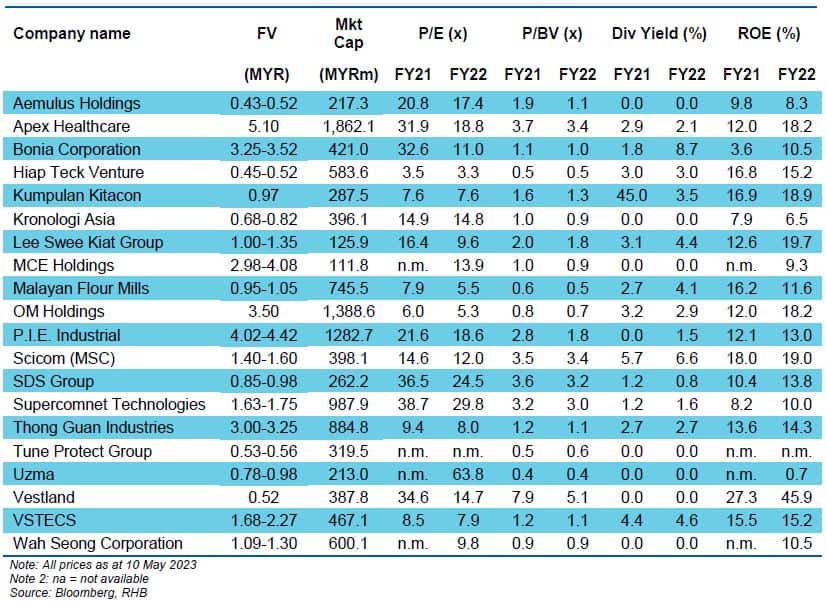
    Here’s the Top 20 Malaysia Small Cap Companies For 2023 (20 Jewels) at a glance:

    Source: RHB Research Team

    The Top 20 Malaysia Small Cap Companies For 2023 (20 Jewels) are spread across seven sectors with an average market cap of MYR597m. The consumer and industrial products & services sectors feature prominently, making up 50% of our picks. All but four – which are ACE Market-listed – of the 20 names are in the Main Market. None of the 20 companies featured this year are within RHB Research’s existing coverage as they continue to seek new investment ideas.

    *All investors are advised to conduct their own independent research into individual stocks that are listed in the Top 20 Malaysia Small Cap Companies For 2023 (20 Jewels) before making any decision to buy or sell. Investors are also advised that past stock performance is no guarantee of its future price.

  • Fundamental Analysis: 5 Financial Ratios To Quickly Analyse Stocks

    Fundamental Analysis: 5 Financial Ratios To Quickly Analyse Stocks

    Investing in stocks can be a challenging task, especially for beginners. With so much information available, it can be overwhelming to determine which stocks to buy and which ones to avoid. Here are 5 financial ratios to quickly analyse stocks. It is an effective tool that can help investors make informed decisions when analyzing stocks.

    These ratios provide insight into a company’s financial health, growth potential, and profitability, allowing investors to assess its investment potential.

    In this article, we will explore the different types of financial ratios and how they can be used to analyze stocks, providing you with a quick and efficient way to evaluate investment opportunities.

    Read: 3 Types Of Stocks That Every Investor And Trader Must Know

    1. Earnings Per Share (EPS)

    EPS is one of the financial ratios to quickly analyse stocks. According to Investopedia, earnings per share (EPS) is a company’s net profit divided by the number of common shares it has outstanding.

    Source: educba

    Company’s EPS vary based on changes in earnings, total number of outstanding shares, or both. A company can increase its EPS by increasing its earnings or reducing its number of shares through share buybacks.

    Typically, company with high EPS are considered as a profitable company. Usually, we can find EPS value in a company’s income statement.

    Read: As An Investor, Here Are 3 Things To Look For In Financial Statements

    2. Price To Earnings Ratio (P/E)

    P/E ratio is one of the financial ratios to quickly analyse stocks. PE ratio measures the relationship between a company’s stock price and its earnings per issued share. Sometimes it is also known as the earnings multiple.

    Since the P/E ratio relates to the share price and earnings per share, some investors prefer stocks with lower P/E. However, a high PE does not mean the share price is overvalued. A company can have a high P/E because investors expect high future growth and thus buy it from now. This causes the price has started to increase due to high demand.

    Tips for you, always compare a company to other in the same industry. Some of you may wonder, what about companies without P/E ratio? Companies that have no earnings or are losing money does not have a P/E ratio.

    3. Return On Equity (ROE)

    Return on Equity shows how well a company uses shareholders investment funds to generate income. ROE is calculated by comparing the proportion of net income against the amount of shareholder’s equity.

    Source: wallstreetmojo

    Investors love high ROE stocks because it shows the company is good at converting its equity financing into profits. If you are looking for a strong company with good ROE, a return on equity ratio of 15% – 20% is considered good.

    This is why ROE is one of financial ratios to quickly analyse stocks, that is being used by most investors.

    Read: 5 Reasons Why We Lose Money In The Stock Market

    4. Net Tangible Asset (NTA)

    Net tangible asset is one of the financial ratios to quickly analyse stocks. NTA is the value of all tangible assets minus all liabilities in a business.

    Some examples of net tangible assets are land, buildings, vehicles, equipment, and etc. There are few significances of NTA such as:

    • Have definite value
    • Help in production
    • Can be sold and thus raise cash
    • Subject to depreciation
    • Used as collateral / security

    Usually, investors will compare current stock price to NTA value. It can help to determine whether a company is undervalued or overvalued. If the current share price is smaller than the NTA value, the stock is considered undervalued and vice versa.

    5. Dividend Yield (DY)

    Why does investors have to pay attention to dividend yield compared to dividend payout? Dividend yield displayed in percentage represents the annualized return a stock pays out in dividends.

    So, what is a good dividend yield? Dividend yield ranging from 5% – 7% are generally considered to be good. Anything above 7% is considered very good.

    But remember, other than high dividend yield, consistency in distributing dividend is equally important. You will not want to receive dividend for only one time.

    The legendary Warren Buffet focused on dividend investing to get steady cash flow over the long-term. There are few stocks in Buffet’s portfolio that he has been holding for long period. That’s why dividend yield is one of the financial ratios to quickly analyse stocks.

    However, investors also must keep in mind that high dividend yield may not attractive if the stock price is declining. What is the point of receiving dividends but you are losing more money from the declining stock price right?

    Read: Create Your Stock Watchlist With These Simple Steps

    Conclusion

    Financial ratios are a powerful tool for investors to analyze stocks and make informed investment decisions. By examining a company’s financial statements and using various ratios, investors can gain valuable insights into a company’s financial health and potential for growth.

    While no single ratio can provide a complete picture of a company’s financial health, using a combination of ratios can help investors make more informed decisions about which stocks to invest in. You can start your own fundamental analysis by looking at these 5 financial ratios to quickly analyse stocks.

    However, it is important to remember that investing in the stock market carries risks, and no investment strategy can guarantee success. By using financial ratios as part of a larger investment strategy, investors can navigate the complexities of the stock market and work towards achieving their financial goals.

    Read: Using The CANSLIM Formula To Choose Good Stocks

  • Technical Analysis: Support, Resistance And Trendline

    Technical Analysis: Support, Resistance And Trendline

    Technical analysis is an important tool that traders use to identify potential buying and selling opportunities in the stock market. Support and resistance levels and trendlines are two key concepts in technical analysis that can help traders make informed decisions about when to buy or sell stocks.

    In this article, we will explore what support and resistance levels and trendlines are, how they are plotted on a chart, and how they can be used to identify potential trading opportunities.

    But is that true by mastering support, resistance & trendline you can make money from the stocks market? Technically yes, if you are using technical analysis to trade a stock and if you are looking to trade in short term.

    For longer term, you are advisable to use fundamental analysis as well to study on the company financial health.

    Read: 4 Different Types Of Traders: Which One Are You?

    What Is Support?

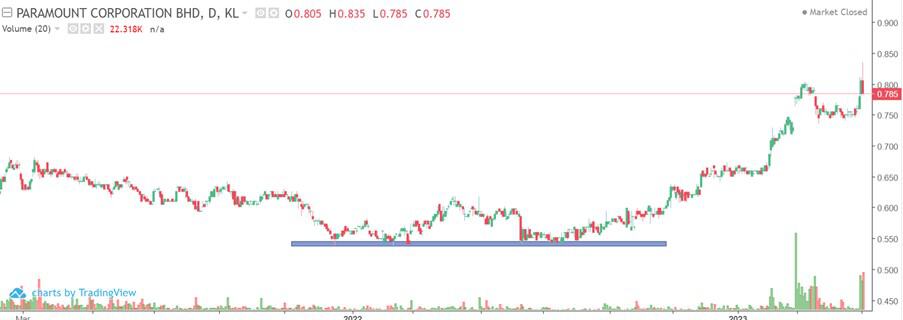
    Support is a price level where a downtrend is expected to pause due to demand or buying interest. As the price drops, demand for the shares increases and thus forming a support at that area.

    It can be seen as an area or zone that is strong enough to stop the stock from falling any further. Therefore, traders and investors use support as part of their decision-making tool.

    Buy At Support

    Some investors buy shares at support level as they expecting the share price will bounce back upward if the price does not break the support level

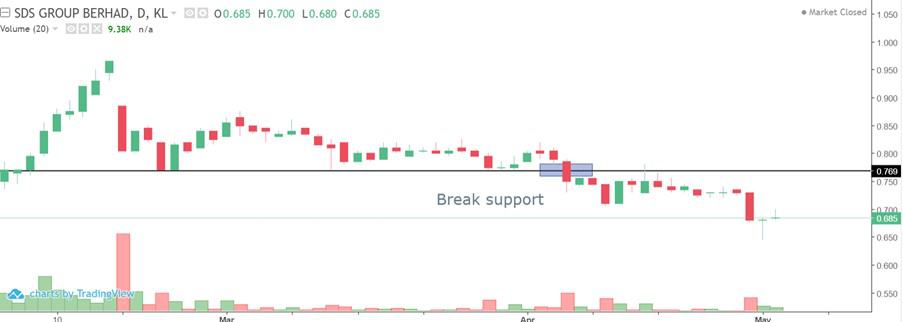
    Sell When Price Break The Support Level

    Investors also use support level as a cut loss point if the price keep falling and break the support

    Read: Create Your Stock Watchlist With These Simple Steps

    What Is Resistance?

    Resistance is opposite to support. Resistance is a price level an uptrend is expected to pause due to selling pressure. As the price increasing, early buyer starts to sell the shares to take profit and thus forming a resistance at that area.

    It is an area or zone that is strong enough to stop the stock from getting higher. If the resistance level is very strong, the price may reverse and drop lower.

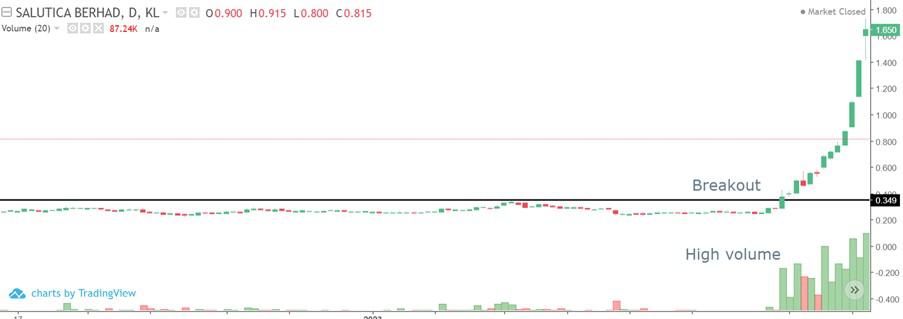
    But what if the price breaks the resistance? When the price breaks the resistance level, this is called as breakout.

    A quality breakout is when the price breaks the resistance with high volume. This indicates high demand in the stock as more buyer attracted to the stock and willing to pay higher price.

    Sometimes breakout happens when there is positive catalyst related to the company such as increase in earnings, strong quarter / annual result, good news and etc.

    What Is Trendline?

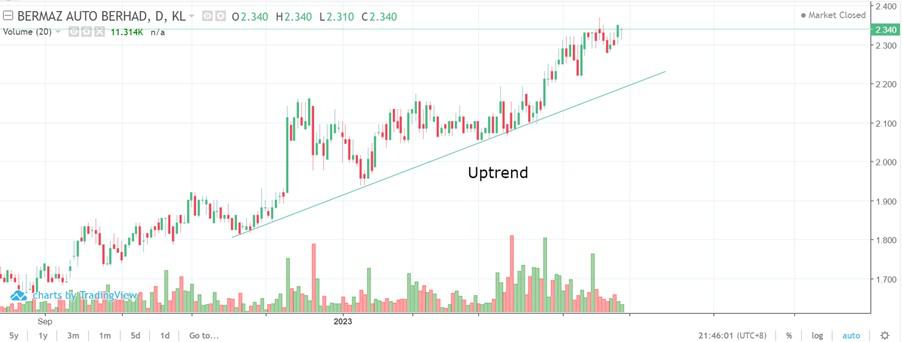
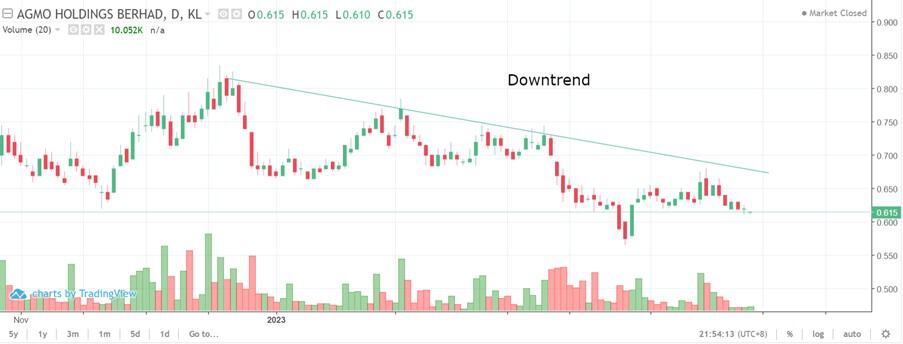
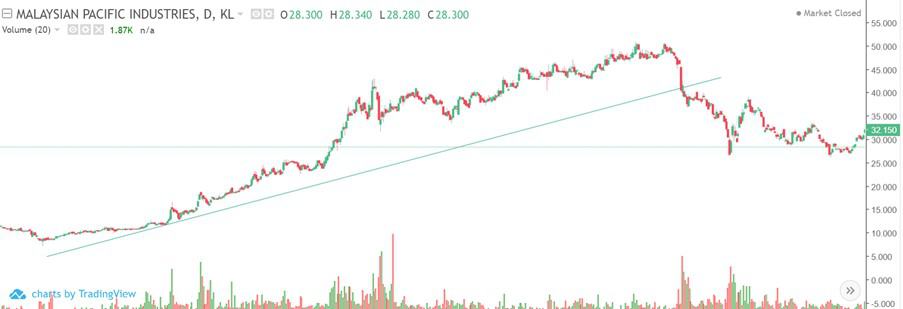
    Sometimes trendline can be considered as trendline support and resistance levels. Trendline can be upward sloping or downward sloping. Since the stocks market move in trend, trendlines are often used to identify uptrend and downtrend.

    Trendlines connect significant highs together or significant lows together. For a trendline to form we need to see at least three touches.

    Why It Is Important To Identify Trendline?

    The answer is to help determine the current direction of market prices. Have you heard from technical analysts saying trend is your friend until it bends? Identifying uptrend stocks is the first step to perform a good trade. Look for an uptrend stocks, hold the stocks and exit when the trend starts to bend.

    Conclusion

    Support, resistance levels and trendlines are powerful tools in a trader’s arsenal that can help them identify potential buying and selling opportunities in the stock market. By understanding these concepts and how they can be used, traders can make more informed decisions about when to buy or sell stocks.

    As with any trading strategy, it is important to conduct thorough research and analysis before making any trading decisions based on support and resistance levels and trendlines. With practice and experience, traders can become more proficient in using these tools to navigate the complex and ever-changing landscape of the stock market.

    Read: Fundamental Analysis vs Technical Analysis

  • 3 Types Of Stocks That Every Investor And Trader Must Know

    3 Types Of Stocks That Every Investor And Trader Must Know

    The world of stocks may be thrilling and terrifying for an investor or trader. However, it is crucial to understand what a stock is and how it functions before diving into the 3 types of stocks.

    A unit of ownership in a firm is represented by a stock, also called a share. Purchasing a stock makes you a shareholder, giving you a stake in the company’s success or failure.

    The stock price will typically increase if the business does well, allowing you to sell your shares for a profit. If the business performs poorly, the stock price could drop, and you could lose money.

    Now you know what a stock is, let’s examine the 3 types of stocks and who they might be good for.

    Read: 4 Different Types Of Traders: Which One Are You?

    3 Types Of Stocks

    1. Speculative Stock

    Investments in speculative stocks have a high risk/high reward ratio. These stocks are typically linked to tiny or fledgling businesses with great growth potential but entail many risks.

    Investing in speculative stocks can include risk due to the fact that they are frequently unproven and don’t have a successful track record. However, there is a sizable chance for profit if the business succeeds.

    Generally, speculative stocks are best suited for aggressive investors who don’t mind taking on more risk. This kind of investor is prepared to take the risk of substantial gains in exchange for the possibility of sizable losses.

    Penny stock less than RM1 per unit, or even valued at just a few cents (hence the name penny), is more prone to speculation. Even though the fundamental of the company is not good, even though the company is making losses, these kinds of penny stocks can be manipulated and make huge returns in hours or days.

    Read: 5 Reasons Why We Lose Money In The Stock Market

    2. Defensive Stock

    The next stock in the list of 3 types of stocks are called defensive stock. Compared to speculative stock, defensive stocks are more stable and less risky. These kinds of stocks are frequently found in sectors of the economy that offer goods or services that consumers will continue to utilise even when circumstances are hard.

    Healthcare, utility, and consumer goods companies are a few examples of defensive stocks.

    Typically, conservative investors who want to protect their wealth and produce stable, dependable income should stick with defensive stocks. These investors tend to be less risk-tolerant and are prepared to accept lesser returns in exchange for more security.

    Read: As An Investor, Here Are 3 Things To Look For In Financial Statements

    3. Cyclical Stock

    Cyclical stocks tend to perform well during periods of economic boom but poorly during periods of economic contraction since they are correlated with the performance of the general economy.

    Construction, automobile, and travel-related businesses are a few examples of cyclical stocks.

    Investors who have a solid grasp of the general economic cycle and are able to predict when certain industries are likely to perform well or poorly are the greatest candidates for cyclical stocks. These kinds of investors are prepared to assume some risk in exchange for the chance of greater profits.

    In conclusion, a key component of becoming a good investor or trader is understanding the 3 types of stocks and who they are best suited for. You may allocate your resources wisely and create a well-diversified portfolio by understanding the risks and benefits of each type of stock.

    Whether you favour defensive, cyclical, or speculative stocks, you must do your homework and make wise choices based on your unique investment objectives and risk tolerance.

    Now that you know the 3 types of stocks, you can make a more informed decision.

    Read: Create Your Stock Watchlist With These Simple Steps

  • Guide On How To Deposit Money And Buy Stock On The Trading Platform

    Guide On How To Deposit Money And Buy Stock On The Trading Platform

    Investing in the stock market can be a great way to grow your wealth over time. However, the process of buying stocks can seem daunting to many beginners. Fortunately, trading platforms have made it easier than ever to invest in the stock market from the comfort of your own home.

    In this article, we will look at how to deposit money and buy stock on the trading platform. Whether you are a complete beginner or an experienced investor looking to switch to a new trading platform, it will provide you with the information you need to get started.

    But before that, do you have a shares trading account? If you have yet to have an account, you are invited to open an account with one of the brokers available in Malaysia.

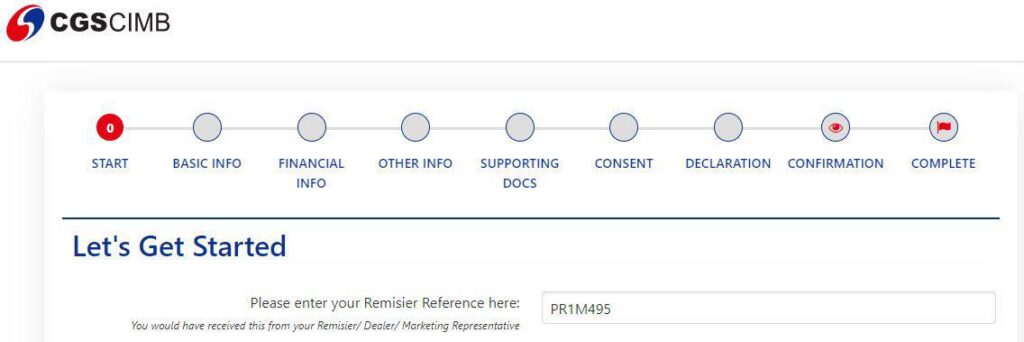
    Click this link to open an account with CGS-CIMB: https://www.cgs-cimb.com.my/en/Account-opening-Tr.jsp

    Don’t forget to key in PR1M495 in the Remisier Reference section. A designated Dealer’s Representative will attend and assist you with your account opening.

    Now, let’s assume that your account has been created. Next of course you would like to know how to deposit money and buy stock on the trading platform.

    Read: How To Open A CDS And Share Trading Account?

    Steps To Deposit Money

    After successfully logging into your account:

    1. Select ‘Settlement’ and click ‘eDeposit(New)’.

    2. Next, select your account and click ‘Online Cash Deposit’.

    3. Select which bank you would like to transfer your money from, key in the amount and click ‘Confirm’.

    4. Key in your Trading Pin and click ‘Submit’.

    The money will be updated in your trust account on the following day. Please contact your Dealer/Remisier if you wish to buy stocks as soon as possible. Let’s move on to the next step on how to deposit money and buy stock on the trading platform.

    Steps to Buy Stock in CGS-CIMB iTrade Platform

    1. Key in the stock code or stock symbol to search for the stock.

    2. Right-click on the stock name and click ‘Buy’.

    3. Ensure the stock that you intend to buy is correct. Next, follow the steps below:

    • Insert quantity (in lot)
    • Insert price
    • Choose validity
    • Insert trading pin
    • Click buy

    4. Under ‘Order Book’, select ‘Order Status’ to check on the order made.

    5. If your order status shows ‘filled’, it means the order that you placed has been matched. The shares purchased will be showed in ‘Equities Portfolio’ under ‘Portfolio’.

    Conclusion

    Investing in the stock market can be a rewarding experience, but it requires knowledge, patience, and discipline. Through this article, we hope to have provided you with a comprehensive guide on how to deposit money and buy stock on the trading platform. Different trading platforms may have different layouts and user experiences.

    An interactive trading platform may give a better user experience to the users.

    Read : Create Your Stock Watchlist With These Simple Steps

    Remember to always do your research, diversify your portfolio, and stay informed about market trends and news. By following these principles, you can make informed decisions and build a successful investment strategy.

    With the right approach, investing in the stock market can help you achieve your financial goals and secure your future. But it all starts with the first step, which is how to deposit money and buy stock on the trading platform.

    Read: Using The CANSLIM Formula To Choose Good Stocks

  • How To Open A CDS And Share Trading Account?

    How To Open A CDS And Share Trading Account?

    For an investor to start investing in Bursa Malaysia, they must open a CDS and share trading account. These two accounts serve different functions. Normally, when you open an account with any broker, these two accounts will be created together.

    The whole application process can be done by completing physical offline forms or some brokers will provide online applications. With this online application process, opening a share trading account will be hassle-free.

    But before we look at how to open a CDS and share trading account, read below for a deeper understanding of what is a CDS account and a trading account.

    What Is A CDS Account?

    Central Depository System (“CDS”) is a system that is fully owned and operated by Bursa Malaysia Depository Sdn Bhd (“Bursa Depository”), which provides central bookkeeping of securities and facilitates the settlement of securities transactions in a scriptless manner.

    Putting it simply, a CDS account acts like a wallet where you keep the shares that you purchased.

    Investors who wish to trade in securities listed on Bursa Malaysia Securities Berhad must open accounts on CDS. Securities bought or sold will be credited or debited into the CDS accounts of depositors accordingly.

    There are a few ways you can open a CDS account such as walking into any investment bank/broker, registering online via a website and you can also open a CDS account via the Bursa Anywhere mobile app.

    Source: Bursa Marketplace

    Read: Guide To Registration of Bursa Anywhere Account

    What Is A Trading Account?

    A share trading account is where you deposit money and use that account to buy/sell stocks via a broker’s trading platform.

    Refer to Bursa Malaysia’s website for the list of brokers in Malaysia: List of Participating Organisations

    For those who are wondering, an individual investor is allowed to open only one CDS account with each broker. It means that you can have 1 CDS account with different brokers such as Maybank, CGS-CIMB, Malacca Securities, RHB, and many more.

    However, a corporate investor may open multiple accounts with the same broker.

    It is very easy to open a CDS and share trading account. You have to ensure you have the necessary documents, so the process can be smooth.

    Required Documents

    There are a few documents that you have to prepare in order to open a CDS and share trading account for an individual. You are required to provide:

    1. Photocopies of NRIC/Passport
    2. Latest 3 months’ bank statements
    3. A copy of the latest 3 months’ payslip

    Do you have a trading account? If not, you are invited to open an account with one of the brokers available in Malaysia.

    Click this link to open an account with CGS-CIMB: https://www.cgs-cimb.com.my/en/Account-opening-Tr.jsp

    Don’t forget to key in PR1M495 in the Remisier Reference section. A designated Dealer’s Representative will attend and assist you with your account opening. All the best in your investment journey!

    Now you know how to open a CDS and share trading account? It is very easy, let’s get started today.

    Read more:

  • 4 Different Types Of Traders: Which One Are You?

    4 Different Types Of Traders: Which One Are You?

    There are different types of traders, as you are aware, if you have ever traded stocks. You could belong to one of several groups of traders, depending on your risk tolerance level and financial objectives.

    Before we begin looking at the different types of traders, let’s start by defining a trader and discussing how they differ from investors.

    Read: Investing VS Trading, Which One Is Suitable For Me?

    Difference Between A Trader And An Investor

    Someone who buys and sells stocks with the intention of making a quick profit is a trader. They achieve this by predicting how quickly stocks, currencies, and other financial assets will change in price.

    In contrast, investors purchase securities to hold them for a long time and earn returns via dividends, interest, and capital growth.

    Investors and traders are distinct in a number of ways. Their risk profiles are one of the key variations. Since they are attempting to capitalise on volatile short-term price movements, traders typically assume greater risk than investors.

    On the other hand, investors have the financial resources to adopt a longer time horizon and is more tolerant to market swings.

    Read: Fundamental Analysis vs Technical Analysis

    The time horizon is another difference. Securities are often held by traders for far less time than by investors. Investors may keep onto a stock for years or even decades, whereas traders may just hold onto it for a few minutes or hours.

    Finally, the kinds of stocks that traders and investors invest in vary. Since buying and selling quickly is simpler when a stock is highly liquid and has a high trading volume, traders frequently concentrate on these stocks.

    Conversely, investors might be more drawn to stocks with solid fundamentals and the potential for long-term growth.

    After knowing the difference between traders and investors, let’s look at the different types of traders.

    1. Scalper

    Traders that try to make tiny profits on many deals are known as scalpers. They often only keep stocks for a short period of time(a few seconds or minutes), and they frequently trade (dozens or even hundreds of times) in a single day.

    Scalpers rely on minute price changes and utilise technical analysis to spot transient patterns.

    2. BTST Trader

    A “Buy Today Sell Tomorrow” (BTST) trader purchases equities today and sells them the following day. They use this to avoid having to take ownership of the shares, which would necessitate full payment.

    BTST traders frequently focus on stocks with significant trading volume and solid momentum.

    3. Swing Trader

    Swing traders try to profit from swift market changes by holding onto securities for a few days or weeks. They employ fundamental and technical analysis to find equities that are likely to experience quick increases.

    More risk is typically assumed by swing traders, as compared to scalpers and BTST traders.

    Read: 5 Reasons Why We Lose Money In The Stock Market

    4. Position Trader

    In order to achieve long-term gains, position traders keep onto securities for weeks or even months. They frequently concentrate on stocks with solid fundamentals and prospects for long-term growth.

    Position traders are more interested in the company’s overall health than they are in short-term price fluctuations.

    4 Different Types Of Traders

    In conclusion, there are many different types of traders, each with a distinctive strategy for the market. Regardless of whether you are a scalper, swing trader, position trader, or BTST trader, it’s crucial to know your risk tolerance and investment objectives before you begin.

    By doing this, you can create a trading strategy that suits your needs and contributes to your market success.

    Read: Create Your Stock Watchlist With These Simple Steps