Category: Stocks

  • 3 Steps To Kickstart Your Stock Market Investment Journey

    3 Steps To Kickstart Your Stock Market Investment Journey

    First of all, congratulations to you! We believe you are here reading this article because you have finally decided to start investing.

    Before we look at how to kickstart your stock market investment journey, we need to understand what investing is all about.

    Investing is buying assets that increase in value over time and provide returns through income payments or capital gains. These assets can be stocks, bonds, property or anything that can give you some returns.

    This article will share how to kickstart your stock market investment journey.

    Perhaps you might be wondering how to start investing for the first time. First of all, to invest in the stock market, you will need three things.

    You will need investment knowledge, some money as your capital and an account to buy stocks. To make your life easier, let us help you how to kickstart your stock market investment journey.

    Here are the things that you need to consider before you begin investing in the stock market.

    Read: Two Ways To Make Money In Malaysia Share Investment

    Kickstart Your Stock Market Investment Journey#1 Understand the Instrument or Product That You Want to Invest In

    To invest in Bursa Malaysia, you must know their products and services. Among the products available are equities, bonds, derivatives and many more.

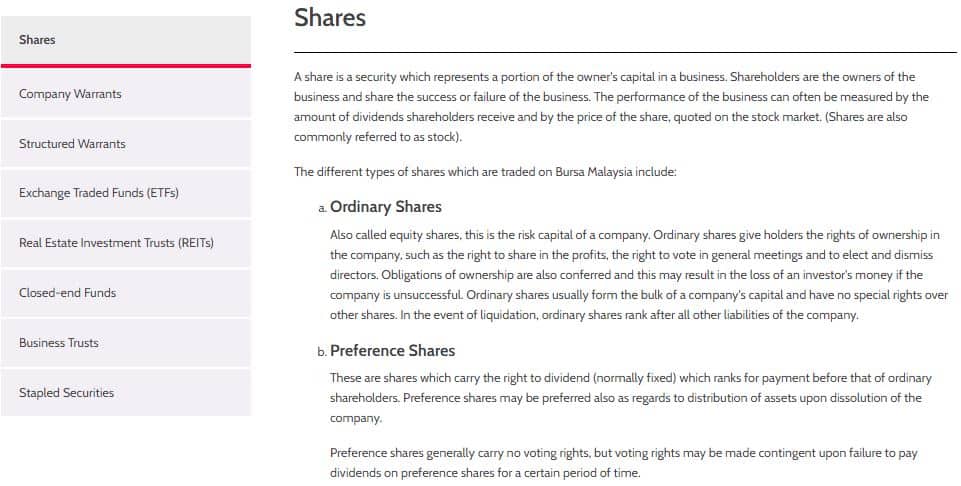
    Under equities are shares, company warrants, structured warrants, Exchange Traded Funds (ETFs), Real Estate Investment Trusts (REITs), Closed-end Funds, Business Trusts and Stapled Securities.

    Source: Bursa Malaysia

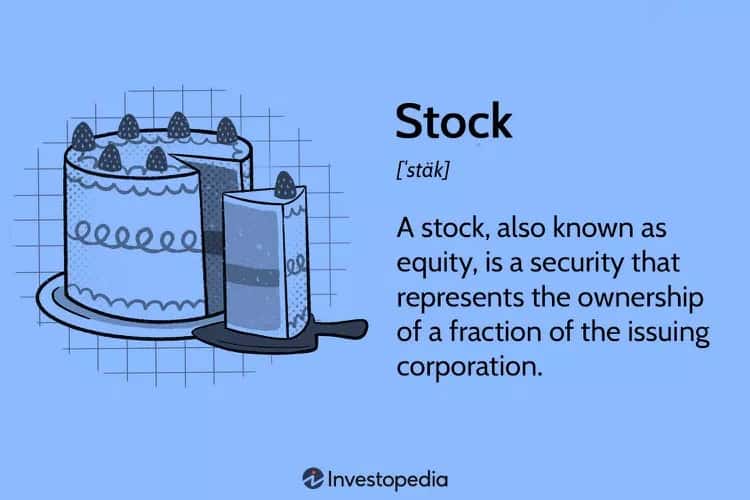
    As a beginner, we would suggest you begin with shares or stocks. According to Investopedia, a stock, also known as equity, is a security that represents the ownership of a fraction of the issuing corporation.

    Source: Investopedia

    If you purchase company shares, you are one of the owners because you own a fraction of ownership in that company. You may not be the major shareholder, but at least you can proudly say you are part of the company business.

    Once you understand what stocks are and how they work, do not stop learning and keep searching for more reading materials and videos over the internet. Believe me. If you wish to sustain long enough in the stock market, there is no shortcut.

    There are some Bursa Malaysia websites where you can get useful information, such as Bursa Malaysia, Bursa Marketplace and Bursa Academy. Check them out!

    Read: Investing VS Trading, Which One Is Suitable For Me?

    Kickstart Your Stock Market Investment Journey#2 Decide How Much to Invest

    Each investor may have a different size of capital to start with. Some may be able to start small such as RM1,000. Meanwhile, others who have higher capital perhaps wish to start with more than RM10,000.

    As a beginner, always start small. You need to get some experience before you go with higher capital. The most important thing is to only invest with your surplus cash.

    Never invest with your emergency funds. Investors who invest with their emergency funds tend to trade emotionally, affecting their decision-making.

    Different sizes of capital require different strategies.

    If you have bigger capital, you might want to diversify your portfolio by purchasing stocks from different sectors or instruments. A piece of advice to new investors and traders. Don’t put all your eggs in one basket.

    So let’s see an example. Assuming that you have RM30,000, to begin with. Our suggestion for you is you can split the RM30,000 into three different stocks, which means each stock is purchased with RM10,000.

    The three types of stocks that you can consider are:

    • High dividend yield stocks that can give consistent dividends
    • Good momentum stocks for short to medium term
    • Large market cap stocks that are more stable for long term

    Read: Fundamental Analysis vs Technical Analysis

    Kickstart Your Stock Market Investment Journey#3 Open a Central Depository System (CDS) & Trading Account

    After deciding which broker to open an account with, the next step is to open a CDS & trading account.

    Any investors who wish to trade in securities listed on Bursa Malaysia must open a CDS & trading account. A CDS account acts like a wallet. Any stocks bought or sold will be credited into your CDS account & debited from your CDS account accordingly.

    Simply put, when you buy stocks, shares are credited into your CDS account, and when you sell your stocks, they are debited from your CDS account.

    Meanwhile, trading accounts enable you to buy and sell shares on the stock exchange. Normally, CDS and trading accounts will be opened together when you open with the brokers. The list of Participating Organisations can be found on the Bursa Malaysia website.

    Do you have a trading account? If not, you are invited to open an account with one of the brokers available in Malaysia.

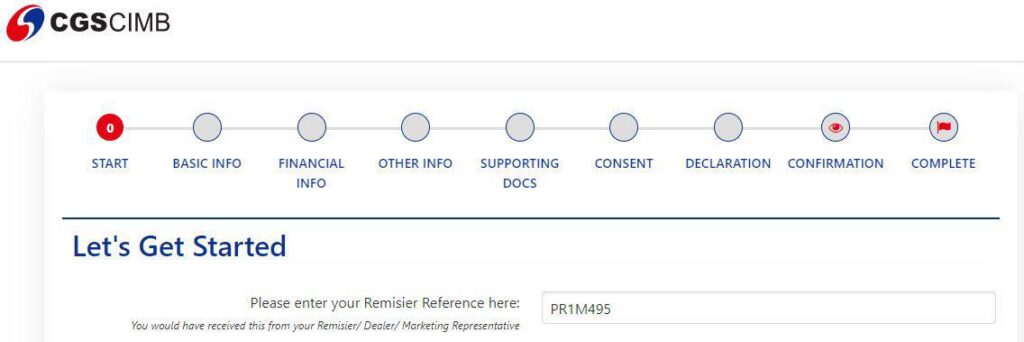
    Click this link to open an account with CGS-CIMB: https://www.cgs-cimb.com.my/en/Account-opening-Tr.jsp

    Don’t forget to key in PR1M495 in the Remisier Reference section.

    A designated Dealer’s Representative will attend and assist you with your account opening.

    There you go with some tips to kickstart your stock market investment journey. All the best!

    Read: 4 Mistakes People Make In Stock Investing

  • Investing VS Trading, Which One Is Suitable For Me?

    Investing vs trading are both ways to make money in the financial markets, but they are different. While investing vs trading have some similarities, they differ in many ways.

    Investing involves buying assets to hold them for a long period of time, with the expectation that they will appreciate in value or generate income. The goal of investing is to build wealth over the long term, and investors often take a more passive approach, holding onto their assets for years or even decades.

    In investing vs trading, there are several reasons why people invest:

    1. To Grow Wealth

    Investing can be a way to build wealth over the long term. Investors can increase their financial resources by buying assets expected to appreciate in value or generate income.

    2. To Generate Income

    Some investments, such as stocks that pay dividends or rental properties, can generate regular income for investors. This can be an attractive option for those looking for a source of passive income.

    3. To Save For The Future

    Investing can also be a way to save for long-term financial goals, such as retirement or education expenses. By investing in a diverse range of assets, investors can potentially earn higher returns than they would by saving in a low-interest savings account.

    4. To Beat Inflation

    Inflation is the general increase in prices over time, which can erode the purchasing power of money. Investing can be a way to protect against inflation, as assets that appreciate in value can help to offset the impact of rising prices.

    An investor will normally do fundamental analysis to filter good stocks.

    Read: ESG Investing – How To Integrate It Into Your Investment Planning?

    What Is Fundamental Analysis?

    Fundamental analysis refers to analysing the information from the news and reports. The investors will assess the information in their hands and attempt to predict the asset’s price direction.

    Overall, investing can effectively grow wealth, generate income, save for the future, and protect against inflation. While risks are involved, investing can be a valuable tool for those looking to secure their financial future.

    Read: Where To Invest In 2023: Amidst The Recession

    Trading

    On the other hand, trading involves buying and selling financial instruments with a shorter-term focus, often holding positions for only a few days or weeks. The goal of trading is to generate profits from short-term price movements rather than from holding onto assets for the long term.

    Traders often take a more active approach, continuously buying and selling to take advantage of market movements. Trading can be an attractive option for people looking for ways to generate financial returns and are comfortable with the inherent risks and uncertainties of the markets.

    Read: What Is Algorithmic Trading And Why It Is Important?

    In investing vs trading, some of the potential benefits of trading include the following:

    1. The Potential To Generate High Returns

    By buying and selling securities or other financial instruments at the right time, traders can potentially generate high returns on their investments.

    2. The Ability To Take Advantage Of Market Movements

    Trading allows individuals to take advantage of short-term market price movements and potentially make profits.

    3. Flexibility And Control

    Trading allows individuals to buy and sell assets as they see fit, allowing them to have more control over their financial affairs.

    4. The Opportunity To Diversify

    Trading allows individuals to diversify their investment portfolio by buying and selling various securities and financial instruments.

    As for traders, they will normally do technical analysis to find good stocks that can give the desired returns quickly. Price and volume are essential in finding good stocks to trade.

    Read: Correlation VS Causation

    What Is Technical Analysis?

    The technical analysis is a price action strategy. The investors will evaluate the market breadth based on the readings of price trend patterns, indicators and oscillators, then draw a conclusion on future market sentiment.

    However, it’s important to note that trading also carries inherent risks and uncertainties and is not suitable for everyone. Trading requires a high level of risk tolerance and financial knowledge, and it is not guaranteed to be profitable.

    It is important for individuals to carefully consider their financial goals and risk tolerance before deciding whether trading is the right approach for them.

    Read: Fundamental Analysis vs Technical Analysis

    Investing VS Trading, Which One Is Suitable For Me?

    In general, investing is more suitable for those looking to build wealth over the long term, while trading is more suitable for those looking to generate short-term profits. Both strategies can be used to generate returns, but they require different approaches and different levels of risk tolerance.

    So between investing vs trading, which one do you prefer?

  • Two Ways To Make Money In Malaysia Share Investment

    Two Ways To Make Money In Malaysia Share Investment

    The stock market is hugely popular, not only in Malaysia but the entire world. During the Movement Control Order (MCO) back in 2020, retail investors made a huge splash in Bursa Malaysia, and most investors made quite a handsome profit.

    Let’s look at the two ways which you can earn in Malaysia share investment.

    1. Capital Gain

    Capital gain is the increase in a capital asset’s value and is realized when the asset is sold. It is the profit that you get when the selling price of the stock exceeds its purchase price. It is the difference between the selling price (higher) and purchase price (lower) of the stock.

    For example:

    Stock ABC price = RM1 per unit
    Buy 10 lot (100 unit) = RM1 x 100 units
    Purchase price = RM1,000

    One month later

    Stock ABC price = RM1.10 per unit
    Selling price = RM1,100
    Profit/Capital gain = RM100 or 10%

    The above shows an example of how a capital gain of 10% is being made. ABC price went up by RM0.10, and was then sold at RM1.10.

    *Note, the profit does not take into consideration costs such as brokerage charges, stamp duty and clearing fees. The net profit should be less after deducting these fees

    Read: What Causes Bursa Malaysia Prices To Go Up And Down?

    2. Dividend

    dividend

    The second way to earn in Malaysia share investment is through dividend. A dividend is the distribution of a company’s earnings to its shareholders and is determined by the company’s board of directors.

    When a company generates a profit and accumulates retained earnings, those earnings can be either reinvested in the business or paid out to shareholders as a dividend. Dividends are often distributed quarterly and may be paid out as cash or in the form of reinvestment in additional stock.

    If the company is not making good profit, or even making a loss, then we shouldn’t expect any dividends from the company. In fact, we don’t invest in these companies that do not have good fundamentals.

    Malaysia Share Investment: Capital Gain VS Dividend?

    The stock market is suitable for all kinds of investors. There are those who are in for the short term, perhaps capital gain is more suitable. But do keep in mind that if a stock price can go up so fast, it can go down even faster.

    Whereas dividend stocks are more suitable for those who are in it for the long term. By investing in good and strong fundamental companies, you should be able to get a steady stream of dividends.

    But that shouldn’t stop you from looking for stocks that can give you both capital gain and dividend right?

    Make sure you also read:

  • Correlation VS Causation

    Correlation VS Causation

    The confusion between the correlation and causation is inevitable especially for those who are new in investment and trading. But one must understand the difference between correlation vs causation before opening any investment accounts. The financial analytics bible defines the correlation is a relationship between markets.

    For instance, FBMKLCI and DJIA have a positive relationship. But without further statistical test, we cannot say which market is the leader and which market is the laggard. Both markets may share and react on the similar information which is the mediator. So there comes the need of another course of test called causality test. The causation, for example, explains the case when FBMKLCI causes DJIA to move.

    The mathematics of assets correlation is simple and straightforward. The correlation test finds the degree of association between the price change of Asset A and Asset B. It is then measured by a statistical tool such as Pearson Correlation coefficient. The causality test on the other hand adopts the similar mathematical formulation but with a little adjustment on the equation parameterization.

    Correlation VS Causation

    The causality test focuses on finding the correlation of Asset A and Asset B with each other’s history. The most popular causality test used in the Bloomberg terminal is Granger causality test.

    The knowledge on assets correlation and causation is crucial for investors as it helps the investors to differentiate and identify market movers. Some of the assets maybe well correlated but not necessarily a price determinant to each other. For instance, the most popular assumption in the agricultural commodity trading is the soybean oil futures traded in US Chicago Board of Trade (CBOT) is the leader for the Malaysian crude palm oil futures (FCPO) in Bursa Malaysia Derivatives (BMD).

    A study by Li and Nguyen (2015) provide a crucial piece of evidence where they reveal that the CBOT soybean oil and BMD crude palm oil have a stable long run relationship, but the study discovered that there is bi-directional causality between both futures markets. It shows that the Malaysian crude palm oil price may influence the soybean oil price in the US and vice versa.

    Futures Market

    Another example, the causality test determines the functionality and reliability of futures market as a hedging avenue for the market players. The futures market is established to be a future price reference for its underlying cash market. The efficient futures market guarantees effective hedging strategy. Therefore, an efficient futures market must have two conditions to be fulfilled.

    First, the correlation between the spot and futures must be at perfect positive at all times. Secondly, the futures price must be proven leading the spot price in the causality test. Lacking on any of these prerequisites may render the price risk transfer process from the hedger to speculator to be less efficient. To add further, the causality test helps the global investors in devising their international portfolios.

    A good knowledge in cross markets causality will tell whether the bearish mode in the S&P500 tonight maybe spill over to Nikkei 500 in the next morning or not. This is why it is important to have the knowledge about correlation vs causation.

    So, the next time you heard an impactful news on a geo-economic event, you can tell that if your portfolio will be impacting or impacted by the global sentiment. Hope you now have a better understanding of correlation vs causation.

    About the Author

    Dr. Ahmad Danial is a Certified Financial Technician (CFTe) and Senior Lecturer in Finance at Department of Economics and Financial Studies, UiTM Puncak Alam. He has over 10 years’ experience in the financial markets before hopping into the academia. His areas of expertise include financial contagion, trading in stocks and derivatives markets, price discovery, hedging strategy, Econophysics and technical analysis. He can be reached at danialzainudin@uitm.edu.my.

  • Bursa Malaysia Launches Two New ESG Themed Indices With FTSE Russell

    Bursa Malaysia Launches Two New ESG Themed Indices With FTSE Russell

    Bursa Malaysia Berhad (“Bursa Malaysia” or the “Exchange”) today launched two new ESG themed indices under the FTSE Bursa Malaysia Index Series which are the FTSE Bursa Malaysia Top 100 ESG Low Carbon Select Index (FBM100LC) and the FTSE Bursa Malaysia Top 100 ESG Low Carbon Select Shariah Index (FBM100LS).

    These new indices add to the existing portfolio in the FBM Index Series suite that the Exchange jointly issues with index partner FTSE Russell. These additions expand the Exchange’s benchmarking offerings in the ESG, low carbon and climate risk index space to cater to evolving investors’ demand.

    The FBM100LC Index tracks companies in the FBM Top 100 Index based on their ESG and carbon intensity performance, thus providing an opportunity for investors to reduce their investment portfolio’s carbon footprint.

    The index methodology addresses ESG and climate change risks from multiple dimensions based on clear, transparent and targeted objectives. It is constructed using the FTSE Russell Target Exposure methodology, which applies succussive tilts to capture target exposure and climate outcomes.

    The index aims to achieve a maximum 30% reduction in Fossil Fuel Reserves Intensity, 30% reduction in Carbon Emissions Intensity, and 20% uplift in ESG Ratings. It excludes companies involved with controversial product activities such as weapons, thermal coal, extraction and electricity generation, tobacco, nuclear power, gambling, adult entertainment, and companies involved with controversies related to the UN Global Compact principles.

    “We are delighted to expand on our strong partnership with Bursa Malaysia to bring these new ESG themed indices to the market. As sustainable investing continues to be embraced in Malaysia, the new indices provide a powerful tool for investors to increase company ESG transparency and performance,” said Helena Fung, Head of Sustainable Investment, Asia Pacific at FTSE Russell.

    The launch of the index aims to further encourage ESG and low carbon adoption within the local capital market ecosystem, in line with the Exchange’s vision to be a leading sustainable and globally connected marketplace.

    “ESG has become a staple of the investment management landscape. Clients have started to demand products that make it easier for them to manage their portfolios with better ESG compliance and risk management,” said Datuk Muhamad Umar Swift, Chief Executive Officer of Bursa Malaysia. “We are pleased to again partner with a respected name like FTSE Russell to develop new products that emphasize our commitment towards a low carbon economy.”

    A Shariah version of the index is available where further screening is applied on the constituents to only include Shariah-compliant companies.

    About Bursa Malaysia

    Bursa Malaysia is an exchange holding company incorporated in 1976 and listed in 2005, and has grown to be one of the largest bourses in ASEAN today. Bursa Malaysia operates and regulates a fully-integrated exchange offering a comprehensive range of exchange-related facilities, and is committed to Creating Opportunities, Growing Value. Learn more at www.bursamalaysia.com.

  • Fundamental Analysis vs Technical Analysis

    Fundamental Analysis vs Technical Analysis

    There is a prolonged debate on the superiority of both analyses, or in short: fundamental analysis vs technical analysis. I can recall my days as a derivatives dealer where some clients prefer to read news, while others like to draw charts.

    But for sure both types of analyses have their own merits as it measures the price trajectory of the markets.

    What Is Fundamental Analysis?

    Fundamental analysis refers to analysing the information from the news and reports. The investors will assess the information in hands and make attempts to predict the direction of the asset’s price.

    What Is Technical Analysis?

    The technical analysis on the other hand is a price action strategy. The investors will evaluate the market breadth based on the readings of price trend patterns, indicators and oscillators; then draw a conclusion on future market sentiment. So, based on the definition, which is more appropriate and why?

    The news have heterogeneous impacts on the financial markets. A group of markets may receive the same news, but the investors will react differently. The COVID-19 news for instance, may trigger a bearish sentiment but the magnitude of impacts on the financial markets in the developed and emerging markets will be different. Therefore, it is crucial that the investors to understand how the asset price in their portfolio moves.

    According to the empirical finance, generally there are three main stages of asset movement which are called information arrival, co-movement and volatility. At the stage of information arrival, investors receive and react on the information upon receiving them.

    In the second phase, the asset influences the other assets or markets. Next, when there is the absence of news, but the price is constantly moving, we call it the stage of volatility.

    Fundamental Analysis vs Technical Analysis

    To decide on when to use the fundamental or technical analyses, the investors need to know their portfolios well such as the sensitivity to news and the movement of interrelated markets. Applying the fundamental analysis needs a good knowledge of portfolio sensitivity.

    The best example is the stock’s beta to index. The fundamental analysis is best to use in the first and second stage. While some commodity markets like energy and agriculture futures, the investors are depending on the EIA and USDA reports however the information on production numbers and demand will not being released so frequently.

    In this case, it is preferably to use fundamental analysis to determine the market sentiment thereafter technical analysis is used to time the entry and exit.

    By and large, fundamental and technical analyses are tactical in investment and trading. The investors should assess the market sentiment based on the news, and time their entry using the price charts. It is worth to note that regardless of trends, either bearish or bullish, the price will not move linearly.

    There must be the phases of corrections, retracement, rebounds and reversals amidst of the major trend. The news may set path for the major trend, but the trading motivations of buyers and sellers determine the intertemporal price dynamics.

    So in the case of fundamental analysis vs technical analysis, which one do you prefer? They say if you are an investor, then you should use fundamental analysis. If you are a trader, then you should be using technical analysis. Or can we use both?

    About the Author

    Dr. Ahmad Danial is a Certified Financial Technician (CFTe) and Senior Lecturer in Finance at Department of Economics and Financial Studies, UiTM Puncak Alam. He has over 10 years’ experience in the financial markets before hopping into the academia. His areas of expertise include financial contagion, trading in stocks and derivatives markets, price discovery, hedging strategy, Econophysics and technical analysis. He can be reached at danialzainudin@uitm.edu.my.

  • US Equities: Opportunities Amid Turbulence

    US Equities: Opportunities Amid Turbulence

    Global markets are at a crossroads, reflecting deep concerns around inflation, interest rates, moderating economic growth, and elevated geopolitical uncertainty in Europe as it pertains to the Russia-Ukraine war and its potential ripple effects. Market sentiment has swung dramatically, from bullish peaks in 2021 to extremely bearish levels in recent weeks.

    Indeed, sentiment indicators are close to the lows of 2009. This is notable considering that the state of the economy today is certainly stronger than 2009, when the U.S. economy was reeling from the impact of significant financial imbalances and an imploding housing market.

    In our view, the sentiment indicators reflect anticipated economic headwinds ahead and an expectation that consensus earnings estimates could be revised lower in the coming quarters. In aggregate, we believe S&P 500 earnings growth will face pressure in the second half of the year, but should remain positive in 2022.

    Valuations have rapidly contracted over the last six months; the forward price-to-earnings (P/E) ratio of the S&P 500 Index has returned to pre-COVID-19 levels and is trading about one standard deviation below its past five-year average. Stock price pressure has largely been driven by multiple compression as interest-rate increases have impacted discount rates and, in turn, reduced what investors are willing to pay for future earnings.

    While this is appropriate to some degree, it is notable that the profitability and earnings power of many companies remain intact and earnings reports have been resilient across many sectors. In our opinion, recent volatility has created interesting opportunities in the market for long-term investors who are able to look through the near-term turbulence and focus on the growth opportunity of future years.

    In our analysis, U.S. stocks continue to trade at a premium versus other markets. In our view, these higher relative valuations reflect stronger corporate profitability, better return on equity, and more robust growth in comparison to equity markets in other parts of the world.

    While interest-rate increases can slow the economy and lead to recessionary downturns, equity markets have historically performed well in rising interest-rate environments. Over the last eight rate hike cycles dating back to the early 1990s, the S&P 500 has typically declined ahead of and going into the first interest-rate increase, but as the pace of policy tightening becomes more transparent and predictable, equity markets have tended to perform well. Looking at the last few months, the market has followed its historical pattern, but with a higher degree of downside volatility.

    Long-term secular growth trends, such as health care innovation, digital transformation and the rise of fintech, remain intact. These trends were clear beneficiaries of the COVID environment but remain deeply relevant even as economic growth moderates. We believe they will likely create productivity and profitability tailwinds for companies operating in these integral sectors.

    Outlook For Inflation: Some Pressures May Moderate

    We think the United States has probably seen the inflationary peak, but core levels of inflation may remain stubbornly high for a while. However, we believe this should moderate as supply challenges abate and pent-up demand normalizes. As it stands, we’ve already seen some moderate pullback in commodity prices including oil, lumber and copper from very elevated levels, which should ease inflationary pressure somewhat.

    It is important to note that measures of inflation, such as the Consumer Price Index (CPI) and Personal Consumption Expenditures (PCE), are lagging indicators, with substantial backward-looking components. The more forward-looking components of inflation seem to point to some moderation. Home prices have moderated in the United States and home sales have slowed meaningfully.

    Wage inflation has slowed, and we have started to observe layoffs across some companies—early indications that the labor market is rightsizing. The auto backlog, which was primarily driven by supply chain problems, has started to recede and auto deliveries have increased. Energy prices have also receded from recent highs. Taken together, we believe these should create an environment for moderating inflationary pressure, although the effects will only be seen in headline and core inflation gauges after a lag.

    Directionally, in our opinion, inflation should continue to improve in the second half of the year and may moderate faster than market participants anticipate. This could be a net positive for risk assets as it means the U.S. Federal Reserve (Fed) may not have to move as aggressively as it had intended in the face of slowing economic momentum.

    While we think inflation will moderate, there is a strong likelihood that it will not hit the Fed’s 2% core PCE inflation target. Instead, inflation may hover around a 2%–3% range for some time, reflecting the stickier aspects of inflation that may not dissipate quickly. This will keep pressure on the Fed, in that they may keep policy settings tighter for longer.

    As it stands, we’re already seeing the effects of higher interest rates ripple through mortgage rates, auto lending rates and other consumer credit rates, which is likely to dampen aggregate demand further in the face of already moderating growth. The challenge for the Fed will be to calibrate monetary policy settings, such that it is tight enough to curtail inflation, yet not too tight that it triggers a deep and long recession. Engineering a soft landing is a tall order.

    Probability Of Severe Recession Appears Low

    We believe the probability of a severe recession in 2022 is low. Underlying economic conditions in the United States, while weaker than last year, remain healthy, in our view. Two pillars of the U.S. economy appear resilient: corporate earnings have remained relatively robust, while consumer balance sheets are solid, and debt-servicing ratios remain low. That said, earnings growth could slow and we’re likely to see a moderation of gross domestic product (GDP) growth from a fairly elevated base on a year-on-year basis.

    As long as the labor market remains healthy, where unemployment hovers around 3%–4%, it is difficult to fathom a case where we enter a recession that is anything but shallow. A technical recession—two quarters of negative GDP growth—in the next year or so is certainly possible, but ultimately it is likely to be a shallow and short-lived one, in our opinion.

    Sector Opportunities

    We have a quality basis and primarily focus on businesses with robust competitive positions, strong pricing power and healthy financials as we believe these are the companies that perform well in any market environment. Our focus on major secular themes, like digital transformation and health care innovation, invariably leads us to both established and emerging growth players in various sectors.

    Companies across the globe are focused on improving productivity, lowering costs and finding ways to widen their reach and deepen relationships with customers. These often require investments in digital technologies, digital applications, software and hardware.

    We continue to see robust demand for technology enablers from enterprises across various sectors. The outlook for digital spending remains bright as investing in digital capabilities has moved up the needs ladder for many businesses post-COVID.

    We do think that some technology players have been unfairly penalized in the recent rates-driven market correction. Many of these tech businesses are unprofitable and are likely to remain so in the near term. Being in the early stages of growth, they’re understandably focused on spending to engage the huge addressable market opportunity for their products as they grow their business.

    As active and fundamental investors who focus on the bottom-up, we continue to see healthy fundamentals among some of these businesses. They’re growing at a rapid clip and continue to acquire customers at a rapid pace. There are certain viral aspects to their businesses and existing customers are also spending more on their platforms.

    That said, we remain discerning on our exposure, focusing on software over hardware given their resilience to supply chain snarls, and favoring enterprises over consumers given that the former is a reliable source of demand and is likely to spend more on tech. We also pay close attention to unit economics in terms of the cost to acquire a customer and the return they earn on that investment. These are the businesses we believe will shine with time and grow to be the next-generation leaders in their respective sectors.

    Striking A Balance

    We seek a good balance of consistent, high-quality, name brand, best-in-class, established businesses along with exposure to next-generation leaders. To do this, we rely a great deal on our bottom-up, fundamental research capabilities and leverage our in-house team of analysts to uncover promising companies that have the potential to become market leaders. Having a constant dialogue with the companies we hold also helps us discern potential winners that may emerge in different sectors.

    As long-term investors, we typically take a three-to-five-year view when assessing opportunities. Ultimately, we believe outperformance can be generated by identifying these long-term winners rather than timing short-term trades in the market. As such, we view the current volatility as a compelling buying opportunity.

    The dramatic performance of mega-cap (companies with market capitalizations in excess of $200 billion) technology stocks, specifically Apple, Alphabet and Microsoft, relative to the broader S&P 500 Index has been a defining feature of the market environment since the onset of the COVID-19 pandemic. These three names continue to account for roughly one-sixth of the S&P 500 based on market capitalization.

    While these are very good companies, in our view there are many opportunities outside of these names that offer compelling potential for alpha generation. We believe the opportunity set outside these mega-cap names is large and robust and the real opportunity for active equity investors is to find uncovered gems that have the potential to be the next generation of market leaders.

    Gauging The Market Bottom

    We do not focus or rely on any one particular indicator to divine or predict where the market is headed next. We typically observe a range of indicators to better understand the market environment.

    Historically, overly bearish sentiment tends to signal good buying opportunities. Incrementally shallower selloffs in the stock market in response to adverse new information often tells us that a great deal of bad news is already baked in the price. We are starting to see this in sectors like tech.

    Over the next quarter, any negative earnings revisions could test this hypothesis. The reaction to companies missing earnings estimates or providing negative forward guidance on top-line earnings, costs and growth may offer insights into what outcomes the market has already priced in.

    On a macro level, seeing a sustained moderation in forward-looking inflation indicators will be crucial to pinpoint the potential top-end for interest rates, as it provides some scope for the Fed to temper the pace of monetary policy tightening. Directionally, this means less headwinds and more tailwinds for risk assets like stocks.

    For now, we think it is too early to call a market bottom, although we do think we’re close. Valuations are very supportive for many companies, and the outlook for growth and earnings has been significantly reset over the last six months, not just in equities, but also across many asset classes.

    Grant Bowers,
    Portfolio Manager, Franklin Equity Group,
    Franklin Templeton

  • What Causes Bursa Malaysia Prices To Go Up And Down?

    What Causes Bursa Malaysia Prices To Go Up And Down?

    We all know that investing in stocks are considered to be “high risk high return” investment. Which means that it can potentially make you profit a lot, and make you lose a lot as well. With that in mind, what causes the Bursa Malaysia prices to be volatile with the price going up and down almost all the time?

    It all boils down to the concept of supply and demand. When there are more buyers than sellers, naturally the price will go up. When there are more sellers than buyers, then naturally the price will go down.

    Bursa Malaysia Prices Always Go Up And Down

    To understand further, you need to do some Technical Analysis. Look at the charts and follow the trend.

    If a stock is in a solid uptrend, you stand to make good money for as long as the trend is still bullish. Well as long as there are new buyers and the volume is strong, then there’s still potential for it to go up.

    But in the end, what goes up must come down right?

    You can also look at stocks that are moving downtrend and wait for a strong reversal signal. As the seller weakens with no new sellers, then buyers will start to turn the tide. Once buyers are more than sellers, the price should stop from going down any further and the momentum will start to change upwards.

    Once it hits rock bottom, surely there’s no other way it can go other than up?

    More Millennials Coming Into The Stock Market

    Another reason why Bursa Malaysia prices are seeing a lot of volatility is due to many new investors come flooding the market – more specifically the youngsters. They typically trade stocks that are in the news, trending or based on thematic investment such as healthcare-related or oil-related stocks while also generally favoring small-cap and mid-cap stocks.

    With better access to information and technology, millennials are most prepared to participate in online share trading and investment. Investment gains and validation of good analysis attract young investors to develop money-managing skills and later, to begin their own investing journey. 

    Millennials are also deeply passionate about global issues that are important to them, and these include Environmental, Social and Governance (ESG), green technology and clean technology.

    Know The Risks Involved

    All investments carry with them some degree of risk, and these risks can range from inflation and interest rate changes to political uncertainties and economic trends. An investor must know his own risk tolerance, investment time horizon, and most importantly, his own financial goals. Holding investments for the long term, too, is advisable.

    Trading on stocks that have no fundamental earnings, poor cash flow and poor business model is a dangerous start. Penny stocks and cheaply priced warrants, too, can also turn into potential big losses as their price drops can be very sharp too.

    New investors should consider only value stocks and business models that are sustainable and should always make a practice of verifying if the information received is accurate. It is always good to diversify. Monitor the market and keep some cash ready for new opportunities that might arise.

    Make sure you read 4 Mistakes People Make In Stock Investing.

  • 4 Mistakes People Make In Stock Investing

    4 Mistakes People Make In Stock Investing

    As a dividend investor who derives dividend income regularly from a portfolio of dividend paying stocks, I believe all of us can move towards financial freedom investing in the same. However, many fail to build additional income or grow wealth sustainably over the long-term despite having a sincere desire to move ahead financially.

    So, where do we fall short?

    In this article, I will list four major mistakes that most people make when attempting to make money from the stock market.

    1. Investing without a Plan

    First, investing starts with one having an investment plan.

    Basically, it has four key elements:

    1. Your Current Financial Status
    2. Your Future Financial Goals
    3. Duration
    4. Choices of Investment Vehicles and Strategies

    An investment plan is likened to one planning a trip. It starts with where you are now, where you want to be, when you intend to reach your destination, and how you intend to get there safely. The subject of investing is confusing but usually this is due to one trying to invest without having a plan beforehand. It is like driving around in circles when investing their money.

    This leads to:

    2. Investing Becomes a Game of Chance

    Today, we have 900+ stocks listed on Bursa Malaysia. Which stocks should you invest in?

    Logically, the answer depends on your investment plan as it helps you select stocks that would propel you towards financial success. However, many do not bother to sit down and have their plans crafted as the process seems boring. Thus, how would most people pick their stocks?

    1. Feel, Guts, and Emotions?
    2. Colleagues, Friends, or Relatives?
    3. Stock Tips, Rumours, and Commentaries?

    As such, many treat stocks like lottery tickets. They may buy stocks out of hope after having heard of some “exciting news” about them. Many expect the prices of these stocks would go up forever. It is a fallacy as they would soon met with disappointment when their stocks fall in prices. This leads us to:

    3. Buy High, Sell Low

    investing stock market

    Ideally, success in investing revolves around four words: “Buy Low, Sell High”.

    However, it is easier said than done. As mentioned, many buy stocks after gaining knowledge of exciting news about them. What is this news usually about? In most cases, they are about stocks that have experienced the highest appreciation in a short span of time. Instead of “Buying Low”, many resort to “Buying High” as they want to join the bandwagon.

    Usually, a savvy investor would stay away from such stocks or would have sold their shares at high prices (“Sell High”).

    This is a reality of the stock market. Stock prices go up and come down. It is the norm and hence, a savvy investor would have prepared for what to do if his or her investment fell in price. But since most people do not have a plan, they panic when prices drop and “Sell Low” out of fear even though they “Bought High”.  

    At these times, an investor with know-how would enter the market to accumulate more of these stocks as their prices would be trading at a discount (“Buy Low’).

    This brings us to the next question: What gives these investors the guts and confidence to invest in stocks when their stock prices drop?

    4. Not Treating Stocks as Businesses

    Investing is more intelligent when it is businesslike.

    Warren Buffett, the living legend and an example of how one who can amass billions by investing, advised not to speculate the markets.

    So, what is the meaning of being “businesslike”? It is one who views stocks as businesses which own assets and generate profits and cash flows from their customers. Thus, an investor would first study, in great length, a stock’s business models, financials, and its future plans for growth. If the stock is fundamentally solid, he proceeds by assessing its stock price and would only commit his capital into it if its prices are relatively cheap. This explains why savvy investors, like Warren Buffett, can be confident on their stock purchases in a bad market.

    Regrettably, many do not view shares as certificates of ownership of a business and thus, buy stocks with little knowledge on what businesses they are into and how much money they are making. It is a mistake and the biggest downfall is one who bought into stocks where their businesses are unprofitable.

    Think about it. Are they able to grow shareholders’ wealth sustainably over the long term? In short, it does not take a genius or a crystal ball to build a stable and a regular source of income from stock investing. It takes a plan, logic, willingness to learn and a business mindset to profit consistently from the stock market.

    This article was written by Ian Tai. Ian can be reach via email iantai888@gmail.com.

  • Picking the Best Time to Invest

    Picking the Best Time to Invest

    Since the start of the market rout in mid-March 2020, when benchmark gauges worldwide plunged due to pandemic fears over COVID-19, investors are probably wondering if it’s a good time to invest.   A sea of red across equity markets certainly has attracted the attention of bargain hunters looking to scoop up stocks that are trading at a discount to their premium.

    However, the vagaries of market timing can make it challenging for investors trying to pick this elusive bottom.

    Of course, the biggest question is whether these gains are sustainable or just a dead cat bounce. The reality is that there are too many market variables to know for sure, and what’s more, we are in uncharted territory. The world has never seen an economic shutdown on such a scale before due to a pandemic.

    It is likely that the economy is already in a recession as a result of this clampdown on business activity and consumption. The depth and length of this economic slowdown still unclear given the many variables at hand.

    But what is absolutely certain is that volatility is poised to persist. 

    So What Should Investors Do?

    Keeping perspective for one. It may seem like uncertain times, but this isn’t the first time that stock markets have gone through a recession before. History shows that every bull market cycle ends at a higher point than the previous one by subsequently recovering and notching higher gains.

    For instance since the MSCI World Index plummeted by -13.5% in March 2020, the index has retraced losses by climbing +10.8% in the month of April.  Similarly the MSCI Asia ex-Japan index recouped back gains of +8.9% buoyed by stimulus hopes as central banks eased monetary policy.

    Gains during expansionary periods have also far outpaced losses suffered during a downturn. As such, it is important that investors remain disciplined and stay on track towards achieving their investment goals. Adopting a long-term approach and staying diversified is important in this regard to weather the turbulence ahead.

    More defensive asset classes such as fixed income tend to hold up better compared to equities during periods of market stress.  But that does not mean investors should overlook equities completely.

    The stock market will eventually recover and it is important that investors stay invested to be in a position to capture that rebound. Similar to sell-offs, market gains often occur in short bursts at high velocity. Timing precisely for such moments require more than a stroke of luck and is highly unlikely.

    As can be seen in Graph 1 below, missing out on the best days in stock markets can significantly undermine an investor’s long-term financial success.

    Graph 1: The Cost of Market Timing The Risk of Missing the Best Days in Market, 2000 – 2019  
    Source: Morningstar, 2020

    According to research by Morningstar, investors who stayed in the market for all 5,035 trading days achieved a compound annual return of 6.1%. However, that same investment would have returned 2.4% had it missed only the 10 best days of stock returns.

    Further, missing the 50 best days would have produced a loss of 5.5%. Although the market has exhibited tremendous volatility on a daily basis, over the long term, stock investors who stayed the course were rewarded accordingly.

    This underscores the peril of market timing that could lead to significant opportunity loss. 

    The appeal of market-timing is obvious by avoiding periods of poor performance to improve portfolio returns. But the truth is timing the market consistently is extremely difficult that even the savviest investor can get wrong.

    As aptly put, history does not repeat itself, but it often rhymes. The COVID-19 pandemic may be unprecedented with little clarity yet on outlook, but some of the strongest rebound often occur when the market is at its most bearish.

    The ideal approach to invest in such a period then is by staying disciplined and investing consistently by sticking to a regular investment plan to ease one’s way into the market.

    Over the long-term, this would reduce the impact of volatility by spreading out your investments over periodic time intervals by dollar cost averaging. This ensures that one do not buy at inflated prices as well as seize the opportunity to acquire more units at lower prices.

    Best Time For You, Not The Market

    stock chart candlestick

    Instead of looking outward and trying to time the market, investors should turn inward to decide when the best time for them to invest is. 

    An easy way for investors to do so is by asking themselves basic financial questions such as:-

    • Do I have enough in my emergency savings to cover necessities?
    • What about future commitments and liquidity needs?  
    • Can I take a long-term view on my investments?

    The global economy is undoubtedly in a fragile state as businesses grapple with closures due to nationwide lockdowns to stem the spread of the coronavirus. With companies embarking on cost-cutting measures, the likelihood of pay-cuts, redundancies and job losses may be inevitable.

    That is why the importance of having enough in emergency savings cannot be emphasised enough. A rule-of-thumb is that one should have at least 3-6 months’ worth of living expenses in a rainy day fund for precisely in times like these.

    Similarly, investors should also look at their time horizon and liquidity needs. Do you require cash to pay any outstanding debt or expenses in the near future? Also, can you afford to hold your investments without withdrawing for at least 3 years?

    These are important points because no investment can churn out returns overnight.  Patience is needed for investment success and history has proven to be kind to investors who do sit through market cycles and stay invested.

    Waiting for the perfect time to invest should not be an external exercise and what happens in the market.   Rather, it should be an introspective one by taking into consideration your own financial standing, investment horizon and risk appetite.

    About The Author

    Lee Sheung Un is the Communications Officer of Affin Hwang Asset Management. A former business journalist, he is an ardent investor who is passionate about markets and is working towards building his dream portfolio.