Category: Technology

  • Malaysia faced 27.9 million online threats in 2024

    Malaysia has moved up the global rankings for web threats, a stark reminder of the escalating cyber dangers lurking online. According to the latest Kaspersky Security Network (KSN) report, Malaysia now ranks 30th worldwide, with a staggering 27.9 million web threats detected and blocked by the global cybersecurity company in 2024, a 4% increase compared to the previous year. This alarming data underscores the critical need for enhanced cybersecurity measures to protect individuals and businesses in the country.

    “The rise in web threats detected in Malaysia is a serious concern. Our latest data shows us the growing sophistication of cybercriminals and the urgent need for individuals and businesses to continuously enhance they safeguards against cyberthreats. Neglecting cybersecurity best practices can have severe consequences, from data breaches and financial losses to reputational damage, and event disruption of critical services,” says Yeo Siang Tiong, General Manager for Southeast Asia at Kaspersky.

    The Digital Communications Ministry highlighted that no single entity could address the cybersecurity challenges that Malaysia faces today. The threats are complex, multifaceted and evolve at a pace that demands collective action. The ministry views public and private partnerships as an important synergy to address the cybersecurity concerns.

    Malaysia is the current overall coordinator of the ASEAN Regional Computer Emergency Response Team (ASEAN Regional CERT), with the aim to build a more resilient digital ecosystem for all. The country is also in the midst of joining the Budapest Convention and the United Nations Convention Against Cybercrime, demonstrating the country’s commitment to combat cybercrime both locally and internationally.

    “The Malaysian government’s ongoing efforts to combat cyberthreats are commendable. These steps are crucial in raising public awareness and strengthening the country’s cyber defenses. Staying safe online requires a multi-layered approach, strong passwords, updating software, being vigilant against phishing attempts are just the first steps. You need to utilize robust cybersecurity solutions, so you can significantly enhance your protection against cyberthreats. It is troubling to learn that approximately RM5 billion in losses occurred due to cybercrimes from 2020 to 2024. We urge Malaysians to continue to prioritize online safety and take proactive measures as soon as possible,” adds Yeo.

    Kaspersky experts advice the following for users to reduce some of the online risks:

    • Use strong and unique passwords. The weakest link is often the entry point to the platform, which is the password. This should be unique and not one that you re-use on multiple social media platforms. If you struggle to come up with a unique password, consider using a password manager to generate a unique and strong password.
    • Two-factor authentication. While many people choose to use SMS or email as the source of the second verification, Kaspersky recommend using an authenticator app.
    • People you do not know, do not click to read the direct message. There is no reason for you to assume that you should click on any link sent from people you do not know. It may be a goal to chase the influencer wagon and make fast cash, if something sounds too good to be true, it probably is.
    • Talk to your kids on basic safety on social media networks.
  • TCS Global Study: 64% of consumers likely to choose EV

    TCS Global Study: 64% of consumers likely to choose EV

    A new study by Tata Consultancy Services (TCS) (BSE: 532540, NSE: TCS), reveals that more than six out of 10 (64%) consumers are likely or very likely to consider an electric vehicle (EV) for their next purchase. The TCS Future-Ready eMobility Study 2025, a comprehensive report on how EVs are shaping the future of sustainable mobility, also highlights that while 60% of consumers said charging infrastructure was a major challenge, 56% were ready to pay up to $40K for an EV.

    This study surveyed over 1,300 anonymous respondents across North America (USA, Canada), United Kingdom & Ireland, Continental Europe (Belgium, Denmark, Finland, France, Germany, Netherlands, Norway, Sweden, Switzerland) and APAC (China, India, Japan, ANZ). The respondents for the survey included transport manufacturers, charging infrastructure players, fleet adopters, consumers and EV adoption influencers.

    Sustainability and lower operational costs were key factors driving EV adoption, according to the study. While consumers and influencers highlighted a clear motivation for EV adoption as ‘environmental sustainability’, the environmental benefits did not match the expectations of many EV influencers. Nearly 48% EV influencers said EVs increase the overall carbon output just as much as they reduce it, with 10% even saying EV adoption is negatively impacting the environment. Commercial fleets maintain a positive outlook towards electric mobility, with a sizable percentage—53%—pointing to reducing operational costs as a primary motivation. Fleet adopters were willing to pay a premium for EVs than for traditional internal combustion engine (ICE) vehicles.

    Despite the growing interest in EVs among consumers, significant challenges remain, particularly in the areas of charging infrastructure and technological advancements. While 74% of EV manufacturers said the lack of appropriate charging infrastructure remains the biggest obstacle limiting growth in the EV market, 55% have already started investing in innovation for battery technology advancements. Nearly 78% are making investments to reduce vehicle costs to cater to growing demand for EVs.

    Anupam Singhal, President, Manufacturing, TCS, said, “The EV industry is at a defining crossroad, navigating the complexities of scale and transformation. While nearly two-thirds of consumers are open to choosing electric for their next vehicle, manufacturers face challenges like advancing battery technology, complex vehicle designs, and production economics. At TCS, our Future-Ready Mobility vision focuses on creating an interconnected ecosystem powered by AI and Gen AI to drive smarter decision-making, enhanced customer experiences, and deliver scalable, sustainable solutions. By addressing these critical challenges, we are accelerating the global shift toward electrified and sustainable transportation.”

    The survey indicates that 90% of manufacturers believe that improvements in battery technology will enhance range and charging speed and will significantly impact the design and performance of EVs in the near term compared to other technological advancements.

    Key results from the survey, which can be found at TCS Future-Ready eMobility Study 2025, include-

    • 90% EV manufacturers and 84% of EV Influencers said battery technology improvements to optimise range and charging speed will have a large impact on design and performance of EVs
    • 74% of manufacturers believed charging infrastructure remains the biggest obstacle limiting EV market growth
    • 72% of EV charging infrastructure players are expecting significant mergers in the EV space driven by financial viability and scaling challenges
    • 41% consumers said that an acceptable EV range on a single charge is 200-300 miles, followed by 31% respondents who felt 300-400 miles is a better deal
    • 63% EV influencers said their primary motivation for EV adoption is to achieve net-zero goals and reduce carbon footprint
    • 55% of EV manufacturers are investing in R&D for battery technology advancements, while 78% are investing in vehicle cost reduction
    • 72% US consumers are likely or very likely to purchase an EV as their next vehicle, compared to less than 31% of Japanese consumers

    In a world quickly moving towards electric mobility, TCS’ vision for future-ready mobility combines technological innovation, strategic collaboration, and deep expertise to empower manufacturers and EV stakeholders to navigate change. TCS drives change across the mobility value chain, from vehicle design and gigafactory planning to digital platforms, generative AI, and personalised customer experiences. Focused on sustainable mobility and measurable value, it partners with customers to shape a bold, sustainable future.

  • Alibaba Cloud unveils ACS for international customers to revolutionise workload deployment

    Alibaba Cloud unveils ACS for international customers to revolutionise workload deployment

    Alibaba Cloud, the digital technology and intelligence backbone of Alibaba Group announces the international debut of its innovative Alibaba Cloud Container Compute Service (ACS), designed to simplify and optimise workload deployment using container technology. ACS will be available for international customers starting from January 2025.

    ACS, which uses Kubernetes as its interface, offers a serverless container service that provides compute resources compliant with container standards. This new product eliminates the need for users to manage underlying nodes and clusters, significantly reducing costs and technical barriers associated with container deployment. It also allows customers to pay-as-you-go, helping them avoid over allocated, and scale on demand, enabling the optimisation of costs during periods of high and low usage.

    “As the deployment of workloads on container technology becomes increasingly prevalent, we developed a more accessible solution that would anticipate the evolving needs of our customers,” said Jiangwei Jiang, General Manager of Infrastructure Products, Alibaba Cloud. “ACS represents a big step forward in how businesses can utilise container technology, offering cost-efficiency and ease of use to support businesses unleashing productivity.”

    Container technology, a form of virtualisation that bundles programmes with everything they need to run, makes it easy to deploy applications consistently across different hardware and systems. The benefits in terms of efficiency and resource optimisation have made containers a mainstream development method.

    According to Gartner, the container management market has experienced over 20% growth in the past year, with projections indicating a market value of US$4.5 billion by 2028. Gartner also predicts that by 2027, more than 75% of all AI deployments will utilise container technology as the underlying compute environment.

    ACS is designed to overcome the complexities associated with Kubernetes configuration, resource management, and on-demand elasticity. By integrating containers and resources based on Alibaba Cloud’s Shenlong architecture to allow maximum scaling of computing resources, ACS offers a solution capable of reducing computing power costs by up to 55%.

    “ACS has transformed the container orchestration service into a comprehensive computing product. Users benefit by paying only for the compute capacity that they use,” Jiang added.

    This product is fully compatible with Kubernetes technologies and supports seamless migration to the cloud for both open-source ecosystems as well as self-developed products. This is notable in that users can continue using familiar Kubernetes management methods and file formats. There is also no need to pre-purchase nodes so users can simply declare their workload requirements and ACS will match them with the necessary underlying compute resources. This minimises the demand for additional costs and human resources in infrastructure maintenance.

    Alibaba Cloud Container Service supports different architectures and can be deployed in multiple cloud environment including public cloud, private cloud and hybrid cloud. Currently, Alibaba Cloud Container Service has been applied across a wide range of industries.

  • World’s First 27” 4K 240Hz and 27” QHD 500Hz QD-OLED and More

    At CES 2025, MSI unveiled a new series of gaming monitors featuring advanced AI-driven technologies to elevate gaming performance. These monitors include AI Navigator, which integrates the latest AI Menu, simplifying MSI AI settings adjustments in one place to provide optimal performance and a smoother experience. Designed with gamers in mind, MSI’s latest lineup delivers immersive gameplay and exceptional visual clarity, setting a new standard in gaming. Introducing MSI’s brand-new innovative gaming monitors.

    MPG 272URX QD-OLED

    The world’s first DisplayPort 2.1a (UHBR20) 27″ 4K 240Hz QD-OLED monitor, the MPG 272URX QD-OLED, is equipped with a 5-layer tandem OLED panel featuring the EL Gen 3 technology. This new material composition improves efficiency up to 30%.This monitor offers stunning clarity with 166 PPI, which enhances text sharpness and significantly reduces color fringing, setting a new standard for daily visuals. Recognized for its design and innovation, it has earned the CES 2025 Innovation Award.

    With G-SYNC Compatible support, the monitor delivers smoother, tear-free gaming with reduced lag and fully compatibility with future hardware. This monitor is also perfect for all AAA game titles, ensuring an exceptional gaming experience with flawless performance and visuals.

    MPG 272QR QD-OLED X50

    For all the mainstream gamers out there, MSI is excited to introduce the world’s first 27-inch QHD 500Hz QD-OLED panel. It is equipped with DisplayPort 2.1a (UHBR20) technology, which takes the performance of all mainstream games on the market to new heights. This monitor combines stunning clarity, ultra-fast refresh rates, and 0.03ms GtG response time to deliver an unparalleled immersive and competitive gaming experience. Recognized for its outstanding performance, it has earned the VESA DisplayHDR™ True Black 500 certification. Additionally, we are proud to announce that it has also received the VESA ClearMR 21000 certification, offering exceptional color and brightness performance, along with clear dynamic visuals, providing a more realistic and smooth viewing experience.

    MPG 322URX QD-OLED

    The MPG 322URX QD-OLED, a 32-inch 4K 240Hz gaming monitor equipped with advanced DisplayPort 2.1a (UHBR20) technology, has officially launched. For all console gamers, this is definitely a must-have. It is designed to support future hardware and deliver an unparalleled gaming experience. Featuring G-SYNC Compatible technology, it ensures smooth, tear-free gameplay with minimal input lag, fully immersing gamers in their favorite titles. Built for peak performance, it boasts 4K resolution, a 240Hz refresh rate, and an ultra-fast 0.03ms GTG response time, offering breathtaking visuals and seamless gameplay for both cinematic RPGs and fast-paced action games.

     Ready For the Future

    All of them feature G-SYNC Compatible technology, ensuring a smoother and more immersive gaming experience by eliminating screen tearing and stuttering. This delivers fluid, synchronized visuals that enhance gameplay across various genres. Designed with the future in mind, they are fully compatible with future hardware, providing gamers with cutting-edge display performance that keeps pace with evolving technological advancements. Additionally, three models are designed with future advancements in mind, featuring DisplayPort 2.1a (UHBR20), which enhances the DisplayPort standard by improving connection stability and quality without compromising performance. This standard supports future hardware by increasing single-channel transmission bandwidth from 8.1Gbps (HBR3) to 20Gbps (UHBR20), achieving a total bandwidth of 80Gbps—2.5 times that of DisplayPort 1.4a (HBR3). Thanks to the significantly larger bandwidth of DisplayPort 2.1a (UHBR20), it supports non-DSC 4K at 240Hz for DSR and DLDSR. DisplayPort 2.1a (UHBR20) enables gamers to experience native, lossless 4K visuals at 240Hz, delivering a faster and more responsive gaming experience.

    Exquisite Details with Mini LED Technology

    The MPG 274URDFW E16M features Mini LED 1152-zone backlight technology, delivering precise control over light and shadow for vibrant contrast and stunning detail. With deeper blacks, higher brightness, and minimized light bloom, this monitor excels in both fast-paced action and cinematic visuals.

    The dual-mode allows users to select the resolution and refresh rate based on their game, offering seamless switching between ‘4K UHD (3840 x 2160) @160 Hz’ and ‘1080p FHD (1920 x 1080) @320 Hz’. In 4K 160 Hz Mode, the monitor delivers high resolution, providing an immersive gaming experience with smooth visuals and enhanced responsiveness, making every session thrilling. Conversely, in FHD 320 Hz Mode, the display provides ultra-low latency, making it ideal for fast-paced FPS games played by professional gamers.

    Additionally, with MSI AI Dual Mode, the monitor intelligently detects your current resolution and refresh rate, automatically adjusting to the optimal refresh rate when switching resolutions. Furthermore, gamers can choose whether to enable AI Dual Mode in the AI Menu through MSI exclusive Gaming Intelligence software for specific applications, providing a smoother and more tailored experience. The one-click switch button simplifies mode switching, offering a user-friendly way to quickly adapt to different gaming or productivity needs.

    AI Navigator: Elevating Gaming with Smart Optimization

    Introduces MSI exclusive AI Navigator, a powerful AI-driven feature designed to revolutionize the gaming experience. By intelligently analyzing and optimizing gaming setups, AI Navigator ensures that every gamer enjoys maximum performance, convenience, and an overall smoother experience. This innovative tool leverages the latest AI technology to create personalized gaming environments that adapt to each player’s unique preferences and needs.

    One of the standout features of AI Navigator is the AI Menu, which helps gamers easily adjust game settings for specific applications through MSI exclusive Gaming Intelligence software. Whether playing fast-paced shooters, detailed role-playing games, or strategy titles, the AI Menu allows for pre-customized settings, enabling gamers to fine-tune monitor profile, refresh rates, AI Dual Mode settings, and other key parameters with ease. This ensures an optimized and smooth gaming experience. With its smart, user-friendly interface, AI Navigator provides seamless control, allowing players to instantly apply their personalized settings and dive right into the game without the need for manual adjustments.

    By embracing AI to enhance both performance and user convenience, AI Navigator is a game-changing tool that caters to both casual gamers and competitive gamers, offering a more intelligent, customized, and immersive gaming experience.

    MSI is set to unveil an exciting lineup of new products and features at CES 2025. But that’s not all—MSI has even more innovations in store.

  • Smartphone users should be aware of the threats posed by malicious NFC tags

    The festive shopping season is well underway. Whereas once cash was king, now more shoppers than ever use their mobile phone’s electronic wallet as a contactless payment system when buying items, replacing credit cards or electronic ticket smart cards.

    Smartphones increasingly rely on Near Field Communication (NFC) technology for convenience and connectivity, but cybersecurity experts warn about a rising threat: NFC tag tampering. This tactic, often overlooked, can expose users to phishing attacks, malware, and data theft with a simple tap of their phone.

    “NFC technology is incredibly convenient, but it’s also a vector for malicious activity if users aren’t cautious,” warns Marc Rivero, Lead Security Researcher at Kaspersky. “Innocent-looking tags in public spaces can be reprogrammed or replaced to carry out harmful actions. As the adoption of NFC continues to grow in areas like payments, public transport, and marketing, we anticipate that malicious actors will become increasingly sophisticated in their tactics. In the next few years, NFC-related attacks could potentially target thousands of users globally, particularly in urban areas where NFC usage is widespread. Awareness and proactive measures are key to mitigating these risks.”

    How NFC tag tampering works

    NFC tags are widely used in marketing campaigns, public transport systems, and smart home setups to enable quick, touch-free interactions. However, this same convenience makes them susceptible to tampering by malicious actors.

    One method involves reprogramming legitimate NFC tags. These tags, when left unlocked, can be altered to redirect users to phishing sites, initiate unintended actions on their devices, or even deliver harmful software payloads. Another method is the physical replacement of original NFC tags. For example, attackers might swap out a genuine tag on a public poster or kiosk, in high-traffic areas like transportation hubs, cafes, or retail stores, with one that triggers harmful behaviors.

    The dangers of malicious NFC tags

    The consequences of interacting with a malicious NFC tag can be severe. Phishing attacks are among the most common outcomes, where users are redirected to fraudulent websites designed to steal personal information or login credentials. It’s possible that vulnerabilities in a smartphone’s NFC reader can be exploited to execute harmful code, compromising the device’s security. Malicious NFC tags can also prompt users to download apps or files containing malware, which may steal data, track activity, or damage the device. The seemingly small act of scanning a tampered NFC tag can thus lead to significant financial and privacy repercussions.

    Protect yourself against NFC tag tampering

    To stay safe, users are encouraged to adopt these simple but effective measures:

    1. Inspect NFC tags. Avoid scanning tags in untrusted or suspicious locations and look for signs of tampering.
    2. Verify actions. Always carefully explore the URL or action triggered by a tag before proceeding.
    3. Disable automatic actions. Configure your smartphone to require confirmation before executing NFC-related commands. Install a reliable security solution on the device to reduce the risks.
    4. Stay updated. Ensure your smartphone’s software is up to date to protect against known vulnerabilities.

    Advice for businesses

    Organizations using NFC technology should take proactive steps to secure their systems and protect their users:
    • Use locked or “read-only” NFC tags to prevent tampering.
    • Regularly inspect their tags in public spaces for alterations.
    • Educate customers and employees about safe NFC practices.

  • Kaspersky: Businesses in Southeast Asia faced over 140K web cyberthreats daily

    Kaspersky: Businesses in Southeast Asia faced over 140K web cyberthreats daily

    In Southeast Asia, businesses face a growing spectrum of web, or internet-born threats as they navigate an increasingly digital economy. The region’s rapid digitalisation has made it both a hub for growth and a target for cybercriminals.

    In the first half of 2024, Kaspersky has detected and blocked over 26 million web threats from its security solutions for businesses in the region, averaging 146,944 web attacks every day.

    Companies and organisations in Malaysia faced 19,615,255 web-based threats in the first six months of the year, placing the nation at the top of the rank among SEA countries. Indonesia trailed behind in second spot with 3,204,294.

    Web-based threats, or online threats, are a category of cybersecurity risks that may cause an undesirable event or action via the internet. Web threats are made possible by end-user vulnerabilities, web service developers/operators, or web services themselves. Regardless of intent or cause, the consequences of a web threat may damage both individuals and organisations.

    Vietnam and Thailand are sitting lower in the regional rank, with total web attacks of 1,445,452 and 1,057,732, while 846,837 threats were recorded in the Philippines and 574,292 in Singapore.

    “As businesses and governments in the region continue to embrace digitalisation to drive economic growth, their increased reliance on digital platforms broadens their attack surface. This leads to more opportunities for cybercriminals to exploit vulnerabilities in unprotected systems, which can cause disruptions to supply chains, financial institutions, and critical infrastructure such as healthcare and energy. Such incidents can damage productivity, lead to financial losses, and erode trust in digital systems,” says Yeo Siang Tiong, General Manager for Southeast Asia at Kaspersky.

    While governments are increasingly focusing on mandatory regulations and laws to protect data and enforce accountability for cybersecurity incidents, it is important that local businesses too must continue keeping round-the-clock vigilance, prioritising and strengthening their cybersecurity posture.

    “Cybercriminals in the region are becoming more sophisticated, utilising AI-driven attacks and other tools and techniques Businesses must invest in robust cybersecurity tools like endpoint protection, firewalls, and real-time event monitoring and management. Regular security assessment and audits must be conducted to identify weaknesses and address vulnerabilities,” Yeo remarks.

  • SoftwareOne Launches New Cloud Competency Centre in Malaysia to Accelerate Digital Transformation for Clients Across Southeast Asia

    SoftwareOne Holding AG, a leading global software and cloud solutions provider, has launched a SoftwareOne Cloud Competency Centre in collaboration with Amazon Web Services (AWS) in Kuala Lumpur, Malaysia.

    Serving businesses across Southeast Asia, this new centre will provide clients with local expertise and support in AWS cloud services, including generative artificial intelligence (AI) tools Amazon Bedrock, a fully managed service that provides a single API to access and utilise high-performing foundation model from leading AI companies, and Amazon Q, a generative AI-powered assistant for business and developers, to drive digital transformation. By establishing the SoftwareOne Cloud Competency Centre in Malaysia, SoftwareOne further expands its global delivery network across fast-growing technology markets to help local businesses innovate with the latest technology advancements. The SoftwareOne Cloud Competency Centre opening follows AWS’s own recent announcement of cloud infrastructure expansion in Malaysia.

    “As an AWS Premier Tier Services Partner, we are thrilled to continue our collaboration with AWS through the opening of our new SoftwareOne Cloud Competency Centre in Malaysia,” said David Tan, Regional Services Leader, APAC at SoftwareOne. “This is strategically aligned with AWS’s commitment to Asia and will make SoftwareOne’s global expertise and resources readily accessible to local clients. Businesses of all types will be able to accelerate their digital journeys more efficiently, benefiting from on-the-ground support in cloud migration, application modernisation, end-user computing, and FinOps.”

    “AWS is committed to enabling global organisations across industries with the world’s most comprehensive and broadly adopted cloud, and AI technologies to innovate, scale, and achieve their business and digital transformation objectives with efficiency and resilience. The recent launch of our AWS Region in Malaysia deepens that resolve,” said Peter Murray, Country Manager, AWS Malaysia. “As a Premier Tier AWS Partner, SoftwareOne is well-positioned to help businesses adopt and optimise their AWS use. Establishing the SoftwareOne Cloud Competency Centre in Malaysia aligns our goals of expanding cloud accessibility and compliance capabilities locally for customers.”

    The SoftwareOne Cloud Competency Centre experts will guide clients in implementing the SoftwareOne Landing Zone for AWS, a comprehensive pre-configured and automated framework that provides a foundation for building a secure, multi-account AWS environment. Featuring cloud infrastructure, policies, and guardrails, including centrally managed services, it is designed to help organisations quickly set up a secure and scalable environment with a consistent set of AWS best practices.

    Leveraging industry-leading infrastructure as code tool Terraform, SoftwareOne’s Landing Zone for AWS gets clients up and running from a zero footprint to AWS workload deployment within days. It also helps clients improve the operational efficiency of their AWS environments with SoftwareOne’s ongoing management and expertise in implementing patching and updates.

    “The launch of the regional SoftwareOne Cloud Competency Centre demonstrates SoftwareOne’s continued dedication to empowering digital transformation globally,” said Sean Pope, Global Leader, SoftwareOne Centre of Excellence for AWS. “This Centre will be a cornerstone in our global portfolio development, enhancing our ability to deliver cutting-edge solutions and support to businesses in SEA. The innovations and best practices we establish here will also be pillars upon which to build, benefitting other regions by enhancing our global AWS service offerings.”

    For more information about the SoftwareOne Cloud Competency Centre in SEA and its support of digital transformation initiatives, please visit www.softwareone.com.

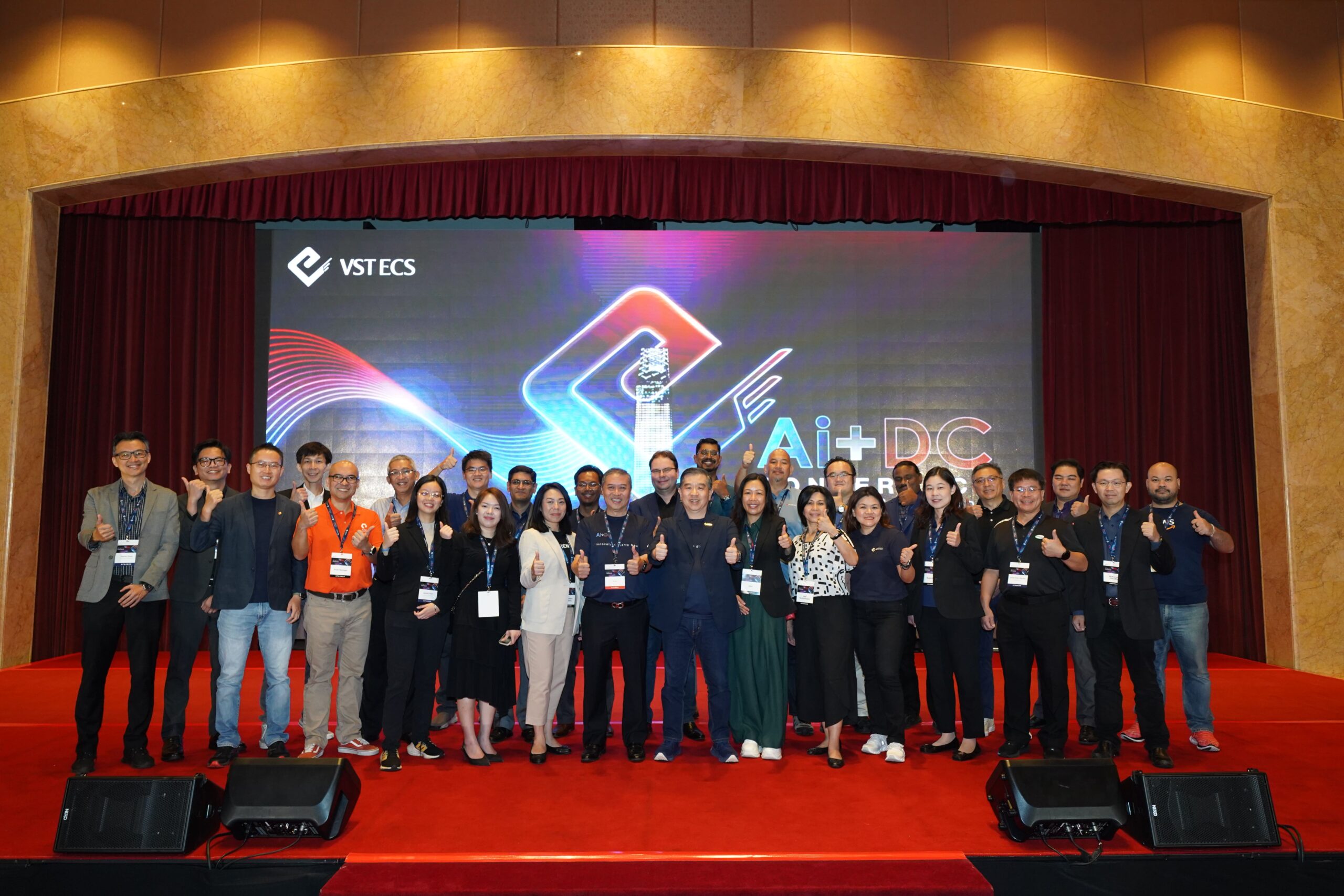
  • VSTECS Unites Technology Leaders at Malaysia’s Premier AI + DC Conference

    VSTECS Unites Technology Leaders at Malaysia’s Premier AI + DC Conference

    Kuala Lumpur, 10 October 2024 – VSTECS Berhad (“VSTECS”or the “Company”, 偉
    仕佳杰, Stock Code: 5162), Malaysia’s leading Information & Communications Technology
    (“ICT”) distributor, today hosted the nation’s largest convergence of Artificial Intelligence (“AI”)
    and Data Centre (“DC”) technology leaders. This landmark event gathered industry pioneers
    and thought leaders from global technology giants – such as Nvidia, AWS, Microsoft, VMware,
    AMD, Dell, HPE, Lenovo, IBM, Juniper, Cisco, Huawei, and Alibaba – alongside local
    independent software vendors (“ISVs”) specialising in AI solutions, to share cutting-edge
    advancements and opportunities in AI and DC solutions.

    In his keynote address, JH Soong, CEO of VSTECS, emphasized the Company’s commitment
    to driving digital innovation and enriching the technology ecosystem in Malaysia. He
    highlighted VSTECS’s role in bridging the gap between cutting-edge technology and local
    enterprises, contributing to the country’s digital transformation.

    “AI and DCs are the foundation of the digital revolution, and we are proud to be part of this
    transformation,” said Soong. “VSTECS is committed to fostering collaboration, sharing
    knowledge, and enabling businesses to fully leverage these technologies. Malaysia is not just
    prepared to participate in this global shift—we are poised to be a key player, emerging as a
    regional hub for data centres, the key infrastructure to support and process the massive
    amounts of data that fuel AI algorithms.”

    During the conference, VSTECS also announced its appointment as the authorised server
    partner for Supermicro in Malaysia, further expanding its portfolio of industry-leading solutions.
    “This partnership further enhances VSTECS’s position as the leading distributor in Malaysia’s
    ICT infrastructure space, allowing us to offer high-performance server solutions that meet the
    increasing demands of the market,” added Soong.

    In addition to featuring global tech leaders, numerous local AI ISVs were showcased at the
    conference. This initiative aims to enrich the ecosystem by encouraging local developers to
    market their AI solutions through VSTECS’s extensive channel network, reinforcing the
    Company’s commitment to supporting local talent and innovation. The VSTECS AI + DC
    Conference 2024 proved to be a resounding success, offering an invaluable platform for
    industry leaders to connect, exchange ideas, and form strategic collaborations.

  • TikTok Shop Summit Set to Unleash New Growth Opportunities for Malaysian MSMEs Through Strengthened #JomLokal Initiatives

    TikTok Shop Summit Set to Unleash New Growth Opportunities for Malaysian MSMEs Through Strengthened #JomLokal Initiatives

    KUALA LUMPUR, 24 SEPTEMBER 2024 — TikTok Shop Summit, an annual e-commerce
    seller empowerment event by the e-commerce platform, will return this year to redefine the
    future of online shopping in Malaysia. Local micro, small, and medium enterprises (MSMEs)

    are expected to be the the biggest beneficiary from the summit as TikTok Shop will heighten
    its #JomLokal support and share key insights ahead of the upcoming year-end sale season.

    At TikTok Shop Summit this year, homegrown brands will discover new growth opportunities
    to realise their full business potential via unique matchmaking sessions with top creators,
    such as Khairul Aming, Pinn Yang, Dear Carynn, Almiyaz, TulipPetals, and more. Local
    entrepreneurs will also learn from experts and top sellers during the knowledge-sharing
    sessions on Shoppertainment strategies

    to tap into evolving consumer behaviour, including best practices for content, community
    engagement, livestreaming, ads solutions, and store performance optimisation. New support
    will also be introduced to help local MSMEs scale and build an active customer base, in
    addition to generating revenue.

    Yang Berhormat Datuk Armizan bin Mohd Ali, Minister of Domestic Trade and Cost of Living,
    emphasised: "As part of KPDN’s strategic pillars, we are committed to driving the
    contribution of domestic trade to the gross national income, fostering an innovation-based
    economy, and creating a conducive market environment that empowers the rakyat to
    manage cost of living effectively. E-commerce has proven to be a key catalyst to achieve
    these aspirations, considering Malaysia’s digital economy now contributes around a quarter
    of our national GDP. Leading platforms like TikTok Shop are pivotal partners for the
    government in supporting and upskilling local MSMEs to facilitate inclusive participation from
    all levels of society. I encourage local entrepreneurs nationwide to take full advantage of the
    resources and opportunities accessible during this upcoming TikTok Shop Summit to
    transform digitally and build alternative sources of income, thus realising the vision of the
    MADANI Economy to improve Malaysians' quality of life.

    TikTok Malaysias Head of Public Policy, Anuar Fariz Fadzil, echoed the sentiment:
    "We are fully committed to supporting the government’s efforts through continuous public-
    private partnerships aimed at accelerating the growth of Malaysia’s digital economy. TikTok
    Shop's comprehensive ecosystem provides MSMEs with a distinct opportunity to not only
    sell online, but also empower them to scale. By equipping them with the tools and training
    needed to build communities through content, affiliate creators, and full-funnel solutions,
    TikTok Malaysia is uniquely positioned to help homegrown brands grow nationwide and even
    penetrate international markets. Together, let's pave the way for Malaysia to transform into
    an inclusive, digitally-enabled, technology-driven, and high-income nation.

    TikTok Shop Malaysias Director of Strategic Partnerships, Nur Azre Abdul Aziz,
    underscores that: Our #JomLokal initiative is at the heart of TikTok Shop’s ambition to
    empower Malaysian entrepreneurs. This year alone, we have trained over 100,000 local
    MSMEs to date through government partnerships. But, we're only getting started. At the
    upcoming TikTok Shop Summit, we are thrilled to unveil enhancements to our #JomLokal
    support and help MSMEs unleash new growth opportunities. Our upcoming creator-
    matchmaking and knowledge-sharing sessions are designed to provide practical insights
    and meaningful connections that can inspire homegrown brands. We hope this summit will
    cultivate the rise of more local champions like Khairul Aming, Amir Mohsin, Shiffa Enterprise,
    Empat BeranakHYGR  and others.

    About TikTok Shop
    TikTok Shop is a one-stop e-commerce solution for driving brand growth and sales directly
    on TikTok. With TikTok Shop, sellers can tap into a full-commerce experience with the
    capability to upload products and manage everything from shipping to fulfillment and point of
    purchase. Products are recommended to TikTok audiences through shoppable content
    formats such as in-feed short videos (embedded with product links), live shopping events, as
    well as a marketplace through the new Shop Tab.

  • Alibaba Cloud Unveils New AI Models and Revamped Infrastructure for AI Computing

    Alibaba Cloud Unveils New AI Models and Revamped Infrastructure for AI Computing

    Kuala Lumpur, Malaysia, September 19, 2024 – Alibaba Cloud, the digital technology and intelligence backbone of Alibaba Group, today announced it has released over 100 of its newly-launched large language models, Qwen 2.5, to the global open-source community. This significant contribution was revealed at the Apsara Conference, its annual flagship event.

    In addition, Alibaba Cloud has unveiled a revamped full-stack infrastructure designed to meet the growing demands for robust AI computing. This new infrastructure includes innovative cloud products and services that enhance computing, networking, and data center architecture, all aimed at supporting the thriving development and wide-range applications of AI models.

    “Alibaba Cloud is investing, with unprecedented intensity, in the research and development of AI technology and the building of its global infrastructure. We aim to establish an AI infrastructure of the future to serve our global customers and unlock their business potential,” said Eddie Wu, Chairman and Chief Executive Officer of Alibaba Cloud Intelligence.

    100 Open-sourced Models Unveiled

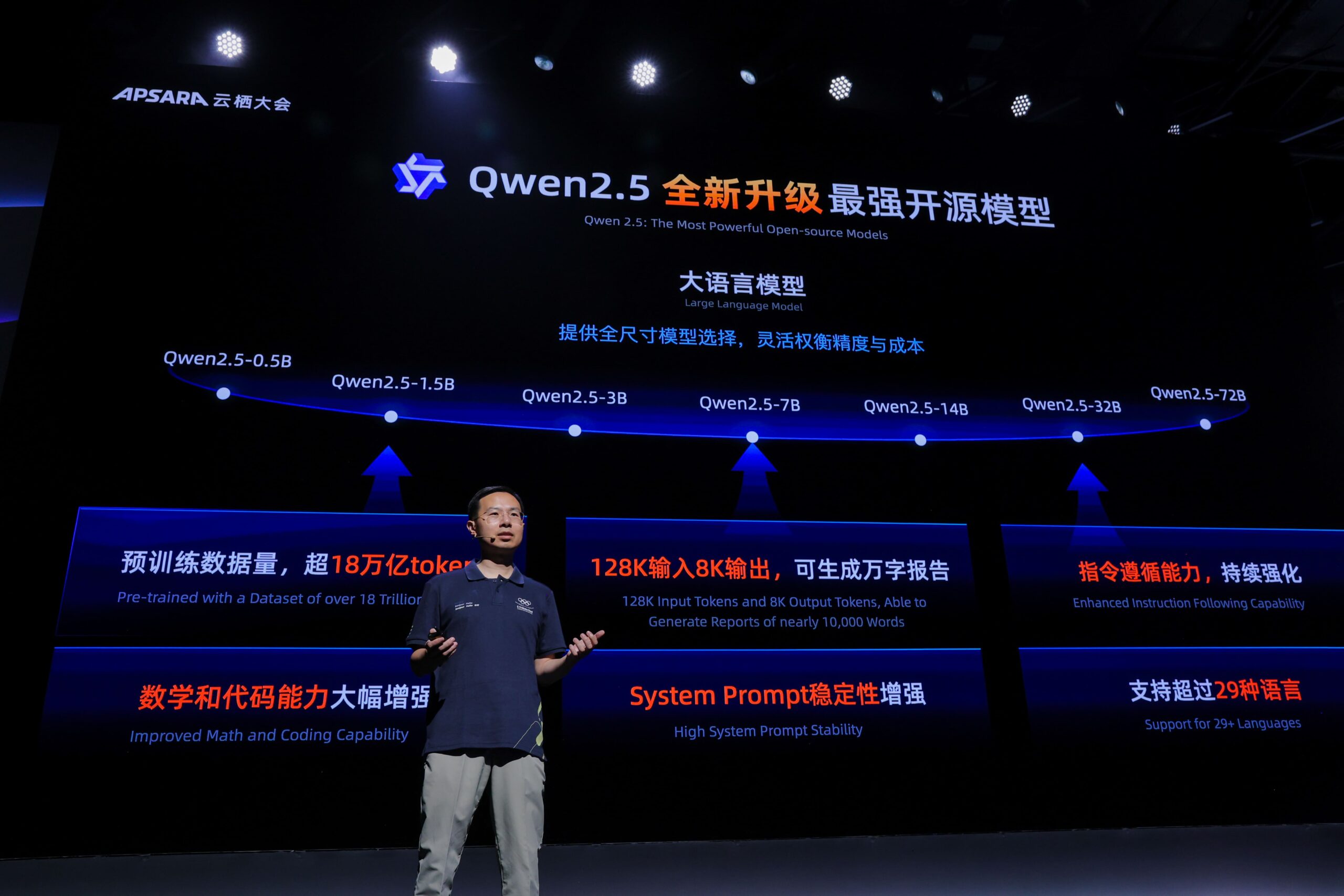
    The newly released open-source Qwen 2.5 models, ranging from 0.5 to 72 billion parameters in size, feature enhanced knowledge and stronger capabilities in math and coding and are able to support over 29 languages, catering to a wide array of AI applications both at the edge or in the cloud across various sectors from automobile, gaming to science research.

    The Qwen model series, Alibaba Cloud’s portfolio of proprietary large language models, has achieved remarkable traction since its debut in April 2023. To date, the Qwen models have surpassed 40 million downloads across platforms such as Hugging Face and ModelScope, an open-source community initiative by Alibaba. Furthermore, these models have inspired the creation of over 50,000 models on Hugging Face.

    The Qwen 2.5 release will see over 100 models being made open-source. This extensive range includes base models, instruct models, and quantized models of various precision levels and methods, spanning different modalities such as language, audio, and vision, along with specialized code and mathematical models.

    “Today marks a significant milestone as we launch our most expansive open-source initiative to date,” said Jingren Zhou, Chief Technology Officer of Alibaba Cloud Intelligence. “This initiative is set to empower developers and corporations of all sizes, enhancing their ability to leverage AI technologies and further stimulating the growth of the open-source community. We remain committed to investing in advanced AI infrastructure to foster the widespread adoption of generative AI technologies across different industries.”

    Alibaba Cloud also announced an upgrade to its proprietary flagship model Qwen-Max. The enhanced Qwen-Max model demonstrates performance on par with other state-of-the-art models in areas such as language comprehension and reasoning, math, and coding.
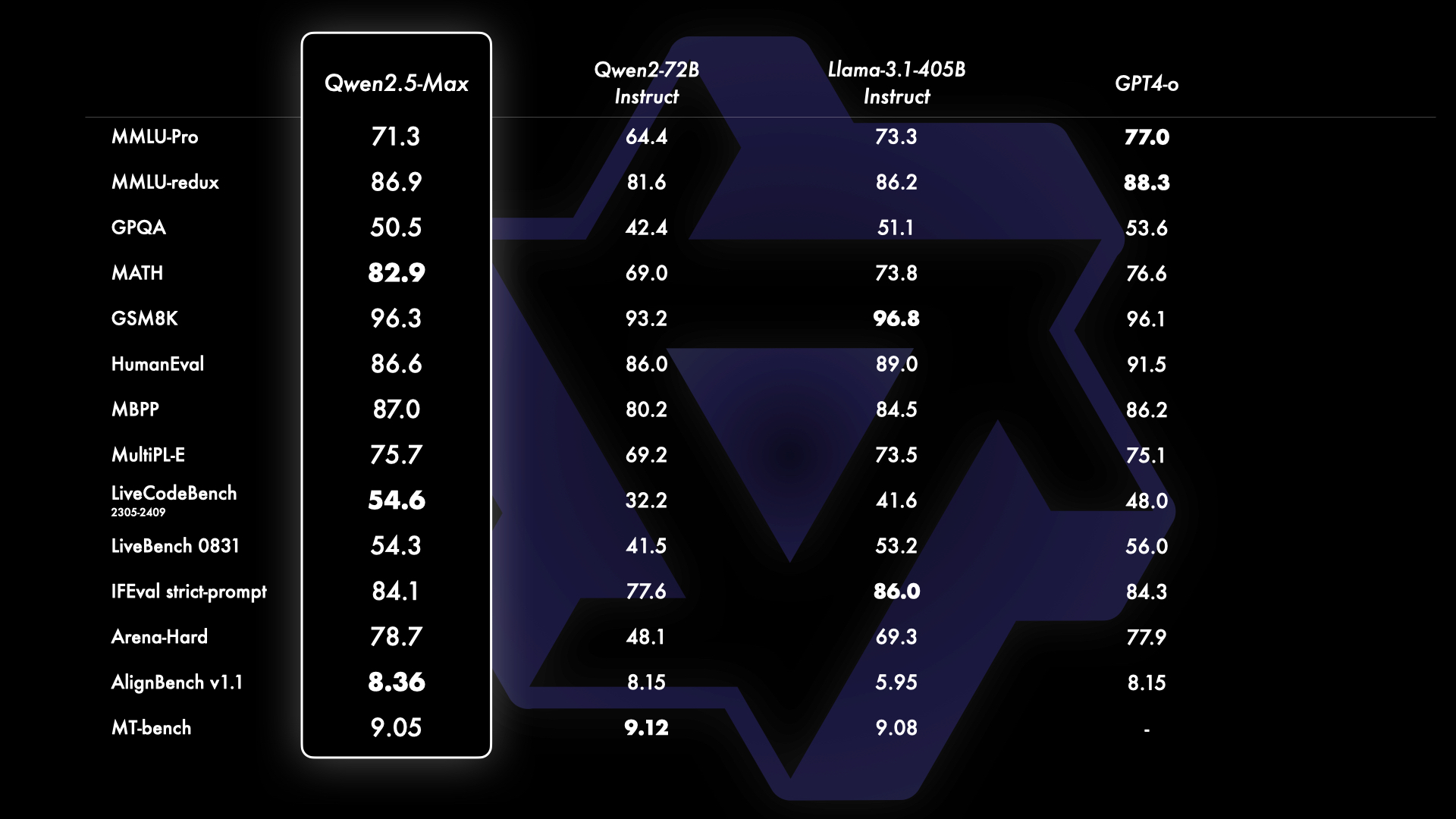
    Qwen2.5-Max demonstrates strong performance in various areas such as math and coding compared with other state-of-the-art models.

    Expanding the Frontier in Multimodal

    In addition to its extensive suite of large language models, Alibaba Cloud also unveiled a new text-to-video model as part of its image generator, Tongyi Wanxiang large model family. The new model is capable of generating high-quality videos in a wide variety of visual styles from realistic scenes to 3D animation. The model can generate videos based on Chinese and English text instruction and transform static images into dynamic videos. The model features advanced diffusion transformer (DiT) architecture to enhance video reconstruction quality.

    The cloud leader is also deploying a significant update to its vision language model with the introduction of Qwen2-VL, capable of comprehending videos lasting over 20 minutes and support video-based question-answering. Equipped with sophisticated reasoning and decision-making capabilities, Qwen2-VL is designed for integration into mobile phones, automobiles and robots, facilitating the automation of specific operations.

    For computer programming, Alibaba Cloud has also launched an AI Developer, a Qwen-powered AI assistant designed to support programmers automate tasks such as requirement analysis, code programming and identifying and fixing software bugs. This enables developers to concentrate more on essential duties and further their skills.

    A Full-Stack AI Infrastructure Upgrade

    The cloud pioneer has also announced a slew of innovative updates to its full-stack AI infrastructure covering green datacenter architecture, data management, model training and inferencing:

    Next-Gen Data Center Architecture for Surging AI Development: To meet the increasing and diverse demand for high-performance computing power driven by the global AI boom, Alibaba Cloud has revealed its next-generation data center architecture, CUBE DC 5.0. The new CUBE architecture increases energy and operational efficiency with a set of advanced and proprietary technologies such as wind-liquid hybrid cooling system, all-direct current power distribution architecture and smart management system and reduces deployment times by up to 50% compared to traditional data center builds through prefabricated modular designs.

    Open Lake Solution to Maximize Data Utility: As organizations face challenges in managing vast amounts of data amidst the growing demand for generative AI, Alibaba Cloud introduces Alibaba Cloud Open Lake which can seamlessly integrate big data engines into a unified solution, maximizing data utility especially for generative AI applications. By integrating workflows, performance optimization, and robust governance in a single platform, it achieves efficient resource usage through compute-storage separation, clear data governance, and significant cost and time savings.

    AI Scheduler with Integrated Model Training and Inference: Alibaba Cloud has launched PAI AI Scheduler with integrated model training and inference, a proprietary cloud-native scheduling engine designed to enhance computing resource management. Through utilizing intelligent integration of diverse computing resources, flexible resource scheduling, real-time tasks adjustments, and automatic fault recovery, it can achieve over 90% of effective compute utilization rate.

    DMS for Unified Management of Metadata: To help organizations efficiently manage their data and unleash values, Alibaba Cloud introduced DMS: OneMeta+OneOps, a platform that enables a unified management of over 40 types of data sources in database, data warehouse, and data lake across multiple cloud environments. The platform will boost data utilization rate by 10 times, significantly enhancing the efficiency of transforming data into valuable intelligence.

    More Powerful Elastic Compute Service: Alibaba Cloud also introduced the 9th Generation Enterprise Elastic Compute Service (ECS) instance during the conference. The latest generation of ECS instances has notable performance enhancements, including a 30% increase in search recommendation speed and a 17% improvement in the effectiveness of reading and writing Queries Per Second (QPS) when applying to database products compared to the previous generation.

    These updates are designed to provide more comprehensive support for customers and partners to maximize the benefits of the latest technology has to offer for building even more efficient, sustainable and inclusive AI applications.


    About Alibaba Cloud

    Established in 2009, Alibaba Cloud (www.alibabacloud.com) is the digital technology and intelligence backbone of Alibaba Group. It offers a complete suite of cloud services to customers worldwide, including elastic computing, database, storage, network virtualization services, large-scale computing, security, big data analytics, machine learning and artificial intelligence (AI) services. Alibaba has been named the leading IaaS provider in Asia Pacific by revenue in U.S. dollars since 2018, according to Gartner. It has also maintained its position as one of the world’s leading public cloud IaaS service providers since 2018, according to IDC.