Malaysians are getting more health conscious, as we can see by the mushrooming marathon events. Sales of running shoes, sports attires are also on the rise.
Smart Investor recently interviewed Sheyong Tan, Co-Founder of BiiB on the upcoming Malaysia Corporate Team Marathon, Malaysia’s Largest Intercompany Marathon Challenge. GetBiib is a startup supported by the Malaysian Research Accelerator for Technology and Innovation (MRANTI).
Sheyong Tan, Co-Founder of BiiB
Smart Investor: How do you plan to enlist 200 companies and 10,000 marathoners to achieve the 500,000,000 steps through this effort?
Sheyong Tan: We are creating 3 unique experiences through this event:
1. First ever inter-corporate challenge that is inclusive for both bigger corporations and SMEs. It doesn’t require a huge commitment like donation or fee to be part of it.
2. Not by performance but teamwork. Everyone in the team must do their part to help the company to reach the team goal. It is ok if you’re not the fittest, you can play your part too. In this challenge, you have competitors and you have a common target and a well designed format to motivate your team to work together and kindle the team spirit among your employees. Most importantly, the organiser will manage everything for you, the employer’s job is just to cheer for the team.
3. Attractive rewards focusing on fitness, health and well-being to improve your workplace wellness. Some companies are adding in more “private” rewards to motivate the team to participate. Prize money is usually important for performance based sporting events but for an event that is inclusive and one that promotes team participation – like ours, we want the participants to focus on what he or she can do as part of the team rather than making them to feel they have no chance to win any prizes because they would never the fittest person in the room.
SI: How are you adopting a similar strategy in the annual running league RUNLIGA Malaysia which drew in more than 20,000 participants in the past 2 editions?
ST: The GetBiiB app has been used to host the largest running league in Malaysia for 5 consecutive years.
Through this, we know the best practices, pain points and insights to create the best in class challenge for participants of this corporate challenge.
As such, for this event, we are working with companies who are aligned with our vision to create a healthier workplace and promote well-being among our workforce.
As such, we are working with healthy snack company Signature Market, healthcare company like Doc2us, wearable technology company COROS Malaysia, mental health company Thoughtfull, employment platform like Jobstreet, outdoor company PTT Outdoor, sports facility booking platform AFA and the newly listed technology company Agmo Berhad. The Department of Statistics (DOSM) is also a partner.
We have prepared some nice goodie bags for the participants and finishers which is nearly 20X more than the participation fee.
We are still open for sponsorship and collaboration with any businesses who believe in our vision.
SI: How is this is different from other corporate marathon programmes or apps that companies can choose to organise themselves?
ST: There are several key features.
Key feature 1: Interesting and fun team-based game format
Our platform has different game formats to focus on different outcomes of the challenge. It can be for health, for team building, for a cause, etc.
In a mass participation event like this, the main goal is to motivate participants to commit themselves and at the same time help their team to achieve the best possible result. As the organiser, we know that intrinsic rewards such as pushing through one’s own limit, making new friends, becoming a finisher or becoming one of the top 10 teams can create a more lasting impact.
More than an app, we create a healthy experience for the participants
Key feature 2: Professional support
Joining an online challenge can be challenging for many first timers. We provide professional support to our participants to help them to enjoy the challenge with their team.
The GetBiiB app has been designed to offer participants a hassle free way to create company wide engagement with minimum budget and minimum effort. The HR department or organising teams do not need to put in work extra hours to manage well-being programs for their employees as they can leverage what we have already designed.
SI: Why the need for something like this now? What are the risks / opportunities for companies who (do not) participate?
ST: In this, I would like to quote Bill Gates “The health of a society is ultimately determined by the health of its citizens.”
Overall, improving the health and well-being for employees will reduce the burden of healthcare and insurance on the company. The government recently announced a target of 10 million healthy Malaysians in the next 10 years – and there’s no better time than to start now!
Through this event, we would have just involved 1% of the population. We have a lot more work to do in making sure every organisation can host their very own sporting event easily with the lowest possible effort for highest possible impact.
We wanted to remove the barrier to host an event or a challenge so that big and small organisations can do it at least once a year and collectively we can impact 70% of the population in the next 10 years.
Running / walking is an easy and low cost activity – just need to contend with weather. This is easily an intergenerational activity which is inclusive and allows teams to celebrate their unique strengths. With more hybrid working models in play today, it is important to bring teams together
We also try to lower the barrier of entry to the lowest possible to make sure most people can be part of it. For the Malaysia Corporate Team Marathon, as long as you’re able to walk, you can be part of it without much issue.
All participants commit based on their ability.
SI: Insights on how bosses can engage their employees to participate in an activity like this. How can bosses onboard employees who may be demotivated to exercise ie “this is not my thing”?
ST: Be inclusive and make it accessible to all the employees:
By removing barriers to participation, companies can increase engagement and participation, which can lead to better outcomes and a greater impact.
By making inclusivity and accessibility a priority, we can create a more welcoming and supportive environment for all employees and ensures that all employees have the opportunity to participate and benefit from the initiative.
Find some internal champions
Inspire someone in the community to take the lead, regardless of position and job scopes. This person will be responsible to hype up the event to drive everyone to move forward as a team and he or she should be rewarded too to take up this vital role.
Bosses should be sporting enough to be part of the team too.
Rewards: Companies that offer rewards, incentives or prizes for their employees have a higher engagement and commitment level.
Early engagement: Start engaging with your teams now to prepare them for the challenge – some internal promotion is important.
Positioning: It is important not to position it as an exercise or a workout as it turns people off and relates it to tired, tough and difficult. It is best presented as a challenge for the whole team.
Foster Team spirit: Setting a collective goal and making it inclusive for everyone to be part of it. Believe me if you are surrounded with people who would like to be part of something bigger than themselves with extra steps everyday, you don’t feel like it is a workout.
In our experience, many first time participants realise they can actually walk more and they feel they are more energized by doing so without feeling tired if they do it with a friend. Example, walking for a longer distance with colleagues to get a good lunch vs I need to workout today.
Commitment from team members will be high on some days, but others will need to make up for down days – and the effect will be quite clear especially if 1 or 2 on the team misses their daily target
Offer Strong leadership: a team captain who can create hype and also maintain the team chemistry by cheering for the weaker team members (don’t let them feel left out or shameful for contributing less) is important. Motivation is also key. Those who are fit can share their experience and help the team to go further and maintain high team morale.
Nominate a good team manager – may not be the fastest or strongest, but holds the key to motivating, setting reasonable expectations, managing team morale, etc.
The last few days towards the closing really gets really exciting. Sometimes the ones who start out strongest may not last the longest. So this is also when you will observe how individuals on the team will step up to support each other when they have a common goal and desire to achieve it.
SI: What kinds of companies have been early adopters of such programmes? What are some trends or commonalities you see amongst these companies and their employees?
ST: Companies which have active people in the workplace and believe in health and wellness are often early adopters.
Most of our corporate clients came to us because of the running or sporting communities they have personally been involved in. We believe these people are the seeds to bring change to our country’s future for a more active, collaborative and inclusive society.
SI: Conversely, how can employees get the buy-in from their bosses or management to participate in an activity like this especially if it may involve time at work ie extended lunch hour or early dismissal?
ST: They can provide a number of factual, compelling reasons to management. For example:
Improved physical health: According to one study, regular exercise can lead to a 25-30% reduction in sick leave. Another study found that for every $1 invested in wellness programs, a company can save $3 in healthcare costs.
Enhanced mental well-being: One study found that regular physical activity can lead to a 20-30% reduction in symptoms of anxiety and depression. Another study found that workers who exercise regularly are 15% more productive than those who do not.
Greater team cohesion: A review of several studies found that team building activities, such as sports and fitness programs, can lead to improved communication, trust, and collaboration among team members.
Increased retention: According to one survey, 69% of workers said that they would prefer to work for a company that offers wellness programs. Another study found that companies with strong wellness programs have a 50% lower turnover rate.
Enhanced corporate image: A survey of consumers found that 76% of respondents were more likely to purchase products or services from a company that promotes employee wellness. Another study found that companies with strong wellness programs had a 30% higher brand value.
A food revolution is upon us! The increasing concern of food security, made even more dire with inflation and the recent pandemic, has increased the cost of food supply and production worldwide, even in Malaysia. Meanwhile, the production and consumption of food around the world over the years have been exhausting the earth’s natural resources.
Yet, there remains hope! This situation has prompted an unprecedented global pursuit to find alternative sources of food. This is where the food revolution comes into play – a revolution that will fundamentally change the way people perceive meat by transforming the meat industry into a plant-based one, thereby reducing the dependency on animal protein to create a better planet.
Here to drive this revolution and transform the food supply industry in Malaysia is The Vegetarian Butcher by Unilever – a plant-based meat brand now available to a variety of restaurants in Malaysia.
The introduction of the new brand locally is part of its Future Foods ambition, aimed at helping people transform towards wholesome living by consuming nutritious plant-based food alternatives that are sustainable and environmentally friendly. Unilever believes that delicious plant-based food is better for the health of the people and the planet. This belief forms the core of Unilever’s business strategy.
As one of the largest food manufacturers in the world, Unilever carries the responsibility of shaping the global food system. In line with their initiative, the company aims to reach €1 billion in sales from plant-based meat and dairy alternatives between 2025 and 2027, reduce food waste by half, thereby achieving zero waste to landfill, and ensure no ‘good food’ is destroyed to lower greenhouse gases.
Made by meat lovers for meat lovers
Guests had the opportunity to try a spread of finger foods that showcased the new plant-based meat products by The Vegetarian Butcher
While food-related consumer habits often come and go as fads, plant-based alternatives are here to stay – and grow, with more meat eaters turning towards a vegan or flexitarian diet. In 2021, Euromonitor International’s Voice of the Consumer survey revealed that 49.5% of consumers chose to follow a flexitarian or mostly plant-based diet. The survey indicated that about 37% of consumers opted for plant-based alternatives in a bid to feel healthier.
“Consumers are increasingly becoming conscious that plant-based food consumption is in fact a more sustainable and ethical option. However, in order to help fuel this transformation, it is crucial for those in the food industry including restaurant owners and manufacturers to make plant-based products more easily accessible to all,” said Vangie Hu, Marketing Director, Southeast Asia & South Asia at Unilever Food Solutions.
To spur the shift towards plant-based meat, The Vegetarian Butcher has invested behind technology and chefmanship expertise to offer a broad range of products for meat lovers who do not want to sacrifice flavour, texture and nutrition.
By working with chefs, product developers and food scientists who understand the specific qualities of meat, The Vegetarian Butcher is able to create an entirely new generation of plant-based meat alternatives that will appeal to all meat lovers – from vegans to carnivores.
Embark on a journey of plant-based culinary variety
Raheel Ahmad and Chef Eric Chua speaking to the audience comprising chefs and food service industry players on the latest trends and observations surrounding plant-based products during the event’s panel session
As the plant-based diet picks up in trend among meat lovers, more and more eateries are now offering meat-free options to their diners. Food operators can join the food revolution together with Unilever to drive positive social impact by providing healthier plant-based options.
With The Vegetarian Butcher, restaurants and chefs can meet diner’s demands for wellness and well-being while playing their part to be a force for good in the world by solving issues that have plagued the food industry for decades. Meanwhile, meat lovers need not sacrifice quality, taste and most importantly, nutrition, towards a more hearty, sustainable meal. This comes as part of Unilever’s commitment to consumers and food service operators alike. The Vegetarian Butcher in Malaysia allows chefs to deliver their best with delicious and easy-to-use products while marrying the mouth-watering flavours of the country’s many local cuisines together with the benefits of plant-based meat alternatives.
Now available in Malaysia to all restaurants, The Vegetarian Butcher offers a selection of delicious plant-based meat, including NoBeef Burger, NoChicken Burger, NoMeatballs, and NoMince, making it easy for restaurants to offer meat-free alternatives to all Malaysian diners. Indeed, a food revolution is upon us. Thanks to Unilever and The Vegetarian Butcher, sustainable dining is now a valid option, without sacrificing quality, nutrition and most importantly, taste!
In the world of ESG, corporate sustainability is gaining momentum. Corporate sustainability is an approach aiming to create long-term stakeholder value through the implementation of a business strategy that focuses on the ethical, social, environmental, cultural, and economic dimensions of doing business.
Smart Investor spoke to Professor Avvari V. Mohan, Deputy Head of the School of Business, Monash University Malaysia, to find out more about corporate sustainability trends in Malaysia. He is well versed in speaking on the realisation of sustainable development in Malaysia, the ecosystem required to do so, and the roles of different actors, with a focus on the private sector and education.
Corporate Sustainability Trends In Malaysia
Smart Investor: What is the state of Malaysia in terms of ESG?
Professor Avvari V. Mohan, Deputy Head of the School of Business, Monash University Malaysia
Avvari V. Mohan: The state of sustainability / ESG practices should be looked at from different perspectives – at the country level what is the institutional push from policy & regulatory support, adoption by a business organisation and how the consumers/society are practicing it?
At the country level, the National Sustainable Development Goals (SDG) Council, chaired by the Malaysian Prime Minister, sets the national agenda and milestones; and prepares reports for the United Nations (UN). Since 2009, Malaysia has put in place a progression of policies, frameworks and implementation mechanisms to move the country towards a low-carbon future like the National Green Technology Policy, The Renewable Energy Act, the Low Carbon City Framework and Assessment System (2011), the National Policy on Biological Diversity 2016-2025 and such.
On the technology front, the National Fourth Industrial Revolution (4IR) Policy has also made sustainability and ESG issues are the critical point, with clear outcomes to be achieved by 2030 to support the country’s commitment to the UN-SDGs. To resource the implementation of the SDGs, the Malaysian government, in addition to the initiatives in the 11th Malaysia Plan, has also mapped out the SDGs in the Twelfth Malaysia Plan (2021 to 2025) and the Thirteenth Malaysia Plan (2026 to 2030).
To drive sustainability / ESG adoption by the private sector the Securities Commission (SC) Malaysia laid the foundation of sustainable and responsible investment (SRI) in 2014 by introducing the SRI Sukuk Framework. More recently, SC also initiated the Sustainable and Responsible Investment (SRI) Roadmap and released the 2021 Malaysian Code on Corporate Governance (MCCG).
Bursa Malaysia took the lead in ASEAN by introducing a globally benchmarked ESG Index and the FTSE4Good Bursa Malaysia (F4GBM) Index as early as 2014. This index is to increase the profile and exposure of companies with leading ESG practices. These helped investors make ESG investments in Malaysian listed companies. Bursa Malaysia has several initiatives to support the private sector, including the Sustainability Road Map, BURSASUSTAIN, a one-stop knowledge centre.
There is also the JC3 platform, established in September 2019, to pursue collaborative actions for building climate resilience within the Malaysian financial sector. The JC3 is co-chaired by Bank Negara and SC Malaysia, with members including senior officials from Bursa Malaysia and the industry.
Bursa Malaysia launched the Bursa Carbon Exchange (BCX) in Dec 2022, a voluntary carbon market (VCM) and the world’s first shariah-compliant carbon exchange. This exchange enables companies and other entities to trade voluntary carbon credits from projects that remove, reduce or avoid greenhouse gas (GHG) emissions to help them meet their climate targets.
The country has been putting in place support in terms of financing sustainability. There is the RM1 billion Low Carbon Transition Facility by Bank Negara Malaysia (BNM) to support the adoption of sustainable and low carbon practices by small and medium enterprises. The banking sector has also started announcing ESG-linked financing.
SI: How is Malaysia standing in the region compared to other nations, as well as globally?
AVM: A recent publication (April 2022) published by PwC Malaysia and Capital Markets Malaysia (CMM) shows that Malaysian public listed companies have done comparatively well in Sustainability / ESG indicators in comparison to other ASEAN countries’ peers based on leading ESG indicators. The publications also find that there are 28 Malaysian companies listed in the MSCI All Country World Index (ACWI) ESG Leaders Index [1].
The Index consists of large and mid-cap companies across developed and emerging markets countries. Malaysian companies are also comparatively advanced in embracing global standards, with nine companies currently committed to emissions reduction targets grounded in climate science through the Science Based Targets initiative (SBTi).
Malaysia accounts for the second highest number among ASEAN peers for the MSCI ACWI ESG Leaders Index and the SBTi indicators. Despite these encouraging findings related to sustainability and ESG practices within the Malaysian private sector, the report also states that there are challenges in measuring and comparing ESG efforts across various organisations.
The recently launched (Sept 2022) Malaysia Businesses Sustainability Pulse Report (SPR) 2022 by UN Global Compact Network Malaysia & Brunei (UNGCMYB), based on a survey done among both large and small business organisations, reveals varying levels of readiness among companies to adopt ESG practices. Many companies indicated that they are considering but need more understanding regarding the various ESG practices.
This calls for bridging the knowledge gap through awareness-building and competency development programs. The study also indicated that ‘Social’ and ‘Governance’ related practices are relatively stronger than ‘Environment’ related practices.
Despite the growing trends of Malaysian stakeholders’ sustainability demands, 45% of Malaysian companies had still not allocated a budget for sustainability initiatives, with 33% claiming a lack of sustainable financing plans.
While the survey indicates varying levels of ESG adoption, some large companies in Malaysia have embarked on sustainability / ESG-related strategies, like Sarawak Energy, the first corporation in Malaysia to commit to the “Business Ambition for 1.5°Celsius” under United Nations Global Compact. It has committed to set a science-based emission reduction target across relevant scopes, in line with the Paris Agreement, to pursue efforts to limit the global temperature increase to 1.5°C above pre-industrial levels by 2030.
Another example is HSBC Amanah Malaysia, which completed a bespoke green trade financing facility for Guan Chong Cocoa Manufacturer Sdn Bhd. This ESG financing supports Guan Chong’s ambition to achieve 100% Traceable and sustainable cocoa by 2030 from its direct cocoa bean sourcing network. VINDA (hygiene products), with its Malaysian R&D and manufacturing base, is a good case study for sustainability commitments in terms of its products and social agendas.
Malaysia also has good small and medium-sized companies that have adopted ESG-oriented business strategies. Some examples of Malaysian small or medium enterprises to watch in the ESG space include the Green Factory (wood furniture), Edar (formerly BeliGas), BoomGrow (Agro tech), Next Green (sustainable paper mill), NettsGroup, The TLC (home cleaning), Hexafoods & Hexa IOT are all Malaysian homegrown companies that are great case studies for sustainability /ESG related practices.
The other important readiness for sustainability (ESG) is at the market, consumer, or individual level. Responsible members of society and consumers of products/services have a role in realising sustainable development through the lifestyles they lead. Malaysian consumers are beginning to show interest in demanding ‘green’ products or sustainability.
Many local enterprises are emerging in the fashion and food sectors that consumers support. Civic society and educational institutions (from primary school to universities) are influential in educating the general public/society, businesses, and individuals to help realise sustainable development goals. Civic society organisations can help businesses to understand ground-level issues, eg. environmental and ecological degradation.
In Malaysia, there are both global non-government organisations like the UNGCMYB, and local ones like the TRCRC, RIMBA, and many other NGOs playing a crucial role in such efforts. Finally, it’s heartening to see media organisations now playing an essential role in communicating about ‘responsible businesses.’
SI: Where is Malaysia heading with ESG? What does the future of ESG look like? Is Malaysia on the right track? If not, what can be done to ensure we can meet the goals related to sustainability?
AVM: At the national level, policies and frameworks are implemented to drive the adoption of sustainability / ESG practices in the private sector. Malaysia can be seen as early stages of its ESG journey compared to, say, Nordic and some northern EU counties but is already ahead in ASEAN (based on a study by the NUS and ASEAN CSR of Sustainability Reporting in ASEAN).
There are also vital sustainably finance-related initiatives, including the Bank Negara Climate Taxonomy and green financing products emerging fast. There is still some paucity regarding policy blocks for economically accessing technologies. There also seems to be some incongruence between policies at the federal level and those at the state level.
What is also needed is better literacy of sustainability, ESGs and the UN-SDGs at all levels of business organisations and even more among small business owners. There is a lot of confusion with the current ‘compliance’ approach. The Sustainability Pulse Report (by UNGCMYB – Sept 2022) also found that businesses still perceive sustainability / ESG adoption from only a ‘risk’ perspective and not as an opportunity for product/process innovation.
There is also room for exploring traditional knowledge (as done by companies like Tanamera Spa products or Frangipani resorts with their water treatment facility) for modern market needs.
SI: How successful is the ESG deployment at Monash Universiti Malaysia, and what are the challenges you/the organisation are facing regarding ESG?
Millennial group of young businesspeople Asia businessman and businesswoman celebrate giving five after dealing feeling happy and signing contract or agreement at meeting room in small modern office.
AVM: Monash University overall and the campus in Malaysia can be seen as being committed to driving sustainable change and empowering communities through its education, research, and leadership. Monash’s new strategic plan, Impact 2030 [2], defines priorities and actions for the University for the next decade, focusing on climate change, preserving geopolitical security, and fostering thriving communities as the challenges Impact 2030 will address.
They are also efforts to make the campus infrastructure more environmentally friendly, and the issues of social justice and inclusion are core to Monash University’s goals and values. The university has a diversity and inclusion framework to support campus social justice.
The School of Business, Monash University Malaysia, is an advanced signatory of the UN Principles of Responsible Management Education. This means that sustainability/ESG elements are embedded in a myriad of subjects taught, faculty conduct research in this realm, and there is also engagement with relevant stakeholders to promote sustainability / ESG in business and society.
A recent such high-level event was the ‘State of Sustainability in the Malaysia Private Sector,” a Roundtable organised collaboratively by the UN Global Compact Malaysia and Brunei and the School of Business Monash University Malaysia in Oct 2022. In this roundtable, representatives from private industry, government, and academia discussed the findings of the Malaysia Businesses Sustainability Pulse Report 2022, launched by UNGCMYB.
The challenges for Monash University Malaysia, as with any private institute of higher learning in Malaysia, are that businesses and other organisations need to understand that there is a wealth of knowledge related (be it research-related or training content) to environmental issues, ecology, community development, business, etc. in the university.
Through public-private academic collaborations, there can be mutual benefits through knowledge exchange, and that is what you should know about the corporate sustainability trends in Malaysia.
There are four money personas found across Malaysia according to new research from Wise, a global technology company building the best way to move money around the world, which uncovered that almost half of Malaysians polled are avid shoppers, or “Shopping Pros”, making up 49% of survey respondents, while budgeting geniuses “Financial Controllers” are 38%.
Hidden fee finders “Aunty Powers” are a smaller group at just 12% of Malaysians surveyed, followed up by value driven buyer “Kopitiam Uncles” representing a mere 1% of respondents.
While Shopping Pros and Financial Controllers clearly dominate, Wise’s Don’t Kena Con campaign, which looked to uncover how “wise” Malaysians are with their spending, has determined the majority of Malaysians still have much to learn from Aunty Powers and Kopitiam Uncles on understanding hidden fees and markups while undertaking shopping adventures.
In fact, over one-third (37%) of Malaysian respondents who shop online and spend overseas note they have no idea what the fees and exchange rates are until the transaction is complete. That said, Malaysians show off an impressive understanding of currency exchange, with 60% reporting they know what the mid-market rate is.
Cost-conscious behaviour among Malaysians spurring need for transparency
Aunty Powers and Kopitiam Uncles who seek truth and cost transparency may only make up a small part of the population now, but they’re showing off some influence in Malaysians looking to better understand currency conversions.
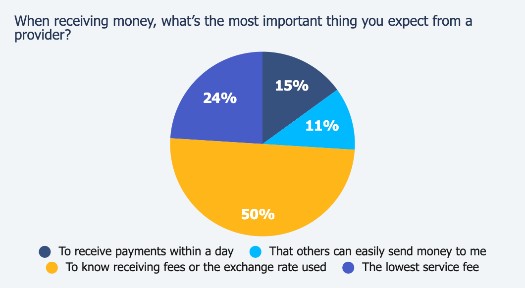
More than half (52%) of all Malaysian respondents have the impression that fintech platforms give the best rates when it comes to foreign exchange, although 38% chose money changers. This may be to their detriment, as half (50%) of Malaysians surveyed want to know if the remittance provider charges a receiving fee or the exchange rate used when receiving money from overseas.
Plus, close to a quarter of respondents (24%) said having the lowest service fee was the second most important thing they expect from a remittance provider.
Given the Aunty Power’s ability to sniff out the prawn behind the rock, many Malaysians still have a lot to learn when it comes to understanding hidden fees, and it’s clear that transparency in fees is something consumers are increasingly looking for.
An earlier independent research commissioned by Wise[1] found that Malaysians had spentRM 10.5 billion in total card fees[2] when shopping overseas from 2015 to 2020 and RM 1.5 billion[3] was paid in transaction fees and hidden exchange rate markups yearly when shopping overseas.
Malaysians are Shopping Pros first, but Financial Controllers keep a keen eye on spending
When it comes to shopping overseas, the Shopping Pros show off their strategic buying capabilities with strong preferences for digital payment methods. Malaysians surveyed choose to use their credit card (39%), followed by debit cards (22%), multi-currency cards (20%) and cash (20%).
Given how many Malaysians use their credit cards when shopping, it’s encouraging to see that two-thirds (69%) are aware when it comes to shopping in a foreign currency with their credit card, they pay more than just currency conversion fees.
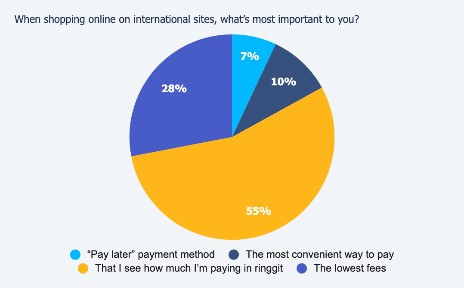
Still, the Financial Controllers are still looking to keep budgets intact and spending on track, as 28% of shoppers noted that whether they are paying the lowest fees is the most important factor of consideration when spending on an international site, and 55% want to know the total cost of the purchase in ringgit.
Importantly, to feel more secure when spending money overseas, Malaysian respondents say they want to know they are protected from fraud (40%), the total amount they have spent (37%), and the exact fees they have to pay (15%).
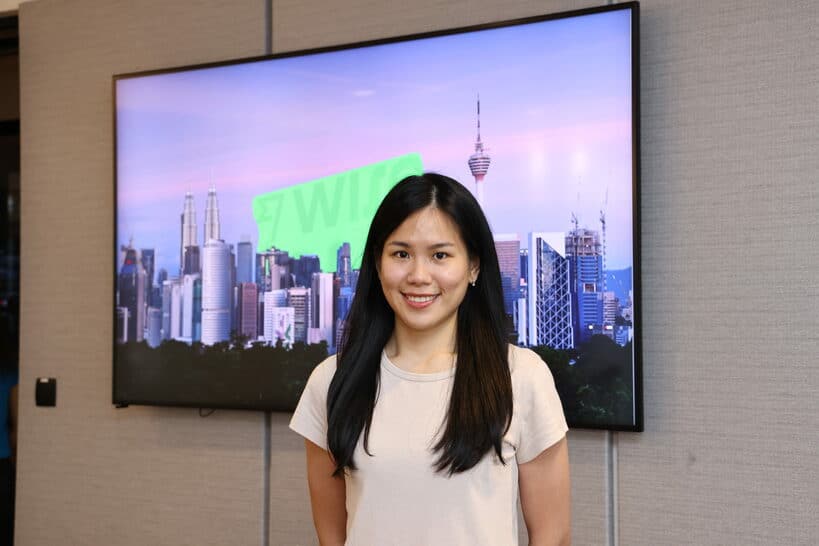
Lim Paik Wan, Malaysia Country Manager, Wise, said: “As international e-commerce and shopping continues to grow in popularity across the country, Malaysians need solutions that will help them navigate hidden fees and provide an easier way to make international purchases. We know from our research that transparency and convenience are paramount to Malaysian consumers, which is why we’re proud to offer our multi-currency account and card to anyone who needs a better solution for their spending needs. Malaysian shoppers should be able to put their hard earned money toward their purchases, not hidden fees, and we hope they take their financial savvy even further by using Wise.”
The Don’t Kena Con research was conducted from 15 December 2021 to 18 March 2022. It encompasses a sample size of 672 respondents who identify as Malaysian and non-Malaysian. Responses were collected online from the How Wise Are You About Money? Quiz.
About Wise
Wise is a global technology company, building the best way to move money around the world. With the Wise account people and businesses can hold more than 50 currencies, move money between countries and spend money abroad. Huge companies and banks use Wise technology too; an entirely new cross-border payments network that will one day power money without borders for everyone, everywhere. However you use the platform, Wise is on a mission to make your life easier and save you money.
Co-founded by Taavet Hinrikus and Kristo Käärmann, Wise launched in 2011 under its original name TransferWise. It is one of the world’s fastest growing, most profitable tech companies and is listed on the London Stock Exchange under the ticker, WISE.
13 million people and businesses use Wise, which processes over £8 billion in cross-border transactions every month, saving customers over £1 billion a year.
Appendix A: Four money personality types — which one are you?
Shopping Pro
Shopping is always the highlight of your travels abroad. You’re quick to spot the best buys, and even faster to snap them up. You know where the hottest sales are and what cards to swipe with to snag your new favourite buy. Your internet browser has bookmarks of all your favourite shopping sites, and you value speed above all.
Financial Controller
You keep a firm grip on the purse strings. Often the one in charge of money matters in your household, you ensure the bills are paid on time so that the wifi stays connected and Netflix keeps streaming. You’re always on the lookout for financial tools and services that offer convenience and efficiency while helping you to reduce costs.
Aunty Power
Your superpower is seeing through hidden agendas. If a deal sounds too good to be true, you poke and prod until you’re satisfied it’s legit. RM3.99 is RM4.00 lah! You actually read all the terms and conditions and ask as many questions as possible before committing.
Kopitiam Uncle
You look for quality, not Insta-worthy. You don’t go for designer coffee and prefer the humble kopi O from your regular kopitiam. You just want the simple and honest truth — what are you offering me and how much do I need to pay? Your life motto is less frills, more value.
[1] Independent research conducted by Capital Economics in June 2021 for the period between 2015-2020 on fees related to overseas card spend.
[2] These fees include card ownership and miscellaneous fees, transaction fees and exchange rate margin fees.
[3] Yearly average calculated from the total amount on card transaction fees and exchange rate margin fees only on overseas card spend from 2015 to 2020
Have you ever wondered about the health status of your vehicle? Sure, we put a lot of thought and emphasis when it comes to our health but what about our four wheels that strive to keep us safe on the road? Just like us, our vehicles also need to undergo regular health checks to ensure it is operating at optimum safety levels at all times.
With the upcoming school holidays and patriotic holidays in August and September – Merdeka Day and Malaysia Day, vehicle health checks are even more crucial before driving off on a road trip with the family or for ‘balik kampung’ journeys. This could potentially save you from being stranded on the highway due to a breakdown or accident, especially when the roads are going to be jam packed with thousands of holiday-goers.
To avoid such inconveniences, here are five basic vehicle health checks that should be done on a regular basis;
1. Always remember your tyres!
Checking the condition of your tyres should be made a habit, no matter a long or short drive, as a tyre in dire condition is a hazard to everyone on the road. Without healthy tyres, drivers may find themselves skidding on a slippery road or even find that the brakes do not grip as well. Aside from ensuring there’s a spare tyre in the boot and checking the tyre’s air pressure, drivers should also check the tyre alignment, thickness of the brake pads as well as the tyre tread.
2. Swish, swish goes the wiper blades
Most drivers would not even think twice about the condition of their wipers, as long as it is still swishing and wiping rain water away. However, the health of wiper blades deteriorates too, especially when parked daily under the humid and hot sun. Look out for these signs and know when to get them changed; the rubber blades are cracked or peeling off, the blades leave streaks on the windshield, there is squeaking and the wiper frame is bent or looks damaged.
3. Signal left or right, are your lights alright?
Every single light on the exterior of the car is equally important and it should be in good working condition at all times. However, it can get a bit tedious when it comes to maintaining the lights because chances are drivers would not even know if one is faulty. Whenever possible, perform a simple check at home to ensure all lights are in good condition. Aside from the headlights, rear lights, and fog lights, other more important lights to note are the indicator lights for switching lanes and brake lights to alert other drivers to slow down.
4. Battery problems?
One of the first signs that the car battery is about to die is when you have trouble getting the car to start. The moment when the car starts chugging or huffing as you turn the ignition on, drive to your mechanic to get those batteries checked and changed if necessary. It is also good to note the lifespan of your battery and make a note of it somewhere in the car or on your phones so that you can remember.
5. Ensure a cooler vehicle for a cooler drive
While checking engine oils, also check the coolant levels in the vehicle as it might trigger a fire when heat cannot escape from the engine bay due to overheating. In simpler words, the engine radiator and cooling systems are what prevents a vehicle from overheating. The most common causes are faulty radiator fan, cooling system leak and low coolant levels. Never remove a radiator cap when the engine is hot as hot liquid could squirt out and injure you. If unsure, it is best to seek professional help at the mechanic.
In addition to performing these routine checks to ensure your vehicle is operating at tip top shape, one other important measure to consider is getting a motor insurance. Similar to how health insurance may potentially save your life and looming medical costs, motor insurance can do the same. It is like a safety net to ensure your motor vehicle, along with the driver and passengers are well covered and insured.
At Liberty Insurance, Private Car EZY Plus – Comprehensive insurance is a holistic coverage plan to get as it doesn’t provide coverage only against own damage and third-party losses but also covers medical expenses, permanent disability or death in the event of an accident on the road and also covers child seat replacement if the seat is damaged due to accident, theft or flood.
In addition to this, you can also buy one of our Bundle add-ons that include coverage on PA for Passengers, Flood Allowance, 24-hours unlimited mileage towing, side mirror damage and others.
Liberty Insurance also offers an efficient claim process with its Liberty Own Damage (OD) Express Claim that is only applicable with its Private Car EZY Plus – Comprehensive plan. Claims can be made via any smart phone and the accident must be reported within 48 hours for express claims disbursement.
To find out more about Liberty Insurance’s Motor Insurance and its claims process, visit www.libertyinsurance.com.my.
During the pandemic, two words that we always heard or read are “lives and livelihoods”. These two words were often mentioned in press conferences by the government and how they are trying hard to balance between the two.
How does this relate to us an individual, lifestyle vs living your life?
Based on the Oxwhite Shopper Survey 2021 published on TheEdge on 28 June 21, about 58% of the participants shop for only things they need when they need them, 24% usually keep a wish list. While the remaining 12.5% buy on impulse and 5.5% always on the lookout for the latest product.
Let’s explore few ideas before you decide to place your next order.
Luxury VS Necessities
When we talk about luxury product, there are generally perception associated with a certain product. Be it a luxury watch or car, it is either a symbol of success, quality or excellent.
Does that mean you have to avoid buying luxury product altogether? No.
The more important question to ask yourself are as follows:
What is your current financial situation?
Have your cover your necessities?
Have you been putting aside your monthly savings for protection or medium to long term financial needs?
For instance, if you spend more than 1/3 of your expenditure to pay for your luxury items, then you may need to reconsider whether buying that item is necessary now or should you defer or consider another product.
Only when your financial situation allows, then you can re-evaluate whether to buy it in the future.
Buy Now Pay Later (BNPL) VS Pay In Full
Another new payment method that offers interest free payment is “Buy Now Pay Later” (BNPL). It is actually be good for consumers who are prudence in managing their spending, as they do not have to come up with a large sum of money at one go to purchase something and is also not subjected to any interest payment. But if you do not not pay the amount every month as per the due date, you tend to build up more debts and end up spending over your means.
It is the same with anything, for example a knife. If you use it appropriately in the kitchen, it is a great cooking tool. However, if it falls to the wrong hands with bad intentions, it can take away someone’s life.
Current VS Future
By having ads being shown to us many times when we are searching for something online, it builds our liking towards that product unknowingly. Not many of us are able to refrain from the temptation of getting the latest gadget and or any new product that is being launched in the market.
Some products are marketed via influencers or artists as their ambassadors, therefore this encourages their fans to buy the product because of their idols are associated with that particular product or brand. Our brain tends to focus more on the present rather than the delayed gratification that enable us to build more sustainable savings at a later age.
Choose The Lifestyle That You Can Afford
There is always a choice in how we live our life. Do we really buy certain items because we can afford it and want to give the best to our loved ones? Or do we only need certain product to perform certain task?
There is no right or wrong on how one lives their life. Therefore, we cannot have one rule for all circumstances. These are just some of the factors for you to consider before making your next purchase.
A great habit to inculcate is to manage your money and spend it prudently. It is about finding the right balance between lifestyle and living your life.
“Lifestyle is not an amount, it’s a practice.”
– Jim Rohn
About the Author
Goh Chee Yong is a Licensed Financial Planner under Capital Markets Services Representative License (CMSRL) and Bank Negara approved Financial Advisor Representative (FAR). Prior to becoming a financial advisor, he spent eight years working in Big 4 audit firms and multinational corporations. He can be contacted at cygoh@imaxfinancial.com.my
Approximately 95 per cent people suffer from type 2 diabetes, which is primarily obesity and lifestyle-related diabetes that can be prevented by diet modification and exercise. We normally diagnose diabetes when fasting blood sugar is more than 125 mg/dl, which is primarily affected by hours of fasting and quantity and quality of carbohydrate meal consumed during dinner the night before.
A postprandial blood sugar level of more than 200 mg/dl is diagnosed as diabetes. The majority of obese people, who are in between the 100-125 mg/dl fasting sugar ranges and/or 140-200 mg/dl post-lunch ranges are at risk of developing diabetes and termed as pre-diabetic. Diabetes can be reversed at pre-diabetic stage with lifestyle modification (diet and exercise).
Home remedies can help you tremendously in controlling blood sugars at pre-diabetic stage and preventing its progression to diabetes.
Now, we have a more reliable test called HbA1c (Glycated Haemoglobin), which shows an average of blood sugars over last 3 months which is not affected by hours of fasting and quality of food consumed. A normal person has a HbA1c value of 5.7% or less. A pre-diabetic person’s HbA1c value ranges between 5.7-6.4%; 6.5% and above is diagnosed as diabetes.
Type 2 diabetes is a progressive disease. When diabetes develops, approximately 60% of pancreatic beta cells are dead and eventually, over time, beta cells keep on diminishing and finally a stage arrives when exogenous insulin is necessary to control blood sugar.
5 Surprising Facts about Type 2 Diabetes
The highest relative rates of type 2 occur in the small island republic of Nauru in the South Pacific. More than 30 percent of the 10,000 residents are afflicted. The main reason here is obesity – more than 90% of all adults are obese.
Type 2 diabetes is more common in African Americans, Latinos, Native Americans, and Asian Americans/Pacific Islanders, as well as the aged population.
Both types of diabetes share the same name, but the treatment is very different: whereas type 1 patients are dependent on insulin injections, type 2 patients can lower their insulin resistance with exercise and healthier eating habit, plus medication.
The symptoms of type 2 diabetes can sometimes be so mild you don’t notice them. In fact, according to WebMD, about 8 million people who have it don’t know it.
While daily high-quality sleep is important, too much sleep might be just as risky, with Canadian researchers revealing the risk of type 2 diabetes doubles among people who sleep more than eight hours a night. The magic sleep number, research has suggested, is between 7-8 hours a night.
Natural home remedies are fruits and vegetables, which help lower blood sugar levels by reducing carbohydrate absorption from the gut, delaying gastric emptying or preserving and promoting beta cell function.
Also, in the case of already developed diabetes, these home remedies, along with medication, can help keep blood sugar under control. In diagnosed diabetes patients, it is not an alternative to medication but adjunct to medication.
Commonly-used natural home remedies for type 2 diabetes include fenugreek (methi), bitter gourd (karela), cinnamon (dalacini), Indian gooseberry (amla) and black plum (jamun). Other natural home remedies include guava, green tea, okra, aloe vera, cloves and peas.
All these home remedies are effective only if they are consumed daily for at least 2-3 months. In known diabetes patients who are already on insulin or certain medication, occasional or sudden use may induce hypoglycaemia. In such a case, it is advisable that you consult your diabetologist before starting such home remedies.
About the author
Dr Nikhil Prabu is a Mumbai-based Consulting Diabetologist. He did his post-graduate studies in Diebetology from College of Physicians & Surgeons of Mumbai at Kokilaben Dhirubhai Ambani Hospital & Research Centre Mumbai and completed his MBBS from R.C.S.M. Govt. Medical College, Kolhapur in 2008 (MUHS).
Most of us wish to retire early before we hit 60, which is the retirement age in Malaysia. But not the living legend, the Father of Modern Malaysia.
Born on 20 of December 1925, Tun Dr Mahathir Mohamad holds the record of being the oldest prime minister in the world when he was in office. This was when he became the prime minister of Malaysia once again on 10 of May 2018 when he was 92 years and 141 days old.
Smart Investor’s team with Tun Dr Mahathir Mohamad
Smart Investor recently had the honour and opportunity to speak with Dr Mahathir in person. He spoke to us about his philosophy around work and retirement, what he has invested in and how he keeps his mind sharp at his age.
Trust in Our Malaysian Doctors
A well-known story about Dr Mahathir during his first premier was that he put his faith in local Malaysian doctors for his heart surgery. The surgery was led by a local doctor, Dr Yahya Awang with his team in 1989.
Dr Yahya Awang with Tun Dr Mahathir – Photo : MHTC
He was then 64 and 82 years old when he went for his first and second major surgery, respectively.
“Basically, I’m quite healthy in the sense that I don’t have any debilitating diseases. What I had was a blockage in one of the heart arteries. The doctors are very good and I recovered. Once I recovered, I was free from the disease and I naturally came back to normal,” Dr Mahathir shared.
Today, at 96 years old, he is still standing strong and working tirelessly for the betterment of our country.
You need to live a moderate life. Don’t eat too much because that could affect your health. You should also have enough sleep and don’t get too excited over things.
Tun Dr Mahathir
Dr Mahathir added that one has to try and stay as calm as possible.
“Mainly, I don’t smoke, I don’t drink and I think this also contributes to my good health,” Dr Mahathir emphasized.
He said that he eats almost anything but keeps his portions small. He also shared that he practiced his mother’s advice when it comes to diets:
“When the food taste nice, stop eating.”
Until today, Dr Mahathir’s memory is still intact. What is his secret?
“If people ask me questions on matters that I am interested in, it is easy for me to remember what information I have. But if you ask me something that I know nothing about, of course, I cannot answer. The main thing is to always do a lot of reading, discuss frequently with others and debate with people,” he responded.
These are the tips he shared on keeping your mind active.
The mind is like the body. If you don’t use it, it begins to retrogress.
Tun Dr Mahathir
Stress and Heart Attacks
Recent findings by the Department of Statistics Malaysia (DOSM) found that ischemic heart disease remained the principal cause of death in Malaysia, contributing to 17% of 109,155 medically certified deaths in 2020. People tend to think that heart attacks will only occur to those in the retirement age, but surprisingly we can see that men and women are now having heart attacks as early as in their 20s.
He thought that people nowadays are very emotional and get easily upset over things. This will affect the part of the body where the heart beats more than normal which can put a strain on the heart.
“No smoking. That’s very important. Beyond that, don’t go through too much stress. Try not to get excited and angry much,” he advised.
Severe road congestion, the rise in living costs and many other factors seem to make everyone so stressed these days. What are the ways we can overcome stress?
“We have to accept that things cannot always be right. Today, we are facing a pandemic that prevents people from working and they cannot earn money to buy food. Of course, this worries them and it’s very difficult not to worry,” he said.
Health is Wealth
When the word retirement planning comes into mind, everyone is focused on building their wealth but not their health.
Health is very important. It’s no good having billions of Ringgits if you can’t even move or talk or behave normally. So, it’s better to have less money, but stay healthy. You enjoy life better.
Tun Dr Mahathir
Younger generations tend to get involved in the gig economy, freelancing and running their own business. In 2020, the DOSM shared that almost four million people are working in the gig economy in Malaysia. This includes ride-hailing, food deliveries and managing holiday rentals via an online platform or an application accessible through smartphones.
Unfortunately, most of those who are involved in this line of work did not contribute to the Employees Provident Fund (EPF). How can they start planning for their retirement?
“When you’re healthy and able to work, you can do whatever you like. But when you grow old, you need a pension and some income. If you have done well in your business and you have contributed to EPF or you have saved money, then when you’re old, you don’t have to worry too much about finance. But if you work where there is no pension and you don’t save and don’t contribute to EPF, when you grow old you’re going to have problems,” Dr Mahathir shared.
On the Rise of Inflation
Bank Negara Malaysia (BNM) projected the headline inflation of the country to be between 2.2% – 3.2% in 2022. This is not only happening to Malaysia but countries around the world which are affected due to the pandemic and Ukraine-Russia war.
How can Malaysians weather the storm?
“Interest rates are a cost to doing business. The higher it is, the more costly the business. This will result in production services being more costly and when it is more costly, of course it is not sellable,” he shared.
Dr Mahathir further explains that low interest rates will encourage people to invest and some of them would fail. But for the government, the lack of investments will reduce the creation of wealth.
“We need people to invest money in order to create wealth. Because when they make a profit, they are actually creating wealth, then they will pay taxes to the government,” he added.
Investment is one of the tools to hedge against inflation. However, the number of scams is now running into billions of Ringgits, despite there being a lot of legitimate investments. Why are people still falling for scams?
Dr Mahathir opined that people want to get rich quickly and they easily believe the pitch when people tell them that there are easier and faster ways to earn money.
“There is no such thing as easy money. Money comes through hard work and intelligent work. If you believe that putting up a few dollars somehow will multiply to a big amount of money you earn, then you’re going to be cheated,” he explained.
We then asked him what his investment portfolio was like.
I don’t own any shares except for 200 shares of Malayan Tobacco which I bought long ago before I became a minister. That’s all my investment.
Tun Dr Mahathir
Dr Mahathir further added that he also had to invest in PNB and took up some shares worth RM1,000 or RM2,000 because he had to show that investment matters and is good for the people during that time.
He clarified that he only depends on his salary which is quite a lot for him and more than what he needs.
“I used to be a private practitioner, earning maybe RM2,000 a month. But when I was a prime minister, I earned RM20,000 a month. I can’t spend the money. Besides, the government pays for my house, electricity, water supply, cars and even aeroplanes. I keep my money,” he shared.
As a smart investor, you can have all the money in the world. But all that money will mean nothing if you do not have good health to go along with it.
Going for regular medical check-ups goes a long way in maintaining your health. A medical condition or onset of disease can actually be slowed down or even averted if discovered on time, particularly if there are no symptoms.
Smart Investor talks to Dr Hilwani Kaharuddin of Ara Damansara Medical Centre on why timely intervention can make all the difference.
SI: What is the purpose of Health Screening?
Dr Hilwani Kaharuddin (Dr HK): Many diseases are “silent” meaning they have no symptoms or the symptoms are very vague. For example, you may have hypertension (high blood pressure) and not know it unless you specifically
check your blood pressure. Many people associate hypertension with headaches. However, hypertension only causes headaches when the blood pressure is severely high. You may have had hypertension for years without knowing and all the while the constant high pressure is damaging your kidneys, heart, eyes and so on.
Another example is diabetes. People with diabetes will usually feel thirsty all the time and pass urine more frequently than normal. However, these symptoms may come on so gradually that the person does not notice the change.
Many patients have told me, “I drink a lot of water, so of course I go to the toilet often”. It sounds logical, but these are actually symptoms of diabetes. So, unless you test for diabetes, you will not know.
The idea of health screening is to detect problems or diseases early, when treatment is usually easier with a higher success rate as complications of the disease have not yet arisen.
SI: What Tests does one need to Do and When?
Dr HK: It is never too early for a health screening. I have diagnosed diabetes, hypertension and cancer in young people. Talk to your health care provider. Based on your lifestyle, family history and symptoms (if any), he/she will advise the necessary screening tests. Of course there is basic general screening, but it is best to get one that is tailored to you.
For example, someone who has a family history of Thalassemia may need to be tested for that. A young 30-year-old female with no health concerns but is sexually active may be advised to have a PAP smear.
SI: In Malaysia, what is the prevalent disease? Is it Diabetes? Or High Blood Pressure? Or something else?
Dr HK: We are seeing an increasing number of non- communicable diseases in Malaysia. This is largely due to our stressful and unhealthy lifestyle. It is difficult to estimate prevalence of a disease because many are not reported. It is estimated that one in three Malaysians above 30 years has hypertension.
For diabetes, the figure is estimated to be one in 6.5. More importantly, according to the Global Burden of Disease Study, the top five diseases leading to disability or death are:
Top 5 Deadly Diseases
Coronary artery disease
Road traffic accident (which is not a disease but included here due to its significant impact)
Cerebrovascular disease (stroke)
Lower respiratory tract infection
Diabetes mellitus
We need to be cognizant of the fact that both coronary artery and cerebrovascular diseases share the same risk factors, that is hypertension, diabetes, dyslipidemia (high cholesterol), cigarette smoking and so on. These risk factors are easily picked up and addressed with health screening.
SI: Can you give an example where early detection has saved someone’s life?
Dr HK: I don’t know about saving lives, but we do frequently pick up things that need further evaluation. I was attending to a young man once who came in with a heart attack. He was unusually tall and had some physical features which suggest a certain genetic disorder.
He had never noticed he was any different from others because he has always looked like this since young. Then his brothers came in and I noticed they ALL had the same features. Therefore, we arranged for screening and all turned out to have this genetic disorder, which although there is no cure, there are things we can do to reduce their risk of complications.
There are also young people with abdominal pain who eventually turn out to have colon cancer, or an overweight young man who we diagnose with diabetes and so on.
SI: What is Pre-employment Health Screening and why is it important?
Dr HK: Pre-employment health screening is used to evaluate a person’s fitness to perform the duties he/she will be employed to do and that he/she will not put other colleagues at any health risk.
SI: What will happen if the employee fails the test? Does it mean he cannot be employed?
Dr HK: If a test is abnormal in the first instance, the potential employee may be advised for further tests or treatment. He/she may be asked to repeat the test at another time or after the completion of treatment. If he/she fails the test a second time, the duty of the doctor is to advice on the potential employee’s fitness to practise. It is up to the employer if they want to proceed to employ the candidate or consider a more suitable position.
SI: Are there risks involved in these tests? What are they?
Dr HK: Screening tests are generally low risk tests. They usually involve an interview with your healthcare practitioner, a physical examination, certain blood tests and may or may not include urine test, imaging such as chest X-ray or ultrasound and ECG.
SI: How long will the tests take generally?
Dr HK: A basic screening test usually does not last longer than half a day in centres where they have their own lab and imaging facilities such as ours in Ara Damansara.
SI: Are there certain things that one should not do/consume before a test?
Dr HK: For most health screenings, you are advised to fast for at least eight hours for your blood test and if you will be undergoing an abdominal ultrasound. However, you are advised to continue your usual prescription medications except diabetic medications despite fasting.
Dr Hilwani Kaharuddin is an Emergency Physician and the Head of Emergency Department at Ara Damansara Medical Centre, Ramsay Sime Darby Health Care.