Blog

  • Best Unit Trust In Malaysia

    Best Unit Trust In Malaysia

    With so many options when it comes to unit trust, it won’t be easy to come out with a list of the best unit trust in Malaysia. Nevertheless, here are some of the best unit trust in Malaysia.

    Source: FSMOne Recommended Unit Trusts Awards 2022/2023

    There were a total of 44 categories to emerge as the best unit trust in Malaysia. In total, there were 5 broad categories: Core Equity, Core Fixed Income, Balanced, Supplementary Portfolio and Private Retirement Scheme (PRS).

    The winner for Core Equity – Global category, goes to Manulife Global Thematic Fund by Manulife Investment Management (M) Berhad.

    The winner for Core Equity – Global (Islamic) is abrdn Islamic World Equity Fund by abrdn Islamic Malaysia Sdn Bhd.

    The winner for Core Equity – Global Emerging Markets is won by Eastspring Investments Global Emerging Markets Fund by Eastspring Investments Berhad.

    Two winners for Core Equity – Asia ex-Japan, one goes to Affin Hwang Select Asia Pacific (ex Japan) Dividend Fund by Affin Hwang Asset Management Berhad and the other goes to Principal Asia Pacific Dynamic Growth Fund by Principal Malaysia.

    We also have two winners for the Core Equity – Asia ex-Japan (Islamic) category, won by Affin Hwang Aiiman Asia (ex Japan) Growth Fund by Affin Hwang Asset Management Berhad and Principal Islamic Asia Pacific Dynamic Equity Fund by Principal Malaysia.

    For the Core Equity – Malaysia category, the two winners are Affin Hwang Equity Fund by Affin Hwang Asset Management Berhad and KAF Tactical Fund by KAF Investment Funds Berhad.

    Core Equity – Malaysia (Islamic) category have two winners as well: Affin Hwang Aiiman Growth Fund by Affin Hwang Asset Management Berhad and PMB Shariah Premier Fund by PMB Investment Berhad.

    Moving on to the Core Fixed Income, the Core Fixed Income – Malaysia category have two winners: KAF Bond Fund by KAF Investment Funds Berhad and Manulife Investment Bond Fund by Manulife Investment Management (M) Berhad.

    Core Fixed Income – Malaysia (Islamic) was won by AmanahRaya Syariah Trust Fund by AmanahRaya Investment Management Sdn Bhd.

    Next up we have the Balanced category, with Balanced – Global won by RHB Asset Management Sdn Bhd with its RHB Global Allocation Fund.

    Balanced – Asia ex-Japan winner is Principal Asia Pacific Dynamic Mixed Asset Fund by Principal Malaysia.

    Balanced – Malaysia category was won by Affin Hwang Select Balanced Fund by Affin Hwang Asset Management Berhad.

    Finally, Pheim Unit Trusts Berhad won the Balanced – Malaysia (Islamic) with its Dana Makmur Pheim.

    Under Supplementary Portfolio, the winner for Sub Regional Equity – ASEAN is Principal ASEAN Dynamic Fund by Principal Malaysia.

    Sub Regional Equity – ASEAN (Islamic) was won by ASEAN Equity Fund by Saturna Sdn Bhd.

    The Sub Regional Equity – Greater China was won by Principal Malaysia with its Principal Greater China Equity Fund.

    Sub Regional Equity – Greater China (Islamic) category winner is Eastspring Investments Dinasti Equity Fund by Eastspring Investments Berhad.

    Sub Regional Equity – Europe was won by Europe Equity Growth by AmFunds Management Berhad.

    Single Country Equity – US winner is Manulife Investment U.S. Equity Fund by Manulife Investment Management (M) Berhad.

    Single Country Equity – China category winner is RHB Asset Management Sdn Bhd with its RHB Big Cap China Enterprise Fund.

    Single Country Equity – Japan was won by Affin Hwang Asset Management Berhad with its Affin Hwang World Series – Japan Growth Fund.

    Single Country Equity – Singapore was won by Singapore Dividend Equity Fund by Nikko Asset Management Asia Limited.

    The Sector Equity – Asia ex-Japan Small to Medium Companies category winner is Affin Hwang Select Asia (ex Japan) Quantum Fund by Affin Hwang Asset Management Berhad.

    Sector Equity – Malaysia Small to Medium Companies winner is KAF Investment Funds Berhad with its KAF Vision Fund.

    Meanwhile Sector Equity – Malaysia Small to Medium Companies (Islamic) category was won by Kenanga Investors Berhad with its Kenanga Shariah Growth Opportunities Fund.

    Then we have Kenanga Investors Berhad winning the Sector Equity – Malaysia Focused with its Kenanga Growth Fund Series 2.

    The winner for Sector Equity – Global ESG (Water Theme) is Manulife Investment Management (M) Berhad with its Manulife Global Aqua Fund.

    Sector Equity – Global Healthcare category winner is Manulife Global Healthcare Fund by Manulife Investment Management (M) Berhad.

    TA Investment Management Berhad wins in the Sector Equity – Global Technology category with the TA Global Technology Fund.

    Maybank Asset Management Sdn Bhd wins in the Fixed Income – Global (Islamic) with its MAMG Global Income-I Fund.

    There were two winners in the Fixed Income – Asia ex-Japan category: Affin Hwang Asset Management Berhad with its Affin Hwang Select Bond Fund and AmFunds Management Berhad with its AmTactical Bond.

    Under the Fixed Income – Emerging Markets category, RHB Asset Management Sdn Bhd emerge victorious with the RHB Emerging Markets Bond Fund.

    Fixed Income – Malaysia (Short Duration) category saw that AmFunds Management Berhad wins with its AmIncome Plus.

    In the Fixed Income – Malaysia with Foreign Exposure category, AmFunds Management Berhad won it with the AmDynamic Bond.

    In the Private Retirement Scheme (PRS), there were a total of four categories. Affin Hwang Asset Management Berhad wins the Private Retirement Scheme – Moderate with its Affin Hwang PRS Moderate Fund.

    Next we have AIA Pension and Asset Management Sdn Bhd winning the Private Retirement Scheme – Growth category with AIA PAM – Growth Fund.

    The Private Retirement Scheme – Moderate (Islamic) category was Manulife Investment Management (M) Berhad picking it up with its Manulife Shariah PRS-Moderate Fund.

    Last but not least, Manulife Investment Management (M) Berhad wins the Private Retirement Scheme – Growth (Islamic) with its Manulife Shariah PRS-Growth Fund.

    How The Best Unit Trust Was Selected?

    The winners were chosen using a meticulous selection process that involves quantitative and qualitative criteria.

    Performance

    The most objective way to determine the quality of the fund manager is to assess the fund’s historical performance, a factor we weigh heavily in our fund selection exercise. For this, we consider both the magnitude of performance as well as the consistency of returns. In the case of new funds which feed into their overseas target funds with a longer track record, we may assess the target fund’s performance. We recommend funds which have at least a 3-year track record.

    Expense Ratio

    The expense ratio is what investors pay for the management of their fund on an annual basis. This charge is deducted from the value of the unit trust, and it takes into account all the operating expenses that a fund incurs, including its annual management fee, administration costs as well as trustee and custodian fees. Generally speaking, the lower the expense ratio, the better it is for you, because you are incurring less costs.

    Risk

    Instead of purely using standard deviation as the measure of risk, we believe that it is more appropriate to focus on how well a fund holds up during periods when the relevant markets saw substantial decline. As such, in our assessment of risk, we focus on the maximum decline of a fund over a given period, and also incorporate a measure of downside volatility, which tells us how volatile a fund is over periods when it is losing value.

    Bond Funds

    Equity funds usually track well-known stock market benchmarks, making it easier to compare funds invested in a similar region or country. Bond funds are less comparable, given their differentiated focus on credit, country selection, currency and duration. To reflect the emphasis on stability in fi xed income investments, we assign different weightings to the three quantitative parameters as shown below.

    Other Qualitative Criteria

    In addition to looking at the above-mentioned quantitative parameters, we also consider other qualitative factors in our analysis, including the fund manager’s consistency in their investment approach, the departure of key personnel as well as the stability of the management team. We also incorporate our outlook on the fi xed income market to assess the merits and disadvantages of a bond fund.

    As most of the funds which invest in other regions buy companies that predominantly have their assets and earning streams denominated in foreign currencies, there is currency risk involved. A gain in the MYR against another currency may reduce the returns of the funds exposed to other currencies, while a drop in the MYR against other currencies would increase the returns. Thus, qualitative analysis is a necessary step to distinguish
    funds with superior management ability from those which were beneficiaries of strong market or currency movements.

    As we take into account the qualitative factors, the highest scoring fund based on quantitative assessment in a particular category may not necessarily be the fund we recommend, although fund performance remains a significant factor.

    Weightage Of Quantitative Parameters

    Those are some of the best unit trust in Malaysia, but always do your own due diligence before buying any of it.

    Know your risk tolerance, time horizon and capital that you can invest in. A unit trust might be suitable for me, but might not necessarily be suitable for you or others.

  • Overcoming A RM1,700 Monthly Deficit To Buying Three Properties Worth RM1.1 Million

    Overcoming A RM1,700 Monthly Deficit To Buying Three Properties Worth RM1.1 Million

    A story of a typical Malaysian walking a path less travelled. Ian approach me to help resolve his debt problem.

    “Where do I go? Who can I turn to?”

    I met Ian (not his real name) when I went back to serve as a coach in one of the property investment courses I previously attended in 2013. He was introduced to me by a friend, who said that I needed to help him.

    During our first meeting at Old Town Coffee at Kuchai Lama over lunch, Ian shared with me that he was working as a Graphic Designer and has been working for more than 10 years but finds it very hard to have any savings. I see him as someone who has a dream, and ambition because he told me “People around me, my colleagues, friends and even relatives have already had their own families and even owned a few properties”.

    Yet he is still single and haven’t bought his first property nor started any investment.

    This was his situation:

    • Credit card debts, personal loans & Car Loan close to RM66,000
    • Negative cash flow of RM 1,767 (Outflow more than monthly salary)
    • Earns RM5000/month salary
    • His CCRIS has been badly affected, as he wasn’t prompt in paying his debts
    • Total commitments and loans of RM4,870/month (97% of his salary)

    To be honest, I thought he was in a worse-off situation. But after reviewing his situation, I share with him two strategies to resolve his situation. The first strategy is called Debt Consolidation Strategy, as he had multiple loans which needed to manage.

    The second strategy was to use the World’s Simplest Money Management System, which help him not to fall back into the same situation moving forward.

    Here is his situation before and after:

    Ian’s situation before applying the Debt Consolidation Strategy

    Ian’s situation after applying the Debt Consolidation Strategy

    ” If there’s the slightest chance for you to make a change in your life, don’t let go of it. Keep moving and going and you will find a way.”

    After applying the strategy, he managed to:

    • Reduce RM3,152/month after restructuring his debts from RM 4,870 to RM 1,718 per month
    • Ian could now save RM1,650/month as a result (Monthly salary having surplus)
    • Save on interest of 7-9% on average for his credit card debts & personal loans
    • Bought his first property for RM200K & subsequently another RM900K with his property investor team
    • Avoid being ‘EARMARKED’ by not going to AKPK else he wouldn’t be able to buy property. (I don’t have anything against AKPK, as they genuinely help people restructure their debts, but they need you to pay off your debts fully before taking on new debts)

    Ian Was A Mr Nice Guy To Others, But Is He Nice To Himself?

    So with these two financial strategies, Ian can free himself from his debt problem and pursue his dream of owning his own property. What I notice about Ian was, that he was an easy-going and easy to ‘trust people kind of guy’ which led him to this problematic situation.

    This same trait led him to trust his friend, his friend’s MLM products because he didn’t know how to say NO. And as a result, he doesn’t know how much he has spent over the years. After this experience, he is much more aware of his financial situation.

    How Do You Restructure Your Loans When Your CCRIS Is Not Great?

    “How do you qualify for more loans since Ian’s CCRIS is koyak?” If this is the same question you are wondering about, congratulations!

    It means two things. Firstly you are very aware of what you are reading and you probably have a high Financial IQ. Secondly, you could be in the same situation and you need help. Regardless, the solution to your problem is simple but not easy if you are not equipped with proper financial education.

    Learn how to overcome your debt situation by enrolling to Debt-Free Code here.

    *DISCLAIMER – All strategies listed here are not a recommendation or advice. The article is written purely for the purpose of education and journaling only. The content of this article is an expression of my opinion and should not be taken as professional advice. If you are seeking professional advice, please consult me personally. You should do your own research and/or seek expert advice when overcoming your debt circumstances.

    Source: J Advisory

  • Is Malaysia Property Still Worth To Invest In?

    Is Malaysia Property Still Worth To Invest In?

    Malaysia property might not be as hot as previous years, but the interest is still there. With the recent hike in interest rates and more hikes expected later this year, the instalment for properties will go up.

    This then begs the question as to whether Malaysia property is still a good investment?

    First of all, let’s look at some stats.

    Malaysian House Price Index

    Source: National Property Information Centre (NAPIC)

    House prices in Malaysia went up by almost 100% from 2010 to 2022 with the average price went up from RM220,154 to RM433,430.

    But there has been a steady decline in recent years caused by the pandemic where demand went down and supply going up. The concept of supply and demand has influenced Malaysia property price to a certain extent.

    Source: National Property Information Centre (NAPIC)

    The number of transactions were seen climbing up towards the end of last year before falling off a little bit.

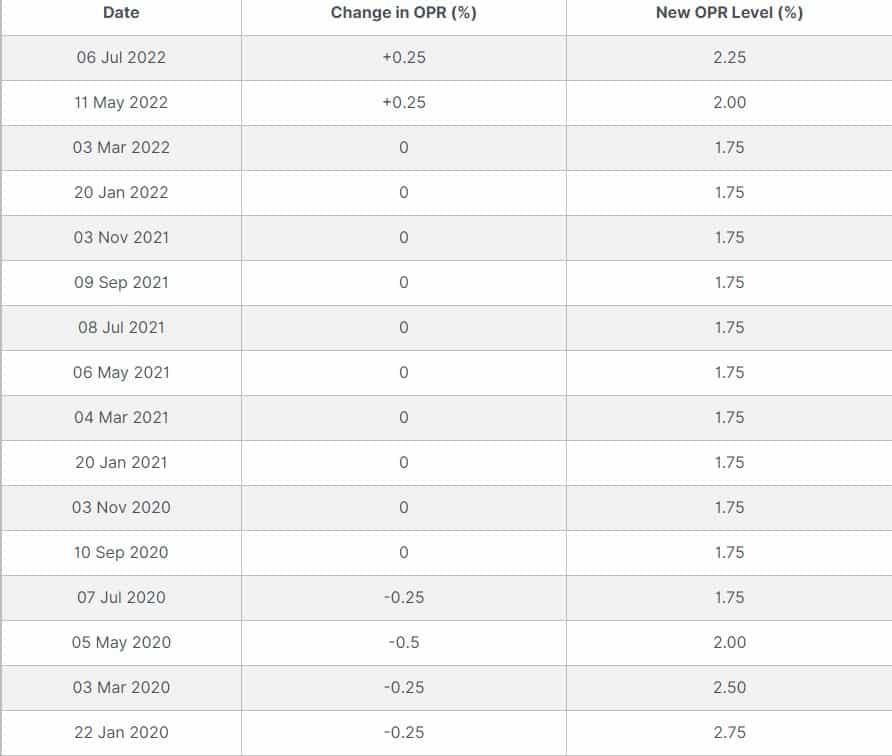
    OPR (Overnight Policy Rate) Is On The Rise

    Source: Bank Negara Malaysia

    Malaysia have been enjoying a very low interest rate since the pandemic begin. But with the recent OPR hike by Bank Negara Malaysia, this would have caused interest rate to rise, and subsequently the monthly instalment for houses to increase as well.

    Analysts are predicting a few more rounds of OPR increase to curb the rising inflation by end of this year, which could cause house purchases to cool off.

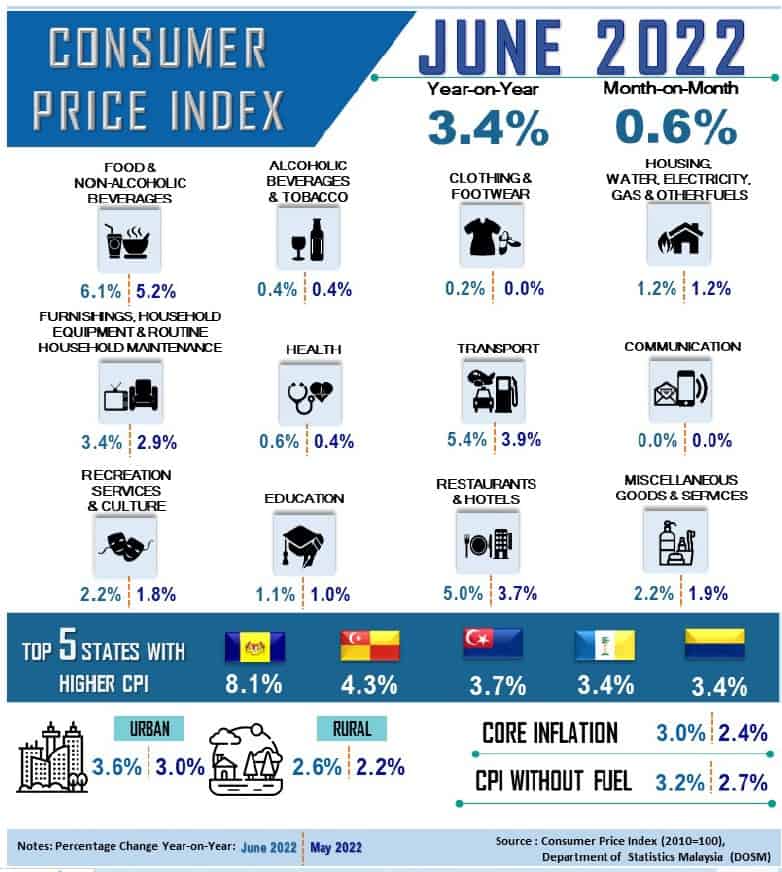
    The Rise Of Inflation

    Source: Department Of Statistics Malaysia

    Malaysia’s inflation increased 3.4%to 127.4 in June 2022 as against 123.2 in the same month of the preceding year. The Food index increased 6.1% and remained as the main contributor to the rise in the inflation during the month of June 2022. 

    When faced with high inflation, there will be lesser disposable income as everyone will be tightening their budget. Only those who have made the necessary preparation and is prioritizing in buying a house over other needs, will buy it.

    The others will then have to rent, so more renters are expected to be on the market.

    Ultimately only you can answer whether Malaysia property is worth investing in. Do you have the holding power? Are you able to find below market value and irresistible deals from the property market?

    As the saying goes, it is about ‘buying low and selling high’. Do your homework and remember the mantra, ‘location, location, location’.

    For more tips and tricks:

    Do you know how much is your Home Loan eligibility? Not sure how much you can borrow from the bank? 

    Get your TechRevo credit report + Home Loan Eligibility which includes:

    • Credit history up to the past 12 months [CCRIS] 
    • Bankruptcy, Legal Suits, Legal action from banks, SAA, and Trade Bureau (Section E)  
    • Max home loan eligibility calculation up to 12 mortgage favorable banks in Malaysia 
    • CCRIS + Credit report + Calculator 

    It only takes 5 minutes. Click here now to get 50% off -> https://www.smartinvestor.com.my/techrevo

  • What Causes Bursa Malaysia Prices To Go Up And Down?

    What Causes Bursa Malaysia Prices To Go Up And Down?

    We all know that investing in stocks are considered to be “high risk high return” investment. Which means that it can potentially make you profit a lot, and make you lose a lot as well. With that in mind, what causes the Bursa Malaysia prices to be volatile with the price going up and down almost all the time?

    It all boils down to the concept of supply and demand. When there are more buyers than sellers, naturally the price will go up. When there are more sellers than buyers, then naturally the price will go down.

    Bursa Malaysia Prices Always Go Up And Down

    To understand further, you need to do some Technical Analysis. Look at the charts and follow the trend.

    If a stock is in a solid uptrend, you stand to make good money for as long as the trend is still bullish. Well as long as there are new buyers and the volume is strong, then there’s still potential for it to go up.

    But in the end, what goes up must come down right?

    You can also look at stocks that are moving downtrend and wait for a strong reversal signal. As the seller weakens with no new sellers, then buyers will start to turn the tide. Once buyers are more than sellers, the price should stop from going down any further and the momentum will start to change upwards.

    Once it hits rock bottom, surely there’s no other way it can go other than up?

    More Millennials Coming Into The Stock Market

    Another reason why Bursa Malaysia prices are seeing a lot of volatility is due to many new investors come flooding the market – more specifically the youngsters. They typically trade stocks that are in the news, trending or based on thematic investment such as healthcare-related or oil-related stocks while also generally favoring small-cap and mid-cap stocks.

    With better access to information and technology, millennials are most prepared to participate in online share trading and investment. Investment gains and validation of good analysis attract young investors to develop money-managing skills and later, to begin their own investing journey. 

    Millennials are also deeply passionate about global issues that are important to them, and these include Environmental, Social and Governance (ESG), green technology and clean technology.

    Know The Risks Involved

    All investments carry with them some degree of risk, and these risks can range from inflation and interest rate changes to political uncertainties and economic trends. An investor must know his own risk tolerance, investment time horizon, and most importantly, his own financial goals. Holding investments for the long term, too, is advisable.

    Trading on stocks that have no fundamental earnings, poor cash flow and poor business model is a dangerous start. Penny stocks and cheaply priced warrants, too, can also turn into potential big losses as their price drops can be very sharp too.

    New investors should consider only value stocks and business models that are sustainable and should always make a practice of verifying if the information received is accurate. It is always good to diversify. Monitor the market and keep some cash ready for new opportunities that might arise.

    Make sure you read 4 Mistakes People Make In Stock Investing.

  • Clear Signs You Need To Refinance Your Home Mortgage Loan

    Clear Signs You Need To Refinance Your Home Mortgage Loan

    Home loans and home loan applications may be complicated, with changing interest rates, bank policies, and government regulations. These and other factors lead to constant movement in what a lender can and can’t accept. As a result, countless Australians reach a point where they must shift lenders to take advantage of a better mortgage available elsewhere.

    “Refinancing is tricky and time-consuming. Thus, it’s important to determine whether or not this choice is viable for you. Refinancing your mortgage is a big financial choice you’ll have to make. If done correctly, it can save you a fortune in the long haul.” says Shane Perry of Max funding—Australia’s leading second mortgage loan provider.

    If you’re trapped in the same situation, take a closer look at these five tell-tale indicators that you need to refinance your home mortgage loan:

    1.  Low Rates On Offer

    People refinance their mortgages for various factors, one of which is the availability of low-interest rates. Interest rates fluctuate a lot, so don’t pay too much attention to everyday fluctuations. When considering refinancing, it’s a good idea to keep an eye on the trends. Similarly, it’s critical to compare your current mortgage interest rate to the rates offered by mortgage lenders.

    2. Your House Is Now Worth More Money

    Secondly, you may choose to refinance if you’ve made significant renovations or improvements or the value of the homes in your neighbourhood has increased. Also, you may consider refinancing, particularly when you have a massive personal debt such as credit card, personal loans, etc., that you’d want to combine to payout or consolidate.

    However, note that if your house’s assessed value improves, your home equity will likely rise, giving you greater borrowing capacity.

    3. Your Income Or Credit Has Improved

    Your income and credit score mainly determine the interest rate on your mortgage.  Refinancing can help you get a better rate if you’ve earned additional income or your credit score increased after closing your mortgage.

    4. Your Arm (Adjustable Rate Mortgage) And Mortgage Interest Rates Are Increasing

    The combination of an ARM with rising mortgage interest rates is not a desirable match since it may substantially raise the total cost of your house when rates increase. If you find yourself in this situation, you should consider refinancing and switching to a fixed-rate mortgage.

    5. You Want To Remodel Your Home

    People who consider refinancing and get cash out often do so for various reasons. Home equity loans let homeowners borrow money against the value of their houses. You can spend the money to remodel your property and make changes to enhance its long-term worth.

    Is Home Mortgage Refinancing Right For You?

    Mortgage refinancing, along with many other financial transactions, is complicated and needs careful analysis by homeowners seriously considering it. Consider the signs listed above and connect with a trustworthy lender to get immediate answers to your questions. This will assist you in deciding whether or not refinancing is suitable for you.

  • Ushering In The New Era Of Divorce

    Ushering In The New Era Of Divorce

    An innovative legal tech developed by lawyers is changing the divorce landscape in Malaysia while simultaneously supporting the Malaysian government’s goal of increasing the adaptation and use of technology across as many industries as possible.

    Launched early this July, Klik Divorce  is the country’s first digital divorce platform and was created with the primary intent to ease the pathway of those seeking legal avenues for the dissolution of marriage.

    It was developed by lawyers Dato Fion Wong and Dato Chris Chin, both strong advocates for the adoption of technology in Malaysia’s legal industry and also the founders of Malaysia’s First A.I. legal assistant Askaila, that was launched last year.

    Dato Chris Chin and Dato Fion Wong

    Through Klik Divorce users can build divorce terms i.e. spouse maintenance, child custody, maintenance and visitation rights as well as the division of matrimonial assets. With just one click, divorce papers are immediately generated for printing and signing. If the divorcing couple mutually agree on the terms, the whole process takes only about 5 minutes. The law firm can then review the papers and prepare them for filing in the Court the next working day.

    Meanwhile, those who encounter challenges or need help to facilitate settlement agreements, can engage the service of a lawyer; online or in-person.

    That, in a nutshell, is divorce in the digital age.

    Klik Divorce offers two key positives amidst the pains of divorce proceedings, namely time and cost savings.

    “Many people are unable to afford the legal fees for divorce, especially with today’s increasing costs of living. Additionally it can take anywhere between 6-12 months for terms to be discussed back and forth before the divorce is filed in court,” says Dato Fion.

    “Adopting legal technology to execute simple manual tasks can save a lot of time and reduce costs which make legal fees affordable to more people. This also enables lawyers to dedicate more time and effort to develop the law.”

    Klik Divorce is especially beneficial for uncontested divorce cases. Not only does it make the process faster and smoother, it also leads to quicker settlements, freeing up judiciary workload and court time. As the first legal online service in Malaysia, it also sets an example and paves the way for more digitalised services.

    Dato Fion said that despite receiving encouraging and positive feedback from users, there are unfortunately lawyers who continue to openly resist the adoption of this platform.

    “Nevertheless, despite the obstacles that lie ahead, we are determined to drive Malaysia’s legal industry towards adopting technology to offer efficiency and value  to the public. We are also confident that in the near future Malaysia’s legal industry can catch up and compete with other nations whose legal technologies are already ahead of us,” added Dato Chris.

  • What Blockchain Taught Me About Parenting and Economic Wisdom

    What Blockchain Taught Me About Parenting and Economic Wisdom

    Imagine the following situation: you bring your twins out for a family dinner in a pizza restaurant. When the pizza arrived, the restaurant didn’t split it. Now, you must split it between your children. The trillion-dollar question is how will you do it?

    For this exercise, I present two plausible options:

    1. You, as the parent, will split for the children.

    2. You let the children decide for themselves.

    For the first scenario, being their parent, you may rightfully believe that you are bestowed the right (by social convention for example) to decide for them. Here’s the catch though, what happens if you have good intentions but are inept with logic (e.g. You can’t tell that a large pizza with 8 slices and a large pizza with 12 slices is the same)?

    Or your method might not yield consistently good results due to some long held tradition (e.g. tiger parenting). When your children grow up, they might constantly defer to a “higher” authority while imposing their will rightly or wrongly on their children.

    For the second scenario, you are laissez-faire, trusting your children to behave well towards each other. Let’s say one of your twins is epigenetically different from the other. So one has a growth spurt much earlier than another. Making a twin stronger, but also hungrier. Then, it is easy for one to bully the other to get a larger slice. This creates an unhealthy dynamic between the twins. They might grow up hating each other, causing a rift in the family.

    The first method sounds tyrannical; while the second can turn into anarchy. Both scenarios presented above are not meant to predict what would happen definitively. It aims to jolt us into being more conscious of our methods, because they might lead to undesirable outcomes.

    Okay, what would be a better approach? How can we split the pizza between the children in such a way where a parent’s authority is not needed in the future; at the same time, the children will learn imaginative ways to treat each other as fair as possible?

    The Fairness Solution

    There is a little game to play when splitting the pizza, it is called the “split and choose”. To play the game, one of the twins is given the right to split the pizza into two slices, then the other gets to choose the first slice. For example, twin A splits the pizza into two, then twin B gets to choose which slice to take first. If twin A cheats by splitting the pizza unevenly, twin B will naturally choose the larger slice first.

    In such a game, only the cheater loses. You don’t have to use your parental authority, nor enforce any fairness values. The self-evident fairness of this game creates a naturally desirable result.

    Such games are at the centre of blockchain protocol development. This “split and choose” game is commonly referred to as proposer-builder separation in the blockchain development. The proposer (i.e. pizza splitter) will propose a block for the blockchain, while the builder (i.e,. pizza chooser) will build the block for the blockchain. The exact details of how this works is too lengthy and technical to cover in this article.

    Nonetheless, you can find out more in the Ethereum discussion forum here. The point of all these is to keep a balance of power by avoiding centralization, so that it is worthwhile to build meaningful use cases on it. Without which, the participant with the most power can corrupt the entire system.

    Not Everyone Thinks Fair

    For the astute reader, you might be able to detect a flaw in this game. This game only works if participants are willing to play the game. What if in the future, without parental supervision, the stronger twin decides not to play this game and resorts to brute strength for a larger share?

    This abuse of power happens a lot in the real world and in blockchain. However, let’s not forget that with continuous abuse, the weaker twin can also decide not to play the game and find other players willing to follow the fairer rule. One example in the real world is the migration of a minority group from one country to another.

    In blockchain speak however, we call it “forking”. Forking is a situation where a group of participants decide to create another version of a blockchain with a new set of rules. Participants fork a blockchain because of competing beliefs in a better system given the risks and rewards like utility, cost, convenience, scalability, security, transparency, decentralization etc.

    The trillion dollar question here is that given more time, which of these factors will society value most?

    Shade They will Never Sit

    Blockchain protocol developers are building blockchain infrastructure primitives (i.e. rules, standards, systems, protocols etc) that they believe will naturally and legitimately benefit society. Good blockchain protocols are developed through pragmatic first principles approaches using science, maths, cryptography, extensive human behavioural research etc.

    We are already reaping the rewards from these efforts. In 2014, disadvantaged groups torn by war and oppression found refuge and financial freedom through Bitcoin. In 2021, we see the rise of NFTs (through ERC-721 standard) which allows artists from all around the world to have another sustainable means of income.

    People living in countries with hyperinflation and foreign exchange controls use stablecoins (created through the ERC-20 standard) to keep the value of their hard earned incomes from eroding. And of course, some of us trade or invest in cryptocurrencies as a new class of asset.

    In the coming years, there will be a lot more innovation in this field (so don’t sleep on it). Only with hindsight, will we realise how these imaginative games played a pivotal role in solving difficult social, political and economic problems. With it, we may no longer require blind obedience to an authority, nor giving up to zero-sum anarchy.

    Future generations will reap the rewards of these old men who planted trees whose shade they shall never sit. Isn’t that what any good parent would want for their children?

    About the Author

    Chia Sheng Yeong is the partner of Celebrus Advisory, a bespoke and industry-acclaimed consulting firm for digital assets with focus on regulatory compliance, technical delivery, and project outcomes.

  • How to Handle Family Disputes About Ageing Parents?

    How to Handle Family Disputes About Ageing Parents?

    Providing care for an ageing parent or loved one can be a rewarding experience. However, it is also considered one of the most physically, mentally and emotionally stressful times an adult child will face. This isn’t only because of the intense demands placed on the caregiver, but also due to potential conflict amongst family members. The conflict isn’t just contained to who does what for mom or dad.

    Among other things, financial matters are one of the main sources of conflict among family caregivers. This is especially so when siblings or other family members disagree on how funds are spent or if one or more caregivers are helping to support mom or dad.

    Who is in charge of the money decisions?  Should mom/dad stop handling the investments? Is the ageing parent showing signs of cognitive impairment? How bad is the condition and how do you know? Is one family member doing all the hard work?

    Pertinent questions such as these can sneak up on adult children and the ageing parent, wreaking havoc on family relationships if distinct instructions aren’t discussed and answers are left vague. Combined with the fact that the caregiver may have to reduce working hours or leave their job entirely to care for a parent, resentment and animosity may surface.

    If the situation isn’t handled delicately, the result can be explosive. Ugly accusations fly back and forth, someone brings in a lawyer and the conflict escalates.

    Hence, before things get to this stage, you should have conversations with all parties in the family about how the ageing parent wants their needs met during their later years – especially if you’re getting along in years and still able to make decisions. Doing so would make the caregiving experience easier in later years and bring the family closer.

    While you probably won’t cover all the important topics in one conversation, it’s a good idea to have a plan.  At the very least, make sure you cover these two areas: understand your parents’ financial situation and lay the groundwork for advance care planning.

    Talking with Parents About Finances

    ageing

    Money is often a sensitive issue. Many people don’t talk about their finances, even with family members. As such, communicating with your parents about the subject may feel awkward or like you’re overstepping a boundary in their personal lives. Some are concern that they might upset their parents by talking about issues related to their possible incapacity or death.

    On the other hand, many adult children aren’t aware about their parents’ financial situation. They don’t know if their parents have sufficient money to live on, what type of care or medical treatment they want, whether they can financially afford the care they want, or even what they would want in the event they became incapacitated and unable to make decisions for themselves.

    However, it is never too early to have such discussions with them. Most families don’t talk about these important matters until a major crisis occurs. Then more often than not, important health and financial decisions are made under great emotional distress and without the time to find and consider all the alternatives.

    The Benefits of Advance Care Planning

    ageing

    You may have heard of Advance Care Planning (also known as ACP) and pays to have one. Planning how you receive care ahead of time is important for not only your peace of mind – for yourself, as well as your parents – it also helps to save money and lead you to more options and better choices in healthcare, housing and legal matters. It also helps to reduce family conflicts and ease the emotional distress.

    The sooner your family begin planning for care, the more options they have available. For example, while many Malaysians would choose to stay in their homes for as long as possible – aided by home care services when needed – when given enough time to plan and compare different senior living

    arrangements, your parents might choose to move into a retirement community as they develop more definitively in Malaysia.

    Some may prefer it over other options because they can stay in the neighbourhood near like-minded peers and be assured of the availability of continuum care. The facilities may also offer amenities -such as a fitness centre or transportation to planned social activities and shopping sites – that are important to your parents.

    However, if your parents’ condition requires a high level of care, it could eliminate this alternative altogether. In such circumstances, such as limited mobility, they might have to choose another, less desirable living arrangement. Planning for these situations is especially pertinent as decisions are more difficult if your parents haven’t considered the options.

    While talking about these issues – while they’re still healthy with time to plan and make choices – is discomforting, bear in mind that its much less so than the distress caused by failure to plan and decision-making during a crisis. You may not be successful in getting your parents to do some advance care planning, but the risks of not even having that conversation can be devastating.

    Conclusion – The Pros and Cons

    Unlike writing a will, penning down an Advance Care Plan document is not legally binding in Malaysia. The parties involved – such as doctors, healthcare professionals, and family members – are under no obligation to follow the directives listed and can ignore them in favour of options or treatments that healthcare professionals may deem more suitable.

    However, having an ACP document that clarifies your preferences in a confusing and emotionally charged situation would give you or your parents a higher probability of receiving the care you wish for.

    It also helps reduce ‘silence or violence’ responses – where family members either clam up when they get angry and shut off communication, or they get aggressive, accusatory and begin shouting and name calling, which also shuts off communication – and restore peace within the family.

    If you need help with making an Advance Care Plan, do your research to find a trained and experienced Care Administrator.  You can seek their services from Managedcare’s one stop care platform or visit www.managedcare.com.my for more information.

    In the aftermath of medical emergencies, the matters is that a family pulls through the experience together for the better. 

    Aged Care Group (ACG) is an organisation engaged in the business of elevating and providing aged care services in Malaysia. It is involved in a range of products and services for the elderly including developing and managing day care centres, retirement villages, and aged care facilities.  

    ACG advocates innovation and transformation in ageing by offering continuum care as a premium choice for enriched living. We operate in an ecosystem that provides integrated care services & products through meaningful partnerships. A detailed profile of who we are can be obtained at www.agedcare.com.my.

  • More Money, More Happiness?

    More Money, More Happiness?

    I used to be a full-time musician a decade ago. I produced and arranged music from a home studio consisting of pre-owned musical gears that I bought mostly through eBay.  I was always doing research and upgrading my audio gears from time to time, ranging from keyboards, microphones, sound modules, audio interface, software, and so on. Even though music is a niche and relatively small market, there is an array of equipment available and I was spoiled by vast choices.

    Costly Sound Bites

    For example, just in the area of vocal microphones under Neumann Solution DS, you could find one in the price range of RM100 up to RM50k. I would first buy an entry level microphone, then upgrade it after making more money from music gigs. My first studio mic was about RM800. Then I had one that was RM2,000 a few years later. What was the difference? Of course, it was more expensive but records better quality audio. It captured a wider spectrum of sounds. However, when I played the recording clips from these two different mics to friends, most of them could not hear the difference. The improvement was very subtle.

    How about those mics that cost more than RM10k? It is true that the sound quality will be better. But what is the degree of improvement? If we put it in a graph representation, let’s say the entry-level mic gives a quality of 80%, while the RM2k-mic will boost it to 90%, and the RM10k-mic will produce 95%. However, when you consider the premium you need to pay, is it worth it? There is no right or wrong answer. It depends on your needs and affordability.

    money

    What Price for Prestige?

    Another case we can examine is the passenger cars segment. For a sedan, there are many models from many different brands. Consider the most affordable Perodua Bezza, the value-for-money Honda Civic, the flashy BMW 5-series, or even the stately Bentley Flying Spur. All these vehicles have the same functions like air-conditioning, air-bags, automatic transmission and so on but the most important aspect is that you will get to your destination with any of these cars.

    Now let’s consider the pricing. The cost of a brand new     

    BMW 5 Series 530i M Sport (CKD) (2017) (RM388,888) gives you a budget to buy up to 10 Perodua Bezza. I understand that the feeling and satisfaction you will get out of driving a BMW would be much better than a Perodua. But you will have to pay 10 times the price. Will you be getting 10 times the satisfaction?

    Again, it depends on your level of wealth. You can own a luxury car when you are rich and can make good economic use of the money. From these examples, you can see that there is a premium to be paid for all the good stuff. Most of the time, you might need to fork out two times, five times or even 10 times more just to enjoy maybe a 20% boost of value.

    Consider the Value of your Money

    I would urge you to contemplate whenever you think of paying an extra premium for better stuff or better service. If it is for something within your budget, then go ahead. But when affordability becomes an issue, do consider the value of your money. There are always alternatives that can meet your budget and give you the best stretch for your money.

    There was a research done about the level of wealth versus happiness. Psychologist Daniel Kahneman during his TED talk in 2010 made a note of studies that showed that earning less than US$60,000 per annum can have a significant effect on your happiness levels. It means when you are earning less than RM240k a year, every ringgit will contribute proportionately to your happiness. However, when it comes to making more than US$60,000 per annum, there is entirely no correlation between more income and more happiness.

    money
    Source: The Hedonic Treadmill

    More wealth does not convert to a prorated happiness boost. Similarly, when it comes to material consumption, most of the time, even when you pay 10 times the premium, it does not translate to 10 times better quality.

    If this is true, how do you gain more happiness? The simple act of getting a new car, a bigger house, or a more exotic vacation is no longer the solution. I suggest that you look into areas that give you real satisfaction. Would it be a more meaningful job? Is it the freedom to make life choices? Or perhaps it would be spending more quality time with family? Know yourself.

    About the author

    KCLau is a financial educator, having published seven books including the current bestseller Money Smart, and co-created a dozen online financial courses. He gives away his popular Money Tips e-book volumes free at his website: https://KCLau.com

  • Home Remedies to Stop Type 2 Diabetes

    Home Remedies to Stop Type 2 Diabetes

    Approximately 95 per cent people suffer from type 2 diabetes, which is primarily obesity and lifestyle-related diabetes that can be prevented by diet modification and exercise. We normally diagnose diabetes when fasting blood sugar is more than 125 mg/dl, which is primarily affected by hours of fasting and quantity and quality of carbohydrate meal consumed during dinner the night before.

    A postprandial blood sugar level of more than 200 mg/dl is diagnosed as diabetes. The majority of obese people, who are in between the 100-125 mg/dl fasting sugar ranges and/or 140-200 mg/dl post-lunch ranges are at risk of developing diabetes and termed as pre-diabetic. Diabetes can be reversed at pre-diabetic stage with lifestyle modification (diet and exercise).

    Home remedies can help you tremendously in controlling blood sugars at pre-diabetic stage and preventing its progression to diabetes.

    Now, we have a more reliable test called HbA1c (Glycated Haemoglobin), which shows an average of blood sugars over last 3 months which is not affected by hours of fasting and quality of food consumed. A normal person has a HbA1c value of 5.7% or less. A pre-diabetic person’s HbA1c value ranges between 5.7-6.4%; 6.5% and above is diagnosed as diabetes.

    diabetes

    Type 2 diabetes is a progressive disease. When diabetes develops, approximately 60% of pancreatic beta cells are dead and eventually, over time, beta cells keep on diminishing and finally a stage arrives when exogenous insulin is necessary to control blood sugar.

    5 Surprising Facts about Type 2 Diabetes

    • The highest relative rates of type 2 occur in the small island republic of Nauru in the South Pacific. More than 30 percent of the 10,000 residents are afflicted. The main reason here is obesity – more than 90% of all adults are obese.
    • Type 2 diabetes is more common in African Americans, Latinos, Native Americans, and Asian Americans/Pacific Islanders, as well as the aged population.
    • Both types of diabetes share the same name, but the treatment is very different: whereas type 1 patients are dependent on insulin injections, type 2 patients can lower their insulin resistance with exercise and healthier eating habit, plus medication.
    • The symptoms of type 2 diabetes can sometimes be so mild you don’t notice them. In fact, according to WebMD, about 8 million people who have it don’t know it.
    • While daily high-quality sleep is important, too much sleep might be just as risky, with Canadian researchers revealing the risk of type 2 diabetes doubles among people who sleep more than eight hours a night. The magic sleep number, research has suggested, is between 7-8 hours a night.

    Natural home remedies are fruits and vegetables, which help lower blood sugar levels by reducing carbohydrate absorption from the gut, delaying gastric emptying or preserving and promoting beta cell function.

    Also, in the case of already developed diabetes, these home remedies, along with medication, can help keep blood sugar under control. In diagnosed diabetes patients, it is not an alternative to medication but adjunct to medication.

    Commonly-used natural home remedies for type 2 diabetes include fenugreek (methi), bitter gourd (karela), cinnamon (dalacini), Indian gooseberry (amla) and black plum (jamun). Other natural home remedies include guava, green tea, okra, aloe vera, cloves and peas.

    All these home remedies are effective only if they are consumed daily for at least 2-3 months. In known diabetes patients who are already on insulin or certain medication, occasional or sudden use may induce hypoglycaemia. In such a case, it is advisable that you consult your diabetologist before starting such home remedies.

    About the author

    Dr Nikhil Prabu is a Mumbai-based Consulting Diabetologist. He did his post-graduate studies in Diebetology from College of Physicians & Surgeons of Mumbai at Kokilaben Dhirubhai Ambani Hospital & Research Centre Mumbai and completed his MBBS from R.C.S.M. Govt. Medical College, Kolhapur in 2008 (MUHS).