
Tourism is tricky business—do it right and a nation prospers beyond dollars and cents. Get it wrong? The costs can run far deeper than lost revenue. But a balancing act amidst geopolitical tensions and global economic instability, that’s an ongoing challenge that requires agile, resilient and forward-thinking industry leaders.In conjunction with the 29th Rainforest World Music Festival (RWMF) 2026, we speak to Dr Sharzede Datu Haji Salleh Askor, CEO of Sarawak Tourism Board (STB) on surviving industry shake-ups and gatekeeping the sanctity of the tourism sector.
Built to Last

RWMF: Celebrating nature and music for more than two decades
RWMF 2026 took place right in the thick of things—amid escalating conflict in the Middle East, energy disruptions, the closure of the Strait of Hormuz and trade tensions between economic powerhouses. While a music festival may seem small in comparison to these global upheavals, think again: no industry, however big or small, is immune to their impact.
As a result of global turmoil, the numbers for one of Sarawak’s foremost music events has dipped but Sharzede, who has served as STB’s CEO since 2018, remains proud that the turnout maintained above the 20,000 music-goers mark at 22,000 attendees.
Unpredictable flight routings and soaring ticket prices had long-haul festival goers rethinking their plans. As TSI combs the streets speaking to industry players, sighs echo from the dampening situation with last minute hotel room cancellations and low traffic at the popular tourists Kuching Waterfront area.
For STB, strategies had to switch at the last minute by ramping up the regional and domestic market. Experience continues to be the selling point of RWMF 2026 and attention to details made a difference. This year’s shuttle service and crowd traffic has improved with queues being much more effectively managed. “Maybe because the numbers are lower, but the shuttle service is totally free whether people purchased tickets or not. So, they can come to the venue for the many surrounding activities. Even if they didn’t want to pay for the experience, we want them to feel the vibes of a major event as such,” Sharzede explained.
Despite another successful edition, Sharzede acknowledges room for improvement, particularly in digital integration. “We did a test in one area to use NFC and hope to apply the technology on a bigger scale for the next event. This is to address challenges faced especially by foreign visitors, so sorting out the digital aspect of coming to our event seamlessly is important,” she notes.
Capacity constraints also remain a challenge as RWMF strives for world-class standards. STB is exploring plans for a new stage and further development of Sarawak Cultural Village ahead of next year’s special edition—RWMF’s 30th edition in 2027. As global tensions continue to cast uncertainty over the tourism landscape, STB is aiming for another exceptional milestone.
Sharzede emphasises legacy for this special edition, which she defines as showing importance on RWMF’s evolution throughout the years while amplifying the revolution-inspired event for the next generation, the custodians of RWMF.
While its focus remains at curating exceptional acts, Sharzede also opines that branching out is just as important as fringe events. RWMF has evolved beyond music into a purposeful, family-friendly cultural experience that celebrates Sarawak’s food, artisans, indigenous heritage and cross-cultural connections while creating meaningful engagement with local communities. The festival is positioned as a catalyst for returning visitors, with its strength lies in preserving authenticity while broadening its reach and impact.
On meeting RWMF 2027’s targets, Sharzede enthuses a bold but possible statement, “If we bring the best acts from each country, which is my aim and ultimate goal, I am confident we can exceed our highest so far which was 26,000 in 2024.”
Sarawak’s Tourism Strategy
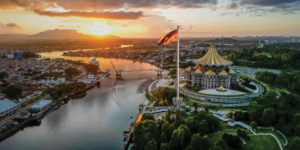
Sarawak is staying focused and agile to strengthen its tourism industry amid changing global conditions.
Looking at the bigger picture, Sharzede articulates that Sarawak’s tourism strategy must remain flexible, amidst persisting wars by adapting to shifting demand and market conditions. While regional and cross-border tourism remain strong, long-haul markets continue to be important. Drawing on lessons from the COVID-19 pandemic, Sarawak is prepared to pivot towards domestic and nearby markets through targeted campaigns while maintaining its appeal to international visitors.
As for Sarawak’s position in nationwide tourism, Sharzede states that Sarawak is very much aligned with Tourism Malaysia’s national agenda but not necessarily its strategy. However, she affirms that STB and Tourism Malaysia work closely if the markets approached are right for Sarawak and in line with STB’s EDGE strategy.
STB’s Future Plans
STB is staying true to its event IPs and will not be launching anything new for the time being.
“We still have the RWMF, Borneo Jazz Festival and Rainforest Youth Summit (RAYS)—that’s three big initiatives owned by STB and we are always supporting the Ministry of Tourism, Creative Industry & Performing Arts Sarawak for international events.”
Sharzede emphasises that STB is clear on its plans based on the PCDS 2030 and 3rd Sarawak Tourism Masterplan 2035 but is strategically staying agile. She pointed out, “With all that is happening globally, we will need to be very versatile and to keep reviewing all these documents to make it alive. So long as we have a guideline and the most important thing, continuity. If a leader wants change just for the sake of creating a legacy, then there will be disruption.”
Full interview available in The SmartInvestor’s Nov/Dec 26 issue.
Leave a Reply