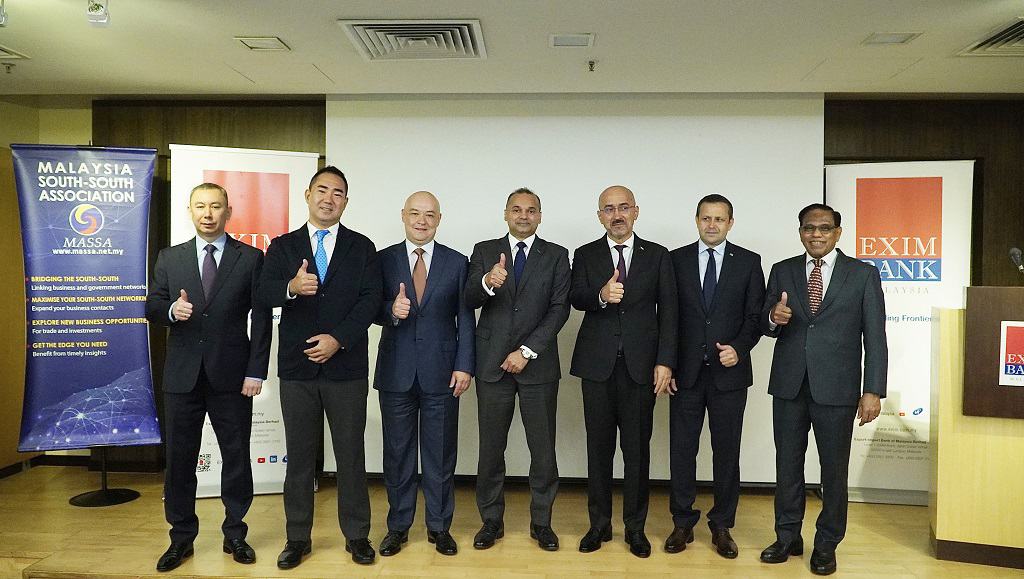
Export-Import Bank of Malaysia Berhad (EXIM Bank) and Malaysia South-South Association (MASSA) join hands in bringing the Central Asia region to exporters via a business briefing and networking session.
Called the EXIM Bank & MASSA Business Briefing and Networking Luncheon, the session sees the participation of countries from the Central Asia region, namely Uzbekistan, Tajikistan, Kyrgyz Republic, Kazakhstan and Turkmenistan. The ambassadors attended and shared the market potential of their countries.
Over 70 exporters attended the briefing session to hear about the market opportunity of the RM 1747.5 billion Central Asian market, specifically in the agriculture, energy, infrastructure, health, information technology and tourism sectors.
“EXIM Bank is honoured to host the Ambassadors of the Central Asian region and exporters at the Bank for the business briefing session. This event serves as a platform for the embassies to share the economic potential of their respective countries with local exporters; and for the local businesspeople to learn, explore and gain entry to these markets,” said Arshad Ismail, President/Chief Executive Officer of EXIM Bank Malaysia.
Datuk Merlyn Kasimir, MASSA EXCO Member said: “Central Asia is fast emerging as a promising and strategically located market for businesses worldwide. The world is moving into a new era characterized by VUCA, ESG and IR4.0 and this is a new frontier for Malaysian businesses, presenting us opportunities to collaborate with other developing countries. The areas for business collaboration between Malaysia and Central Asia are many and remains to be tapped.”
On the back of the recent revised Budget 2023 and the introduction of the Exporters’ Development Incentive Scheme or “Skim Insentif Pemampanan Pengeksport” (SIP2), EXIM Bank is driven to help local entrepreneurs strengthen their businesses and achieve their cross-border aspirations.
Arshad hopes that the affordable funding rate the SIP2 scheme offers will encourage local entrepreneurs/exporters to explore new markets, such as the Central Asian region, for their products and services and increase their capability as an exporting company in the long term.
About EXIM Bank
The Export-Import Bank of Malaysia Berhad (EXIM Bank) was incorporated on 29 August 1995 and is wholly-owned by the Government of Malaysia. The Bank has assisted a diverse range of Malaysian business in various sectors in their global ventures. EXIM Bank takes pride in meeting its mandated role of stimulating and enhancing the competitiveness of Malaysian industries for exports and investments globally via the provisioning of internationally and domestically competitive banking and insurance products and advisory services. The Bank also offers Shariah-compliant financing and Takaful instruments. For more information, visit www.exim.com.my.
Brand Soul Malaysia, a leading brand strategy consultancy firm in Malaysia, launches the world’s first artificial intelligence (AI) driven marketing strategy platform in collaboration with Robotic Marketer. Recognised for its sustainable brand building and marketing strategy formulation, the new partnership with Robotic Marketer is a women- led venture by Stella Wong and Mellissa Smith, stepping towards building the future of marketing.
Over the last decade, Malaysian business owners have encountered unprecedented business challenges and struggled to expand their organisations under fierce competition to manage their brands effectively. Despite several government initiatives, most SMEs find it challenging to differentiate their brands in the global market due to weak branding and marketing strategies and a lack of digital marketing skills. Companies without a strategy or plan are at risk of spending more resources on ineffective campaigns and missing out on valuable opportunities.
With the launch of Robotic Marketer in Malaysia, Brand Soul intends to transform the branding and marketing landscape by becoming the sustainable brand and AI marketing partner for growing businesses, helping them to capitalise on AI and ChatGPT technology for better marketing ROI.
Another Women-Empowered Milestone
According to a report by Grant Thornton in 2021, Malaysia has achieved a new record with 37% of women occupying senior leadership positions. This partnership is a reflection of this achievement which has resulted from persistent efforts made over the years to enhance skills and expertise, enabling women to reach the pinnacle of the business world.
Stella Wong, Founder of Brand Soul
“We are thrilled to be the leading licensee of Robotic Marketer in Malaysia to extend our service offerings. With ChatGPT technology becoming the buzzword in almost every industry, we aim to become Malaysia’s first branding and marketing consultancy that puts technology and experience into real practice. Our goal is to help our clients succeed by making marketing easier, more efficient and more cost-effective,” says Stella Wong.
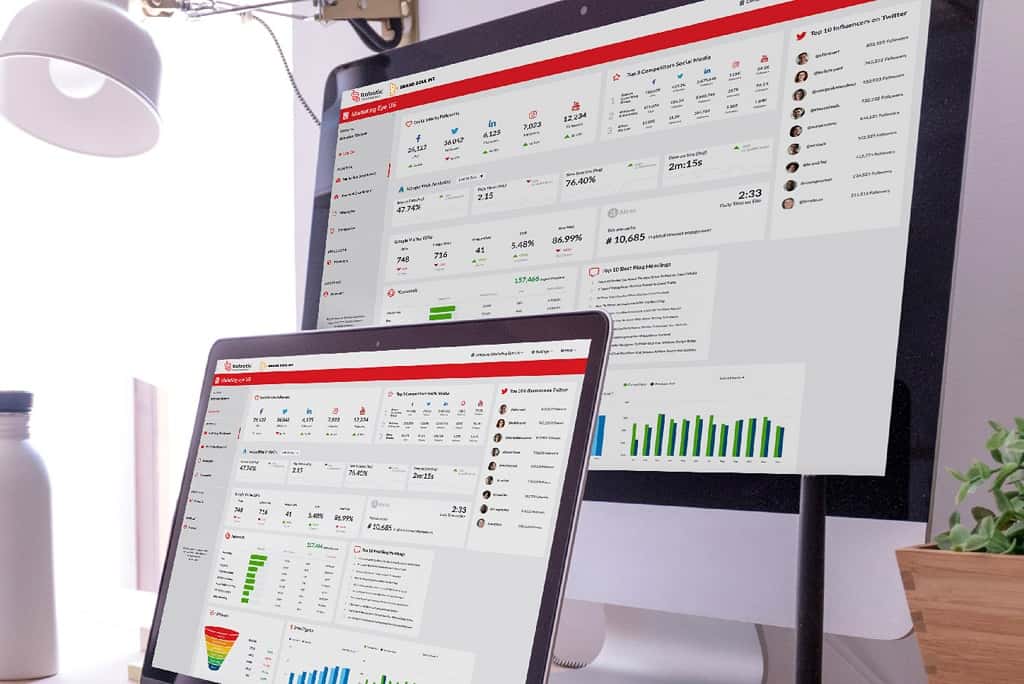
“The marketing automation platform is a game-changer for businesses as we give them full control over their marketing performance, with up-to-date data analysis, reporting and full visibility of marketing strategy performance in one single platform. One of its key features is creating a comprehensive marketing plan with the target audience and competitor insights and marketing tactics aligned to key marketing objectives. It also features a 12-month marketing calendar with real-time data and industry benchmarking analysis. We cannot wait to see how it disrupts the traditional marketing methods and helps businesses to grow,” adds Stella Wong.
Mellissah Smith, the CEO of Robotic Marketer, also comments on the partnership, stating, “We are delighted to partner with Brand Soul. When we were looking to expand into Asia, we sought a forward-thinking company that embraces technology to drive better marketing performance for their clients. We found that Brand Soul had accumulated respect in the industry working with companies that benefited from their creative approach and performance-centric brand marketing campaigns.
Mellissah Smith, CEO of Robotic Marketer
The leap into data-driven marketing strategies using artificial intelligence is a good fit with Brand Soul’s expertise in branding and marketing.”
Having worked closely with over 1000 companies across various industries with specialities in the branding and marketing sectors, the founders understand the fast-evolving nature of businesses. Individually they have also helped businesses drive their branding and marketing through the thick and thin of the pandemic and the current global situation.
Moving forward, Brand Soul will launch a series of AI marketing awareness programmes and introduce Channel Partnership Programme to help software companies and their channel partners develop go-to-market strategies to build brands and generate leads. Companies that Robotic Marketer work with across the channel include SAP, Oracle, Mitel and Zift.
Brand Soul will also offer Robotic Marketer as part of its branding and marketing services suite, including brand strategy, brand identity, digital marketing, seed marketing, content creation and more.
For more information, please visit Brand Soul’s official website at www.brandsoul.com.my or contact+017-513 6870.
About Brand Soul Malaysia
Founded in 2016, Brand Soul Malaysia is an independent, sustainable-driven, and innovative brand and marketing strategy design consultancy based in Kuala Lumpur.
Known for helping organisations to improve profitability and achieve sustainable growth through a data-driven approach, Brand Soul has revolutionised how branding & marketing is done with its differentiators, namely data-led brand strategy & identity framework, integrated web design & content strategy, precise marketing, and brand-centred training & development programmes.
Brand Soul’s innovative approach to branding and marketing led it to win several coveted awards. Brand Soul has worked with local and international clients, including Petronas, GDEX, Ho Wah Genting, Medtronic, Viewpoint, Yinson and more.
Renting vs buying is one of the hottest topics around town. This is for those who can’t decide whether to purchase a house in 2023 or keep renting until you can afford a home!
Purchasing your own home or property is one of the biggest achievements in life. The concept of putting a big amount of money into such an asset is overwhelming, and it is something that requires careful consideration.
Economists anticipate a contraction in the global economy in 2023, although most economies worldwide have largely returned to normal operations since the COVID-19 epidemic.
It’s also important to consider the costs associated with purchasing a home, which include mortgage payments, stamp duty, legal fees, valuation fees, mortgage insurance (MRTA), and real estate agent fees.
Yet, on the other hand, like most Malaysian millennials, you are probably sick of paying a sizable portion of your monthly rental income. And wouldn’t it be lovely to own your home, which could lead to a future period of strong capital growth?
Nonetheless, there are several grey areas in the renting vs buying decision. In the end, everything relies on the situation and future goals of the individual.
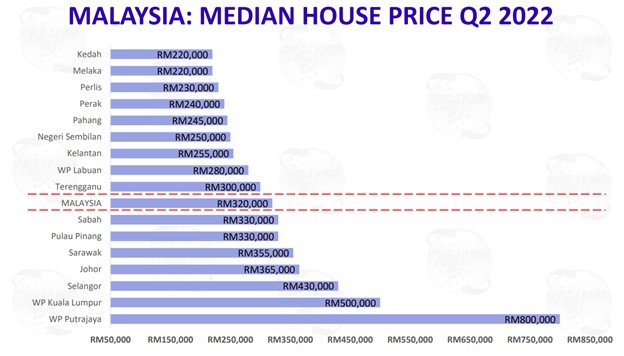
Did you know that based on the recent findings by National Property Information Centre (NAPIC), Malaysia’s median house price is RM320,000? But as you can see from the photo below, there is a huge median price difference across states in Malaysia.
According to NAPIC, the median home price in Malaysia in 2022 was RM320,000, up from RM305,000 in 2021. However, it fell to RM295,000 in Q1. The most expensive states to own a home in are Putrajaya, Kuala Lumpur, and Selangor, but this price differs. The median home price in Kedah and Melaka is RM220,000, which is half that of Kuala Lumpur.
Does it also depend on your location and whether you should rent or buy a house? There is no accurate answer to that. It all depends on you.
Yes! Every one of you has different life commitments, needs, and others.
Renting Vs Buying: Is Owning a Home Cheaper Than Renting?
We’ll use a renting vs buying calculator to estimate how much renting versus buying will cost.
Consider that you have decided to purchase a condominium at Setia Alam in Selangor for RM560,000. You will need to pay
10% upfront as a down payment
4% as a closing fee (legal fees, stamp duty and valuation fees)
3% Home Insurance
Monthly payments of about RM2,500
RM250 maintenance fee
The following are used to compute this:
10% down payment
4.25% interest rate
30-year loan term.
In contrast, the identical unit will cost you RM2,100 monthly to rent. You must pay the following before committing: RM5,750 as a down payment (equivalent to 2.5 monthly rent)
The renting vs buying Calculator makes the following assumptions:
Property values grow by 2% year over year.
Rental rates for the same properties increase at a 2% YoY rate.
4.0% as an investment yield (the percentage of annual earnings from investment in FD, stocks etc.)
Renting VS Buying: Cost
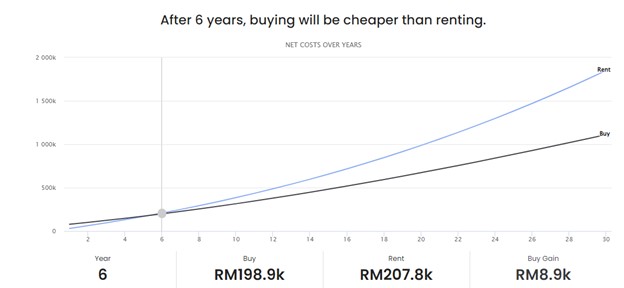
After 6 years, your total cost of homeownership (down payment, mortgage, taxes, etc.) for an RM560,000 home in Malaysia would be RM829,577. Renting leaves you with RM616,246 in your pocket (including the money you didn’t spend on a down payment).
Renting VS Buying: Gain
After 6 years, if you buy, your home will have RM181,393 in equity (available to you when you sell). However, if you instead rent and invest your down payment and the other money you save, at a 4% return rate, it will earn around RM17,602 in 6 years.
Looking at your gross costs, equity and investment potential, buying is better for you to buy than renting if you plan to live in your home for more than 6 years.
As a result, it is better for you to only invest in a property that you are positive will meet your and your family’s needs over the long run. Dont forget about RPGT! It must also be considered by buyers who intend to upgrade in 5 years or fewer.
Remember that this is only an example for us to understand and see the whole picture. Prices for buying and renting property can vary significantly depending on the type of dwelling, the age of the property, and the location.
There are many other factors in deciding whether buying or renting is better for you. However, one of the easiest and fastest ways to do it is by using a renting vs buying calculator.
You should experiment with the renting vs buying calculator to determine whether buying your property right now makes sense.
In conclusion, the decision to rent or buy property in Malaysia ultimately comes down to one’s circumstances, financial status, and market trends. For those not yet ready to make a long-term commitment or who need flexibility, renting may be a better option.
On the other hand, buying a property may be a better choice for those looking for stability and long-term investment. It is important to consider all factors and make an informed decision based on needs and circumstances.
Insurance is an essential aspect of financial planning. Think of insurance as a cushion. If tragedies or accidents occur, insurance acts as a financial cushion to protect what matters most to you – be it your loved ones, your assets, or your business.
Before the Covid-19 pandemic, insurance was considered a ‘nice-to-have’ instead of ‘must-have’. However, the pandemic shook up the general perception of insurance as people started to realise the importance of having a financial safety net to shoulder against life’s uncertainties.
Even so, many do not understand what insurance is, how it works and the types of insurance available.
Insurance is usually a financial cushion to protect you and your family. | Credit: fernandozhiminaicela
What is insurance and how does it work?
In a nutshell, insurance is a contract (deemed as a policy), whereby policyholders receive financial protection against losses resulting from an unforeseen event.
Policyholders pay a fixed premium on a monthly, quarterly, semi-annually or annual basis to an insurance company which pools risks to hedge against potential losses. Financial planners recommend setting aside 6% of your monthly income for insurance.
How do I know which insurance to purchase?
Some simple calculations like what you can afford and how much coverage you’d need would be what you would consider before buying a policy. | Credit: stevepb via Pixabay
Before you purchase an insurance policy, it is important to ask yourself:
Your financial commitments: What is your debt situation? How would you manage your financial risks if you were to lose your job, or for your family manage if you were to pass on?
Your dependents: If you were to lose your job or pass on, would your dependents be able to manage financially? How much would your dependents need to cover living costs?
Your medical history: Is there a history of critical illness such as cancer or stroke in your family? Do you smoke?
The nature of your job: Do you have a high-risk job, a physically demanding job or a job that requires frequent travelling?
Your assets: Is your property insured against potential theft, fire, flooding, burst pipes or earthquake risks? Are you able to sustain losses or damages to your vehicle in the event of accidents, theft or fire?
Based on your answers above, you would have a clearer idea as to the types of insurance as well as the policy limit (sum insured) that you would require.
What are the types of insurance?
Life Insurance or Takaful
People often confuse life insurance and health insurance. Life insurance is essential primarily if you have debt or a spouse/dependents relying on your income. Your life insurance company pays a lump sum benefit to your next of kin to serve as a financial relief in the event of your demise or total permanent disability.
Takaful is an Islamic financial product that is regulated through the Islamic Financial Services Act 2013 and is Shariah-compliant. Do note that it is not considered ‘Islamic insurance’, even though that’s what many seem to regard it as such. Unlike conventional life insurance, Takaful participants contribute or donate an amount to a tabarru fund, from which the mutual risk of losses is borne based on the Islamic principles of brotherhood.
Health or Medical Insurance
If you are diagnosed with an illness, there are both direct and indirect costs involved. On top of direct costs such as your medical expenses, your illness may affect your ability to work, pay off debts or afford living expenses.
According to Aon’s 2023 Global Medical Trend Rates Report, medical inflation in Malaysia stands at 12% and is expected to rise. Medical insurance or commonly known as a medical card is a policy that reimburses your medical expenses in the event of illness, hospitalisation or surgery.
There are many medical cards in the market, with some starting from as low as RM5-10 per month. It is not mandatory but some employers include medical insurance as a fringe benefit which only covers up to a certain limit.
Illness can strike at anytime changing the course of your life; so it’s better to always be prepared. | Credit: geralt via Pixabay
Critical Illness Insurance
Based on your family and medical history, consider purchasing critical illness insurance on top of a medical card. A critical illness policy offers a lump sum payout as an income replacement if you are diagnosed with cancer, stroke, heart attack and so forth.
Personal Accident Protection
If you are a frequent traveller or involved in a physically demanding job, personal accident insurance is ideal for you as it covers medical expenses incurred from an accident, travel inconveniences or sickness resulting from travelling.
Property Insurance
After spending your hard-earned money on your home or property, the last thing you would want is to leave it unprotected from potential risks such as fire, theft, flood and natural disasters. Though property insurance is not compulsory in Malaysia, it is worth purchasing as it is not too costly.
Motor Insurance
Car or motor insurance is mandated by the Road Transport Department (JPJ) Malaysia, as you will not be able to apply for road tax without having a policy. In case of an accident, fire or vehicle theft, a comprehensive motor insurance covers damages and losses associated with the third-party injury as well as you or your authorised drivers who are driving the vehicle.
Getting started with insurance may be an overwhelming process. Rest assured, it is not necessary to purchase all types of policies, only the ones you truly need.
A great way to start is with the essentials such as medical and life policies. Afterwards, you can schedule a regular policy review to assess your evolving protection needs.
By Mabel Yan
If you enjoyed this article, you might also want to check this out:
Amazon Web Services’ RM25.5 billion investment into Malaysia – making it the first in the region for cloud computing infrastructure with 3 availability zones is a catalyst on many fronts.
MRANTI believes this will accelerate the rate of innovation as it opens up more bandwidth for Malaysian innovators to closely collaborate with leading science, technology and innovation teams across the value chain, from anywhere in the world, at speed and with greater capacity, reliability, availability, manageability and security. This will raise the stature of our R&D for commercialisation while elevating more Malaysian technologies to market.
This in turn, will enhance the country’s security of innovation supply.
AWS’s investment also opens up new pathways for upstream and downstream R&D services and solutions to be developed in Kuala Lumpur – which is ranked as a top 10 innovation hub in the region.
It will also help us draw in the right talent and move Malaysia up the innovation value chain as the next-generation cloud infrastructure system will support a host of technologies by high-growth companies, set to take flight in the coming years.
Malaysia is already a base for many leading multinational and leading technology companies, and we believe more will follow in AWS’ lead in this regard.
Dzuleira Abu Bakar, CEO MRANTI
MRANTI is committed to connecting investors and innovators to accelerate ideas to impact. In this regard, we look forward to collaborating with AWS and Malaysian institutions, startups, and companies to deliver cloud-powered applications to fuel economic development across the country and to spur job creation, skills training, and educational opportunities for communities.
Ultimately, it will serve the needs of the rakyat, business and industry – as outlined in the Ministry of Science, Technology and Innovation (MOSTI)’s strategic initiatives and framework to enable Malaysia to migrate from a technology consuming to a technology producing nation strongly based on an innovation-driven economy.
About MRANTI
MRANTI is the one-stop research commercialisation agency with the resources to accelerate the commercialisation of innovative ideas that will drive impact. As a connector, collaborator and catalyst, MRANTI will connect problem statements (demand) with solutions (supply), bridging collaboration between public and private sectors (transition); increase private sector participation, either through market access, investment, advisory or consultation and facilities for testing and prototyping.
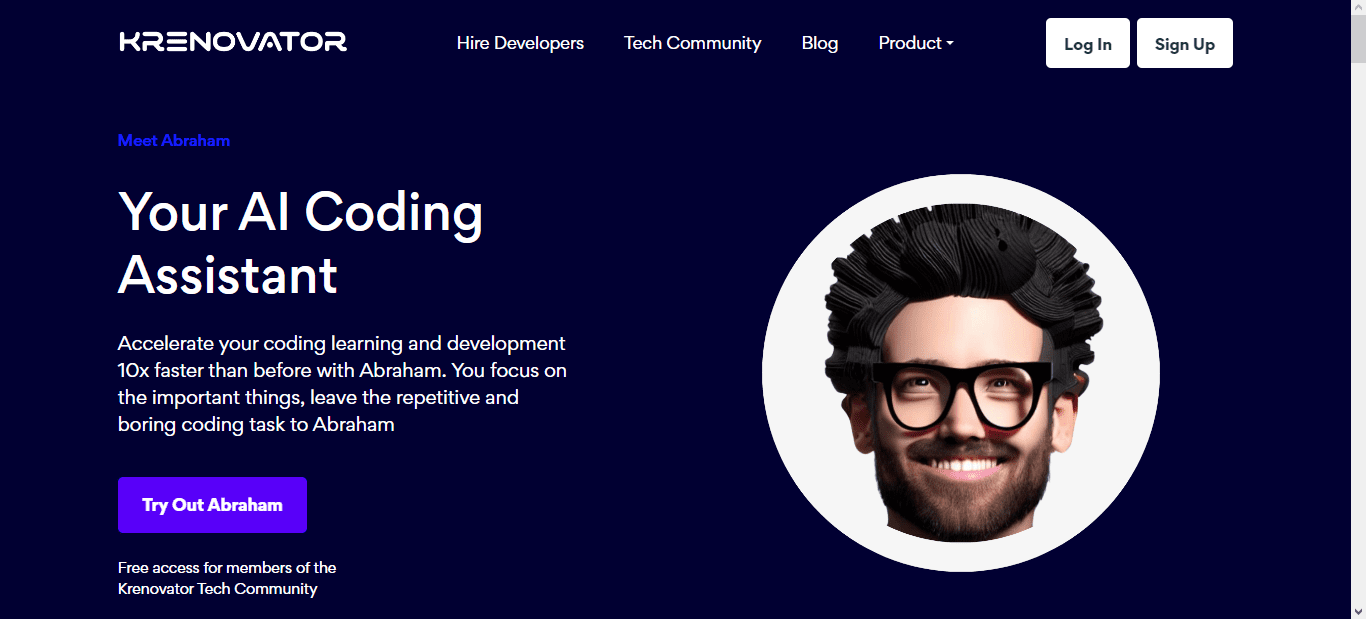
Krenovator Technology Sdn. Bhd. announced the immediate availability of Abraham, an AI Coding Assistant on its digital Tech Talent Platform that was launched late last year. The new tool provides users with real-time feedback and suggestions, helping them to improve their coding skills efficiently and effectively. It also allows users to create new software at a much faster rate than conventional methods. The intelligent coding assistant is available for users at no charge.
Among Abraham’s main capabilities are to assist users in completing unfinished code as well as detect any syntax or semantic errors in a code. Mahadhir Yunus, CEO of Krenovator said, “We are thrilled to introduce Abraham to the world. As a provider of coding training, we often receive a high volume of questions from our users. Some of these questions were unique, which made it challenging to provide quick answers, while others were repetitive. These situations have inspired us to create an intelligent and efficient method of learning to code. Our objective is to offer targeted assistance to developers worldwide so that they can create high-quality and innovative solutions.”
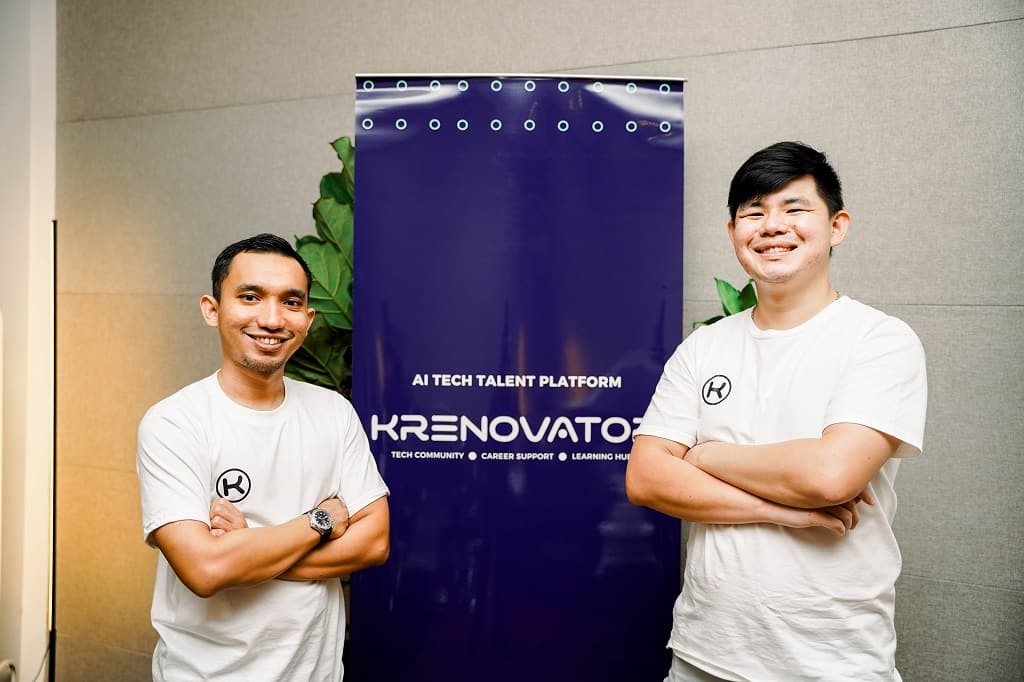
(L-R) Mahadhir-Yunus, CEO and Calvin Lim, COO
Currently, Abraham supports full-stack programming covering 17 popular programming languages and frameworks including frontend, backend, database, API, Angular, DevOps, Flutter, .NET, PHP, Python, Java, and Javascript. Krenovator is working on expanding the list.
“We are glad that the work that began in early 2022 to develop Abraham has finally come to fruition now. Whether it’s a junior coder trying to fix a bug or a senior software engineer wanting to inspect their codes, Abraham can assist 24/7,” Mahadhir explains.
“We see that Abraham has the potential of becoming the first line support assistance when it comes to coding,” he concludes.
Krenovator plans to introduce an enterprise version of the AI coding assistant in the future. Krenovator’s Tech Talent Platform offers free coding and training modules developed by the Company. It has also recently partnered with Coursera to allow users to obtain a certification. The platform currently has more than 3,000 tech talents from Malaysia and Indonesia combined.
About Krenovator
Founded in 2019, Krenovator is an AI tech talent and placement platform that provides services to two main groups – individuals who want to learn and improve coding skills, and companies looking to hire qualified software developers. The Company’s digital platform which was launched in late 2022 has attracted over 3,000 tech talents from Malaysia and Indonesia. So far, the Company has also successfully helped more than 200 qualified talents to land a tech job with employers from Malaysia, Singapore, and the United Kingdom. Krenovator is based in the state of Selangor, Malaysia. Visit us at: www.krenovator.io.
Exchange-traded funds (ETFs) are a popular investment vehicle that has recently gained popularity due to their simplicity, flexibility, and low cost. An ETF is a type of investment fund traded on a stock exchange, similar to a stock. It is designed to track the performance of a specific market index, such as the FTSE Bursa Malaysia KLCI or the MSCI Malaysia Index.
ETFs, offer several advantages over other investment vehicles, such as mutual funds and individual stocks. They provide investors with a low-cost way to invest in a diversified portfolio of assets that can be bought and sold throughout the trading day. This article will look at some of the reasons why you need to invest in ETF.
Why You Need To Invest In ETF#1 Diversification In Portfolio
One of the main advantages of investing in Malaysia’s ETFs is that it allows investors to gain exposure to a diversified portfolio of assets that would be difficult or expensive to acquire individually.
For example, MyETF MSCI Malaysia Islamic Dividend or MyETF-MMID aims to provide investment results that closely correspond to the performance of the Benchmark Index, which is a price return index comprising 16 to 30 Shariah-compliant securities listed on Bursa Securities, with higher than average dividend yield that is deemed both sustainable and persistent by MSCI.
With an ETF, you will own multiple shares with only one purchase!
Why You Need To Invest In ETF#2 Exposure to Malaysia’s Fast-Growing Economy
Another advantage of investing in Malaysia’s ETFs is that it allows investors to gain exposure to a fast-growing emerging market. The Malaysian economy has been growing consistently over the years, and the country is known for its export-oriented industries, such as electronics, palm oil, and petroleum.
The Malaysian government has also been implementing various initiatives to attract foreign investors, such as providing tax incentives and streamlining regulations.
Source: Bursa Malaysia
To encourage investors to invest in the ETF, the Malaysian government has exempted Stamp Duty of 0.1% until 31 December 2025.
Investing in Malaysia’s ETFs is also a cost-effective way to invest in the Malaysian stock market. ETFs are passively managed, which means that they track a particular market index rather than being actively managed by a fund manager.
As a result, ETFs typically have lower management fees than actively managed funds, making them an attractive investment option for cost-conscious investors. For example, the MYETF Dow Jones U.S 50 (METFUS50) has a total expense ratio of 0.62%, which is relatively low compared to other actively managed funds.
In other actively managed funds, the minimum cost usually involves around 2% to 5% annually for management fees. Some mutual funds also will charge you a performance fee when your investment outperforms the market or the benchmark.
ETFs are also highly liquid, meaning they can be bought and sold on a stock exchange throughout trading. This gives investors great flexibility and control over their investments, as they can buy and sell their ETF holdings anytime.
Additionally, because ETFs are traded on a stock exchange, investors can buy and sell them at market prices, which means they can take advantage of price movements throughout the trading day.
Investors can consider several ETFs on the Bursa Malaysia stock exchange. In addition to the two ETFs mentioned above, other ETFs provide exposure to specific sectors of the Malaysian economy.
For example, the TradePlus Shariah Gold Tracker (0828EA) tracks the London Gold Fixing PM price performance. The MyETF MSCI South East Asia Islamic Dividend (0825EA) or MyETF-MSEAD is an ETF that tracks the performance of the MSCI South East Asia IMI Islamic High Dividend Yield 10/40 Index, which objectively and passively represents the dividend yield opportunity within South East Asia’s Shariah equity markets.
Investing in Malaysia’s ETFs can expose investors to a fast-growing emerging market and a diversified portfolio of assets. ETFs are also cost-effective, highly liquid, and easy to invest in. However, as with any investment, it is important to conduct thorough research and seek professional advice before investing in Malaysia’s ETFs or any other investment vehicle.
Bintang Capital Partners Berhad (“Bintang” or the “Firm”) announced its second investment under its maiden fund, BCP Asia Fund I L.P., into Involve Asia Technologies Sdn. Bhd. (“Involve Asia” or the “Company”) to support the Company’s expansion across Southeast Asia and Australasia, as well as the development of a new product suite to cater to its customers’ increasing digital marketing needs.
Involve Asia is a Malaysian-based marketing technology company that operates a performance-based marketing technology platform, providing a single platform to help brands market digitally through advertising attribution, partner workflow management, and creative distribution. Involve Asia partners with content creators, influencers, developers, and affiliate partners worldwide. The platform tracks and manages returns on these digital marketing partnerships for global brands. The Company operates in 6 countries, catering to over 500 brands and over 4,000 offers with more than 400,000 affiliate partners on its platform, driving over USD1.5 billion in transactions since its inception in 2014.
The USD10 million investment round was led by Bintang, and supported by co-investors Orbit Capital Malaysia, 500 Global, and Monumental Productions. Fundraising proceeds will be utilised to fuel the Company’s recent expansion into Vietnam and the Philippines, as well as to continue cementing its footprint across Southeast Asia and Australasia. Involve Asia also plans to put part of the proceeds to use in catalysing its in-house development of a new product suite. This intends to meet the demands and needs of clients with a solution to track and attribute their business in the global online commerce industry. Amongst these include creating an in-house business intelligence team to provide its stakeholders with detailed insights into consumer purchasing patterns and developing a novel content management system for its marketing partners to manage their multi-channel promotions on a single platform.
Bintang’s investment into growing the Company’s burgeoning Southeast Asian presence underscores the Firm’s belief that the long-term prospects in Southeast Asia continue to outweigh growing uncertainty and global headwinds. A growing working population and expanding upper-middle class underline the strong demographic trends that fortifies Southeast Asia’s position as an appealing consumer market and attractive investment destination.
The investment in the Company was driven by the extraordinary shift in Southeast Asian consumer behaviour towards digital consumption, with more than 80% of Southeast Asian consumers expected to have transacted online by the end of 2022. Bintang believes that the increasing internet and mobile penetration in Southeast Asia would also provide significant long-term opportunities for value creation on a regional scale.
Bintang’s Founder, Johan Rozali-Wathooth
“Bintang believes that Involve Asia is well-positioned within Southeast Asia’s fast-growing and rapidly transforming digital marketing and digital commerce space. Its’ highly innovative business model also has great potential to catalyse positive social impact by providing opportunities for individuals and small-to-medium-sized marketing companies to harness their networks by partnering with global brands,” said Bintang’s Founder, Johan Rozali-Wathooth. With that, Johan adds, “Bintang believes that this can create new jobs and provide economic uplift opportunities for individuals in the process. These aspirations are very much aligned to Bintang’s philosophy of ‘Investing in Impact and Innovation.’”
Jimmy How, CEO of Involve Asia
Jimmy How, CEO of Involve Asia shared, “The team is thrilled to join forces with Bintang, Orbit Capital Malaysia, and Monumental Productions, and fortifying our partnership with 500 Global further. These partnerships and their long-term backing allows us to continue growing our platform to better serve brands, publishers, and affiliates, as well as to double down on growth.” He adds, “After closing 2022 with a record revenue of RM90 million, we’re confident this momentum will make 2023 a really significant year for Involve.”
About Bintang
Bintang is the private equity arm of AHAM Asset Management Berhad (“AHAM”), a leading independent Malaysian asset management group. Bintang further benefits from a parentage that includes leading global investment managers including CVC Capital Partners and Nikko Asset Management.
Bintang focuses on deploying capital into fast-growing mid-sized ASEAN companies with proven track records: we back visionary entrepreneurs who are aligned to Bintang’s twin core investment philosophies of Innovation and Impact. Bintang is a signatory to the United Nations Principles of Responsible Investing (“UN PRI”). The Firm is also the first Malaysian signatory to the Operating Principles for Impact Management (“the Impact Principles”), an initiative whose development was led by the International Finance Corporation (“IFC”), a member of the World Bank Group.
The Firm’s maiden fund, BCP Asia Fund I (“BCPAF I”) is anchored by Dana Penjana Nasional, an investment fund under the Malaysian Government’s Ministry of Finance aimed at catalysing the country’s post Covid-19 economic recovery whilst supporting the local private capital industry.
BCPAF I invests in high performance, high impact and high innovation companies who are well-placed to meet the challenges, opportunities and disruption brought about by rapid advancements in technology, as well as who are committed towards delivering impact from environmental, community, employee, customer and governance perspectives.
Involve Asia is a global marketing technology company that provides a platform for advertisers to measure, manage and scale their marketing partnerships by automating workflows and providing attribution to marketing campaigns. Using its proprietary cookie-less tracking technology for highly accurate, future-proofed digital marketing.
Involve has tracked over USD1.5 billion in transactions for multinationals such as Lazada, Shopee, Grab, Marriott, Malaysia Airlines, Air Asia, Nike, Citibank and over 500 customers across E-commerce, Travel, Finance and Services sectors.
Founded in 2014, Involve Asia has been backed by major venture capital firms such as 500 Global, OSK Technology Ventures, and Cradle Seed Ventures and has an established presence across Asia with offices in Malaysia, Indonesia, Philippines, Singapore, Thailand and Vietnam.
The SPY (SPDR S&P 500 ETF) and the SPUS (SP Funds S&P 500 Sharia Industry Exclusions ETF) are exchange-traded funds that track the performance of the S&P 500 index, but they have different approaches to selecting the stocks that make up the index.
The SPY tracks the performance of the S&P 500 index, which includes the 500 largest publicly traded companies in the US. The SPUS also tracks the S&P 500 index but excludes companies that generate revenue from activities deemed non-compliant with Islamic principles, such as alcohol, tobacco, and gambling.
Over the past few years, both funds have performed well, with the SPY showing slightly better performance overall. However, there have been periods where the SPUS has outperformed the SPY. For example, in 2020, the SPUS had a slightly better performance than the SPY, with a return of 18.8% compared to 18.4% for the SPY.
It is important to note that the SPUS may have a more limited selection of stocks than the SPY, potentially impacting its performance. Additionally, the criteria used to exclude certain companies from the index may result in excluding companies that may perform well in the future.
The SPY and the SPUS have shown positive performance over the past few years. The choice between the two depends on an investor’s preference for investing in socially responsible companies that adhere to Islamic principles.
The SPY (SPDR S&P 500 ETF) and the SPUS (SP Funds S&P 500 Sharia Industry Exclusions ETF) both track the performance of the S&P 500 index. Still, the SPUS excludes companies that generate revenue from activities deemed non-compliant with Islamic principles, such as alcohol, tobacco, and gambling.
As of February 18, 2023, the top 10 constituents of the SPY are:
Apple Inc. (AAPL)
Microsoft Corporation (MSFT)
Alphabet Inc. (GOOGL)
Amazon.com Inc. (AMZN)
Facebook Inc. (FB)
Berkshire Hathaway Inc. Class B (BRK.B)
Tesla Inc. (TSLA)
JPMorgan Chase & Co. (JPM)
Johnson & Johnson (JNJ)
Visa Inc. (V)
As for the SPUS, the top 10 constituents as of February 18, 2023, are:
Apple Inc. (AAPL)
Microsoft Corporation (MSFT)
Alphabet Inc. (GOOGL)
Visa Inc. (V)
Procter & Gamble Co. (PG)
PepsiCo Inc. (PEP)
Cisco Systems Inc. (CSCO)
Coca-Cola Co. (KO)
McDonald’s Corporation (MCD)
Verizon Communications Inc. (VZ)
Dividends Payout
The SPY (SPDR S&P 500 ETF) and the SPUS (SP Funds S&P 500 Sharia Industry Exclusions ETF) are exchange-traded funds that track the performance of the S&P 500 index. As such, the dividends paid by these ETFs are based on the dividends paid by the individual companies in the index.
The SPY has a current dividend yield of approximately 1.24%, which means that for every share held, an investor would receive an annual dividend payout of US$1.24. The SPY pays dividends every quarter, and the dividend amount can fluctuate depending on the performance of the companies in the index.
The SPUS, which excludes companies that generate revenue from activities deemed non-compliant with Islamic principles, may have a different dividend yield than the SPY. As of February 18, 2023, the dividend yield for the SPUS is approximately 0.66%.
This means that for every share held, an investor would receive an annual dividend payout of US$0.66.
It is important to note that the dividend yield for both the SPY and the SPUS can vary over time based on several factors, including changes in the underlying companies’ dividend policies, overall market conditions, and other economic factors.
How Much?
As of the market close on February 18, 2023, the prices for the SPY (SPDR S&P 500 ETF) and the SPUS (SP Funds S&P 500 Sharia Industry Exclusions ETF) were:
SPY: US$499.55 per share
SPUS: US$50.53 per share
With US$1,000, You Can…
As of the market close on February 18, 2023, the price for one share of the SPY was US$499.55, and the price for one share of the SPUS was US$50.53. Based on these prices, $1000 could buy approximately:
2 shares of the SPY (US$1,000 / US$499.55 = 2.00)
19 shares of the SPUS (US$1,000 / US$50.53 = 19.77)
Over the past year (as of February 18, 2023), the SPY (SPDR S&P 500 ETF) has had a total return of approximately 31.7%. Assuming that you invested US$1000 in the SPY at the start of the year, your investment would have grown to approximately US$1,317 by the end of the year (not accounting for any fees or expenses).
Meanwhile, the SPUS (SP Funds S&P 500 Sharia Industry Exclusions ETF) has had a total return of approximately 28.5% over the past year (as of February 18, 2023). Assuming that you invested US$1000 in the SPUS at the start of the year, your investment would have grown to approximately US$1285 by the end of the year (not accounting for any fees or expenses).
Assuming that you invested US$1,000 in each S&P 500 ETF and held them for a year, the projected dividend income would be approximately:
SPY: US$13.70 (1.37% of US$1000)
SPUS: US$6.80 (0.68% of US$1000)
Important Notes
It is important to note that past performance does not guarantee future results and that investing in the stock market always carries some risk. It is also important to consider various factors, including expense ratios, historical performance, and overall investment strategy, before making investment decisions.
Additionally, it is important to note that the prices of the S&P 500 ETFs can fluctuate daily based on many factors, including changes in the underlying companies’ stock prices, overall market conditions, and other economic factors. Additionally, investors need to consider factors beyond just the price of the S&P 500 ETF, such as its performance history, expense ratio, and other factors, when making investment decisions.
Mukhriz Mangsor is currently the Head Global Market Strategist at Quantdynamic Research Company. His expertise includes financial education, financial institutions, and property trading with clients, including Brunei, Canada, Malaysia, Singapore, and the United States firms.
Purchasing property in Malaysia can be complicated and perplexing, particularly for first-time buyers. Yet, if you are prepared and knowledgeable, you may go through the process easily and assuredly.
Here are some tips for first-time home buyers in Malaysia.
1. Property Ownership
One of the important tips for first-time home buyers is to know the many forms of property ownership. Malaysia has three: leasehold, freehold, and Bumiputera quota. Properties with a leasehold duration of up to 99 years are often less expensive than those with freeholds.
Freehold homes cost more and have an unrestricted tenure. For ethnic Malays and other indigenous communities, quota-Bumiputera properties are set aside.
Get knowledgeable about the property market. It is crucial to comprehend the market’s circumstances before making a purchase. Find out the costs of nearby properties similar to yours and the level of interest in those properties.
To better grasp the market, you can also speak with property agents, registered real estate negotiators or property developers.
Next on tips for first-time home buyers is to obtain a loan pre-approval: If you intend to use a loan to pay for your property purchase (which most people are), it’s a good idea to get pre-approved a loan before beginning your search.
This can help you decide how much you can pay on a property and provide you leverage when dealing with vendors.
One should know and understand the legal process before buying a property. The legal procedure for purchasing property in Malaysia might be complicated, so it’s important to understand all the processes.
This includes the ownership transfer, stamp duty and additional legal costs. Having a lawyer at your side will be very helpful throughout the procedure.
Number five on the tips for first-time home buyers, we need to inspect a property, particularly if it’s a sub-sale property. Make sure you conduct a property inspection before making an offer. It’s better to have a professional inspect the house before making an offer.
This will ensure there aren’t any flaws or problems that aren’t obvious now but could later cause complications in terms of safety or money in your pocket!
You should be ready! There are additional charges to consider in addition to the property’s purchase price, such as legal fees, stamp duty, and other ancillary costs. Make sure to budget for these fees in advance.
If you are buying a sub-sale or auction property, be aware that repairing or renovating may take a lot of money.
One of the final tips for first-time home buyers is to be patient. Take your time, research, and consider all your possibilities before deciding.
Remember! Property loan is one of the largest loans with the longest tenure one has in life!
Buying property in Malaysia can be difficult and complex, but with a little information and planning, you can go through it confidently and smoothly.
Understanding the various types of property ownership, being familiar with the real estate market, obtaining a loan pre-approval, being aware of the legal process, obtaining a property inspection, being ready for additional fees, and exercising patience are all key.
Once you know these tips for first-time home buyers, you’ll have no trouble choosing your ideal property in Malaysia if you keep these suggestions in mind.