Category: lifestyle

  • Should I Adopt Dollar Cost Averaging?

    Should I Adopt Dollar Cost Averaging?

    There are multiple ways to invest, with one of the more passive ways recommended by many is dollar cost averaging.

    “Dollar-cost averaging (DCA) is an investment strategy in which an investor divides up the total amount to be invested across periodic purchases of a target asset in an effort to reduce the impact of volatility on the overall purchase. The purchases occur regardless of the asset’s price and at regular intervals; in effect, this strategy removes much of the detailed work of attempting to time the market in order to make purchases of equities at the best prices.” – Investopedia

    At the core of the fancy lingo used above, it means you put a fixed amount daily/monthly/yearly into a certain investment so that you average out your buy-in price.

    Think of it like gardening where you need to tend to the plants regularly and conscientiously in hopes that it will grow well.

    Dollar-cost Averaging Illustration

    For example, let’s say you’re buying into a Real Estate Investment Trust (REIT) counter on any market in Malaysia. Why? Because in most cases, it gives you steady dividends and that’s why it’s a good place to exercise dollar cost averaging.

    Assume that you allocate RM500 per month to contribute to REIT 1. Every month you diligently buy up RM500 worth of shares in REIT 1.

    I want to present two scenarios here.

    If the prices go up monthly by 10 sen:

      Amount Invested Cumulative Investment Price Investment Value % Gain
    Month 1 500 500 1 500
    Month 2 500 1,000 1.10 1,050 5%
    Month 3 500 1,500 1.20 1,646 10%
    Month 4 500 2,000 1.30 2,283 14%
    Month 5 500 2,500 1.40 2,958 18%
    Month 6 500 3,000 1.50 3,670 22%

    If the prices go down monthly by 10 sen:

      Amount Invested Cumulative Investment Price Investment Value % Loss
    Month 1 500 500 1 500
    Month 2 500 1,000 0.90 950 5%
    Month 3 500 1,500 0.80 1,345 10%
    Month 4 500 2,000 0.70 1,677 16%
    Month 5 500 2,500 0.60 1,937 23%
    Month 6 500 3,000 0.50 2,114 30%

    Can you see the effect it has?

    Pros and Cons of Dollar Cost Averaging

    As you can see in the illustration above, with a 50% increase/decrease in the stock price by month six, the total returns/losses are reduced.

    Yes, it’s a double-edged sword. You minimise your potential losses and hopefully when it rebounds, you’ll get more returns. However, you also lose the full upside if the stock goes up in price.

    The other potential risk here is that in most dollar cost averaging mechanisms, you set a fixed time in a month to invest that sum, such as the start or end of the month, when your salary is in etc. The issue here is that you could also be unlucky in that every time it’s time to invest, it’s at the higher price point for the month. That’s not fantastic but luck does play a part.

    Then why do people recommend dollar cost averaging? If I were to guess, it’s because it gives people the “sense of calmness” that you don’t need to worry about the market’s ups and downs and just need to periodically invest a sum like clockwork.

    I must add on that this was also popularised by mutual funds. At least, that’s where I heard this method being used the most, but I’m sceptical as they’re partially motivated by the sales charge.

    Which brings me to… the case of commissions that we’re paying for any investments (depending on the amount). By doing a monthly dollar cost averaging investment, we’re technically paying 12 times a year at the highest commission rate (in most cases due to smaller investment size).

    With that said, I do think there are uses for dollar cost averaging.

    What Do I Use Dollar Cost Averaging On?

    My journey on dollar cost averaging began with mutual funds. I’ve tried dollar cost averaging via direct debit on mutual funds a long time ago. The market was going up monthly and hence my cost was averaging up. Then one fine day the market decided to take a dip. That’s when I realised that the amount I’ve invested thus far actually suffered a much bigger loss due to my average cost being higher. Hence, I stopped doing dollar cost averaging.

    Another asset that I’ve used dollar cost averaging on is bond funds via robo-advisors because their prices rarely fluctuate too much, but currently the only other investment asset that I practice dollar cost averaging on is gold.

    Averaging Down vs Dollar Cost Averaging

    What I prefer is to use the concept of “averaging down” in my investments.

    I can’t control how the market moves and whether the prices will go up or down after I invest. What I can control is how and when I invest.

    My approach is to always keep a basket of potential stocks in my watchlist. With this shortlist of stocks, I can then monitor where prices are heading. Rather than investing into a stock or any asset when the prices are up, I’d only invest when the prices fall to a target price.

    When investing in a stock or asset, it’s possible that the price will fall below the invested prices. This is where averaging down shines as it takes on the benefit of dollar cost averaging to minimise losses and amplifies the profits via more investment in the particular asset. This is on the assumption that you’re investing in a fundamentally strong asset whereby prices will eventually turn around. However, it could take years in some cases, so patience is needed.

    If prices are above my invested price, then I’d only think about when to realise that investment into profits. I’d seldom add on unless there is a particularly compelling reason to do so and would rather scour my watchlist for other stocks to invest in instead.

    This approach is obviously not too relevant for short term traders but can be beneficial to the long term investors.

    But how about non-stock related investments?

    Modified Dollar Cost Averaging

    For assets such as robo-advisors, bond funds and gold, I do recommend the use of some form of dollar cost averaging. However, I’d keep the monthly amount small.

    Upfront I will invest a lump sum amount and when prices fall substantially, I’ll average down again with a lump sum amount. Hence, I keep a close eye on the prices of these investments and have a ready cash pile to go in when prices are right.

    This is my take on dollar cost averaging. I don’t use a straight up dollar cost averaging strategy as I believe with some active management, I can reap more benefits from my investments.

    About the author

    This article was originally published at betweenthemoney.com, a personal finance website by Jason Loh that focuses on money matters and investment topics for Malaysians


  • The Importance of Financial Planning for Small Businesses in Malaysia

    The Importance of Financial Planning for Small Businesses in Malaysia

    Are you concerned about whether you need to close your business during this MCO period? Most small businesses have been dealing with this concern.

    For small business owners running SMEs, it’s arguably more important to be involved in financial planning as you must consider not only how it affects your personal finances, but also the financial health of your business and your employees in general.

    That’s a lot of responsibility. 

    Based on SSM statistics, a total of 9,675 companies and businesses shut up shop during the first phase of the MCO from 18 March to 9 June 2020, while another 22,794 closed down during the recovery MCO (RMCO) phase from June to September 2020.

    What are the reasons for small business owners to make such a tough decision? Here are some possible reasons why:

    Lack of Crisis Awareness

    Many business owners may overestimate their business operating model. They tend to feel that a higher degree of effort put into their business leads to a higher degree of success.

    While this may be true, it doesn’t take into account emergencies and unforeseen circumstances like the Covid-19 pandemic. Without any backup or emergency funds in place, there’s only one possible outcome.

    Misjudgment

    There’s a common tendency for people to inaccurately assess the degree of risk in a risky situation. This happens mainly due to irrational behaviour and overconfidence in their personal judgement.

    Therefore, losses may occur due to ignoring the possibility of wrong information and hastily acting without performing their due diligence.

    Lack of Financial Planning

    During the MCO, many small business owners applied for loans to sustain their SMEs. Many may have used all their resources in order to start the business at the beginning.

    Thus, when business is not going well, they will need to find a way to raise funds to avoid going bankrupt.

    Transformation of Small Business Model

    Across industries, both small and large businesses are accelerating digital transformation processes for long-term growth and profitability. Yet, there are businesses that remain untested in the face of digital challenges, with their digital transformation readiness remaining uncertain.

    As a result, these companies that cannot adapt to change will be knocked out of the business cycle.

    So, what steps can small business owners take to prevent this?

    Planning ahead is key to ensure businesses can survive periods of uncertainty, with preparations made before it occurs. Regardless of economic conditions, business owners can take several precautions to mitigate risk:

    Plan Well for Financial Health

    In football, strikers spearhead the attack but often have nothing to do with defending. Similarly, small business owners may be too focused on earning money and neglect other financial needs of the business.

    Financial planning is key to ensure good financial health, which allows you to focus on your core business without any concern since a strong financial base has already been built.

    Separate Legal Entity

    All transactions associated with a business must be recorded separately from other business or personal transactions. If records are mixed up with that of its owners or other businesses, the accounting information loses its usability – this is an issue that still plagues many family-owned SMEs today due to a lack of management.

    Many owners will feel that no matter how much they earn, it’s not enough for them to retire. By not recording business cash flow separately, they’ll never truly know how much their business can earn in comparison to their personal expenses.

    Build Up an Emergency Fund

    Strong cash flow allows a company to have more flexibility in regards to business decisions and potential investments. Therefore, it’s very important to have an emergency fund in place to survive tough phases like the current MCO period.

    During this time, many SMEs have been forced to stop operations or close completely due to insufficient funds. However, businesses that were well-prepared have been able to sustain themselves and weather the storm accordingly. After all, “cash is king”!

    Refinancing

    Most people would like to settle their mortgages as soon as possible, and small business owners are no different. The feeling of being in debt is one that no one likes. In times of crisis, they may prefer to rely on overdrafts, credit cards, or term loans and personal loans that don’t require collateral.

    These liabilities may have a higher interest rate and a shorter payment term. For small business owners looking to tough it out, refinancing a home loan is an option as a longer payment term and lower interest rate can be negotiated compared to the loan facilities mentioned. Plus, you’ll end up with a lower monthly commitment!

    Asset Diversification

    As mentioned earlier, “Don’t put all your eggs in one basket”. While properties and other physical assets may be tangible, it doesn’t provide liquidity during periods of low revenue. Therefore, it’s important to diversify assets accordingly.

    Businessmen may select other investment vehicles such as REITs, shares, commodities, bonds, collective investment vehicles such as ETF and unit trust, and also other regulated investment tools that have high liquidity and can be easily converted into cash.

    In conclusion, it’s very important for small business owners to have a sense of urgency about their personal finances. With proper financial planning, you’ll be well-placed to face any uncertainty ahead and can survive black swan events without panicking.

    About the author

    Alex Teoh Teik Shiang (FAR CMSRL) is a FA Director, Licensed Financial Planner and Bank Negara Approved Financial Adviser Representative. He can be contacted at alex.teoh@yesfinancial.co.

  • FA Advisory: A Journey in Progress

    FA Advisory: A Journey in Progress

    If there’s a word to define FA Advisory, it would be ‘progress’.

    This takes precedence over terms like ‘success’ or ‘achievement’, FA Advisory Sdn Bhd general manager Bryan Zeng muses. This is simply because the financial advisory firm adopts a progressive culture that allows its practitioners to be forward-looking in their unwavering purpose of helping their clients navigate their financial journey.

    “We don’t believe in the status quo. As an organisation, we must continue to progress, and because of that we move the organisation towards innovation. We continue to innovate our processes, and build robust infrastructure so we are able to support our financial practitioners to carry out their duties to the highest standards of professional advice,” he tells Smart Investor.

    But first, a quick history of FA Advisory.

    Established in 2009 under the name Uniplan Advisory Sdn Bhd, the Kuala Lumpur-based firm changed its name to FA Advisory in 2013 when it became a member of the Financial Alliance Group based in Singapore which is, today, the largest independent financial advisory firm in Singapore.

    Home to 67 licensed financial planners across Malaysia, FA Advisory is a one-stop centre for wealth management and financial planning solutions. It offers professional and unbiased advisory services based on detailed analyses of their clients’ financial situations and goals.

    This is followed up with the firm’s capability to implement financial solutions – drawn from their comprehensive range of wealth management services – that best suit their clients’ needs, thus allowing them to enjoy flexibility in mixing and matching the financial benefits they seek.

    Navigating Turbulent Times

    The COVID-19 pandemic has forced businesses of all kinds to rethink how they work and interact with customers. While this is very much the case, it is business as usual for FA Advisory.

    “What we do is regularly engage and communicate with our clients. We do this through various means, including holding talks where we invite our clients to either educate or inform them of the happenings in the markets, and this has been done since day one,” Zeng reveals.

    And so, when the pandemic hit, FA Advisory diversified their touchpoints and increased the frequency of their outreach. This is done by making full use of online meetings/webinar facilities, as well as social media platforms such as Facebook and YouTube.

    Despite the convenience offered by technology, Zeng is quick to point out that the significance of personal engagements is still very much emphasised in their daily operations.

    “During the first month of the Movement Control Order (MCO), we held daily Zoom meetings with our financial planners to communicate, empower, share, and learn from each other,” he recalls, adding their financial planners in turn reached out to their clients with personal telephone calls and messages to show care and encouragement.

    As FA Advisory is about the client, and providing the client with the best possible financial advice, Zeng reveals that when the pandemic led to a nationwide MCO, there were a myriad of issues impacting their clients’ lives.

    “We acted swiftly to provide relevant information to enable our clients to make the right decisions. We have created over 15 YouTube videos to address the concerns related to the stock market volatility. In addition, we have been hosting a bi-weekly webinar on market updates for our clients since March,” he says.

    In fact, the team at FA Advisory had rallied together to create infographics, slides and webinars to guide their clients on the deferment of life insurance premium payments and loan moratorium, alongside other Covid-19 relief initiatives by government agencies and private sectors.

    “It warms our hearts when we receive acknowledgement and messages of appreciation from our clients. If anything, the pandemic has strengthened our resolve and conviction in our mission to champion purposeful financial advice for our clients and elevate life quality for all,” says Zeng.

    The Road Ahead

    Financial planning as an industry has witnessed impressive growth over the past few years, and the pandemic has all but accelerated it as the awareness about financial planning continues to grow and consumers become more informed.

    So, what does this mean for the industry?

    “One of the things that the Covid-19 pandemic has taught us is the importance of being financially prudent. Even as Malaysia progresses towards becoming a high-income and developed nation, the demand for quality advice will continue to grow, and the industry will offer a great career path for young people,” Zeng opines.

    Positive growth notwithstanding, he cautions there are various challenges ahead. Among these is that we live in an age of information overload, with misinformation, fake news and outright scams threatening the financial well-being of individuals and households at unprecedented speed and reach.

    “We must play our part to continue promoting financial literacy and dispensing sound financial advice to members of the public. The advent of fintech has disrupted the financial services industry by empowering consumers with innovative products and myriad choices with great efficiency.

    “Thus, the job of a financial planner is increasingly demanding, and as a firm, we are constantly building our advisory capabilities to address the increasingly complex needs of tomorrow’s consumers.”

    As such, continues Zeng, the future of financial planning will definitely be client-driven.

    “We believe we are in a good position to capitalise on this as our business model has always been client-centric with a personal touch. We are delighted to be in this rewarding profession that enables us to make a meaningful contribution to improve people’s lives,” he concludes.

    By Bernie Yeo

  • Does Value Investing Work?

    Does Value Investing Work?

    For decades, value investing has been popular with financial luminaries like Ben Graham and Warren Buffett, who is arguably the most famous investor in the world. Buffett is renowned for his investing style which is “value investing”. Many are curious about what value investing is and whether the concept still works in an environment where the Covid-19 pandemic is plaguing the whole world.

    Firstly, investors must understand how value investing works. In layman terms, value investing is a strategy for taking advantage of the market at the right moment. It’s based on the idea of “appraising” stocks, with value investing advocating hunting for stocks that are undervalued based on their “intrinsic value”, before buying them, holding them and weathering the volatility of the market. In theory, a company’s stock value should be the same as its market price but in many cases, this doesn’t hold true. It’s possible that stocks could be overvalued and at other times, it’s undervalued.

    To carry out this strategy, the investor will be required to analyse the company’s fundamentals and project the future profits that the business is going to generate in its lifetime and with that the investor is able to assess whether the company is underestimated in the market or not. If so, you get to buy its stocks at a bargain in the hopes that the market will turn in their favour over the long run. These value stocks are being sold below their intrinsic value and have huge potential to grow in the future when the price is adjusted accordingly.

    Although the concept seems simple, value investing is extremely difficult to implement properly and requires rigorous analysis to determine what the “underlying value” of a stock is. In today’s environment, investors must consider geopolitical factors, fiscal or monetary policies, currency, business model, supply and demand of the company’s services or products, and other underlying factors.

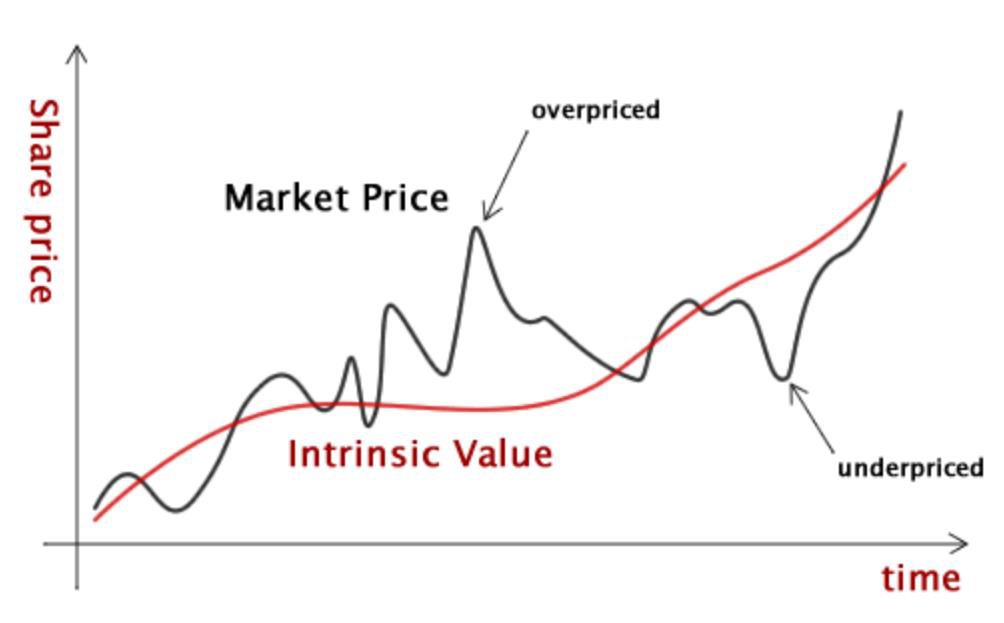
    stock analytic chart

    Understanding Value Investing is Vital before Making any Investments

    If you look at the chart above, the red line indicates the company’s potential or intrinsic value. In the beginning, due to its low value, the market misinterpreted the situation and quickly undervalued its stock. Value investors wait for this golden opportunity to buy the shares at a discounted price. They know the company has future growth potential. Then, they sell their stock when the market price is overvalued, earning them a nice, big profit. 

    For example, let’s take Microsoft whose product is widely used and accounts for 76.56% share of its industry as of December 2020 according to Statista.com and has about 1.5 billion active users worldwide. On average, its net income margin is about 25% per year and it consistently manages to turn over healthy profits. Despite the Covid-19 outbreak, its products were still massively used but during the pandemic selloff in March 2020, it lost about 25% of its share value. 

    Putting the factor of the COVID-19 outbreak aside, this company maintained good, continuous growth, and its share value grew about 23,000% in the last 30 years. Using the value investing strategy, one will see a huge opportunity in this company due to its nature of business, as well as the demand for its service and product continuing even during a pandemic. 

    (*Note: This should not be taken as financial advice or a buy recommendation.)

    Like all investment strategies, patience and diligence to stick to the investment philosophy is a requirement. There will be days when an investor may want to purchase some stocks because the fundamentals are sound, but he or she may have to wait if it’s overpriced at that time.

    If investors are unable to properly carry out this strategy themselves or commit to the time needed to invest themselves, it’s always advisable for them to seek for professional advice or seek a proper licensed financial planner or financial advisor to assist them. These professionals will be able to offer advice according to the investors’ risk appetite, goals and objectives. Other factors will also be used to evaluate the investors’ current financial condition before such advice is given.

    Conclusion

    Therefore, do buy the stock that is most attractively priced at that moment, and if there is none that meets the criteria, just sit and wait and let the cash sit idle until an opportunity arises. The bottom line is, value investing is a long-term strategy, it requires hard, there is no short cut and it works as Warren Buffett is still a devoted advocate of this strategy.

    About the author 

    Alex Ng Wern Ping is a licensed financial planner, and can be contacted at alexng.alpineadvisory@gmail.com.

  • How To Check And Claim Unclaimed Money in Malaysia Online

    How To Check And Claim Unclaimed Money in Malaysia Online

    In 2019, the sum of money NOT being claimed by Malaysians was reportedly over RM10 billion, which is quite a sizeable amount! According to the news article, the Accountant-General’s Department (AGD) wanted to help Malaysians check the status of their unclaimed monies, leading to the development of an online system for this purpose.

    Previously, to check whether you have any unclaimed monies (eg. from tax relief), you’ll need to queue up without knowing if you even have any unclaimed money! However, earlier in 2020, the AGD’s eGUMIS portal went live and it was a significant improvement for people wanting to check whether they had any unclaimed monies.

    Despite this breakthrough, if you wanted to claim the money, you were still required to pay a visit to the AGD’s office to submit a physical form (Borang Permohonan Bayaran Balik WTD “UMA-7”).

    I remembered I had a small sum of money unclaimed, but due to the trouble and since the amount was not significant, I procrastinated and left the money unclaimed, on purpose. Towards the end of 2020, I read an article on The Star that stated the government could consider using unclaimed monies as a “source of revenue” – this triggered me to check my unclaimed money again.

    I was asked to create an account again as my account had expired after six months of inactivity. As I registered for another account, I realised that the user interface had changed and the more I explored, the more I realised that eGUMIS now allowed us to submit forms online.

    My step-by step experience of claiming my unclaimed monies is outlined below, and be sure to read till the end as I will also explain how to overcome a certain bug (as of 28 November 2020) in the system:

    Step 1: Register For a New Account

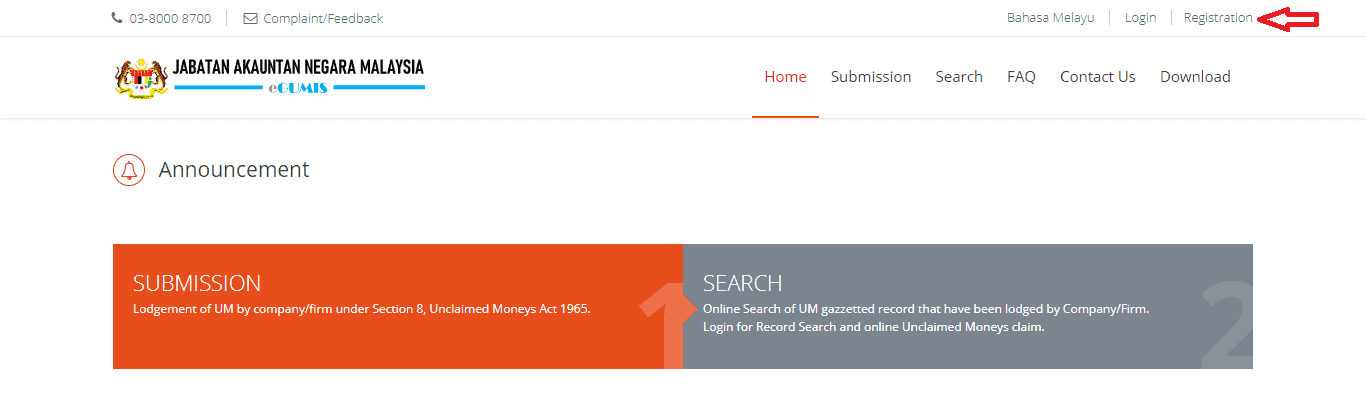
    First, head over to this link to register for a new account. Then click on ‘Registration’ in the top right corner as per the screenshot below to get started.

    Note: You may first need to change the default language to English, or you may proceed in Bahasa Melayu.

    egumis home

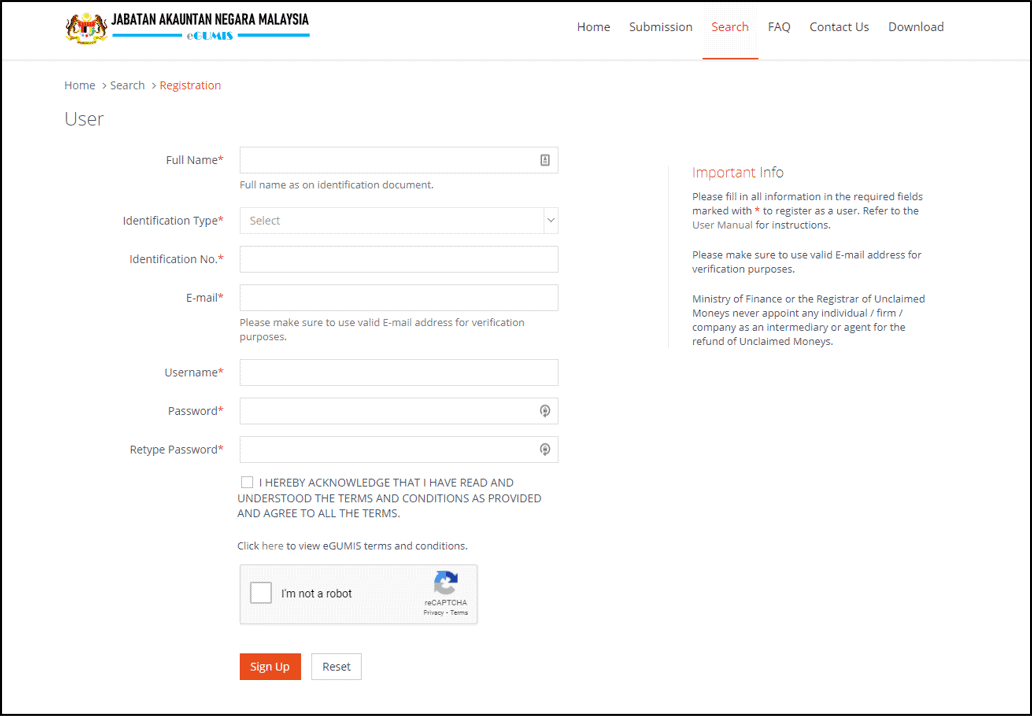
    You may then fill in the form to register your new account.

    Account Registration Form

    Your account will be deactivated after six months of inactivity, so if you have previously registered and have not logged in for the past six months, you’ll need to register for a new account.

    Step 2: Update your Profile

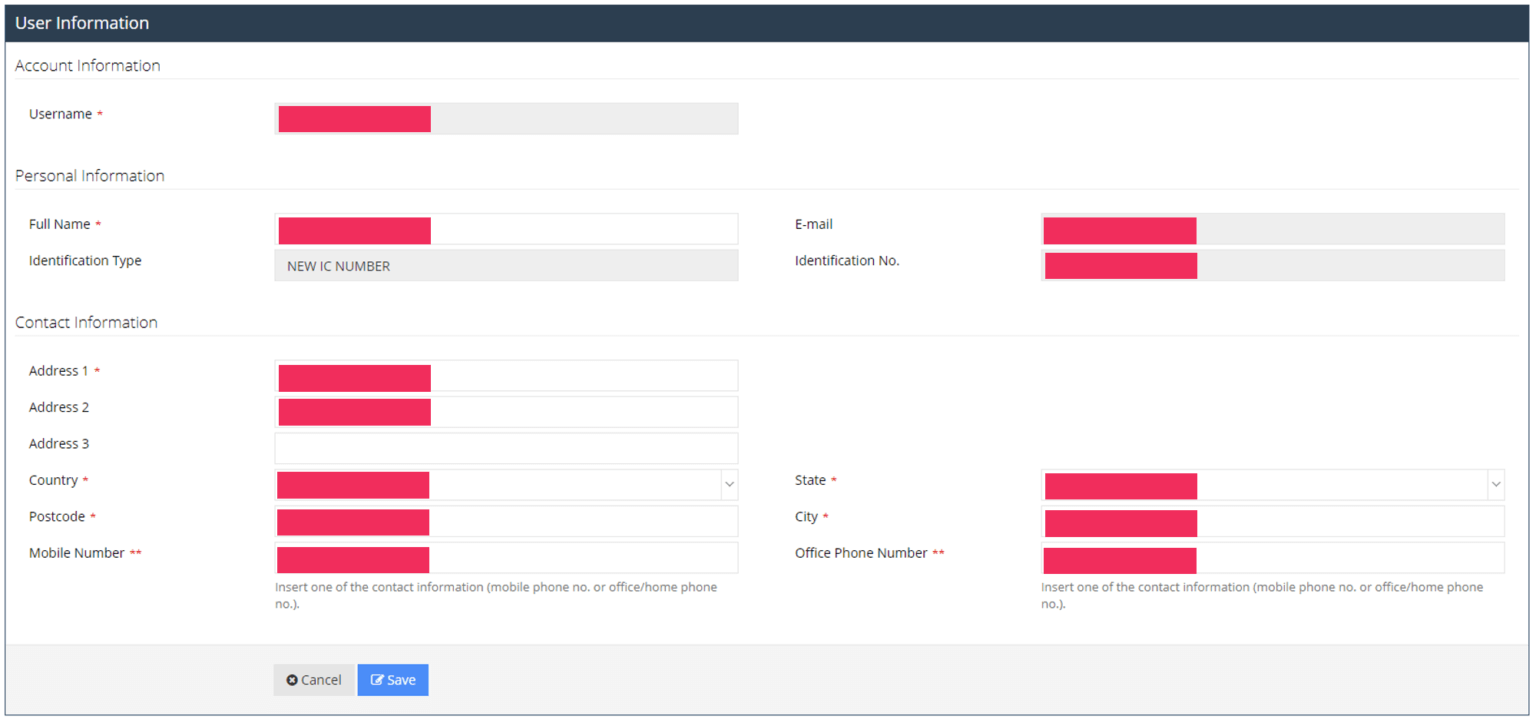
    Next, update your profile. Make sure to fill up all the boxes that is marked as compulsory (*).

    User Profile Information Form

    Step 3: Check for Unclaimed Monies

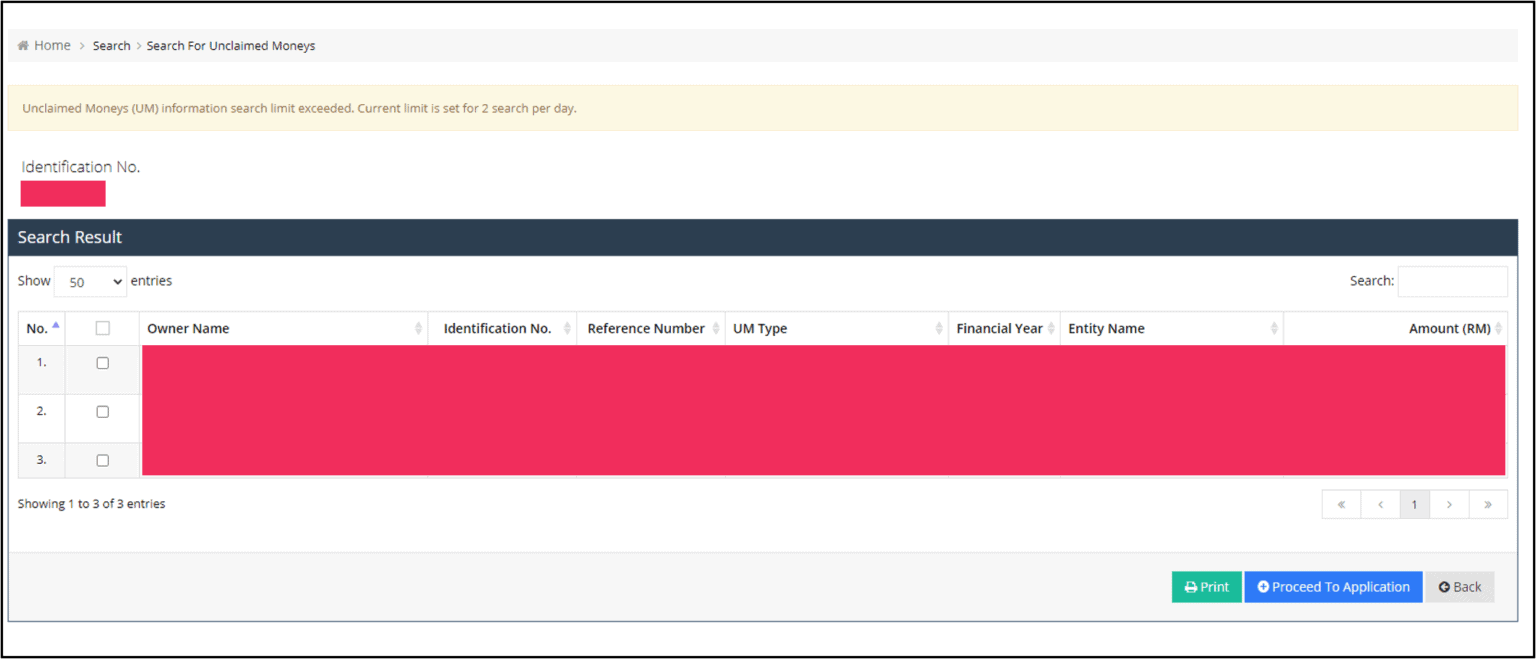
    Click on “Search for Unclaimed Moneys” and enter your Identification Number into the provided space. If you have any unclaimed money, it will show up in the search result.

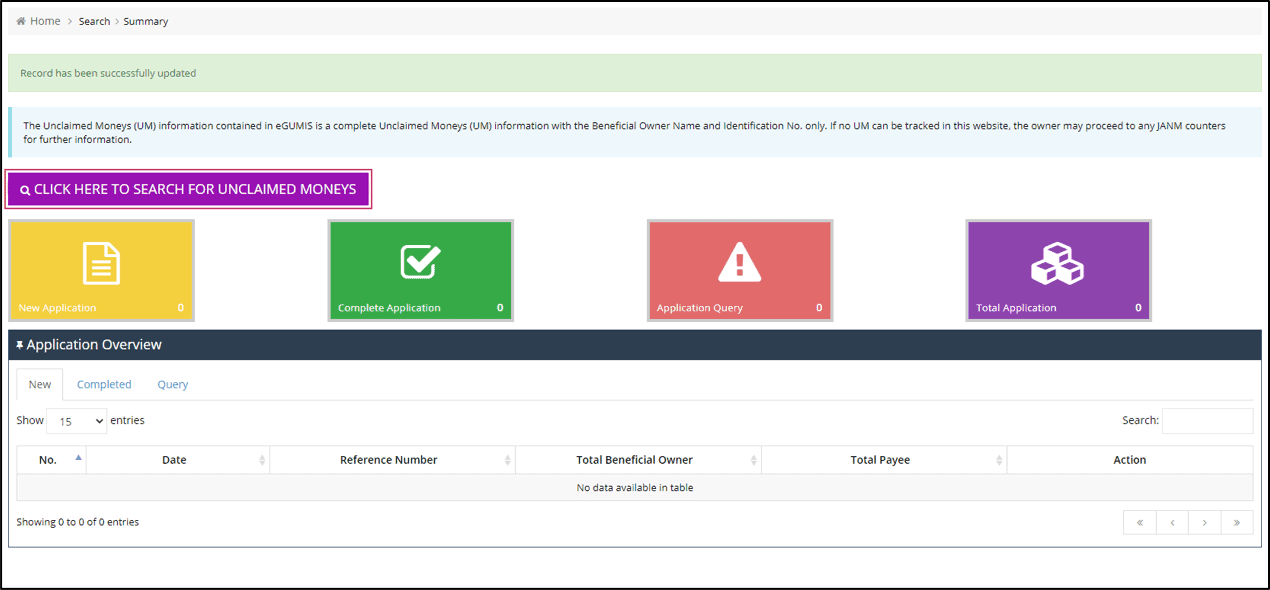
    Unclaimed Monies Summary Search Result For Unclaimed Monies

    I also helped my parents check their unclaimed money through my account. However, I’m not sure if I can actually process the claims using my account, so to be on the safe side, I registered new accounts for them to help them claim their money.

    Do note that you can only check a maximum of two IDs per day.

    Step 4: Application Form

    If you have any unclaimed money, here is what you need to do to claim it:

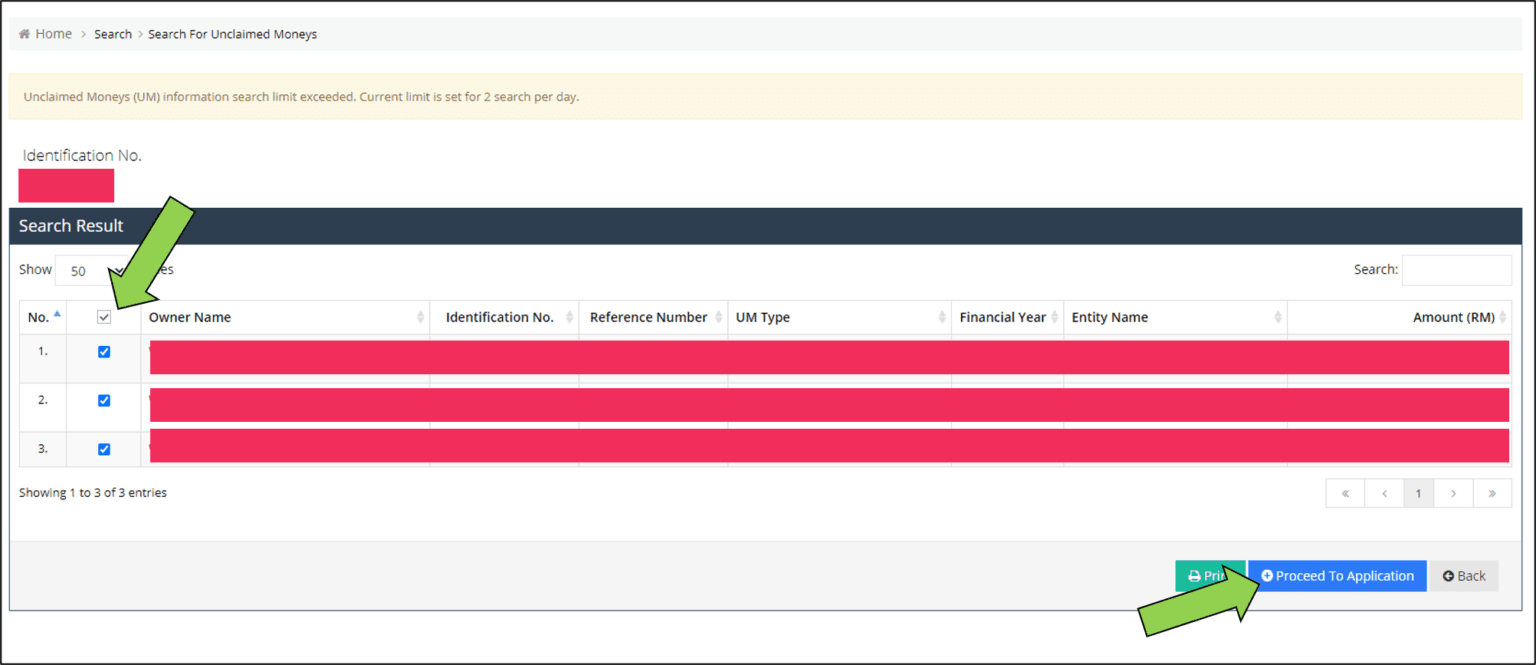
    Don’t click anything other than the following two steps. As the system doesn’t save your search results, if you use up your quota of two searches per day, you have to wait for the next day to proceed to the next step.

    Search Result For Unclaimed Monies

    Select the “check all” box, as I assume everyone wants to claim all their unclaimed monies.

    Select the “Proceed to Application” box.

    Step 4.5: (Workaround) Bug in the System

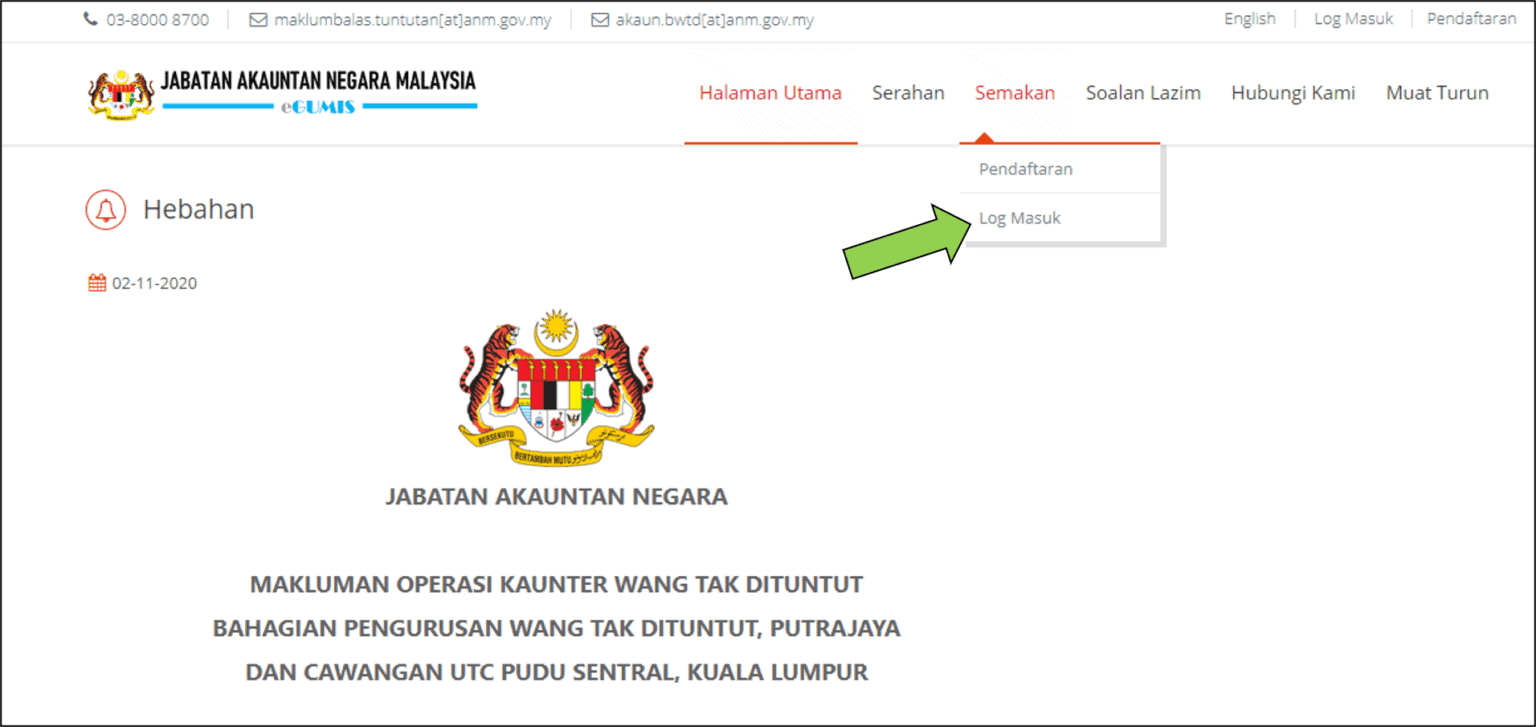
    In my experience, for some reason, there is a bug in the English version of eGUMIS which prevented me from proceeding to the next step. I’ll save your time without boring you with the details; here’s the work around:

    English eGUMIS login JANM Login Page

    Visit this link and under “Semakan” click “Log Masuk”. This is the Bahasa Malaysia version of eGUMIS.

    Step 5: Enter Payee Information

    This screenshot was taken in the English version. In the Bahasa Malaysia version, “Tambah Penerima” is also located in the same position.Enter Payee Information Screenshot

    Once you click on “Tambah Penerima” (Payee), a pop-up will appear and you’ll need to fill in your particulars and bank account number accordingly.

    After you’ve saved the Payee details, check the two boxes below and click on the “Hantar” button.

    Step 6: Almost there

    Once you’ve completed your application, you should receive an email by the AGD. To complete the claim, you are required to submit:

    • A copy of your ID (IC / passport / company certificate)
    • Bank statement (from the same bank that you entered in the Payee column).

    Submit the above document to permohonan_wtd@anm.gov.my with the application number as the email subject.

    (Please be reminded that each email cannot exceed 15MB.)

    Final Thoughts

    Even though there’s no time limit as to when you can claim your money, it’s better to claim it as soon as possible. This is because the Registrar of Unclaimed Money doesn’t pay any interest on the money claimed while your money can be invested elsewhere to generate a return.

    One common reason why money remains unclaimed is because the legal beneficiaries don’t know about the money after the owner passes away. This is especially true if the owner dies unexpectedly. Therefore, it’s good to have a simple will (at the very least) to avoid this scenario.

    Don’t stop at checking your own account; if you have elderly parents or family members, do help them to check as well.

    However, please be reminded that the Ministry of Finance or the Registrar of Unclaimed Money doesn’t appoint any individual/firm/company as agents for the refund of unclaimed monies. Be extra careful if anyone claims that they can help you claim the money.

    This article was originally published at planNERD.

    About the Author 

    Marshall Wong is a licensed financial planner and can be contacted through his website or marshallwong@fa.my.


  • Cultivating Healthy Financial Literacy for Kids

    Cultivating Healthy Financial Literacy for Kids

    “I wish I knew about this earlier. Why were we not taught this at school?” Thus begins the lack of education and awareness of financial literacy in kids.

    Whenever I discuss financial planning and other sub-topics with clients and prospects, this is the most common thing I hear. 

    Have you ever thought about how great it’d be if good money management skills were nurtured in our young ones? And how it’d be even better if we’re prepared to face the challenges in handling money from young? 

    One of the best skills that parents can teach children from a young age is smart money habits. It’s important to impart good knowledge and attitude in handling money during the early years as it’ll shape their attitude towards money as adults.

    Undeniably, this will largely be influenced by parents, peers as well as the media. If their foundation is strong, they’ll be able to rationalise the idea of money and become financially savvy in the future once they become adults.

    However, it’s getting tougher to teach kids about the value of money since we’re firmly in the cashless era now. More and more people are no longer used to paying for things in cash, with more online transactions and card payments used.

    Thus, kids do not see physical money transactions when their parents and people around them purchase goods and services. In addition, with the easy availability of credit today, the need to be able to manage money is even more important.

    So how can we start teaching our kids about good money management?

    1. Start Them Young

    Parents can teach their kids from as early as three years old. Kids at this young age learn through observations so for a start, parents can teach the concept of money by exchanging it for food or toys, which is likely to be their primary interest at such an age.

    2. Value of Money

    For kindergarteners and school-going children, you can start to teach them about the value of money. This is to prepare them since they will need to purchase their own food when at school. At this age, parents must be more involved by instilling confidence in their kids. 

    For instance, get your kids to approach the cashier and pay when making purchases, while you observe.

    To assist when they’re paying to ensure that they can calculate the money to give and balance to receive.

    Provide them with a fixed allowance and rationalise with them by suggesting substitutes if the item they choose is more than what’s budgeted. As a result, you’re also teaching them that not everything can be purchased, and we should spend within our means.

    3. Include Your Kids in Conversations

    When your children are in their teenage years, do include them in conversations when making money decisions.

    You may ask for their opinions and discuss the advantages and disadvantages, repercussions, and rationalisation behind making decisions with regards to financial decisions like buying a car, a television, a phone etc. 

    You can also discuss with them their aspirations for college and the cost it entails. This is important as they will learn that it’s okay and safe to talk about money with someone that they trust i.e. family members.

    In addition, they will feel involved and should develop a sense of responsibility towards money as their opinion is heard.

    As a result, they’ll have more understanding and familiarity about how money works and how better to manage debts.

    4. The 3 Jars System

    Parents should provide a consistent allowance to school-going kids so they can practice handling money and learn how to manage their allowance.

    One of the ways to inculcate a healthy financial mindset is to set up jars that signify a percentage of their money eg. 70% for spending, 20% for savings and 10% for charity or donation. 

    At the end of each quarter, bring your kids to the bank to save the money accumulated and bring them to the charity of their choice to share some of their savings.

    Consequently, you are teaching your kids about sharing with the less fortunate, how to save for their future, and budgeting for spending on what they need and want.

    5. Paint the Picture that Things Can Go Wrong, Sometimes

    Kids should know that sometimes, things will not be in our favour and it’s not always rainbows and butterflies.

    Parents may share with their kids if they’re facing money difficulties and some compromises or sacrifices need to be made by the family. At times like this, where the economy is not as good, most people face pay cuts, unpaid salaries, and even retrenchment. 

    Thus, it is best to layout the expenses that can be dropped temporarily, for example, extra classes like piano, art, taekwondo, swimming etc.

    Do involve the kids in the discussion where some expenses need to be cut off as this will affect them, physically and mentally. Explain to them what needs to be prioritised for the time being.

    In this way, you also teach them that when things don’t go your way, you’ll need to have a mitigation plan in place without sacrificing what truly matters.

    6. Be a Good Example

    Parents should always portray a good attitude towards money in front of children. Avoid quarrelling about money due to overwhelming debts or spending lavishly above your means.

    Talk about money from positive angles and paint money as a tool that can help us achieve what we desire eg. education in the university of choice, to live comfortably within our means, and the freedom to work towards what we want to acquire with peace of mind. 

    Children learn about money from observing you. Thus, parents need to learn how to speak the right money language and develop the right money attitude and skills.

    Children will absorb these money habits from their observation and listening while growing up.

    Your beliefs become your thoughts,

    Your thoughts become your words,

    Your words become your actions,

    Your actions become your habits,

    Your habits become your values,

    Your values become your destiny.

    A famous quote from Mahatma Gandhi

    Kids that are taught good money management skills will have a better chance of making sound financial decisions and not getting into money troubles when becoming adults.

    They’ll also be better prepared to face any challenges in the future.

    As parents, we should discuss openly with kids and share our financial mistakes so that they won’t repeat them in the future (touch wood!).

    Nonetheless, in order to cultivate a healthy financial mindset in our children, we should also equip ourselves with the right skills, knowledge and good money management!

    About the Author 

    Fateen Binti Rosli (IFP) is a Licensed Financial Planner. Her expertise is in holistic financial planning that includes health care planning, children education planning, retirement planning, wealth accumulation and cash flow management. She can be contacted at fateen@wealthvantage.com.my

  • A Guide on Applying for A Housing Loan in Malaysia

    A Guide on Applying for A Housing Loan in Malaysia

    “Your loan application has been rejected.” If you had this said to you when you applied for a housing loan in Malaysia, then read on.

    Getting this response to your mortgage loan may be daunting and make you feel like a lost cause but don’t give up hope! There are several ways to navigate the murky waters of mortgage loan application – here are some points to look into to maximise your odds of obtaining approval for future mortgage loan applications:

    1. Check Your Debt Service Ratio

    This is one of the preliminary checks for financial institutions, with your debt service ratio (DSR) used to determine whether you’re able to afford the loan repayments. If the DSR is within their threshold given a range of income, it passes one stage of the mortgage loan application.

    The formula to calculate DSR is:

    DSR = Total monthly liability commitments / total monthly nett income

    Monthly Net income = Gross Income – Total Deductions (EPF, SOCSO, tax etc)

    Monthly Commitments = new loan application amount + car loan + personal loan + credit cards + mortgage loan

    Once the DSR has been determined, each bank will have their respective guidelines for the maximum allowable DSR threshold given a range of incomes.

    It’s typically determined by income level, but it may also be affected by your net worth and even things as arbitrary as educational background, age and nature of employment and sector.

    For example, some banks may recognise 100% of investment property rental income, and some may only consider 50% of the rental income.

    The calculation may differ also when it comes to variable income earners and the nature of the job. For instance some banks may take 80% of the six-month average income of an insurance agent, while others may take only 60%.

    2. Get Your Documents in Order

    Banks always look for a clear and complete set of documents for assessment. For any bank to process any mortgage or loan application, they require supporting documents including proof to validate your income sources and employment.

    For a salaried employee, the banks would like to see that you contribute to EPF and your income taxes via your payslips and tax submissions.

    For variable income earners, do keep a record of at least six months’ worth of income/payout statements and supporting transactions into your bank account(s).

    For the self-employed or business owners, ensure that your business documentation and accounting of bank balances are up to date as this will assist the loan officer to get any loans approved. In most cases, the bank would like to see a business with at least two to three years of operations supported by audited profit and loss and bank statement transactions to evaluate the ability to service the loan.

    3. Don’t Apply for Loans Immediately

    If you are a fresh graduate looking to submit a bank loan application, don’t apply immediately for a mortgage or credit facility once you receive your first payslip.

    While it may be tempting to get on the credit ladder, banks typically want to see a minimum of three to six months of permanent employment supported by your salary payslip, along with EPF and tax deductions (if applicable). 

    In the case of the self-employed or commission earners, banks look for stability in income and usually need to see a minimum of six months of payments to be certain that you can service the loan.

    4. Don’t Go Bankrupt!

    It goes without saying but if you are declared bankrupt, you won’t be able to secure any loans or credit facilities with any financial institution. Your status of bankruptcy can be obtained by checking the Malaysian Department of Insolvency (MDI) or searching on CTOS.

    5. Issuing Bad Cheques

    If cheques that you issue bounce back three times, this is a huge red flag. A bad cheque is commonly referred to as a bounced cheque, and refers to a cheque issued by an account holder, dishonoured and returned by the drawee bank when it is issued from an account with insufficient balances or a blacklisted account under the Credit Bureau by Bank Negara Malaysia. 

    Banks usually view this as a precautionary signal and will reject the mortgage loan application and other pending loan applications.

    6. Maintain a Good Credit Score

    Maintaining a good record and positive status in CCRIS and CTOS is essential. Banks use CCRIS and CTOS as a reference to evaluate credit pattern behaviours and adverse reporting that will illustrate credit payment ability and servicing financial commitments.

    The Central Credit Reference Information System (CCRIS) is a system created by Bank Negara Malaysia that maintains the repayment track record for the last 12 months of all credit facilities of participating financial institutions in Malaysia.

    Any late payment or prolonged late payments of over six months will be flagged as a “Special Attention “ account in CCRIS. This indicates a red flag for banks.

    CTOS is a privately-owned credit reporting agency that provides credit reporting and also has access to information such as bankruptcy, legal action and case statuses, individual’s business ownerships, shareholding and directorships.

    They can also retrieve information from utility and telecommunication companies if you have outstanding bills (even if it’s only RM50!) and which can be a cause for banks to reject your loan application!

    7. Ensure your Quantitative Elements are Solid

    In this day and age, every bank has its own algorithm and software to calculate an individual’s score. This can be a subjective matter as software calculates the scoring according to quantitative and qualitative elements, which may not be the same as the algorithm and systems used by other banks.

    The quantitative elements include DSR calculation, the net worth of an individual or profit and loss of a company and also refers to CCRIS records. Qualitative elements include factors such as age and educational background.

    Your score will differ across each bank as they use different algorithms and systems. As a mortgage loan applicant, you can improve your profile by ensuring the quantitative aspects are covered and within their requirements.

    8. Not Having Any Credit History

    A poor credit score is not the only reason lenders reject mortgage loan applications. Having no credit history makes banks uncertain of your ability to pay.

    It’s advisable to build up a clean credit history, and it’s normally best to start this by applying for a credit card application or taking up a small loan. 

    With a smaller credit card facility or loan (that is consistently paid!), this may create a higher approval rate for your mortgage loan in the future because the perceived chances of defaulting on payment are lower.

    9. Late Payment of Instalments

    A poor track record of loan repayments gives a bad impression to potential lenders and might impact your future application. So try your best not to be late and settle your credit card bills, car loan instalments and other commitments on time.

    One way to do this is to set a payment reminder on your calendar or other forms of reminders on your mobile devices.

    10. Bank Risk Appetite

    Lastly, it is important to note that all banks have different risk appetites. There are instances where a bank has their own non-preferred segments; this could include people working in a niche industry, not meeting the minimum age, or not having a strong educational background requirement.

    You may get rejected for holding too many credit cards and you may also get rejected for not holding any credit card. In addition, a rejection could also be due to the mortgage financing not being within their particular area, developer, property type or market segment.

    Treat applying for any mortgage or loan like you’re going for a job interview. With a little financial planning help in money management, preparation of supporting documents and maintaining a clean profile in CCRIS and CTOS you stand a better chance of getting your mortgage loan approved by the right bank.

    About the Author

    Rozanna Rashid is a Licensed Financial Planner (CFP, IFP) that has an MSc in Real Estate Economics & Finance from the London School of Economics & Political Science. Her background is in corporate banking and Islamic finance and she can be contacted at rozanna@alpine-advisory.com

  • The Importance of Financial Planning

    The Importance of Financial Planning

    Have you ever thought about what would happen if Malaysia’s government re-implements the Movement Control Order (MCO)? With the upward trend of Covid-19 cases in Malaysia, this is a big possibility.

    Be honest for a second – are you well-prepared for the next MCO? Many seasoned working adults in Malaysia are struggling to manage their cash flow, let alone fresh graduates or youths.

    This highlights the importance of financial planning and being financially literate from an early age.

    A survey conducted by AKPK in 2019 shows that only 24% of Malaysians are able to survive on their savings for up to three months, while just 10% are able to sustain for six months or more!

    Are you among the 76% of Malaysians who won’t be able to cover expenses for more than three months? If so, what can you do to improve your cash flow?

    Differentiate between “needs” and “wants”

    Many Malaysians lack financial knowledge in general, especially in the area of financial planning. A study conducted by the Financial Education Network (FEN) showed that Malaysians are not confident about their own financial knowledge.

    Although 76% have set a personal budget, two out of five people were unable to stick to it. 

    In addition, one in every five Malaysian working adults couldn’t save any income in the last six months, while three in every 10 needed to borrow money to buy essential goods.

    In other words, these people had to rely on credit cards, government incentives or even loans just to buy food!

    To restructure your personal finances, you must learn how to differentiate between ‘needs’ and ‘wants’. For example, food, rent, petrol and insurance fall under needs.

    Conversely coffee, streaming services, the latest smartphones, and other luxury goods are not necessary to survive. If you are spending more on wants than needs, you should consider reviewing your cash flow and potentially cut down on luxury expenses.

    You could explore carpooling or taking public transport, or cooking at home to reduce spending on dining outside.

    Make saving a habit

    The rising cost of living in Malaysia, especially in cities, has forced many young working adults to become more frugal.

    Even with extra jobs, many are still unable to allocate any earnings to their savings, with a 2017 Bank Negara Malaysia survey revealing that 75% of the Malaysians are unable to raise RM1,000 in emergencies. 

    Due to poor saving habits, many youngsters rely heavily on credit cards to finance their needs and wants. As a result, they may fall deeper and deeper into credit card debt. When they fail to settle their balance, it becomes a debt that carries forward to the next month’s bill with compounded daily interest. In simple terms, they’re spending their future income in order to support their lifestyle.

    When planning your personal finances, I strongly encourage you to set a budget and always keep track of your expenses, and avoid using a credit card if possible. Below is a rough allocation budget I would recommend:

    30% Savings and investment
    50% Necessities
    10% Commitments
    10% Insurance and protection
    100% Total take home income

    It is advisable to allocate at least 10% to 30% of your income to savings and investments. These savings serve as emergency funds for you to cover the cost of getting sick, accidents and more.

    You should also look into exploring small investments that can help to grow their wealth. I highly recommend that you save or invest before spending so that you won’t spend all your income. 

    Do also allocate at least 10% of your income for commitments such as PTPTN loans to reduce the principal and compounded interest. Another 10% should be allocated for protection, as you are human and unable to foresee unfortunate incidents in your future.

    By purchasing insurance, this offers peace of mind and a reduction of your financial burden during times of sicknesses or unfortunate events.

    If it’s too good to be true, it probably is!

    High-return investments always sound good on paper, which is why it continues to attract many people, young and old alike. However, if you aren’t able to self-engage in comprehensive and thorough financial planning, you may lack a clear understanding of financial risks and returns.

    This makes you prone to errors of judgment, which leads to high-risk or unwise financial decisions. 

    It’s very easy to fall into investment traps and suffer huge losses. Many are also jumping into the deep end of trading in forex and bitcoin, or worse still – pyramid schemes and other scams.

    Without proper financial planning or knowledge and understanding, it’s easy to be misled by shiny numbers and figures without considering the risk or feasibility of such schemes.

    Don’t be susceptible to financial traps and irrational financial decisions – read and learn everything you can about investing before jumping in to avoid becoming another statistic.

    In a nutshell, it’s incredibly important for you to learn how to manage your cash flow and have your own simplified financial plan.

    By better understanding your cash flow analysis, you can re-allocate your income wisely.

    Always remember to save before you spend and understand the financial risks and returns before investing into anything. Be sure to avoid investing in platforms or schemes that aren’t legally recognised by the Securities Commission Malaysia

    Finally, remember that it’s never too early to start your financial planning journey!

    About the Author

    Edmond Tang Zhen Han is a certified financial planner that is passionate about helping people achieve financial literacy in order for them to reach financial freedom. He can be contacted at edmondtangzh@genexus.com.my

  • Financial Planning for Fresh Graduates

    Financial Planning for Fresh Graduates

    Congratulations on your recent graduation! You are now entering into another exciting stage in life as a fresh graduate and are ready to start building wealth. This is just like building your dream house. Let’s start with financial planning for fresh graduates.

    You have to start building a strong foundation, so that your wealth is solid and stable. Here are three steps you can take to start your journey:

    1. Change Your Money Management Mindset

    Wealth accumulation is all about having the right mindset in terms of money management. Let’s start by accessing your way of handling money.

    Equation 1

    • Income – Saving = Expenses  

    Equation 2

    • Income – Expenses = Saving

    Which equation do you apply in your life? Your answer will reveal where your PRIORITY lies in managing money. In equation 1, you prioritise SAVING before spending. In equation 2, you prioritise SPENDING before saving. Eventually, you might end up saving nothing.

    For you to accumulate wealth, you have to pay yourself first every time you receive an income. It’s recommended to start saving (and investing) at least 10% of your income, and then gradually increase this percentage to 30% and beyond as your income continues to grow.

    The secret to wealth accumulation is all about spending below your means, saving and investing your money, and to continue repeating this with every pay raise you get!

    However, why are people prone to spend first instead of saving money? We are living in a digital era where our decisions and behaviour are easily manipulated via social media marketing, without us even realising it.

    I bet you can relate to the following scenarios:

    • When the latest technology gadget is launched, you are magnetised to purchase it to keep up with the trend
    • After viewing your friend’s Instagram story, you might make an impulsive decision to book a flight ticket for vacation
    • You are spending, dressing, behaving in certain ways to impress others

    The above scenarios are examples of social validation. We’re social animals and will do whatever it takes to belong to a social group. Therefore, you are likely to spend your hard-earned money just to keep up with trends and stay updated among your peers.

    Realising your worth is more than your social appearance can help in breaking social validation patterns. Sit down and think about who you really are and what defines you. Once you’ve cleared this up, you’ll start to make better decisions for your financial and mental health.

    2. Build An Emergency Fund

    Emergency funds are a financial safety net for unexpected events like losing your job. Not having a financial cushion might lead you into bad debts such as personal loans and credit card defaults. The biggest enemy of wealth accumulation is bad debt, because it is impossible for you to accumulate wealth while serving high interest bad debt.

    According to the RinggitPlus Malaysian Financial Literacy Survey (RMFLS 2020), 53% of Malaysians would not be able to survive for more than three months with their current savings. What will happen to them after exhausting their savings?

    The Covid-19 pandemic has put the importance of emergency funds firmly in the spotlight, so it’s important that you build up your own in order to survive unexpected events. But how big of an emergency fund do you need?

    If you are single with no dependents, aim to prepare an emergency fund with at least six months of monthly expenses. For example, if your monthly expenses (loans, food and beverages, transportation, accommodation, insurance, etc) is RM3,000, you should have at least RM18,000 on hand at all times.

    If you have dependents like your parents, spouse, or kids, prepare an emergency fund that can cover at least 12 months of expenses. Let’s say your loans and living costs total RM5,000 each month – this means you should have RM60,000 available in case of emergencies.

    3. Risk Management

    Life does not come with guarantees. The Covid-19 pandemic has shown us that anyone is vulnerable. Accidents can happen. Health issues may arise due to lifestyle choices, stress, and family history. When something unexpected happens, the last thing you want to worry about is money.

    In order to protect and grow your wealth, you need to mitigate your risks. Generally, there are a few types of insurance that’s advisable to have, depending on your situation. 

    Types of Insurance Purpose
    Medical Insurance Pays for your medical bills
    Critical Illness Insurance Lump sum money payable to you upon diagnosis of critical illness.
    Acts as income replacement
    Life Insurance Lump sum money payable to your beneficiaries upon death. 
    This is especially for those with dependent (parents, spouse, kids)
    Disability Insurance Lump sum money payable to you upon disability.
    Acts as income replacement

    By following the three steps above, you’re well on your way to building the right foundation in wealth accumulation. Once your foundation is solid, the next step is to understand and set your wealth accumulation goals like house purchase or retirement, as well choosing the right strategies and solutions to achieve your goals. However, Rome was not built in a day; be patient and take your wealth accumulation journey one step at a time!

    About the Author

    Kuah Soo Yee is a Licensed Financial Planner (CFP) who is passionate about helping people make sound financial decisions and achieve their financial goals. She can be contacted at soo.yee@ipp.com.my

  • Business Confidence of Asian CEOs Shaken by Pandemic

    Business Confidence of Asian CEOs Shaken by Pandemic

    A study by Big 4 global accountancy firm KPMG revealed how drastically priorities and concerns of Asian CEOs have changed in the wake of the Covid-19 pandemic.

    The crisis has shaken CEO confidence, with fewer chief executives saying they are confident now than they were at the start of the year when reflecting on business and growth prospects over the next three years.

    In the first study of its kind, KPMG conducted two surveys – one at the onset of the pandemic in January and a second in July/August to measure changes in CEOs’ priorities and concerns during the global pandemic.

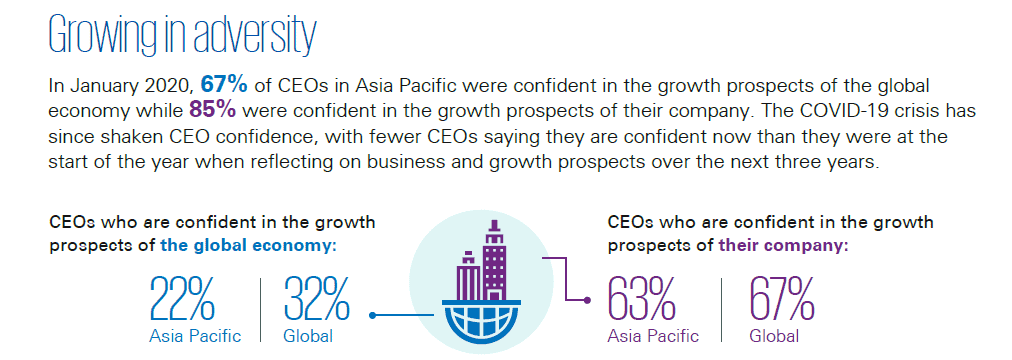
    The 2020 KPMG Global CEO Outlook revealed only 22% of CEOs in Asia Pacific remain confident about the growth prospects of the global economy over the next three years, a significant drop from 67% in January 2020.

    A clear result from the study reveals business leaders have “radically shifted” their perspectives as businesses and governments around the world continue assessing the long-term impact of Covid-19.

    It found during this period of unprecedented uncertainty, CEOs are prioritising digital transformation, talent and ESG (Environmental, Social and Governance) factors at the top of their agendas.

    On a more positive note, CEOs are much more assured in the resilience of their own business as 63% expressed confidence in their company’s growth for the same time period.

    Source: 2020 Global CEO Outlook, KPMG International

    Critical Measures to Bolster Resilience

    Datuk Johan Idris, managing partner of KPMG in Malaysia commented: “A majority of CEOs have undertaken critical measures to bolster their company’s medium-term resilience.

    “This is particularly evident at the height of the crisis when business leaders worldwide took steps to maintain business-as-usual activities in answer to restricted movements. With the extension of the Recovery Movement Control Order (RMCO) until 31 December 2020, business leaders are forced to relook at their operational strategies,” says Johan (pic).

    And key to this is the ability to move away from short-term measures and prepare for mid and long-term growth.”

    One way CEOs are collectively doing to secure long-term growth is channeling resources towards digital transformation initiatives.

    Before the pandemic, 64% of CEOs felt overwhelmed by the lead times required to achieve significant progress on digital transformation.

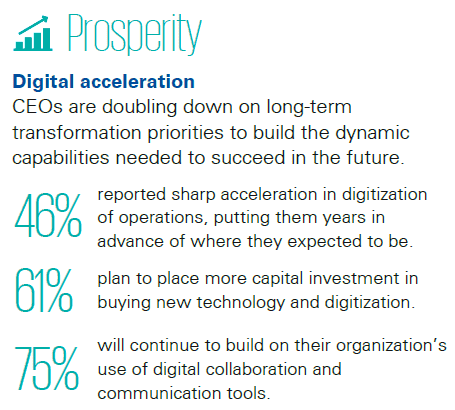
    However, following worldwide lockdowns and the need for physical distancing, 46% of CEOs have reported that progress for their digitisation of operations has sharply accelerated, putting them years in advance of where they expected to be.

    Almost two out of 3 (61%) plan to prioritise more capital investment in buying new technology and digitisation.

    “Clearly, there has been a momentous change in mindset in that CEOs are now more confident and willing to invest in technology to make their companies more operationally resilient, agile and customer-focused to achieve growth during this tumultuous time,” says Johan, adding he expects digital acceleration to increase in speed and scope even after the pandemic subsides.

    New Risk Paradigm

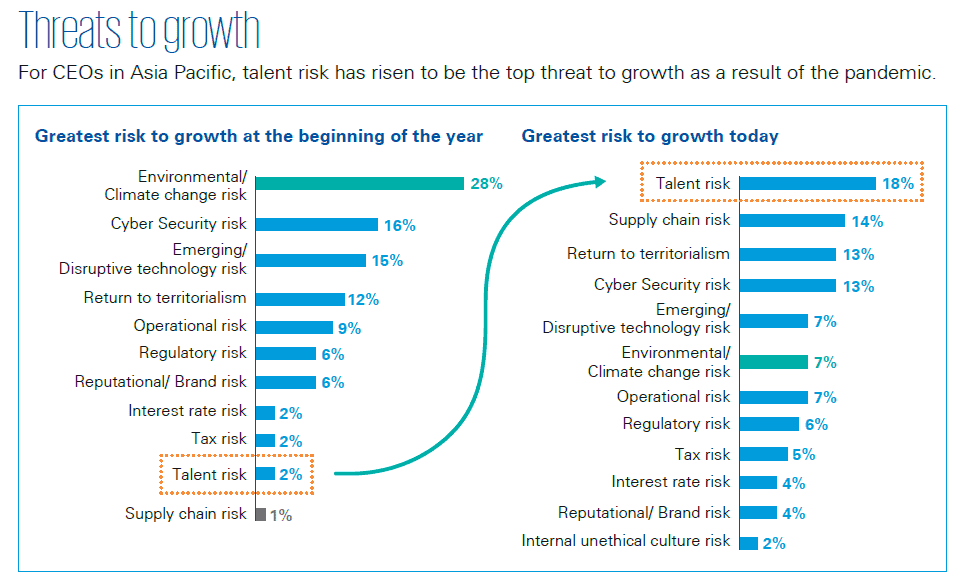
    CEOs have also identified talent risk as the main threat, a category which encompasses recruitment/retention, overall well-being and health of staff.

    This was the threat that CEOs were least concerned about at the beginning of the year. As a result of this pandemic, it has now risen to be the highest perceived threat to long-term growth.

    This could reflect the challenges CEOs face with recruiting and retaining personnel while motivating the workforce despite disruption to the usual ways of working.

    Most CEOs (72%) have said that remote working caused them to make significant changes to their policies to nurture culture, while 69% reported how remote working has widened their potential talent pool for future hires.

    Regardless of the barrier caused by physical distancing measures, CEOs recognise that losing key employees, attracting specialised talent, keeping workforces productive and the health and wellbeing of their staff can have a critical impact on their future business performance.

    Supply chain risk (just 1%) was at the bottom of the list for CEOs in January but catapulted to second place (14%) by July-August, the surveys revealed.

    The rise in supply chain concerns could be attributed to the fact over two-thirds of organisations (72%) have had to rethink their global supply chain approach given the disruptive impact of the pandemic.

    This could potentially lead to a redesign of global supply chains to become more agile in response to changing customer needs, and more robust to reduce risks and disruptions over the long term.

    Renewed Sense of Purpose

    Recent developments have driven 78% of CEOs in Asia Pacific to develop a stronger emotional connection to their organisation’s purpose, with 66% stating how they responded to the pandemic by shifting focus towards the ‘Social’ component of their ESG programme.

    KPMG’s survey also found that 76% have had to re-evaluate their organisation’s purpose as a result of the Covid-19 crisis.

    Johan concluded, “Recovery from the pandemic does not mean a return to normal, but instead an opportunity to define our post-pandemic reality.

    “As the crisis continues to change what good corporate leadership looks like, the role of the CEO is more important than ever in steering the business towards growth in the new reality and beyond.”