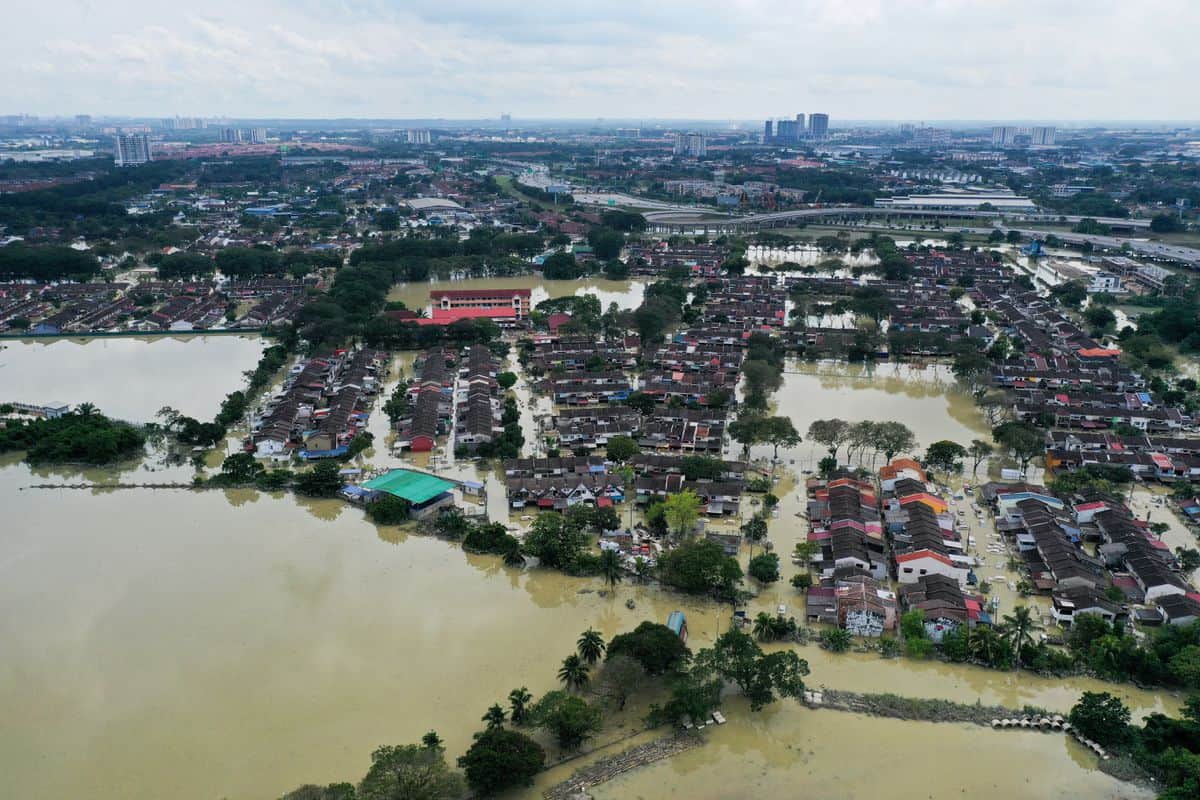
The 2021 year-end flood which affected many areas nationwide surpassed all previous year’s floods within Malaysia. These has financial implications on the lives of our fellow Malaysians. For those affected, here are some ideas on how to pick up the pieces and build resilience moving forward.
1. After the flood – restarting your life
Consider the immediate aids you can leverage on to restart your life and get back on track. These can come in the form of financial, food, or accommodation aid, life essentials such as clothes and household items, or even transport arrangements for stranded individuals.
2. Get your mental health in check
Be sure to stabilise your frame of mind and check your stress level. There are a number of free services and apps such as:
Naluri (03-8408 1748, 24 hours, English, Malay and Mandarin)
Selangkah – Selangor Mental Sihat (SEHAT)
MySejahtera (Digital Health > Minda Sihat)
3. Gauge your financial situation
Once more urgent and pressing matters are taken care of, you can now take stock of your current financial situation. Ask yourself:
What are my losses?
What are my family incomes?
What are my monthly commitments?
What are my debts?
What is the position of my current investments and savings?
What is my protection coverage for my life and assets (takaful/insurance for personal and workplace)?
These questions will help you paint a picture of your financial situation and will quickly bring up areas of concern (if any) which you can focus on as you look to recover.
4. Salvaging assets from flood damage
The next step is to consider your current assets. Firstly, assess damage to items within your household. Check if you have household insurance and if yes, whether it covers special perils or not.
Assess damage to your vehicles, and be sure not to start them as the electronic system will short-circuit; get tow trucks to haul it to a workshop. Depending on the make of your car, the repair cost may range from RM4,000 to RM10,000.
Other things to consider:
If you are working from home, is your laptop and handphone provided by your company? Do you need to report up or make a police report?
Are your important documents destroyed?
Do you need to replace NRIC/birth and marriage/divorce certificates at the Registration Department, driving licence and road tax at the Road Transport Department (JPJ), and school certificates from the respective schools?
5. Stay safe and healthy
In such trying times, keeping healthy may be the last thing on your mind but it is very important that you do your best to follow Covid-19 standard operating procedures (SOP) by getting help from NGOs and volunteers for masks and hand sanitisers.
Be wary of water-borne diseases such as typhoid, cholera and dysentery and use water-purifying tablets if you are unsure if the water is safe for drinking or you do not have access to clean water. Follow the dilution instructions that comes with the tablets.
6. Rebuild your financial status
The information in point (2) above is important to guide you on your next steps. You may seek help from:
Agensi Kauseling & Pengurusan Kredit
A licensed financial planner at SmartFinance.my where you can talk to an expert
Be on the lookout for scammers; they are heartless and only want your money. Only accept help from reliable sources. When in doubt, err on the side of caution!
7. Preparing for a future flood
The financial challenges you face today is the basis of your emergency fund for the future. Therefore, it is crucial to start building one when you can. Transfer some of the risks to your protection coverage and tap into your network of friends or relatives that you and your family can stay with.
Flood-proof your home and/or prepare your evacuation SOP and equipment (torch lights, inflatable boats, dry food, bottled water, charged power banks, clothes, blankets and toiletries in waterproof bags, disposable wares and bags). Be constantly alert of your surroundings. Chances are, it may be difficult to sell your home and move to another so you may need to continue staying in your current place.
Review how you place your furniture and appliances. Some homes put them on platforms that can be jacked up to desired heights (granted, if water level too high, it can render platforms useless). Store critical items in waterproof boxes when the rainy season approaches. It may also be prudent to check if you can convert your rooftop to an emergency accommodation equipped with the evacuation items listed above?
My heart goes out to all flood victims. We are fortunate there are volunteers and NGOs that we can contribute to, who will organise, mobilise and distribute contributions to as many victims as they can. I hope the above is useful to those affected. May you have a respite from your situation and the strength to ride through this tough times.
This article is contributed by Linnet Lee, CEO of the Financial Planning Association of Malaysia (FPAM).
Dr J.R Sathiyananthan, a Consultant Urologist at ParkCity Medical Centre, explains about kidney cancer and the measures that can be taken to minimise the risks of getting it.
Kidney cancer is a disease in which malignant tumour is found in one or both kidneys.
Kidney cancers account for a small proportion of all cancers, and the insidious nature of it makes early detection difficult.
In 2010, kidney cancer was reported to affect 1.9 in every 100,000 Malaysians, while 2020 data from World Health Organisation showing 2.1 per cent of all cancers in Malaysia to be kidney cancer.
Types of kidney cancer
“Kidney cancer is generally divided into two—primary and secondary kidney cancer.
“Primary kidney cancer comprises renal cell carcinoma, which accounts for 90 per cent of all kidney cancers, and other rare cancers such as lymphoma or medullary and collecting duct cancers.
Dr J.R. Sathiyananthan
“Secondary kidney cancer originates from cancers in other organs such as breast and colon. This in turn spreads to distant organs such as liver, lungs, and the kidney. This is not considered kidney cancer per se.,” says Dr Sathiya.
Although there are instances when kidney cancers are caught early, most are diagnosed at a more advanced stage. This is due to a variety of reasons, including the cancer being localised and growing without causing any pain or symptoms. Besides that, the nature of the kidneys lying deep within the body, small kidney tumours cannot be felt during a physical exam.
“At times when we examine patients for kidney cancer, it may have progressed to be locally advanced. Patients may have come in with flank pain, blood in urine, and sometimes the cancer is large enough to be palpable. The definite test which can confirm this is a contrasted multiphase CT scan, an imaging tool that provides accurate diagnosis. Besides that, percutaneous biopsies are also used in some circumstances to confirm the diagnosis and exclude metastasis from other cancers, bilateral cancers affecting both kidneys, or possibly benign tumours,” explains Dr Sathiya.
How the disease progresses
Currently there are no recommended screening protocols for kidney cancer in people who are not at increased risk. As of now, no screening test has shown to lower the overall risk of dying from kidney cancer.
Kidney cancer is known in some instances to grow aggressively and invade the surrounding bowel and solid organs, which is called local extension.
Other methods of progression could be blood borne, and spread to the lungs, liver, pancreas, lymph nodes, and bone. This is referred to as metastasis. When metastasis occurs, the outcome is expected to be poor as patient may not benefit from surgery.
The spread could occur anywhere between six months to years depending on the type of kidney cancer. Clinical data suggests that cancers larger than 3cm have higher tendency to spread compared to smaller ones. Nonetheless, the more common renal cell carcinoma has a slow progression rate compared to the rarer varieties, leading to the possibility of better outcome.
Treatment options
“Localised kidney cancer can be treated by surgery. This can be done by removing the entire kidney, also known as radical nephrectomy, or removing only the tumour, with multiple factors taken into consideration prior to this decision. For metastatic kidney cancer, there is evidence that removing the kidney may benefit the long-term systemic treatment, and it is still an evolving area. For those with advanced cancer where surgical options are not available, arterial embolisation to block blood supply to the tumour can treat some symptoms,” describes Dr Sathiya.
Although radical nephrectomy has been the mainstay of treatment for kidney cancer, the last 20 years has seen partial nephrectomy being the treatment of choice for most patients. This can be performed by open surgery, keyhole (laparoscopic) surgery, or robotically with the Da Vinci robot. The newer treatments include cryoablation and radio-frequency ablation, which can be used for tumours smaller than 4cm. Larger tumours may require multiple treatments.
“However, the evidence for the newer treatments is not strong and only supported by inferior clinical trials. Nevertheless, they are a viable option for weak patients who are unfit for surgeries or could be used in combination with surgery in familial kidney cancers where multiple tumours are found within the kidney,” Dr Sathiya elucidates.
Since it’s difficult to catch kidney cancer early, what can people do?
“The known risk factors associated with kidney cancer are smoking, obesity, and hypertension. If you can avoid those or keep them in check, you could reduce the chances of getting kidney cancer.
“Those who are at risk, for instance known family history of kidney cancer, should be aware of the symptoms and perform regular screening by ultrasound, blood, and urine test as prescribed by your Urologist,” highlights Dr Sathiya.
With the rise of self-employed entrepreneurs, here are some tax compliance obligations and common oversights.
There has been a dramatic growth in recent years on the number of self-employed entrepreneurs in Malaysia. From 2017 to 2018 alone, this number increased from 2.57 million to 2.86 million, an increase of 11.3% (source: Department of Statistics, Malaysia). In 2018, the self-employed are the second largest category (19.3%) in the Malaysian workforce out of a total of 14.8 million working adults.
Malaysia adopts a self-assessment system where taxpayers are responsible to determine their own tax liability and to submit their tax returns accordingly. As the number of self-employed entrepreneurs continues to grow in the Covid-19 economy, it is important for the self-employed to be aware of one’s tax obligations especially in the area of tax compliance. Failure to do so could result in penalties and additional tax payable.
A self-employed person is an independent contractor or a sole proprietor. The self-employed consists of sub-contractors working in the trades or construction sectors to professionals such as doctors, lawyers, accountants, engineers, and management consultants. Recent iterations include freelancers working in the commonly named “gig economy” (such as e-hailing drivers).
Here are some tax compliance obligations a self-employed individual should take note of:
1. Registration of Tax Identification Number (TIN) and submission of tax return
A self-employed individual should register for a TIN when the person has taxable income which exceeds a threshold of approximately RM28,000 per annum. A TIN can be registered at the nearest Inland Revenue Branch (IRB) branch or via e-Daftar at the IRB website.
For entrepreneurs running a business, the income tax return (Form B) will need to be submitted by 30 June the following year (eg. Form B for the year of assessment 2020 is due by 30 June 2021*extended to 30 September 2021 due to Government movement control, IRB website)
2. Estimate of Tax Payable
Under the Malaysian tax regime, a taxpayer pays income taxes on a “Pay-As-You-Earn” basis. Where an individual taxpayer receives other than employment income, the IRB may issue a Form CP500 setting out the estimate of tax payable under an instalment scheme. The Form CP500 is determined based on the tax liability of the previous year. What should you take note of:
The tax estimate is six (6) bi-monthly instalments commencing from the month of March every year.
Each tax instalment payment needs to be made within 30 days from the due date.
The remittance slip (Form CP501) should be submitted together with the instalment payment.
Should there be a need to revise the tax estimate which affects the instalment amount, you must submit Form CP502 to the IRB not later than 30 June each year on the revision payments. The IRB will issue a Form CP503 if the application is successful.
The penalty for late payment of 10% shall be imposed on the unpaid amount if the tax instalment payment has not been paid within 30 days from the due date.
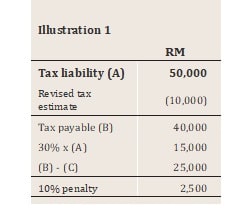
Where there is a difference between the revised tax estimate submitted and the final tax liability which exceeds 30% of the tax payable, the difference will be subject to a penalty of 10%.
The following illustration shows the impact when an estimate of tax payable is inaccurate.
3.Employer’s Responsibilities
As an entrepreneur, you might hire employees to expand your business. In this case, you will be considered as an Employer for tax purposes. The responsibilities of an Employer are as follows:
The Employer is to inform IRB of any new employees within one month from the date of commencement of employment.
Submission of Return of Remuneration by an Employer (Form E) to the IRB on or before 31 March each year. <continues…>
Homegrown e-commerce platform PGMall aims to compete with the big boys with its long-term growth strategy.
Being part of the booming e-commerce industry, PGMall is the fastest growing e-commerce platform in Malaysia.
However, this entirely homegrown operation has quickly established itself as one of Malaysia’s leading marketplaces and has big plans for expansion.
We sat down with Jerry Ng, the chief operating officer of PGMall as he outlines his vision.
Smart Investor: You studied physics for your degree and scientific computing for your Master’s, both in the UK. How did you find the transition from such contrasting industries to e-commerce?
Jerry Ng: Yes, I had a passion for physics and computing while I was pursuing my studies. After completing my studies, I secured a job in the UK as a software developer. This was definitely an extension of my passion in computing and I really enjoyed the experience.
And to be honest, I found that this transition over to e-commerce was not that big a jump. This is because whatever you need to do in the e-commerce industry, you need that technological understanding. This includes the operational side on the backend, as well as how to scale a marketplace platform from small volume of consumers, sellers and transactions to a much higher volume.
For me, my experience working as a software developer meant that I gained valuable technical knowledge while working on similar websites and companies. I believe this knowledge will help me guide PGMall in the coming years to the next level as we aim to transform into a highly scalable and cross-national entity.
SI: When talking about e-commerce, there are many other companies in the market. So what sets PGMall apart from these other marketplaces in Malaysia?
JN: The biggest thing that sets us apart is that PGMall is a fully, locally owned and operated company in contrast with the other two companies which have ties to China and Singapore. We are very proud to say that right now we are the number one local e-commerce player in Malaysia.
All things considered, we are doing well against our competitors considering that we are the third largest platform in Malaysia. We are delighted that we have managed to achieve significant growth over the past few years, alongside the explosive growth of the e-commerce market. We are also confident about our business model as our customer base is stickier than that of other platforms. This is because we reward our customers based on their behaviour; anytime they buy or spend on our platform, we will reward them accordingly.
A good financial plan creates a roadmap or a guiding light for your financial life journey. It’s more than money and gives you an overall picture of where you stand financially and where you’re heading to. It should include financial details about your cash flow, savings, debts, investments, insurance, and any other aspects of your finances.
Financial planning is an ongoing process that allows you to get your money and life under control so that you can reduce stress, fear, and worries about your future life. I think everyone should have one, and it can be done in your own style or with a financial planner. Remember, financial planning is not only for the wealthy or people earning a high income.
You don’t need sophisticated software or tools to draw up your own financial plan; instead a blank piece of paper will help you to kick start the process. Start by listing down what you have (assets eg. savings account, EPF, investment account, investment property, business, etc.) and what you owe (liabilities eg. mortgage loan, car loan, personal loan, credit card, study loan, etc.), income (cash inflow) and expenses (cash outflow). This will give you a snapshot of whether you’re at a financial surplus or deficit, making it easier to work out a financial plan – covered in the next step.
Setting goals for your financial plan
This is where you decide how to design your own life. When crafting your own financial plan from the viewpoint of what your money can do for you, you’ll make saving and investing feel more intentional than overspending it. Your goals should be inspirational, measurable, and realistic – ask yourself where do you see yourself in five years’, 10 years’ or even 20 years’ time? It’s important because it gives you direction to achieve your financial goals at different life stages and it also influences how you plan your career as well.
For example, there will be different needs when doing financial planning in your 20s, 30s, 40s and 50s. In your 20s, you might want to make sure you have sufficient emergency savings that lasts for at least three to six months so that in emergencies you won’t be running on credit. Don’t forget to factor in insurance and ensure you get adequate coverage for personal accidents and a medical plan.
In your 30s to 50s, you’ll likely be experiencing high commitments due to getting married, raising kids, preparing university tuition fees, and funding your retirement fund. As you progress from different life stages, you’ll need to regularly keep an eye on your allocations for investing and spending. If you know that these things will happen in your 30s to 50s, you may save and invest more in your 20s or prolong the retirement age from 55 to 60.
Monthly budgeting for your financial plan
The next step is to allocate your monthly budgeting – what is coming in and what is going out to understand your spending habits and only able to take a balance between spending and savings. It depends on where you live and how you spend – living in an urban area may result in spending more due to higher rent, eating out more etc. If you don’t spend more than half of your income, then you can start saving enough to fund your goals. Of course, you can’t own the whole world, but you can own the things that you value the most!
Executing your financial plan
This is all about allocating your resources or cash surplus to fund your goals. Saving and investing must come into play and you should consider the types of financial products, the risks, returns and liquidity, as well as understanding your risk tolerance. For example, if you set aside 15% of your gross income for long-term goals like retirement, you may consider investing in stocks or equity funds that aim for capital appreciation. For shorter goals like saving for an emergency fund, you wouldn’t put your money in a high-risk fund because you might need it quickly in an emergency. It’s best to have separate accounts for different funding purposes.
Review your financial plan
Lastly, review and monitor your financial plan regularly to ensure you exercise strict discipline with the flexibility to adjust accordingly in the future, especially when entering different life stages. It’s easy to talk and plan, but execution remains the most challenging task as we may not have the discipline to stay on track. So, reviewing, monitoring and fine-tuning acts as reminders of your goals all the time. It’s best if you can make it measurable so that you can reward yourself with small gift when you are on track!
A good financial plan is not a beautifully written document that is presented nicely to you. It’s a tool to track your progress and help you reevaluate plans after a life milestone such as getting married, raising a kid, buying your first property, upgrading to a new car, preparing for a kid’s college fee, or building your retirement fund. When everything is handled, you can enjoy living your life. The small steps you are taking now will definitely have a huge, positive impact on your future.
About the author
Eewen is a licensed financial planner and strongly upholds the belief that financial wellness is all about money bringing a positive impact into your life. She can be contacted at keaheewen@vka.com.my
Taking personal finance to another level by looking at it from a more holistic view.
How has the past year been for you? I’ve done a lot of reflection on myself and how I want to further evolve when things get a little more normal for the coming year (fingers crossed)!
One thing I personally learned is about life and recognising that money is just a tool. We must make sure we use it correctly in order to work towards financial wellness.
“People first, then money, then things.” – Suze Orman
Reflection on the path to financial wellness
The stoic path to wealth mentions that the fear of losing all our wealth is creating a monster inside us and therefore turning the chase for wealth into fear of losing it.
This eventually turns money into our master and we’re enslaved by fear until we almost lose touch with ourselves.
There is a saying “Money is the root of all evil”. But in actual fact, the full quote is “the love of money is the root of all evil.”
It’s the greed for wealth that is bad as it can corrupt minds, and the need to keep accumulating more and more is the real issue.
Money is not the end goal
Personal finance is not about the money we have or about creating more wealth. Its main purpose should be more holistic, ie. leading the life you were born to lead, no matter what your financial status is.
You’ll see money in a different light if you began your career with a student loan. Even before starting your career, you’ve already created a load of fear by accumulating a large amount of debt.
This results in your mind becoming clouded with thoughts of the repayment of loans first and pushing aside all other goals or dreams. I personally experienced it as a child; teachers kept telling me to finish school, get good grades, go to university, get a degree and get a good paying job.
As a child I thought that was the dream, but it didn’t turn out the way I imagined it would as a child.
We were repeatedly told this fairytale, and subconsciously I believed it. But now that’s not the case. How can we take a holistic approach around our personal finances and take back control of our life?
Believe me, we’re not meant to suffer through life constantly worrying about paying bills.
Reflecting on your childhood dreams
Have a goal in mind. You already knew what you wanted when you were a child. In fact, there’s a good chance you were so good at it.
Try asking your parents or other close family members what you were like when you were around the age of 9 to 12. It’ll give you some insights about your strengths and your childhood dreams.
I grew up observing how passionate my parents were and how they were willing to give their all to their career. At the end of the day, my parents still had time to spend with us and go on a little vacation once in a while. It was a nice balance.
That’s currently what I want to strive for – a balanced life between my career and family.
I’m not saying I don’t want to be rich (who doesn’t), but it’s not my main focus right now.
Between juggling two young kids, my husband works long hours because he enjoys the work he does. Even though in my opinion, he deserves to be paid better, it matters less.
There’s been a string of financial decisions we made that may be a sin in the personal finance community focused on accumulating wealth. But we needed to make those decisions to get to where we need to be in life.
Our goals were bigger than wealth accumulation.
Using my finances to find peace
We can never be free. I believe there’s no such thing as financial freedom. This is because I realised just when I thought we were “free”, something would suddenly hit us like a bomb and I would think “Here we go scrambling again”.
Getting married is expensive. Staying married is expensive. Having kids is expensive. I remind myself of my battles daily.
If my needs are covered, I am willing to forgo some of my wants. How precious and priceless is the laughter of a child?
Just do you
It‘s terribly hard to maintain a balance and I personally struggle with this on a regular basis. Turning off the work switch and being present was a difficult process.
Being frugal and being disciplined in managing our budgets has a big impact on our long term finances.
But this just makes me exhausted. There’s no point stressing about maximising my savings or the future so much that I forget to be present. The goal is not the money – it’s my life.
I’m not going to kill myself just to keep striving towards this illusion that my future will be far brighter if I continue maximising my savings and investments.
I choose to enjoy every step of the journey instead, without mentally burdening myself.
Use your wealth-building experience to create happiness for yourself and inspire others to do the same. Remember it’s not about the numbers and figures in your portfolios, but what you do with the money.
“Wealth consists not in having great possessions but in having few wants.” – Epictetus
Move from survival mode to thriving mode. Choose not to be trapped in the illusion of not having enough. You’re enough! If you’re in survival mode, you’ll trap yourself in the rat race.
Therefore, there’s no room for helping others and all you’ll think about is how to make yourself better instead of the community around you.
About the author
Nurul Yahi has a background in Business Administration majoring in Islamic Financial Planning. She’s a financial enthusiast and you can find her at dearduit.com. You can also find Nurul on Twitter, Instagram and Facebook.
It’s been a tough year for the world, and Malaysia is no different with Covid-19 cases rising to a new high from 2,000+ cases to 6,000+ cases daily despite several Movement Control Orders (MCO).
It doesn’t seem that the pandemic is going to end anytime soon, so what’s the best way to manage personal risks in this new normal?
Managing personal risks means being prepared for the worst possibilities that may occur.
It also means that you should ensure that if something unprecedented does happen, it would leave little to no impact on your family finances and well-being.
Here are six tips on how to manage your financial risks in this new normal:
1. Prepare a buffer of emergency funds
Thanks to the Covid-19 pandemic, the economy has been severely impacted and the unemployment rate is rising. Due to the restrictions set by the government, many businesses couldn’t survive, leaving them with no choice but to enforce pay cuts, retrench staff, or in the worst case scenario, shut down their businesses.
In addition, there are also businesses that are quick to adapt and move towards digitalisation which can often mean that human capital is then regarded as redundant, leading to further retrenchments.
This turbulent time has taught us that anyone can be at stake, which is one of the main reasons why it’s absolutely crucial for us to build up an emergency fund that can last at least 6-12 months.
Having this fund will provide a buffer of cash reserves to help us weather tough times if we are no longer able to rely on our active income or even when we experience pay cuts. It’ll also help us avoid relying on a credit card for essential expenses as a go-to fund will be in place to help us stay afloat.
2. Upskill or reskill to stay relevant
With the increasing unemployment rate, the job market is becoming more uncertain and tough. The supply of labour is now greater since more people are actively seeking jobs.
Thus, it’s essential to always ensure your skills aren’t obsolete and are still relevant. That way, if you’re still employed, your company will see you as valuable and thus increases the chance of job security.
On the other hand, jobseekers will benefit from upskilling and reskilling as you’ll remain employable and at the same time stand out in the job market. There are tons of free and paid courses to explore online.
The Employment Insurance Scheme (EIS) under the Social Security Organisation (SOCSO) also provides vocational training to eligible participants who have been retrenched. The training cost will be covered by them and you may also be eligible to receive a training allowance.
In addition to all these, do consider being flexible and open to any job even though it’s not paying as much, as this will not only help you with learning and using relevant skills but will also help to stretch your emergency fund before you land yourself a suitable role.
3. Reduce the risk of getting infected
The number of cases has shown that the virus doesn’t discriminate or choose its victims. We also know that people who fall under vulnerable categories have a higher risk of getting infected, and it can even be fatal for them.
Regardless of which category we’re in, it’s important to follow the standard operating procedure to reduce the chances of getting Covid-19 and to ensure that we won’t become a carrier to those who are more prone to be infected.
Try to lead a healthy lifestyle; be it in terms of adopting a balanced diet or engaging in physical activity to boost our immune system. It’s easy to opt for a sedentary lifestyle these days, especially now that some of us can work in the comfort of our home without having to travel back and forth to the workplace.
In addition to that, it’s crucial to get vaccinated to prevent you from getting infected with Covid-19, and by doing so, we can also help reduce the spread of the virus. You can register on the MySejahtera app if you’re yet to do so.
4. Be prepared for unfortunate events
As much as we try our best to maintain a healthy lifestyle, we’re all exposed to risks other than Covid-19. Death is inevitable, while total permanent disabilities and illnesses are potential risks in life.
If we’re not prepared for such events, it may leave our family finances vulnerable and possibly break the bank or worse yet, spiral into debt.
These are scary events to think of, but we have to face the fact that not preparing for them is more detrimental. So how can we start? Think about how you would want your money to be managed in these events.
For instance, if you were to pass away, how would you settle your debts and ensure the continued survival of your dependents? This is imperative for parents with minors and those with special-needs dependents.
As for disabilities and illnesses, are your funds enough to take care of this, or is it cheaper to opt to be insured in the first place?
5. Take up financial initiatives by the government
Since the first MCO, there has been much financial assistance offered by the government to safeguard the people’s welfare as well as to continue stimulating the economy.
While some financial initiatives announced aim to help vulnerable groups and daily wage workers, there are also optional initiatives like the EPF i-Sinar advance facility and loan moratorium where you can defer your loan repayment.
So who should take up this financial initiative? Those with little or no emergency funds, high-interest debts like credit cards and personal loans, at risk of getting retrenched, experiencing pay cuts or retrenchment, or a monthly cash flow deficit should consider taking these up.
Take this period of assistance as an opportunity to reset and improve your financial situation so it’ll be more resilient to withstand any shocks. Having said that, it’s also important to understand the impact of utilising these facilities.
The EIS by SOCSO also offers a job search allowance (JSA) for those who are eligible, and if you do, you can claim this allowance for up to six months. It will be reduced over the period so you won’t be able to fully rely on this, but it’ll certainly help your emergency fund last longer.
6. Review your investments
‘Should I redeem my investments?’, is one of the questions I received a lot during this hard time as people are uncertain about the market. If this is what you are thinking of, review your investments and ask yourself:
What is my investment objective for that particular investment?
The objective of investments will determine how long you should stay in the market. A longer time horizon should be able to withstand the turbulence as you’re not going to need the money in the short term.
This is also where the emergency fund plays a role to increase the holding power of your investment and you won’t need to cash out in times of emergency.
Am I able to withstand the ‘roller coaster’ movement of the investment?
If your answer to this is no, you may want to switch to a lower risk profile. This doesn’t mean that you’re exiting the market; it just means that you’re lowering your exposure to high-risk investments and increasing exposure to low-risk investments so you’ll not have to experience as much volatility.
Are my emergency funds enough?
It’s essential to have a buffer of funds prior to any investment. However, different people have different circumstances these days.
If you’ve suffered a job loss, and are currently living on your emergency funds, you may want to have the a final backup plan ie. selling your investment, should you exhaust your funds before you can secure a job. It’s a better option compared to relying on credit cards.
With the current work arrangements, you may also find that you have extra money to invest. If this is the case, regularly saving will help you get into the market at different times and you will benefit from the market dip where investments are on sale!
Conclusion
Being prepared with risks will give us peace of mind that things will be taken care of. A resilient financial situation will certainly help us weather this crisis. If you’re unsure about how to go about your finances and stuck, do seek unbiased professional help. It may be a daunting period but there are also lots of opportunities.
‘Tough times never last, tough people do.’ – Robert H. Schuller
About the author
Nursyahirah Mohd Ghazali (CFP, IFP) is a Licensed Financial Planner. She strongly believes that financial education starts from home and that parents play a huge role in raising financially savvy kids, and that a collective effort from parents in this matter will result in a more financially literate generation, helping to transform Malaysia for the better. She can be contacted at nursyahirah@wealthvantage.com.my
Lots of us would like to reach our RM1 million goal, but how do we do it?
What is your MAGIC number to reach your first million?
While it may seem like a number that’s hard to achieve, let’s break it down to see how it’s possible to do so with discipline, time and the power of compounding!
When do you want to achieve your RM1 million?
Keep a time-based goal in mind.
For example, if you set a timeline of 30 years to achieve your first million, that will take you RM2,777.78 of savings a month. But, if you want to achieve it in a shorter time span of 10 years for example, it requires you to save a whopping RM8,333.33 a month without compounding. Therefore, keep in mind that time is your best friend.
Longer time = lesser RM saved each month Lesser time = more RM saved each month
So, the time is NOW! It’s just a matter of how much you want to commit to saving on a monthly basis.
Some of you may be asking what this rule is so allow me to explain.
It’s a fast track to calculate how long it takes to double your money with a fixed interest rate without using a financial calculator.
How does it work?
For example, if you have RM100,000 in a fixed deposit that yields 3% interest, how long does it take to double your money?
Simply take 72 / 3 = 24. This means your RM100,000 will take 24 years to become RM200,000. If you were to get an interest rate of 5%, 72 / 5 = 14.4 years to double your money.
Below is a table with some examples of the rate of return that will affect the amount of years needed to double up. The higher rate of return, the faster you’ll achieve your goal of RM1 million.
Rate of Return
Years it would take to Double Up
3%
24
5%
14.4
8%
9
10%
7.2
15%
4.8
For example, RM100,000 at a rate of return of 15% per annum will accumulate as per the table below. This means it will take 20 years to reach RM1.6 million!
Year
Amount (RM)
1
100,000
5
200,000
10
400,000
15
800,000
20
1,600,000
How much would I need to save each month?
Let’s use an example of 8% return per annum.
This table below shows that the more money you set aside, the faster you can achieve your RM1 million.
If you were to increase your savings from RM500 to RM1,000 a month, you can achieve your first million eight years faster!
Monthly Savings
Years to RM1 Million
500
33
1,000
25
2,000
18
3,000
15
4,000
12
5,000
10
10,000
6
Summary
Ultimately, it doesn’t matter if you’re 10 years or 30 years away from your RM1 million target. Take some time to think of the three steps below and apply the rule of 72 to it.
1. When do you want to achieve your RM1 million?
2. What is your targeted rate of return?
3. How much am I saving monthly?
With the above information now set in stone, you’re now able to clearly plan your destination and search for a vehicle or investment products that are able to drive you towards your goals.
Saving as much as you can now will help you to reach your first million as soon as possible.
The more time you let your money grow, the less you’ll need to set aside each month, and this in turn will mean you can accept lesser returns to reach your designated amount and goal.
While lesser returns may not sound attractive at first, it also means you don’t have to expose yourself to much market risk and simply let time do the work for you.
As the saying goes, better late than never.
So keep in mind that it’s never too late to start saving now and I hope this will help you to achieve your goal with more clarity and direction!
About the author
Nick Lim is a licensed financial planner under Capital Markets Services Representative License (CMSRL) and a Bank Negara-approved financial advisor representative (FAR). He can be contacted at nicklim@imaxfinancial.com.my
Very recently, I’ve been shopping around for property for my own stay. This reminds me of the time I looked for my first property investment over five years ago. I’m still holding on to that property at a loss – both in cash flow and unrealised capital losses.
As a friend once said, things that happen to us could either be a blessing or a lesson.
This loss-making investment has given me three very important lessons that I hold close to my heart when it comes to property purchases.
1. Avoid new developments
As a professional real estate lawyer friend once told me, “Buy certainty when you are looking at investment property”.
The allure of a new development is apparent – minimal to no upfront costs (i.e. affordable), a lot of incentives, looks new and nice, etc.
However, every new development that we buy into is a bet. A bet that the developer will not fail, a bet that the future market is bright so that the value goes up, a bet that it has a market for good rentals.
When I bought mine, it was going to take three years to finish building. It was a mixed development that was supposed to come with a mall right in the middle (the second mall in that area). But, it didn’t happen.
The (prominent) developer decided to take out the mall from the development, SECRETLY! I only found out about it after it was completed in three years.
The mall just disappeared from the plan altogether as if it never existed.
Furthermore, more high-density properties started to pop up around that development. Causing supply to skyrocket around that place. Naturally, the value of my property dropped significantly.
As a result, I’ll be avoiding all new developments, even for my own stay. Nothing’s stopping them from delivering the property to you hastily or taking forever to fix the defects in the property.
Or building up the commercial space, which they promise will be vibrant, but end up becoming a dead place with only a few tenants.
Rather than buying something so uncertain, it would be better to buy into an existing property, where I can clearly evaluate how good or bad the place actually is.
2. It’s all about the maths
From the get-go, it’s all about the calculations when it comes to property investment. I got suckered in by the sales pitch for my first property and being a newbie then I didn’t do my own calculations.
The obvious part is that the rental income has to be higher than the mortgage payments and management fees.
The not-so-obvious part is the indirect costs – agent fees, maintenance fees, assessment tax, income tax, etc. These will eat into the income and hence reduce the net income that we would get.
Which means, we’d require a bigger margin in order to cover all these costs so that it’s profitable in the end.
For example:
– Mortgage + management fees = RM1,500 – Rental Income = RM1,700 – Indirect costs = RM140 (RM1,700 / 12 being the agent’s first month fee) + RM200 (miscellaneous fees) – Loss = RM140 per month (= RM1,700 – RM1,500 – RM140 – RM200)
Don’t hope for capital gains because it’s uncertain. Ask anyone who bought a new property five years ago at the peak of property prices. Most, if not all, are suffering from capital losses now.
Get the profit maths right before any investment. If it’s cash flow negative, forget it. It’ll be a pain somewhere down the road.
The saying of, “at least partially it’s being paid by someone” or “It’s breaking even!” is nonsense at best. Nobody enters an investment to break even!
3. Property investment is semi-passive
When we talk about property investment income, mostly we talk about renting out to tenants to collect rental income. The passive income part is when tenants pay rentals on time throughout the tenancy.
That’s about it.
There is a whole other side of property investment, which demands active participation. Some examples:
– Getting a tenant in involves liaising with the property agents on and off (every month it’s not tenanted is a loss to the P&L) – In between tenancy, there is a period where the property needs to be “cleaned up” and ready for the next tenant. The degree of work (and costs) required depends on how well the previous tenant took care of the place – Tenants with issues can create headaches during their tenancy. This could be delayed payments, pests, broken things, etc. We won’t know any of these for sure until the start of the tenancy
Some investors, especially those with a big portfolio of properties tend to engage property managers to manage the portfolio to get the headache off their minds.
This will bring down the returns but at least it’s converted into a mostly passive income portfolio. However, for most of us, this can take up significant brain juice, time, and effort to handle.
However, it’s all good as long as the profits from the investment better justify the effort required. Refer to lesson no. 2.
Closing thoughts
My first property was a headache. Students are potentially one of the worst tenants ever, in my experience.
In contrast to my trading and other investments, I’d rather put in more of my efforts there. The rewards in property can be huge, no doubt, but it isn’t one that I prefer.
It might be obvious for many but hope this reaches those of you who are looking into your first property for investment. It may help you in your journey!
About the Author
This article was originally published at betweenthemoney.com, a personal finance website by Jason Loh that focuses on money matters and investment topics for Malaysians
This article is written to share some steps for you to consider when evaluating properties as an investment vehicle in Malaysia.
Think of it as a methodology for you to apply during your first round of scouting properties before going into more detailed research.
This selection process can be applied to property investment opportunities in both the primary market (properties under construction) and the secondary market, including auction properties.
The goal is to identify a suitable area and then select property that will represent a logical, financially-suited and tax-effective investment vehicle.
1. Look for established and planned infrastructure
One of the specific elements that influences demand within an area is the degree to which established and planned infrastructure is readily accessible to tenants.
Thus, it’s crucial that the existing and planned infrastructure surrounding property is critically identified and assessed.
Ask yourself why property in areas like Taman Tun Dr Ismail (TTDI), Mont Kiara, Bangsar and Desa Park City are very sought after?
One factor is that these neighbourhoods are matured, secure and self-sufficient townships that offer many modern conveniences — from good schools, access to banks, retail and F&B outlets, and many popular public parks.
Using TTDI as an example, it’s close to popular commercial developments such as 1Utama Shopping Centre, the Bandar Utama City Centre, and the Curve, as well as a number of multinational companies that base their offices nearby like Tesco and IKEA in Bandar Utama.
It also has a green lung of Lembah Kiara as a public park.
Infrastructure can be divided into two broad categories:
i) Accessibility – Local transportation links like access to local bus routes, MRT/LRT feeder buses, train stations, access to highways and also major arterial roads
ii) Local amenities – schools (including international/private schools), shopping centres, parks, hospitals, recreational areas, jogging/cycling paths, public parks etc
An attractive area for property investment is an area with amenities and rich infrastructure, of which there are several in Malaysia.
Alternatively, you could also look at areas that have some upcoming planned infrastructures like new highways (DASH, SUKE), highway access (MEX extension or interchange add ons), new MRT lines, LRT lines, and convenient access to commercial areas with eateries, banks and offices.
Other key indicators include sustainable malls (not just any mall, but those with established management with experience running malls that are well occupied/tenanted and well patronised), government or private/international schools, universities, public transportation, green lungs like parks and recreational areas, and working populations with a heavy focus on professionals in the middle to high-income group.
However, the time it would take for these infrastructures to be resident-accessible is a factor that shouldn’t be ignored.
Remember that you have to take into account the duration for your own target property to be built as well as the maturity of new infrastructures (highway, MRT, LRT, new central business district, malls etc) to be ready.
The faster one expects infrastructure to materialise, the quicker and better the chance of a property investment yielding capital appreciation while simultaneously lowering the risk of the infrastructure project being postponed or worse still, called off entirely.
Many will testify that this is not an uncommon occurrence in Malaysia!
2. Observe the residential vacancy rate and supply of similar properties
The same fundamental economic forces that affect the share market or even the price of coffee in your neighbourhood cafe are the exact same forces that affect the price and rental of the property market: supply and demand.
Naturally, an area with high demand but limited supply will inevitably experience above-average capital growth. An area that is “oversupplied” in contrast to demand will result in lower average capital growth.
A property investor in an oversupplied market may be forced to:
i) experience an extended vacancy period;
ii) be forced to revise the rental rate downwards to attract a potential tenant in a competitive market environment; or
iii) incur a greater than anticipated cash outflow/expense as a result of lower rental yield and/or extended vacancy rate
An area with strong property demand is also more likely to attract tenants and own-stay occupiers to the same area.
One perspective to consider is to think about an area with a lot of units, it’ll be sensible to analyse and identify the vacancy rates in the development and also the surrounding area of the neighbourhood.
If the vacancy rate is high (for example, over 10%), be wary about the competition you may have, not just within the development you have invested in but also neighbouring developments.
In the instance of high vacancy, it is a tenant’s market to pick and choose.
In a competitive tenant-oriented market, you will need to consider ways to manage the vacancy or to attract tenants to pick your unit over others.
Before buying any property for investment, plan ahead for sufficient reserves to act as a buffer to sustain a higher vacancy period and/or putting in more capital to furnish the place or make your unit stand out among the competition.
3. Focus on mass market property and homes with a unique selling proposition
For property investment, consider buying mass-market product homes in the target area, but ensure that your entry price isn’t above similar transacted prices.
In the worst case scenario, purchasing a poorly selected property that has little valuation upside below the average transacted cost of similar properties in the area, at the very least, an investor would not be the first to lose money.
You should also look at the median property price of any one area.
You’ll often hear the saying “location location location”, however, the relevance to that mantra is not quite the same in this day and age.
More importantly, consider whether the price you are paying is around the average of the property market, whether or not the average Malaysian can afford to buy/or rent in the area that you’re targeting.
A typical rule of thumb we recommend is that a property investor invests at a price point within a 15% range of the median property for that particular area or development.
Our observation is that by limiting one’s scope to properties within this 15% price range, an investor is able to obtain an “above average” property that is more likely to represent good value for a future purchaser and prospective tenants.
To put it simply, a property within this price range maximizes represents a home the majority in that area is likely to afford to either rent or buy.
4. Be open to multiple rental strategies
Have an open mind and consider having multiple rental strategies for your property investment to target different rental prospect segments such as students, middle to high income locals, or expats so that you don’t just depend solely on one type of tenant.
For example, a “mass market property” in Bangsar, Mont Kiara, or TTDI isn’t within the same price bracket of a “mass market property” in Puchong, Selayang, Rawang or Sungai Buloh. This also applies to other hot areas within Malaysia.
A mass market development refers to properties that are priced and rented at affordable levels to the locals in that area. There are two parts to this equation:
Firstly, you must find out what the prices are for the various types of properties within an area. For example, segments condominiums landed bungalows and terrace houses to use as examples.
The second component is to roughly estimate who the locals in the area are and how much they’re likely to earn.
Typically, as a rule of thumb, a tenant or own stay would spend a maximum of one-third of their disposable income for housing expenses each month.
So if the usual rental price of a property is RM2,000 per month, the disposable income for that household should be around RM6,000 to RM8,000.
Do plan out multiple rental strategies like having a master tenant, rental on a per room basis, or even platforms like Airbnb, so that if one doesn’t work, you can try another approach.
If you buy a property relying on one stream of marketing, eg. only Airbnb, you run the risk of property management deciding to ban it.
And if your Airbnb unit isn’t profitable or requires too much time to manage or a black swan event like the Covid-19 pandemic leading to a lack of travellers, you’ll struggle with tenancy options.
5. Pay attention to the cash flow rule
Ideally, you’ll want a property investment where the minimum expected rent can cover 80% of your monthly mortgage instalment so that it wouldn’t deplete your cash flow to the point where you need to sacrifice your vacations, luxuries, cars and other basic necessities.
This also implies that with better cash flow, you could be eligible to obtain more loans in the future and therefore can invest in more properties or other assets of your choice.
Let’s use a subsale property that costs RM560,000 as a case study.
Purchase Price = RM 560,000
Loan Amount = RM 504,000
35 years tenure, 4.6% rate, Installment = RM2,416
Assumptions:
There are no new major catalysts (e.g. transport infrastructure, central business district) that affect rental appreciation)
There are similar developments that we can take as a comparison. Rental benchmarks are taken based on the transacted rental of units with a similar layout that’s less than 10 years old
Case A: If your rental = RM1,900
Rental-Installment Ratio = Rental / Installment = 1900 / 2416 = 78.6% → not qualify
We can say that Case A is not good enough to be considered because the Rental Installment Ratio is below 80%.
Does this mean we disqualify Case A straight away? It depends.
We did the comparison based on assumptions that the area does not have any other major infrastructure to induce a more significant increase in the rental. Secondly, there are similar units in the area that aren’t much older than the subject.
Let’s look at another point of view, in which the scenario is that there are major infrastructure developments and amenities where the rental could possibly increase to RM2,000 for example:
Rental installment ratio = 2,000/ 2,416 = 82.7%
Therefore the property now should be taken into serious consideration.
OR
If there is no newer supply of similar units. Most existing developments are already more than 10 years old, and the rental benchmark against these developments aren’t apple-to-apple comparisons, and rent of RM1,900 would be an underestimation of rent potential.
New development with a modern facade and newer facilities has strong property investment potential and is in a strong position to command a higher rent.
Prospective tenants would likely be willing to pay a 10-20% premium to live in a more posh and modern residence, especially if they are expats in Malaysia.
These are just two examples of how one development becomes a “good” or “bad” development based on different factors.
6. Prioritise and achieve balance of rental yield and capital growth
Capital growth isn’t the only factor that makes property investment exciting; it’s also the fact that regular and constant income can be derived from real estate that makes it a sound investment choice for many investors.
Rental income is also a source of cash flow that can be used to pay down debt on the property. Rental yield, therefore, is simply the annualised rental income expressed as a percentage of the value of the property.
For example:
Property value = RM400,000
Monthly rental = RM2,000
The annualised rental income = RM2,000 x 12 = RM24,000
Rental yield calculated as a percentage = 24,000 / 400,000 = 6%
This is not only an important percentage as it helps to determine the return on investment so that the cash flow requirement of servicing and maintaining the property can be calculated, it also provides important information about the rate of capital growth.
A natural response would be to obtain as high a rental yield as possible. However, this may not always be the best route for the investor.
More often than not, an area experiencing high rental yield is more likely to have a lower capital growth, and vice versa.
Usually, when rental returns are high, investors are willing to accept a less than average capital growth rate. When rental yields are lower, investors must be compensated by achieving a higher than average capital growth rate.
Most people will strive to achieve a balance between making a bit more money now (higher rental yield, cash flow and lower capital growth rate) or more money later (lower rental yield, higher capital growth rate).
7. Calculate potential cash on cash return(COCR)
COCR can be used as a metric to quickly evaluate if you should pump in more capital for the investment property.
However, we urge caution when looking solely at this number as this figure may not necessarily be the most useful and accurate way to evaluate the rate of return beyond one year.
Cash on Cash Return = Income / Capital Outlay
Income = Rental income – (installments + maintenance + sinking + quit rent + fire insurance)
To compare buying an undercon and subsale at nett price of RM550,000
a) Buying an undercon
Price: RM611,000
Loan amount : RM550,000
Monthly installment = RM2,637
Progressive interest costs: RM20,000
Downpayment: ZERO
Legal fee, stamp duty = Waived
Renovation = RM25,000
Capital outlay : RM 1,000 + RM 25,000 = RM 26,000
Assuming a first year rental of RM1,900 per month:
Income = (1,900×12) – (2,637+300) x 12 – 1,000 (assessment) = – RM13,444. In the first year, cash flow is negative for over RM13,000 and I spent RM26,000 to acquire the property
A quick calculation of COCR = -13,444 / 26,000 = -51.6%. This shows a negative COCR.
Consider the next investment option:
b) Buying a subsale
Price: RM550,000
Loan amount: RM495,000
Monthly installment = RM2,373
Progressive interest costs: ZERO
Downpayment: RM55,000
Legal fee, stamp duty, valuation = RM22,500
Remodeling / Refurbishments = RM30,000
Capital outlay: RM55,000 + RM22,500 + RM30,000 = RM107,500
Assuming a first year rental of RM2,200
Income = (2,200×12) – (2,373+300) x 12 – 1000 (assessment) = – RM6,676
In the first year, cash flow is at negative RM6,000 but I spent over RM100,000 to acquire the property
A quick calculation of COCR = -6,676 / 107,500 = -6.21%. This shows a negative COCR.
As COCR is only good in the short term, you need a better way to analyse your target property otherwise this number, which happens to be negative, will not tell you much. What can be deduced from this figure? Does a negative COCR tell you that you’re going to lose money?
Both options have negative COCR, but scenario (b) is less negative.
Scenario (a) capital outlay is RM26,000 with COCR -51.6% while scenario (b) capital outlay RM107,500, COCR -6.21%. How can you tell which one gives a better return? Can there be another way to evaluate these two options?
8. Meaningfully analyse your potential return on investment via internal rate of return (IRR)
As investors, it’s important to know the returns you make on your investment because you want to be able to know which are winning plays or losing plays.
For financial instruments like shares, bonds or unit trusts, keeping tabs on how well these investments are doing is quite easy because these investments have to produce some sort of “report card” each year; some may even produce it monthly.
If you don’t know how to check on the status of these investments, it’s probably best you engage a financial advisor to help you out.
However, it’s not that simple for property investments.
Using the internal rate of return (IRR) takes into consideration the cash outflows (your cost) of owning the property over any given investment horizon.
Cash on cash return (COCR) doesn’t give you an accurate picture of how good or bad your investments are, as you wouldn’t be able to make comparisons using COCR with the returns you get from other investments like entering into a business venture, Amanah Saham Bumiputera (ASB) funds, unit trusts, shares, or any other options available to you.
COCR = Annual cash flow / Total investment
Annual cash flow = all income – all expenses. It captures the snapshot year by year. If the COCR is positive, this suggests you’re getting some returns from the money put into this investment.
But what if the COCR is a negative number?
How would you benchmark against other asset classes? Property investment is a long term investment vehicle. Taking a snapshot return of any one particular year does not convey the full picture about whether you stand to make good or bad returns or lose money.
Rental yield = Annual rental / purchase price
This metric gives a quick indicator as to how the property is performing but it does not tell you anything about the expenses incurred to get the property rented out at a certain rental rate.
For example, let’s say owner A has two properties worth RM560,000 each of the same layout and size in the same development.
For one unit, the owner spends RM40,000 and he gets a rental of RM2,800 and for the other, he spends RM25,000 to get a rental of RM2,500.
Rental yield for unit #1 = 2800 x 12 / 560k = 6%
Rental yield for unit #2 = 2500 x 12 / 560k = 5.36%
The rental yield for unit #1 is 6% while unit #2 is 5.36%, but can we conclude that unit #1 is better than unit #2? It isn’t very accurate to make such an assumption just by looking at this equation.
If we restrict ourselves by analysing based just on rental yield, we will ignore the other extra cost of RM15,000 that it takes to be able to charge a RM300 premium on the rental yield of unit #1 compared to unit #2.
One way to address this cash flow is to use the internal rate of return as mentioned earlier. This is the third complimentary benchmarking tool to look at to help you make more informed decisions when evaluating a property, and is also useful for considering other asset investment classes.
IRR is simply the internal rate of return of the investment in which the net present value of all cash flow equals to zero.
When investing in property, it’s important for you to have a plan.
A plan is not the same as being told “let someone else pay your loan”; or “this property is yielding 20%” when you don’t know what those two sentences mean! Like all investments, there is a tried and tested method called IRR or internal rate of return.
One of the worst methods of getting information to validate an investment is through forums or a non-expert.
While we recognise the advantage of getting tips or rumours if you’re going to be spending a lot of money on your investment, why take the risk at all?
To evaluate transacted data, begin by benchmarking the selling price of the target property against the transacted price of similar products in the area for the last 12 to 24 months.
Building a portfolio is just like building up a football team – your team will require good cash flow properties (defensive) and good capital gains (offensive).
You can maintain your portfolio through defensive plays alone, but this strategy wouldn’t give you much cash to grow your portfolio.
The ability to consistently buy successful undercon properties involve many uncertainties that include the workmanship, delays or abandonment of the project, cancellation of nearby infrastructure and so on.
On the other hand, one can get more reliable data about transacted price and rental from subsales properties.
You can also visit the development and check out crucial factors like the profile of the residents and the upkeep of the development to entirely avoid the risk of construction delays or abandonment.
Cash from capital gain plays can be used for several purposes: loan reduction for defensive play properties, portfolio expansion, or used as self-rewards such as travelling, a dream car, or starting up a business.
Others may also use capital gains to fund children’s education or to keep for health emergencies.
You should also consider the time and effort of managing four units of low cost flats vs managing two residential properties for middle-upper income groups.
A low-cost only portfolio strategy does have its drawbacks.
Firstly, it’s more likely that you’ll encounter more issues managing lower income bracket tenants like late payments or even defaults.
Secondly, management spends on amenities improvements is limited. Most of these developments are run down and will not look appealing to future buyers or renters.
On the other hand, low-cost apartments provide better rental yields with limited capital appreciation.
Some people believe that buying landed properties gives better capital gain, sacrificing cash flow. Investing in too many landed developments will significantly affect short term cash flows compared to highrises.
In addition, to aim for better capital gains, people believe in investing in new areas or untested products (small units, new/low occupancy offices towers, landed play, negative cash flow) to hopefully enter at a lower price and exit the market after the boom, (for example, Setia Alam).
New areas and new mega developments involve huge resources and take time to build and there are a lot of dependencies and uncertainties involved.
Developers usually take a minimum of 10 years to build a self-sustaining township. Holding power and cash reserves are the most important considerations in deploying this strategy.
Your ability to maximise your property value depends on your holding power, your own patience, and cash reserves.
There are people who prefer the hybrid investment model (capital gain + cash flow), who would choose investments in high rises below market value while still offering decent cash flow.
And then there are others who use properties as a vehicle for wealth preservation or to provide a steady stream of income and tend to prioritise strong cash flow properties.
It all depends on your own resources in deploying proper investment planning, risk appetite, holding power, cashflow priorities and many factors.
The winning formula is about creating a balanced mix that suits your game plan to meet your financial goals. There are no free lunches out there so keep learning, and apply the knowledge learnt.
The more enlightened you get, you’ll make better, rational choices when building your nest egg for the future. All the best in your investment journey!
About the authors
Rozanna Rashid is a Licensed Financial Planner (CFP, IFP) and has an MSc in Real Estate Economics & Finance from the London School of Economics & Political Science. She can be contacted at rozanna@alpine-advisory.com
William Wong is an avid property investor and has an MBA (Finance) from Universiti Putra Malaysia. He is also the co-founder of Property Buddy PLT, a company that helps property investors strategise to achieve optimised rental returns via refurbishment for their investment properties