Category: Stocks

  • 8 Categories of Real Estate Investment Trusts (REITs) in Malaysia

    8 Categories of Real Estate Investment Trusts (REITs) in Malaysia

    Real estate or property is one of the ‘cliche profitable’ investment portfolios. Many people said that you can never go wrong with property or real estate investment. They never ‘betray’ you. It performs very well for the last few years.

    Before REITs were introduced, an investor need to buy physical property to get exposure in real estate/property investment. But now, with REITs being introduced, an investor can just buy a fraction of the property prices.

    Want to get investing started? You can try the easiest one : 5 Easiest Investments You Can Start With In Malaysia

    Simply put, REITs offer you a high-value commercial property at just a low price and without the need for you to buy the properties physically. It’s very interesting and tempting! Isn’t it?

    We can also say that it’s an investment that gather funds and access better investment opportunities which in this case, property.

    So, what are the categories of REITs in Malaysia? This categories came from PropertyGuru.

    8 Categories of REITs

    1. Hotels

    hotel REITs

    This includes any property with hotel business and also accommodation

    2. Office

    This includes office buildings or office spaces.

    3. Retails

    Malls REITs

    This includes malls, shops or commercial shops.

    4. Industrial

    This includes factories, industrial buildings, and industrial lands.

    5. Healthcare

    Hospitals property reits

    This includes clinics, hospitals, pharmacies or any healthcare buildings.

    6. Warehouse

    This includes storage and logistic facilities.

    7. Carparks

    car park reits

    This includes car parks or parking infrastructure.

    8. Residential

    This includes residential properties, multi-unit properties or rental properties.

    You can buy this REITs via your CDS account in Bursa Malaysia. These are 18 REITs that you can purchase from Bursa Malaysia as of 1st June 2022.

    Source : Bursa Malaysia

    Remember! There are syariah and non-syariah compliant REITs (this will be discussed in our next article).

    The best REITs in Malaysia? Best Reit In Malaysia. Which One Is Better? Is It Time To Invest Now?

    As you can see from the image above, you can invest in property (REITs) with less than RM100. It’s kind of great opportunities for those out there that want to save their money, take lower risk without having to buy hundreds of thousands or million of physical property.

    What do you think?

  • Top 20 Malaysia Small Cap Companies: These Are The Jewels For 2022

    Top 20 Malaysia Small Cap Companies: These Are The Jewels For 2022

    RHB Research recently published the 18th edition of Top Malaysia 20 Jewels 2022. RHB Research continues to persevere and maintain unwavering commitment towards producing yet another signature compendium of 20 top small-cap investment ideas despite the extremely challenging macroeconomic environment.

    The selection has been complicated by capital market volatility – buffeted by rising interest rates, high inflation, the Russia-Ukraine conflict, and draconian lockdowns in China – we see a strong rebound in economic activities, with manufacturing and retail spending recovering swiftly. Valuation for small-cap stocks have also retraced, leading to a sizeable valuation gap to the big caps, making the investment thesis more compelling.

    Top Malaysia 20 Jewels 2022

    Here’s the list of Top 20 Malaysia Small Cap Companies for the year 2022 by RHB Research.

    1. Aemulus Holdings

    2. Bonia Corporation

    3. CJ Century Logistics Holdings

    4. Coastal Contracts

    5. Dayang Enterprise Holdings

    6. Dufu Technology Corp

    7. Homeritz Corporation

    8. Kawan Food

    9. Kumpulan Fima

    10. KKB Engineering

    11. Nova Wellness Group

    12. Optimax Holdings

    13. Samchem Holdings

    14. Sedania Innovator

    15. Supercomnet Technologies

    16. Texchem Resources

    17. Tune Protect Group

    18. Unimech Group

    19. VSTECS

    20. YBS International

    The 20 companies featured are not within RHB Research’s existing coverage. Companies from 10 different sectors with an average market cap of MYR509m have been curated into this 2022 edition. Consumer and industrial products & services sectors feature prominently, making up 45% of the picks. All but five – which are Ace Market listed – of the 20 names reside on the Main Market.

    Source: RHB Research Team

    *All investors are advised to conduct their own independent research into individual stocks before making any decision to buy or sell. Investors are also advised that past stock performance is no guarantee of its future price.

  • 5 Investing Lessons from Warren Buffett’s Letters

    5 Investing Lessons from Warren Buffett’s Letters

    The letters of Warren Buffett… What are they?

    Well, if this is the first time that you heard of these letters, you are likely new to investing or Warren Buffett. Let’s start by giving you the background of this super investor, his letters and its significance to the investment community around the world today.

    Who is Warren Buffett?

    Warren Buffett is the chairman and CEO of Berkshire Hathaway Inc, a US-listed holding company that owns substantial interests in some of the world’s most profitable and valuable companies. They include Apple, Coca-Cola, American Express, Wells Fargo, US Bancorp, and so on.

    The 91-year-old Buffett has accumulated a total of US$125 billion in net worth, hence, placing him as the fifth richest man and a living investment legend on planet earth today.

    A native of Omaha, Nebraska, Buffett is also known as the Oracle of Omaha because the investment community closely follows his investment picks and comments on the market.

    His Letters

    Buffett writes to his fellow shareholders of Berkshire Hathaway Inc to report on the latest happenings and future direction undertakings of the company, and more importantly to the rest of the world, imparting his gems of wisdom and as well as decades of experiences in the field of investing.

    Tens of million investors around the world have read and studied his letters in search of insights to what or how they can do better when it comes to managing their investments.

    My Advice to New Investors

    Empty cinema white screen with audience. Ready for adding your picture. Screen has crisp borders. This shot was made using tripod with long exposure.

    Read it. Study it. It is worth it. You will emerge as a better stock investor from it. Here, in this article, we’ll share five lessons from reading the letters written by Warren Buffett. 

    1. Investments Into Productive Assets

    Warren Buffett invests for steady and rising cash flows for the long-term. In his letter in 2011, he views a stock or a business as a ‘commercial cow’ which could produce ‘milk’, referring to recurring profits and cash flows for years or decades to come in the future.

    Also, in his letter in 2013, Buffett wrote that if your focus is on ‘prospective price change’ when buying stocks, you are speculating and he is sceptical of anyone who claimed to have sustainable success in doing so in the stock market.

    So, put it into perspective:

    An investor is one who will be looking at a stock’s long-term income-generating ability before investing for he wants to receive recurring profit or to have its shareholdings revalued higher as a result of sustainable growth in earnings in the future.

    A speculator tries his luck buying into stocks in the hope that its prices might somehow jump in the future, which is not wise based on the writings of Buffett. After 78 long years of investing, he has not seen anyone able to speculate his way to sustainable profits in the stock market. Thus, the question is: ‘Why would you?’

    2. Be Prepared For The Thousand-Year Flood

    Jokingly, Warren Buffett remarked in his letter in 2014 that he would be the guy who sells life jackets if the thousand-year flood occurs in the future. What does it mean to get ready for the thousand-year flood?

    The answer lies in the ‘financial staying power’ of an investor. This is evident for Buffett for he has maintained a sizeable cash balance of US$ 75+ bil within Berkshire Hathaway Inc in Q3 2019. While he stated that cash itself is a poor investment, he is holding onto them for emergency funds or to stand by for significantly discounted investments in the future. In other words, Buffett believes not in being cash-strapped and is one who builds a sizeable buffer at all times.

    3. The Use Of Debt Or Borrowings

    In his letter in 2010, Buffett likens debt as being a double-edged sword. It can either make people rich or poor. He is known to favour an investment into stocks where their businesses earn a good return on equity (ROE) without or with little use of debt.

    But, having said that, Berkshire had made investments into companies which were funded by long-term debt such as Burlington Northern Santa Fe and MidAmerican. Nevertheless, Buffett is comfortable with them as the obligation from both corporations is serviced by cash flows from operations which are stable and recurring.

    4. Reduce Investment Fees At All Cost

    In his letter in 2017, Warren Buffett wrote a profound statement: ‘Performance comes, Performance Goes. Fees never falter.’ This comes after Buffett emerged as the winner of a 10-Year Bet against Protege, a US-based investment advisory firm where Buffett has publicly challenged any investment firm to create a fund or funds to beat a ‘virtually’ cost-free unmanaged S&P 500 index fund.

    Protege, the firm who took up Buffett’s challenge, had failed to create funds to overcome the returns of S&P 500 index fund despite having assembled a team of investment experts to manage these funds professionally over the last 10 years.

    The conclusion of this bet is pretty simple. It is to educate the public, and especially those who had invested in mutual funds or hedge funds, to rethink about their investments. First, he wishes to point out about the recurring ‘fees’ involved in these investments, for they are not cheap. Second, he wants us to consider the worth of fees paid to fund managers.

    This is because fund managers are compensated regardless of the fund’s investment performance over the long-term. Hence, the message is clear, and it is to avoid investing in funds that charge high fees for they would erode your investment returns in the future.

    5. Continuous Learning Is Important To Investors

    Warren Buffett is an avid reader, an active learner and one who appreciates the power of mentorship. It is evident, as Warren Buffett revealed that he had read two books that had effectively shaped his investment life.

    The first is titled ‘The Intelligent Investor’ by his mentor, Benjamin Graham, while the second is titled ‘Common Stocks and Uncommon Profits’ written by Philip A. Fisher. To date, he remains committed to applying what he’d learnt from these books into investing in the stock market and now, Buffett believes that he should pass along this same investment wisdom to the next generation, which is us.

    What Should I Invest In 2022 And Beyond?

    The answer is: ‘Investment Education’. Instead of finding out what stocks to buy or speculate in 2022, why not take time to learn to become a better investor? It would be the most profitable thing to do if you are new to investing, be it stocks or properties.

    By the way, you can download Buffett’s letters from Berkshire’s website, for free. Begin your progression towards becoming a better investor.

    About the Author

    This article is co-written by KC Lau and Ian Tai.

    Ian Tai is a Dividend Investor. Financial Content Machine. Producer of 200+ Articles, Weekly Host and Presenter at KCLau.com. Co-Founded DividendVault.com, an online educational membership site that empowers retail investors to build a stock portfolio that pays rising dividends in Malaysia and Singapore. 

    KCLau is a financial educator, having published seven books including the current bestseller Money Smart, and co-created a dozen online financial courses. He gives away his popular Money Tips e-book volumes free at his website: https://KCLau.com

  • Tax For The 6 Common Investments In Malaysia

    Tax For The 6 Common Investments In Malaysia

    Most investors swear by the saying “Never put all your eggs in one basket”. They usually invest in various types of investment vehicles by putting more money into safer types of investments rather than the riskier ones. Previously, most Malaysians chose shares, unit trusts, real estates, fixed deposits and bonds as the main vehicle to grow their money.

    Over the last few years, a range of new investment vehicles have emerged in Malaysia, namely, cryptocurrencies, peer-to-peer (P2P) financing, robo-advisors and equity crowdfunding.

    As the saying goes, there are two things you cannot avoid in life – death and taxes. This article aims to explore the tax concerns when investing into certain types of investment vehicles in Malaysia, with a greater focus on these popular, emerging investment vehicles:

    1. Shares

    Over the shoulder view of and stock broker trading online while accepting orders by phone. Multiple computer screens ful of charts and data analyses in background.

    When investing in shares or stocks, investors may focus on investing either for dividend yields or capital gains. Any capital gains on shares are not subject to tax under the Malaysian Income Tax Act, 1967 (ITA).

    However, if the activity of trading in shares is frequent enough, the Malaysian Inland Revenue Board (IRB) may treat the gain as a revenue gain which will be taxable. Alternatively, dividends distributed by a company is taxed at the company’s level as a final tax. Hence, dividend yields are exempted from tax in the hands of the shareholders.

    2. Unit Trusts

    The return on investment for unit trust holders is usually in the form of income distribution or capital appreciation which is derived from the pool of assets supporting the unit trust fund. Generally, unit holders are subject to tax on their share of the total taxable income of the unit trust.

    The distribution received by the unit holders are net of tax. In this regard, unit holders are advised to check their dividend statements to identify the Section 110 tax credit. Unit holders are entitled to utilise this tax credit to offset against any income tax payable by them. In the event the tax credit exceeds the tax liability of the unit holder, the excess will be refunded to the unit holders.

    3. Equity Crowdfunding

    Happy young Asia businessmen and businesswomen meeting brainstorming some new ideas about project to his partner working together planning success strategy enjoy teamwork in small modern home office.

    Start-ups and small-to-medium enterprises often use equity crowdfunding to raise funds from the public. The term “angel investor” is usually related to equity crowdfunding. An angel investor is generally a high net-worth individual who invests in start-ups.

    In Malaysia, angel investors are accorded tax incentives in terms of a tax exemption of up to RM500,000 per year in the second year of assessment following the year of assessment in which an investment is made. Prospective angel investors are required to apply to the Malaysian Business Angel Network (MBAN) to ensure that the eligibility criteria are met and to accredit them as angel investors (see Public Ruling 12/2020, IRB).

    4. Cryptocurrencies

    The IRB has mentioned that all cryptocurrency transactions will fall within the ambit of the ITA. The IRB referred to Section 3 of the ITA where any gains from trading in cryptocurrencies will be taxed if it is revenue in nature for the investor.

    Therefore, gains made by occasional trading in cryptocurrencies should be viewed as capital gains and under the local tax law, capital gains are not taxed.

    With that said, the Malaysian tax authorities have recently updated its Guideline on Taxation of Electronic Commerce Transactions in 2019 to include digital currency under its scope of charge. This now effectively allows the IRB to collect revenues generated by cryptocurrency trading.

    With the absence of any provisions in the Malaysian tax law on taxing virtual assets, investors involved in digital currency activities are strongly advised to keep their transaction records and any relevant documents for seven years in case of a tax audit.

    5. P2P Financing

    Millennial Asia businessmen and businesswomen having conference video call meeting brainstorming ideas about new project colleagues working together planning strategy enjoy teamwork in modern office.

    P2P financing is akin to traditional borrowing with the exception of a financial intermediary such as a bank or financial institution. Therefore, the subject of concern in P2P financing will be the interest earned. So will the interest income be subject to tax? Yes, the interest earned is taxable for both Malaysian resident and non-resident investors.  

    What is the tax treatment on your P2P interest earned? While Malaysian resident investors will need to declare the interest earned as interest in their annual income tax returns, the P2P financing operators will directly deduct 15% withholding tax at source for non-resident investors.

    6. Robo-Advisors

    Certain investors prefer to simply let a third party handle the investment aspect of their money. This is possible with the existence of robo-advisory platforms which use algorithms to allow an investor’s portfolio management to be automated.

    Robo-advisor platforms typically invest in exchange traded funds (ETFs) which are a compilation of stocks, bonds and other investments. Furthermore, most robo-advisor platforms in Malaysia tend to focus on foreign ETFs.

    Investors should be aware that the dividend yields from trading in foreign ETFs may be subject to withholding tax depending on the jurisdiction of the ETF. The distributions received from the foreign ETFs will be exempted from tax in Malaysia as it is considered a foreign source of income.

    About the Author

    Shanthini Parama Dorai is a Tax Senior Manager at Crowe Malaysia PLT. Crowe Malaysia PLT is a member firm of the Crowe Global network of independent accounting and advisory services firms. She can be contacted at shanthini.dorai@crowe.my.

  • Malaysia: Investment For Expatriates In A Global Context

    Malaysia: Investment For Expatriates In A Global Context

    There are many factors that expatriates must take into account when considering what to invest in.

    Whether you are risk-loving, or not, Malaysia has a lot to offer expatriates for work, pleasure or retirement. How much time you choose to spend in Malaysia may depend on your work schedule, family commitments and the availability of legal status as a foreigner.

    All these things change and so does the risk of investing in Malaysia. When you are deciding whether or not to invest in Malaysia, as an expatriate or a local, one way to make better decisions is to look at the risk and return on investment opportunities in Malaysia in a global context.

    Malaysia Country Risk

    Country risk is the uncertainty associated with investing in a particular country and, more specifically, the degree to which that uncertainty could lead to losses for you as an investor. Uncertainty can come from many different factors ranging from political and economic, to health and technological influences.

    A rule-of-thumb to use when assessing country risk is a global, or Asian, country risk ranking. For Malaysia the recent country risk rankings are varied and comparable to their Asian neighbours. Risk rankings are based on a variety of political, sovereign debt, perception of ethics indices and a combination of business specific factors, but how useful are they to the individual investor?

    Once you have taken the decision to invest yourself, your time and your hardearned money into Malaysia as an expatriate, then you can run through the list of assets that you might like to invest in and do a global comparison for each one.

    Your Time In Malaysia

    Is time more precious than money? It may be, depending on whether you have a busy job or are retired. Deciding how much of your time each year to spend in Malaysia and how much to spend in the rest of the world is a good way to assess your investment risk in Malaysia as an expatriate.

    With high growth rates in Asian countries and, until recently, ease of travel across Southeast Asia, Malaysia is the perfect hub from which to do due diligence on other Asian investment opportunities.

    Your Investment Portfolio

    Most investors, expatriate and local, diversify their investments amongst different asset classes. Malaysia offers the same, or similar, assets as most developed countries, which now includes cryptocurrency exchanges, but does that mean that Malaysia should be a large proportion of your investment portfolio? The answer to this depends on your personal investment journey.

    Entry, and exit, from Malaysia may be more complicated than you may have anticipated as an expatriate. If you are a Malaysian and see your future lying overseas, in Australia, the UK or elsewhere, then Malaysia may be a smaller part of your global investment portfolio.

    Short-, medium-, or long-term stays in any country does not necessarily equate to how much of your investment portfolio should be held there, but it could be an important factor. Analysing typical economic variables over time can inform your investment decision.

    The RINGGIT

    The first thing most visitors to a country look at is the exchange rate risk. If it is favourable, you may be pleased but it is not likely to cause you to extend your time in a country. Holidays, travel, work or living in a foreign country are usually motivated by more than one factor.

    In the case of Malaysia, the valuation of the ringgit against other foreign currencies is attractive for a holiday but does it make it a good investment for the medium- or long-term? Probably not; the Malaysian Ringgit is relatively weak, compared to major global currencies, and also volatile.

    Buying on dips may be good for speculation but long-term accumulation of currency in Malaysia, like many other countries, faces the risk of tightened global exchange and transfer controls.

    Real Estate

    Buying real estate in Malaysia is relatively easier for locals than for expatriates. Limits on purchase price for real estate for foreigners vary from state to state, and legal status as well. Compounding these risks, oversupply of property in Kuala Lumpur is palpable, but there are some real gems to pick up in good locations at affordable prices if you take expert, local real estate advice.

    Real estate in Kuala Lumpur is no longer below global market prices but there are many, great out-of-town locations still available at a fraction of global prices.

    Tax Rates

    Personal income tax and corporate tax rates are still relatively low in Malaysia. As an expatriate you can benefit from tax rates that are comparable to other neighbouring Asian countries and still below average global tax rates. A non-resident tax rate of 30% applies across Malaysia and 15% in Iskandar, Malaysia.

    This compares favourably to many countries in Europe where marginal rates of tax can be 40% or higher. Any good investment advisor will tell you that there is no point in making 100% if you have to pay 40% of it in tax. It also leaves you more to invest from your Malaysian income.

    Interest Rates

    Bank fixed deposit interest rates in Malaysia are still competitive, at more than 2% per annum, whereas globally interest rates can be as low as 0.1%. If you have built up a significant amount of savings, holding them in a riskless bank account in Malaysia could be a good investment in these turbulent times.

    Then there are higher interest saving options such as the EPF for salaried expatriates where annual interest rates, although variable in recent years, was a relatively attractive 5.2% per annum in 2020, with easy access to withdraw funds.

    Future Investments

    Crypto exchanges are nascent worldwide and Malaysia also has four regulated digital asset exchanges, namely Luno, MX Global, SINEGY and Tokenize. There is currently no capital gains tax on cryptocurrency profits in Malaysia, making it an attractive location to buy, hold and sell Bitcoin, Ethereum and other cryptocurrencies compared to other countries.

    If you are smart (and lucky), you may be able to realise large, speculative profits when you buy and sell cryptocurrency assets in Malaysia then invest for the longer term.

    Exit Strategies

    Exit from Malaysia may prove more difficult than you may expect, so do your homework and be prepared to face changing rules and regulations just like most other countries. A smart expatriate should think twice before he, or she, or they, make a long-term investment decision in Malaysia.

    One key country risk assessment that should be done before making an investment decision in Malaysia is your ability to transfer currency for foreign payments, or other uses. Such a country risk assessment involves weighing and assessing a variety of factors and potential, unforeseen future changes. If you are planning to retire in Malaysia, and never leave, then the only real risk is your inheritance. Due to the Covid-19 pandemic, and other factors, even this long-term view may need to be reassessed.

    A key question locals may ask you as an expatriate in Malaysia is ‘What are you doing here?’ It’s a good question, so why not ask yourself, as an expatriate investor, ‘What am I doing investing here?’ A good way to answer this is to put your Malaysia investments in a global context, then take it from there.

    Article by: Dr. Jonathan Di Rollo (PhD Econ)

    First published : Smart Investor Issue 369

  • Value Investing in the Pandemic Economy

    Value Investing in the Pandemic Economy

    Most investors use either one of two primary strategies when it comes to investing – value investing or growth investing. Interestingly, the term ‘value investing’ is often used but not all investors understand the meaning of ‘value investing’.

    What is value investing all about, and what are value funds and the benefits of investing in a ‘value fund’? When the Covid-19 pandemic spread globally and became the world’s largest health crisis, it stirred things up completely and left us with the question “Do value investing strategies remain relevant in these times?”

    What Is Value Investing?

    Value investing is a strategy that focuses on trading at a share price that’s considered to be a bargain for businesses with good fundamentals. The strategy involves selecting stocks that are undervalued compared to the industry average or their peers. The theory behind this approach is that the stocks of good companies will bounce back in time, if or when their true value is recognised by other investors.

    A stock price may be undervalued because of an overreaction to market news, such as disappointing earnings, negative publicity or legal problems, all of which may raise doubts about the company’s long-term prospects. To determine the real value, value investors usually ignore the stock price and look at the entire company. They focus on the company’s fundamentals such as sales data, financial reports, holdings, real estate, patents, intellectual property, research and development, and many other factors. Value investing aims to exploit the irrational short-term behaviour of emotional investors.

    What Is a Value Fund?

    A value fund primarily invests in value stocks. Value fund managers will research and analyse a company’s fundamentals to determine if its stock is “good value” and should be purchased. However, it’s commonly believed that investors decide to buy into a fund based on the fund’s net asset value (NAV), which is incorrect. Investors should focus on macro-trends for the sectors in which the fund has invested.

    Value investing is a long-term strategy, as it invests in companies with a high likelihood of generating a higher income to produce a sustainable cash flow. Thus, in a value fund, even if the stocks do not appreciate in value, the investor can benefit from dividends, if there’s high upside potential.

    Market Review

    The COVID-19 pandemic, followed by the movement control order (MCO) and a series of conditional movement control orders (CMCOs), disrupted many industries. A significant number of companies suffered as both their top line and their bottom line were affected. As people were unable to travel and were quarantined at home, business revenues dropped precipitously.

    A lack of cash flow impacted the growth and performance of many firms, which was reflected in stock prices. Many investors, especially retail investors, resorted to panic selling which led to the market plummeting much faster compared to previous crises.

    Sectors like energy and banking, plus cyclical, such as automakers, aerospace and defence firms, insurance companies and building material suppliers, all suffered, as they’re sensitive to economic cycles. Investors are currently weighed down by concerns that COVID-19 would persist, unemployment would remain high, interest rates and inflation would stay low, and dividends would not recover.

    As a result, they shortened their time horizons. They piled into secular winners and avoided cyclicals. Fear and uncertainty also meant that investors favoured well‑understood growth stories during the recovery rally without considering valuations. Growth stocks, supercharged by low interest rates, digitisation, working from home and other pandemic-related trends, were continuously bought up which drove the market higher.

    However, while the circumstances clouding the market were dark, falling prices created opportunities for fund managers to buy undervalued stocks. As mentioned earlier, a value investing strategy aims to benefit from the irrational behaviour of emotional investors. This is because fear and greed remain ever present and frequently lead to poor investment decisions based on perception and emotion rather than reality. For example, on March 15, 2020, the FBM KLCI slumped to its lowest level since December 2011, due to the second wave of Covid-19.

    2021 Economic Recovery – The Benefits of a Value Investing Strategy

    Growth should accelerate as the vaccine becomes widely available, allowing consumer, work, leisure and travel habits to return towards more sustainable levels. If the vaccination programme is effective, it will help drive economic recovery, which should favour the cyclical parts of the market. Furthermore, the expansionary government policy may see unemployment drop sharply and the bull market may keep running, with the COVID-19 losers likely to be the first to benefit.

    China is a great example of how a recovery scenario could potentially play out globally. Their aggressive efforts to control the Covid-19 pandemic in the early days of the crisis were widely scrutinised, but the country’s heavy-handed approach paved the way for it to be largely Covid-free by the second half of last year. Consumer spending, car sales, and economic growth have all bounced back strongly from the depths of the pandemic back in March.

    Certain sectors, such as airlines, energy, banking and other value sectors, may not recover in 2021, as the demand for their goods and services may not pick up until 2022. However, the stock market is forward looking and pricing in an anticipated recovery. These sectors may do better in 2021 than the economies in their respective states. Moreover, comparisons of corporate earnings could become more important in 2021. Many value cyclicals will have an easier time beating their dismal 2020 figures, unlike growth companies, which have a much higher bar for impressing investors.

    The Bottom Line

    The road to a post-COVID-19 ‘new normal’ will not be smooth. Investing during uncertain times can make an investor anxious and fearful, but even in good times, it can also be challenging. Investing successfully depends on being able to control and manage the risks without skipping the possible returns. This pandemic is having a significant impact on both value and growth stocks in the short term and long term. The most popular value investing strategy is diversification, which is designed to create a high safety margin.

    About the author

    Joe Tiong is a certified financial planner and she can be contacted at joe.tiong@uobkayhian.com.

  • Asia-Pacific REITs: Past, Present and Future

    Asia-Pacific REITs: Past, Present and Future

    Despite a volatile and unpredictable 2020, it is always important to remember why investors choose to invest in REITs. While they certainly can offer the possibility for price appreciation (or depreciation), stable and predictable income payouts through dividends has been the main historical source of return.

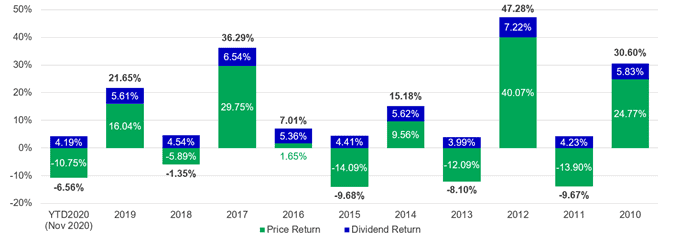
    Chart 1: AP REITs historical payout

    reits asia pacific manulife
    Annual total returns of Asia ex-Japan REITs (2010 –2020 YTD)

    Indeed, over the past 10 years, AP REITs have provided, on average, a 6.8% annualised return; roughly 5% of the total return came from dividend payouts. To put this dividend yield in perspective, Asia (ex-Japan) equity markets offered, on average, a 5.4% total return, with only 2.4% coming from dividends over the same time period.

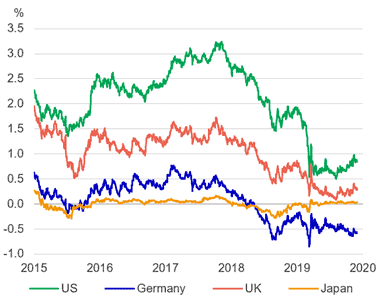
    Despite the notable challenges of the past year, from another perspective, AP REITs historical yield is also attractive in the current “lower for longer” interest rate environment. As Chart 2 shows, developed markets’ sovereign bond yields have steadily declined since December 2015.

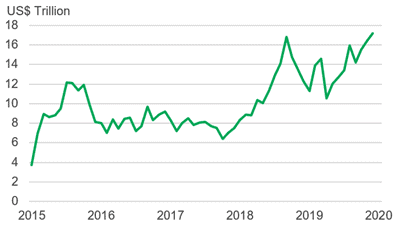
    In some developed markets, bond yields have even turned negative, with the current level of negative-yielding debt instruments near US$18 trillion and expected to climb even further in the near-term.

    Chart 2: Negative yielding bonds

    reits asia pacific manulife
    Developed market 10-year government bonds yields

    reits asia pacific manulife
    Negative-yielding debts size mounted

    While the lower for longer interest rate environment is a headwind for many fixed income segments, it is supportive for REITs due to lower borrowing costs.

    Despite these traditional strengths, 2020 was indeed a challenging year for REITs globally as well as Asia, as the economic impact of the COVID-19 pandemic called into the question the asset class’s predictable history of dividend payout.

    The Past: Early 2020

    The global outbreak of COVID-19 had a varying impact across the sub-sectors of real estate, but initially led many to question the viability of dividend pay-outs in a worsening environment. The worst hit sector globally was retail as a result of national lockdowns and social distancing requirements.

    In contrast, industrial/specialised real estate assets continued to generate stable cashflows and high-income visibility, as the acceleration in e-commerce trends led to stronger demand in warehousing and logistics facilities.

    Many segments of AP REITs have gradually recovered from the economic shock due to unprecedented monetary and fiscal policy measures. Policy responses from governments such as Singapore and Australia have helped save jobs and companies, with some packages totalling up to 20% of GDP.

    At the same time, central banks across the region have slashed rates, with the Reserve Bank of Australia starting quantitative easing for the first time in 2020.

    The Present: End of 2020

    The top priority across all landlords and REITs managers has been to ensure high cleaning/maintenance standards, temperature checks to ensure safety for all their tenants and instil confidence for people to visit their facilities. The pandemic has brought about unprecedented economic impact and all stakeholders in one form or another must bear some pain from it.

    Landlords for commercial assets in Singapore and Australia are mandated to provide rental holidays for tenants who were badly affected by the loss of sales/income. landlords have also offered help in terms of rental commissions, waiver of management fees, lease restructuring to tide tenants through the difficult period.

    We saw suburban retail landlords have also accelerated their digital marketing plans to help their tenants to sell their products online or food delivery services for their food and beverage tenants, with more people working from home, these suburban malls have ramped out digital offering to capture the sales in their neighbourhood.

    The Future: 2021

    Moving into 2021, we envisage the macroeconomic backdrop should gradually improve across the region, with significant dispersion in economic growth across the region.  Despite the economic rebound, we expect that the low interest rate environment should remain a strong tailwind for the asset class. The low cost of borrowing continues to underpin healthy demand in trophy assets across Asia.

    Our base case scenario is that key markets like Singapore, Hong Kong, and Australia should not enter into national lockdowns given policy learnings and experiences. The positive newsbytes on vaccines successes could restore confidence in consumer and corporate spending in 2021.

    Retail landlords should enjoy recovery in cashflows given the low base in 2020 (high rental reliefs) and industrial REITs remain stable with growth boosted from accretive acquisitions.

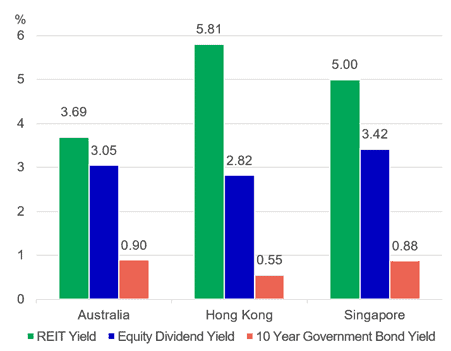
    Based on this base case and favourable macro backdrop, the outlook for yields of AP REITs should remain attractive next year (see Chart 3). Forecasted yield for AP REITs is approximately 5.1% compared to a 2.1% yield for Asian equities. In our view, this payout is expected to remain stable over the long-term, largely due to the strength of the asset class and improved economic conditions.

    Chart 3: AP REITs offer attractive forward yield

    reits asia pacific manulife


    Conclusion

    In our view, the main attraction of AP REITs as an asset class is the stable, sustainable payout of dividends to investors. While this assumption was challenged in early 2020, the response by governments and central banks helped to stabilise the real estate sector. Moving into 2021, we believe an improving economic outlook and continued low interest rates should be beneficial for the asset class.

  • Millennials Driving Stock Market Frenzy

    Millennials Driving Stock Market Frenzy

    The COVID-19 pandemic has had a devastating impact on global economies, sparking huge volatility in stock markets worldwide. However, the lockdowns imposed by many countries seemed to have sparked a strange phenomenon where millennials have piled into stock markets around the world including in Malaysia.

    In the past few years, millennial investor participation has been recording steady growth, with participation by this cohort in the local stock market being consistently above 20%. In their 20s to mid-30s, millennials are born between the early 1980s and mid-1990s.

    Statistics from Bursa Malaysia show retail investors in the local equity market have witnessed substantial growth in the last few months, coinciding with the imposition of the Movement Control Order (MCO).

    The exchange operator revealed year-to-date May 2020 the total retail registered an increase of 30% in new accounts opened while trading activity among retailers registered an 82% increase in average daily value.

    The retailers were also net buyers at RM5.1 bil, a whopping 607% increase compared to the same period last year.

    Similarly, online brokerage Rakuten Trade has reported a surge in account openings during the MCO period with almost 50,000 new accounts being activated between 18 March and 30 June 2020.

    “If one compares this to the more than 100,000 accounts activated since our start in May 2017, about half of the total accounts were opened in just four months,” acting CEO and chief marketing officer Kazumasa Mise tells Smart Investor.

    “The surge in retail participation can be attributed to the availability of good-value stocks due to the state of the capital market at the time. Many shares were below their historical prices, so it was a good time for new investors to enter the market and weigh their options,” he adds.

    Kazumasa Mise

    Equity Investment Trending among Millennials

    Investing in equities is fast becoming a trend among millennials, and the fact that approximately 80% of Rakuten Trade’s accounts are held by millennials is testament to this.

    For context, Rakuten Trade contributed almost RM20 bil in total trading value on Bursa Malaysia since its inception in May 2017. As of 30 June 2020, their retail market share stood at almost 7% while the clients’ assets under trust stood at more than RM1.5 bil.

    “From the onset, our fully-digital equity trading platform has appealed to those below the age of 40. This essentially means we are attracting a new segment of investors and thereby, enabling greater retail market participation, and this includes traders with no prior investment experience,” says Mise.

    He adds from the company’s perspective, their millennial traders generally find it easy and convenient to use a ‘zero contact’ and ‘low fees’ trading platform.

    As to what sectors or industries its millennial account holders are focusing their equity investments in, he says, “Our clients typically trade stocks that are in the news, trending or based on thematic investment such as healthcare-related or oil-related stocks while also generally favouring small- and mid-cap stocks.”

    Lok Eng Hong

    Maybank Investment Bank regional head of Retail Brokerage Lok Eng Hong says low interest rates globally is what’s pushing savers and investors into equity investment.

    “With better access to information and technology, millennials are most prepared to participate in online share trading and investment.

    “Investment gains and validation of good analysis attract young investors to develop money-managing skills and later, to begin their own investing journey.

    “Millennials are also deeply passionate about global issues that are important to them, and these include Environmental, Social and Governance (ESG), green technology and clean technology. Ultimately, investing in companies that champion good causes makes millennials happy,” says Lok.

    Investing in the Era of Technology

    Millennials have come of age during a time of technological change, globalisation and economic disruption. Being more diverse, better educated and more investment- and technology-savvy than the generations before them, millennials are fast changing the face of investing and wealth management.

    “Social media, private chat groups and easy access to research reports have provided trading insights and ideas to tech-savvy millennial investors during the MCO period,” says Lok.

    However, being able to gain access to information quickly with the use of social media and various available platforms does not always positively impact one’s portfolio, Lok reveals.

    “Millennials, usually the younger ones, can be influenced by various sources and influences, and we are not just talking about mainstream financial news or analysts’ recommendations – some may also be exposed to ‘expert’ commentaries and ideas, which may or may not be accurate.

    “Text messages, views and comments without proper support can easily spread through networks of friends and contacts. Sometimes, great ideas are shared, but more often than not, some high-risk speculative trade ideas are being shared as well,” he continues.

    As such, it is important for millennials to remain cautious and to rely on strong technical and fundamental aspects of a professional company and not being drawn into quick gains and rumours, especially during periods of market volatility.

    Risk Mitigation is Essential 

    All investments carry with them some degree of risk, and these risks can range from inflation and interest rate changes to political uncertainties and economic trends. Investing in equities can often be risky especially in times of market volatility such as that caused by the Covid-19 pandemic and resulting economic downturn.

    As such, risk mitigation – the process of determining what risks exist in an investment and then handling those risks in the best-suited way – is essential for any investment strategy and can help investors reduce losses and achieve their investment goals.

    “With investment of any kind, one must weigh the risks and benefits, and buying and selling shares are no different and must be done with caution,” Rakuten Trade’s Mise opines, adding when it comes to investing, time and effort are very much required.

    “An investor must know his own risk tolerance, investment time horizon, and most importantly, his own financial goals. Holding investments for the long term, too, is advisable.”

    Mise also goes on to emphasise the importance of financial literacy to make informed decisions when it comes to one’s investments.

    “Plan ahead on the possible circumstances that would justify selling. Investors should also avoid getting caught up with emotions that lead to making hasty decisions when their stocks are not performing well,” he advises.

    In terms of investment risks, Maybank Investment Bank’s Lok believes new investors should be aware of the risk of them losing all their investment funds, and potentially going into debt from over-trading and the wrong use of high leveraged derivative products.

    “Trading on stocks that have no fundamental earnings, poor cash flow and poor business model is a dangerous start. Penny stocks and cheaply priced warrants, too, can also turn into potential big losses as their price drops can be very sharp too,” he cautions.

    In addition, new investors should also be aware of the risk of stock price gap down and low trading volume, which will make some stop-loss strategy impossible to execute, says Lok.

    As such, investors should consider only value stocks and business models that are sustainable and should always make a practice of verifying if the information received is accurate. “It’s also always good to diversify. Track the market, and keep some cash ready for new opportunities that might arise,” he concludes.

    By Bernie Yeo

  • Bursa Malaysia Derivatives Hits New Highs

    Bursa Malaysia Derivatives Hits New Highs

    With five all-time trading highs in January 2020, Bursa Malaysia Derivatives Bhd (BMD) is on a roll. It subsequently bettered some of these highs in February and March as market conditions deteriorated with the spread of the Covid-19 pandemic.

    BMD’s derivative instruments essentially allow market participants to take advantage of both upward and downward trends in the market, and are particularly relevant in light of global economic uncertainties and heightened market volatility.

    The derivatives market offers products that serve as an efficient price discovery and hedging instrument, providing market participants an effective avenue to manage risks as well as take advantage of the market position.

    “The rising trend, especially in open interest for all products, is a positive development, indicating a rise in confidence and strong appeal of BMD’s products by market participants,” BMD chief executive officer Samuel Ho (pic, below) tells Smart Investor.

    BMD aims to continue on this growth trajectory, he adds, by broadening its product offerings for investors and traders to manage their price risk exposure. Here are snippets of our interview with Ho.

    Smart Investor: BMD achieved five all-time trading highs in January 2020. Have there been new highs since then? Tell us more about this historical milestone.

    Samuel Ho: In the first quarter of 2020, BMD saw strong levels of trading activity, hitting several historical highs. We ended March 2020 with three historical highs:

    (1) Trading volume for all products combined at 2.13 million contracts surpassing the previous record of 1.72 million contracts registered in February 2020;

    (2) Monthly trading volume for Crude Palm Oil Futures (FCPO) of 1.66 million contracts surpassed the previous high of 1.43 million contracts registered in February 2020; and

    (3) Monthly trading volume of FBM KLCI Futures (FKLI) of 455,535 contracts surpassing the previous high of 388,755 contracts registered in August 2015.

    Additionally, the total daily open interest of 346,403 contracts for all products traded on BMD hit a new high on 26 February 2020, surpassing the previous all-time high of 343,251 contracts registered on 29 January 2020.

    How has the derivatives market performed in light of the COVID-19 pandemic and arising economic uncertainties and market volatility?

    In the derivatives market, the FCPO and FKLI have served as an efficient price discovery and hedging instrument that have provided market participants with an effective avenue to manage their risks as well as the opportunity to express their trading views to take advantage of the market position.

    The depth of the market has provided orderly execution with no significant negative movement. This has been evident by the increase in volumes trade for both FCPO and FKLI futures contract.

    With the global economy slipping into recession and equity markets in bear market territory, how can BMD help market participants manage their risks and thrive in such uncertain environment?

    BMD’s derivative instruments allow market participants to take advantage of both upward and downward trends in the market. In a downward market, investors can take advantage by short-selling FKLI futures contract to protect their equity portfolio.

    For example, the short position will gain as the FBM KLCI declines. This gain will allow investors to offset the loss in the underlying cash equity market. There are also traders with a speculative objective who enter a short position with FKLI futures in anticipation of a market downtrend.

    However, speculation can be extremely risky as they are vulnerable to both the downside and upside of the market as it involves leverage risk. It is therefore essential that investors have a clear understanding of the risk and reward before entering into any speculative trades.
    What are some of the action plans BMD has put into place to ensure continued sustainability and vibrancy of the capital market?

    The first quarter of 2020 was marred by various unpredicted events that have contributed to higher volatility in global markets. This included the oil price war between Saudi Arabia and Russia, tensions between the US and Iran, and the unprecedented health crisis caused by the COVID-19 pandemic.

    During this period, BMD registered several new highs in trading volume and open interest for our derivatives products. We also recorded the highest quarterly Average Daily Contracts (ADC) ever.

    This is an indication of the continuing confidence of our customers in BMD’s product offerings to manage their price risk exposures.

    Earlier this year, the Exchange launched the world’s first Options on Refined, Bleached & Deodorised Palm Olein Futures Denominated in US dollar (OPOL) contract.

    To encourage further participation in OPOL, the Exchange has waived the exchange and clearing fees until 30 June 2020. The OPOL contract allows for the introduction of more sophisticated strategies to raise the level of derivatives trading and will attract new categories of market participants.

    We also re-launched the Single Stock Futures (SSF) contract offering an expanded list of new underlying stocks. This will provide investors with an additional risk management tool as well as an opportunity to gain exposure to the equity market. You can view the full list of SSF contracts on our website at www.bursamarketplace.com/ssf.

    Moving forward, we aim to continue this growth trajectory by diversifying our products and service offerings as well as strengthening our derivatives ecosystem to enhance market attractiveness and vibrancy.

    What are some major programmes or initiatives that BMD will be rolling out in 2020?

    For our commodity products, BMD is implementing the Malaysian Sustainable Palm Oil (MPSO) Certified Physical Delivery to fortify further our benchmark Crude Palm Oil Futures (FCPO) contract in line with the Malaysian Government’s Malaysian Sustainable Palm Oil (MSPO) mandate.

    The national scheme is for all oil palm plantations, independent and organised smallholdings, and palm oil processing facilities to be certified per the requirements of the MSPO standards.

    We also plan to introduce the Alternative Delivery Procedure (ADP) for FCPO contract. This new facility allows flexibilities for buyers and sellers to negotiate their delivery terms other than one specified by the Exchange.

    We are also re-launching the Crude Palm Kernel Oil Futures (FPKO) contract to cater to the industry need for a palm kernel oil hedging instrument.

    For financial derivatives, we are currently working with Bank Negara Malaysia (BNM) and Securities Commission Malaysia (SC) to revitalise the 5-Year Malaysian Government Securities Futures (FMG5) contract by changing the settlement methodology from cash to physical delivery.

    The first physically delivered contract will be the Dec 2020 FMG5. This initiative is in line with BNM’s efforts to improve market efficiency, accessibility, and liquidity in the domestic financial market.

    Participation by foreign institutions has been growing from strength-to-strength, contributing close to 46% of our ADC. We will continue to build on this by promoting our derivatives products to foreign proprietary trading firms, hedge funds and commercial firms.

    We will also introduce foreign futures brokers to Malaysian futures brokers in our bid to forge new interbroker relationships for potential business opportunities in the future.

    As part of our market entry strategy into Greater China, our initiatives include offering market data fee waivers to new Futures Commission Merchants (FCM) from Greater China who promote BMD products to their clients.

    We have also recently embarked on a partnership with a leading financial media publication, China Futures Daily, as one of the foreign exchanges featured in their annual live trading competition.

    This partnership will help increase the visibility of our products in the region. For domestic institutional participants, BMD plans to work with palm oil industry associations to conduct targeted product awareness and risk management seminars or webinars to encourage local institutions to use futures and options as part of their risk management tool.

    We will continue to conduct a series of webinars to educate retail participants on derivatives trading. In our pipeline, we are developing a mentor-mentee programme, a collaboration with futures brokers and professional traders to help grow the professional trading community.

    However, because of the COVID-19 pandemic, our efforts to educate and promote will be carried out digitally. Finally, we are also looking out for opportunities to collaborate and forge strategic partnerships with other foreign exchanges.

    This is part of our continuous efforts to consolidate and lay the building blocks for our next stage of growth.

    BMD is one of the exchange partners in the global trading competition held by China Futures Daily. What benefits are expected from this competition?

    This live trading competition is one of China Futures Daily’s annual highlights. Last year, the competition attracted over 45,000 participants.

    This year, the competition is held from 27 March to 25 September 2020. It is open to all traders both from mainland China and other countries outside of mainland China.

    For the first time, BMD is participating as a Silver Sponsor and one of the Exchange Partners, with the FCPO as our participating product. We are offering two award categories based on the highest return rate and highest trading volume.

    Each category will feature three winners. The Champion for each category will take home a cash prize of RMB10,000 along with a trophy and a certificate! The collaboration with China Futures Daily aims to help increase our brand and product visibility in the Greater China region.

    This is also in line with our internationalisation strategy. For more information on this competition, you can visit the official website at http://special.qhrb. com/200122-1/ or email us at futures@bursamalaysia.com.

    By Bernie Yeo

  • Succesfully Investing in a Pandemic

    Succesfully Investing in a Pandemic

    For many investors around the world, the onslaught of the Covid-19 pandemic wreaked havoc on their investment portfolios as stock markets tanked in late February and March. How does one start successfully investing in a pandemic? From the lows of late March, equity markets including Bursa Malaysia rebounded significantly in April though it remains to be seen whether this just a “dead cat bounce” or an unsustainable rally within a bear market.

    Investors are understandably concerned the lockdown imposed in many countries, including Malaysia, will tip the global economy into a deep recession. In the event Malaysia falls into a recession, this will be the first time since 2009 that the economy has contracted.

    In such a scenario, investors will be preoccupied with preserving their investments in case the markets drop further. Nevertheless, astute investors are licking their chops in anticipation of a market crash that will enable them to swoop in to snap up a host of quality assets at a steep discount.

    Despite the volatility in the capital markets, FSMOne assistant research manager Tan Wei Yine thinks there are still opportunities residing within equity markets.

    However, he cautions that while global equities have rebounded strongly from their March lows, there is still “a great deal of uncertainty” surrounding the containment progress of Covid-19 across the globe.

    “In the coming weeks, macroeconomic data reflecting Covid-19’s impact on the economy are going to surface with more negative signs, which could inject an additional dose of volatility in stock markets.”

    On whether the rebound from the March lows is just a rally within a bear market, Tan notes that from a historical perspective the S&P 500 Index has seen 16 bear markets (excluding the current one) over the past 90 years.

    “With hindsight, four out of those bear markets have posted intermittent bull market rallies of more than 20% before trending lower later. Although counter-trend bulls may not appear as often, it would be unwise for one to rule out the possibility of it happening again completely,” he adds.

    Rebalancing investment portfolios

    What strategies should investors adopt during times of market stress such as now?

    FSMOne advocates investors to have a mix of equities and fixed income that is aligned to their risk profiles, explains Tan (right).

    “In market distressful periods, the fixed income portion of the portfolio could help provide stability and in decent times, the exposure to equity markets could help capture capital growth opportunities.

    “Investors may find it easier to hold onto a risk-aligned portfolio in challenging times. An investment portfolio that has large, concentrated exposure to volatile assets may induce huge swings in emotions that could lead to poor investment decisions in market distressful periods,” he adds.

    Tan advises that an investor should hold a portfolio that aligns with his risk profile. For instance, a balanced investor should have equal weights of 50:50 into equities and fixed income.

    In a market downturn, the equity allocation is expected to decline along with the drawdown in stock markets’ movement, while the fixed income portion that is holding up relatively well should have a higher allocation (e.g. the portfolio now has <50% to equities and >50% to bonds), he explains.

    Investors may take the opportunity to rebalance their portfolios by reducing their fixed income exposure and increasing equity exposure, bringing those allocations back to the neutral level of 50:50, he adds.

    “Mainly, investors are selling high (fixed income prices that held up relatively well) and buying low (equity prices that have been battered heftily). As there is still a great amount of uncertainty surrounding Covid-19 over the near-term, we recommend investors to rebalance progressively when equity markets continue to decline,” he advises.

    Preserving your capital

    When markets turn bearish, investors will need to adopt a defensive stance when it comes to their portfolio.

    Affin Hwang Asset Management chief marketing and distribution officer Chan Ai Mei says as a defensive measure, investors can diversify and opt to tilt their allocation towards fixed income and bond funds.

    “Its more modest drawdowns can help ensure capital preservation as well as provide a measure of stability through a regular income stream,” she says.

    To position their portfolios and navigate through volatility ahead, investors should first review their portfolios and assess if they are comfortable with the level of risk they are taking. Ideally, investors should also rebalance their asset allocation annually to correct any portfolio drifts, she adds.

    “If liquidity is crucial, especially for conservative investors who have retired or are approaching retirement, we believe it is appropriate for them to reduce exposure in equities. This might forego some future upside, but is ideal to help preserve and protect capital.

    “Within fixed income, conservative investors should also tilt their allocation towards investment-grade bonds and avoid high-yield exposure.”

    For investors sitting in the middle of the risk-profile spectrum and want some equity exposure, an important question they need to ask themselves is whether they can stomach the volatility for the next three to five years?

    “If the answer is yes, then investors should average down and split your investment into a few tranches to ease your way into the market,” Chan advises.

    Timing the Market

    With equity markets rebounding from recent lows, should investors consider buying the dip? Is it even possible to know when the market’s bottom is reached?

    Chan believes there is always an element of danger in timing the market. “Even the savviest investor can get it wrong. The ongoing Covid-19 episode has shown how sudden and vicious markets can turn, especially coupled with the presence of algo-traders that have exacerbated volatility.

    “Instead of trying to time a market in a downturn, the ideal approach for investors to take may be to just do nothing at all.”

    To illustrate, Chan examines how an investment of RM100,000 fares through different market cycles and how it would fare under two different scenarios:

    * The investor cuts losses by selling in every market downturn; and

    * The investors hold and does nothing in every market downturn.

    As can be seen from the tables, the investor who does nothing would perform better overall. Thus, investors should endeavour to spend time in the market instead of trying to time the market, she says.

    “Avoid making drastic shifts in one’s asset allocation, whether it is ploughing into the market or cashing-out all at once.”

    The Value of Waiting

    Chan also highlights what investing legend Charlie Munger – Warren Buffett’s right-hand man – once said: “It is waiting that helps you as an investor, and a lot of people just can’t stand to wait.”

    In this type of market environment, she says investors’ nerves are bound to get frayed and they may start turning jittery whenever they see a new headline about new infection rates or whispers about a recession or layoffs.

    “We believe investors stand to benefit more by doing less in 2020. Once the Covid-19 contagion recedes, there will be very little impact to long-term investment decisions and fundamentals. As such, we don’t advise doing much on your portfolios.

    “It is crucial that investors stick to their asset allocation and stay prudent in this current volatile landscape. Investors who remain disciplined in their approach by investing consistently and sticking to their long-term asset allocation will eventually reap the benefits and fare better overall,” Chan concludes.

    By Lee Min Keong