Category: business

  • ESG Investing – How To Integrate It Into Your Investment Planning?

    According to the Global Investment Review 2020 report, at the start of 2020, ESG investing or ESG-themed investing had reached USD35.3 trillion in the five major markets, a 15% increase in the past two years (2018-2020) and a 55% increase in the past four years (2016-2020). It’s up from 33.4% in 2018 to 35.9% of all professionally managed assets across all regions.

    This trend is continuing to grow in most regions, with Canada experiencing a tremendous increase in absolute terms over the past two years (48% growth), followed by the United States (42% growth), Japan (34% growth), and Australasia (25% growth) from 2018 to 2020.

    So, what is ESG investing? Let’s look at the facts.

    Read: All You Need To Know About ESG And ESG Benefits

    ESG Investing For Sustainable Investment
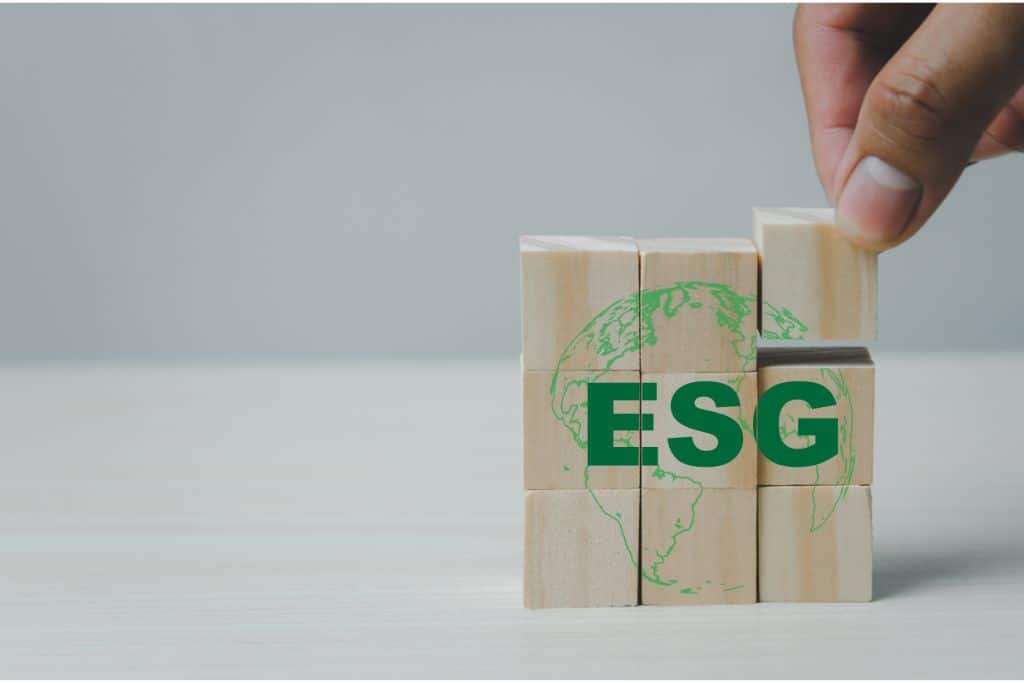
    ESG is an acronym that stands for Environmental, Social, and Governance Investing. In addition to evaluating an investment’s financial metrics, the ESG investing approach involves a need to weigh up the corporation’s or fund’s policies related to:

    • Environmental matters (climate change and pollution, for example)
    • Social issues (such as diversity and ethics)
    • Governance (style of leadership and transparency)

    Why Are People Attracted to ESG Investing?

    Traditionally, most long-term investors felt they had to choose between their values and making money. To fulfil this intention, they will hold a massive and diversified portfolio that likely ended up with companies that paid well but did not do much good for the planet or society in their business practices.

    However, the Schroders Global Investment Study 2020 reported that almost half (47%) of people around the globe are attracted to sustainable investments because of their broad environmental impact. Another 42% believe sustainable funds are appealing because they are likely to provide higher returns.

    The data shows that investors no longer have to choose between two options because ESG-based sustainable investing is good for both goals, making it a very good choice.

    Local ESG Investing Growth Trends

    Where do Malaysians stand when it comes to adopting ESG investing?

    The Securities Commission Malaysia (SC) developed a 10-year strategy blueprint (2010-2020) involving ESG investing. Since 2014, SC has introduced several initiatives, including developing the Sustainable and Responsible Investment (SRI) Sukuk Framework.

    Read: Driving The Development Of ESG With Sukuk

    In December 2014, Bursa Malaysia launched the FTSE4Good Bursa Malaysia (F4GBM) Index for the Malaysian market to provide more visibility and profiling of ESG-compliant companies that meet various ESG inclusion criteria and are eligible to be included.

    The standard is consistent with the global ESG model that FTSE developed, with strong references to the Global Reporting Initiative and Carbon Disclosure Project. As of 30 September 2019, there are 71 constituents of the Index, with a market capitalization of RM510.4 billion. As of June 2022, the total number of constituents is 87.

    On the other hand, the FTSE4Good Bursa Malaysia Shariah (F4GBMS) Index was launched in July 2021 with 54 constituents to cater to investor demand for ESG and Shariah-compliant index solutions. The purpose is to track constituents in the F4GBM Index that are Shariah-compliant. For the most recent review period, June 2022, nine new companies were added to the F4GBMS Index. This brought the total number of companies in the index to 65.

    Both indices are reviewed semi-annually in June and December against international benchmarks.

    Read: The Islamic Sustainability Approach In ESG

    The Reality Of ESG Investing

    From the perspective of industry players, the challenges arising in developing ESG investments locally are due to a limited investment universe and a lack of quality ESG reporting standards. These limitations are reflected in the types of ESG-themed funds available in Malaysia.

    With the limited local investment universe, the fund houses need to construct a portfolio that consists of global securities for diversification purposes. The aim is to deliver the most value to their investors with higher potential returns and manage downside risks.

    In addition to not having good reporting standards, fund houses need to spend more money to make sure the information they report is correct. Some might rely on information from ESG rating agencies, while others use third-party screening tools.

    Read: ESG Investing And The 3 Steps To Build An ESG Portfolio

    ESG Investing With A Licensed Financial Planner

    Fear of missing out (FOMO) in investing is the desire to stay continually connected with what others are doing. Often, one succumbs to “recency bias” and makes a rushed decision based on recent investment performance.

    How do you combat this and align your investment portfolio with your values? Let’s look at how financial planners can help in this situation.

    •  Discover client’s ESG values

    Usually, financial planners will seek to learn about their client’s unique set of financial goals and risk tolerance first. But ESG values can be very personal, and they can differ from one person to the next. One client may prioritise environmental issues, while another values diversity.

    Financial planners must first understand how clients might want to see them executed in the investments they pursue. Then, personalize their portfolio to mirror the client’s values.

    •  Deploy a negative screening approach

    Once financial planners are on the same page with their clients, they can start putting clients’ values into practice. They will identify companies that don’t align with clients’ values and remove them from clients’ portfolios.

    A straightforward approach is to identify the right ESG funds for their clients. A fund will reduce the need to analyze individual stocks and spread out risk by holding a large basket of equities.

    • Review and reporting

    Greenwashing is one of the risks associated with ESG investing. It is a strategy to market a company as sustainable or green when it isn’t.

    To manage the risk, financial planners will use the right ESG data and tools to monitor and report ongoing changes to the ESG scores of the companies or funds. By working hand in hand with a professional Licensed Financial Planner, you will have clarity on the placement of ESG in your investment portfolio.

    Have you incorporated ESG investing?

    About the Author

    Zulkhairi Zulkifli (CFP) is a Licensed Financial Planner With Expanded Scope. His expertise is in holistic financial planning and advising on equities, debentures, or warrants listed on Bursa Securities. Zulkhairi truly believes that a simple and personalized investment plan is vital to growing your financial assets. He can be contacted at zulkhairi@wealthvantage.com.my

  • Save Monthly Repayment Up To RM9,000 Per Month

    Save Monthly Repayment Up To RM9,000 Per Month

    Taking out loans is a normal part of life. Some take out loans to buy a house, or a car, to sustain their lifestyle and many other things. But is there a better way to manage debts, so we can save monthly repayment and sleep better at night?

    Meet Isabela (not her real name), a working mother at a multinational bank in Malaysia. Managing 20 employees as a senior manager while raising seven children was frequently like working two jobs. She was so busy she did not have time to manage her finances.

    As a result, Isabela suffered from a negative cash flow of RM5,000 every month, even though she earned a T20 income* as a senior manager in a bank. She constantly asked these same questions over and over: “Why is it that I pay my credit card bill every month on time, but my outstanding debt seems to be getting bigger and bigger?”

    So how is it possible that if one pays their credit card on time, they are still in debt?

    This is what we found out when we sat down with Isabela. The main contributor to her RM5,000 per month deficit is the ‘Loan Repayment’ row (in the diagram below).

    Can you imagine paying RM11,000 per month on your loan repayments? Is there a way to save monthly repayment?

    Read: Save RM1 Million On Your Own Or Do It By Buying A Property?

    How To Save Monthly Repayment Up To RM9,000 Per Month?

    Before and after: a monthly cash flow summary from a deficit of RM5,000 to saving RM2,000 in two months

    As I dug deeper, I found four credit cards with multiple instalment plans (refer to Chart 1). “Okay, it’s not too bad,” I thought. I have seen worse, something like 10 to 20 cards.

    Chart 1

    For Isabela, some of the cards were tied to recurring payment plans. Nothing out of the ordinary but they all had one thing in common: all the cards had outstanding balances.

    I started to organise them to understand how much she was paying monthly for each card. Here’s a snapshot, where we found the root cause.

    I realised she was paying a fixed amount for some of the cards. I knew she was in trouble because her income couldn’t support the card repayments. She was paying on ‘gut feel’, meaning she would pay an average of RM3,000 per card for three of the four cards.

    For example, as shown in Chart 1, she only pays RM3,000 for her CIMB Credit Card. However, the monthly instalments come up to RM2,130, and she was spending RM3,071 in June, totalling to RM5,201. Meaning the payment was short of RM2,201, so she owed her credit card outstanding payments before she started that month.

    This is a bad habit and one of the major blind spots for most credit card users as they don’t clear their monthly balance. Here’s what I have to advise:

    First, although you pay your cards on time every time, you still need to pay the amount spent in full for that month or else the outstanding will grow out of proportion. You cannot just pay on time without paying in full for what you need to pay.

    Secondly, when you miss paying in full for one month (that means having an outstanding balance for the following month), it would be very hard to keep track of your expenses. It becomes impossible to reconcile what you spend the subsequent months unless you sit down and take a snapshot of your expenses over three months of credit card spending.

    Read: Saving vs Investing, Should I Save Or Invest?

    When you don’t know what you have been spending, you won’t know how much you have to pay. And this will go on like running on a treadmill that won’t stop and will keep going faster until you fall.

    Thirdly, most people who constantly pay off any outstanding monthly credit card expenses will not have this problem.

    So how can we save monthly repayment and solve this issue?

    Read: How Can You Save Money Without Even Realising It?

    Case Study On How To Save Monthly Repayment

    Once we identify the problem, we can develop solutions and strategies. In Isabela’s case, here’s what we needed to do to save monthly repayment:

    1) Restructure her debt and consolidate it into one unifying loan.
    2) Manage her expenses through ICE JAR, the world’s simplest money management system, to prevent her from falling into the same situation in the future.

    Although she has a housing loan that we can use to consolidate her credit card debts, there wasn’t much capital appreciation as these properties were purchased recently.

    So, we had to use another ‘container’ to consolidate her loan. The most effective ‘container’ is similar to a housing loan that uses a ‘reducing balance interest’ calculation instead of a ‘fixed line interest’ calculation loan (also known as a personal loan) that most people use.

    Within a month, my team and I managed to help Isabela find her ‘container’ and save monthly repayment by reducing her loan repayment from RM11,648 to just RM2,594 monthly.

    Many of our fellow Malaysians are unaware of a significant difference in interest calculation.

    Read: 4 Money Personality, Find Out Yours

    The ‘fixed line interest’ calculation (typically used for traditional car loans and personal loans) is very different from the ‘reducing balance interest’ calculation (typically used for housing loans). Let me illustrate by using this example of taking an RM100,000 loan with a 5% interest rate over ten years.

    From the diagram illustrating Isabela’s Debt Consolidation Strategy (DCS), you can clearly see why I chose to use the ‘reducing balance interest’ option. Given the same loan amount, interest rate and same 10-year duration, and a monthly instalment of RM1,250, you can see that the ‘reducing balance interest’ calculation gives 50% interest savings compared to the ‘fixed line interest’ calculation.

    This is how you can save monthly repayment and sleep better at night.

    Read: 6 Ways To Deal With Inflation

    This is the reason we need to invest in our financial education. As they say: “Education lifts us past poverty,” and that especially includes financial education, and save monthly repayment is something that almost everyone needs to know how to do it.

    *T20 income is classified by the Household Income & Basic Amenities Survey Report 2019 by the Department of Statistics Malaysia (DOSM). The income classifications for T20 have been revised to reflect inflation, the rising cost of living, and household size, among a host of other factors, into two parts:

    • T20 Part 1 – RM 10,961 to 15,039 and
    • T20 Part 2 – RM 15,040 and above

    About the Author

    Ng Ka Hoe is a Licensed Financial Planner and a Financial Adviser Representative (FAR) with Bank Negara Malaysia and“Capital Market Service Representative License (CMSRL) Financial Planner with Securities Commission Malaysia. He is also the Founder of J Advisory, a Personal Finance Academy that helps struggling Malaysians elevate their financial well-being with proven tools, systems and strategies. For more real-world case studies, you can head over to https://jadvisory.asia/.

  • 5 Tips To Help You Set And Achieve Your Financial Goals

    5 Tips To Help You Set And Achieve Your Financial Goals

    Have you ever set goals for yourself but failed to meet them? It may be to start exercising, investing, spending more time with your family members or loved ones, or whatever goals you may have.

    You set goals at the start of the year but did not follow through in the following weeks or months. You only realize your goals as year-end approaches.

    A study by Martin Oscarsson published online in 2020 on large-scale experience with New Year’s Resolutions found that 55% of the respondents successfully sustained their resolutions at a 1-year follow-up.

    Therefore, it is possible to follow through on your goals by following these five tips to help you set and attain your financial goals.

    Read: Six Golden Rules In Getting Favorable Returns And Growth, When Investing In Unit Trusts

    1. Clarity

    Do you have a clear and specific goal for how much you want to achieve in financial goals?

    It can be measured by savings amount, net cash flow or how much net worth or how much investment portfolio, how many like properties or how much reduction of debt or how much sum insured you would like to have at a certain time frame.

    Clarity is power; having that clear focus on what you want helps give you that clear direction.

    When you use your GPS, whether you are using Waze or Google Maps, the first step is to key in your destination. In your financial planning, you need to know what clear financial goals you want to achieve.

    Read: Should I Take Out My EPF To Settle My Housing Loan?

    2. Compelling Reason

    After you know what you want, the next thing is to know why you want those financial goals.

    “ Reasons come first. Answers come second.”

    – Jim Rohn

    Why do you need to achieve that goal? For what purpose? Is it for yourself or for others?

    Having that compelling reason will pull you toward the goals that you set. You may face certain challenges/obstacles, but your stronger reasons will pull you back to the right track.

    For example, by achieving that financial freedom, what would this allow you to do? Is it to live a comfortable lifestyle for yourself and your family? Is it to travel worldwide and create memories with your loved ones? Is it to start a charitable organisation?

    Read: Where To Invest In 2023: Amidst The Recession And General Election

    3. Consistency

    Consistency is key to ensuring that you are getting closer to your goals. Don’t undervalue the small steps you take every day.

    For example, by saving RM3 per day for 365 days, you will save around RM1,100 over one year. What if you put it in an investment vehicle that grows at a certain percentage?

    For example, someone saving RM500 per month over 35 years with the assumption of an 8% compounded annual return will have over RM1.1 million at the end of that period.

    Read: 5 Easy Steps to Achieving Financial Merdeka

    4. Accountability

    Do you have someone accountable to you who helps you track and guide you in achieving your financial journey, be it your financial planner or someone competent enough to advise you on your personal finances?

    It is like having a mentor or a coach who can advise you on the rights and wrongs.

    Read: 5 Investment Tips For Beginners That You Should Know

    5. Review and Measure

    It is always good to measure periodically; it may be quarterly, half-yearly, or yearly, depending on the duration of those financial goals that you set. Knowing the actual results will allow you to make necessary adjustments to try out different methods to save or reduce unnecessary expenses that contribute to your overall financial goals.

    Once you have your financial goals, the most important step is to take action either to create that investment account opening or schedule that appointment with your financial planner or what would the next things you can do.

    Read: Saving vs Investing, Should I Save Or Invest?

    5 Tips To Help You Set And Achieve Your Financial Goals

    Every new year comes with optimism and new year resolutions. I hope that these tips will be able to help you set and achieve your financial goals.

    About the Author

    Goh Chee Yong is a Licensed Financial Planner under Capital Markets Services Representative License (CMSRL) and Bank Negara approved Financial Advisor Representative (FAR). Prior to becoming a financial advisor, he spent eight years working in Big 4 audit firms and multinational corporations. He is also invited to speak on financial literature at universities and public events. He can be contacted at cygoh@imaxfinancial.com.my

  • Being An Executor Of Will Is Not As Easy As It Seems To Be

    Being An Executor Of Will Is Not As Easy As It Seems To Be

    The following story is based on an actual series of events with some names and circumstances fictionalised and any similarity to the name, character or history of any person is entirely coincidental and unintentional. We will be taking a closer look at why the executor of will is not as easy as it seems to be.

    Elson and Jason were good friends for many years. They have met each other since primary school and even graduated from the same university. Growing up together, Elson would fend off those who bully Jason at school. They would also go to their makeshift secret base and play the whole afternoon after school.

    Jason was the only child in his family, and because of that he sees Elson as the big brother that he never had.

    As time goes by, these two boys have become men. They have both secured good jobs and beautiful and kind wives who bore them healthy children. It was a family that any man would be proud of with much love and warmth.

    Read: True Friend Dilemma, Declaration Trust Coming To The Rescue

    Not Ready To Be The Executor Of Will

    What seemed to be an ideal life for Jason soon came to a tragic end. What seemed like a normal cough, turned out to be lung cancer. Elson’s heart was shattered, he felt as if he was betrayed by a person that he trusted the most.

    “How dare he leave me behind?” was the first thought that came into Elson’s mind when he learnt of Jason’s departure. There were so many dreams that they had yet to achieve together.

    Elson made a promise to Jason that he will take care of Jason’s family and everything else. “Rest in peace my brother, I got you. See you on the other side.”

    Jason’s wife, Yvonne found Jason’s Will. It was a simple Will that named her as the beneficiary of every asset that Jason owned. Elson was named as the Executor in the Will. She wasn’t sure what an Executor meant, but since Elson’s name was mentioned, she guessed he may have known a thing or two about it.

    Read: Unfulfilled Wishes, Learn How To Protect Yourself

    Becoming An Executor Of Will, Is It A Nightmare?

    That starts with being the appointed executor of will to sort out what was left behind by Jason. Even with no knowledge or experience in administering the Estate, Elson thought, what could go wrong?

    A few months later, with the assistance of a lawyer, Elson obtained the Grant of Probate from the High Court. It was quite a straightforward though tedious procedure. All he had to do was to look out for the lawyer’s details of Jason’s assets.

    With the Probate in hand, Elson thought all he had to do now was to transfer the assets according to Jason’s instructions in his Will, which is quite clear cut to Elson. Jason’s Will basically says to give all his assets to his wife.

    Yvonne asked, “What about my husband’s debts? I know he has a few credit cards that needs to be settled.” Elson had an idea, if he could transfer all the liquid assets quick enough, then there would be nothing left for the bank to chase after.

    After all, Jason is long gone now. Who would sue a dead person? Yvonne was sceptical at first, but with enough assurance from Elson, she accepted everything that Elson was transferring to her. Elson had bypassed all Jason’s creditors in administering the estate.

    Read: Planning Is Important, Things Can Turn Ugly In An Instant

    The Executor Of Will In Action

    A few months have passed since, notice of due payment received by Yvonne has now become a letter of demand with a letterhead from a law firm that was appointed by the banks. To make matters worse, Yvonne also received a letter from the Inland Revenue Board Of Malaysia that is addressed to Jason to declare his income.

    As much as Elson tried to ignore the demands from Jason’s creditors, he soon learned that he was obliged by the law to pay up the creditors first, especially the tax due, which was one of the first priorities.

    All attention is now on Elson, with letters that legal action will be taken against him personally if he did not satisfy Jason’s creditor.

    “How does that even make sense? I’m just here to help, now I have to pay the price?!” Elson shouted at the lawyer whom he engaged for advice on what to do with the demands. It is either Elson calls back the assets that he has transferred to Yvonne, otherwise he will have to compensate the Estate’s creditors from his own pocket.

    Elson is now desperate. Yvonne had used most of the liquid assets that were being transferred to her. “I have warned you, it was you who assured me that everything is fine. I have used the money. I can’t give it back.” said Yvonne.

    While Yvonne was trying hard to scavenge whatever was left, Elson has been trying to see what he can sell off on his own to pay.

    It Is Tough Being The Executor Of Will

    mental health

    It was a very bad time for both Elson and Jason’s family that they must face. Being an executor of will sounded very easy, many did not expect there to be so many legal pitfalls until it was too late.

    It always starts with good intention to help, but often ends up in a relationship breakdown between the executor of will and the beneficiaries. Elson felt guilty that he had made the matter worse than it should be.

    Yvonne had to pull back from some commitments especially the children’s education expenses. Yvonne had to face the embarrassment, but for Elson, he is at risk of legal liabilities. If he is not careful, he could be facing criminal charges as his lawyer said to him this could be defrauding creditors if their claims are not recovered because of his negligence.

    A long legal nightmare is the likely outcome, that’s why it is not that easy being an executor of will.

    Read: Hard Facts About The Executor Of Will In Malaysia

    About Rockwills International Group

    Rockwills International Group, now in its 27th year, pioneered professional will writing in 1995 and has since evolved into the leading estate planning specialist in the country. It is today the largest provider of solutions and support services in the areas of trusts, succession, management and distribution of wealth. It has shareholders’ funds exceeding RM50 million. It has done over 280,000 wills and 15,000 trusts and hold more than RM25 billion in assets under trust.

  • Can Money Buy Happiness?

    Can Money Buy Happiness?

    Without a doubt, a lot of people consider money to be crucial in their life. But the question on everyone’s mind is that, can money buy happiness?

    Many of us work hard to earn money so we can buy the things that will make us happy and comfortable. While others might look to money for personal fulfilment, which may involve impressing others by flaunting an expensive handbag or dress.

    Nevertheless, due to its importance, we can find many people fight over it, hate, or adore each other because of it.

    Read: 4 Money Personality, Find Out Yours

    Can Money Buy Happiness?

    Some claim that you can buy happiness with money because they believe it will give them power, while others might disagree. Can money buy happiness?

    From a personal standpoint, I do not agree that we could buy eternal happiness with money.

    But then, to buy the things we need on a daily basis, money is a basic requirement in our life. Although having a lot of money may be utilised to buy upscale and pricey items, the satisfaction would only be temporary. Additionally, you cannot buy the feelings of love and devotion with money.

    Everyone wants money, but it could not possibly purchase everything. This is true, especially when it comes to intangibles things such as general knowledge or a loved one who has passed away and the experiences you shared with them.

    Read: More Money, More Happiness?

    Credit Photo: Amazon

    In a famous book written by Robin Sharma, entitled “The monk who sold his Ferrari”, the main character named Julian Mantle was a lawyer who find himself burned out and feeling dissatisfied despite his amazing achievements. He was a successful lawyer, rich, and highly sought by clients for law advice and cases.

    Suddenly, no one was able to contact him after the incident where he passes out in a courtroom due to a heart attack. He just disappeared and was nowhere to be found.

    After three years he came back to meet his friend, John. John was astonished to see Julian glow in joy, looking wiser and healthy. Julian shared with John the lessons he had learn while meditating with the Himalayas Sages-and surprisingly all his happiness now has nothing to do with money.

    Remarkably, we can find many people who felt the same burnout experience and a have different definition to happiness as Julian.

    Read: How Can You Save Money Without Even Realising It?

    Can Money Buy Happiness For A Couple?

    Credit Photo: Essentially Sports

    In a similar case, Tiger Woods’s ex-wife, Elin Nordegren net worth’s skyrocketed to more than USD200 million after their infamous divorce. While she admitted that money did make things easier for her as she took her children away to somewhere secluded for quite some time from reporters and journalists, she did insist that money could not buy her happiness or put her family back together.

    In fact, she claimed her marriage to Woods was one of the happiest days of her life.

    Can Money Buy Happiness For Kids?

    In India, a man shared over the net that he had broken up with the love of his life and was heartbroken. His friend’s advice him to smoke weed (cannabis) to forget his pain. They agreed to go buy it together.

    Arriving at the place they went to; they saw three children playing nearby. The heartbroken man offered to buy them ice-cream and all three of them could not stop smiling while eating. The man said it made his day and he never took the weed.

    He then asked for the kids’ permission to take photo of their smiling faces for memories. He would frequently look at the beautiful picture and smile. In his opinion, he claimed money can and does buy happiness!

    Picture:  Shared by Aditya Meena, Credit: Medium

    On the other hand, my beloved father, once told me, if your too rich you can become crazy if you do not know what do with the money. Thus, I guess by having money with a purpose would then mean something, and the type of purpose mentioned here should be more akin to empowering yourself and others.

    It should also be inspirational, memorable, helpful, useful, or important.

    Despite how great it is, money cannot alter how you feel about yourself. Most individuals make this mistake. They want to be strong, fashionable, or respected. Most importantly, they want to be admired.

    However, there is nothing that money can do to alter how you feel about yourself. Money won’t make you proud of who you are if you do not feel so yourself and it will definitely fail you if you have insecurities in believing yourself.

    As to answering the question whether can money buy happiness, majority would agree that it does not. But to some it certainly can relieve you some pain, comfort, safety or help when you are in need, thus, that is happiness.

    To me, happiness is something internal and intangible. Therefore, to obtain it obviously is not going to be from something external and tangible.

    How about you, can money buy happiness?

    Read: Are Malaysian Millennials Really That Bad At Managing Money?

    About the Author

    Azah Atikah Binti Anwar Batcha has Accounting, Finance, Auditing, and Islamic Finance background. She has worked with two of the Big four firms prior to pursuing her postgraduate studies at University of Technology Malaysia (UTM), Kuala Lumpur. She can be contacted at aaabwrite@gmail.com

  • Prioritising The Hereafter, Conventional VS Islamic

    Prioritising The Hereafter, Conventional VS Islamic

    In 2017, as I was just about to leave recital class, my ustazah asked a random question: “Aisya, what kind of funds do your clients invest in?”

    Back then I was still a unit trust agent and didn’t really thought about it thoroughly between conventional vs Islamic. So I told my ustazah that it was a combination between conventional and Islamic funds.

    “Perhaps you should only focus on Islamic funds,” she replied. That question sat with me, but I chose not to dwell on it. Not too long after that, I went to perform umrah (mini pilgrimage) and happened to be in the hotel room instead of with the entourage. I spent my time browsing through the Quran. Fate had it that the page I randomly flipped to was a verse about riba (interest).

    Then it hit me: what was the message I was supposed to comprehend, here at the Holy land about conventional vs Islamic? That was when my curiosity was piqued.

    After the trip, I sat for my CFP and IFP exams within a year. Unfortunately, as much as the modules had taught us theories about riba, gharar and usury, there wasn’t a chapter about here and hereafter implications on financial planners for offering conventional products instead of Islamic products to our clients.

    We are what we eat, right? In Islam, we are what we earn, too. As the years went by, I had accumulated endless burning questions that nobody could answer. Finally, in early 2021, I had the opportunity to consult a reputable Shariah scholar. After our consultation, I finally saw light at the end of the tunnel.

    These are some of the changes I have embedded into my life, including paradigm shifts that I have also been sharing with my clients, and now with you.

    Conventional VS Islamic Are The Same

    Let’s address the elephant in the room. If Islamic banks, Islamic asset management companies and takaful providers are all leveraging on its conventional arms’ back-end offices, systems and talents, then their Islamic arms cannot be that halal, can they?

    Well, if we dig deeper, one additional step required for the Islamic arms would be to get mutual consensus from their internal Shariah Committee before each Islamic product is submitted to regulators and its Shariah Advisory Council for approval.

    Imagine this: if chicken rice can have different recipes and ingredients from different sellers, how do you make a decision as to which chicken rice shop to buy from? The main ingredient is still chicken; isn’t chicken halal?

    Choosing halal doesn’t mean it will be risk-free. It just removes the risks that you have yet to see. For those who resonate with this, if we insist on consuming halal meals when we are abroad or at home, don’t you think we should be doing the same for banking and investing?

    Conventional VS Islamic: Converting To Shariah EPF

    For Muslim readers, have you shifted your conventional EPF to Shariah EPF? If you are thinking: “But I can pay zakat for the profits received from conventional EPF, right?”

    I’m here to tell you that that’s a misconception. Zakat can only be paid when your source of income is free from riba, gharar and usury.

    Incorporating Islamic Solutions Into Your Everyday Life

    There are limited Islamic credit cards with good perks in the market. But there is one worth mentioning. If you are currently using a Maybank credit card, Maybank allows you to switch to Maybank Islamic without affecting your credit limit and credit score. The migration is free and you will still have access to the Treats Points facility.

    A good reason to shift even though you may be paying your credit card in full every month is because riba still exists in all of your conventional cards’ transactions, under what is known as merchant fees. Next, what about your current and savings accounts? Your children’s? Your CDS accounts? What about crypto? The answer is to shift, shift and shift.

    Limitations In The Financial Technology Sector

    There are still many fintech and do-it-yourself platforms out there offering many one-size-fits-all types of accounts. What MIDF Invest has done right is to offer both conventional and Islamic accounts to its investors. This feature is fantastic because the app will only list Shariah-compliant foreign stocks and ETFs for investors who opt for Islamic accounts.

    This shows that it is possible for fintech providers to provide an option for Islamic accounts despite leaning on conventional structures, like how MIDF Invest leans on Saxo Bank.

    Conventional VS Islamic: The Pricing Battle Between Insurance And Takaful

    Until we solve this supply and demand saga, takaful providers will struggle in reducing their pricing to compete with their insurance peers. The cost of takaful plans can sometimes be twice the premium of insurance for the same amount of coverage.

    I see my clients struggling between choosing what is right for their faith versus affordability. Let’s face it, everyone needs sufficient coverage, but how do we guide our clients to choose what is best for them if pricing can sometimes get in the way?

    Islamic Finance Is For All

    One misconception I often come across is the belief that Islamic finance is only for Muslims. One of the strengths of Islamic finance is that it reduces and eliminates exposure to gambling, alcohol, entertainment, banking, companies with high gearing and more in its product mix.

    It forces you to go back to your risk appetite: what do you envision having in your investment portfolio and ultimately, everything else in life?

    Going Above And Beyond Our IFP Certification

    At the current time of writing, there are only 363 Islamic Financial Adviser Representatives registered under Bank Negara Malaysia (BNM). We are still a minority in the market. Here’s something I’d like my fellow colleagues to ponder upon:

    “How are we upholding our IFP certification and license?”

    See, the IFP mark isn’t just a mark on our names and business cards. It isn’t just about providing Islamic financing, Islamic funds and takaful to our clients. For me, Islamic financial planning is a way of life. We uphold the practice here, pave the way for our clients to pursue the same so that it becomes part of our hereafter and theirs.

    Conventional VS Islamic: There Is More To Life Than Just Dollars And Cents

    There are certain things in life that we cannot quantify. There are decisions that we have to make that go beyond the usual tangible ROI. Make the intangible ROI your compass, and see what kind of blessings come knocking on your door.

    I want to call upon those who serve from your hearts, to be the light to those around you. In a world where things are about revenues and returns, how do we draw the line between what’s right for us, our clients and our Creator?

    “Life is about making choices, so why not make our financial choices a win-win for our journey here, as well as in the hereafter?”

    Hope we all now have a greater conscience when it comes to conventional vs Islamic, especially if you are a Muslim.

    About the Author

    Aisya is an Approved Financial Adviser from Harveston Financial Group as well as a HRD Corp Registered Training Provider. She shares financial literacy content on her Instagram @aisyarahman.advisory daily on a variety of financial topics. Aisya can be reached at aisya@aisyarahman.com.

  • True Friend Dilemma, Declaration Trust Coming To The Rescue

    True Friend Dilemma, Declaration Trust Coming To The Rescue

    The following story is based on an actual series of events with some names and circumstances fictionalised and any similarity to the name, character or history of any person is entirely coincidental and unintentional. Let’s look at how a declaration trust can help your friend, as they rightly mentioned “A friend in need, is a friend indeed”.

    True friends like Seng are hard to come by. But little did he know that being Donald’s true friend would put him in such a pickle.

    Seng found his pool of savings that he reserved for his old age depleting by the day. It had already been more than a year that since he alone shouldered the responsibility to meet the medical expenses of his buddy Donald after the latter fell into a coma.

    Donald, who is single and with no family members, has a successful interior design business where he is able to own a few properties and have a sizeable investment portfolio with a licensed fund manager. Donald have been procrastinating to get a medical and hospitalisation insurance policy because of the regular income he is getting from the property rental and dividends from the investments.

    He was diagnosed with severe case of Crohn’s disease last year which requires regular treatment and this year had to be hospitalised several times due to kidney failure. Seng has been footing his medical bill since whenever Donald had problems redeeming some of his investment to pay for his hospitalisation bills.

    A childhood friend, Seng, had been just a phone call away especially in recent years when Donald became sickly.

    In their childhood and adolescence years, they were dubbed as the village Siamese twins as they were rarely seen apart. Seng and Donald shared a very special bond. Even the separation during the years that Donald was studying in England did not see them go their separate ways after Donald returned.

    While they took different career paths and Seng eventually found the love of his life and married, the Siamese twins were still inseparable right through their old age.

    It became a routine for Seng to drop by Donald’s apartment every other day and also accompany him on visits to the doctor as his health deteriorated. When Donald was well enough, he redeemed some of his investment to pay Seng back for medical and hospitalisation expenses Seng paid for him.

    When Donald did not answer his phone call one afternoon, Seng rushed over and found his buddy unconscious. He rushed him to hospital and Donald had since then not woken up from the coma.

    As days and months went by, Seng became more worried for Donald. He was also weighed down by the mounting expenses he would have to continue to bear on Donald’s behalf. A dilemma one would not wish upon a true friend.

    Seng would not be in such a predicament had Donald had the foresight to plan for such eventualities. One estate planning tool that serves to take care of one’s affairs when incapacitated and not leave one in the quandary without financial support is the Declaration Trust.

    Read: Planning Is Important, Things Can Turn Ugly In An Instant

    What Is Declaration Trust?

    Conceived by Rockwills Trustee Berhad, one can set up a Declaration Trust, place certain assets in the Trust and appoint himself as the Trustee and have a licensed trust company like Rockwills Trustee as substitute Trustee.

    The Declaration Trust works in the event of specified triggers such as total and permanent disability, critical illness, disappearance for a period of time or death. Setting up the Declaration Trust, the settlor prepares a trust deed which are instructions for his wishes to be carried out when certain trigger events take place.

    Unlike the Will which only comes into effect upon death, the Declaration Trust allows the settlor to retain control of his assets while still alive and facilitates the drawdown of funds from the assets when he is, for example, incapacitated.

    Read: Hard Facts About The Executor Of A Will In Malaysia

    Donald as Settlor can in the Trust Deed include his investments and monies in his bank accounts as well as name himself as a beneficiary while alive. In the Trust Deed, he can name a trust company as the substitute Trustee, to have access to investments and funds to utilise them in the manner as he so wishes. He can also name beneficiaries to benefit from any balance of trust assets unutilised upon his demise.

    The Trust Deed will include a Power of Attorney for the substitute Trustee, which would be a Trust Company as it operates in perpetuity, to step in to administer the assets according to the Settlor’s wishes.

    The Declaration Trust has the advantage of distribution of assets to the beneficiaries without any delay when any one of specified triggering events occur and also the benefit of flexibility in safeguarding one’s interest pertaining to access to funds which otherwise could be locked down until death occurs or grant of probate in the instance if there is only a Will.

    Read: The Importance Of Estate Planning, Avoid Last Rites Drama

    About Rockwills International Group

    Rockwills International Group, now in its 27th year, pioneered professional will writing in 1995 and has since evolved into the leading estate planning specialist in the country. It is today the largest provider of solutions and support services in the areas of trusts, succession, management and distribution of wealth. It has shareholders’ funds exceeding RM50 million. It has done over 280,000 wills and 15,000 trusts and hold more than RM25 billion in assets under trust.

  • Survey Finds Malaysians Are Struggling Financially From the Pandemic

    As the world braces itself for a recession and continued inflation in 2023, Malaysians are in their worst-ever financial position to prepare for it. Data from the RinggitPlus Malaysian Financial Literacy Survey (RMFLS) 2022 revealed various painful truths about the current financial state of the rakyat, including depleted savings, cash flow issues, and other worrying trends.

    Malaysians are still struggling from the financial impacts of the pandemic

    Malaysians from all walks of life are now facing severe financial challenges that leave them vulnerable to financial shocks, as various financial aids reduced the impact in 2020 and 2021. 70% of respondents indicated that they save less than RM500/month or do not manage to save at all. This is the worst-ever result tracked by the RMFLS in 5 years.

    At the other end of the spectrum, the amount of Malaysians who manage to save more than RM1,500 per month has also dropped significantly. From 20% in 2020, the figure has dropped four times lower to just 5% in 2022.

    The RMFLS 2022 results also indicate that more Malaysians are struggling with less savings in hand, as 63% of respondents stated that they can survive for 3 months or less with only their savings (52% last year). A similar pattern is also seen where 55% of Malaysians spent exactly or more than what they earned each month (44% last year), essentially living paycheck-to-paycheck.

    With depleted savings and higher cost of goods, the survey also highlighted a worrying trend where more credit cardholders are not paying off their bills in full – just 55% in 2022 compared to 70% last year.

    Hann Liew RinggitPlus Survey

    Forgoing long-term security and wealth generation for short-term relief

    With the challenges in cash flow and savings, the survey results show that Malaysians are choosing short-term monetary relief over long-term financial stability. A staggering 66% of respondents above 21 stated that they will consider applying for more Employees’ Provident Fund (EPF) withdrawals if the government allows it.

    In addition, the survey also found that 52% of Malaysians above the age of 18 have not started investing. Meanwhile, a majority of those who are investing have low-risk appetites but medium-term investment horizons which is not optimal – though these may be influenced by current financial challenges and global economic outlooks.

    Current trends are a wake-up call to all parties to take action

    “The financial effects of the pandemic have been devastating and our survey findings this year reaffirm that Malaysians have real financial challenges to address. It is a harsh reality not only for the rakyat, but also for policymakers and industry players – this is a generational issue that requires long-term solutions with sustained and concerted support from all parties. We cannot leave anyone behind,” said Hann Liew, co-founder and director of RinggitPlus.

    In line with this, RinggitPlus recently introduced a new section to its Savings vertical on RinggitPlus.com that highlights the various cash management solutions in the market as it aims to encourage Malaysians to save and earn best-in-class returns.

    “The new section on the Savings vertical at RinggitPlus.com is timely as it highlights a relatively new product line in the industry, and will help those looking to research and compare for the best savings products in the market. Meanwhile, offering our content in Bahasa Malaysia is part of our mission to extend our range of services to other languages and thus reach out to more Malaysians,” said Liew.

    Financial literacy continues to be a major step towards helping Malaysians overcome financial challenges and take control of their financial health. As RMFLS celebrated its 5th anniversary, the annual survey continues to highlight the importance of financial literacy among Malaysians and provides data points that have been used by various organizations, education bodies, and governmental sectors towards guiding Malaysians to take control of their financial health.

    If you enjoyed this article, you might also want to check this out:

  • Protecting Our Children In A Divorce

    The following story is based on an actual series of events with some names and circumstances fictionalised and any similarity to the name, character or history of any person is entirely coincidental and unintentional. Hope that we can learn a thing or two about protecting our children in a divorce.

    Today, it is a sad day for Leng Chai. He got divorced from his wife, Maggie. They had a roller coaster marriage. During happier times, they became parents to twin girls. The court granted Maggie custody of the twins.

    Leng Chai spent so much time to build a successful business that he neglected Maggie and the girls in the process. Leng Chai and Maggie attempted several times to reconcile but each time, their relationship became more strained.

    As Maggie has been out of work for some time to care for the twins, Leng Chai is worried about the financial wellbeing of the girls (now three years of age) in case he dies before they grow up. Though Maggie knows that Leng Chai loves the girls, she is also worried that he may not keep his promise, like so many of the promises he made when they were trying to save their marriage.

    Maggie is also worried that he may remarry and neglect the twins especially when he has children with his new wife. Leng Chai, in turn, is worried that Maggie may remarry and neglect the girls to focus on her new family. The least he can do is provide for them financially.

    Read: Unfulfilled Wishes, Learn How To Protect Yourself

    Protecting Our Children In A Divorce

    One of the way to be protecting our children in a divorce, is by the way of trust. An easy way to resolve both Leng Chai and Maggie’s concerns is for Leng Chai to setup a trust for the girls. This agreement to setup a trust could be incorporated as part of their divorce settlement.

    The trust would need to be one that cannot be revoked by Leng Chai. If Leng Chai is allowed to revoke the trust, Maggie would be concerned because there is no certainty that Leng Chai will not terminate the trust arrangement in the future or amend it to benefit his new family.

    Leng Chai should approach a licensed trust company that is able to address his and Maggie’s concerns for a customised trust solution to be prepared, rather than using a boilerplate trust template. Having a trust company to act as the trustee ensures continuity of the trusteeship and accountability to the twins.

    As the purpose of the trust is to provide financial security to the girls, it is important to ensure that the assets placed into the trust provide sufficient funds for them even when Leng Chai is no longer around. Since Leng Hai intends to purchase a RM2 million life insurance policy, he can transfer it to the trustee together with the unit trust investments he owns that has a market value of RM1 million.

    With RM3 million in the trust, it makes the protecting our children in a divorce even better. The twins would have financial security to pay for their daily expenses, education, and medical needs in the future.

    Read: Fighting Over Equity Distribution, The Importance Of Succession Planning

    Taking Care Of The Children In Whatever Condition

    During Leng Chai’s lifetime, there should not be any distribution to the girls, but any dividends are reinvested by the trustee to increase the available amount for them in the future. Leng Chai can continue to provide financially for the girls before his death or disability.

    When death or disability occurs to Leng Chai or when certain conditions stated in the trust are met, it would trigger the trustee to begin disbursing the funds for the girls’ maintenance, education, and medical needs through their guardian before they are 18 years old.

    Leng Chai may want to indicate his investment preferences or give power to the protector to make such a decision. It would make sense for Leng Chai to appoint Maggie to act as the protector when he is no longer around. As the protector, Maggie would be the watchdog for the girls and liaise with the trustee on the needs of the girls from time to time.

    The trustee may also refer to the protector for an opinion before exercising its discretionary powers with a view of fulfilling the objectives of the trust and to benefit the twins.

    This trust arrangement for the twins should end when Leng Chai is no longer around and the girls reaching the age of 25 years. When they are 25, the remaining funds are to be given to them as a legacy from Leng Chai.

    At the same time, Leng Chai should have a will written where part of the instructions may give other assets to the twins when they reach a certain age. However, if he remarries, he will need to prepare a new Will as that marriage will revoke an earlier Will.

    Maggie in her Will may use her savings and assets to include a testamentary trust for the girls, should she pass on before they are 25 years old. With a testamentary trust, Maggie will leave clear instructions on how her assets should be used for the twins. This is similar to Leng Chai’s trust for the girls.

    There are a few differences between Maggie’s testamentary trust and Leng Chai’s trust.

    All Bases Covered: Protecting Our Children In A Divorce

    Read: The Importance Of Estate Planning, Avoid Last Rites Drama

    For Maggie’s testamentary trust to take effect, it is dependent on Maggie’s passing before her Will is probated and all her debts and taxes fully settled before the testamentary trust begins. It would be different for Leng Chai’s trust where it is not in his Will but in a deed which begins during his lifetime. Leng Chai would have to retitle the unit trust investments and insurance policy into the name of the trustee.

    By doing so, the trust will not be subjected to probate and debts, resulting in the trustee being able to use the assets for the girls immediately when Leng Chai is disabled or dies or even when he is having financial difficulty.

    In conclusion, by Leng Chai having a trust that is irrevocable for the twins with the right trust company as trustee, it will give reassurance to Maggie and the girls as well as fulfil Leng Chai’s intention to provide for them financially when he is not able to do so.

    This will address their concerns and both will have their wishes come true. And that is one way of protecting our children in a divorce.

    About Rockwills International Group

    Rockwills International Group, now in its 27th year, pioneered professional will writing in 1995 and has since evolved into the leading estate planning specialist in the country. It is today the largest provider of solutions and support services in the areas of trusts, succession, management and distribution of wealth. It has shareholders’ funds exceeding RM50 million. It has done over 280,000 wills and 15,000 trusts and hold more than RM25 billion in assets under trust.

  • Scam Awareness: How To Spot A Scam And What To Do About It

    Scam Awareness: How To Spot A Scam And What To Do About It

    Contrary to popular belief, it’s not just the naïve, greedy and gullible who fall for scams that result in them parting with their hard-earned money.
    Scammers are becoming increasingly sophisticated with their tactics and technology that anyone with a mobile phone and internet access is a potential victim. Even though some scams may look like the real deal, you can learn how to spot a scam and do background checks to protect yourself from becoming a victim.

    The Financial Planning Association of Malaysia (FPAM) held a Facebook livestream on World Financial Planning Day, which was on the 5th of October 2022, where licensed financial planner, Dr Selina Dang offered guidelines on hot to spot a scam and how to avoid them.

    Dr Selina Dang, Licensed Financial Planner

    Read: RM5.2 Billion Lost To Scams In Malaysia Over Two Years

    How To Spot A Scam

    Whatever their modus operandi may be, all scammers have the same endgame: to get you to hand over your money to them. That is why it is important to know how to spot a scam. Here are the common scams going around that most of us at some point might have encountered:

    How To Spot A Scam: Macau Scams

    You get a phone call out of the blue from an authority body; the police, the magistrate, the postal service or the Inland Revenue Board. The authoritative voice on the line will inform you that you have heavy criminal charges against you. The caller would read out your name and IC number to prove that they know who you are, with the purpose to lead you on to reveal personal information, namely your bank account password.

    “The scammers put you under pressure, so they can reel you in. We are susceptible to these kind of calls because of our trust in authority,” Dr Dang said.

    How To Spot A Scam: Phishing Scams

    You see an ad somewhere on a website for a service you need from a legitimate business. You messaged them and got a reply with a link to their website or a request to download an app. Once you click on the link, you will be taken to a phishing website.

    “With one click, you will be compromising all your personal data,” Dr Dang warned. “With the technology they have, the scammers are able to steal your usernames, passwords and even gain access to your SMSs.”

    How To Spot A Scam: Investment Scams

    The most obvious tell-tale sign that an investment opportunity is a scam, according to Dr Dang, is when they start guaranteeing or offering high returns with little to no risk.

    “All investments involve some form of risk. The ones with high returns typically carry higher risk. Be aware of investments that promise to generate positive returns regardless of market conditions.”

    How To Spot A Scam: Job Scams

    Scammers would pose as recruiters in search of workers for foreign job positions in a foreign country with the promise of attractive job opportunities with a lucrative income. The jobseeker may be required to pay a processing fee in advance for work visas, air tickets and the necessary paperwork needed.

    Once the money is paid, the scammer disappears.

    Read: Be Wary Of Crypto Scams In Malaysia

    Do Your Due Diligence

    “The point of engagement is where the scam starts,” Dr Dang said. Thus, the best way to not get scammed is to not engage with the scammer in the first place. Once you know how to spot a scam, it is important not to fall in their trap.

    Here are several strategies one can take to protect themselves from being reeled in by a scammer:

    Don’t pick up automated calls

    “A good sign of a scam call is when you hear a recorded message, asking you to press a number to speak to a person. If you receive such a call, hang up right away,” Dr Dang said.

    Never give away personal information over the phone – Some scammers are able to use technology to spoof their number, so that a legitimate phone number will show up on your Caller ID and make you believe you are indeed speaking to a person in authority. Even in such scenarios, Dr Dang would like to remind you that, “No official body will call you for personal information or to threaten you with legal action.”

    Have a spam call filter in place

    Very often nowadays, we receive calls from unfamiliar numbers, many of which are likely from scammers. Fortunately, most phone models now come with a Caller ID and Spam Protection feature that filters incoming calls. If your phone doesn’t have this feature, you can install the Truecaller app, available on Apple and Android, which is also useful for screening unsolicited telemarketer calls.

    “Speak to the elderly folks and teenagers in your family about protecting themselves from scammers, and help them install these safety features on their phones,” Dr Dang added.

    Read: Beware of Investment Scams and Financial Gurus

    Make sure the bank account you are sending money to is not used for scams

    When buying things online where you are dealing directly with the seller, such as through garage sale apps like Carousell and Facebook marketplace, do check to be sure that the bank account you are given to send payment to is not a mule account. This can be done through the Semak Mule portal or the Scam Response Centre by the Commercial Crime Investigation Department (CCID).

    Don’t click on any unauthorised links that may take you to a phishing website

    “If you happen to click on such links, do not enter your personal details, and only download apps from official app stores,” reminded Dr Dang.

    Check with the right regulators

    If approached with an investment opportunity, always check first if the product or service is regulated by Bank Negara or the Securities Commission (SC). Next, check to see whether the person you are dealing with is a licensed or unlicensed intermediary.

    “SC has very strict guidelines when it comes to investments. Money must be transferred to a legitimate company registered either with Bank Negara or SC, not just any company,” Dr Dang explained.

    She then added: “Also, never, under any circumstances, deposit money into an individual’s personal account. If anyone asks you to transfer money to their account or an unauthorised company, please stop. It is a major red flag.”

    Now that you know how to spot a scam, let’s do our part to spread the awareness to someone else.

    Read: Scam Awareness: Be Informed To Protect Yourself