Category: business

  • Personal Tax Relief for 2022

    Personal Tax Relief for 2022

    Remember to take full advantage of the tax reliefs available in filing your personal tax returns in 2022.

    It is that time of the year where you need to fulfil your duty as a Malaysian individual if you are earning income.

    E-filing with the Inland Revenue Board of Malaysia (IRBM) will only be available from March 1, 2021 and you must ensure that you submit your filing by April 30, 2022.

    For individuals filing their tax returns, you have some personal reliefs that you can claim, such as personal tax relief, medical and insurance premiums paid during 2021.

    Additional relief is available to further reduce your tax burden for caring for your parents, spouse and children.

    Some changes were made to reduce some of the taxpayer’s financial burden and adjusting to life during the pandemic.

     LHDN-Tax-Relief-For-Resident-Individual
    Image from https://twitter.com/LHDNMofficial/status/1473529533391196160


    Tax reliefs for taking care of your parents

    Tax-Reliefs-for-Taking-Care-of-your-Parents.


    With a growing ageing population, many of us are required to care for our ageing parents.

    It can be a privilege to spend time with an older parent. However, it is also a huge responsibility and takes a lot of time, energy and money.

    If you are caring for an elderly or sick parent, you can get a tax break to help relieve some of your financial challenges.

    Effective from the Year of Assessment (YA) 2021, the deduction on the expenses incurred by an individual for the medical treatment, special needs and carer for his parents is increased to RM8,000, an increase of RM3,000 from the previous YA.

    The amount includes parents’ medical treatment, limited dental treatment such as tooth extraction, filling and scaling services as well as care services.

    Expenses for caregiving include nursing home or home caregivers, including cost of foreign hired caregivers with valid visas or special work permits.

    However, it shall not include tax payers and taxpayer’s spouse or children. Note that parents who are physically and mentally healthy who may receive such care do not qualify for this deduction.

    Note-on-claims


    Tax reliefs if you have children

    Tax-Reliefs-If-You-Have-Children.


    Having children is costly, and to reduce the financial burden will encourage better childcare.

    For each child below 18 years old, taxpayers can claim relief of RM2,000.

    For children above 18, the taxpayer can claim up to RM8,000, with the condition that the child is studying or serving under tutelage in a professional trade.

    In addition, if you have children up to age six who attend registered child care centres or kindergartens, you can claim relief of up to RM3,000 for the expenses incurred.

    Since YA 2017, to support mothers in breastfeeding their young children, breastfeeding mothers can claim relief for the purchase of breastfeeding equipment (such as breast pump kit, milk collection and storage and cooler bag) with proof of receipt.

    The relief is up to RM1,000 allowed in total and only claimable once every two years.

    One special tax relief that parents should consider is savings for their children in the Skim Simpanan Pendidikan 1Malaysia (SSPN) account.

    While the child reliefs mentioned earlier can only be claimed by one parent, the relief of up to RM8,000 for savings in SSPN can be claimed by both parents for their respective contributions.

    This is provided that each parent has contributed a net deposit of the claimed amount, even for the same child. This relief has been extended a few times, and the latest extension is to YA 2022.

    Fun-fact-SSPN


    Reliefs available for self

    Regardless if you have any such dependents or expenses, you are entitled to RM9,000 relief where evidence of expenses incurred is not required.

    However, for the rest of the reliefs, you are required to provide supporting records.

    Tax-Reliefs-Available-For-Self


    Disabilities

    To provide further support for those with disabilities, the government has granted added reliefs for the taxpayers.

    Tax-reliefs-disabilities


    Except for the purchase of equipment for disabled use, the rest of the reliefs given do not require proof of expenses incurred.

    ******************

    That summarises the reliefs you can claim in filing for your individual tax return this year based on the latest personal tax filing information updated by the IRBM on January 20, 2022.

    Remember to keep all receipts and supporting records where applicable for seven years, which you will need to produce in the event that the IRBM wants to do a tax audit on you.

  • The Importance Of Islamic Estate Administration

    The Importance Of Islamic Estate Administration

    For Muslims, Islamic estate planning can be key for the smooth distribution of assets to heirs.

    When a Muslim dies, the Islamic Law of Inheritance, namely Faraid, applies in respect of the distribution of the deceased’s estate. The main heirs entitled for his estate will be the father, mother, husband or wife, son and daughter. In other circumstances where there is no father or son, the siblings, paternal uncle or the child of paternal uncle, or Baitul Mal, will be entitled to the estate. The rights and portions of the heirs are protected and stated in al Quran, an Nisa’ verses 11 and 12. Those not under the above categories would not be entitled for the Faraid portion.

    In term of legal ownership, the rights of Faraid heirs would not be automatically transferred. However, such rights and portions must be claimed and vested through the legal process, or the estate will remain frozen under the name of the deceased and would not be of any benefit to the heirs. For a person who dies without a wasiat, a representative of the deceased shall be appointed as an administrator of the estate with the agreement of all legal heirs. He shall apply for a court order, namely a letter of administration to empower him to administer the deceased’s assets and liabilities subsequently to distribute the assets to the rightful heirs after making payment of the liabilities.

    Depending on the gross estate value, the letter of administration shall be applied at three agencies as follows:

    i) Department of Director General Lands and Mines (JKPTG) if the value of the estate does not exceed RM2,000,000 consists of movable and immovable assets
    ii) Amanah Raya Berhad for the movable assets worth not exceeding RM600,000
    iii) The Civil High Court for the estate value worth exceeding RM2,000,000

    In addition, the representative shall apply for a Faraid certification at the Syariah Court to ascertain who are the legal heirs and their share over the deceased’s estate. But for applications made at JKPTG, the Faraid certificate is not required.

    “It is advisable for a Muslim to have proper Islamic estate planning for the purpose of expediting the administration and liquidation of the estate.”

    Islamic estate planning instruments
    In consideration of the above issues, it is advisable for a Muslim to have proper Islamic estate planning for the purpose of expediting the administration and liquidation of the estate, as well as planning for a fair and balance distribution based on the wishes and needs of the testator and his family. Wasiat and Hibah are the two main instruments to be considered when preparing the Islamic estate planning.

    Wasiat
    Wasiat is an essential part of estate planning. Having a wasiat provides some advantages to the testator such as appointing an individual or a trust corporation as an executor to administer his assets and liabilities for distribution to his loved ones upon his demise. With the appointment of the executor, the tedious and lengthy process of getting an agreement from all legal heirs for the appointment of administrator can be avoided.

    Appointing a trusted and competent executor is crucial so the testator can rest assured that the administration and liquidation of the estate will be conducted smoothly in the proper manner and the rights of the beneficiary(s) are preserved. Unlike an individual, a trust corporation such as as-Salihin Trustee Berhad is a perpetual, competent, professional and governed under the Companies Act 2016, Trust Companies Act 1949 and Trustee Act 1949.

    In term of distribution, the testator is permitted to bequeath one third of his assets to his intended beneficiaries who are not his Faraid heirs. Therefore, wasiat is a good instrument for distributing assets to an adopted child, non-Muslim family member, orphanage, or charitable organisation.

    In addition, one third also can be allocated for sadaqah and waqaf for the purpose of getting rewards from Allah and his blessing in hereafter. The remaining two-thirds of the estate is to be distributed among the Faraid heirs. Faraid merely indicates the fraction of the heirs’ entitlement over the deceased’s estate as whole. This could result in the fragmentation of a property; for instance, if the ownership of a house is to be shared among many heirs such as father, mother, wife, son and daughter. Therefore, in his Wasiat, the testator may ascertain the manner of distribution.

    In other words, he may give specific assets to specific heirs within his Faraid entitlement or he will provide the executor with wide discretion to sell the asset without the necessity of obtaining consent from the beneficiaries. From the proceeds of sale, distribution of the estate can be divided without much delay. In brief, the executor may use his discretion and absolute power to execute the testator’s wishes provided that the wishes do not contravene Syariah law.


    Hibah
    Hibah is a gift made by a donor to a beneficiary(s) during his lifetime and effective immediately upon the setting up of the hibah. The hibah asset is not considered part of the donor’s estate and is not subject to Faraid. Of equal importance, hibah is used for distributing the asset to intended beneficiaries and avoiding fragmentation of the property. It is the most suitable estate planning instrument for a couple without children or only a daughter, a reverted Muslim, or a couple with a minor or special child.

    Business owners may consider hibah in a business succession plan to ensure the continuity of the business. Allowing the business to be run by all Faraid heirs and inexperienced heirs may lead to serious disruption or dispute within the management of the company. Thus, deciding on the right and capable candidate for taking over the business is a must as it can help to create a smooth transition and management of the company upon his demise.

    In conclusion, by drawing up an Islamic estate plan during his lifetime, the testator may determine who will be given the mandate to administer his estate and the manner of distribution of his assets upon his demise for the benefit of his family’s well-being.

    Article by : Amna Fazillah binti Ismail, Chief Business Officer of as-Salihin Trustee Berhad.
    as-Salihin Trustee Berhad offers full-fledged Islamic Estate Planning products and services such as Wasiat writing, declaration of Hibah, jointly acquired asset agreement, takaful trust and living trust.

  • Financial Planning: Things to Do After a Flood

    Financial Planning: Things to Do After a Flood

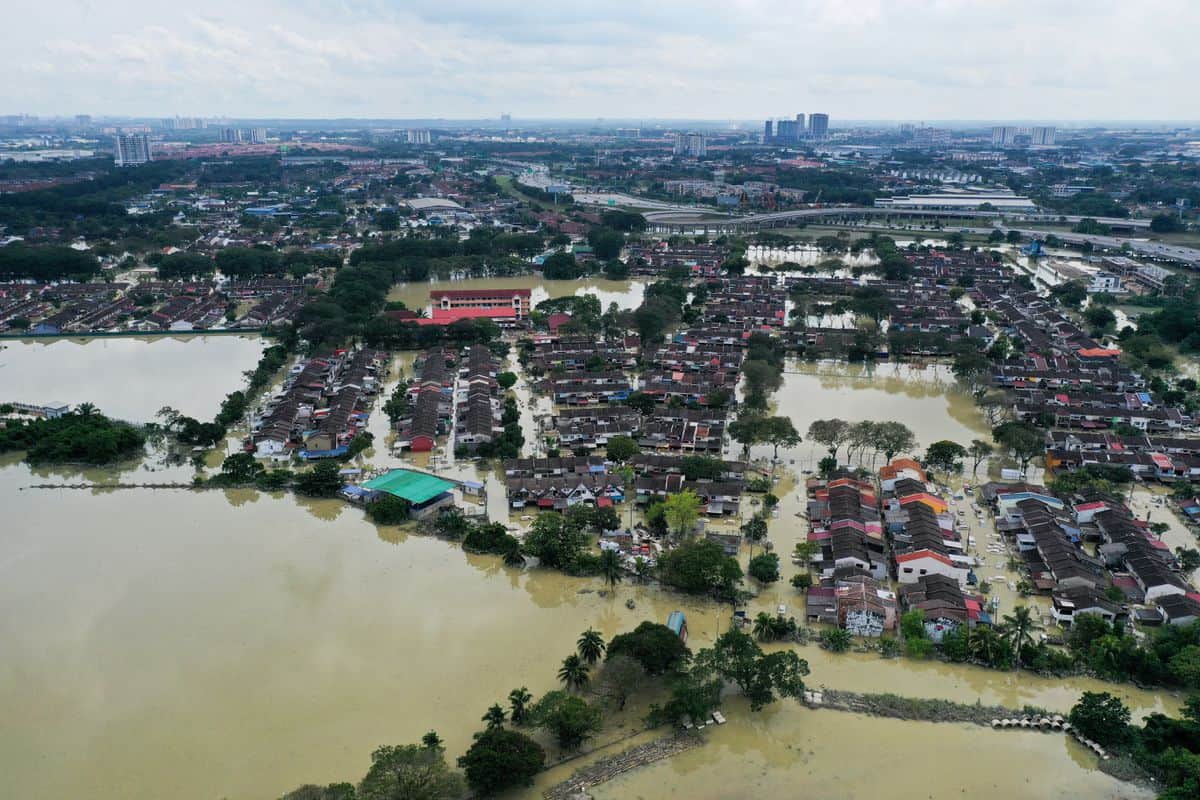
    The 2021 year-end flood which affected many areas nationwide surpassed all previous year’s floods within Malaysia.  These has financial implications on the lives of our fellow Malaysians. For those affected, here are some ideas on how to pick up the pieces and build resilience moving forward.

    1. After the flood – restarting your life

    Consider the immediate aids you can leverage on to restart your life and get back on track. These can come in the form of financial, food, or accommodation aid, life essentials such as clothes and household items, or even transport arrangements for stranded individuals.

    2. Get your mental health in check

    Be sure to stabilise your frame of mind and check your stress level. There are a number of free services and apps such as:

    • Talian KASIH (8am – 5pm daily 15999, WhatsApp 019-261 5999)
    • Naluri (03-8408 1748, 24 hours, English, Malay and Mandarin)
    • Selangkah – Selangor Mental Sihat (SEHAT)
    • MySejahtera (Digital Health > Minda Sihat)

    3. Gauge your financial situation

    Once more urgent and pressing matters are taken care of, you can now take stock of your current financial situation. Ask yourself:

    • What are my losses?
    • What are my family incomes?
    • What are my monthly commitments?
    • What are my debts?
    • What is the position of my current investments and savings?
    • What is my protection coverage for my life and assets (takaful/insurance for personal and workplace)?

    These questions will help you paint a picture of your financial situation and will quickly bring up areas of concern (if any) which you can focus on as you look to recover.

    4. Salvaging assets from flood damage

    The next step is to consider your current assets. Firstly, assess damage to items within your household. Check if you have household insurance and if yes, whether it covers special perils or not.

    Assess damage to your vehicles, and be sure not to start them as the electronic system will short-circuit; get tow trucks to haul it to a workshop. Depending on the make of your car, the repair cost may range from RM4,000 to RM10,000.

    Other things to consider:

    • If you are working from home, is your laptop and handphone provided by your company? Do you need to report up or make a police report?
    • Are your important documents destroyed?
    • Do you need to replace NRIC/birth and marriage/divorce certificates at the Registration Department, driving licence and road tax at the Road Transport Department (JPJ), and school certificates from the respective schools?

    5. Stay safe and healthy

    In such trying times, keeping healthy may be the last thing on your mind but it is very important that you do your best to follow Covid-19 standard operating procedures (SOP) by getting help from NGOs and volunteers for masks and hand sanitisers.

    Be wary of water-borne diseases such as typhoid, cholera and dysentery and use water-purifying tablets if you are unsure if the water is safe for drinking or you do not have access to clean water. Follow the dilution instructions that comes with the tablets.

    6. Rebuild your financial status 

    The information in point (2) above is important to guide you on your next steps. You may seek help from:

    • Agensi Kauseling & Pengurusan Kredit
    • A licensed financial planner at SmartFinance.my where you can talk to an expert

    Be on the lookout for scammers; they are heartless and only want your money. Only accept help from reliable sources.  When in doubt, err on the side of caution!

    7. Preparing for a future flood

    The financial challenges you face today is the basis of your emergency fund for the future. Therefore, it is crucial to start building one when you can. Transfer some of the risks to your protection coverage and tap into your network of friends or relatives that you and your family can stay with.

    Flood-proof your home and/or prepare your evacuation SOP and equipment (torch lights, inflatable boats, dry food, bottled water, charged power banks, clothes, blankets and toiletries in waterproof bags, disposable wares and bags). Be constantly alert of your surroundings. Chances are, it may be difficult to sell your home and move to another so you may need to continue staying in your current place.

    Review how you place your furniture and appliances. Some homes put them on platforms that can be jacked up to desired heights (granted, if water level too high, it can render platforms useless). Store critical items in waterproof boxes when the rainy season approaches. It may also be prudent to check if you can convert your rooftop to an emergency accommodation equipped with the evacuation items listed above?

    My heart goes out to all flood victims.  We are fortunate there are volunteers and NGOs that we can contribute to, who will organise, mobilise and distribute contributions to as many victims as they can.  I hope the above is useful to those affected. May you have a respite from your situation and the strength to ride through this tough times.

    This article is contributed by Linnet Lee, CEO of the Financial Planning Association of Malaysia (FPAM).

  • Takaful Malaysia Launches Nation’s First Flexi Motor Takaful Plan with Pay As You Drive Daily Cover

    Takaful Malaysia Launches Nation’s First Flexi Motor Takaful Plan with Pay As You Drive Daily Cover

    Syarikat Takaful Malaysia Am Berhad (“STMAB” or “Takaful Malaysia”), the general takaful arm of Syarikat Takaful Malaysia Keluarga Berhad virtually launched Takaful myClick Motor FlexiSaver, the nation’s first flexi motor takaful plan with Pay As You Drive daily cover. Jointly organized by Takaful Malaysia and technology partner, Fusionex, the virtual launch was officiated by Dato’ Mohammed Hussein, Chairman of Syarikat Takaful Malaysia Keluarga Berhad.

    “Virtual launch of Takaful myClick Motor FlexiSaver signifies Takaful Malaysia’s unwavering commitment to driving product innovation and delivering superior customer value. Flexible protection plans are the future of the insurance and takaful sector. Offering insurance and takaful products in the new mobility space that are simple, flexible, and usage-based is revolutionising the industry. This means, consumers have the option to decide and pay for just the coverage they need, as and when they need it. With more people driving less these days, while some may face financial challenges due to the impact of the COVID-19 pandemic, Takaful myClick Motor FlexiSaver is the best option that suits the financial and protection needs of those who drive infrequently or own several cars and want to save more on motor takaful or insurance plan. The Pay As You Drive daily cover available under this plan is ideal and rewarding, as we give customers the flexibility to activate it the day before they want to drive and will only be charged for the days they drive. Suffice to say, Takaful myClick Motor FlexiSaver is a quick win for customers to enjoy great savings and peace of mind when they drive,” stated Dato’ Mohammed Hussein, Chairman of Syarikat Takaful Malaysia Keluarga Berhad.

    Takaful myClick Motor FlexiSaver is an online motor takaful plan that provides one-year coverage for loss or damage to your vehicle due to fire or theft, as well as third party bodily injury, death, or property damage. Offered through Takaful Malaysia’s online sales portal and Click for Cover mobile application, this plan provides a 24-hour roadside assistance program for unlimited breakdown towing service and minor roadside repairs, including tyre change, fuel delivery, battery change, and jump start. Featuring Pay As You Drive daily cover for accidental damage to your own vehicle and complimentary personal accident coverage of RM15,000 for the driver and all passengers as well as accident towing, Takaful myClick Motor FlexiSaver also offers add-on protection options for windscreen, personal accident, and key replacement. Customers can also enjoy an instant 10% discount when applying the base plan of Takaful myClick Motor FlexiSaver, and when activating Pay As You Drive daily cover.

    Chief Executive Officer of Syarikat Takaful Malaysia Am Berhad, Mohamed Sabri Ramli said, “In our continued efforts to meet ever-changing consumer expectations, and in line with the rapid pace of digital expansion in consumer purchases, it is timely that we introduce Takaful myClick Motor FlexiSaver with Pay As You Drive (“PAYD”) daily cover to better serve our customers with innovative takaful solutions while preserving consumer choice. The PAYD is the key differentiator, a unique feature that sets us apart from other motor insurance and takaful plans available in the market. Customers only need to sign up for the base plan of Takaful myClick Motor FlexiSaver via our online sales portal or Click for Cover mobile app, before activating PAYD through the mobile app. Eventually, we want to make it easy and hassle-free for customers to enrol in this motor takaful plan online, corresponding to our digital strategy to enhance product and service accessibility.”

    “Takaful myClick Motor FlexiSaver with PAYD not only provides a simple online application process along with an array of benefits and services offered to customers but also diversifies Takaful Malaysia’s product offerings and creates a value proposition for consumers at large. Takaful Malaysia’s strategic move to introduce this motor takaful plan will provide new revenue and value-producing opportunities for the company to stay ahead of the curve and remain competitive in the motor insurance and takaful market,” added Mohamed Sabri Ramli.

    Dato’ Seri Ivan Teh, Group Chief Executive Officer of Fusionex said, “Insurance, at its core, is a business that underwrites risks and helps people in times of need. As such, I applaud Takaful Malaysia for revolutionizing their offerings and empowering their customers to take more control over how they purchase insurance. As a long-term and fully-supportive technology partner, Fusionex pledges to lend our experience, expertise and cutting-edge technology to drive excellent user experience for Takaful Malaysia’s customers, and this partnership continues to innovate with the launch of Malaysia’s first pay-as-you-drive motor insurance.”

    “Together with Fusionex, which specializes in analytics, big data, and artificial intelligence, we leverage digital and social media platforms to actively promote this product. Ultimately, we want to ensure that our business is competitive and relevant to the growing consumer demands, particularly the tech-savvy generation. By embracing technology and digital tools to offer differentiated product offerings and services, we will be able to reach new customer segments through superior protection products and customer experience,” said Mohamed Sabri Ramli in conclusion.

    Takaful Malaysia was recently voted once again by Malaysians as the Best Motor Takaful Company in Malaysia for 2021/2022. The annual award clinched by Takaful Malaysia is based on the results of the online survey conducted by iBanding, an independent, knowledge-based company that provides transparent insights about the local insurance and takaful industry that ranks insurance and takaful companies in Malaysia according to the actual feedback from survey responses among motor vehicle drivers.

  • How to Choose the Right Investment Vehicle for Yourself?

    How to Choose the Right Investment Vehicle for Yourself?

    “Soo Yee, I saw someone on Instagram saying that stock investment is better than unit trust investment. What is your view?”

    This is one of the questions that I get from my client on investment.

    Everyday, we are bombarded by a myriad of information on social media. It’s especially important to process the information, rather than consuming it blindly. How can you take up a piece of investment advice from someone who does not understand your financial situation as a whole? Does the mentioned investment vehicle suit your investment plan?

    Is stock investment really better than unit trust investment? It depends. Stock investment might be good for that person, but it is not necessarily good for you.

    When it comes to investment vehicles that suit you, there are many factors to consider. Here are some of the questions to ask to find your preferred investment vehicle.

    1. Risk level of the investment

    • Is the investment low, moderate or high risk?
    • Does it match your risk appetite?

    2. Capital needed to start investing

    • Does the investment require low or high capital?

    3. Investment lock in period

    • Is there a lock in period for your investment?
    • Is the investment easy to sell?

    4. Guaranteed element of the investment & its income tax implication

    • Is there a minimum guaranteed return for this investment?
    • How does this investment affect your income tax?

    5. Other considerations on the investment

    • Do you enjoy handling property management?
    • Do you enjoy spending time doing stock research & analysis?
    • Are you skilled in stock picking or do you prefer getting professional fund managers to manage your investment?

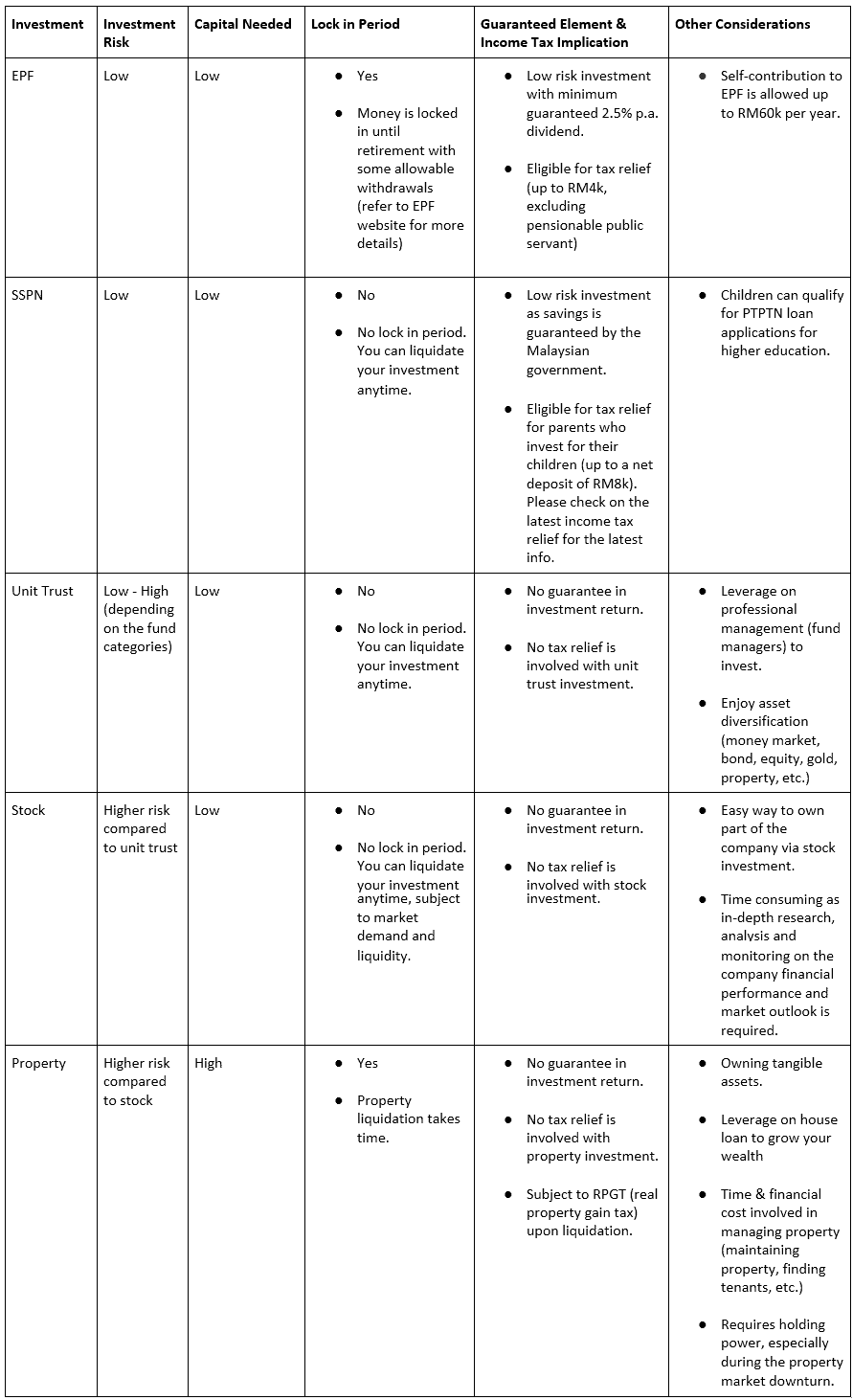
    There’s a multitude of investments available, so here are five of the more common investment types for your reference:

    How to Choose the Right Investment Vehicle

    If you’re a business person (without EPF contributions) and concerned about payable tax, some of the investments that can be considered are EPF and SSPN. Both EPF and SSPN will help to reduce your payable tax.

    If you’re a person who doesn’t have time or enjoy doing stock research & analysis, perhaps you can look into unit trust investment that leverages on professional management to invest your hard earned money.

    In short, a suitable investment vehicle for you should be tailored to your financial situation as a whole. If you’re clueless about your investment planning, you may consider investing in a licensed financial planner. A licensed financial planner will be able to look at your whole financial landscape and advise on the right investment vehicles to help you to reach your financial goals.

    About the author

    Kuah Soo Yee is a Licensed Financial Planner (CFP) who is passionate about helping people make sound financial decisions and achieve their financial goals, and recently launched her own app. Her personalised strategies and advice have helped many to gain better clarity and take firm control of their financial future. She can be contacted at soo.yee@ipp.com.my

    Website
    LinkedIn
    Facebook
    Instagram

  • What Is Your Money Mindset?

    What Is Your Money Mindset?

    This is the first part of this six-part series, where these topics will guide those who have just started to work or have just started their journey to build a strong financial foundation. Before we set out to achieve anything, it always starts with our mindset. 

    How do you know what your money mindset is? It’s how you feel about and view money. It helps to form your decisions on how you manage money by saving or spending it. How you believe money can work for or with you, will decide how you live your life in the future. Every single day, you’ll make many small decisions that will push you forward financially or set you on a reverse course; it’s entirely up to you! 

    Some of the great money mindsets are listed below:

    • I have the ability to spend but I also empower myself to say “No”
    • Everyone has their own path and I have mine
    • Achieving financial goals are possible when I work towards them

    As Henry Ford said, “Whether you think you can, or think you can’t – you’re right.”

    Here are three ways to improve your money mindset:

    1. Money is a tool, not a goal

    Think of money as the fuel to your car. Is fuel considered the destination or is it one of the raw materials needed by your car to bring you to your destination? 

    If your answer is the latter, that’s correct! We exchange our time, energy and skills to earn money to buy us the things we need or want. Through your various life experiences, you may think that money is the answer to everything, but this isn’t true if you don’t know how you would like money to help you in life.  

    When you start seeing money as a tool, it’ll help you think about what your actual goal is. A simple goal could be living a life filled with fun and joy, where you enjoy travelling and eating – this will require money in order for you to fulfil this goal. 

    As you start setting goals for yourself to aim for, they also provide a purpose for your money to work on and naturally, you will start allocating your money to where it should belong. 

    2. Money needs to be managed

    Did you know that most winners of the lottery actually end up losing all the money they won and go bankrupt in a few years? This is hardly surprising because if a person doesn’t know how to manage RM1,000, then they will definitely not know how to manage RM10,000. The same logic also applies to you. If you work smart and hard to earn the money you have, why not take the initiative to learn how to manage, allocate and save your money

    You can set up a few accounts to save and segregate your money. For starters, these could be a savings account, fixed deposit and money market. Although these accounts may not serve as long-term wealth builders, you can use them to practice saving what you earn. When you continue practicing this, it then develops to become a habit. 

    Assume your total take home pay for the next five years of working is RM200,000. How much do you think you would like to keep from this amount? Would you like to save RM20,000 or RM40,000 or even more? What you want to save entirely depends on you. 

    3. Using money is like two sides of the same coin

    The “opportunity cost” or “trade-off” is defined as the loss of alternative choices when you make a decision on how to use your money. This is the same thing that happens if you flip a coin – it either lands on heads or the tails, and never on both sides.

    For example, let’s say you decide to save RM10,000 every year from your take home income of RM50,000. By saving this RM10,000, you gain additional money in your savings account. However, you may miss out on having more fun by travelling, purchasing new gadgets, or buying new furniture that you might want to have. 

    Before making any decisions regarding money, learn to think about the potential opportunity cost or trade-off that you have to make. Will it be something you’re willing to miss out on? Would the trade-off matter in the years to come? Would your decision help to build the life that you want in the future? 

    If the decision isn’t urgent and involves an amount of money that’s a lot to you, and you’re not comfortable making it, then don’t. There is no harm in pausing and thinking through or seeking opinions from the financial planners that you know. For all you know, you may have just saved yourself from future troubles if the initial decision goes against you. 

    Finally, improving your mindset isn’t a “been there, done that” type of destination. It’s a continuous effort to enhance and practice, just like how we build our body muscle, otherwise our body muscle will slowly turn into…body fat. 

    Stay tuned for my next topic in this series!

    About the author 

    Fong Woon Bing is a licensed financial planner who has coached, improved and broadened the mindsets of many people whom he works with, bringing them closer towards achieving their life and financial goals. He can be contacted at fongwoonbing@vka.com.my

  • Tax Obligations For Self-Employed Entrepreneurs

    Tax Obligations For Self-Employed Entrepreneurs

    With the rise of self-employed entrepreneurs, here are some tax compliance obligations and common oversights.

    There has been a dramatic growth in recent years on the number of self-employed entrepreneurs in Malaysia. From 2017 to 2018 alone, this number increased from 2.57 million to 2.86 million, an increase of 11.3% (source: Department of Statistics, Malaysia). In 2018, the self-employed are the second largest category (19.3%) in the Malaysian workforce out of a total of 14.8 million working adults.

    Malaysia adopts a self-assessment system where taxpayers are responsible to determine their own tax liability and to submit their tax returns accordingly. As the number of self-employed entrepreneurs continues to grow in the Covid-19 economy, it is important for the self-employed to be aware of one’s tax obligations especially in the area of tax compliance. Failure to do so could result in penalties and additional tax payable.

    A self-employed person is an independent contractor or a sole proprietor. The self-employed consists of sub-contractors working in the trades or construction sectors to professionals such as doctors, lawyers, accountants, engineers, and management consultants. Recent iterations include freelancers working in the commonly named “gig economy” (such as e-hailing drivers).

    Here are some tax compliance obligations a self-employed individual should take note of:

    1. Registration of Tax Identification Number (TIN) and submission of tax return

    A self-employed individual should register for a TIN when the person has taxable income which exceeds a threshold of approximately RM28,000 per annum. A TIN can be registered at the nearest Inland Revenue Branch (IRB) branch or via e-Daftar at the IRB website.

    For entrepreneurs running a business, the income tax return (Form B) will need to be submitted by 30 June the following year (eg. Form B for the year of assessment 2020 is due by 30 June 2021*extended to 30 September 2021 due to Government movement control, IRB website)

    2. Estimate of Tax Payable

    Under the Malaysian tax regime, a taxpayer pays income taxes on a “Pay-As-You-Earn” basis. Where an individual taxpayer receives other than employment income, the IRB may issue a Form CP500 setting out the estimate of tax payable under an instalment scheme. The Form CP500 is determined based on the tax liability of the previous year. What should you take note of:

    • The tax estimate is six (6) bi-monthly instalments commencing from the month of March every year.
    • Each tax instalment payment needs to be made within 30 days from the due date.
    • The remittance slip (Form CP501) should be submitted together with the instalment payment.
    • Should there be a need to revise the tax estimate which affects the instalment amount, you must submit Form CP502 to the IRB not later than 30 June each year on the revision payments. The IRB will issue a Form CP503 if the application is successful.
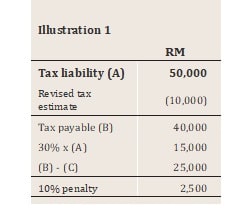
    • The penalty for late payment of 10% shall be imposed on the unpaid amount if the tax instalment payment has not been paid within 30 days from the due date.
    • Where there is a difference between the revised tax estimate submitted and the final tax liability which exceeds 30% of the tax payable, the difference will be subject to a penalty of 10%.

    The following illustration shows the impact when an estimate of tax payable is inaccurate.

    3.Employer’s Responsibilities

    As an entrepreneur, you might hire employees to expand your business. In this case, you will be considered as an Employer for tax purposes. The responsibilities of an Employer are as follows:

    • The Employer is to inform IRB of any new employees within one month from the date of commencement of employment.
    • Submission of Return of Remuneration by an Employer (Form E) to the IRB on or before 31 March each year. <continues…>

    [ You may read the full article HERE ]


  • How COVID-19 Affected Our Favoured Investment Themes

    How COVID-19 Affected Our Favoured Investment Themes

    Schroders identifies eight themes that could transform the world, but how are these being affected by the coronavirus?

    At the core of thematic investing at Schroders is the belief that the most powerful and persistent investment themes are those where human ingenuity ignites innovation to address imbalances in the world. These imbalances may be between populations and resources, or between supply and demand in individual industries.

    As we all know, necessity is the mother of invention. As coronavirus throws the whole world into turmoil, humanity’s ingenuity and powers of innovation are being mobilised to fight the disease, care for our populations and adapt our work and home lives to a new set of economic, political and social realities.

    Covid-19 is exacerbating existing tensions between populations and finite resources and dislocating supply and demand relationships in countless industries. Bearing this is mind, we examine the impact of this crisis on the eight investment themes that we think have the potential to transform the world we live in:

    1.HEALTHCARE INNOVATION

    “Crisis highlights importance of healthcare innovation”

    This pandemic underscores the critical societal importance of healthcare innovation as countries seek to prevent and cure disease while wrestling with ongoing demographic and budgetary challenges. Central to our investment thinking in this area is the belief that science and technology will be crucial as companies harness data, computing power and medical knowledge to meet these goals.

    We believe this will drive further breakthroughs in advanced therapies, medical technology, and healthcare services as well as in digital healthcare where technology in the form of ‘telehealth’ has shown its worth during this crisis as a means of making healthcare provision more responsive and efficient. As governments realise their vulnerability to pandemics, the drive to spend more on healthcare in the future can only intensify.

    2.SMART MANUFACTURING

    “Smart manufacturing essential as demand fluctuates”

    Amid the acute demand and supply shock experienced by the global economy, manufacturers are also having to innovate. We expect to see companies developing local supply lines alongside their existing global networks while investment in data analytics will be imperative as a means of understanding and managing volatile demand and disrupted procurement in the future.

    Investment will also take place in other smart manufacturing themes, including advanced manufacturing such as 3D printing, automation in the shape of robotics, sensors and controls, and advanced materials like lightweight composites as companies harness exciting innovations in hardware, software and materials to deliver greater agility.

    While manufacturers face undoubted short-term headwinds, the disruption caused by Covid-19 demonstrates the importance of manufacturing innovation to ensure responsiveness and productivity in both good times and bad

    3.CHANGING LIFESTYLE

    “E-commerce and well- being are growing lifestyle trends”

    […continue to read this full article HERE ]

  • How to Make a Financial Plan for Myself As a Beginner?

    How to Make a Financial Plan for Myself As a Beginner?

    A good financial plan creates a roadmap or a guiding light for your financial life journey. It’s more than money and gives you an overall picture of where you stand financially and where you’re heading to. It should include financial details about your cash flow, savings, debts, investments, insurance, and any other aspects of your finances. Financial planning is an ongoing process that allows you to get your money and life under control so that you can reduce stress, fear, and worries about your future life. I think everyone should have one, and it can be done in your own style or with a financial planner. Remember, financial planning is not only for the wealthy or people earning a high income. You don’t need sophisticated software or tools to draw up your own financial plan; instead a blank piece of paper will help you to kick start the process. Start by listing down what you have (assets eg. savings account, EPF, investment account, investment property, business, etc.) and what you owe (liabilities eg. mortgage loan, car loan, personal loan, credit card, study loan, etc.), income (cash inflow) and expenses (cash outflow). This will give you a snapshot of whether you’re at a financial surplus or deficit, making it easier to work out a financial plan – covered in the next step.

    Setting goals for your financial plan

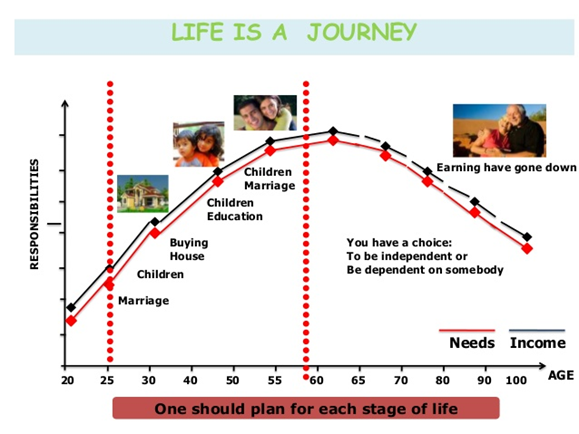
    This is where you decide how to design your own life. When crafting your own financial plan from the viewpoint of what your money can do for you, you’ll make saving and investing feel more intentional than overspending it. Your goals should be inspirational, measurable, and realistic – ask yourself where do you see yourself in five years’, 10 years’ or even 20 years’ time? It’s important because it gives you direction to achieve your financial goals at different life stages and it also influences how you plan your career as well. For example, there will be different needs when doing financial planning in your 20s, 30s, 40s and 50s. In your 20s, you might want to make sure you have sufficient emergency savings that lasts for at least three to six months so that in emergencies you won’t  be running on credit. Don’t forget to factor in insurance and ensure you get adequate coverage for personal accidents and a medical plan. In your 30s to 50s, you’ll likely be experiencing high commitments due to getting married, raising kids, preparing university tuition fees, and funding your retirement fund. As you progress from different life stages, you’ll need to regularly keep an eye on your allocations for investing and spending. If you know that these things will happen in your 30s to 50s, you may save and invest more in your 20s or prolong the retirement age from 55 to 60.

    Monthly budgeting for your financial plan

    The next step is to allocate your monthly budgeting – what is coming in and what is going out to understand your spending habits and only able to take a balance between spending and savings. It depends on where you live and how you spend – living in an urban area may result in spending more due to higher rent, eating out more etc. If you don’t spend more than half of your income, then you can start saving enough to fund your goals. Of course, you can’t own the whole world, but you can own the things that you value the most!

    Executing your financial plan

    This is all about allocating your resources or cash surplus to fund your goals. Saving and investing must come into play and you should consider the types of financial products, the risks, returns and liquidity, as well as understanding your risk tolerance. For example, if you set aside 15% of your gross income for long-term goals like retirement, you may consider investing in stocks or equity funds that aim for capital appreciation. For shorter goals like saving for an emergency fund, you wouldn’t put your money in a high-risk fund because you might need it quickly in an emergency. It’s best to have separate accounts for different funding purposes.

    Review your financial plan

    Lastly, review and monitor your financial plan regularly to ensure you exercise strict discipline with the flexibility to adjust accordingly in the future, especially when entering different life stages. It’s easy to talk and plan, but execution remains the most challenging task as we may not have the discipline to stay on track. So, reviewing, monitoring and fine-tuning acts as reminders of your goals all the time. It’s best if you can make it measurable so that you can reward yourself with small gift when you are on track!
      A good financial plan is not a beautifully written document that is presented nicely to you. It’s a tool to track your progress and help you reevaluate plans after a life milestone such as getting married, raising a kid, buying your first property, upgrading to a new car, preparing for a kid’s college fee, or building your retirement fund. When everything is handled, you can enjoy living your life. The small steps you are taking now will definitely have a huge, positive impact on your future.

    About the author 

    Eewen is a licensed financial planner and strongly upholds the belief that financial wellness is all about money bringing a positive impact into your life. She can be contacted at keaheewen@vka.com.my
  • What I Learned From a Free Financial Health Check

    What I Learned From a Free Financial Health Check

    Nowadays, the words “health” and “healthy” are very important. While the pandemic has taught many people different lessons, one of the most central ones is that it’s important for us to be healthy. Without good health, all other things may not take place, or be sustainable. The concept of being healthy isn’t just limited to medicines or the fitness industry – it’s also widely used in the financial industry. These days, there are plenty of marketing messages that have the phrase “Financial Health” or “Financial Health Check” in a big, hard-to-miss font! At a glance, it seems that we can get free financial health checks from different companies that offer different kinds of products. Life insurance companies offer this, banks may also offer this service, and in social media, we can see many different individuals, or product companies offering this, for free! As a curious person, I tend to try out new things. And the most memorable one, I’d say, is one by a reputable insurance company offering a financial health check. I logged in to the portal to do mine; a few questions were asked about my age, marital status and whether I have children. It then asked me to rate a few scenarios that “concerns me”:
    • Hospitalisation
    • In the event I’m diagnosed with critical illness
    • In the event I’m disabled
    • In the event I meet with an accident
    • If I’m concern about money for my children’s education
    After these questions, the next segment asked me to indicate how much insurance I have in respect to the areas mentioned above, followed by a question of how much of my current income goes to insurance premiums. Boom, the results came out and I was eager to see if I’m considered financially healthy! The results show me, based on the coverage amount I keyed earlier, compared to people like me at this insurance company, whether I had higher or lower coverage for the respective areas. It even comes with a recommendation of what I “need”. You get it – according to this financial health check, I need more insurance products! Just like this, am I supposed to say I’m financially healthier than most just because I have higher coverage on death and total permanent disability? Am I supposed to feel concerned just because “people like me” at this insurance company have a RM20,000 paid savings plan, but I have RM0; does that make me a bad father? Comparing our situation to “people like me” as defined by a company, isn’t a good way to assess if we’re financially healthy. If this is a good approach, we should start comparing our situation to people in other countries, societies, and at other offices. But what is a fitting benchmark for this? If this is considered a good approach, then if “people like me” in this country have a high amount of debt, should I start going all out and accumulating debt? I’m not sure how this makes any sense. It may make sense to some, but I’m still looking for a good explanation! Comparison is the root of all evil and how we lose the clarity we need to live our own life. It also helps in feeding insecurity, jealousy, greed and other emotions that don’t empower us to be a better version of ourselves. I think that if we want to understand if we’re financially healthy, it’s because we want to know if we have a good financial foundation. It’s like a table with four legs; we want to know if these four legs are strong enough, or whether it’s unstable and at risk of collapsing. We need this information because we care about maintaining the table and want it to continue being stable so that what’s on the table will be sustained and maintained. In life, what’s on my table will be what’s important to me. For me, this includes my family, what kind of difference I can bring to the society, whether I’m making a difference, and helping people be better than they were the day before. But, without those four legs supporting my table top, these three items may not be around for long. In the context of money and life, we can start from these four legs to find out if we’re financially healthy.

    What are these four legs?

    Emergency savings

    For a start, I’d suggest looking at your emergency savings. If your savings can support you during sudden spikes in unexpected expenses, or ensure you go through challenging times when you lose your main income without having to lose sleep, your leg is quite stable and strong.

    Are you saving enough?

    Assess if you’re saving part of your income. A person spending all their income today will probably have to always look for money. The day their income stops, they’ll have issues maintaining the lifestyle they lead. On the contrary, a person who saves too much of their income today may not be able to enjoy life at all. Striking a balance seems to be important since none of us know if we’ll get the chance to enjoy our savings 20 years later.

    Debt and commitments

    Take a look at your debt situation. Do you have a habit of carrying outstanding debts forward month to month? How much of your take-home pay are you using to pay off loan instalments? If this amount takes up most of your income, it means you probably have less freedom and flexibility to try something new, since there are weights dragging this leg down. This means you may not be able to put on more weight to your table top.

    Life goals

    Finally, how well have you been preparing to achieve your life goals? For instance, my family is important to me, and if I were to leave them too soon, how long can they continue with minimal disruption? Have I done anything to ensure my frozen estate can reach them as quickly as possible with minimal costs? Am I on-track to provide my child with the kind of education I want? By looking at your financial progress from this perspective, the benchmark you’ll use isn’t public, but rather what you want, and compared to where you are now. This allows you to fairly review the legs of your table. It’ll help you stay on-track and compare your current situation to your ideal goals instead of other people’s. The points above are the four basic areas I think we should review if we want to understand our financial health. Of course, there are more areas such as if assets are optimised or liquid enough, ways to legally reduce taxes, or reducing the fees and cost we pay when we grow our wealth, etc. But this is a good starting point. When was the last time you did a financial health check? By being part of the Money Warriors Community, you can learn how to make improvements to the four basic areas – save more, spend with peace of mind, reduce your debt, and be brave when you think of money.

    About the author

    Kevin Neoh is a NextGen Money Coach who works with people to help them transform their relationship with money to improve their lives with the money they have. Kevin can be contacted at kevin@nextgenadvisors.my and www.kevinneoh.my