Category: business

  • 10 Common Financial Traps Millennials Fall Into

    10 Common Financial Traps Millennials Fall Into

    Money doesn’t disappear overnight but often it’s the case of losing one dollar at a time. It may not seem like a big deal when you order a Mocha Frappuccino, have a dessert in a nice cafe or subscribing for a long-waited movie, but every little item adds up in the long run.

    Being a millennial as well as a licensed financial planner, there are many financial traps I’ve also succumbed to, and now would like to remind myself (and you too) to stay away from.

    1. Instagrammable Lifestyle

    A cup of RM20 Coffee, a plate of RM30 Big Breakfast, a slice of RM20 cake, these are perfect elements to form a likeable photo, but these are also killing our bank accounts. When we chase a materialistic lifestyle, we might lose control of our finances.

    2. Crazy Shopping When There Is A Sale

    Looking for SALE is an easy job in this e-commerce era. You might wonder why buying things on sale is an issue? This is because no matter how great the bargain, if you purchased something you aren’t going to use, you’re just throwing away your money!

    Ask yourself, “Do I really need this and will be using this frequently?” or “I’m just buying it because it’s on sale?”

    3. Subscription Trap

    The most common marketing strategy nowadays is to encourage consumers to sign up for a “free” trial. You only need to activate the trial by putting in your credit card details to enjoy the service.

    The companies are hoping that people will forget to cancel, and then the monthly payments will just get charged to our account. And way too often, that’s exactly what happens. This happened to me before, and probably has to you as well.

    The effective way to avoid this is to ask ourselves: do we truly need things like movie subscription, music services or fancy gym memberships that keep us paying for months? Reconsider to see if there are cheaper ways of doing the same thing and if the subscriptions are necessary for you.

    4. Full Allocation Of Salary While Planning To ‘Save Later’

    RM300 for the latest flagship handphone, RM100 for a mobile plan, RM200 for a gym membership, RM1,000 for the dream car…  who says millennials don’t plan for their finances? We have our monthly salary “100% well-allocated” into different expenses. However, we might just be forgetful about one thing: Savings.

    The more we earn, the more we save? Unfortunately, it’s usually not the case. The first time I received my salary, I told myself to save up at least 10% every month. One year passed, I was still saving the same amount even though my salary was up more than 10%. I thought it’s due to the market inflation, so I couldn’t save more.

    In the end, I realised it’s due to my own “Lifestyle Inflation”.

    5. Using Credit Cards For Daily Expenses

    Don’t you feel it’s cool to just swipe a card/scan a code and get what you want? While we are living in an era where cashless payments are unavoidable, but the credit card is not our only choice.

    When you use your credit cards to cover the shortfalls in your spending, you can eventually run up a huge amount of debt. Besides, people tend to spend more when they are paying with credit cards. Don’t forget, you still have your debit card!

    6. Making Financial Choices Out Of FOMO

    Another common trap I face is to make a financial decision out of the fear of missing out (FOMO). When we are afraid, we might not consider all of the options available, and might end up making a costly mistake. Besides, millennials tend to have peer pressure to take a big financial step, from buying a new car to purchasing a home to getting married or having a child.

    Just stop! Take a deep breath and think whether you are ready for these moves. Rushing to accomplish these might not benefit you financially.

    7. Simply Investing And Chasing Quick Gains

    We are lucky as we have easy access to investment information compared to our parents. However, simply investing without knowledge, time and discipline can be a financial killer of our hard-earned money. I have seen some of my friends chase after quick huge gains from investments without paying attention to the risks involved.

    It would be folly for us to buy a stock or a property and just pray that it would “go up” without careful analysis. If you have no time to do this, it’s advisable to engage experts to help you instead.

    8. Thinking We Will Be Forever Young

    Many young Malaysians don’t even think about retirement:

    • In our 20s, we think retirement is far away, YOLO!
    • In our 30s, we enter a different life stage, buying a house, getting married, etc, and often we lack funds to save for the future.
    • In our 40s, we need to provide more for the family, e.g. children’s education fund.

    Commonly but sadly, people only recognise their retirement needs in their 50s, which is probably already too late. A warm reminder: the youngest millennials are already 24 years old now, and the eldest are already 39 years old.

    Another major misconception many of us have is that we choose not to buy insurance in order to save money. But this isn’t a wise financial decision. What makes a millennial so confident to think we are risk-proof from medical conditions or personal accidents?

    9. Travel Plans Are Done! How About Your Financial Plan?

    financial planning getting it right
    Image from icharts.net

    Planning for travel is always in our top bucket list, but how about our own financial plan? We spend countless hours scrolling through social media feeds, spend thousands of ringgit on getting the latest gadgets, but setting aside two hours to engage with a professional on planning our finances is rarely in the plan.

    We need this “financial waze” to lead us towards our financial goals in life. Without a financial plan, our financial future is unsecured as we are uncertain what is going on right now and where are we heading to.

    10. We Don’t Ask For Help And Choose To Ignore

    I don’t mean you should borrow money from your friends or relatives. However, most of us will be facing financial problems that we can’t handle well, for example budgeting problems or major financial decisions to make. Don’t try to adopt an “ostrich policy” and pray the problems would resolved by itself.

    Many of us get trapped because we don’t pay much attention to our finances. Every month we receive our pay cheque, pay the bills, and then spend what’s left over (if there’s anything). I understand that money is a taboo subject and we feel ashamed when we’re struggling. But there is so much help out there! Tell someone you trust or talk to a licensed financial planner to let them guide you.

    It is important to have an informed financial plan that can help us millennials achieve financial success. Remember, managing your finance is managing your life.

    Starting by monitoring all the seemingly small expenses. Think carefully before adding new debt, keep in mind that being able to make a payment (swiping your credit card) isn’t the same as being able to afford the purchase. Don’t fulfill your current desire by sacrificing your future funds.

    If you make saving a monthly priority and get the help from a licensed financial planner to work out your plan, you are more likely to enjoy life more abundantly.

    If you’ve spent time to finish reading this, take charge of your life by taking charge of your finances now. Have your personalised financial plan today!

    About the Author

    Ocean Pon is a Licensed Financial Planner with Finwealth Management Sdn Bhd.

    We at Smart Investor and Finwealth is committed to help you better manage your financials. Get a free consultation from an expert by filling in your details here: https://www.smartinvestor.com.my/SIxFinwealth

  • Are You The Real King And Queen Of Your Family’s Wealth Kingdom?

    Are You The Real King And Queen Of Your Family’s Wealth Kingdom?

    As the head of your family and business venture, you are being looked up to as the leader of your family and also the companies you are managing. As a business leader, planning well for the future is something that is expected of you and your management team. As the head of your family, you are expected to exercise the same standard when you plan for your personal wealth transfer as well as your business succession.

    When we talk about business estate planning, there is a popular Chinese saying that you may have heard before. It says that a family’s wealth will not last beyond three generations!

    Interestingly, the Americans also have a similar expression, “Shirtsleeves to shirtsleeves in three generations”.

    Backed By Research

    A ground-breaking study conducted by a wealth consultancy firm The Williams Group which involves 3,200 families over a 20-year period, found that 70% of the families tend to lose their fortune by the second generation, while nine in ten families lose it by the third generation!

    The popular explanation behind this phenomenon is that, the first generation works hard to accumulate the wealth. The second generation while growing up, sees their parents’ struggles and have a good understanding of the value of sacrifice and hard work. They appreciate the frugal aspects of their lives growing up and will more likely hold on to their parents’ wealth.

    However, the third generation do not appreciate the struggles and sacrifices of the previous generations. Therefore, they are more carefree and more likely to spend the wealth easily and may end up squandering the inherited wealth.

    Learn From Example

    Credit Photo: Ikea

    There is a shining example that comes to mind when we talk about planning for your business succession and holding on to your accumulated wealth to benefit the future generations. He is IKEA’s founder, Ingvar Kamprad. When this highly respected business leader died in 2018 at the age of 91, he was ranked No. 8 on the Bloomberg Billionaires Index.

    This is thanks to his control of IKEA’s global retail empire that was valued at US$58.7 billion. Interestingly, his wealth will not be dissipated because of a carefully designed and well-thought through wealth preservation strategy that he had put in place to secure the longterm survival of the IKEA business empire.

    According to a media report, most IKEA stores are owned by the Stichting Ingka Foundation, a Dutch entity with the purpose of
    donating to charity and supporting innovation in design, according to its founding statute. Meanwhile IKEA’s trademarks, brand and concept were placed under the ultimate control of Vaduz, a Liechtenstein-based Interogo Foundation whose subsidiary, Inter
    Ikea, is the global IKEA franchisor. “Interogo Foundation is managed by a Foundation Council, consisting of at least two members and a Supervisory Council, as a principle consisting of seven members.”

    This was disclosed by Anders Bylund, Interogo’s head of communications. He was also quoted as saying, “The Kamprad family members in the supervisory councils have been and shall always be in minority.”

    Meanwhile, Stichting Ingka Foundation, is only partly philanthropic. Its statutes allow for profits to be reinvested in the company, according to Per Heggenes, the chief executive of the IKEA Foundation.

    This smartly designed strategy put in place by Kamprad was designed to ensure that IKEA, is not in the hands of his family members, and thus would long outlive its founder. Trust experts say that the set-up ensures IKEA’s business continuity by making it impossible for any individual, whether a manager or heir, to assume control after Kamprad’s death.

    It Can Be Done

    You can also be the real king or queen of your family’s wealth kingdom just like Ingvar Kamprad, once you have come up with your very own comprehensive personal and business estate planning.

    With an intelligently designed estate plan, your wealth can be fortified with a “legal castle” to shield your wealth from all creditors and vultures, as well as to avoid the probable ugly family feuds and disputes, which will tear up and destroy your family’s wealth kingdom. Your legal fort can be watertight against all types of claims and risks, including director’s or professional liabilities.

    By utilising well established and advanced legal means and structures to hold the ownership of the bulk of your wealth, you will be able to perpetuate your family’s wealth kingdom, and escape the curse of family wealth being dissipated by the third generation!

    You will also be able to protect the interest and well-beings of your beneficiaries and descendants. You get to enjoy serenity and inner peace knowing that when the time comes, your family’s wealth kingdom is intact and it serves the needs of your loved ones.

    Let them thrive from the blessings of your wealth kingdom, rather than suffer from the curse of inadequate planning. Your descendants will come to admire and respect your vision and the decisiveness in getting a comprehensive family’s wealth
    succession plan, just like the late Mr Ingvar Kamprad.

    About the Author

    Lee Khee Chuan estate planning

    Lee Khee Chuan holds a B.A. from National University of Singapore and a chartered financial consultant (ChFC), chartered life underwriter (CLU), CFP professional, and Fellow, Life Management Institute (FLMI) USA. He is also a licensed financial adviser representative with more than 25 years’ experience in estate planning. He shares a lot more valuable insights at www.estateplanningmalaysia.com

  • Protecting Your Financial Needs at Different Stages of Lives

    Protecting Your Financial Needs at Different Stages of Lives

    Many people do not see the importance of insurance until they need it, or until it is too late for them to do anything with it, and what’s worse, many considers it an unnecessary expense. In reality, however, insurance is more than that – it is a useful financial tool that forms part of our wealth management planning.

    Starting Out

    Our financial needs, income and liabilities vary at different stage of our life, as shown above. Those who are young and single who have just started their working life in their 20s are only interested in investment to grow whatever little money that they have.

    Although it is good to have the desire to start accumulating wealth early, many of them are unaware that the risk of falling ill can happen any time while accumulating wealth.

    Thus, at that particular age, they should also look into wealth protection. If they are still single, they should at least have healthcare planning. 

    What is healthcare planning?  Is it just a medical card?  When someone is sick and have to be admitted to the hospital, do they stay for a longer period of time, or do they recuperate at home?

    For instance, a cancer patient who is undergoing treatment at the hospital might be required to stay at the hospital for a certain period of time. Even after being discharged, they will still be required to go for follow-up treatments, and all in all, the recovery period could take up to a year or more.

    There is a possibility that they might not be able to work like before, and thus, their income will be affected. In cases of major illnesses, besides medical expenses, many will find themselves having to spend their money on daily sustenance, alternative therapies, supplements, and sometimes they might even require a caretaker.

    A complete healthcare plan should include a medical card and critical illness coverage. Do remember that a medical card solely pays for hospital expenses while critical illness insurance pays a lump sum when one is diagnosed with any of the critical illnesses listed.

    A patient can use this lumpsum amount to cover their daily needs resulting from the loss of income as well as for alternative treatments.

    Having a Family

    Happy cheerful Asian family dad, mom and kids having fun and using digital tablet video call on sofa at house. Self-isolation, stay at home, social distancing, quarantine for coronavirus prevention.

    Thirties is the age where many people choose to start a family. At this phase of life, having children will also mean creating an education fund and protecting the family income and assets.

    This is the period when you need to look into family income protection to take care of your most important responsibility – your loved ones. Should anything unfortunate happen to you, you can rest easy knowing that they will be well taken care of.

    That being said, their financial needs – including their daily expenses and funds for their education – need to be calculated. The amount required might be several million ringgit, and most people in their 30s do not have such a large amount of money available.

    In this instance, the cheapest tool is to purchase an insurance for the required sum, which will provide a peace of mind with the knowledge that in case of any tragedy, your loved ones will be protected.

    Take this case study as an example. Mr Tan, 33, is married with two children aged two and five; his wife is a homemaker. Mr Tan, whose monthly disposable income is RM5,000, is the sole breadwinner of the family, and since this is the case, he is worried about his family’s wellbeing should anything happen to him.

    He has estimated that his family needs RM60,000 a year, and wants to ensure that his family is provided for until his youngest child is 22 years old. To achieve this, he would therefore require 20 years’ worth of funds amounting to RM1.2 mil.

    At 33, Mr Tan does not have that much savings. His house may be worth RM1.2 mil, but his family will still need to live in it. Therefore, having a life insurance coverage of RM1.2 mil to cover this risk would be the most effective financial tool.

    Bear in mind that we should review our insurance policies every 5-10 years as our financial status and priorities change. 40-50s is the prime time where we have more assets and liabilities, as well as changes to our lifestyle as we move into our retirement years.

    It is also the time when our income is more stable and we have excess funds to prepare for our golden years.

    Preparing for Golden Years

    We would want to enjoy our retirement days without worrying about whether there is sufficient money to tide us through the years. If we prepare well in our 40s or even earlier, we would not need to worry about risks or expenses that might take away our retirement funds.

    Someone once asked, “What and how to prepare financially in order to enjoy the golden years?” Well, there are three types of expenses that we need to prepare for post-retirement, namely

    • Daily living expenses (which can be from our EPF fund that many of us have accumulated during our working years);
    • Maintenance or medical expenses; and
    • Happy fund.

    Advancements in science has led to an extended life expectancy rate, but while people are now living longer, many are still unaware that older medical plans only insure a person up to the age of 70. Medical hospitalisation is becoming very costly, and therefore, we need to ensure that our healthcare insurance plan covers us until are 80, at the very least.

    Furthermore, as we age, there will be an increased risk of developing health problems such as high blood pressure, diabetes and high cholesterol. Such health conditions require daily medication which is not covered by medical cards and will eat into our retirement funds.

    On top of the daily medications, there will also be other supplements and nutritional needs required to promote better health. These are the maintenance expenses that need to be taken into consideration as well.

    To enjoy our retirement years to the fullest, we need to have a certain amount of money to do the ‘fun’ stuff like travelling and indulging in hobbies. We should start accumulating our lifestyle or ‘happy’ fund as early as possible by growing our wealth through unit trusts, shares and saving plans.

    How we choose from the different wealth accumulation tools will depend on our risk appetite and duration of investment.

    Financial planning at different stages of life is important. Insurance is one of the cheapest tools to manage risk and is only one of the many financial planning tools out there today.

    In addition to protecting your wealth, there are other financial tools in the market, each with its own purpose such as accumulating and growing wealth through savings and investments; and wealth distribution though estate planning.

    About the Author

    Andrea Siew is an Approved Financial Adviser with Harveston Wealth Management Sdn Bhd.

  • It Is A Tough Job Taking Care Of Your Family, Let A Financial Planner Take Care Of Your Finances

    It Is A Tough Job Taking Care Of Your Family, Let A Financial Planner Take Care Of Your Finances

    My wife and I are both accountants. We have two children, one of them is a child with special needs. I’ve always known the importance of getting our family’s financial planning done, but never quite came around to it due to our busy schedule.

    We were lucky to have met Pauline, our Financial Planner. She was interested in finding out our goals and how she could help us to achieve them. After taking the time to understand us, she helped us in assessing where we are now and what actions we need to do in order to achieve our goals. She helped us to come up with our financial plan.

    I’m very happy that we engaged Pauline for her services. Truth be told, it is actually a tedious process to get the plan done. It requires perseverance and knowing how to go through each of the steps. Luckily, with Pauline’s help, she guided us through it and gave us the options and suggestions which helped us a lot during our financial planning journey.

    Once we have completed our financial plan, we now know our financial standing, and what our spending is like. When we first saw our cash flow, we were surprised that we have been running a deficit. Within a month, Pauline helped us to identify the key areas which can be improved.

    Through financial planning, we also realized that some of our insurance plans did not match with our family’s needs. Pauline was non-biased and was very objective in her advice to us. She helped us to streamline and optimize our current policies to meet our objectives. With this, we are able to save a substantial amount of money on insurance premiums alone.

    Pauline also helped us with our estate planning. We initially had our Wills and Trust drawn up. After reviewing it, we realized there were many areas that were left hanging and no longer matched our needs. Pauline highlighted the areas which we never considered before and it was extremely helpful for my wife and me to consider restructuring our Will and Trust.

    This was especially true for our special needs child. This area has always been a major concern for us as we want to ensure that both our children are taken care of, in the event something happens to us.

    I’m glad we did our financial plan with Pauline. Once you are her client, she puts your interest first and lets you know the best way to manage your finances even if it means she’s not going to get anything out of the recommendation.

    This is what I call “professional” and doing her business with “passion” and “from the heart”. She is also very detailed and tactful on how best to resolve the issues by giving us options for us to consider.

    The best thing about getting my family’s financial planning, is that me and my wife are clear on what our needs are and how much we need to save to achieve our goals. We no longer need to second guess like before. After going through this process, I feel that having a financial plan is very important. Especially if you have a family to take care of, or if you are unsure whether you are saving enough for the future.

    About the Author

    Pauline Teoh loves to coach busy professionals to achieve their financial independence. She is a Licensed Financial Planner, Childpreneur Coach and is an expert in Risk Management, Investment Planning and Estate Planning

  • Financial Planning Is Not Only About Having Insurance

    Financial Planning Is Not Only About Having Insurance

    “Losing your loved ones is tough, but having a financial planner in your life does help”

    I am Monica, a widow aged 52 years old. I came from a poor family and didn’t know anything about finance or money management when I was growing up. I have been working hard with my late husband Andy, in the trading business for the past 20 years and we managed to grow our assets along the way.

    Initially we thought that buying a simple life insurance is all there is to financial planning. That was until I was introduced to Stanley back in 2013.

    We were skeptical and delayed our meeting with him as we thought he is another salesman coming over to sell financial products. I am a person who does not believe in investment and financial planning. Instead I believed that holding cash is the right thing to do.

    Stanley spent many hours meeting us and patiently listening to our financial concerns. He is then able to understand and identify our life and financial goals. Stanley shows the financial pitfalls that we are facing and help us to visualize our cash flow and net worth at that time, while being able to identify our financial gap and estate planning concerns on multiple different scenarios.

    After his careful review, he restructured our existing insurance portfolio and managed to increase my late husband’s insurance coverage substantially from what we have based on our limited cash flow. His integrity and process-oriented independent review, and ability to access all types of financial products in the market really impressed us.

    Stanley also advised us to set up a complete testamentary trust in our will for resource preservation. Using resource liquidation strategy, we are able to avoid estate shrinkage and potential resource squandering by anybody who is not good at financial management. I am fortunate to follow the advice from Stanley which makes the estate execution process very efficient.

    My husband was diagnosed with terminal cancer in 2017 and passed away a year later. Stanley did a good job with timely and efficient claims process. I was able to sail through the difficult period smoothly. He even visited my late husband almost every week in the hospital and accompany us until his last breath. Some of the big insurance policies that we bought a few months before the diagnosis date, Stanley is able to help us claim the insurance payout within a short period of time.

    Our family benefited a lot from the insurance payouts. We managed to pay off our mortgages and ensure that our children’s tertiary education is fully funded. Our life and dignity is improved by using the resource optimisation strategy recommended by Stanley on a conservative money management. I am holding a well-diversified investment portfolio and received timely fixed payment to cover our living expenses. We are also being updated regularly on the market’s movement.

    I am glad that Stanley is also able to provide my children with solid financial knowledge. Now all my children have graduated and they are back at my company to help me run the business. Stanley also provided my children with tips on business resource optimisation strategy to weather the pandemic and it has helped us tremendously.

    I am comfortable knowing that we have a financial peace of mind under Stanley’s good hands. We are very much on track to achieve our family’s financial goals!

    About the Author

    Stanley Hon is Practice Group Director at FA Advisory Sdn Bhd. He is a Licensed Financial Adviser, MDRT & Speaker, Will & Trust Specialist.

  • 3 Values Of Financial Planning: Here’s Why You Need To Start Early

    3 Values Of Financial Planning: Here’s Why You Need To Start Early

    Anwar reached out to me in 2018 as he needed help with his personal finances. As the only son in his family, he was the executor of his late father’s inheritance. His father passed away many years ago due to cancer, and he remembered clearly the financial drain from cancer treatment.

    34-year-old Anwar is a lecturer at one of Malaysia’s largest universities. His wife is a housewife taking care of their two children, aged 7 and 4.

    “Although my father’s death hit us badly, we were thankful that he did not leave us with massive medical bills. This is because our prudent father had a healthy emergency fund,” shared Anwar.

    Being the main breadwinner of his own growing family, he needed to prepare for such emergencies. Just like his father, he wanted to ensure that his wife and children are well-provided for in case anything happened to him.

    Anwar’s father was a banker and had taught his children about saving money. Anwar also has a keen interest in personal finance and investment, and had read books and attended a Do-It-Yourself (DIY) course from a financial guru.

    However, he found that the information was too overwhelming and didn’t know where to start with regards to his own personal finances. Having been approached by unit trust and insurance agents, he was wary as he recalled, “They were more interested in pushing their products for commission rather than to put a roadmap and direction for me to achieve my financial goals”.

    Here are the 3 values of a full financial planning.

    1. An Expression Of Love

    Anwar and his wife know how dire their financial situation will be if Anwar passes away prematurely. People tend to forget verbal reminders easily. But if it is written in the form of a will, wishes, hopes and dreams; it helps tremendously.

    Furthermore, the engagement allows him to translate his expression of love, his long-term and short-term goals into actions, and not just a wish. During our discussion, one of Anwar’s goals is to support his wife’s pastry business once his financial situation has improved.

    After the third year of our advisory engagement, Anwar manages to make his wife’s goal into a reality. (You can check it out on Instagram Pastreen; it’s really delicious)

    2. Aligning Strategy With Financial Goals

    We provided insights to help him map out the strategies to reduce the Debt-to-Service Ratio (DSR), ideal asset allocations for his financial resources and guidance on financial products he should consider getting with the time horizon he needed in order to achieve his financial goals.

    Since he was willing to start early, he will have more options and opportunities to optimise his wealth. As his financial planner, my role is to guide him with the options available so that he can take ownership in his financial planning by making an informed decision.

    Anwar now understands the importance of building a healthy cashflow, and how to lead his ideal life within his means.

    3. Financial Needs And Wants

    A common situation is the relationship between savings for building cash reserves and other goals in life such as buying an asset. Many are unsure if they are over-committing one financial goal at the expense of another.

    With a holistic financial plan, we can see how extra commitments will affect other financial goals. It helps to adjust our actions, weighing the pros and cons before deciding. Most importantly, it is a tool to effectively communicate your financial situations and life goals.

    Conclusion

    Anwar is a real-life story of “It is not about how much income you make, but how well you manage your income”. Without a roadmap and direction, we might spend unnecessarily and make poor financial decisions. Financial mistakes are painful.

    Similar to inflation, financial goals and financial freedom are a challenge to understand and to manage, because it is intangible. Only after acknowledging what an ideal life is, you can move on to support your goals in life.

    About the Author

    Saidah Asilah started her career as a graduate trainee with Securities Commission Malaysia. Then, with a deep interest in investments, she furthered her studies in MSc in International Business and Emerging Markets, graduating in 2013 from The University of Edinburgh, UK. She is a Licensed Financial Planner, CFP Professional & IFP Certificant and describes herself as a multi-talented adventurer with a positive impact to whomever she meets. She can be contacted at saidah@wealthvantage.com.my.

    We at Smart Investor and Wealth Vantage is committed to help you better manage your financials. Get a free consultation from an expert by filling in your details here: https://www.smartinvestor.com.my/SIxWealthVantage

  • 3 Mistakes To Avoid In Your Financial Planning Journey

    3 Mistakes To Avoid In Your Financial Planning Journey

    Based on the OECD/INFE 2020 International Survey of Adult Financial Literacy that included 26 countries, Malaysia was ranked third highest behaviour score after Slovenia and Indonesia. This ranking was achieved thanks to three common, prudent financial planning behaviours that emerged in the survey answers, including saving and long-term planning, making considered purchases and keeping track of cash flow.

    However, Malaysia was also placed in the bottom tier in the section of financial knowledge. The report also highlighted that globally, youths (defined as those aged 18-29) have a lower financial literacy score compared to middle-aged individuals (30-59 years old), of which a similar trend was seen in Malaysia as well.

    Thus, I would like to take some time to share about costly mistakes that you should avoid in your financial planning journey, especially for the younger generation to take note of!

    1. Ignorance

    Ignoring the basic knowledge about invest and power of compounding is like ignoring the blinking fuel light on your dashboard while driving! In the worst scenario, ignoring this indicator may result in your car inadvertently stopping in the middle of nowhere after running out of fuel. Not a pleasant situation to be in!

    In financial planning, you may end up paying a huge price in the future because you will not be able to get back time which is essential to growing your personal financial assets through your active income period, either via employment, business or investments.

    The first step you must take is to accept your current financial situation, no matter what level you are currently at. This is just like the example above, where you can drive your car to the nearest petrol station to refuel before continuing your journey. Just do not run out of fuel!

    Once your financial situation is assessed either by doing it yourself or getting professional assistance, identify several steps you can take towards your goal such as starting to put aside savings regularly, monitoring your cashflows, and identifying investment assets that are suitable for your risk appetite in order to build and grow your wealth.

    2. Procrastination

    yo

    Procrastination tends to occur when we would rather do other things instead of what we actually need to do. Thinking that reviewing and planning your finances is something that can be delayed or put off to a later date is actually a very common problem.

    In investing, this will translate to you needing to save a higher amount each month due to the shorter investment horizon, compared to another individual who started earlier than you. The cost of procrastination may not bite you early on, but its effects can be far reaching in the future!

    This can also apply to insurance planning – some individuals may have certain conditions excluded or charged more on their premiums should they want to apply for and purchase health insurance at a later stage. As their health is not in as good a condition as it was when they were much younger, naturally the price will increase.

    Therefore, it is advisable to get insurance early on with appropriate coverage when you are young. Review your insurance needs annually or whenever there are changes to your lifestyle. After all, any medical emergency can wipe out your savings in an instant so always be prepared!

    3. Fear

    Some individuals may have adopted the wrong beliefs or have misconceptions about investing, creating their own meaning out of their own experiences or that of others. That may also be the reason why some of them tend to keep most of their wealth in their bank accounts, or at best, fixed deposits. Although they would rather opt for certainty in life, the only thing that is certain is change.

    What is more important for you is to implement proper diversification in your portfolio, being disciplined and focused on consistent savings, and growing your wealth in order to reach your long-term financial goals.

    Do you worry that you might not have enough financial resources to fund your retirement in 320 years’ time? Or would you rather worry about the short-term fluctuations in your investment portfolio during periods of market volatility?

    You cannot turn back the clock if you do not have enough savings in your retirement age, so it is wise to maintain a long-term perspective when looking at investing.

    Give yourself a head start. Learn how to gain the right knowledge through reading, attending seminars or seeking out financial professionals such as licensed financial planner to guide you. These avenues will greatly help you with overcoming fear of volatility and taking advantage of it to grow your retirement nest egg or reaching other financial goals you may have.

    In conclusion, the three mistakes to avoid in your financial planning journey (especially among the younger generation) is to get rid of your ignorance, overcome procrastination and conquer your fears.

    It is important to start taking smaller steps as early as possible to improve your financial literacy, and start to save and invest regularly to enjoy your financial planning journey with more confidence. Your future self will be very grateful!

    About the Author

    Goh Chee Yong is a licensed financial planner under Capital Markets Services Representative License (CMSRL) and Bank Negara approved Financial Advisor Representative (FAR). Prior to becoming a financial advisor, he spent eight years working in Big 4 audit firms and multinational corporations. He can be contacted at cygoh@imaxfinancial.com.my

  • Here’s Why You Need To Plan For Your Retirement

    Here’s Why You Need To Plan For Your Retirement

    In the traditional context, the word “retirement” means withdrawing from one’s active working life. However, in today’s modern world, the concept of retirement goes beyond its literal interpretation, with more individuals now viewing retirement as the dawn of a new chapter in their lives.

    A meaningful retirement should be one that affords you peace of mind without the worries of financial concerns. Only then would you be able to relax and enjoy the fruits of your labour.

    However, an ideal retirement does not happen overnight. Just as building strong body muscles requires us to work out in a dedicated and consistent manner over time, the same principle applies to retirement too. When we want to build strong wealth muscles, there needs to be a continuous effort over a long period of time.

    What is the right long-term strategy for our retirement planning to achieve our desired retirement lifestyle? The answer will form a clear blueprint to lead us towards a successful retirement path.

    If it sounds straightforward, why aren’t more people committing towards this?

    Financial Planning: The Starting Point For Retirement Planning

    The biggest mistake one can make in retirement planning is thinking that we do not need to have a plan. Contrary to common belief, financial planning is not exclusively for the wealthy alone. Our financial planning journey is a lifelong marathon to uncover different needs, new opportunities and specific challenges that may arise at different stages of life. 

    A comprehensive financial roadmap will give us more clarity on our current financial situation so that we are able to identify the gaps and address them as we work towards achieving our financial goals.

    Time Waits For No Man

    People have all sorts of reasons for not planning retirement properly, with the most common excuse being – “I am too busy and have no time!”

    I’m sure all of us are guilty of spending time on unproductive pursuits such as our social media activities or watching too much TV. Doesn’t it seem like a sorry excuse that we cannot plan for the rest of our lives because we have no time?

    When we let retirement happen on its own, there is a real risk of running out of money before our time is up! Do we really want to live our golden years tightening our belts and scrimping on every sen daily?

    The Sooner, The Better

    It’s time to face reality and not let excuses hold us back any longer. If you are in your mid-20s, this is the best time to start as your young age affords the benefit of the compounding effect. If you are in your 30s, it is all the more critical to commence your retirement planning without further delay.

    Once you are in your 40s, you will need to work harder to reach your retirement goals which will get increasingly challenging to execute if you wait until your 50s. Financial mistakes may still have a chance to be fixed even at this critical stage. 

    As a baby step, we can start by tracking our own expenses as we need to know where our money goes before we can have better control of our finances. As the saying goes “if we do not manage money, money will end up managing us instead”.

    The Sandwich Generation

    The dilemma faced by many Malaysians nowadays is that parents jeopardise their retirement for the sake of their children’s education, while the younger generation also risk their financial security to fund their parents’ retirement in return. This is an unhealthy financial cycle, leaving parents at an increased risk of a stressful retired life.

    The younger generation themselves are struggling with the burdens of financial commitments brought about by the escalating cost of living and high levels of debt.

    Mindsets need to change so that aging parents do not place excessive financial expectations on their children. At the same time, young adults need to have better financial literacy to plan their money matters better.

    Many Hands Make Light Work

    If the task at hand gets too overwhelming for us to tackle on our own, it is always a good idea to seek assistance. Many people already have their hands full managing their day-to-day or monthly financial affairs, what more to sit down and seriously plan for their retirement!

    Help is always readily available in the form of professional advice and proper guidance to achieve your financial goals. Everyone has their own special skills and abilities; focus on your expertise to continue earning your active income while leveraging on a licensed financial planner’s know-how to help you grow your wealth.

    In the past, retirement planning was hardly the norm and people went about their lives rarely thinking about it, only to deal with the situation when it happens. We cannot afford to adopt this outlook in this day and age where things around us are changing at a rapid pace, and taking a passive stance on our retirement is a huge gamble.

    It is never too early to have a solid plan and a clear vision on how to work towards it with the right strategies.

    One small step for our retirement, a giant leap for financial independence.

    About the Author

    Chan Li Yun is a Licensed Financial Planner with Finwealth Management Sdn Bhd and would like to assist others to improve their standard of living with proper wealth management planning. She can be contacted at liyun@finwealth.com.my

    We at Smart Investor and Finwealth is committed to help you better manage your financials. Get a free consultation from an expert by filling in your details here: https://www.smartinvestor.com.my/SIxFinwealth

  • Is Takaful Not Attractive For Most Malaysians?

    Is Takaful Not Attractive For Most Malaysians?

    “Wisdom is not measured by appearance.”

    As a husband, father, son, and even brother, I am the breadwinner and main contributor to the family finances. I work hard to give my best to my loved ones. The pressure is on to make sure I can leave my loved ones in the same or even better state when I am gone

    As a Chief Agency Officer, I am aware of the need for takaful protection in life. It can alleviate unexpected situations Takaful benefits provide for its participants in times when emergency funds are required because of a disaster resulting in death, accident, critical illness, or hospitalisation.

    The adage preparing for a rainy day holds true with a comprehensive takaful plan that can maintain our, or our beneficiaries’ lifestyles in times of disaster.

    I am often asked what is takaful and how is it different from conventional insurance.

    Takaful vs Conventional Insurance?


    Conventional insurance and takaful share the objective of protecting against financial loss. However, closer inspection reveals some clear differences.

    Takaful is based on Islamic principles of mutual cooperation (taawun). Participants (customers) fulfil their obligations by contributing a certain amount of donation (tabarru’) into a fund to protect one another against losses or damages covering life, general (assets) and medical. A takaful operator manages this fund.

    The takaful operator disburses the funds according to its participants in the event of loss or damage suffered. Surplus monies will be distributed between customers and operator at the end of the financial term based on an agreed ratio. This will only be done after all obligations of assisting customers has been fulfilled.

    Despite being based on Islamic principles, anyone can obtain takaful protection.

    Factors Affecting Takaful Contribution Amount

    Like conventional insurance, lifestyle factors affect the contribution amount each participant is required to make. These include occupation, age, family history, and underlying health factors.

    As takaful is based on the basis of donation, if the tabarru’ fund is insufficient, there may be a revision in the contribution amount. For example, the tabarru’ fund can be short due to volume of claims or medical inflation.

    A responsible takaful operator must monitor and revise the fund if necessary, to ensure it s contributors are always adequately protected. It is important in sustaining the tabarru’ fund for the long term. If a revision to contribution amount is necessary, the operator will notify customers beforehand so contributors are never caught unaware.

    What Can I Do If I Cannot Afford To Fulfil My Contribution?

    If personal circumstances change, let your takaful agent know so that a customised plan can be worked out based on your affordability. There are two main options provided to customers.

    Firstly, there is the option of reducing some of the benefits while maintaining the same amount of contribution. Another option is to remove certain riders (add-ons) and replace them with other benefits that may be more relevant to the customer’s needs in life.

    This is where a knowledgeable agent is invaluable. A good agent can advise you on the available options, and what may be best for your situation. Everybody’s protection needs differs from person to person. This is why Bank Negara Malaysia requires agents to conduct thorough fact finding to assess customers’ needs and provide recommendations.

    Do I Still Need Takaful When My Employer Already Provides Protection?

    Many overlook the importance of having their own personal protection plan. They think t heir employers will provide coverage for them until they retire. But work situations can change. Some may receive better offers or choose to work for themselves. When this happens, the protection afforded to them by their employer ceases. The level of protection can also cease or change upon retirement.

    Participation in takaful is for future needs. It is not only for one time use. Nobody can guarantee our health throughout life.

    Separating your takaful plans to cover different scenarios and needs is advisable.

    The rule of thumb is to differentiate existing plans for specific purposes, such as medical, savings, and retirement.

    Nowadays, there are plenty of plans with competitive and flexible riders. This allows users to choose add-ons based on their lifestyle needs. It minimises the need for multiple plans as one plan can cover different things. It is recommended to seek professional advice from a knowledge agent to get a better understanding.

    How Can I Tell If The Agent Is Right For Me?

    Agents are dutybound to ensure they do not bring disrepute to the takaful company, which seeks to help individuals, businesses, and community from financial loss. All agents must be licensed. You can and should ask to see the agent’s credentials before signing o n the dotted line. To obtain the license, the agent is required to pass a high integrity and closely supervised Pre Contract Examination organized by Malaysian Insurance Institute (MII).

    Takaful agents are subject to an additional Takaful Basic Exam (TBE) by the Islamic Banking and Finance Institute Malaysia (IBFIM). Many agents now opt to sit for TBE so they have wider breadth of knowledge to better serve customers.

    Beyond this, good agents must have solid fundamentals on different plans available. Investing time in the Customer Fact Finding (CFF) form will enable agents to understand the lifestyle and needs of the customer. Only then can agents propose a suitable plan within the customers’ budget, with adequate protection and savings.

    What Makes A Great Agent Stand Out From The Rest?

    Simply put it is their effort to upskill and improve themselves. Agents must complete the Continuous Professional Development (CPD) training yearly. The minimum is 30 hours. Dedicated agents typically undertake up to 60-70 hours of learning per year to upgrade and upskill themselves with knowledge in providing professional service and advice to help their customers better.

    Great agents prioritise customers. They consider customers’ future needs and explain how the recommended plan ca n help address customers’ concerns and provide peace of mind. The agent must also be honest in what the plan can or cannot do for the customer.

    Customers may have other concerns as well such as the processing of claims, plan maturity or even lapsation of policies. A well trained agent must be able to answer and address these concerns.

    Can Agents Help Me Get Claims Approved?

    A common complaint about the industry is the difficulty in getting claims when required. It does not help matters if the agent is absent or not helpful at all. Claims may be denied due to plans not covering certain aspects, or in other cases it may be due to anti-selections. This is where a person does not declare their health conditions when subscribing to a plan. Upon filing a claim, their case is studied and if found to have not declared, their claim could be denied.

    Good agents will advise customers to be honest and the onus is also on customers to do so. Customers must make timely contributions to ensure their takaful certificates do not lapse. To this end, agents will also advise customers to go through available online portals to avoid delays which could leave the customer unprotected.

    In the case where genuine takaful claims are denied, the customer can write to the takaful provider to appeal or dispute the denial. All takaful providers will act in a fair manner and review the case thoroughly before rejection. The providers are careful to ensure all legitimate claims are honoured.

    Investing into protection is a critical life decision. It is wise to engage a certified and knowledgeable person on different plans and coverage. Seeking advice from multiple agents to make more informed decisions is also good.

    About the Author

    Nazrul Namizan is Chief Agency Officer of Zurich Takaful Malaysia Berhad.

  • IRB Tax Audits And Investigations

    IRB Tax Audits And Investigations

    The Inland Revenue Board of Malaysia (IRB) conducts tax audits to ensure that taxpayers have declared the right amount of income in their income tax returns in accordance with current tax laws and regulations.

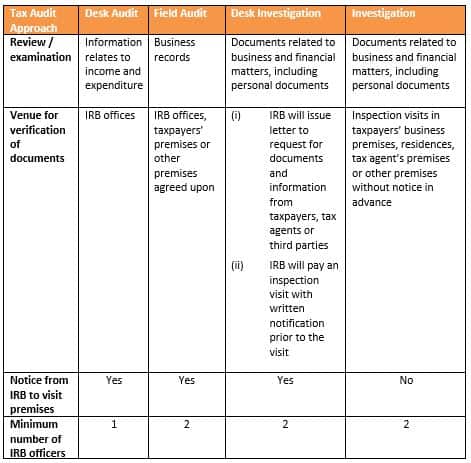
    There are two types of tax audits that can be carried out by the IRB, namely, desk audits and field audits.

    Desk audits are conducted on the supporting documents requested by the IRB from selected taxpayers in relation to the taxpayers’ business transactions and income tax paid. As the name suggests, field audits are usually carried out at the taxpayers’ premises. However, during the Covid-19 pandemic, the IRB officers have been mainly conducting desk audits to comply with the standard procedures enforced by the Malaysian government.

    The period of review for the tax audit ranges from three to five years of assessment. Cases selected for tax audits are mainly based on risk assessment, third party information, specific industries targeted by the IRB, specific issues related to taxpayers, etc.

    A tax investigation is another approach adopted by the IRB to examine documents relating to taxpayers’ business and financial matters, including their personal documents.  While there is a limited period of review for tax audits, there is no limitation as to the investigation period, but it normally covers five years of assessment based on the IRB’s current practice.

    The modus operandi of the IRB investigation officers is to carry out an inspection visit to taxpayers’ business premises, residences, tax agents’ premises and other related premises. Taxpayers may be chosen through a random selection and computer screening process.

    The basis of selection of investigation cases includes risk analysis, insider information, intelligence information and information from other law enforcement agencies. During the Covid-19 situation, the IRB investigation officers have cancelled inspection visits. As an alternative, desk investigations which are similar to desk audits are carried out.    

    A comparison between tax audits and tax investigations conducted by the IRB officers is as follows:

    Source: Crowe KL Tax Sdn Bhd.

    Taxpayers should be aware that a tax audit is merely an examination of records and does not imply that taxpayers have intentionally made errors in their income tax returns. Having said that, one should be prepared for a potential tax audit or investigation by keeping in mind the following information.

    Keep Sufficient Records For Seven Years

    Taxpayers are required to keep sufficient records for a period of seven years from the end of the year to which any income from the business or operations relates. This means keeping records in manual or electronic form to explain each transaction, that have enabled a true and fair profit and loss account and balance sheet to be prepared.

    Although tax audits or investigations may only involve examination of accounting records for a period of three to five years of assessment, it is mandatory for taxpayers to keep sufficient records to avoid a penalty of RM300 to RM10,000, or imprisonment of up to a term not exceeding 12 months, or both.

    Supporting Documents For Any Payments Made


    During a tax audit or investigation, the IRB officers will request for supporting documents for expenses incurred or payments made. Invoices, purchase orders, receipts or any proof of payment are essential to substantiate the expenses claimed in the tax computation.

    Otherwise, the expenses claimed will be disallowed for deduction.

    Payments Made To Non-Residents

    The payments made to non-residents such as royalty or contract payments may be subject to withholding tax. If the payment is subject to withholding tax but no withholding tax had been deducted and remitted to the IRB previously, taxpayers are not allowed to claim tax deduction for these payments.

    As such, taxpayers are advised to determine the withholding tax implications for any payments made to non-residents.

    Accruals Or Provisions For Expenses

    The deductibility of expenses depends on the nature of expenses. If an expense is an accrual amount (an amount set aside for a known expense) and taxpayers are able to provide the relevant invoices or other supporting documents, i.e. the final amounts are ascertainable, the expense will be allowed as a deduction. However, if the amount is merely an estimate and no supporting documents from a third party are available to prove the expense, the expense may be disallowed.

    Segregation Of Expenses Between Separate Business Sources

    If a business entity carries out several business activities which are distinctly different from one another and therefore treated as separate business sources for tax purposes during a year of assessment, taxpayers should be able to segregate the expenses incurred in respect of the different business sources with proper justifications.

    Taxpayers should take note that different expenses may be allocated by using different bases of apportionment to ensure that allocation of expenses between different business sources is fair and reasonable.

    Capital vs Revenue

    Tax authorities and taxpayers frequently have major contentions about whether a receipt is capital or revenue in nature. If a taxpayer has received a large lump sum of income during a year of assessment, it is important for the taxpayer to determine the taxability of the income received or obtain a tax opinion from a reputable tax consultant as to its tax position.

    An assessment of the income received based on the badges of trade or other tax principles may provide the relevant indications as to the taxability of the receipts.

    Allowance For Doubtful Debts Or Bad Debts

    It is common for business entities to make provisions for doubtful debts or write off bad debts if the trade debtors fail to settle their amounts owing due to various commercial reasons. Based on Public Ruling No. 4/2019, Tax Treatment of Wholly or Partly Irrecoverable Debts and Debt Recoveries, taxpayers are required to take reasonable steps to recover the doubtful debts or bad debts, e.g. issue letters of demand, reminder letters or other correspondences.

    Otherwise, the IRB may disallow the doubtful debts or bad debts recorded in the financial statements.

    Direct Expenses Incurred In Respect Of Other Income

    Taxpayers may receive other income in addition to the business income from their business operations. To gain maximum deduction, taxpayers may need to identify the direct expenses incurred to generate the other income as these expenses are not allowed for set-off against business income. Any adjusted loss (income less allowable expenses) derived from the other income is a permanent loss for taxpayers.

    Taxpayers will need to keep the supporting documents for direct expenses incurred because the IRB may verify these documents during a tax audit or investigation.

    If the above cannot be properly substantiated during an IRB’s tax audit, any adjustments made by the IRB would result in additional tax payable and penalties being imposed under Section 113(2) of ITA. Therefore, taxpayers should consult their licenced tax agents on the taxability or deductibility of income or expenses prior to the transaction taking place or prior to submission of income tax returns.

    About the Author

    Dr. Voon Yuen Hoong is an Executive Director of Crowe KL Tax Sdn Bhd.