The following story is based on an actual series of events, with some names and circumstances fictionalised. Any similarity to any person’s name, character, or history is coincidental and unintentional. It is about who protects your insurance money.
Heng could not help but feel emotional as he saw little Tim at the playground without a care in the world. His thoughts were how Tim meant the world to his late sister and that she is weeping in heaven now that all the insurance monies meant for him is gone.
A cruel twist of fate had robbed Tim of what is rightfully his.
Being a single parent, June is ever careful of making sure that there is something for Tim in the event that something happens to her. She dutifully took up a life insurance policy which will serve to provide for Tim’s living expenses and education when she is not around.
Putting Ownself As Trustee, Who Protects Your Insurance Money?
But little did she realise that by naming herself as trustee in the insurance policy, she started a chain of events that made Tim an innocent victim of circumstances. Poor Tim.
Not well versed in insurance matters, she just followed the norm to name herself as trustee. June who had come to terms with her terminal illness and had got Heng’s consent to be Tim’s guardian, was at peace in her final days thinking that Tim’s welfare would be well taken care of, financially as well.
After the funeral, Heng set about to handle June’s financial matters. It was only after submitting for insurance claims did Heng learn of an oversight by June which turned out to be a costly mistake.
Heng was told that since the policy owner had passed away, the nominee in the policy will be the trustee. However, for that to happen, the nominee must be at least 18 years old and not incapacitated mentally.
Who Protects Your Insurance Money, When The Nominee Is Not Yet 18?
Then comes the hard question of who protects your insurance money? Since Tim is not 18, the trustee will be his surviving parent, which is in this case is his father, who left both mother and child some time ago.
Heng knows that once the money reaches his hands, Tim would never see it again. If she had known, June would have appointed a new trustee – an individual or a trust company who can hold this insurance money for Tim until he grows up.
This is reaffirmed by the new Financial Services Act (FSA) which repealed the Insurance Act and made it invalid for the policy owner to be trustee of the insurance policy. Those who named themselves as trustee even prior to the FSA coming into force would have to change trustees for complete protection of the money.
As this is a common situation, the best solution for a single parent to protect their insurance monies from ending up with an unintended person or used for unintended purpose would be through the setting up of a Single Parent Trust.
In June’s situation, she can easily set up this trust by assigning the life insurance policy to the licensed trust company. This will enable the trustee to claim the insurance proceeds upon her death or disability.
She could provide instructions to the trustee through a trust deed, for example; to cover her medical expenses if she is critically ill, for scheduled payments for Tim’s living expenses and education, thus ensuring that his needs will be provided for as she would have wished for him.
In this manner, she is also rest assured that another problem is averted – an inheritance being squandered away in the hands of a young heir who is inexperienced in handling a large sum of money so early in life.
A trust is indeed a viable approach to ensure total protection of insurance monies to be utilized according to one’s wishes. It is also an advantage to have a trust company as trustee instead of an individual as the trust company is impartial and is duty bound to follow the terms and conditions in the trust deed whereas an individual may not be so compliant with regard to other people’s money.
The perpetuity of a trust company is also another advantage as a natural person is liable to die, fall ill, meet with an accident and be in capacitated, become of unsound mind or go bankrupt. At least you will have a peace of mind, knowing that there’s an organisation who protects your insurance money.
Rockwills International Group, now in its 28th year, pioneered professional will writing in 1995 and has since evolved into the leading estate planning specialist in the country. It is today the largest provider of solutions and support services in the areas of trusts, succession, management and distribution of wealth. It has done over 300,000 wills and 16,000 trusts and holds more than RM25 billion in assets under trust.
In Part 1, we have discussed the definition of cybercrime and commercial crime. We also see the cases recorded for financial and recorded crime in Malaysia from 2016 until 2021, the total losses due to cybercrime and commercial crime. Lastly, we deep dive into the classification of cybercrime and the number of cases happening in Malaysia. For this part 2, we will investigate the arrests and charges against cybercrime cases.
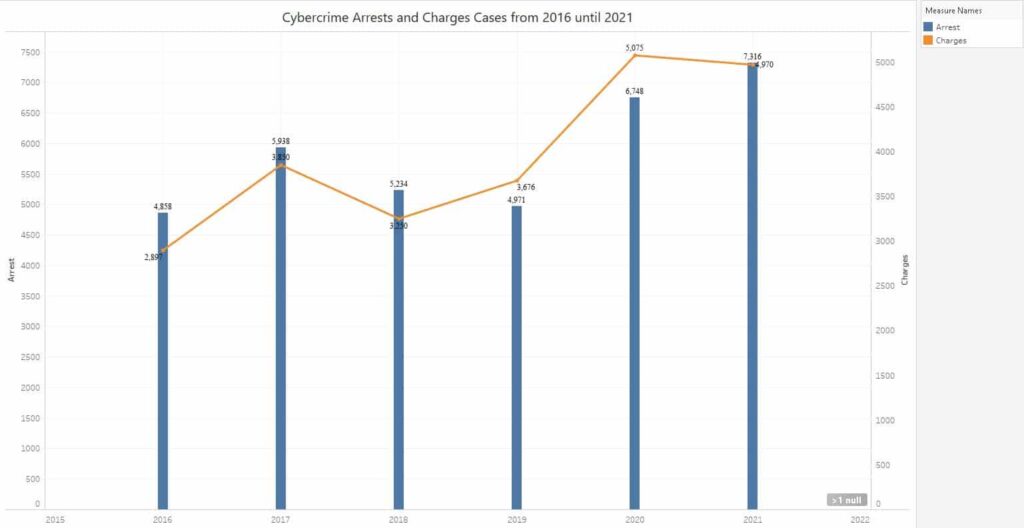
From 2021 to 2016, PDRM made 35,065 arrests and 23,718 charges. Over the six years, the number of arrests increased year-on-year, with an average of 5,844 arrests per year. The same pattern is also shown in the number of charges, which grows yearly, with 2,897 charges in 2016 to 4,970 in 2021. This indicates that the authorities are doing their best to reduce these online fraud cases in Malaysia.
Source: Commercial Crime Investigation Section (CCIS), March 2022.
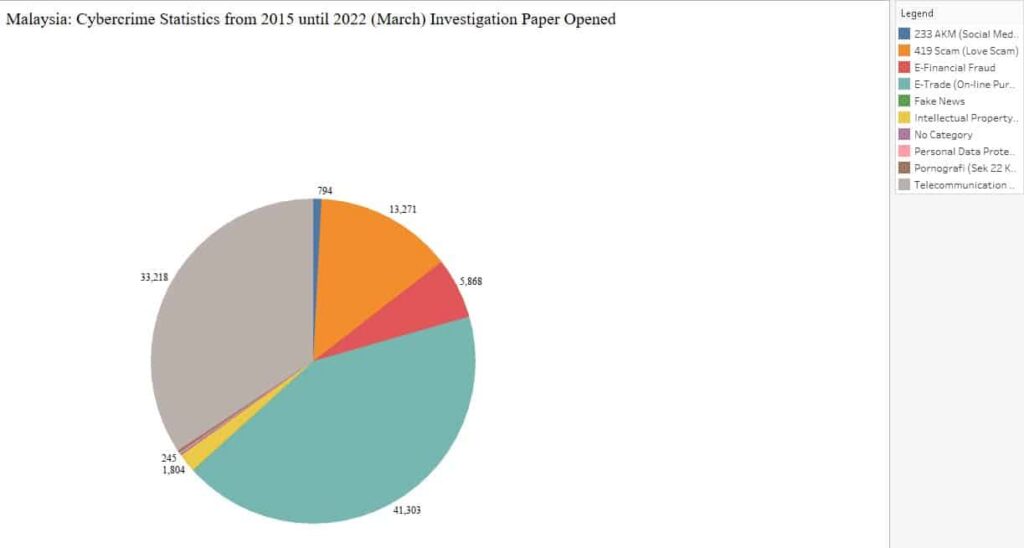
For cybercrime from 2015 to March 2022, an investigation paper was opened. The total loss recorded was RM2,575,293,503.85; e-commerce ranked first with 41,303 or 43 per cent, followed by telecommunications fraud (line/sms) with 33,218 or 34 per cent.
While cybercrime involves fake news with 48 investigation papers, protecting personal data with 98 investigation papers and no category with 212 investigation papers is the least reported type of cybercrime.
Source: Commercial Crime Investigation Section (CCIS), March 2022.
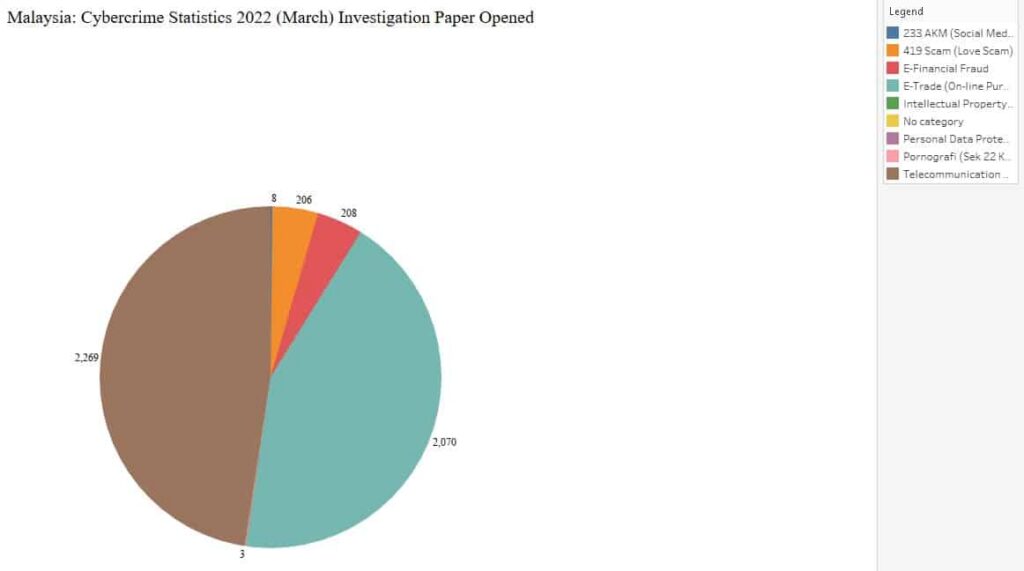
If viewed up to March 2022 alone, based on the investigation papers, reported losses amounting to RM124,166,360.00 with telecommunication fraud (line/sms) were the highest with 2,269 cases or 48 per cent. They followed by e-commerce (online purchase) with 2,070 cases or 44 per cent.
Meanwhile, cases involving pornographic material (Section 22 of the Penal Code), intellectual property (CD/VCD/DVD), no categories and personal data protection were the lowest recorded cases, with only three, one, one, and two cases recorded.
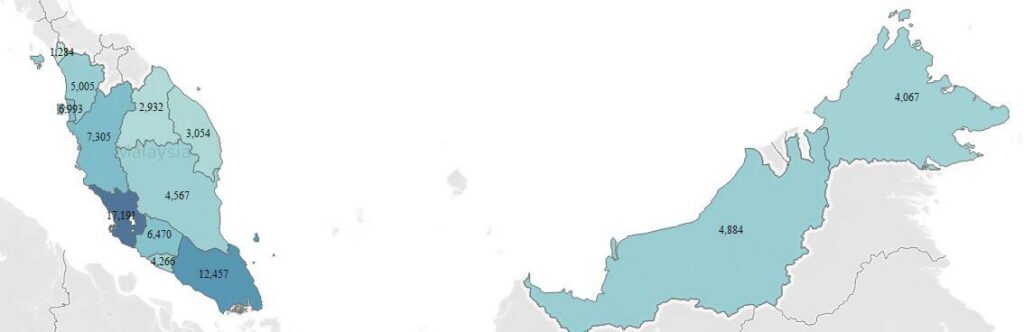
In terms of locality for the cybercrime cases, if viewed by state from 2015 to 2021, most cases occurred in major cities such as Selangor with 17,191 cases, followed by Johor with 12,457 cases and Kuala Lumpur with 11,658 cases. At the same time, cybercrime was seen relatively less in towns such as Terengganu, with 3,054 cases, Kelantan, with 2,932 cases and Perlis, with 1,284.
Cybercrime is common in large and rapidly developing cities because it is a hotspot for finding better job opportunities and thus increasing social mobility in their society.
Source: Commercial Crime Investigation Section (CCIS), March 2022.
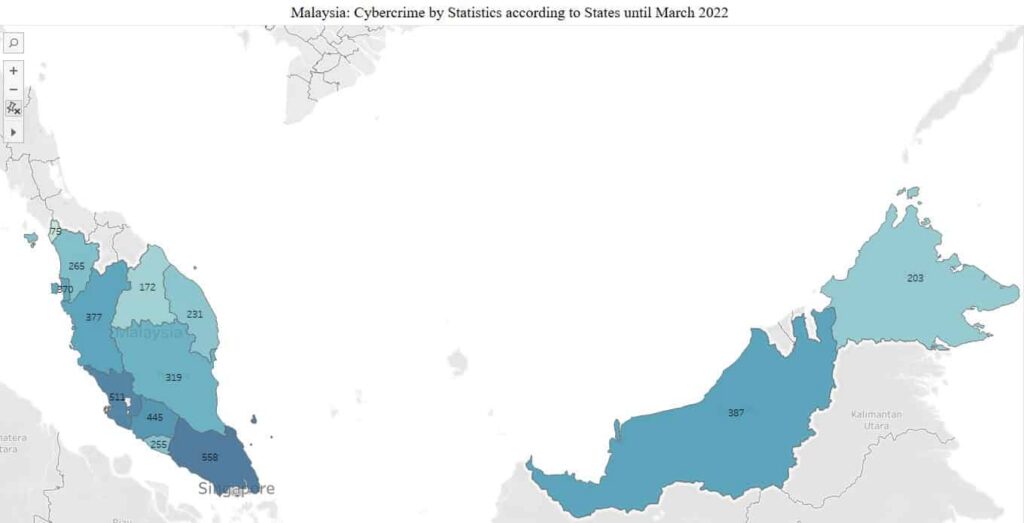
The same statistics also show that until March 2022, cybercrime cases were widespread in Kuala Lumpur, with 600 cases, Johor with 558 cases and Selangor with 511 cases. These are the three highest states that recorded cybercrime by the state in March 2022.
Meanwhile, Sabah, Kelantan and Perlis were the three states that recorded the least cybercrime by recording 203, 172 and 75 cases.
Source: Commercial Crime Investigation Section (CCIS), March 2022.
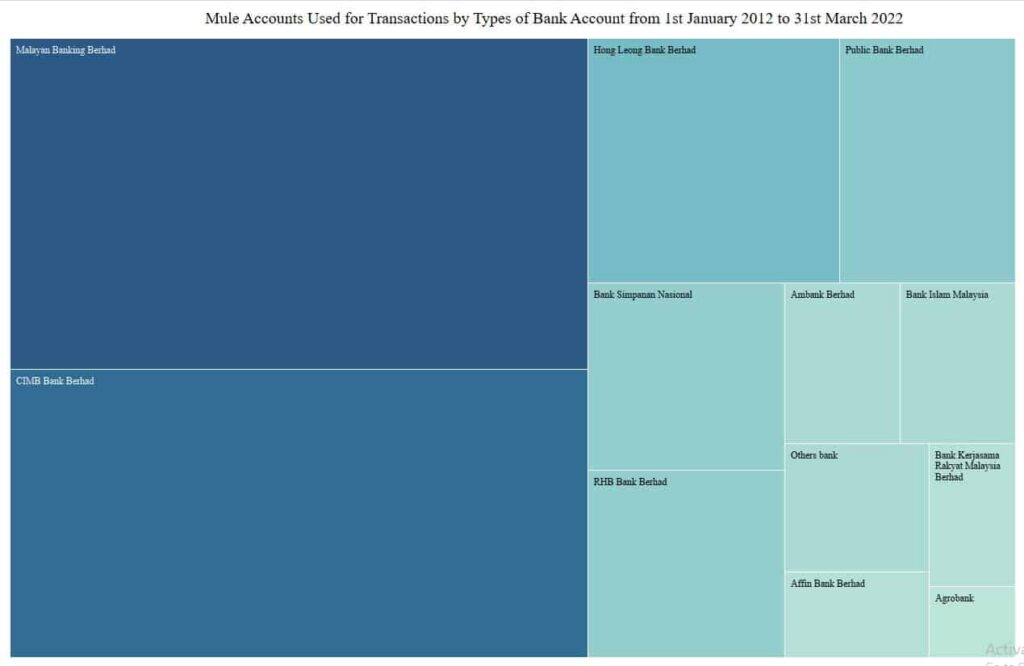
In the case of mule accounts or donkey accounts according to bank accounts used from January 2012 until March 2022 showed that these accounts mostly used CIMB Bank Berhad with 32,492 or 27 per cent, followed by Malayan Banking Berhad or Maybank with 36,765 or 31 per cent. Donkey accounts often use These two banks to carry out their operations.
Meanwhile, Agrobank, Affin Bank Berhad and Bank Kerjasama Rakyat are the least used banks to operate this donkey account.
Source: Commercial Crime Investigation Section (CCIS), March 2022.
*The Malay Version of this article is currently under review at e-Jendela Dewan Ekonomi, Dewan Bahasa dan Pustaka, June 2023. Researchers also would like to thank the Criminal Investigation Department (JSJK), Bukit Aman, for providing this data to the authors.
Rashid Ating. Researcher in the Department of Economics, Faculty of Business and Economics, Universiti Malaya and Institute of Advanced Studies (IAS), Universiti Malaya (UM).
Every day we are often presented with various cases of online fraud. As technology progresses, which is getting increasingly advanced, the techniques and methods scammers use to trap victims also keep evolving. Every day there are always some cases of online fraud involving the public.
Data from the Bukit Aman Criminal Investigation Department (JSJK) reported that are for commercial crime and cybercrime cases, according to the number of investigation papers, show an alarming trend.
Cybercrime can be defined as an act of harming someone’s finance and security. This kind of crime is conducted using computers and internet networks. Examples of cybercrime include computer fraud, financial scams, financial crimes, and advertisement fraud. This type of crime has happened frequently in Malaysia lately and was the focus of this Part 1.
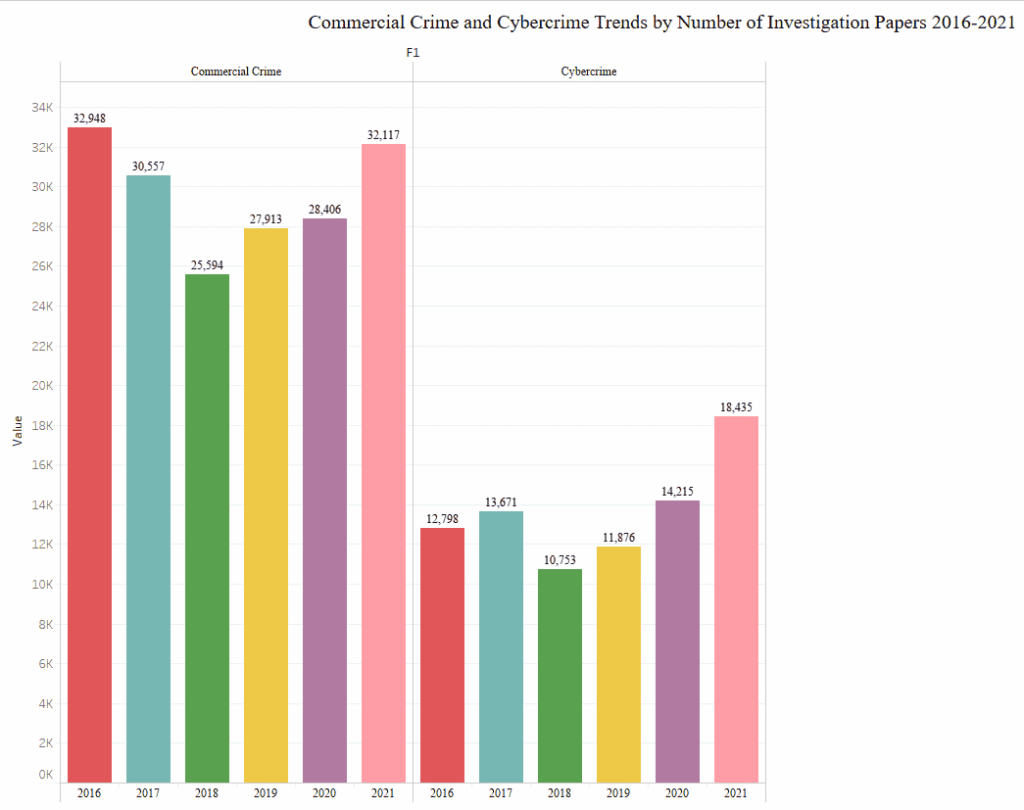
The number of investigation papers showed a significant increase from 12,798 cases in 2016 to 18,435 cases in 2021, with an increase of 5,637 over the six years. The year 2018 recorded the fewest cybercrime cases, with 10,753 cases. On average, 13,790 cases occurred annually from 2016 to 2021.
It will be alarming as it is feared that more innocent Malaysians will become victims because of the actions of some irresponsible individuals that exploit the naivety of the victims that are not updated with the trends of online scam activities.
Meanwhile, commercial crime or known as a white-collar crime. This type of crime is committed in professional settings like government and business. Examples of white-collar crime include embezzlement, financial crime, copyright infringement, and others.
On the other hand, commercial crime recorded almost twice the number of cybercrimes from 2016 until 2021. We can assume that commercial crime was more severe than cybercrime in Malaysia. On average, 29,589 cases of commercial crime happened in Malaysia yearly from 2016 until 2021, higher than on average 13,790 cases of cybercrime in the same period.
The year 2016 recorded the highest year of commercial crime cases, with 32,948, while 25,594 cases in 2918 for the lowest number of cases recorded.
Source: Commercial Crime Investigation Section (CCIS), March 2022
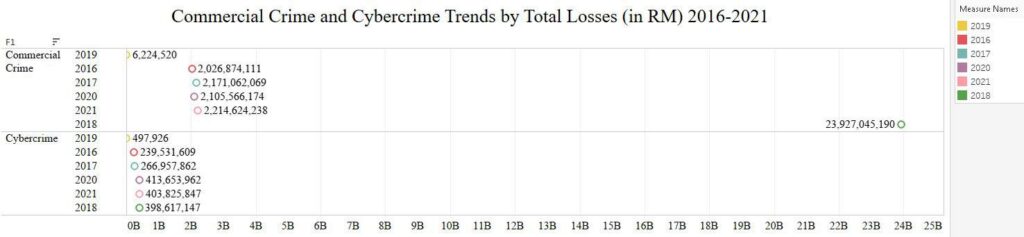
In terms of total losses due to cybercrime, there was an increase of RM239,531,609 in 2016, followed by RM266,957,862 in 2017, RM398,617,147 in 2018, declining to RM497,926 in 2019, rising sharply to RM413,653,962 in 2020 and slightly decreasing in 2021 with RM403, 825,846.71. On average, RM287,180.726 money losses due to cybercrime in Malaysia.
While on the other hand, the losses caused by commercial crime were more alarming compared to cybercrime, with the highest losses recorded in 2018 at RM23,927,045,190. The lowest losses were in the year 2016, with RM2,026,874,111.
On average, during the six years from 2016 until 2021, Malaysia suffered an average loss of around RM2 billion per year due to commercial crime.
Source: Commercial Crime Investigation Section (CCIS), March 2022
E-commerce and telecommunication fraud syndicates are among the two highest types of cybercrime reported according to investigation papers and modus operandi from 2016 to 2021. E-commerce fraud recorded 6,448 cases in 2016, slightly down the following year with 5,959. It continued to plunge to 3,326 cases and remained stagnant at 3,519.
However, in 2020, 5,995 cases of e-commerce fraud were reported in Malaysia and continued to increase to 9,575 cases in 2021. While for telecommunication fraud syndicates, the number of cases recorded annually is not as alarming as e-commerce fraud syndicates, with 1,987 cases in 2016, 4,177 in 2017, 4,963 cases in 2018, 5,750 cases in 2019, 5,995 cases in 2020 and rising to 6,300 cases in 2021.
The cybercrime that recorded the lowest cases was intellectual property fraud involving (CD/VCD/DVD), pornographic material fraud syndicate and fraud 233, Communications and Multimedia Act (CMA).
*The Malay Version of this article is currently under review at e-Jendela Dewan Ekonomi, Dewan Bahasa dan Pustaka, June 2023. Researchers also would like to thank the Criminal Investigation Department (JSJK), Bukit Aman, for providing this data to the authors.
About the Author
Rashid Ating. Researcher in the Department of Economics, Faculty of Business and Economics, Universiti Malaya and Institute of Advanced Studies (IAS), Universiti Malaya (UM).
The world of work is changing. The COVID-19 crisis has accelerated existing structural trends and caused organizations to rethink many aspects of employment. How work gets done, where and by whom is becoming more varied and fluid. As the nature of work and how we make money continues to change, this will inadvertently impact other aspects of personal finances as well.
If you’re a young Malaysian saving for retirement, your future might be less secure than you think. Even though the next decade will see one of the greatest transfers of intergenerational wealth to millennials and Gen Z, the current financial habits and behaviours of these young generations, as well as the changing nature of work, are poised to put their future savings in jeopardy.
The Existing Pension System Won’t Be Enough
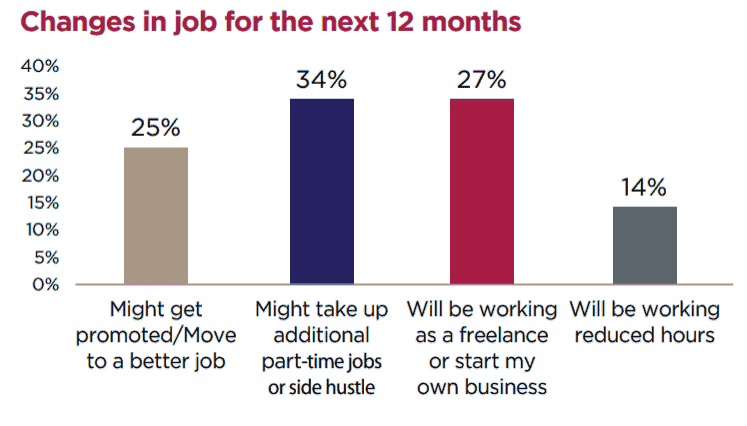
ICMR’s nationwide study of millennials and Gen Z in Malaysia found that 70% of respondents anticipate changes to their work life over the next 12 months. Of this, 61% see themselves changing job modalities, be it taking up additional side hustles or part-time work, or working as a freelancer or business owner.
Figure 1: Expected job changes in the next 12 months (Data Source: ICMR)
As the number of people moving away from the traditional notion of a single full-time job increases, issues of coverage and adequacy within the existing pension system will become more serious. The old retirement wisdom of relying on traditional retirement plans might have worked for their parents and grandparents, but these won’t be enough to get millennials and Gen Z through their golden years.
The existing pension system in Malaysia is largely employer-based, with a portion of salary automatically deducted from payroll and put towards retirement savings. But as we highlighted in our previous report, gig workers, freelancers, and small business owners are not covered by the existing system, and neither does it accurately capture extra income from side hustles or other job modalities.
“I’m comfortable with freelance working arrangements, and I don’t think I’ll go back to full-time work in the future. But I’ve been looking to buy a house recently and it’s been hard to get a loan because banks don’t recognize freelance work, even though I’m getting paid consistently every month for it.”
– Hussein, 30, freelance consultant
Overcoming Present Bias For A Better Retirement
Without access to employer-based pension plans, young Malaysians will be left to take on the responsibility of planning for their own retirement. However, ICMR’s survey found that a worrying number of millennials and Gen Z do not consider retirement savings as a top priority. Instead, they are prioritising to buy a house, high-priced items, and making profits from higher investment returns.
This is in line with insights from our qualitative interviews, where only one respondent had a specific retirement financial goal in mind. For all other respondents, retirement was a vague and distant notion, or there was a belief that “things would fall into place” for retirement purposes. Many also felt they had too many present commitments and expenses to think about retirement.
Present bias makes us favor the present and discount the future – fueling problems like addiction, procrastination, impatience, immediate gratification, and poor planning (Image Source: Don McMinn)
These examples indicate a present bias when thinking about retirement, or the tendency to settle for a smaller present reward than to wait for a larger future reward. In fact, past research has shown that Malaysians only start planning for retirement after the age of 40, hence missing out on the critical long-term accumulation stage that could make a significant difference in their retirement savings.
“I lost my job in March 2020. Now I’m a Lalamove driver, and I help out at a friend’s workshop for extra income. It’s hard to think of financial goals or make any long-term plans when I’m just focused on trying to get by day-to-day. I don’t have the time or the energy to research these things, and I don’t have the funds for it.”
– Zaim, 34, Lalamove driver
Starting Early To Benefit From Lifecycle Planning
The lack of retirement adequacy among young Malaysians is concerning both on an individual level, as well as on a national policy level. The combined effects of population ageing and lack of retirement savings is multifaceted and complex, with policy implications for the labour market, productivity, as well as social and family institutions.
Fortunately, millennials and Gen Zs who have a longer time horizon can benefit from better lifecycle planning based on their own risk appetites. It is therefore crucial that individuals take the first step as early as possible in assessing their overall financial situation, and making a long-term financial and investment plan that fits their own needs and lifestyle.
What can help is to think of retirement savings as wealth accumulation instead. Building a sizable nest egg becomes more difficult later in life as one acquires more and more expenses, such as a mortgage and a family. But by starting early, saving for retirement can be a much more pleasant – and exciting – prospect. Even a small amount saved for retirement now can make a huge difference in the future.
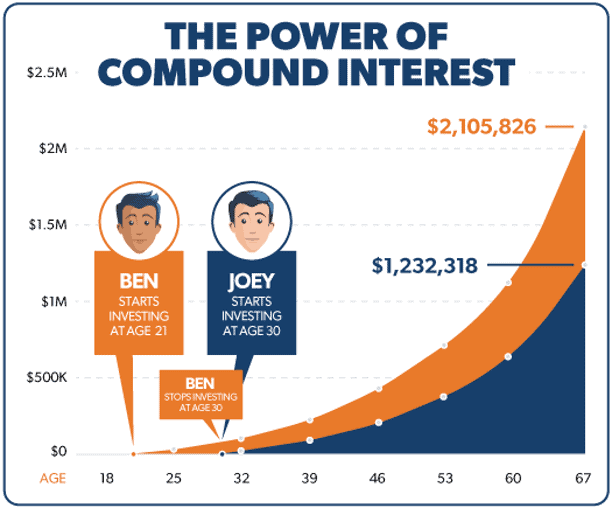
With time on their side, millennials and Gen Z can take advantage of the power of compound interest and minimize the impact of market fluctuations on their investments. They can also make informed decisions about their career choices, education, and lifestyle, all of which can have a significant impact on their financial futures.
The more time money has to compound and grow, the more opportunity for those earnings to earn additional money. (Image Source: Ramsey Solutions)
Redesigning Retirement For The Future
As the nature of work continues to evolve in Malaysia and across the globe, it’s important for individuals to recognize the impact this can have on their personal finances, particularly in relation to retirement planning. Meanwhile, policymakers must also play their part in ensuring that the current pension system is adequate and inclusive for all Malaysians.
Ultimately, building a sustainable and secure financial future for all Malaysians requires a combination of individual action and systemic reform. By prioritizing early and comprehensive planning, as well as addressing policy gaps, we can ensure that all Malaysians have the opportunity for a comfortable and dignified retirement.
This article is part of a content series by the Institute for Capital Market Research (ICMR). Follow ICMR’s Facebook page to stay updated on behavioral tips and insights for better investing habits. To learn more about ICMR’s research on millennials and Gen Z, visit www.icmr.my or download the full report.
About the Authors
Datin Aida Jaslina Jalaludin, Head of Research, ICMRNadhirah Ibrahim, Research Analyst, ICMR
A report by the Department of Statistics Malaysia (DOSM) in 2019 showed that 390,000 out of 560,000 SPM candidates were interested in joining the workforce immediately after the exam, while only 170,000 students were interested in continuing their studies. The three main factors why youths aged 17 to 18 did not want to continue their studies were:
The belief that furthering their studies did not guarantee better-paying jobs;
The availability of job opportunities in the gig economy, and;
The interest to become influencers on social media.
Such is the sad state that this worrying trend is set to continue over the years. This could potentially impact Malaysia’s future supply of skilled labour, hindering its progress toward becoming a high-tech nation.
But on the other end of the spectrum, the Malaysian government has adopted aggressive measures aimed at internationalising its higher education system, a process it hopes will improve the sector’s dynamism and make it more responsive to the demands of a knowledge-driven world economy. In 2012, the higher education ministry established Education Malaysia Global Services (EMGS) to promote Malaysia as an international education hub and facilitate the movement of international students into the country.
Offering a degree that is well-recognised globally, Malaysian universities rank in the world’s top universities, with a total of 13 in the top 600, according to QS World University Rankings. Based on QS World University Rankings by Subject 2022, 10 Malaysian programmes were placed among the top 50 universities for studying their academic subject.
As a result, Malaysia was the 13th-largest destination for international students in the world in 2020. According to the UNESCO Institute of Statistics (UIS), in 2020, Malaysia hosted 89,193 international degree-seeking students.
Smart Investor talked to several industry experts to learn more about the state of Malaysia’s education among the youth and their level of financial literacy.
The State Of Malaysia’s Education And Financial Literacy Among The Youths
Raja Edriana Baizura, head of career services at Taylor’s University
“Education at the very base of it is required for everybody. Having an education will lay the foundation that the youths of today require to be better shapers of tomorrow for society to live in,” said Raja Edriana Baizura, head of career services at Taylor’s University.
“It is said that education and knowledge are two different things. Knowledge is what one knows, and education is how one learns it. Knowledge can be gained by the environment we are exposed to while growing up, while education is acquired knowledge from teaching and learning,” she added.
Terence Ooi, the co-founder of Wiki Impact
“Being in Asian culture, the value of structured education has not diminished. In fact, those who can afford it would be looking for alternatives for their children to receive a better education than what is being offered mainstream. The pressure of getting straight A’s is still there as it is perceived that this would be a stepping stone to tertiary education and progress in life,” echoed Terence Ooi, the co-founder of Wiki Impact.
“In the past, a heavy emphasis was on getting higher education to secure a high-paying job. However, current perceptions about having a traditional 9-to-6 job have shifted as youths are more inclined to look for alternative sources of income, such as trading or even growing and monetising their social media. While general sentiments are that higher education may aid one’s chances in securing a better job, the key is to find your niche,” stated Yeap Jun Rong, a market strategist at IG International.
Haida Tahir, Director of Contingent Workforce Central, PERSOLKELLY Malaysia
“Today’s job landscape is so competitive, and while education does not guarantee a high-paying job or that you will land your dream career, it is a fundamental requirement. Nonetheless, it is undeniable that higher education leads to better job prospects in the long-term. Beyond furthering your studies, continuous learning is also very important, more so now as technological advancements shift the demands of what an organisation requires from talents,” shared Haida Tahir, the director of contingent workforce central at PERSOLKELLY Malaysia.
Dr Sanjay Sarma, CEO, president and dean of Asia School of Business (ASB)
“I have never met a young person disinterested in learning. Curiosity is the most fundamental aspect of learning, and it is impossible to extinguish. I have, however, met many people who are disaffected with how we teach,” explained Dr Sanjay Sarma, CEO, president, and dean of Asia School of Business (ASB).
“At ASB, we are all about action – and I believe classrooms need to have a more engaging, thought-provoking nature for the next generation to be prepared,” he added.
The emergence of new methods of teaching and learning platforms, such as self-learning through learning management systems (LMS), has given students the ease of studying at their own pace. This minimises the effects of constraints they have when pursuing their education and their opportunity cost. They are becoming smarter and gaining skills faster than their predecessors, all at the same time.
For example, Udemy is an online learning platform founded in 2010. According to the company’s website, Udemy has over 155,000 courses taught by over 70,000 instructors and has served over 50 million students worldwide as of 2021. In terms of growth, Udemy has seen significant expansion over the years. In 2016, Udemy reported that it had over 11 million students enrolled in its courses, and by 2019, the number had grown to over 50 million.
The number of courses on the platform has also grown significantly, from around 30,000 in 2016 to over 155,000 in 2021.
Johary Mustapha, founder and CEO of Forest Interactive
“Through our foundation arm, Forest Interactive Foundation (FIF), we are trying to bridge this gap by developing future innovators in tech. Our FIF programmes upskills young entrepreneurs and students alike by curating a robust tech-focused hands-on curriculum needed to solve the digital skills shortage and increase the overall employability rate within the country,” said Johary Mustapha, founder and CEO of Forest Interactive.
Nisa Saharuddin, the community engagement lead, Forest Interactive Foundation
“Through our various programmes, we provide the younger generation with a varied skill set to help them stay relevant with the progressing economy. Our #SeKODlah programme, partnered with corporations like CIMB Bank and CIMB Foundation, would enable the future Malaysian workforce to explore and develop in-demand skills through e-learning and mentorship. If we are to meet the ever-increasing demand of the economy, it must be a collective gesture of both the private and public sectors,” shared Nisa Saharuddin, the community engagement lead at FIF.
Education is and always will be important. However, the dynamics of learning have changed. Evidently, the younger generation places less value on traditional education as, from their viewpoint, there are multiple ways of achieving economic growth.
Are The Youths Of Today More Financially Savvy?
Bankruptcy cases are a telling point of where we stand regarding financial literacy. The number of bankruptcy cases seems to be declining, but let’s not forget that our government amended the Insolvency Act 1967 in 2017, raising the bankruptcy threshold from RM30,000 to RM50,000. This was followed by another amendment, raising it from RM50,000 to RM100,000.
Personal loans are the highest cause of bankruptcy among Malaysians, contributing almost 42%, followed by hire purchase loans at almost 15%. Another worrying sign is the high number of cases in the 25 to 34-year-old age group, which makes up more than 21%, with the highest being in the 35 to 44-year-old age group, with more than 37%.
“As information is readily available on the internet, consuming the right information to be financially savvy is important. Not many know how to save or start investing early but those who have early exposure to financial literacy will or may start saving and investing earlier in life,” said Edriana.
“From my observation, they are generally still quite largely ignorant. Many are still unaware of basic investment options and opportunities. However, if compared to generations of the past, they do have greater access to resources on financial tips and investments – thus if you compare apple to apple, they are in a greater state,” added Ooi.
“They are more aware and practical of their financial capacity, so it’s a yes – if we take the literal meaning of financially savvy. However, long-term planning is also important, and that depends on a case-by-case basis,” opined Johary.
Where Do The Youths Invest?
The Institute for Capital Market Research Malaysia (ICMR) recently conducted a nationwide study to better understand their issues, challenges, and behaviours regarding personal finance and investing. The survey was distributed to 1,500 respondents and found that millennials and Gen Z Malaysians can be categorised into three groups, each with unique characteristics.
A higher proportion of respondents from the east coast do not invest (Group A), while Group C has a higher proportion from the Central region. More notably, there are differences in household income levels between all three groups. While 69% of Group A earns less than RM5,000 in monthly household income, 56% of Group B earns between RM3,000 to RM7,000.
Meanwhile, respondents who fall under Group C were found to have significantly higher incomes, with 31% having household incomes above RM10,000.
Financial Literacy And Risk Tolerance
ICMR’s research suggests a link between financial knowledge, financial confidence, and risk tolerance with the likelihood of investing and the products invested in. For instance, someone who does not know much about financial matters and has little financial confidence would also be unwilling to take risks – hence not investing and falling into Group A.
This could also explain behavioural differences between Group B, which invests only in ASNB funds or unit trust products, and Group C, which invests in other capital market products. The first unit trust company in Malaysia was set up in 1959. This might be why retail investors are most comfortable with unit trust products, considering their long history in Malaysia.
Additionally, many investors who only invest in ASNB funds or unit trust products (Group B) tend to be less risk tolerant and financially confident. In contrast, those who invest in other capital market products like shares or cryptocurrency, which are perceived to be riskier, tend to have higher risk tolerance levels and feel more financially confident.
“Based on our data at IG International, with the recent volatility, youths are more inclined to trade major US indices and forex. The Dow Jones Industrial Average and Nasdaq 100 are popular choices. Since the Covid-19 trading boom, youths continue to have their feet in the game in terms of trading,” shared Yeap.
Jason Low, Co-founder and CEO, Virtualtech Frontier (VTF)
“In addition to the stock market, young people are also investing in alternative assets such as cryptocurrency, NFT’s, and real estate. Cryptocurrency has become increasingly popular among younger generations, with platforms like Coinbase and Binance providing an easy way to buy and sell various cryptocurrencies. Real estate investing has also gained popularity among young people, with crowdfunding platforms like Fundrise and RealtyMogul allowing investors to pool their money together and invest in commercial real estate,” explained Jason Low, co-founder, and CEO of Virtualtech Frontier (VTF).
“Personally, I have seen students who invest in the stock market or even trading to make their money ‘grow’ even as early as their first year of university. We invite speakers from the industry to introduce topics such as financial literacy to students in their final year during Professional Development Week, where they learn the importance of being financially savvy,” added Edriana.
“Most young people I know are investing in insurance and crypto. This is perhaps the access they have to either opening the accounts or someone within the industry educating them,” said Ooi.
“Some common options for youth to invest in are NFTS, cryptocurrency, stocks, fixed deposits, and real estate. Stocks are popular with those looking for higher returns and are willing to take more risk while fixed deposits are a more conservative option that offer guaranteed returns. Real estate is also popular for those who are looking for long-term investment with the potential for appreciation,” mentioned Johary.
The State Of Malaysia’s Education And Financial Literacy Among The Youths Summary
In short, youths of today are more financially savvy than previous generations. But it is important for them to educate themselves about personal finance and investing and seek advice and guidance from trusted sources.
Get your latest copy of Smart Investor Magazine HERE!
The following story is based on an actual series of events, with some names and circumstances fictionalised. Any similarity to any person’s name, character, or history is coincidental and unintentional. It is about special needs trust and how it works in the real world.
Elsie thought she had it all when she walked down the aisle with her beau and then to be blessed a year later with a beautiful bouncy baby, Ann.
Little did she reckon that life would be cruel. It all started one afternoon when little Ann turned blue. It was heart-wrenching for her to see the baby so sickly with her life hanging on a thread. But Ann was a fighter. She survived but became mentally handicapped.
A much relieved Elsie prepared herself for the long haul of bringing up a special needs child. Her whole life was now dedicated to Ann, which took a toll on her relationship with her hubby. They grew more and more apart, and it eventually led to a divorce.
As a single parent of a child whose condition requires special attention, Elsie juggled between work and caring for her child. We were always overhanging and worried that Ann should not be around to care for her.
A friend advised her to set up a Trust for her daughter, but she brushed off the idea, mistakenly thinking that it was something in the League of the Rich. She took comfort that she had many siblings and started to set aside money for her brother to use for Ann’s maintenance, just in case.
Unfortunately, Elsie and her brother both died in a car accident. The money kept by the brother for Ann was frozen in his bank account, pending a letter of representation from the courts. In the meantime, the immediate needs of the special child were left unattended while the uncles and aunties bickered about who should take care of her and who should advance the money for the maintenance costs. Ann became nobody’s child.
Elsie could have averted such a situation by setting up a Special Needs Trust with a trusted company to take care of her medical needs and maintenance. With increasing awareness and understanding, more people now know it is not true that a Trust can only be set up by wealthy people.
In this case, she could have started by using her life insurance policy, unit trust investments, or even money in her bank account as the source to fund her Special Needs Trust instead of placing it in her brother’s account. Even if the sum is modest, she could set it up first and then increase it over time. In fact, the cheapest and fastest way to set up a trust is to fund it with a life insurance policy.
Through the Special Needs Trust, she can also instruct the trustee to use the trust properly to pay for the upkeep of the house where her child is staying and maintenance costs for supporting the child. Instead of relying on help from relatives, she could also have instructed the trustee to make regular maintenance payments out of the income earned from the trust property.
Generally, it is also better to appoint a licensed trust company instead of an individual to be the trustee because an individual is liable to die, fall ill or meet with an accident, become incapacitated, or even become bankrupt.
Besides these problems, other possible risks may arise, such as monies being handled dishonestly or incompetently and failing to cater to the child’s care. For those parents who have children, whether with special needs or not, give them a good head start in life by planning and setting a special needs trust specifically for them, especially if you are a single parent.
Rockwills International Group, now in its 28th year, pioneered professional will writing in 1995 and has since evolved into the leading estate planning specialist in the country. It is today the largest provider of solutions and support services in trusts, succession, management, and distribution of wealth. It has shareholders’ funds exceeding RM50 million. It has done over 280,000 wills and 15,000 trusts and holds more than RM25 billion in assets under trust.
Allianz Malaysia Berhad recently launched ‘Be A-Z ready for tomorrow’, an educational campaign to help Malaysians secure the retirement lives they dream of.
Planning for retirement is more than just ensuring you have adequate finances. The Campaign, will look to help Malaysians understand the importance of retirement planning, with a keen focus on protection and types of insurance coverage that is vital at every stage of life for a sound retirement life.
Allianz Malaysia believes that planning for retirement should encompass overall protection including medical, personal accidents, protection of assets, and having a good support system, in addition to having sufficient savings. Adequate protection is necessary as rising medical costs and unexpected events are likely catalysts for financial setbacks during one’s golden years.
Allianz Malaysia Chief Executive Officer, Sean Wang said a general rule of thumb is that a retiree would need two-thirds of their last drawn salary to retire comfortably.
“When we were studying the market, we learned that Malaysians’ top priorities for retirement are to live debt-free, have sufficient funds for medical emergencies for themselves and family, whilst maintaining their pre-retirement lifestyles. These things will be hard to achieve if people are only leaning on passive savings to finance their golden years.“
A study conducted by YouGov, a global public opinion and data company, showed that only 38 percent of Malaysians have taken proactive steps to plan for their retirement. In fact, when it comes to retirement planning, most are heavily dependent on passive modes such as saving accounts and EPF.
The study which focused on understanding Malaysian retirement priorities found that those intending to plan for their retirement were receptive to protection plans like Life and Medical insurance.
“When planning for retirement, you need to tick as many boxes as you can. Allianz Malaysia through our life and general insurance business offer the best of both worlds, and have crafted a complete suite of solutions to help Malaysians fully realised their retirement dream with no worries,“ he added.
For a Total Retirement Plan, that ticks every box, Allianz Malaysia recommends having sufficient protection such as critical illness coverage and medical coverage to safeguard yourself from events which may deplete your retirement funds and lead to financial catastrophe.
For example, our medical plan HealthInsured offers the most comprehensive medical coverage and comes with an option which many are not aware of. Customers can opt for a suitable deductible level to save insurance costs while being covered by an employer and remove the deductible upon retirement when there is no more employee benefit.
Besides that, an individual that has a significant other and/or has children should also consider a robust protection plan that protects the family like Allianz PrimeCover with high death benefit coverage or leaving a legacy with certainty to the loved ones with our Allianz Legacy Plus.
Malaysians should also consider having Personal Accident plans like Allianz Shield Plus to safeguard themselves in the event of injuries, disability or death, with Cashless Hopsital Admission and Discharge Benefit to further optimise their retirement protection.
In addition, Allianz Malaysia will also provide additional support to its customers through the Allianz We Care Community.
Via the We Care initiative, the Company collaborates with several partners from different sectors such as home care, pharmaceutical, and home medical devices among others, in offering our customers the complete retirement support they will need.
For more details on our ‘Be A-Z ready for tomorrow’ campaign, or realising your retirement dream, please visit allianz.com.my
About Allianz in Malaysia
The investment holding company, Allianz Malaysia Berhad, a subsidiary of Allianz SE, has two insurance subsidiaries – Allianz General Insurance Company (Malaysia) Berhad (“Allianz General”) and Allianz Life Insurance Malaysia Berhad (“Allianz Life”). Allianz General is one of the leading general insurers in Malaysia and has a broad spectrum of services in personal lines, small to medium enterprise business and large industrial risks. The GWP for general insurance business for financial year 2022 reached a mark of RM2.66 billion. Allianz Life offers a comprehensive range of life and health insurance and investment-linked products and for the financial year 2022, Allianz Life recorded a GWP of RM3.37 billion and is one of the fastest growing life insurers in Malaysia. Allianz Malaysia has 32 branches nationwide. In 2021, Allianz Malaysia won The Edge Billion Ringgit Club (BRC) Financial Services (below RM10 billion market capitalisation) award for the highest growth in profit after tax (PBT) over three years. The Company also bagged the Malaysia International Business Awards 2021 (Life Insurance category) and three awards at the Global Banking & Finance Awards: Insurance Brand of the Year Malaysia 2021; Best General Insurance Product Malaysia 2021; and Best Insurance Social Media Engagement Malaysia 2021.
To learn more about Allianz Malaysia, visit allianz.com.my
The Allianz Group is one of the world’s leading insurers and asset managers with more than 122 million* private and corporate customers in more than 70 countries. Allianz customers benefit from a broad range of personal and corporate insurance services, ranging from property, life, and health insurance to assistance services to credit insurance and global business insurance. Allianz is one of the world’s largest investors, managing around 683 billion euros** on behalf of its insurance customers. Furthermore, our asset managers PIMCO and Allianz Global Investors manage about 1.6 trillion euros of third-party assets. Thanks to our systematic integration of ecological and social criteria in our business processes and investment decisions, we are among the leaders in the insurance industry in the Dow Jones Sustainability Index. In 2022, over 159,000 employees achieved total revenues of 152.7 billion euros and an operating profit of 14.2 billion euros for the group.
*Including non-consolidated entities with Allianz customers.
The public is advised to be wary of dubious investment schemes that use the name of legitimate financial planning firms. Please check the Securities Commission Malaysia website for the latest Alert List.
The current modus operandi of the scammers are:
Use financial planning companies key names on bogus companies to confuse the public,
Add members of the public to social media chat groups while pretending to be represent legitimate financial planning firms,
Offer dubious investment schemes that promise high returns,
Post bogus investor testimonials to show proof of transfer receipts and making profits to gain the confidence of potential victims.
It has also come to the attention of the Financial Planning Association of Malaysia (FPAM) that nine financial planning firms who are FPAM’s Corporate Members had their names cloned to promote illegal schemes. Their actual names are:
FPAM is a non-profit organization with a vision and mission to establish the global CFP CERT TM mark as the leading symbol of excellence for personal financial planning and to promote its recognition as a profession to benefit all Malaysians. We also strive to promote Financial Literacy across the breath of the population of Malaysia.
The following story is based on an actual series of events, with some names and circumstances fictionalised. Any similarity to any person’s name, character, or history is coincidental and unintentional. It is about how to convert highly illiquid assets to more liquid and easily realisable.
Bob and Leonard were the best of buddies. They did everything together in school and through university, including courting the same girl until she decided on Leonard, whereupon Bob graciously withdrew.
After graduation, Bob worked as a lawyer while Leonard became an engineer. After several years, Bob made a name for himself in law practice, while Leonard decided to leave his job and strike out as an entrepreneur.
With some inheritance capital and savings, Leonard bought a small but profitable boutique hotel in Kuala Lumpur. At the same time, he embarked on some small development projects building shophouses, small industrial lots and housing schemes in the Klang Valley.
Five years later, he had the opportunity to purchase a piece of land to build a 200-room resort hotel in Penang, and as this needed a substantial amount of money, he approached Bob to help arrange to finance. Bob recognised the project’s viability and managed to help him secure financing, as well as personally putting up 40% of the capital required by Leonard.
The hotel was completed and began making money consistently. The company that developed the hotel soon embarked on the construction of an adjoining tower of 150 apartment suites, which units were slowly released for sale.
No dividends were paid as profits generated from the hotel were ploughed back into the company to finance the apartment tower. Sales of the units had been strong, reaching 70% until the pandemic hit.
By this time, Bob was in his 50’s and thinking of retirement. During the pandemic, he started thinking a lot about succession. What if he passed on suddenly? How would his family access his assets?
Estate Planning Is Crucial: Learn How To Convert Highly Illiquid Assets To More Liquid
He reached out to me and got an estate plan worked out for when he was not around – some assets to be distributed through his will while some substantial ones were put into a living trust to be distributed in stages to avoid overspending by the beneficiaries. We didn’t discuss yet on the topic of how to convert highly illiquid assets to more liquid.
But what niggled him was the 40% stake he had in Leonard’s company. His family was unfamiliar with Leonard or his business. Bob realised that after his demise, the close relationship, trust and understanding between the two shareholders would be gone. Which was like saying the two shareholders would be strangers to each other.
He was worried that his stake, which was now substantial in value, may become worthless after his death in that his family, as minority shareholders, would not be able to influence dividend pay-out, if any, and the company’s direction. And no one other than Leonard would buy a 40% stake at a fair price.
He felt it would be difficult to impose on Leonard to buy his stake at a time when he needed to fund his business expansion. Hence he felt the need to convert highly illiquid assets to more liquid.
Convert Highly Illiquid Assets To More Liquid And Easily Realisable
He talked to me about his dilemma and wondered whether I had a solution. I inquired about the details of the company assets and realised that his solution lay on how to convert highly illiquid assets to more liquid.
So, I suggested that he propose to Leonard to swap his shareholding with unsold units that Leonard held. He gave a bit of a stunned reaction and said: “I should have thought of that.” And we both worked out what we thought was a fair exchange ratio, using cost instead of profit element (avoiding the need to revalue the hotel and apartment suites).
We then brought the idea to Leonard, who liked the idea of being free from pesky shareholders if Bob was no longer around, and at the same time, getting rid of unsold stocks. A buy-sell with a trust was set up with our trust company based on the transaction carried out according to the agreed exchange ratio upon Bob’s death or mental incapacity.
As it turned out, the solution worked after Bob had multiple strokes last year and had to be taken care of by his family, using proceeds from the sale of the apartment suites. Sometimes, I think the best solution is the simplest one.
In this case, it is about how to convert highly illiquid assets to more liquid and easily realisable.
Rockwills International Group, now in its 28th year, pioneered professional will writing in 1995 and has since evolved into the leading estate planning specialist in the country. It is today the largest provider of solutions and support services in trusts, succession, management and distribution of wealth. It has shareholders’ funds exceeding RM50 million. It has done over 280,000 wills and 15,000 trusts and holds more than RM25 billion in assets under trust.
If you were to ask a random person on the street if they own a pet and a personal insurance policy, there is a decent chance of the answer being yes. However, if you were to ask if they have pet insurance, the chance of an affirmative response is very likely to be low.
Although many Malaysians still do not have any form of insurance, the average family is still likely to be covered with a medical or life insurance policy. But when it comes to insurance for pets such as cats and dogs, that is a whole other matter.
Oyen co-founders (l-r): Kevin Hoong, Michelle Chin
This is where Oyen comes into the market, with the company aiming to carve up a niche for themselves in the insurance sector. While the pandemic may have wreaked havoc on the economy, if it was not for this black swan event, the insurtech firm may never even have come to life.
Michelle Chin, the co-founder of Oyen, recalls seeing almost everyone in her social circle introducing a pet into their lives as a result of the pandemic.
“One of our friends adopted a second cat, and the cat was found to be suffering from liver disease and she spent a lot of money on treatments,” recalls Chin.
This resulted in the other co-founder of Oyen, Kevin Hoong, wondering why there was a lack of pet insurance as a product. With a family background in insurance spanning 40 years, he was certainly well-placed to gauge the feasibility of spearheading the growth of a niche vertical.
“We found out that there was one insurance company offering it in Malaysia – MSIG,” she remembers.
“We then indicated our interest to launch a unique product offering with a niche focus on pet health, and the rest was history!”
As for their friend’s cat, Chin shares that she has made a full recovery and is now insured with Oyen!
How it works
Claiming to be the “best pet insurance in Malaysia”, Oyen certainly works to live up to that tagline. It pays up to RM8,000 towards the cost of pet veterinary bills, which includes consultation, diagnosis, and treatment at the clinic and hospital.
The more premium coverage plans also covers third-party injury; that is when your pet causes damage to the property of others or even other pets! This will include any legal fees, compensation and related medical costs up to RM30,000 for cats and RM50,000 for dogs.
In addition, even the funeral expenses for your pet are covered under the premium coverage, which includes the burial plot and columbarium.
Oyen is also transparent about what its pet insurance plan does not cover, listing all of these restrictions on its landing page; this includes aids and prosthetics, congenital conditions and surgical implants to name just three.
Like many other insurtechs, it also strives to use simple language to convey the extent of coverage that your pet will receive. Such simplicity is at the heart of Oyen, which like all insurtechs, ultimately aims to simplify the process of purchasing insurance coverage, even for a segment like pets.
Market challenges
Running an insurtech company is never a walk in the park, let alone in such a niche like pet insurance, and with it comes a specific set of challenges.
According to Chin, the biggest obstacle that Oyen faces is the lack of insurance knowledge in Malaysia. This often results in the company having to deal with and educate customers that cannot make head or tail of the insurance or claims processes.
“We were surprised that 80% – 90% of those who enquire with us, have very limited knowledge of how insurance works,” she shares.
“For example, we have had a lot of people who ask if they can claim for a vet bill that happened yesterday. Or they may be at the vet right now and they would like us to reimburse the cost!”
She adds that customers also often ask about covering preventive and routine treatments, the responsibility of which lies with pet owners themselves.
“Once people understand how the industry works, it is rather straightforward for them to consider getting their pets insured,” says Chin.
Although the concept of pet insurance is still fairly new and relatively unknown to the wider public, it is not a new product in Malaysia, having been in the market since 2010. Chin says this is proof that insurance companies have already established that the market is big enough for them to introduce such a product.
“We determined that there is a fast-growing demand segment through a few avenues,” she explains, adding that the pet care market in Asia-Pacific is growing, and is projected to continue growing at a compound annual growth rate (CAGR) of about 10% until 2028.
“Pet humanisation has been rampant – people no longer treat their pets as pets, but as a family member, and even children.”
This means that the way that people care for their pets is more extensive than ever before, with many now receiving home-cooked diets or even food prescribed specifically by pet nutritionists. Such pets also receive better healthcare treatments in general which could include pet hydrotherapy, physiotherapy and acupuncture to name a few. Some even go to the extent of conducting DNA tests on their pets to ensure proper lineage!
“As the cost of pet healthcare increases, due to higher demand for better services and more advanced equipment, the need for pet insurance will increase as well,” predicts Chin.
As for their future expansion plans, Oyen aims to provide “a holistic ecosystem in pet healthcare”. This means that any growth will be within the confines of the pet healthcare system first and foremost, instead of branching out to other insurance verticals.
“If there are opportunities that arise from our pet healthcare focus, we will be happy to explore them.”
When asked about what the long-term game is for Oyen, Chin is very clear as to what her ultimate goal is.
“Becoming the pet healthcare super app in Asia Pacific!” she says unequivocally.
Industry thoughts
As part of the insurtech industry, Chin is certainly building something special in Oyen. However, she believes that there are still some industry blind spots that often get overlooked.
“There is too much focus on the sexy parts of technology and digitalisation, and not enough on building empathy and simplicity into the user experience,” she notes.
Her deft observation is that the space is awash with technological innovation, so that is not a weak point that needs to be addressed. However, many insurtechs end up chasing new breakthroughs and often ignore the human element that is required to quickly grow a loyal customer base. Rather than cutting-edge features, ease of use should be prioritised.
“We need to identify how these technologies or innovations help improve the experience for customers both from a registration and quote journey, as well as claims,” she adds.
With its customer-first approach, it will be of no surprise to anyone if Oyen continues on its current growth trajectory!
By Caleb Khew
A version of this story was published in Smart Investor March/April 2022; issue 372.
If you liked this article, do check out these other reads on Smart Investor: