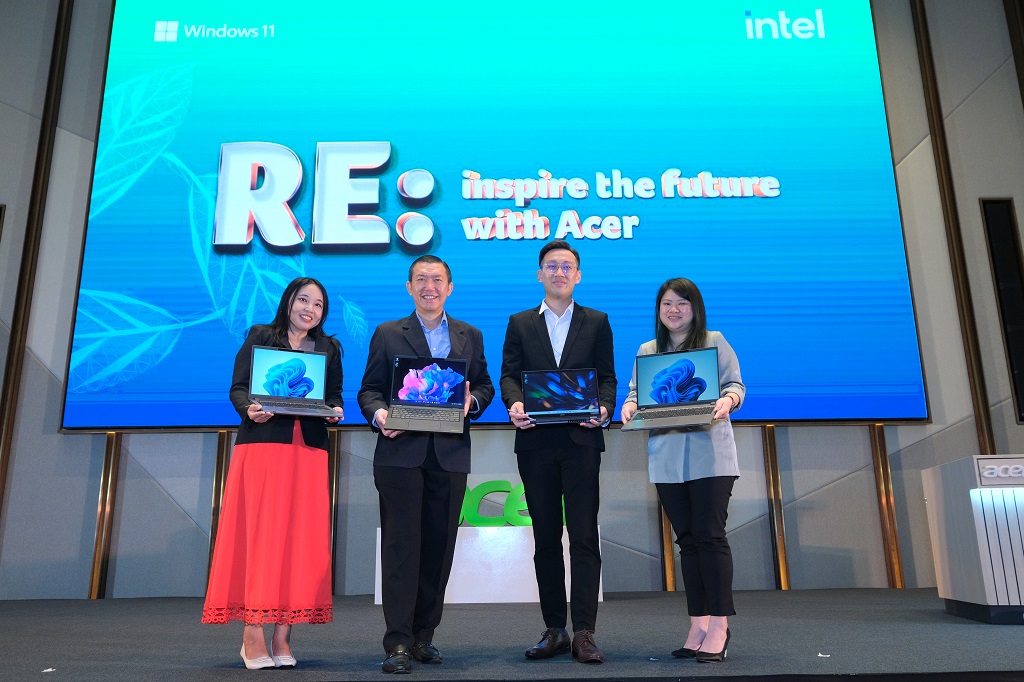
Acer Malaysia today introduced a series of business-grade product including laptops, desktops, an all-in-one (AIO) desktop and monitors. This latest range of refreshed products includes the TravelMate and Veriton devices, which now come incorporated with improved features designed with sustainability in mind, to assist corporations and businesses in fulfilling their commitment to environmental, social and governance (ESG) efforts.
“At Acer, we believe choosing green is only possible when we make green products accessible without compromising user experience, stability and durability. In addition to good and reliable performance, we have improved the robust features that protect an organisation’s data. In the make of the devices, we also incorporated recycled materials which generally cost more and require advance technology to deliver the same performance as regular materials. In walking the talk on sustainability, we are subsidising some of the production cost to make green devices such as the ones we are launching today, accessible. Our goal is to assist organisations make environmentally responsible choices while making sustainability sustainable,” said Chan Weng Hong, General Manager of Products, Sales and Marketing of Acer Malaysia.
Business Sustainability: Safeguard Company Data and Easier Maintenance
Businesses have to be sustainable while contributing to sustainability. Understanding today’s digitalised era and cybersecurity need, Acer integrated hardware, firmware and OS protection into TravelMate and Veriton series to safeguard confidential data of the users. Loaded with commercial bios that helps IT departments to manage and maintain the devices, the new TravelMate and Veriton devices also come with the Acer office manager and Windows AutoPilot to simplify the deployment process while ensuring top security. Furthermore, the TravelMate and Veriton AIO feature a webcam shutter that allows professionals to physically cover the webcam, providing an extra layer of security for their privacy.
Understanding the needs of professionals who value sustained performance in their laptops, Acer introduced the TravelMate P2, P4 and P6 series with the innovative Acer Dust Defender. This advanced feature automatically cleans up the thermal system every 6 hours of use, ensuring the laptops consistently deliver optimal performance over extended use periods. This active maintenance of the device’s capability enables professionals to rely on their laptops to consistently meet their performance requirements, making them a great choice for prolonged and demanding usage.
Stable Performance, Longer Lifespan and Trustable Aftersales Service
The Acer TravelMate and Veriton are powered by the latest 13th Gen Intel Core processor, accompanied by with 4GB or 8GB RAM, and equipped with 256GB or 512GB SSD to enable fast loading speeds. These devices have high upgradability to enable companies to enhance performance and extend the lifespan of the devices without the necessity of a full replacement, resulting in cost savings and reduced electronic waste.
The Acer Veriton Vero Mini desktop (VZ4714G-51348W11PS) and Acer Veriton Vero AIO desktop (VN4710GT) also feature the same design that enables easy upgrading and maintenance despite its compact design, making them ideal desktops for businesses seeking robust devices that take up minimal space in offices that might have spatial constraints.
All the new TravelMate and Veriton devices come with three years on-site service and warranty. Acer Malaysia has established a great reputation of providing excellent ISO9001 certified aftersales service nationwide since 2003. Meanwhile, the ISO 27001 certification attests to Acer’s adherence to information security best practices to minimize risk of data breach and business continuity.
Recycled Materials Incorporated to Automatically Reduce Customers’ Carbon Footprint
The new TravelMate P2, P4 and P6 business laptops go beyond traditional design by incorporating Post-Consumer Recycled (PCR) plastic, effectively helping to reduce carbon footprint and assisting customers achieve their sustainability goals. By choosing these laptops, customers automatically contribute to a greener environment.
For customers prioritising eco-friendly products, the Vero Veriton (Acer Veriton Vero Mini desktop and Acer Veriton Vero AIO desktop) stand out as they birthed from Acer’s Earthion platform, where designers, suppliers and all stakeholders collaborate to create a truly green product from the design phase to packaging. The Vero name is reserved for devices that undergo a comprehensive set of considerations encompassing design, production and materials, packaging, and use-life of the product.
There are up to 56% percentage of PCR plastic in the new Acer Veriton Vero Mini desktop and Acer Veriton Vero AIO desktop as compared to a regular desktop. For more efficient energy usage during use, the devices feature the VeroSense software that allows users to easily to switch to ECO+.
The TravelMate and Veriton Vero series are shipped in green packaging using 100% plastic-free and recyclable packaging. On top of the recycled cardboard, recycled paper from moulded pulp, the devices are protected in recycled PE bags.
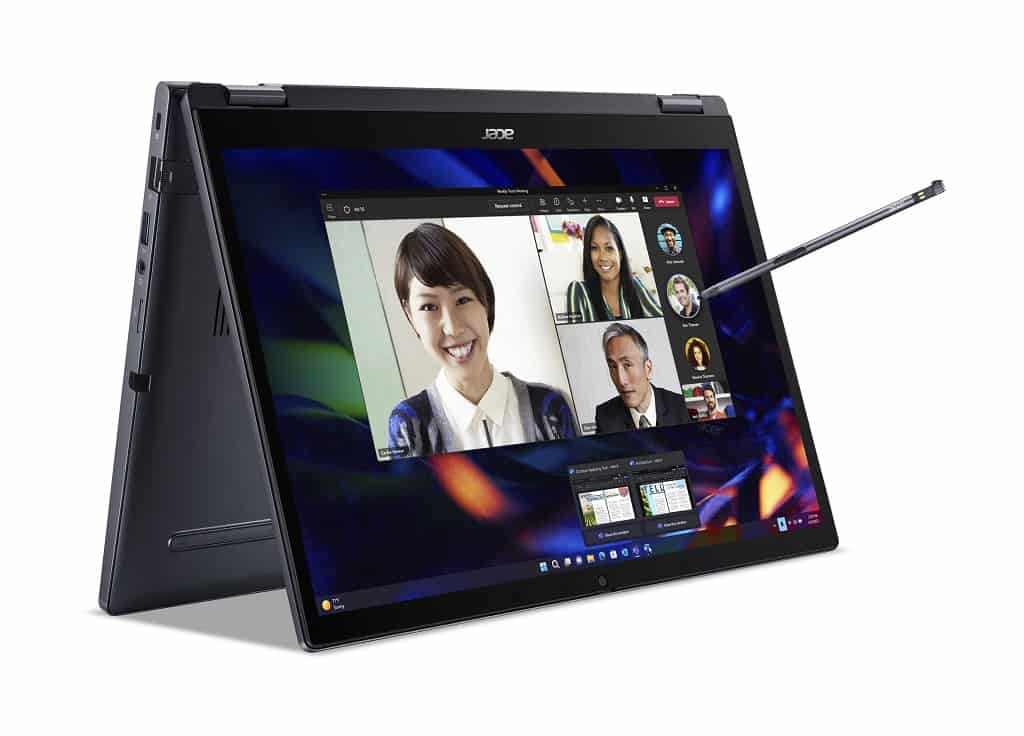
The Acer TravelMate laptop prices start from RM3,249. The 360-degree Acer TravelMate Spin P4 convertible laptop with flappable hinge for additional flexibility to share content is priced at RM5,699. The price for the TravelMate P6 that comes with 14-inch OLED display is RM6,899.
In addition, Acer Veriton desktop prices start from RM2,749, while the Veriton Vero AIO desktop (VZ4714G-51348W11PS) that comes with a 23.8-inch wide FHD display is priced at RM4,699 and the Veriton Vero mini is priced at RM3,499.
For more information, please visit Acer Malaysia’s Facebook @AcerMalaysia or call Acer’s Product Infoline at 1800-88-1288 (9am – 6pm, Mondays to Fridays), or email ama.marcom@acer.com.
About Acer
Founded in 1976, today Acer is one of the world’s top ICT companies and has a presence in over 160 countries. As Acer looks into the future, it is focused on enabling a world where hardware, software and services will fuse with one another to open up new possibilities for consumers and businesses alike. From service-oriented technologies to the Internet of Things to gaming and virtual reality, Acer’s 7,000+ employees are dedicated to the research, design, marketing, sale, and support of products and solutions that break barriers between people and technology. Please visit www.acer.com for more information.
According to the NATIONAL STRATEGIC PLAN National Strategic Plan for Colorectal Cancer (NSPCRC) 2021 – 2025, colorectal cancer (also known as colon cancer) is the second most common cancer and contributed to 13.5 per cent of all new cancer cases diagnosed in 2012-2016.
The incidence of colon cancer increases with age and is slightly higher in males. Colon cancer is known to be highly preventable and treatable through early detection. However, the 2012-2016 cancer report showed, around 70 per cent of colon cancer patients in Malaysia were diagnosed at stage III or IV. This is the stage where treatment is more complicated, and the outcome is poorer.
Understanding Colon Cancer
Dr Zakry Onn Yahya, Consultant General Surgeon, ParkCity Medical Centre
“Colon cancer occurs when there is an uncontrolled growth of abnormal cells in the colon or rectum. These abnormal cells can develop into polyps, which are small growths that protrude from the inner lining of the colon or rectum. While most polyps are not cancerous, some can develop into cancer over time,” explains Dr Zakry Onn Yahya, a Consultant General Surgeon of ParkCity Medical Centre.
The exact cause of colon cancer is still unknown, but there are several risk factors that increase the likelihood of developing the disease. These include a family history of colon cancer, a personal history of colon polyps or inflammatory bowel disease, a diet high in red and processed meats, obesity, smoking and a sedentary lifestyle.
Symptoms Of Colon Cancer
“In the early stages, colon cancer often does not produce any symptoms. As the cancer grows, however, it can cause several symptoms, including changes in bowel habits, such as diarrhoea or constipation, blood in the stool, abdominal pain or cramping, unexplained weight loss, fatigue and weakness. These symptoms are not specific to colon cancer and can be caused by other conditions, so it is important to consult a doctor if any of these symptoms persist,” reminds Dr Zakry.
Screening For Colon Cancer
Screening is the process of testing for a disease in individuals who do not show any symptoms. For colon cancer, there are several screening tests available, including Fecal Occult Blood Test (FOBT) which checks for blood in the stool and colonoscopy—a procedure that involves inserting a long, flexible tube with a camera on the end into the rectum to examine the colon and rectum. If polyps are found, they can be removed during the procedure. Meanwhile, the Stool DNA Test checks for DNA changes in the stool that may indicate the presence of colon cancer.
“The FOBT and colonoscopy is recommended for individuals over the age of 45, and those with a family history of colon cancer or polyps should start screening at an earlier age. Meanwhile the Stool DNA Test is recommended every 3 years for individuals over the age of 50. The choice of screening test depends on the individual’s risk factors, preferences and medical history. It is important to consult a doctor to determine the appropriate screening schedule,” stresses Dr Zakry.
Why Is Screening Important?
Screening for colon cancer is important for several reasons. Firstly, it can detect colon cancer at an early stage when it is most treatable. In fact, colon cancer is one of the most preventable cancers, as it can take 10 to 15 years for polyps to develop into cancer. If polyps are detected and removed during screening, the risk of developing colon cancer can be significantly reduced.
“Secondly, screening can also detect colon cancer before it causes symptoms. As mentioned earlier, colon cancer often does not produce any symptoms in the early stages. By the time symptoms appear, the cancer may have already spread to other parts of the body, making treatment much harder,” adds Dr Zakry.
Treating Colon Cancer
If colon cancer is detected in its early stages, the chances of successful treatment are much higher. Treatment for colon cancer often involves surgery to remove the cancerous tissue. Depending on the type and stage of the cancer, the surgery may involve removing a part of the colon or rectum, or even the entire colon or rectum. In some cases, a colostomy bag may be required temporarily or permanently.
While surgery is often necessary to treat colon cancer, it is not without risks. Patients may experience blood loss, infection or a prolonged stay in the hospital. Patients should be adequately prepared for surgery both physically and mentally and should be informed of the risks and benefits of the procedure.
“In addition to physical preparation, emotional support is also crucial for patients with colon cancer. Patients may experience anxiety, depression or denial when faced with a cancer diagnosis. It is important for doctors to provide adequate counselling and support to help patients cope with the emotional impact of the disease.
“Family support and participation in support groups can also be beneficial for patients with colon cancer. Support groups provide a safe space for patients to share their experiences and learn from others who have gone through similar experiences,” Dr Zakry advises.
Preventing Colon Cancer
“While there is no sure-fire way to prevent colon cancer, there are several steps that can be taken to reduce the risk of developing the disease. Some of these steps include eating a healthy diet that is high in fibre and low in fat, exercising regularly, maintaining a healthy weight, not smoking, limiting alcohol consumption, getting screened for colon cancer regularly and of course screening,” concludes Dr Zakry.
Dry eye syndrome, also known as dry eye disease or keratoconjunctivitis sicca, is a common eye condition that affects millions of people worldwide. This condition occurs when the eyes do not produce enough tears, or when the tears evaporate too quickly, causing the eyes to become dry, itchy and irritated. This condition results in blurring of vision, discomfort, light sensitivity and other symptoms due to disturbances to the eye’s tear film.
According to a local study entitled ‘Prevalence and Risk Factors of Dry Eye Disease’, the prevalence of dry eye syndrome is estimated as 7 per cent to 34 per cent worldwide, occurring at a higher frequency in the elderly above 50 years of age and twice as high in women than in men. In Malaysia, dry eye syndrome was only considered a disease on its own in 2007.
Symptoms & Causes
Dr Norazlina Binti Bachik, Clinical Director of KPJ Centre for Sight
“The symptoms of dry eye syndrome include burning sensation akin to stinging, sandy sensation when closing and opening the eyes, soreness, watery eyes, light sensitivity, heavy eyelids, deteriorating vision and red bloodshot eyes. The syndrome severely reduces the patient’s ability to read, drive and use screens for a prolonged period of time, significantly affecting the quality of life, particularly in middle-aged and elderly patients,” says Dr Norazlina Binti Bachik, Clinical Director of KPJ Centre for Sight.
There are many causes of dry eye syndrome, divided between internal and external causes, with dry and humid climate like ours being one of the external causes.
“Some of the internal causes of the disease include hormonal imbalance or changes, namely declining or lack of oestrogen in pre-menopausal or post-menopausal women, inflammatory systemic disorders like rheumatoid arthritis and Sjogren’s Syndrome, allergic eye disease, and consumption of drugs like anti-histamines and certain anti-hypertensives,” explains Dr Norazlina.
“Meanwhile, the external factors include chronic contact lens wear, long hours on gadgets like computers or handphones and environmental factors like heat and wind. Drier climate specifically aggravates the condition and patients must take better care of themselves especially in our country,” she adds.
Diagnosing Dry Eye Syndrome
In addition to women in general and the elderly, Dr Norazlina also highlights that people who are in tropical countries especially those who receive year-round sun, those working outdoors like construction workers and those on long hours of intense desk-bound computer work in air-conditioned rooms are more prone to dry eye syndrome.
After assessing whether a potential patient with symptoms similar to dry eye syndrome fall into at risk groups as mentioned above, further tests are conducted for diagnosis. The examination entails assessing the eye surface particularly looking for signs of dryness on the cornea. This can be achieved through using dyes like fluorescein or Lissamine green or Red Bengal stains. Meanwhile, tear meniscus (a thin layer of tears that collects along the lower edge of your eyelid when your eye is open, keeping your eyes moist) can give us an idea of how much tears are present in one’s eye.
Treating Dry Eye Syndrome
Unfortunately for dry eye syndrome, there is no single treatment involved, but rather it must be a multi-angle approach.
“Usually, we begin treatment for local eye conditions such as blepharitis by using lid scrubs or warm compresses on the eyelids to improve the flow of meibum.* A judicious use of lubricants either in the form of drops or gel or even ointment also takes place, depending on the severity of the dryness. Mitomycin C eyedrops can also be helpful in inflammatory cases,” says Dr Norazlina.
(*Note: Blepharitis is a common inflammation of the eyelids, and meibum is an oily substance that helps keep tears from evaporating too quickly.)
Apart from medication, some lifestyle changes also need to be undertaken such as avoiding long constant hours on gadget use by taking frequent breaks, wearing sunglasses or any other eye protective gear when doing outdoor activities to prevent direct effect on the eyes from wind or sunlight, ensuring adequate daily water intake and even taking supplements like fish oil.
What advice would Dr Norazlina give to individuals living in drier climates who are concerned about developing dry eye syndrome or experiencing discomfort and vision problems related to their eye health?
“To start with, wearing protective eye gears like sunglasses with ultraviolet light blocking properties when going outdoors is very important. Lubricating eyedrops use will also help to alleviate the symptoms through the day. Once the root cause of the dryness has been identified, compliance to the treatment instituted by the eye doctor must be adhered to ensure the effectiveness of the treatment regime.
Don’t forget to stay healthy by drinking enough fluids and taking balanced healthy diet, with supplements taken as needed.”
ASUS Malaysia announced the 15.6-inch Vivobook Go 15 (E1504F), an exciting and affordable lifestyle laptop that help make users productive or keep them entertained, wherever they go.
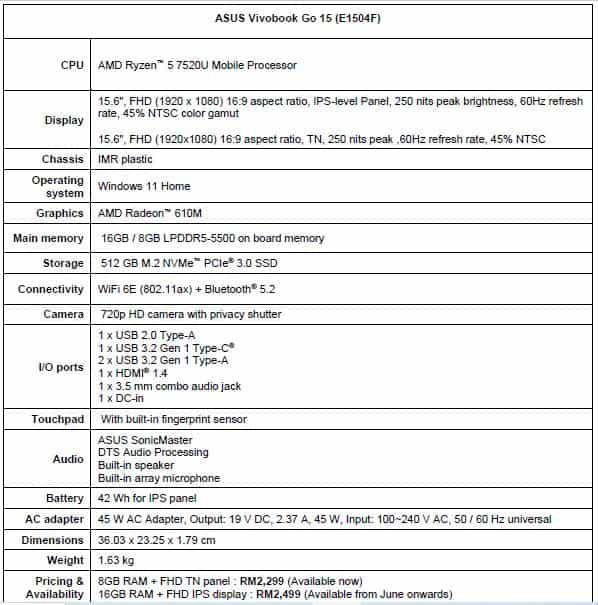
This light and compact laptop feature a sharp and vibrant FHD display and a powerful ASUS SonicMaster sound system with DTS Audio Processing for immersive entertainment. The design is stylish and practical, with thoughtful touches that make the user’s life easier, such as a 180° lay-flat hinge. Built to survive any lifestyle, the Vivobook Go 15 (E1504F) are US military-grade tested for durability using the world’s strictest test regime[1].
Speedy performance for any task is assured by the AMD Ryzen 5 7520U processor, up to 16 GB of LPDDR5 RAM and a 512 GB PCIe® SSD. Other user-friendly features include an ASUS ErgoSense keyboard; smart conferencing via the HD webcam with ASUS 3D Noise Reduction (3DNR), AI noise cancelation, and a physical privacy shield; and a useful suite of ASUS apps including MyASUS, GlideX and ScreenXpert 3.
Superior Sound And Vision
Vivobook Go 15 delivers crisp and clear visuals from its FHD display. The 16:9 NanoEdge slim-bezel design which delivers a staggering 84% screen-to-body ratio gives users more screen space for multitasking and immersive viewing. Both displays also ensure a reduced risk of eye strain during long viewing sessions thanks to their TÜV Rheinland eye-care certification for low blue-light and flicker-free operation.
The Vivobook Go 15 also features incredibly powerful, crystal-clear sound with ASUS SonicMaster and DTS Audio Processing. The combination of hardware and software boosts the volume, and removes noise to improve audio clarity for truly immersive sound.
Light, Compact, Stylish And Tough
Measuring 17.9 mm thin and weighing just 1.63 kg, the new Vivobook Go 15 is designed to be compact enough to slip into any bag, and light enough for easy one-handed carrying. It comes in a timeless Cool Silver finish, along with signature Vivobook details like the raised logo tag on the lid, a warning-stripe pattern on the Enter key, contrasting colored rubber feet on the base, and a stylish V-shaped air vent.
The new Vivobook Go 15 is strictly tested to ensure its durability in everyday use, using the latest MIL-STD-810H US military-grade standard with up to 12 test methods and 26 individual tests — the industry’s most stringent testing regime.
Speedy Performance
The Vivobook Go 15 is powered by the AMD Ryzen 5 7520U processors, with up to 16 GB of speedy LDDR5 memory and 512 GB of storage to help users complete all their daily productivity missions. For on-the-go convenience, the battery can be fast-charged to 60% capacity in around 49 minutes[2].
Ultrafast connectivity is provided by up to WiFi 6E enhanced with ASUS WiFi Master technology for fast and stable connections. The comprehensive I/O ports include a USB-C® 3.2 Gen 1 port, a USB 3.2 Gen 1 Type-A port, a USB 2.0 port, HDMI® output and an audio combo jack — so it’s easy to for users to connect all their existing peripherals, displays and projectors, wherever they are.
Feature-Packed
Superior typing comfort is assured with the full-size ASUS ErgoSense keyboard, which has a 19.05 mm key pitch, a 0.2 mm key-cap dish, and long 1.4 mm key travel that gives it an incredibly satisfying feel, with the optimum bounce and travel calculated with fine-tuned precision. Excellent privacy is provided by the physical webcam shield, and there’s a fingerprint sensor that allows one-touch login with Windows Hello.
For enhanced video and audio conferencing, there’s an HD camera with ASUS 3DNR technology that makes videos as clear as they can be. AI noise-cancelation employs machine learning to isolate unwanted noise from human speech, so users can easily hear what everyone else is saying, in any environment.
The Vivobook Go 15 (E1504F) also come with a collection of easy-to-use productivity-enhancing ASUS apps, including GlideX for cross-device screen sharing; MyASUS for easy access to updates, apps, customer service and performance optimization; and ScreenXpert 3 for easy multi-display management.
Availability & Pricing
ASUS Vivobook Go 15 (E1504F) will be available in two variants, priced starting from RM2,299. For more info:
ASUS is a global technology leader that provides the world’s most innovative and intuitive devices, components and solutions to deliver incredible experiences that enhance the lives of people everywhere. With its team of 5,000 in-house R&D experts, ASUS is world-renowned for continuously reimagining today’s technologies for tomorrow, garners more than 11 awards every day for quality, innovation and design, and is ranked among Fortune’s World’s Most Admired Companies. FORTUNE and FORTUNE World’s Most Admired Companies are registered trademarks of FORTUNE Media IP Limited and are used under license
1 Tested using enhanced military-grade MIL-STD-810H durability standards, with up to 12 test methods and 26 test procedures, to ensure extraordinary toughness. Based on ASUS internal market research using available information and testing reports from main laptop brand websites on Oct 28, 2022, ASUS consumer laptops use a regime consisting of 26 test procedures, which is the consumer laptop industry’s strictest and most extensive test regime for the MIL-STD-810H standard. The number of tests passed by each consumer laptop model can be found in the ASUS quality test report for that model.
2 Charges the battery to up to 60% within 49 minutes when the system is off or in Standby mode. Power adapter with a minimum capacity of 45 watts is required. After charging has reached 60% capacity, charging will resume at normal rate. Charging time may vary +/-10% due to system tolerance.
3 Specifications, content and product availability are all subject to change without notice and may differ from country to country. Actual performance may vary depending on applications, usage, environment and other factors. Full specifications are available at http://www.asus.com
It is rare to come across a book whose title comes in one word. Many books have titles and subtitles that are too many words. Many such books, in the hope of crafting an exciting title to captivate readers, end up just too long. However, there is one book on the market now of which the title is just one word, and it is powerful and sufficient.
MOTHERHOOD is a compilation by Jermaine Li Yuen of the sharing of 72 mothers describing their experiences of what motherhood is all about. Each sharing is brief and concise with a range from 200 to 300 words which makes easy reading.
This book is dedicated to all mothers and mothers-to-be. Jermaine believes that the real-life stories shared in this book can inspire, motivate and give hope to all mothers in their journey of motherhood. The book is well illustrated by Alison Lim, with each write-up with a family photo of the mother and her children converted into a photo illustration format.
The good thing about a photo illustration compared to the actual photo image is that it would not take the attention away from the write-up’s content. The calligraphed name of each mother at the end of the write-up is elegantly done by Gladys Yowono.
The book’s content is as attractive as its layout, illustration, and calligraphy. The sharing of the insights of each mother comes with varied experiences. As much as there are differences in their journey of motherhood, there is also the common joy, pain, thrill, and chaos experienced by each mother.
Having read this book I personally understand for the first time much clearer what motherhood is all about and the sacrifice a mother has to go through to bring a newborn to this world and nurture him or her with tender loving care all the way. This is certainly a valuable book worth reading every page.
The review of this book would not do any justice if I do not share an extract of a two-liner from the book shared by the mothers. It is certainly not easy to pick 5 from the 72 equally interesting ones. So, I chose them based on the 5 criteria on being dramatic, hilarious, meaningful, touching and inspiring.
Dramatic
“A journey of endless possibilities, like having your finger clipped in between the door hinge because your kid got excited and slammed the door while you were trying to grab some ointment to apply on his chest, and before you know it, you are lying on the hospital bed being dragged into the operating theatre because your finger tendon tore.”
-Jermaine Li Yuen, Co-Founder of The Ark and Arkmosphere, Mother of 3
Hilarious
“Motherhood is nights of breastfeeding while your 11 months old baby boy kicks you relentlessly at your caesarean wound as you suffer quietly in pain. Motherhood is watching your husband sleep and snore next to you as you enviously wish how good it is to be a man instead.”
– Mei Xin, Corporate Banker, Mother of 1
Meaningful
“Having a child is a gift from God and it is moments like this that you know somewhat God’s love and patience is with us. I thank God daily for this gift and what my son has taught me about motherhood, patience and humility.”
-Freda Lu, Broadcaster/Author/Emcee/Speaker, Mother of 1
Touching
“To me, motherhood is not about winning a popularity contest. If I had come across as a naggy mother, it is because my love knows no bounds. I remember whenever my children had a fever, I would nurse them throughout the night till they recovered. I will do whatever it takes to ensure their safety and well-being.”
– Juliet Bee, Marketing Director, Mother of 3
Inspiring
One day, a therapist told me something that changed my parenting approach. She said, “connect instead of correct”. Wow! Simple yet powerful. She explained that when spending time with our children, it is better to connect by talking and listening to them about everyday stuff rather than giving instructions and correcting their behaviour (e.g., constantly saying don’t shout, don’t run, don’t touch).
– Emelia Thiran, Artist & Art Educator, Mother of 2
The above two liners excerpts are too short and certainly have shortchanged the value of the full write-up and likewise for the other mothers’ sharing which are not extracted here. So, my recommendation: go get this book and read these great insights from these wonderful mothers.
I promise it will take you through the whole gamut of human emotions. This book is not just for mothers; in fact, everyone should read Motherhood to understand what a mother has to go through to bring all of us up and alive.
Dr Victor SL Tan is the CEO of KL Strategic Change Consulting Group and an international change management consultant. He is the author of 15 books, including management books and biographies. His work has been widely recognized and has recently won 2 awards from The BrandLaureate International for the company and consultant that made the most positive and productive impact for corporations. He can be contacted at 012-3903168 or by email at victorsltan@klscc.com.
A report by the Department of Statistics Malaysia (DOSM) in 2019 showed that 390,000 out of 560,000 SPM candidates were interested in joining the workforce immediately after the exam, while only 170,000 students were interested in continuing their studies. The three main factors why youths aged 17 to 18 did not want to continue their studies were:
The belief that furthering their studies did not guarantee better-paying jobs;
The availability of job opportunities in the gig economy, and;
The interest to become influencers on social media.
Such is the sad state that this worrying trend is set to continue over the years. This could potentially impact Malaysia’s future supply of skilled labour, hindering its progress toward becoming a high-tech nation.
But on the other end of the spectrum, the Malaysian government has adopted aggressive measures aimed at internationalising its higher education system, a process it hopes will improve the sector’s dynamism and make it more responsive to the demands of a knowledge-driven world economy. In 2012, the higher education ministry established Education Malaysia Global Services (EMGS) to promote Malaysia as an international education hub and facilitate the movement of international students into the country.
Offering a degree that is well-recognised globally, Malaysian universities rank in the world’s top universities, with a total of 13 in the top 600, according to QS World University Rankings. Based on QS World University Rankings by Subject 2022, 10 Malaysian programmes were placed among the top 50 universities for studying their academic subject.
As a result, Malaysia was the 13th-largest destination for international students in the world in 2020. According to the UNESCO Institute of Statistics (UIS), in 2020, Malaysia hosted 89,193 international degree-seeking students.
Smart Investor talked to several industry experts to learn more about the state of Malaysia’s education among the youth and their level of financial literacy.
The State Of Malaysia’s Education And Financial Literacy Among The Youths
Raja Edriana Baizura, head of career services at Taylor’s University
“Education at the very base of it is required for everybody. Having an education will lay the foundation that the youths of today require to be better shapers of tomorrow for society to live in,” said Raja Edriana Baizura, head of career services at Taylor’s University.
“It is said that education and knowledge are two different things. Knowledge is what one knows, and education is how one learns it. Knowledge can be gained by the environment we are exposed to while growing up, while education is acquired knowledge from teaching and learning,” she added.
Terence Ooi, the co-founder of Wiki Impact
“Being in Asian culture, the value of structured education has not diminished. In fact, those who can afford it would be looking for alternatives for their children to receive a better education than what is being offered mainstream. The pressure of getting straight A’s is still there as it is perceived that this would be a stepping stone to tertiary education and progress in life,” echoed Terence Ooi, the co-founder of Wiki Impact.
“In the past, a heavy emphasis was on getting higher education to secure a high-paying job. However, current perceptions about having a traditional 9-to-6 job have shifted as youths are more inclined to look for alternative sources of income, such as trading or even growing and monetising their social media. While general sentiments are that higher education may aid one’s chances in securing a better job, the key is to find your niche,” stated Yeap Jun Rong, a market strategist at IG International.
Haida Tahir, Director of Contingent Workforce Central, PERSOLKELLY Malaysia
“Today’s job landscape is so competitive, and while education does not guarantee a high-paying job or that you will land your dream career, it is a fundamental requirement. Nonetheless, it is undeniable that higher education leads to better job prospects in the long-term. Beyond furthering your studies, continuous learning is also very important, more so now as technological advancements shift the demands of what an organisation requires from talents,” shared Haida Tahir, the director of contingent workforce central at PERSOLKELLY Malaysia.
Dr Sanjay Sarma, CEO, president and dean of Asia School of Business (ASB)
“I have never met a young person disinterested in learning. Curiosity is the most fundamental aspect of learning, and it is impossible to extinguish. I have, however, met many people who are disaffected with how we teach,” explained Dr Sanjay Sarma, CEO, president, and dean of Asia School of Business (ASB).
“At ASB, we are all about action – and I believe classrooms need to have a more engaging, thought-provoking nature for the next generation to be prepared,” he added.
The emergence of new methods of teaching and learning platforms, such as self-learning through learning management systems (LMS), has given students the ease of studying at their own pace. This minimises the effects of constraints they have when pursuing their education and their opportunity cost. They are becoming smarter and gaining skills faster than their predecessors, all at the same time.
For example, Udemy is an online learning platform founded in 2010. According to the company’s website, Udemy has over 155,000 courses taught by over 70,000 instructors and has served over 50 million students worldwide as of 2021. In terms of growth, Udemy has seen significant expansion over the years. In 2016, Udemy reported that it had over 11 million students enrolled in its courses, and by 2019, the number had grown to over 50 million.
The number of courses on the platform has also grown significantly, from around 30,000 in 2016 to over 155,000 in 2021.
Johary Mustapha, founder and CEO of Forest Interactive
“Through our foundation arm, Forest Interactive Foundation (FIF), we are trying to bridge this gap by developing future innovators in tech. Our FIF programmes upskills young entrepreneurs and students alike by curating a robust tech-focused hands-on curriculum needed to solve the digital skills shortage and increase the overall employability rate within the country,” said Johary Mustapha, founder and CEO of Forest Interactive.
Nisa Saharuddin, the community engagement lead, Forest Interactive Foundation
“Through our various programmes, we provide the younger generation with a varied skill set to help them stay relevant with the progressing economy. Our #SeKODlah programme, partnered with corporations like CIMB Bank and CIMB Foundation, would enable the future Malaysian workforce to explore and develop in-demand skills through e-learning and mentorship. If we are to meet the ever-increasing demand of the economy, it must be a collective gesture of both the private and public sectors,” shared Nisa Saharuddin, the community engagement lead at FIF.
Education is and always will be important. However, the dynamics of learning have changed. Evidently, the younger generation places less value on traditional education as, from their viewpoint, there are multiple ways of achieving economic growth.
Are The Youths Of Today More Financially Savvy?
Bankruptcy cases are a telling point of where we stand regarding financial literacy. The number of bankruptcy cases seems to be declining, but let’s not forget that our government amended the Insolvency Act 1967 in 2017, raising the bankruptcy threshold from RM30,000 to RM50,000. This was followed by another amendment, raising it from RM50,000 to RM100,000.
Personal loans are the highest cause of bankruptcy among Malaysians, contributing almost 42%, followed by hire purchase loans at almost 15%. Another worrying sign is the high number of cases in the 25 to 34-year-old age group, which makes up more than 21%, with the highest being in the 35 to 44-year-old age group, with more than 37%.
“As information is readily available on the internet, consuming the right information to be financially savvy is important. Not many know how to save or start investing early but those who have early exposure to financial literacy will or may start saving and investing earlier in life,” said Edriana.
“From my observation, they are generally still quite largely ignorant. Many are still unaware of basic investment options and opportunities. However, if compared to generations of the past, they do have greater access to resources on financial tips and investments – thus if you compare apple to apple, they are in a greater state,” added Ooi.
“They are more aware and practical of their financial capacity, so it’s a yes – if we take the literal meaning of financially savvy. However, long-term planning is also important, and that depends on a case-by-case basis,” opined Johary.
Where Do The Youths Invest?
The Institute for Capital Market Research Malaysia (ICMR) recently conducted a nationwide study to better understand their issues, challenges, and behaviours regarding personal finance and investing. The survey was distributed to 1,500 respondents and found that millennials and Gen Z Malaysians can be categorised into three groups, each with unique characteristics.
A higher proportion of respondents from the east coast do not invest (Group A), while Group C has a higher proportion from the Central region. More notably, there are differences in household income levels between all three groups. While 69% of Group A earns less than RM5,000 in monthly household income, 56% of Group B earns between RM3,000 to RM7,000.
Meanwhile, respondents who fall under Group C were found to have significantly higher incomes, with 31% having household incomes above RM10,000.
Financial Literacy And Risk Tolerance
ICMR’s research suggests a link between financial knowledge, financial confidence, and risk tolerance with the likelihood of investing and the products invested in. For instance, someone who does not know much about financial matters and has little financial confidence would also be unwilling to take risks – hence not investing and falling into Group A.
This could also explain behavioural differences between Group B, which invests only in ASNB funds or unit trust products, and Group C, which invests in other capital market products. The first unit trust company in Malaysia was set up in 1959. This might be why retail investors are most comfortable with unit trust products, considering their long history in Malaysia.
Additionally, many investors who only invest in ASNB funds or unit trust products (Group B) tend to be less risk tolerant and financially confident. In contrast, those who invest in other capital market products like shares or cryptocurrency, which are perceived to be riskier, tend to have higher risk tolerance levels and feel more financially confident.
“Based on our data at IG International, with the recent volatility, youths are more inclined to trade major US indices and forex. The Dow Jones Industrial Average and Nasdaq 100 are popular choices. Since the Covid-19 trading boom, youths continue to have their feet in the game in terms of trading,” shared Yeap.
Jason Low, Co-founder and CEO, Virtualtech Frontier (VTF)
“In addition to the stock market, young people are also investing in alternative assets such as cryptocurrency, NFT’s, and real estate. Cryptocurrency has become increasingly popular among younger generations, with platforms like Coinbase and Binance providing an easy way to buy and sell various cryptocurrencies. Real estate investing has also gained popularity among young people, with crowdfunding platforms like Fundrise and RealtyMogul allowing investors to pool their money together and invest in commercial real estate,” explained Jason Low, co-founder, and CEO of Virtualtech Frontier (VTF).
“Personally, I have seen students who invest in the stock market or even trading to make their money ‘grow’ even as early as their first year of university. We invite speakers from the industry to introduce topics such as financial literacy to students in their final year during Professional Development Week, where they learn the importance of being financially savvy,” added Edriana.
“Most young people I know are investing in insurance and crypto. This is perhaps the access they have to either opening the accounts or someone within the industry educating them,” said Ooi.
“Some common options for youth to invest in are NFTS, cryptocurrency, stocks, fixed deposits, and real estate. Stocks are popular with those looking for higher returns and are willing to take more risk while fixed deposits are a more conservative option that offer guaranteed returns. Real estate is also popular for those who are looking for long-term investment with the potential for appreciation,” mentioned Johary.
The State Of Malaysia’s Education And Financial Literacy Among The Youths Summary
In short, youths of today are more financially savvy than previous generations. But it is important for them to educate themselves about personal finance and investing and seek advice and guidance from trusted sources.
Get your latest copy of Smart Investor Magazine HERE!
Arthritis is a common condition that affects millions of people worldwide, including Malaysia. Arthritis is a general term that refers to inflammation of the joints, which can cause pain, stiffness and limited mobility. There are many types of arthritis, each caused by factors unique to the disease.
Understanding Arthritis
Dr John Decruz, Consultant Orthopaedic Surgeon at ParkCity Medical Centre
“Osteoarthritis is when the cartilage that caps the bones in your joints wears away causing the bones to grate against each other. Meanwhile, rheumatoid arthritis is a disease in which the immune system attacks the joints, beginning with the lining of joints (synovium). Unfortunately, rheumatoid arthritis affects more women than men, with the ratio of 3 to 1,” says Dr John Decruz, a Consultant Orthopaedic Surgeon at ParkCity Medical Centre.
“In addition to that, there are also joint paints related to gout, which is caused by uric acid build up in the form of painful crystals in the joints and more commonly seen in the younger group around 30 to 50 years of age. This is in contrast with the other types of arthritis that are more prevalent in much older groups. Joint pain may also occur due to an infection, which appears in the form of redness and reduction in range of motion around the affected joint,” he continues.
Some patients may experience joint pain due to a genetic predisposition, which causes their joints to stiffen up and become painful as they age. This can be diagnosed with a thorough family history, inspection and physical examination. Sometimes X-rays may also be necessary. Meanwhile, blood tests will also reveal joint pain caused by autoimmune diseases such as lupus, gouty arthritis and septic arthritis.
Diagnosing Arthritis
If you think you may be suffering from joint-related diseases, it’s best not to delay seeking treatment. However, not all symptoms lead to arthritis.
“Usually, patients begin suspecting of conditions are often marked by a ‘crackly’ sensation or sound that people may experience when performing physical activities, including something as simple as getting up from a chair,” explains Dr John. “However, most of the time, especially if there is only sound without any pain or swelling, it’s harmless. But of course, we can always rule out any potential of the disease with x-ray, blood tests and even MRI.”
X-rays of patients suffering from osteoarthritis will reveal a reduction of the gap between the bones indicating that the cartilage is worn out. There may even be hairline cracks, bone spurs or even bone cysts in more severe cases.
Treating Arthritis
If you’re diagnosed with arthritis, there are many options that you could explore before landing on surgery.
“Nowadays surgeries such as knee or hip replacement surgeries or joint replacement surgeries are often last resort options when the arthritis is no longer manageable. The go-to upon initial diagnosis are supplements such as Glucosamine and Chondroitin; which are often taken together and are believed to help repair and maintain the cartilage in the joints.
“One good thing is our local food is generally rich in turmeric, which contains curcumin that has been proven through studies to have anti-inflammatory properties that could help reduce joint pain and inflammation,” details Dr John.
In addition, an Omega-3 fatty acids-rich diet and vitamin D has also been found to help reduce inflammation of joints.
“And of course, we have medications that are commonly used to treat arthritis, including painkillers, nonsteroidal anti-inflammatory drugs (NSAIDs), disease-modifying antirheumatic drugs (DMARDs) and biologic agents.
“Painkillers such as acetaminophen can help to relieve pain, while NSAIDs such as ibuprofen can help to reduce pain and inflammation. DMARDs such as methotrexate can help to slow the progression of rheumatoid arthritis, while biologic agents such as adalimumab can target specific parts of the immune system to reduce inflammation in the joints,” adds Dr John.
Physical therapy is also an option for effective treatment of arthritis, but Dr John reminds to approach it with caution.
“Yes, physical therapy improves joint function and reduces pain but only start it upon seeing a doctor to get a proper medical diagnosis of the type of arthritis that is afflicting you. I’ve seen cases of patients’ arthritis becoming worse due to premature physical therapy.”
Preventing Arthritis
If you would like to keep arthritis at bay, there are certain measures that can be taken. Similar to the way in which physical therapy is used to reduce pain in joints—through exercises to strengthen the muscles around joints, as well as stretches and range-of-motion exercises to improve flexibility, keeping active will help to keep the onset of arthritis at bay.
“Lifestyle changes is also important in treating as well as preventing arthritis. Maintaining a healthy weight to reduce the pressure on the joints while avoiding excessive inflammatory food such as sugar, fast-food and food fried with processed oil. Eating a healthy diet that is rich in fruits, vegetables and whole grains can also help to reduce inflammation in the body,” advises Dr John.
If you were to ask a random person on the street if they own a pet and a personal insurance policy, there is a decent chance of the answer being yes. However, if you were to ask if they have pet insurance, the chance of an affirmative response is very likely to be low.
Although many Malaysians still do not have any form of insurance, the average family is still likely to be covered with a medical or life insurance policy. But when it comes to insurance for pets such as cats and dogs, that is a whole other matter.
Oyen co-founders (l-r): Kevin Hoong, Michelle Chin
This is where Oyen comes into the market, with the company aiming to carve up a niche for themselves in the insurance sector. While the pandemic may have wreaked havoc on the economy, if it was not for this black swan event, the insurtech firm may never even have come to life.
Michelle Chin, the co-founder of Oyen, recalls seeing almost everyone in her social circle introducing a pet into their lives as a result of the pandemic.
“One of our friends adopted a second cat, and the cat was found to be suffering from liver disease and she spent a lot of money on treatments,” recalls Chin.
This resulted in the other co-founder of Oyen, Kevin Hoong, wondering why there was a lack of pet insurance as a product. With a family background in insurance spanning 40 years, he was certainly well-placed to gauge the feasibility of spearheading the growth of a niche vertical.
“We found out that there was one insurance company offering it in Malaysia – MSIG,” she remembers.
“We then indicated our interest to launch a unique product offering with a niche focus on pet health, and the rest was history!”
As for their friend’s cat, Chin shares that she has made a full recovery and is now insured with Oyen!
How it works
Claiming to be the “best pet insurance in Malaysia”, Oyen certainly works to live up to that tagline. It pays up to RM8,000 towards the cost of pet veterinary bills, which includes consultation, diagnosis, and treatment at the clinic and hospital.
The more premium coverage plans also covers third-party injury; that is when your pet causes damage to the property of others or even other pets! This will include any legal fees, compensation and related medical costs up to RM30,000 for cats and RM50,000 for dogs.
In addition, even the funeral expenses for your pet are covered under the premium coverage, which includes the burial plot and columbarium.
Oyen is also transparent about what its pet insurance plan does not cover, listing all of these restrictions on its landing page; this includes aids and prosthetics, congenital conditions and surgical implants to name just three.
Like many other insurtechs, it also strives to use simple language to convey the extent of coverage that your pet will receive. Such simplicity is at the heart of Oyen, which like all insurtechs, ultimately aims to simplify the process of purchasing insurance coverage, even for a segment like pets.
Market challenges
Running an insurtech company is never a walk in the park, let alone in such a niche like pet insurance, and with it comes a specific set of challenges.
According to Chin, the biggest obstacle that Oyen faces is the lack of insurance knowledge in Malaysia. This often results in the company having to deal with and educate customers that cannot make head or tail of the insurance or claims processes.
“We were surprised that 80% – 90% of those who enquire with us, have very limited knowledge of how insurance works,” she shares.
“For example, we have had a lot of people who ask if they can claim for a vet bill that happened yesterday. Or they may be at the vet right now and they would like us to reimburse the cost!”
She adds that customers also often ask about covering preventive and routine treatments, the responsibility of which lies with pet owners themselves.
“Once people understand how the industry works, it is rather straightforward for them to consider getting their pets insured,” says Chin.
Although the concept of pet insurance is still fairly new and relatively unknown to the wider public, it is not a new product in Malaysia, having been in the market since 2010. Chin says this is proof that insurance companies have already established that the market is big enough for them to introduce such a product.
“We determined that there is a fast-growing demand segment through a few avenues,” she explains, adding that the pet care market in Asia-Pacific is growing, and is projected to continue growing at a compound annual growth rate (CAGR) of about 10% until 2028.
“Pet humanisation has been rampant – people no longer treat their pets as pets, but as a family member, and even children.”
This means that the way that people care for their pets is more extensive than ever before, with many now receiving home-cooked diets or even food prescribed specifically by pet nutritionists. Such pets also receive better healthcare treatments in general which could include pet hydrotherapy, physiotherapy and acupuncture to name a few. Some even go to the extent of conducting DNA tests on their pets to ensure proper lineage!
“As the cost of pet healthcare increases, due to higher demand for better services and more advanced equipment, the need for pet insurance will increase as well,” predicts Chin.
As for their future expansion plans, Oyen aims to provide “a holistic ecosystem in pet healthcare”. This means that any growth will be within the confines of the pet healthcare system first and foremost, instead of branching out to other insurance verticals.
“If there are opportunities that arise from our pet healthcare focus, we will be happy to explore them.”
When asked about what the long-term game is for Oyen, Chin is very clear as to what her ultimate goal is.
“Becoming the pet healthcare super app in Asia Pacific!” she says unequivocally.
Industry thoughts
As part of the insurtech industry, Chin is certainly building something special in Oyen. However, she believes that there are still some industry blind spots that often get overlooked.
“There is too much focus on the sexy parts of technology and digitalisation, and not enough on building empathy and simplicity into the user experience,” she notes.
Her deft observation is that the space is awash with technological innovation, so that is not a weak point that needs to be addressed. However, many insurtechs end up chasing new breakthroughs and often ignore the human element that is required to quickly grow a loyal customer base. Rather than cutting-edge features, ease of use should be prioritised.
“We need to identify how these technologies or innovations help improve the experience for customers both from a registration and quote journey, as well as claims,” she adds.
With its customer-first approach, it will be of no surprise to anyone if Oyen continues on its current growth trajectory!
By Caleb Khew
A version of this story was published in Smart Investor March/April 2022; issue 372.
If you liked this article, do check out these other reads on Smart Investor:
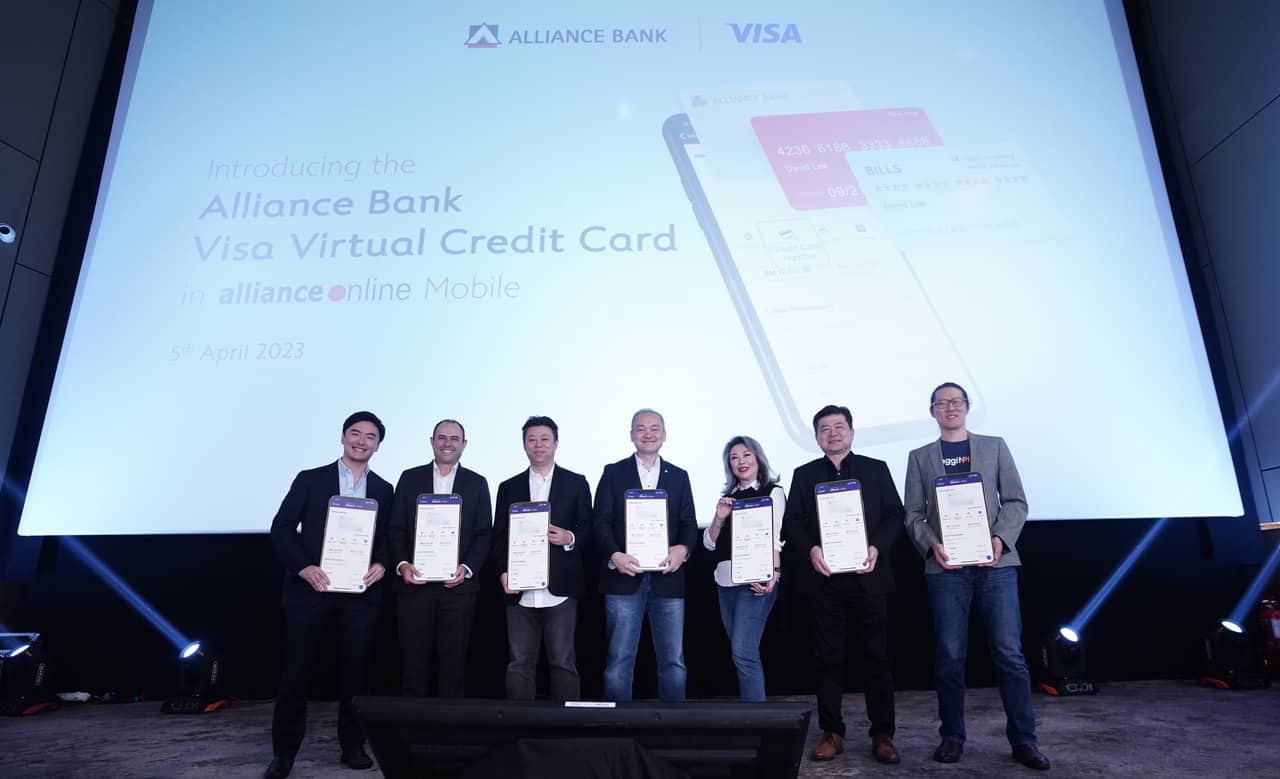
Alliance Bank Malaysia Berhad (“Alliance Bank” or the “Bank”) continues to step up efforts to strengthen security of digital transactions with the introduction of Dynamic Card Number in its Alliance Bank Visa Virtual Credit Card. In partnership with Visa Malaysia (“Visa”), CTOS Digital Berhad (“CTOS”), Jirnexu (“RinggitPlus”), YTL Communications (“YES”) and Touch ‘N’ Go Digital (“TNG Digital”), this new payment solution will not only make online transactions more secure, but it will also greatly enhance the overall experience for credit cardholders.
The enhanced feature generates a randomised 16-digit credit card number for every transaction which includes e-commerce transactions, streaming and subscription services to cater to customers’ various lifestyle needs. As part of Alliance Bank’s Acceler8 strategy, the Bank will continue to drive digital transformation to provide faster, better, and more personalised solutions for customers.
The single-use Dynamic Card Number offers a more secure and safer way of making daily purchases and minimises the customers’ exposure to fraudulent risks, identity thefts and other financial scams. Additionally, it also brings about a positive impact to the environment as it reduces production of plastic credit cards and helps to lower credit card footprint on online channels.
Customers also have the flexibility to determine a dedicated Dynamic Card Number as well as the number of times it can be used for a particular subscription service. This enables customers to track and manage their digital transactions on-the-go more conveniently and securely via their mobile phones.
“In line with Alliance Bank’s customer-first mindset, we constantly innovate and enhance our suite of digital solutions to meet our customers’ expanding banking needs, and also deliver a seamless digital payment experience. The new feature on the Alliance Bank Visa Virtual Credit Card provides our customers with greater peace of mind by way of a more secure payment option, addressing concerns of credit card data breach at third party sites when they transact online,” said Ms Gan Pai Li, Group Chief Consumer Banking Officer of Alliance Bank.
Sharing the same sentiment, Mr Ng Kong Boon, Visa Country Manager for Malaysia, said, “With more Malaysians relying on digital commerce, we believe it is important that they feel empowered and secure when making digital payments. Hence, we have partnered with Alliance Bank on this dynamic card number solution for the virtual credit card. We hope to give customers more confidence as they shop and pay for their purchases online.”
“The virtual credit card will enable users a smooth experience when fulfilling their payments, reload and purchasing needs. Furthermore, the main edge of the virtual credit card is its dynamic card numbers which is in tandem with TNG Digital’s main aim for being a safe and secure eWallet in line with Bank Negara Malaysia’s standards,” said Mr Alan Ni, Chief Executive Officer of TNG Digital.
With Malaysia recording 154 data breaches per 100 people in 2022 according to Surfshark, the introduction of the Dynamic Card Number aims to meet the market needs of more personalised and safe mode of payment for goods and services, especially among young professionals.
The fully online application process is fast and simple, with digital submission of supporting documents such as EPF statements or salary slips. Successful applicants will be notified through a push notification.
Alliance Bank Malaysia Berhad and its subsidiary, Alliance Islamic Bank Berhad, offers banking and financial solutions through its consumer, SME, corporate, commercial and Islamic banking, and stockbroking business. The Bank provides easy access to its broad base of customers throughout the country via multi-pronged delivery channels that include retail branches, Privilege Banking Centres, Business Centres, Investment Bank branches, and mobile and Internet banking.